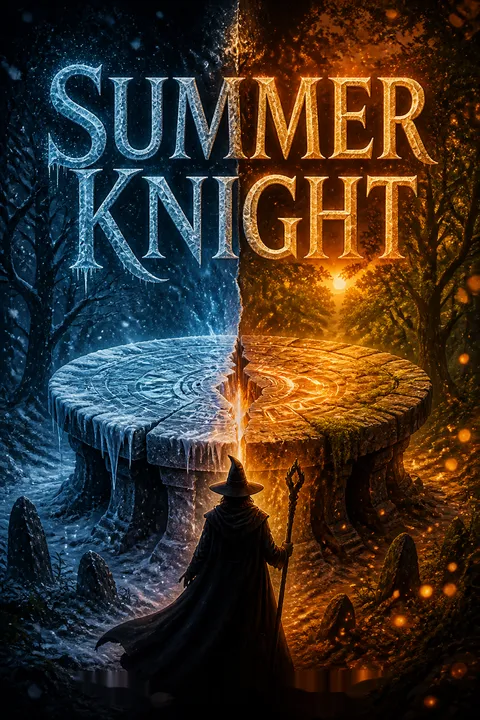


Plot Summary
Toads Over Chicago
Harry Dresden, a Chicago wizard, is broke, sleepless, and consumed by the search for a cure for Susan Rodriguez, the woman he loves, after the Red Court infected her with vampiric hunger. When toads begin falling from a clear sky, his young friend Billy the werewolf helps him test whether they are real.
Before they can finish, Red Court allies attack with guns and a disguised ghoul. Billy shifts into a wolf and saves Harry from the third assailant, while Harry drives the attackers away. The toads prove real, a sign that magic itself is coming undone. Harry recognizes that danger is gathering, but grief and exhaustion have left him resisting the friends trying to help.
The opening makes Harry’s private collapse visible before it makes the supernatural crisis legible. His neglect of his work and body is not mere eccentricity: guilt over Susan has narrowed his attention until even Billy’s concern feels like an intrusion. The real toads turn that inward disorder outward. Their physical presence makes the magical imbalance undeniable, while the attack shows that Harry’s isolation has practical costs. Billy’s intervention also complicates Harry’s self-image as protector: he is not the only person capable of saving someone, and refusing help does not prevent others from taking risks for him.
Mab Buys the Debt
Harry’s new client, Ms. Sommerset, reveals herself as Mab, Queen of Winter. When he tests her with cold iron, she drops her disguise and explains that his faerie godmother, Lea, has transferred her claim on him. Mab demonstrates the bond by making Harry stab his own hand with a letter opener. She then offers a way out: three tasks, chosen by Harry, will cancel his debt.
Her first request is to identify who killed Ronald Reuel, an artist whose death was reported as an accident, and recover what was taken from him. Harry accepts the bargain because refusing leaves him under Mab’s power. The task immediately ties his personal survival to a murder whose supernatural consequences he does not yet understand.
Mab’s bargain turns an abstract supernatural debt into bodily coercion. Harry can technically refuse her requests, but the relationship is already unequal enough that consent becomes a calculation under threat. The three-task offer gives him a limited route toward freedom, yet it also recruits his stubborn sense of responsibility. The mystery is therefore not simply work for hire: solving it may rescue Harry from Mab, while the bargain itself makes him an instrument in a contest he barely understands. His injured hand is a physical reminder that every future choice will be made inside a bond he did not knowingly renew.
The Council’s Trial
At the White Council meeting, Harry learns that Simon Pietrovich, a Senior Council wizard and vampire expert, has been killed in an attack on his Russian stronghold. The Merlin and LaFortier blame Harry for provoking the Red Court and argue that the Council should surrender him to secure peace.
Ebenezar McCoy, Harry’s former mentor, secures a closed vote, while the Gatekeeper proposes a test: Harry must win Winter’s cooperation by answering Mab’s request. Failure could cost him his standing as a wizard. Harry realizes the Council’s safe routes through the Nevernever depend on Mab, and her emissary is already in town. He accepts the Trial, knowing that solving Reuel’s murder may determine whether he is protected or handed to the vampires.
The Council meeting makes Harry’s personal history public property. His earlier actions against the Red Court are recast as evidence that he is reckless, while the Council’s fear encourages a political shortcut that could erase his rights. Ebenezar’s support matters because it resists that shortcut, but it cannot absolve Harry or control the vote. The Gatekeeper’s Trial preserves due process only conditionally: Harry must prove his value through the very supernatural politics that threaten him. The scene’s pressure comes from institutional vulnerability, not just personal hostility. Harry’s guilt is real, but the Council’s willingness to use it as a bargaining chip is also real.
Murphy Opens the File
Harry visits Lieutenant Karrin Murphy, head of Chicago’s Special Investigations unit, hoping to inspect the police file on Reuel. He finds her shaken by the death of her first husband, Greg, and by nightmares left from a supernatural assault the previous year. Harry shares his own history of losing Elaine, which helps Murphy explain her fear rather than hide it.
She agrees to help, but insists on joining if the case proves to involve a killing. The file notes a rookie officer’s report of slippery residue above the stairs where Reuel fell, though later investigators dismissed it. Harry recognizes the substance as ectoplasm, suggesting that something entered the building from the Nevernever and bypassed its security.
Murphy’s grief is not a pause from the investigation; it shapes the terms on which she agrees to help. She is struggling with a trauma that has made her feel unsafe in her own mind, yet she refuses to let that vulnerability cancel her professional agency. Harry’s disclosure about Elaine creates a rare reciprocity between them, though he still wants to protect Murphy by limiting what she knows. The ectoplasm clue gives their shared work a concrete direction. It also links two forms of evidence: police procedure can notice the residue, but only trust between the detective and the wizard can make it meaningful.
Elaine Returns Alive
Back at his apartment, Harry finds Elaine Mallory, the childhood companion he believed had died in the fire that ended their old master Justin DuMorne’s control. Elaine explains that DuMorne had enthralled her before she helped bind Harry, so her betrayal was coerced, not freely chosen.
She escaped the fire and survived under the Summer Court’s protection, but now owes the Summer Queen for that refuge. A murder within Faerie has made her an emissary against Winter, placing her in direct conflict with Harry’s assignment.
Harry urges her to trust the White Council, but she refuses. When Warden Morgan arrives accusing Harry of treason and Susan of controlling him, Harry nearly fights him, then sends him away without violence. Elaine leaves, unconvinced the Council is safe.
Elaine’s return revises Harry’s memory without erasing its damage. The revelation that she was enthralled makes her actions intelligible, but it cannot restore the trust he lost when she helped DuMorne. Their reunion is therefore neither simple forgiveness nor renewed romance. It exposes how coercion can make a person both victim and instrument, a complexity Harry recognizes more readily in Elaine than in himself. Morgan’s intrusion sharpens their disagreement about the Council: Harry still believes there are allies inside it, while Elaine sees an institution prepared to punish before it understands. Their different survival strategies now divide them.
The Summer Knight’s Secret
In his laboratory, Harry consults Bob, the spirit of intellect housed in a skull, and learns that Reuel was the Summer Knight, a mortal champion carrying part of his Court’s power. Because that power has not returned to Summer after his death, the balance between Summer and Winter is broken. Harry searches Reuel’s apartment and finds an ogre named Grum ransacking the place for papers.
His spells barely affect the creature, so Harry uses an iron nail to wound it and escapes with a photograph of Reuel among four young people. Grum flees, leaving Harry with new questions about who the group are and why someone wants their connection to Reuel erased. The murder now threatens more than a client’s reputation.
Bob’s explanation turns the missing evidence into a problem of political physics: a Knight’s power should return to its Court, and its failure to do so creates a dangerous imbalance. The theory gives the investigation its stakes, but it also warns Harry against assuming that apparent supernatural rules will yield straightforward answers. Grum’s attack demonstrates that knowledge itself is contested. Harry’s magic is not enough against a creature built to resist it, so he survives through preparation and a simple piece of iron. The photograph he steals preserves a human trace amid the magical struggle, pointing him toward people rather than abstractions.
A Guide Made of Pizza
At Reuel’s funeral, Harry hears three of the people in the photograph discussing the disappearance of Lily, a young woman who had been close to the dead artist. They flee when they notice him, and one of them knocks him into a Dumpster.
With Billy’s help, Harry uses pizza to draw out Toot-toot, a tiny faerie who tells him that the unaligned faerie folk are being drawn into the Courts’ growing conflict. Toot points Harry toward Maeve, the Winter Lady, and arranges for a tiny guide named Elidee to lead him through Undertown.
Billy insists on accompanying Harry. Their trip through Chicago’s hidden tunnels takes them to a concealed entrance into Winter’s underground court, where Harry must confront a power that may know what happened to Reuel.
The chapter’s comic bargain with Toot-toot makes faerie obligation legible on a small scale before Harry faces it among the Court’s rulers. Pizza is not merely a joke or a bribe; it is a form of reciprocity that respects the little faerie’s own interests. Toot’s warning about the gathering of the unaligned also shows that the conflict is spreading beyond the two Courts. Billy’s insistence on joining Harry counters the older wizard’s impulse to treat friendship as a liability. The descent into Undertown makes the investigation physically cross a threshold: Harry is entering a social order whose rules are older and stranger than his own.
Maeve’s Price
In Winter’s underground ballroom, Harry sees Maeve treat a mortal musician’s death as entertainment before demanding a price for information about Reuel. She offers the truth in exchange for Harry’s firstborn child, using glamour and a seductive attendant to intensify the temptation.
Harry breaks the spell by pouring freezing water down his trousers and refuses the bargain. Lloyd Slate, Winter’s Knight, arrives with a bloodstained knife and admits he did not kill Reuel.
Maeve’s attempt to freeze and command Slate leaves her visibly weakened, and Harry concludes she is too impulsive to have arranged a murder meant to look accidental. He leaves without her answer, but with a sharper suspect question and evidence that Slate is not acting comfortably under Maeve.
Maeve makes coercion pleasurable before she makes its price explicit. The offer exploits Harry’s exhaustion and longing, converting desire into a possible claim on a future child. His crude self-interruption is effective precisely because it is bodily and unromantic: he breaks glamour with discomfort instead of pretending to be immune to it. Slate’s resistance gives Harry evidence through behavior rather than confession. Maeve’s violence is immense but poorly controlled, a contrast with the careful planning the murder would require. Harry leaves without the answer he came for, but his refusal preserves a moral boundary that the faerie court expected him to trade away.
Aurora’s Gentle Trap
Meryl, one of Reuel’s changeling friends, asks Harry to find Lily, who has vanished after Slate threatened her. Harry accepts the job, then discovers Elaine badly wounded in his car. Elaine refuses a hospital and directs him to the Summer Court, where Lord Marshal Talos keeps her alive until Aurora arrives.
Disguised as a clay-covered artist, Aurora treats Harry kindly and eases the pain he has been carrying since Susan left. She asks him to abandon Winter’s investigation and remain in Summer’s refuge.
Harry refuses. Aurora then explains that Summer intends to attack before Midsummer because the missing Knight has left it weakened. Harry leaves knowing the deadline is real and that Aurora’s compassion may be as strategic as Maeve’s seduction.
Aurora’s offer works through care rather than appetite. She sees Harry’s grief and briefly gives him relief from it, making her invitation emotionally more dangerous than a plainly hostile threat. Her kindness is not false simply because it serves a political purpose; the scene holds open the possibility that genuine care and manipulation can coexist. Harry’s refusal shows how he understands duty, but also how readily he denies himself rest. The Midsummer deadline turns the case from a search for a culprit into a race against a seasonal transfer of power. Elaine’s wounds bring the two Court missions into immediate physical proximity.
The Superstore Ambush
Harry tells Murphy the supernatural facts he has kept from her and asks for help identifying Reuel’s killer. She links the earlier attacks on Harry to a hired assassin known as the Tigress, who may be working for the Red Court.
Before they can leave a late-night superstore, a mind-fog spell rolls through the building, leaving shoppers confused and helpless. Harry shields Murphy with a handmade charm, but the Tigress attacks them in the garden center. Murphy freezes when the ghoul reveals her true form, then steadies herself and shoots it.
An ogre and a living mass of trees join the assault. Harry uses gasoline and fire against the ogre, while Murphy and the battered Beetle help bring down the plant creature. They escape, but Murphy’s knee is badly injured.
The attack forces the two friends to act through different vulnerabilities. Harry risks telling Murphy what he knows because secrecy has stopped functioning as protection; she can help only when she understands the danger. Murphy’s fear returns when the Tigress changes shape, but her training and anger help her regain control. Harry’s improvised defenses are not displays of mastery so much as practical adaptations to an opponent whose magic resists his. Their survival depends on cooperation, not on one person’s power. The episode also reframes Murphy’s recovery: courage does not mean feeling no terror, but remaining capable of action while terror is present.
The Stone Table
With his car damaged and the Council refusing to help, Harry calls Lea, his faerie godmother, and asks her to take him to the Queens. She carries him into the world between Chicago and Faerie, where a stone altar stands amid a cloud-shaped copy of the city. Lea explains that the Stone Table passes between Summer and Winter at Midsummer and Midwinter, and that blood spilled on it becomes power for its holder.
Through his Sight, Harry sees the Queens’ forces pressing against one another across the landscape. He understands that a battle over the Table could magnify the Courts’ imbalance into catastrophe for the mortal world. Lea cannot take him to the Mothers, but urges him to act before sundown.
The Stone Table turns the conflict’s seasonal metaphor into a physical mechanism. Blood is not only the cost of the Courts’ struggle; it is the means by which power changes hands. Harry’s Sight gives him knowledge at the price of overwhelming exposure, showing that perception itself can injure. The experience makes the scale of the conflict emotionally undeniable, yet it does not grant him control over it. Lea’s help is similarly double-edged: she has protected Harry in ways he resents, but her guidance is indispensable. The scene makes responsibility feel less like heroic choice than an obligation accepted despite inadequate knowledge.
The Mothers’ Unraveling
Elaine agrees to help Harry reach the Mothers of the Courts, though she fears their power. A monstrous, thought-sensing unicorn guards their cottage, and Elaine distracts it long enough for Harry to get inside. Mother Summer and Mother Winter answer his questions indirectly, forcing him to reason that the missing mantle has been trapped in a transformed vessel.
Harry identifies Aurora as the likely culprit. Mother Winter gives him an Unraveling, a woven charm able to undo enchantments, which could also undo Susan’s vampiric infection. Before Harry can use it, Grum and Elaine ambush him. Aurora imprisons him in a ring of toadstools, confirms that he has come too close, and prepares to kill him before he can interfere.
The Mothers refuse to solve the mystery for Harry; they make him earn the conclusion by understanding what the theft has accomplished and how the mantle must pass. Their indirectness is not simply evasive. It tests whether he can think beyond the question of who committed the crime. The Unraveling is a concentrated temptation: Harry receives a possible answer to his most private hope, but must carry it into a crisis where its use may help someone else instead. The ambush immediately strips away the comfort of that gift. Knowledge, power, and rescue arrive together, but none comes with a guarantee that Harry can choose its consequences.
The Bog Beneath Harry
Aurora tells Harry that she killed Reuel with Slate’s help, moved the Summer Knight’s mantle into Lily, and turned Lily to stone so the power would remain trapped. She plans to restore Lily at the Stone Table after midnight, then kill her there and send the mantle to Winter, breaking the Courts’ balance.
Aurora believes destroying the cycle will end its cruelty, even if the natural world suffers. Elaine helps bind Harry and suggests drowning him, but Harry recognizes the old spell they once devised together.
As Aurora’s muddy execution ground swallows him, he waits for her protective circle to fade, breaks Elaine’s binding, and blasts himself free. The Gatekeeper finds him, offers a route to the Table, and Harry refuses to abandon the people at risk.
Aurora’s motive is not simple power hunger. She wants to end a system that repeatedly harms mortals, but she treats catastrophic collateral damage as an acceptable price for that goal. Her reasoning exposes the danger of reform pursued without consent or humility. Elaine’s apparent betrayal is painful because it echoes their childhood, yet Harry survives by remembering her work closely enough to recognize its weakness. The escape depends on patience and technical knowledge rather than force. When the Gatekeeper offers Harry a chance to withdraw, Harry’s decision to continue marks a shift from self-punishing guilt toward accountable action: he will not control every outcome, but he will not leave others to face the consequences alone.
The Road Through Battle
Harry gathers Billy and the Alphas, along with Meryl and Fix, and follows the Gatekeeper’s stone toward a stairway rising from Lake Michigan into the battlefield between the Courts. The Tigress attacks at the harbor, but the werewolves overwhelm her.
Ace, Reuel’s friend, admits that the Red Court hired him to arrange Harry’s death in exchange for protection from Winter. The group climbs into the battle and follows Mab’s advice to use a river as a route toward the Stone Table. Giant bees and faerie warriors block their way.
Slate and Talos attack; Harry’s lightning knocks Slate down, and Fix disables him with a steel wrench. Meryl is stabbed protecting the others, but insists they continue. Harry reaches the hill and tears the Unraveling from Aurora’s hands.
The approach to the Table turns the abstract Court conflict into a landscape where every alliance has a cost. The Alphas’ pack discipline, Fix’s practical courage, and Meryl’s determination supply forms of strength that Harry’s magic cannot replace. Ace’s confession also reveals that the Red Court’s campaign is entangled with the faerie crisis, though it does not make the two conflicts identical. Harry’s progress comes through movement and cooperation, not a clean chain of victories. Meryl’s injury gives the mission a human measure: the route to the Table is paid for by people who chose to follow Harry, and that choice increases rather than erases his responsibility toward them.
Midnight at the Table
Aurora retrieves the Unraveling, frees Lily from stone, and reaches for a knife as midnight changes the Table’s power from Summer to Winter. Harry strikes her and buys Lily time, while Elaine secretly frees him from Aurora’s binding and helps him through the poisonous thorn wall.
Meryl, now transformed into a troll, breaks through the barrier and crushes Talos, dying from her wounds. Harry’s tiny faerie allies, armed with steel box cutters, swarm Aurora and weaken her. He tackles her before she can bleed on the Table.
Aurora, dying beneath him, insists that she only wanted the suffering to stop. Harry recognizes the terrible simplicity of her wish, but refuses to let it excuse the destruction she planned. Her death prevents the stolen mantle from being used to break the Courts’ balance.
The climax brings the novel’s competing forms of power into direct contact: the Table’s ritual authority, Aurora’s magic, Meryl’s bodily sacrifice, and Toot-toot’s small but decisive band of allies. Harry wins not by overpowering a Queen, but by interrupting the precise act that would turn her plan irreversible. The Unraveling, introduced as a possible cure for Susan, becomes the instrument around which the crisis turns, yet Harry’s immediate priority is Lily’s survival. Aurora’s dying wish complicates victory without undoing its necessity. Her pain is real; so are the lives she was willing to spend without their consent.
Home, Not a Throne
Mab confirms that the White Council will have safe passage through Winter, then offers Harry the vacant Winter Knight’s mantle in exchange for canceling his debt. He refuses, leaving two tasks between himself and freedom.
Meryl dies after telling Billy she chose her faerie nature without regret. Aurora’s power passes to Lily, who trusts Fix as her Knight and promises Harry help if he needs it. The Alphas survive, and Fix repairs the Beetle while Summer brownies clean Harry’s neglected apartment.
Elaine apologizes before leaving town, urging Harry to stop punishing himself over Susan. Harry keeps Elaine’s survival from the Council, then joins Billy and the werewolves for pizza and their role-playing game. He returns, briefly, to the human company he had abandoned.
The resolution refuses the most obvious rewards of the adventure. Harry gains neither instant freedom from Mab nor a cure for Susan, and he declines the power that could have made him a faerie champion. Instead, the ending restores ordinary forms of care: friends repair his home, Fix repairs his car, and the group makes room for him at their table. Elaine’s advice addresses the self-neglect that opened the story, while Harry’s decision to conceal her from the Council preserves a complicated loyalty beyond institutional rules. The final gathering does not erase grief or danger. It gives Harry a reason to stop treating isolation as penance.
Analysis
Summer Knight makes a murder investigation the hinge between private grief and institutional catastrophe. Harry begins by treating guilt as a duty to suffer: he neglects his work, refuses friendship, and imagines that relentless research can repair what happened to Susan. The case forces that habit into contact with other people’s agency. Murphy will not be protected through ignorance, Billy will not remain a bystander, and Meryl’s group will not accept Harry’s judgment about what risks they can take. Their help is not a reward for Harry’s heroism; it is a relationship he must learn to accept without pretending he can control its cost. The Courts mirror Harry’s temptation to confuse power with care. Aurora’s desire to end suffering is emotionally intelligible, but she tries to impose salvation by making others bear a catastrophe they did not choose. Mab, by contrast, is candidly coercive, yet her bargains also operate within constraints that Harry can study and exploit. Neither Court offers a simple moral opposite. The novel asks readers to judge power by what it permits a person to do to others, not by whether its language sounds benevolent.
The Knight’s mantle and the Stone Table make balance more than a metaphor. Political disorder has material consequences in weather, ecology, and mortal safety. Harry cannot solve the crisis by discovering a guilty party alone; he must interrupt the transfer of power at the exact moment it becomes irreversible. His success depends on skill, improvisation, and a coalition whose members bring different capacities. The resolution leaves his deepest wish, Susan’s recovery, unresolved, but changes the way he approaches the burden. He returns to friends rather than to the isolated laboratory, suggesting that responsibility can demand action without requiring self-destruction.
Review Summary
Summer Knight receives mostly positive reviews, praised for improved writing, world-building, and character development. Readers appreciate the introduction of faerie politics and deeper exploration of the magical world. Some find Dresden's character growth slow and his humor hit-or-miss. The book is seen as a turning point in the series, with better pacing and more complex plotting. While not universally loved, many consider it the strongest entry so far and are excited to continue the series.
People Also Read


Characters
Harry Dresden
The stubborn wizardHarry is Chicago’s professional wizard, a full member of the White Council whose practical work often puts him in conflict with its cautious leadership. His instinct is to protect people, even when he is tired, underpaid, or badly outmatched. That instinct is tangled with guilt: he blames himself for Susan’s condition and for the danger his choices have brought to others. Humor and stubbornness help him keep fear from taking control, but they can also make him refuse help. Harry’s central struggle is to distinguish responsibility from self-punishment. He is most effective when he accepts allies as people with agency, rather than treating them as liabilities he must carry alone.
Karrin Murphy
The fearless investigatorMurphy leads the Chicago Police Department’s Special Investigations unit, which handles cases that resist ordinary explanation. She is a precise detective, a trained fighter, and one of Harry’s closest friends. Her commitment to protecting people can make her impatient with his secrecy, especially when he tries to keep her safe by withholding facts. She also carries private grief and trauma that threaten her confidence, though she continues to choose difficult work rather than let fear define her. Murphy’s strength is not invulnerability; it is her insistence on remaining an active participant in her own life, even when she is frightened or injured.
Mab
Winter’s calculating queenMab rules the Winter Court, a sovereign power whose bargains make obligation as consequential as physical force. She is controlled, perceptive, and willing to exploit whatever leverage a situation offers. Her dealings with Harry show that she values competence and resolve, but she does not confuse respect with gentleness. Mab’s speech is constrained by faerie truth, yet she can still use timing, omissions, and technically accurate statements to mislead. She represents a political order in which freedom is desired but rarely granted without cost. Harry’s history with Lea gives Mab a direct claim over him, making their relationship both adversarial and structurally intimate.
Elaine Mallory
Harry’s returning first loveElaine is a skilled wizard who grew up with Harry under the control of their adoptive master, Justin DuMorne. Their early intimacy was shaped by isolation, magical training, and the unequal power of the adult who raised them. Elaine is elegant and disciplined, but she is also guarded, wary of institutions, and practiced at surviving without asking permission. Her history with Harry makes trust emotionally charged: affection remains, but neither can return to the untested closeness of youth. She fears being controlled again and makes choices according to immediate survival, even when those choices hurt someone she once loved.
Billy Borden
Harry’s werewolf friendBilly is a young werewolf and a founding member of the Alphas, a group that patrols Chicago’s supernatural margins. He is energetic, physically capable, and more perceptive about Harry’s isolation than Harry wants to admit. Billy’s friendliness does not make him passive: he challenges Harry when he sees him spiraling and joins dangerous work when he believes people need help. His relationship with Georgia and the Alphas gives him a community beyond Harry. He helps show that courage can be social and collaborative, not merely the solitary wizard’s willingness to face danger.
Ebenezar McCoy
Harry’s old mentorEbenezar is a senior wizard, Harry’s former teacher, and one of the few Council members prepared to defend him openly. He is blunt, grounded, and shaped by practical labor as much as magical power. His farm once gave the teenage Harry discipline and stability after a devastating magical trial. Ebenezar’s loyalty is personal, but he also understands the political machinery that threatens Harry, so his support is strategic as well as affectionate. He wants Harry to survive without becoming a pawn of either the Council or the faerie Courts.
The Gatekeeper
The Council’s hidden judgeThe Gatekeeper is a masked senior wizard whose votes and observations carry unusual weight within the White Council. He speaks sparingly and interprets events through a broad, prophetic view of supernatural balance. His calm manner can conceal how consequential his judgments are. Unlike the Merlin, he is willing to recognize that procedure may fail to address a crisis, though he still insists that individuals bear responsibility for their choices. He tests Harry rather than simply rescuing him, offering only the limited help needed to let Harry decide whether to continue.
Aurora
Summer’s compassionate LadyAurora is the Summer Lady, a powerful faerie figure associated with growth, healing, and the warmth of Summer. She appears patient and generous, with a genuine attentiveness to pain that makes people feel seen. Yet her kindness exists within a political world where care can become influence, and she is convinced that a long-standing order may justify drastic intervention. Aurora’s character challenges the easy division between benevolent Summer and cruel Winter. She can empathize with suffering while remaining dangerously certain that she understands what others must endure for a greater purpose.
Maeve
Winter’s reckless LadyMaeve is the Winter Lady, young in appearance and powerful enough to make a ballroom into a theater of fear and pleasure. She delights in spectacle, provocation, and testing the limits of a visitor’s self-control. Her behavior can seem impulsive, but she understands how desire and obligation can be used to corner someone. Maeve’s connection to Slate is volatile, and her disregard for mortal life reveals the distance between faerie beauty and human ethics. She embodies the dangerous allure of Winter without being interchangeable with Mab’s colder political discipline.
Lloyd Slate
Winter’s troubled championSlate is the Winter Knight, a mortal empowered to act as the Court’s champion beyond its own boundaries. He is physically formidable but visibly worn by addiction, resentment, and the unstable attention of his supernatural patrons. His position gives him power without guaranteeing dignity or control. Slate’s anger at Maeve and his appetite for greater strength make him vulnerable to promises from others. He represents the human cost of becoming useful to beings whose timescale and priorities exceed his own.
Meryl
The protective changelingMeryl is a changeling, born with both mortal and faerie heritage, who has become the practical protector of her small circle of friends. Strong, blunt, and uncomfortable with self-pity, she carries the physical signs of a heritage she has not fully chosen. Her loyalty to Lily and Reuel pushes her to seek help even when she fears the person she approaches. Meryl’s struggle reflects the pressure placed on changelings to choose between human vulnerability and faerie power. She wants to protect others without allowing either Court to define her identity for her.
Fix
The underestimated allyFix is a slight, nervous changeling whose appearance makes others underestimate his strength and resolve. He is close to Meryl, Lily, and Ace, and his loyalty grows from a desire to keep their fragile group together. Fix is frightened by danger, but fear does not erase his capacity to act. His practical habits and willingness to use ordinary tools give him a distinct role among more powerful supernatural figures. He embodies the novel’s repeated suggestion that courage is not measured by size, status, or magical force.
Lily
The missing changelingLily is a gentle changeling who has worked as a model for artists in Reuel’s circle. She is trusting and lacks the self-protective instincts that Meryl has developed, which makes her vulnerable to people who treat her as a means to an end. Her connection to the Summer Court places her near powers she does not fully understand. Lily’s presence in the story raises a question central to changeling life: whether a person’s identity should be decided by heritage, by circumstance, or by an active choice.
Ronald Reuel
The dead artistReuel is an elderly artist whose work and personal relationships connect him to both mortal Chicago and the faerie Courts. He offered protection to a group of young changelings who had few safe places to turn. His death initially appears mundane, but the circumstances draw Harry into a political crisis much larger than a police report suggests. Reuel’s role matters not only because of what he carried, but because his care for vulnerable people left a network of loyalty and grief behind him.
Lea
Harry’s dangerous godmotherLea, the Leanansidhe, is a powerful member of Winter and Harry’s faerie godmother. She treats affection and possession as closely related concepts, and her idea of protection can be frighteningly unlike a mortal’s. She is bound by faerie truth, but her precise wording allows her to shape what others believe they have agreed to. Lea has a long history of bargains with Harry and sees herself as invested in his fate. Her aid is real, but never wholly separable from the power she holds over him.
Bob
The skull-bound researcherBob is a spirit of intellect housed in a human skull and serves as Harry’s magical research assistant. He is knowledgeable, irreverent, and fond of turning grim questions into jokes, though his warnings are often sound. Bob helps Harry connect the Knight’s missing power to the broader imbalance between the Courts. His role makes magical research feel collaborative, even as his humor provides a counterweight to Harry’s obsessive focus.
Toot-toot
Pizza-loving faerie captainToot-toot is a tiny faerie who has developed a lively, mock-military identity and a deep appreciation for pizza. He is easily distracted and comically grandiose, but he understands the obligations that bind faerie beings and can gather others when needed. His relationship with Harry grows through repeated exchanges rather than command. Toot-toot brings humor to the supernatural world while demonstrating that loyalty and agency can exist even among its smallest inhabitants.
Klaus Schneider
The senior Council wizardSchneider is an established White Council wizard whom the Merlin proposes for a vacant Senior Council seat. He is respected enough to be considered for leadership, but he declines in favor of Ebenezar. His brief choice helps expose the political contest over the Council’s direction.
The Merlin
The Council’s chief authorityThe Merlin leads the White Council and prioritizes institutional survival, secrecy, and political order. He is intelligent and controlled, but his caution can become a willingness to sacrifice an individual for a hoped-for settlement. His conflict with Harry is not merely personal; it reflects two competing responses to danger, containment versus direct intervention.
Warden Morgan
The relentless enforcerMorgan is a Warden, charged with enforcing the White Council’s laws and investigating threats to wizardkind. He is disciplined, suspicious, and inclined to see Harry’s independence as a danger to everyone else. His harshness is sharpened by personal losses, though he rarely allows grief to soften his judgments. Morgan represents the protective purpose of Council authority at its most rigid and punitive.
Titania
Summer’s sovereign queenTitania rules the Summer Court and is one of the great powers behind the seasonal balance. She does not appear directly in Harry’s investigation, but her decisions shape Aurora’s obligations and Summer’s response to the missing Knight. Her distance from mortal concerns contrasts with the immediate effects her Court’s choices can have on the human world.
Mother Summer
The elder of SummerMother Summer is one of the ancient powers behind the Summer Court. Practical and observant, she tests Harry’s reasoning rather than simply supplying answers. She can offer guidance within strict limits, and her household combines domestic acts with immense supernatural authority. Her character reveals that age and power do not necessarily mean freedom to intervene.
Mother Winter
The elder of WinterMother Winter is an ancient and unsettling power whose identity is bound to destruction and unmaking. She speaks in riddles, judges Harry’s questions, and gives him a tool whose significance extends beyond the immediate case. Her influence is immense, but she remains constrained by the order she helps embody. She is both a source of knowledge and a reminder that even the oldest powers operate within boundaries.
Ace
The frightened changelingAce is one of Reuel’s young changeling companions, more impulsive and self-protective than Meryl or Fix. He wants security from the supernatural factions pressing in on his group, and fear makes him susceptible to offers of protection. His choices complicate the group’s loyalty without making his anxiety difficult to understand.
Georgia
Billy’s steady partnerGeorgia is Billy’s girlfriend and a member of the Alphas. She is practical, attentive, and capable of handling an injury without making a show of it. Her presence gives Billy a close personal bond within the werewolf community and helps make that community feel like a lived-in support network.
Plot Devices
Faerie bargains
Debt becomes leverageFaerie bargains turn promises, gifts, and obligations into channels of power. Lea’s claim over Harry passes to Mab, who uses the inherited debt to bind him to her investigation. Harry learns that refusal may be technically allowed while still carrying severe consequences. The same principle appears on a smaller scale when pizza earns Toot-toot’s cooperation, and in the Courts’ attempts to purchase information with a firstborn child or other intimate costs. The device makes consent a central practical problem: a bargain can be freely spoken yet shaped by unequal knowledge, desperation, and supernatural rules.
The Knight’s mantle
Power held in a mortalEach Court’s Knight carries power from the faerie sovereigns while retaining a mortal will. When the Summer Knight dies, his power should return to Summer, but its absence destabilizes the balance between the Courts. The mystery turns on how that power was diverted and what vessel can contain it. The Knight’s mantle links personal identity to seasonal power, making one mortal’s condition a political and environmental danger. It also explains why the Courts cannot treat Reuel’s death as an ordinary murder.
The Stone Table
Blood changes the balanceThe Stone Table is a ritual site that changes hands between Summer and Winter at Midsummer and Midwinter. Blood spilled upon it becomes power for the Court that holds it, turning the battlefield into a mechanism for transferring strength. Its timing creates the final deadline: once midnight passes, the Table’s allegiance shifts. The Table makes the Courts’ conflict tangible, but it also threatens the mortal world because an imbalance in their power can distort natural forces far beyond Faerie.
The Nevernever
A road between worldsThe Nevernever is the spirit realm, connected to the mortal world through places where their realities overlap. Harry uses hidden routes through Undertown, a faerie guide, Lea’s passage, and finally the Gatekeeper’s stone to travel between Chicago and Faerie. These crossings let supernatural beings bypass locks, cameras, and ordinary geography, while also exposing travelers to places where time and physical rules may shift. The Nevernever is both a practical route for the investigation and a reminder that Chicago’s visible streets are only one layer of the city.
Mother Winter’s Unraveling
Undoing enchantmentMother Winter gives Harry an unfinished weave that can undo enchantments and transformations when its threads are pulled. It is powerful enough to reverse the spell holding the Summer Knight’s mantle in an altered vessel. Because Harry also hopes to find a cure for Susan, the object carries a private promise alongside its public importance. Its use at the climax makes the difference between restoring a living person and allowing the Courts to turn her death into a transfer of power.
FAQ
Synopsis & Basic Details
What is Summer Knight about?
- Faerie Court Intrigue: Harry Dresden is forced to investigate the murder of the Summer Knight, drawing him into the complex and dangerous politics of the faerie courts.
- Balance of Power: The murder threatens the delicate balance between the Summer and Winter Courts, with a potential war looming if the truth isn't uncovered.
- Personal and Political Stakes: Harry must navigate treacherous alliances, personal betrayals, and the threat of the White Council while trying to solve the mystery and protect the innocent.
Why should I read Summer Knight?
- Intricate Plot & Twists: The story is filled with unexpected turns, keeping readers engaged as Harry unravels the conspiracy behind the Summer Knight's death.
- Complex Characters: The characters are well-developed, with their own motivations and flaws, making them relatable and compelling.
- Rich World-Building: The book expands on the magical world of the Dresden Files, exploring the faerie courts and their influence on the mortal realm.
What is the background of Summer Knight?
- Urban Fantasy Setting: The story is set in modern-day Chicago, blending the mundane with the magical, creating a unique and immersive atmosphere.
- Faerie Mythology: The book draws heavily on faerie lore, with the Summer and Winter Courts representing opposing forces of nature and magic.
- Dresden Files Continuity: It builds upon the events of previous books in the series, with Harry's past experiences and relationships shaping his present actions.
What are the most memorable quotes in Summer Knight?
- "I am what I am, and I'm going to do what I need to do.": This quote encapsulates Harry's stubborn determination and his willingness to make difficult choices, even when facing overwhelming odds.
- "The world is a dangerous place, Harry. It's not safe. It's not fair. And it's not always going to be easy.": Mab's words highlight the harsh realities of the magical world and the challenges Harry must face.
- "Sometimes, the only way to win is to lose.": This quote foreshadows the sacrifices Harry must make and the complex nature of victory in the faerie courts.
What writing style, narrative choices, and literary techniques does Jim Butcher use?
- First-Person Perspective: The story is told from Harry's point of view, allowing readers to experience his thoughts, emotions, and biases, creating a personal and engaging narrative.
- Fast-Paced Action: Butcher employs a fast-paced writing style with frequent action sequences, keeping the story moving and the reader invested.
- Humor and Wit: The narrative is infused with Harry's sarcastic humor and witty observations, providing levity amidst the darker themes and adding to his character.
Hidden Details & Subtle Connections
What are some minor details that add significant meaning?
- Frog Rain Foreshadowing: The initial rain of frogs is not just a bizarre event; it's a direct sign of faerie activity and a warning of the chaos to come, linking the mundane to the magical.
- Toot-Toot's Loyalty: Toot-Toot's unwavering loyalty to Harry, despite his small size, highlights the theme that even the smallest beings can have a significant impact, and foreshadows his crucial role in the final battle.
- The Stone Table's Location: The Stone Table's placement in a liminal space between the mortal and faerie realms emphasizes its role as a nexus of power and a point of conflict, connecting the physical and metaphysical.
What are some subtle foreshadowing and callbacks?
- Elaine's Betrayal Hints: Elaine's initial interactions with Harry are tinged with a subtle unease, foreshadowing her involvement with Aurora and her divided loyalties.
- Mab's Ambiguous Motives: Mab's seemingly helpful actions are always presented with a layer of ambiguity, hinting at her own agenda and the complex nature of faerie bargains.
- The Unraveling's Purpose: The mention of The Unraveling early on foreshadows its crucial role in undoing Aurora's magic, highlighting the importance of seemingly minor details.
What are some unexpected character connections?
- Mab and Harry's Alliance: The unlikely alliance between Mab and Harry, despite their opposing natures, reveals the complex web of faerie politics and the necessity of cooperation against a common enemy.
- Elaine and Aurora's Partnership: The connection between Elaine and Aurora, two seemingly disparate characters, highlights the theme of divided loyalties and the lengths people will go to for their beliefs.
- The Gatekeeper's Aid: The Gatekeeper's subtle assistance to Harry, despite his position on the White Council, reveals a hidden layer of support and the complexity of the Council's internal dynamics.
Who are the most significant supporting characters?
- Toot-Toot's Unwavering Loyalty: Toot-Toot's loyalty and resourcefulness make him a crucial ally, demonstrating that even the smallest beings can have a significant impact on the story.
- Billy's Steadfast Support: Billy's unwavering support and courage provide Harry with much-needed assistance, highlighting the importance of friendship and loyalty in the face of danger.
- The Gatekeeper's Mysterious Aid: The Gatekeeper's subtle interventions and provision of tools are crucial to Harry's success, revealing a hidden layer of support within the White Council.
Psychological, Emotional, & Relational Analysis
What are some unspoken motivations of the characters?
- Mab's Strategic Manipulation: Mab's true motivation is not just to solve the murder but to maintain the balance of power, using Harry as a pawn in her larger game.
- Aurora's Twisted Idealism: Aurora's desire for peace is driven by a twisted idealism, leading her to believe that sacrificing others is necessary for the greater good.
- Elaine's Conflicted Loyalties: Elaine's actions are driven by a conflict between her past with Harry and her present allegiances, highlighting her struggle for self-preservation and doing what she believes is right.
What psychological complexities do the characters exhibit?
- Harry's Guilt and Burden: Harry is burdened by guilt over past events, which influences his decisions and actions, highlighting his internal struggle with responsibility.
- Aurora's Descent into Madness: Aurora's descent into madness reveals the corrupting influence of power and the dangers of unchecked ambition, showcasing her psychological fragility.
- Maeve's Seductive Manipulation: Maeve's seductive nature masks her manipulative tendencies, highlighting the psychological games played within the faerie courts.
What are the major emotional turning points?
- Harry's Betrayal by Elaine: Harry's discovery of Elaine's betrayal is a major emotional turning point, forcing him to confront the loss of trust and the complexity of their relationship.
- The Sacrifice of the Summer Knight: The planned sacrifice of Lily is a major emotional turning point, highlighting the stakes of the conflict and the lengths people will go to for power.
- Harry's Confrontation with Aurora: Harry's final confrontation with Aurora is emotionally charged, forcing him to confront the consequences of her actions and the cost of victory.
How do relationship dynamics evolve?
- Harry and Mab's Uneasy Alliance: The relationship between Harry and Mab evolves from one of coercion to a grudging respect, highlighting the complex nature of their interactions.
- Harry and Elaine's Broken Trust: The relationship between Harry and Elaine is irrevocably damaged by her betrayal, showcasing the fragility of trust and the consequences of divided loyalties.
- Harry and Billy's Steadfast Friendship: The relationship between Harry and Billy remains a constant source of support and loyalty, highlighting the importance of friendship in the face of adversity.
Interpretation & Debate
Which parts of the story remain ambiguous or open-ended?
- Mab's True Motives: Mab's ultimate goals and the extent of her manipulation remain ambiguous, leaving room for speculation about her long-term plans.
- The Gatekeeper's Agenda: The Gatekeeper's true motivations and the extent of his influence within the White Council are not fully revealed, adding to his mysterious nature.
- The Future of the Faerie Courts: The long-term consequences of the events in the book and the future of the Summer and Winter Courts are left open-ended, allowing for future storylines.
What are some debatable, controversial scenes or moments in Summer Knight?
- Elaine's Betrayal and Redemption: Elaine's actions are controversial, with readers debating whether her betrayal is justified and if her redemption is genuine.
- Mab's Manipulation of Harry: Mab's manipulation of Harry is a point of contention, with readers questioning the morality of her actions and the nature of their alliance.
- The Necessity of Sacrifice: The theme of sacrifice is debatable, with readers questioning whether the ends justify the means and the cost of achieving balance.
Summer Knight Ending Explained: How It Ends & What It Means
- Aurora's Defeat and Lily's Ascension: The ending sees Aurora defeated and Lily becoming the new Summer Lady, restoring the balance of power, but at a great cost.
- The Cycle of Power Continues: The ending highlights the cyclical nature of power and the ongoing struggle for balance, suggesting that the conflict between Summer and Winter is far from over.
- Harry's Growth and Loss: The ending shows Harry's growth as a character, but also emphasizes the losses he has suffered, highlighting the bittersweet nature of victory and the ongoing challenges he faces.
The Dresden Files Series


About the Author

Download PDF
Download EPUB
.epub digital book format is ideal for reading ebooks on phones, tablets, and e-readers.








