

Plot Summary
Thirty-Seven Spirits Rise
In Kilahito, Painter patrols the edge of a city lit by floating hion lines, turning living nightmares into harmless paintings while wondering whether his quiet, repetitive work matters. Far away, Yumi, a nineteen-year-old chosen to summon spirits, spends her days in rigid rituals and cannot bring herself to ask her warden, Liyun, for time at the capital’s festival.
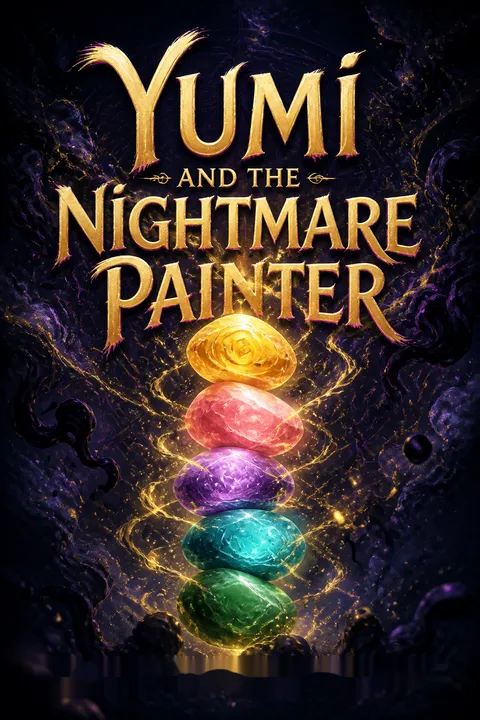
During a punishing ceremony, Yumi creates an elaborate arrangement of stones and draws thirty-seven spirits, far more than anyone expects. She grants each one a villager’s request, then collapses from exhaustion. That night, a distant spirit reaches her with an unusual appeal: it needs Yumi’s help to escape captivity.
The two openings make opposite forms of isolation visible. Painter can choose how to spend his nights, yet sees himself as forgettable; Yumi is publicly revered, yet cannot choose something as small as attending a festival. Her record-breaking ceremony exposes the cost of a role that treats a person as a resource. The spirit’s request makes her private doubt consequential: for the first time, the duty she has been taught to accept may require her to question the system that defines it.
Ink Against the Wolf
On patrol, Painter follows traces of a nightmare into a poor neighborhood and finds a nearly formed creature attacking a sleeping child. Rather than leave the danger to specialists, he paints the child’s mother, transforming the nightmare enough to drive it away. The grateful family begins preparing to flee, but Painter postpones reporting the sighting and returns home exhausted.
Something strikes him from above. He wakes in Yumi’s wagon, wearing her ceremonial clothes, while Yumi appears beside him as a ghost. Confused by the unfamiliar sun and convinced she is a powerful spirit, Painter accepts her mistaken belief that he is a hero sent to rescue her. His arrival gives the trapped spirit’s plea an unexpected human face.
Painter’s first consequential choice contradicts his self-image. He feels ordinary and unworthy, but acts when a child is in danger, without waiting for recognition or permission. That decision is the kind of courage his later boasts only imitate. The sudden displacement also turns private insecurity into a shared problem: Yumi mistakes his confidence for spiritual authority, while he sees her faith as a chance to become the person he wishes he were. Each begins their partnership by misreading the other.
The Hero in Her Room
Yumi first believes Painter is a spirit using her shape, while Painter pretends to be the mighty champion she expects. Liyun’s arrival forces him to follow Yumi’s instructions and pose as the Chosen, because the warden would reject their impossible explanation.
The two discover that Painter becomes a ghost in his own city while Yumi inhabits a body shaped like hers; in Yumi’s world, Painter occupies her body and Yumi is incorporeal. They cannot stray far apart, and touching brings a rush of warmth and shared emotion. When they fall asleep, they return to their respective worlds. Painter admits he cannot stack stones, and Yumi learns he is a nightmare painter, not a warrior.
The swap gives each character a close view of a life they previously judged from the outside. Yumi’s ritual authority looks absurd to Painter, while Painter’s supposed freedom hides social fear and professional insecurity. Their forced proximity is not simply romantic machinery: it makes each person’s emotional defenses perceptible to the other. The physical tether also gives the plot a practical constraint, turning the abstract connection between them into a daily negotiation over distance, privacy, and responsibility.
Kilahito Through Yumi’s Eyes
In Painter’s city, Yumi struggles with cold apartments, self-service showers, unfamiliar clothes, and the freedom to choose her own meal. Painter warns her not to draw attention, but Akane, his stylish neighbor and fellow painter, notices Yumi’s distress and takes her shopping. Yumi chooses a blue dress for herself, then joins Akane’s circle at the Noodle Pupil, where Tojin, Masaka, and Izzy welcome her awkwardly.
At the counter, the noodle-shop owner Design recognizes Painter’s ghostly presence and explains that Yumi’s powerful soul has reshaped his body to match her self-image. Design cannot fix the bond, but directs them toward Hoid, an expert in the strange workings of souls and connection.
Small choices become major experiences because Yumi has been denied them for so long. Selecting a dress, eating without attendants, and watching friends joke together are not distractions from her story; they show her what a self-directed life might feel like. Akane’s attention also challenges Painter’s assumption that his old companions would never care about him. Meanwhile, Design’s explanation shifts their problem from a supernatural misunderstanding toward a real interaction between souls, bodies, and worlds.
A Machine Reaches for Spirits
Yumi tries to teach Painter the stone-balancing art that summons spirits, but he cannot manage even a stable first stack. While he trains, scholars arrive with a mechanical device designed to stack stones without a yoki-hijo. Its demonstration stalls until one scholar supplies power, and Yumi glimpses the same colored energy lines that run through Painter’s city.
Later, the prototype draws a spirit and turns it into a useful household device, though the result seems weaker than Yumi’s creations. Painter and Yumi argue over whether machines threaten her calling, but the spirit’s capture leaves a more urgent question: why would an apparently helpful invention make the spirits plead for freedom?
The machine introduces a conflict that neither protagonist can reduce to a simple opposition between tradition and progress. Yumi fears that her society will discard the people who serve it; Painter points out that machines already make ordinary life easier in his city. Yet the captured spirit’s plea supplies evidence that efficiency may conceal coercion. Their debate matters because it exposes the assumptions each brings: Yumi equates duty with virtue, while Painter is quick to dismiss traditions whose costs he does not yet understand.
A Freedom Kept Secret
Painter pushes against Yumi’s strict routines, and she begins letting him feed himself and take breaks without attendants. After watching a rival scholar machine operate, Yumi becomes convinced that the device is an affront to the spirits and may be connected to their plea.
Then Hwanji, one of Yumi’s attendants, reveals that most other yoki-hijo belong to a reform movement: they eat and dress independently, take days off, visit their families, and may retire. Liyun has kept these facts from Yumi, insisting that the old restrictions are necessary. Yumi is shaken by the scale of the concealment, but recognizes that her role still serves her people and chooses to continue investigating the machine.
The revelation does not instantly liberate Yumi. That is psychologically important. A person raised to equate obedience with goodness cannot simply discard that belief when presented with evidence of alternatives. Hwanji’s disclosure breaks the appearance of consensus, while Liyun’s influence remains emotionally powerful because she raised Yumi and has framed restriction as protection. Yumi’s first real movement toward autonomy is not escape, but the ability to see that obedience and service are not identical.
Nightmare Behind Glass
After Yumi trains in Painter’s basic painting methods, they search Kilahito for the stable nightmare he reported to his foreman. The creature is not the one Painter first described, but when he approaches a sleeping woman’s room, it senses his ghostly presence and begins draining his essence.
Yumi freezes with fear, then screams, startling the nightmare into fleeing and saving Painter. Akane and Tojin arrive after hearing the commotion and assume Yumi has recklessly taken Painter’s patrol. They escort her to the Noodle Pupil, where their concern turns into an explanation of Painter’s old betrayal: he once lied to them about being accepted into the elite Dreamwatch.
Yumi’s scream is not a triumphant display of skill; it is an instinctive act that works because she acts despite terror. The episode revises both characters’ judgments. Painter had assumed Yumi could not help in his dangerous world, while she had mistaken his caution for cowardice. Their friends’ arrival adds another pressure: the person she trusts most is already understood by others through the harm he caused them.
The Portfolio and Carnival
Akane and the others explain that Painter falsely claimed he had joined the Dreamwatch, then let his classmates believe it for a year while they planned to become his companions. Yumi finds his hidden portfolio, filled with accomplished paintings, and confronts him about why he stopped creating. Painter admits that rejection devastated him and that fear of disappointing his friends turned one lie into many.
Instead of condemning him, Yumi asks him to spend one evening with her at the city carnival. He guides her through rides, food, and games, and she wins a stuffed dragon by studying the carnival game’s balance. At the top of a ride, they share their rare memories of happiness; afterward, Yumi paints their joined hands as a keepsake.
The portfolio distinguishes ability from the conditions that let a person keep practicing. Painter did not stop because he lacked talent; he lost the audience and belonging that had made creation meaningful to him. Yumi’s response does not erase the damage his lie caused, but it offers a different model of accountability: understand the injury without reducing the person to it. The carnival lets both characters practice pleasure without turning it into a duty or a test.
The Beast at the Carnival
As Painter and Yumi leave the carnival, the stable nightmare finds them and chases them through the streets. Painter leads it away while Yumi circles back for their alarm bell, but the monster destroys her bag and wounds her spirit, leaving her dangerously cold and weak. Tojin and Akane arrive, still unaware of the creature’s true strength, and Painter returns to protect them.
He first tries his habitual bamboo, then drives the nightmare backward by painting a shape he can imagine with force and conviction. The creature flees rather than die. Painter embraces Yumi to restore her warmth, and their friends take her to the noodle shop. The damaged playground convinces the foreman to summon the Dreamwatch.
The attack turns the relationship’s warmth into a literal survival mechanism, but it also tests Painter’s artistic identity. His practiced bamboo buys time; his decisive, improvised image changes the encounter. Yumi’s injury makes her vulnerability concrete, while Painter’s return for Akane and Tojin repeats the earlier choice that first marked him as brave. The friends begin to revise their view of him because they witness the consequences of his actions, not because he asks them to trust his claims.
The Cities Underneath
A spacecraft from Painter’s world reaches the nearby planet, but its first explorers find people unlike Yumi, disproving the pair’s belief that she comes from the visible star. Design examines their spiritual connections and finds Yumi linked to thirteen other yoki-hijo.
Masaka, a quiet painter who helps map the dark regions beyond Kilahito, shows that the sealed areas align with towns on Yumi’s map, including the capital. Yumi and Painter return to the prototype and stack stones together, summoning a spirit that begs them to stop the machine.
They gather Liyun and local officials to confront the scholars. The scholars instead reveal that the town’s people are nightmares, identify Liyun as the stable creature, and sever Painter and Yumi’s connection.
The map turns two seemingly separate settings into parts of one concealed geography. The expedition to the visible planet removes a tempting but incorrect explanation, while Masaka’s measurements offer a stronger one. The scholars’ revelation also transforms familiar social roles into something frightening: Liyun is both Yumi’s guardian and a monster, and the people around them are not what they appeared to be. The severed bond is more than a separation; it removes the protection and shared understanding that had made their investigation possible.
The Day Erased Again
After the connection breaks, Yumi wakes in a familiar routine with her memories of Painter gone. Painter finds Liyun in nightmare form near the playground and learns that the machine has trapped them for more than seventeen centuries, repeatedly erasing Yumi’s memories and sending Liyun back to hunt. He gives Liyun the painting of their joined hands, and she delivers it to Yumi.
The image returns Yumi’s memories. She searches the town, finds the scholars’ small machine, and smashes it, only to learn it is merely a prototype. The scholars explain that the original device was activated long ago to harvest spirits, consumed the population, and created the shroud. The capital holds the real machine.
Memory here is not a neutral record but a tool of captivity. The machine keeps Yumi compliant by repeating a day until its routines feel like her whole life. Painter’s small painting defeats that control because it carries a relationship the machine cannot fully erase. Liyun’s role is equally tragic: her care for Yumi persists beneath the imposed nightmare shape, even when her conscious memory has been stripped away. The recovered truth enlarges the crisis from a local machine to a civilization held in suspended aftermath.
No Heroes Coming
Yumi escapes the scholars by riding a floating tree through the invisible boundary around her false town. The shroud becomes transparent to her, revealing the dark wasteland, other sealed towns, and the ruined capital. She reaches Torio City but cannot pass the barrier protecting its central hall and the original machine.
In Kilahito, Painter warns the Dreamwatch that a hundred stable nightmares are coming; they dismiss him and send him away. He turns instead to Akane, Tojin, Masaka, Izzy, and other painters, admits the danger without hiding behind a false story, and gathers thirty-seven people at the city’s edge. Yumi and Painter are now separated, but each acts with the skills and allies they have earned.
Both protagonists meet institutional failure at the same moment. The Dreamwatch’s prestige does not make its members responsive, and the scholars’ barrier makes Yumi’s individual power insufficient. Their alternatives come from relationships rather than rank: Painter’s friends choose to help because he has finally told them the truth, while Yumi uses the knowledge she has gained to leave her enclosure. The parallel actions show growth without making either character suddenly invulnerable.
Stacks and Ink Unite
The nightmare army pours from the shroud and surrounds Painter’s group. Their paintings can restrain the creatures but cannot destroy them, and the painters suffer severe injuries, including a fatal attack on Usasha.
Painter realizes the nightmares are the people consumed by the machine and begins painting them as individuals, using what he knows of Liyun and the villagers to restore their human shapes. Meanwhile, Yumi starts stacking stones in the capital’s ruined courtyard, building an immense sculpture that draws hundreds of trapped spirits away from the machine.
As the spirits leave, the machine loses its power and collapses. The shroud unravels, releasing the dead and ending the nightmare siege, but Yumi herself begins to dissolve with it.
The climax depends on the protagonists correcting the limits of their own crafts. Painter’s art becomes more than containment when he sees a person inside each nightmare; Yumi’s stonework becomes liberation rather than a ritual performed for approval. Neither technique works alone. His recognition restores the dead people around Kilahito, while her accumulated skill reaches the spirits powering the machine. The rescue is costly because Yumi is bound to the same substance the machine maintained, making freedom inseparable from the danger of losing herself.
Painted Back to Life
As Yumi dissolves, she tells Painter she loves him and asks him to remember her. The freed spirits and the souls within the shroud vanish, and Painter is left beneath a sky opening to sunlight. He refuses to treat their separation as inevitable. Using the last smoke of the shroud as pigment, he paints Yumi on the blank wall he had once failed to finish, depicting her among floating flowers.
When a presence touches his arm, he reaches into the remaining darkness and takes her hand. He urges her to choose a life beyond service. Yumi accepts that her life can belong to her, and the two return to physical form together. They embrace as the city faces its first real sunrise.
Painter’s last painting differs from his earlier work because he no longer seeks approval from a prestigious audience or a lost circle of friends. He creates for one person whose life he values, and the image becomes an invitation rather than a memorial. Yumi’s return depends on her own choice, not on Painter’s artistry alone. The ending therefore turns the book’s language of service around: love does not ask her to sacrifice herself, but asks whether she wants to live.
Epilogue
Hoid wakes from his long immobility and learns that Design has built a restaurant while he was trapped as its coat rack. He and Design leave the planet aboard the explorers’ ship. After the shroud vanishes, Komashi’s people adapt to sunlight, rebuild, and continue using willing spirits as hion lines.
Painter and Yumi settle into life together, eventually working at a noodle shop where Yumi is known for her cooking and extraordinary bowl-stacking. The living nightmares end, and the old need for yoki-hijo fades. Their first kiss is awkward, but both value it because they chose to share it.
The ending refuses to make liberation effortless. Komashi survives, but its people must reorganize daily life after losing the systems built around the shroud and the trapped spirits. The former service roles do not simply disappear; they become choices, including the spirits’ continued work as hion lines. Yumi’s modest life as a cook contrasts with the ceremonial identity imposed on her from birth. Hoid and Design’s departure restores the frame narrator’s own story, while Painter and Yumi’s imperfect kiss brings the romance down from cosmic stakes to a chosen, ordinary intimacy.
Analysis
The novel builds its romance through reciprocal apprenticeship. Yumi teaches Painter to read weight and balance; Painter teaches Yumi to use a brush, navigate an unfamiliar city, and recognize that an imperfect creation can still matter. Their crafts are not decorative metaphors pasted onto the plot. Each solves a different part of the crisis: painting restores individuality to the nightmares, while stacking draws spirits away from the machine. The climax works because neither art is sufficient by itself.
The book’s central psychological conflict concerns the conversion of care into control. Yumi’s society praises her as indispensable, yet uses that praise to deny her rest, family, and choice. Liyun’s strictness is sustained by genuine belief that she is protecting Yumi, which makes the control more difficult to name than simple malice. Painter faces a different captivity: he is free to choose, but shame and fear of rejection narrow his choices until he hides in repetitive labor and self-pity. Their bond gives each a witness who can recognize the cost of the other’s coping strategy.
The machine extends these personal conflicts into a social catastrophe. Its makers intend to solve scarcity by automating a sacred practice, but fail to understand the lives and souls their invention will consume. The result is not progress versus tradition, but efficiency without ethical comprehension. The machine can reproduce a process and maintain its output; it cannot understand why a person makes art, or what freedom means to the beings supplying its power.
The ending does not resolve these ideas by making Yumi’s sacrifice inevitable. Painter paints because he refuses to treat her disappearance as the only possible conclusion, while Yumi returns because she claims the right to choose a life for herself. Their survival reframes love as neither possession nor duty. It is an invitation to remain, freely accepted.
Review Summary
Yumi and the Nightmare Painter is highly praised for its captivating story, beautiful illustrations, and well-developed characters. Readers appreciate the Asian-inspired fantasy setting, unique magic system, and exploration of themes like art and identity. The romance subplot receives mixed reactions, with some finding it charming and others feeling it unnecessary. While many consider it a strong standalone Cosmere novel, some readers note that prior knowledge of Sanderson's works enhances the experience. Overall, the book is widely regarded as one of Sanderson's best, with its imaginative world-building and emotional depth resonating with fans.
People Also Read





Characters
Yumi
Chosen spirit-callerYumi has been raised from infancy to serve as a yoki-hijo, the rare person who summons spirits through intricate stone arrangements. Her discipline is sincere: she believes her work sustains her people, and she fears that wanting an ordinary life would make her selfish. Beneath her formal composure are curiosity, humor, and a longing to make choices without asking permission. Her encounters with Painter expose how little she knows about ordinary life, but also how much artistic judgment and stubbornness she already possesses. Yumi’s central tension is not between duty and laziness, but between service she values and a system that denies her the right to decide how she serves.
Painter
Lonely nightmare artistBorn Nikaro, Painter uses his occupational title as a name and works the night patrols of Kilahito, turning dangerous nightmares into harmless painted forms. He is talented, observant, and more compassionate than his self-description allows, but he hides insecurity beneath a practiced loner persona. He craves recognition and friendship while expecting rejection, a contradiction that shapes both his old relationships and his choices with Yumi. Painter’s art is a way to interpret what others overlook, yet he has become trapped in repetitive work and regret. His bond with Yumi challenges him to act without pretending to be a hero and to make art for connection rather than approval.
Liyun
Yumi’s strict wardenLiyun serves as Yumi’s guardian, sponsor, and instructor, enforcing the protocols that govern a yoki-hijo’s life. She is exacting and formidable, skilled at turning concern into correction and authority into a daily presence. Her commitment to tradition is not simple cruelty: she believes discipline protects Yumi and preserves the order on which people depend. Yet her protection leaves Yumi isolated from alternatives, family, and ordinary companionship. Liyun’s severity makes her a central emotional force in Yumi’s life, because Yumi both resents her control and longs for her approval. She represents how care can become entangled with power when the person being protected has no freedom to refuse.
Design
Eccentric noodle-shop ownerDesign runs the Noodle Pupil and speaks with startling bluntness, odd appetites, and a fascination with human behavior. Her unusual nature gives her knowledge of souls and spiritual connections that Painter and Yumi cannot access. She offers practical aid, food, and a path toward investigating their bond, though her explanations often arrive wrapped in jokes and baffling terminology. Design’s curiosity makes her an observer of intimacy as much as a supernatural helper. She treats social rules as optional, which throws the more constrained characters into relief.
Akane
Painter’s generous friendAkane is a fellow nightmare painter and Painter’s neighbor, known for her fashion sense and instinct to bring people into the group. She notices Yumi’s distress before Yumi knows how to ask for help, then takes her shopping and introduces her to the others. Her kindness is not naïve: she remembers Painter’s past actions and does not immediately trust his claims. Akane helps hold her circle together, but her loyalty has limits where betrayal has hurt it. She gives Yumi an early experience of friendship that is offered without a formal role or obligation.
Tojin
Painter’s muscular classmateTojin is a fellow painter whose imposing build and visible enthusiasm for exercise initially make him seem like a boaster. In practice, he is sociable, sincere, and more shy around women than Yumi expects. He values physical effort for its own sake and responds to danger with loyalty to his friends. His history with Painter carries real hurt, but Tojin is willing to reconsider what he believes when new evidence appears. He offers Yumi a glimpse of a person who builds strength not to serve a prescribed purpose, but because he has chosen the challenge.
Masaka
Quiet, macabre painterMasaka is a reserved painter who dresses in black, keeps her skin covered, and draws unsettling images in a sketchbook. Her interest in the macabre can make her seem threatening, though she is also perceptive and unexpectedly gentle. She contributes crucial knowledge about the landscape beyond the cities and provides a map that helps Painter and Yumi connect their worlds. Masaka is wary of being treated as frightening or inhuman, and her desire for acceptance parallels the protagonists’ struggles to be seen beyond their assigned roles.
Izzy
Dramascope enthusiastIzzy, short for Izumakamo, is an imaginative painter who invents theories about predicting people’s fortunes from television dramas. Her companions tease her, but she keeps testing ideas and dreaming of a wider audience. She is among the people most deeply hurt by Painter’s past deception, and her skepticism reflects a legitimate loss of trust. Izzy’s eccentricity is not a lack of seriousness; when danger becomes clear, she joins the effort to protect the city.
Hwanji
Attendant who speaks upHwanji is one of Yumi’s attendants, responsible for the practical rituals that structure the Chosen’s daily life. She has served other yoki-hijo and knows that Yumi’s restrictions are not universal, but she hesitates to contradict Liyun. When she finally tells Yumi about the reform movement, she gives her information that changes how she understands her own life. Hwanji’s quiet intervention shows how important truth can be even when delivered by someone with little formal authority.
Chaeyung
Yumi’s loyal attendantChaeyung is one of Yumi’s two attendants and helps manage her meals, clothing, bathing, and ceremonial routines. Her role is intimate but carefully bounded by the rules that keep attendants from becoming friends. When Yumi gives her permission to speak more openly, Chaeyung responds with visible relief, suggesting that the formal distance has constrained her as well as Yumi.
Foreman Sukishi
Painter’s skeptical supervisorSukishi supervises the nightmare painters and distrusts Painter’s repetitive bamboo paintings, suspecting that he is not doing his work properly. He embodies the workplace’s dependence on essential labor alongside its readiness to doubt a worker who already has a poor reputation. His skepticism delays the response to a genuine danger and costs Painter a month of pay.
Hoid
Sardonic offworld narratorHoid frames the story with commentary, context, and a wry awareness of events beyond the protagonists’ understanding. His voice moves between cosmic explanation and personal asides, giving the unfamiliar worlds a larger perspective without displacing Painter and Yumi’s emotional story. He is curious, theatrical, and not always reliable about how much he knows or when he chooses to reveal it.
The scholars
Inventors of the stone machineThe scholars bring a prototype device to Yumi’s town, hoping to automate the stone-stacking process and make spirit-made tools available more widely. They value invention and efficiency, but their confidence in machinery hides a dangerous failure in how the original device was designed. Their mixture of technical ambition and incomplete understanding gives the story its central conflict over what happens when a tool’s instructions outrun its makers’ judgment.
Hikiri
Dreamwatch companionHikiri is a companion attached to the elite Dreamwatch, the organization Painter once hoped to join. He listens when Painter reports the approaching nightmare army, but cannot persuade the Dreamwatch to take the warning seriously. His matter-of-fact response exposes the gap between the prestige of the institution and its willingness to hear an outsider.
Plot Devices
Nightmare painting
Turns terror into formOn Painter’s world, nightmares emerge from the shroud as unstable masses of darkness and feed on fear. Nightmare painters use a brush, ink, and a canvas to impose a harmless shape on them. The painting works through the painter’s concentration and perception, not merely through the marks on the page. This craft gives Painter a job that is both practical and artistic, and it becomes essential when ordinary containment fails. At first he relies on repetitive bamboo strokes; later he must recognize people within the nightmares to restore them more fully. Spoiler: the nightmares are connected to the people consumed by the ancient machine.
Yoki-hijo stone stacking
Art summons the spiritsYumi arranges stones into balanced, intricate sculptures that attract spirits. The spirits can then divide or transform into useful devices for people, such as lights, flyers, and lifting statues. The practice requires technical judgment, bodily endurance, and aesthetic invention, though Yumi’s culture often emphasizes discipline over personal expression. Painter’s struggle to learn the art creates a reciprocal apprenticeship, while their eventual work together produces results neither could reach alone. The stone sculptures also reveal that the spirits respond to human creativity in ways a purely mechanical process cannot fully reproduce.
The shared connection
Binds two distant livesA spirit links Yumi and Painter across two overlapping regions of the same planet. Their bodies and perceptions shift between worlds when they sleep, and the bond limits how far they can travel apart. In each setting, one is embodied while the other is ghostlike, which lets them experience each other’s ordinary routines and emotional habits. Their touch creates warmth and shared feeling. The connection protects Yumi from the machine’s control, but it also makes their relationship and survival dependent on a bond neither understands. Its abrupt severing leaves both without their chief source of information and support. Spoiler: the connection is also what prevents Yumi’s memories from being erased.
The stone-stacking machine
Progress becomes a prisonThe scholars’ device imitates a yoki-hijo by stacking stones to attract spirits and convert them into useful power. A small prototype appears in Yumi’s town, but it is only an echo of a much larger machine in the ruined capital. The original device was built to harvest spirits, yet its instructions led it to consume the human population as well. It persists by drawing power from trapped spirits and maintaining the shroud, the false towns, and the nightmare system. Spoiler: destroying it frees its captives but also threatens the continued existence of Yumi and the other yoki-hijo.
The shroud
Hides a stolen worldThe shroud is a vast field of darkness surrounding Kilahito and the other cities. Hion lines push it back, creating safe streets and travel routes, while nightmares emerge from it to prey on sleepers. Its apparent geography conceals a second set of towns that overlap Painter’s world. The shroud also holds the altered souls of people caught by the machine, allowing the machine to create artificial settlements and repeatedly reset Yumi’s day. It therefore serves at once as environment, threat, camouflage, and prison. Spoiler: its disappearance releases the dead but causes Yumi to begin dissolving.
FAQ
Synopsis & Basic Details
What is Yumi and the Nightmare Painter about?
- Worlds Collide: The story follows Yumi, a spirit-summoning artist from a world with a red sun, and Painter, a nightmare-banishing artist from a city lit by hion lines, as they are inexplicably linked, swapping bodies and realities.
- Duty vs. Desire: Both characters grapple with their prescribed roles in their respective societies, yearning for something more than their duties, while also feeling the weight of their responsibilities.
- A Shared Quest: They must learn to navigate each other's worlds, master each other's art forms, and confront a looming threat that endangers both their realities, all while trying to understand their connection.
Why should I read Yumi and the Nightmare Painter?
- Unique Worldbuilding: Sanderson crafts two distinct and fascinating worlds, each with its own unique cultures, magic systems, and visual aesthetics, creating a rich and immersive reading experience.
- Character-Driven Story: The narrative focuses on the personal journeys of Yumi and Painter, exploring their internal struggles, their growing connection, and their individual growth as they learn from each other.
- Exploration of Art: The novel delves into the nature of art, exploring its power to create, to heal, and to challenge the status quo, making it a compelling read for those interested in the creative process.
What is the background of Yumi and the Nightmare Painter?
- Technological Contrast: Yumi's world is a land of tradition, with a focus on spiritual practices and a reliance on natural elements, while Painter's world is a technologically advanced society powered by hion lines, creating a stark contrast.
- Cultural Differences: Yumi's culture is highly ritualistic, with a strict social hierarchy and a focus on duty, while Painter's society is more modern and individualistic, with a focus on personal expression and creativity.
- Cosmere Connection: The story is set within Brandon Sanderson's Cosmere universe, though it is a standalone novel, and explores themes of Investiture, Connection, and the nature of souls, adding depth for those familiar with the larger universe.
What are the most memorable quotes in Yumi and the Nightmare Painter?
- "It's terrifying how nightmares transform.": This quote highlights the fluid and unpredictable nature of nightmares, a central theme in Painter's world, and foreshadows the challenges he faces.
- "You must remember that you are a resource to the land.": This quote encapsulates the burden placed on Yumi as a yoki-hijo, emphasizing her lack of personal freedom and the expectations of her society.
- "We don't get to decide what is food and what is not... But we absolutely get to decide what counts as art.": This quote speaks to the subjective nature of art and the power of human perception, a key theme in the novel.
What writing style, narrative choices, and literary techniques does Brandon Sanderson use?
- Dual Perspective: The story is told from the alternating perspectives of Yumi and Painter, allowing readers to experience both worlds and their internal struggles, creating a rich and nuanced narrative.
- Detailed Worldbuilding: Sanderson uses vivid descriptions and intricate details to create immersive and believable worlds, with unique cultures, magic systems, and visual aesthetics.
- Thematic Exploration: The novel explores complex themes such as duty vs. desire, the power of art, the nature of identity, and the importance of human connection, adding depth and meaning to the story.
Hidden Details & Subtle Connections
What are some minor details that add significant meaning?
- The Star: The single star in Painter's sky, initially a source of wonder, becomes a symbol of the other world and the connection between Yumi and Painter, hinting at a larger cosmic link.
- The Hion Lines: The teal and magenta hion lines in Kilahito, initially just a source of power, become a visual representation of the city's unique identity and a symbol of the connection between Painter and his world.
- The Color Red-Orange: The dominant color of Yumi's world, initially just a visual detail, becomes a symbol of the heat and intensity of her life, contrasting with the cool colors of Painter's world.
What are some subtle foreshadowing and callbacks?
- The Noodle Shop: The Noodle Pupil, a seemingly random location, becomes a recurring place where Painter and Yumi connect, and where Design reveals her true nature, foreshadowing the importance of this location.
- The Star Voyage: The news of a voyage to the star in Painter's world foreshadows the eventual connection between the two worlds and the possibility of travel between them.
- The Bamboo Paintings: Painter's repeated use of bamboo in his paintings, initially a sign of his lack of creativity, becomes a symbol of his connection to his world and his eventual growth as an artist.
What are some unexpected character connections?
- Design and Hoid: Design's references to Hoid, a recurring character in the Cosmere, hint at her true nature and her connection to the larger universe, adding a layer of mystery to her character.
- Liyun and the Nightmares: The revelation that Liyun is a stable nightmare, a creature Painter has been fighting, creates a tragic connection between them and highlights the complex nature of the world.
- Masaka and the Hordes: Masaka's true nature as a member of the Natricatich strain, a group that has explored the shroud, reveals a hidden connection to the larger world and adds depth to her character.
Who are the most significant supporting characters?
- Liyun: As Yumi's warden, Liyun represents the strict traditions and expectations of Yumi's world, and her eventual transformation into a nightmare highlights the corrupting influence of the machine.
- Akane: As Painter's friend, Akane provides a sense of normalcy and support, and her kindness and understanding help Yumi navigate the unfamiliar customs of Kilahito.
- Design: As a spirit disguised as a human, Design offers a unique perspective on the events of the story, and her knowledge of the cosmere provides valuable insights into the nature of the connection between Yumi and Painter.
Psychological, Emotional, & Relational Analysis
What are some unspoken motivations of the characters?
- Painter's Need for Validation: Painter's desire to be a hero stems from a deep-seated need for validation and recognition, fueled by his past failures and feelings of inadequacy.
- Yumi's Yearning for Freedom: Yumi's strict adherence to ritual masks a deep yearning for personal freedom and a desire to escape the confines of her prescribed role.
- Liyun's Fear of Change: Liyun's rigid adherence to tradition stems from a fear of change and a desire to maintain control, which is rooted in her own tragic history as a nightmare.
What psychological complexities do the characters exhibit?
- Painter's Self-Doubt: Painter struggles with self-doubt and a lack of confidence, often undermining his own abilities and seeking validation from others, which is a result of his past failures.
- Yumi's Internal Conflict: Yumi experiences a constant internal conflict between her duty and her personal desires, leading to feelings of guilt and a struggle to reconcile her own needs with the expectations of her society.
- Liyun's Internal Struggle: Liyun's internal struggle between her duty as a warden and her desire for freedom is a result of her tragic transformation into a nightmare, highlighting the complex nature of her character.
What are the major emotional turning points?
- Yumi's Outburst: Yumi's outburst in Painter's wagon, where she expresses her frustration and anger, marks a turning point in her character development, as she begins to question her prescribed role.
- Painter's Confession: Painter's confession to his friends about his lies and his desire to be a hero marks a turning point in his character arc, as he begins to confront his past mistakes and seek redemption.
- The Shared Bath: The shared bath between Yumi and Painter, where they experience a powerful emotional connection, marks a turning point in their relationship, as they begin to understand and accept each other.
How do relationship dynamics evolve?
- From Skepticism to Trust: Yumi and Painter's relationship evolves from initial skepticism and confusion to a deep sense of trust and understanding, as they learn to rely on each other and appreciate their differences.
- From Isolation to Connection: Both Yumi and Painter initially feel isolated and disconnected from their peers, but their relationship allows them to experience a sense of belonging and acceptance, highlighting the importance of human connection.
- From Duty to Love: Yumi and Painter's relationship evolves from a shared sense of duty to a deep and abiding love, as they learn to prioritize their own desires and find happiness in each other's company.
Interpretation & Debate
Which parts of the story remain ambiguous or open-ended?
- The Nature of the Spirits: The true nature of the spirits in Yumi's world remains ambiguous, leaving readers to wonder about their origins, their motivations, and their relationship to the machine.
- The Origin of the Shroud: The origin of the shroud and its connection to the machine is not fully explained, leaving readers to speculate about the larger cosmic forces at play.
- The Future of the Worlds: The future of both Yumi's and Painter's worlds is left open-ended, leaving readers to imagine the long-term consequences of their actions and the potential for future interactions.
What are some debatable, controversial scenes or moments in Yumi and the Nightmare Painter?
- Painter's Lies: Painter's lies to his friends about being in the Dreamwatch and his initial deception of Yumi can be seen as morally ambiguous, raising questions about the nature of truth and the consequences of dishonesty.
- Yumi's Acceptance of Duty: Yumi's initial acceptance of her prescribed role as a yoki-hijo, despite her internal yearning for freedom, can be seen as both admirable and problematic, raising questions about the nature of duty and personal agency.
- The Use of the Machine: The scholars' use of the machine to control the spirits and the people of Torio can be seen as a commentary on the dangers of unchecked technological advancement and the ethical implications of power.
Yumi and the Nightmare Painter Ending Explained: How It Ends & What It Means
- Yumi's Sacrifice: Yumi's decision to sacrifice herself to destroy the machine is a powerful act of selflessness, highlighting her commitment to her people and her willingness to give up her own life for the greater good.
- Painter's Art as a Conduit: Painter's painting of Yumi becomes a conduit for her return, demonstrating the transformative power of art and the enduring nature of love, and the ability of art to transcend death.
- A New Beginning: The ending, while bittersweet, offers a sense of hope and renewal, as Yumi and Painter are reunited and their worlds are forever changed by their connection, suggesting that even in the face of loss, new beginnings are possible.
Secret Projects Series

About the Author
Other books by Brandon Sanderson






Download PDF
Download EPUB
.epub digital book format is ideal for reading ebooks on phones, tablets, and e-readers.








