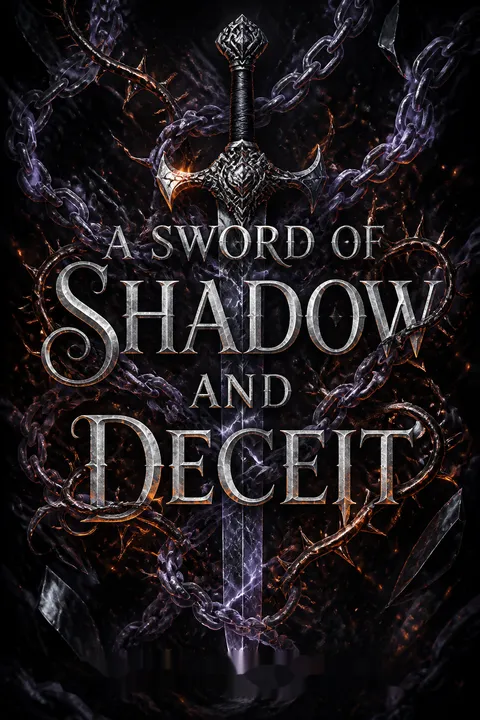


Plot Summary
Four Million Denza
At a tavern in Mineval, assassin Kiera learns that her Guild has been offered an unprecedented four million denza for a long-term job inside Riviere’s Mortal Gods Academy. The client refuses to name the target until she accepts, leaving her unable to judge the danger. Kiera is already bound to Guildmaster Ophelia by a blood contract that suppresses her powers and compels obedience.
The payment could clear her debt and let her leave the Guild, so she agrees to consider the job despite the missing information. Her friend and fellow assassin Regis promises to stay nearby during the mission. Kiera’s hope of choosing her own life now depends on entering a place built to keep mortals and Divine offspring under scrutiny.
The contract makes freedom both a concrete sum and a problem of consent. Kiera is not simply choosing danger for money: the Guild’s bond means her choices already occur inside another person’s authority. Yet the client’s secrecy turns the bargain into a second form of coercion, one she accepts because even a hazardous chance at independence feels better than a known captivity. Her practical suspicion and her longing for escape pull in opposite directions, establishing the novel’s central tension between agency and the systems that counterfeit it.
Talmatia’s Cruel Carriage
While Kiera considers the job, the God Lord Talmatia drives her carriage through Mineval’s crowded market and runs over a boy. His father tries to explain the accident, but Talmatia treats the family’s distress as an insult and orders the parents taken to her dungeons. Kiera wants to intervene immediately.
Regis, who has known her since childhood, drags her away because exposing herself could endanger the Guild and reveal that she is a Mortal God. He promises they will return after dark to rescue the family. Kiera accepts the delay, though the boy’s cries and the parents’ helplessness stay with her. Her decision to enter the castle turns an impulse of compassion into a dangerous plan.
The market incident gives Kiera’s hatred of Divine rule a specific human cost: Talmatia’s vanity matters more to her than the life she has just taken. Kiera’s first response is action, not an abstract denunciation, while Regis supplies the caution her anger cannot. Their disagreement shows the distinction between moral courage and survivable resistance. His promise to return does not erase her helplessness, but it gives that feeling a practical direction and tests whether the Guild’s loyalty can coexist with Kiera’s private ethics.
Escape Through the Gate
That night, Kiera and Regis scale Talmatia’s wall and search the dungeons. They find the mother, Irina, holding the dead boy, Henry, while his injured father, Gordon, lies unconscious nearby. Kiera frees them and gives Gordon a few drops of her blood, which eases his damaged breathing.
Regis starts a fire to draw guards away, then dismantles part of an enchanted gate so the family can escape without triggering its alarm. As Kiera passes Henry’s body through the opening, a Mortal God attacks her. She blinds him and cuts his wrist, but Regis’s thrown dagger gives her the chance to flee. The rescuers carry Irina and Gordon into the woods, leaving Talmatia’s guards behind.
The rescue shows that Kiera’s compassion has limits imposed by reality, not by indifference. She cannot revive Henry, and she refuses to pretend otherwise, yet she helps his parents carry his body rather than treating it as disposable cargo. Her blood, a sign of the secret she must hide, becomes a tool of care. The escape also brings her into direct conflict with the Academy’s children: the attacker is the same kind of being she is. That encounter complicates the simple division between mortal victim and Divine predator.
The Brothers’ Tower
At the Academy, Theos, Ruen, and Kalix Darkhaven learn that a thief has escaped Talmatia’s castle after freeing prisoners. Kalix, the volatile brother who was blinded during the escape, is amused rather than simply angry and wants to meet the fighter again. Theos and Ruen are less carefree: their father, the God of Strength Azai, has left them with scars and a childhood shaped by neglect and violence.
Ruen hears from the God of Prophecy, Caedmon, that a change is coming with the next group of Terra. Meanwhile, the brothers’ former servant is gone after Kalix abused him. Their new servant will arrive soon, giving Kiera’s infiltration a destination and placing her among three dangerous, closely watched men.
The viewpoint shift prevents the Darkhavens from remaining faceless targets in Kiera’s enemy map. Their cruelty toward servants is real, but so is their dependence on one another and their exposure to a father’s power. Kalix’s interest in the thief suggests that resistance attracts him more than obedience, while Theos and Ruen try to contain the damage he causes. Caedmon’s forecast gives the coming arrival a sense of consequence without explaining it. The brothers’ tower is at once a place of privilege and a small, guarded enclosure.
A False Terra Arrives
Kiera and Regis travel to Riviere, where a contact, Madam Brione, builds Kiera a false identity as Kiera Nezerac, a nomad from the Hinterlands. She is accepted as a Terra, a human servant assigned to the Academy’s Mortal Gods, and Regis remains in the city as a messenger and backup.
At the Academy, the staff welcomes new servants with rules that forbid leaving without permission and place the Gods’ children above them. Kiera meets Niall, a nervous, kind new Terra, and learns she has been assigned to three First Tier brothers: Ruen, Theos, and Kalix Darkhaven. Her own name and silver hair make her easier to recognize, but she has already crossed the gates and cannot safely retreat.
Kiera’s disguise is deliberately close to the truth: the nomad identity helps explain her unfamiliarity with Academy customs, while preserving her real first name reduces the strain of living entirely as someone else. The Academy’s welcome ceremony makes its hierarchy sound benevolent, but its restrictions reveal the institution’s function as surveillance and confinement. Niall’s sincere excitement contrasts with Kiera’s practiced suspicion. She sees the cost of the system before he does, yet his kindness creates an early relationship that could make her mission harder to keep emotionally separate.
A Bet on Survival
When Kiera reports to the brothers, Theos, Ruen, and Kalix treat her as a fragile servant who will soon quit or be driven out. Kalix’s appetite for torment and Theos’s confidence turn their prediction into a wager about how long she can endure them. Kiera refuses to accept their judgment quietly and asks what she will receive if she outlasts their estimates.
Her challenge exploits their pride, so they let her join the bet, with Ruen forbidding them to kill her. The wager gives Kiera a private reason to remain even as she searches for her hidden target. It also makes the brothers watch her more closely, exactly when invisibility would be safest.
The bet turns the brothers’ habitual contempt into a structure Kiera can use. She cannot openly challenge their authority without risking her cover, so she makes their pride do the work for her. Her defiance is both strategic and personal: she needs the job, but she also refuses to let powerful men define her endurance in advance. The arrangement creates a paradox. The wager offers her protection from outright murder while inviting the brothers to test her in other ways, making attention itself a hazard.
The Classroom Cane
On the first day of classes, Theos, Ruen, and Kalix arrive without their texts, though they had never given Kiera anything to carry. Their instructor, the Goddess Narelle, blames the new Terra and uses her power to force Kiera forward. She strikes the backs of Kiera’s legs in front of the class, splitting the skin while the brothers watch.
Ruen eventually takes Kiera outside and dismisses her, but the damage creates a new problem: her rapid healing would expose her as a Mortal God. Alone in her room, Kiera cuts the wounds again and uses poison to slow the healing. She preserves her disguise at the cost of making her own pain last longer.
The punishment reveals how the Academy transfers responsibility downward: the brothers withhold the books, but the servant absorbs the consequence. Kiera’s self-injury is not a bid for attention; it is calculated concealment, an instance in which survival requires her to reproduce the harm already done to her. Her hidden strength gives her an advantage only when it can remain secret. The scene also changes the bet’s stakes: endurance is no longer a performance for the Darkhavens but a daily bodily negotiation between healing and appearing human.
Ruen Opens an Exit
After the punishment, Kiera returns to the Darkhavens’ rooms to clean and inspect them for useful information. Ruen finds her there and urges her to leave before his brothers hurt her. When she asks whether she frightens him, he responds with a sudden burst of Divinity that transports her out of the room and into the corridor.
Kiera understands that the brothers possess powers she has not yet measured, but she does not take Ruen’s warning as permission to abandon the mission. Instead, she continues her work at the Academy and studies the brothers’ habits. The warning confirms that Ruen sees danger in keeping her near, even if he cannot explain why he is trying to protect her.
Ruen’s warning exposes a split between his authority and his judgment. He can physically remove Kiera, yet he cannot make her choose the safer path, just as the Academy cannot make its servants feel gratitude for confinement. His power is a reminder of the threat she faces, while his attempt to send her away hints at unease about his brothers’ behavior. Kiera’s refusal is not simple bravado. The unknown contract and her debt make leaving another form of surrender, so she chooses the danger she can observe over a future she cannot control.
Rahela’s Water Prison
On a day off, Kiera tries to bond with a rare spider in a courtyard reserved for Mortal Gods. Niall finds her there and warns that a volatile First Tier, Rahela, may punish her if she is discovered alone. Before Kiera can finish establishing control over the spider, Rahela arrives and suspends her inside a sphere of water, tightening it until Kiera cannot breathe.
Niall fetches his own charge, Maeryn, who stands between Rahela and the two Terra despite being a lower Tier. Maeryn’s intervention breaks Rahela’s control long enough for Kiera to reach the ground. Niall’s choice to seek help saves Kiera from revealing her hidden strength or suffocating under Rahela’s attack.
Kiera’s effort to acquire the spider is an attempt to make surveillance more manageable, but her private tool becomes the occasion for public vulnerability. Niall’s warning is caring, though Kiera dismisses it because she reads his fear as excessive. His later action proves that his caution has practical value. Maeryn’s intervention matters because she uses limited status to challenge someone stronger, not because she can guarantee safety. The incident gives Kiera evidence that some Mortal Gods resist the Academy’s cruelty, while also showing how quickly its hierarchy can turn an ordinary mistake into a threat to life.
Caedmon’s Dark Vision
After the courtyard confrontation, Caedmon, the Academy’s God of Prophecy, takes Kiera to his office and gives her tea to soothe her throat. He treats her with an attentiveness she does not expect from a God, then asks her to look into his eyes. Kiera sees an immense darkness there and cannot describe anything beyond it.
Caedmon calls the sight unusual and tells her she may return if she needs to understand what she saw. Kiera leaves unsettled by the possibility that his prophetic power has detected something in her. His kindness does not make him safe in her eyes; it makes the encounter more difficult to interpret.
Caedmon’s gentleness destabilizes Kiera’s moral categories without dissolving her suspicion. His care is not a trick on the page, but for someone trained to associate Divine attention with control, benevolence can be more disorienting than hostility. The darkness in his eyes offers no exposition or clear prophecy; it gives Kiera a sensation she cannot convert into usable knowledge. That uncertainty is structurally important. Her identity remains concealed, yet the narrative signals that her secret may not be invisible to every form of Divine perception.
Dolos Takes the Arena
The Academy’s semester battles begin under the Goddess Maladesia, whose preference for praise initially reassures Theos and Ruen that the matches may not end in deaths. The dean, Dolos, God of Imprisonment, appears and his presence makes Kiera and many others feel physically chained and crushed. Maladesia later yields the arena to him, and he calls Kalix to fight a First Tier opponent.
Kalix enters without a weapon and treats the encounter as entertainment. He breaks his opponent’s wrist, takes up her sword, and kills her, then presents her severed head to the watching Gods. The crowd cheers. Kiera sees that the Academy’s battles are not merely training but spectacle controlled by Divine authorities.
The change in presiding God converts a supposedly regulated school ritual into a death sentence. Dolos’s power makes the institution’s metaphorical imprisonment bodily, while the audience’s betting and cheering turns violence into communal entertainment. Kalix is both performer and product: his brutality earns approval from the Gods, even as it deepens his own separation from ordinary moral limits. Kiera’s attention shifts from individual cruelty to the structure that rewards it. The Academy does not simply fail to prevent violence; it stages violence as a way to train and display the children it claims to educate.
Darius Dies Winning
Theos’s friend Darius enters the arena against an experienced opponent. Although Darius fights hard and eventually kills his rival, he celebrates before the danger has passed. His defeated opponent uses a final burst of fire to kill him. Theos watches the death from the stands, while Ruen tries to steady him and Kiera recognizes the loss in the brothers’ silence.
The remaining battles continue, but their attention has changed. Theos leaves the arena in grief, and Kalix’s earlier excitement fades. Kiera can no longer dismiss the Mortal Gods as untouchable privileged heirs: they are also forced to fight under rules controlled by Gods who can decide whether a match ends in survival.
Darius’s death makes victory an inadequate measure of safety. He wins the fight and still dies because the arena’s rules allow violence to continue past the moment a student appears defeated. Theos’s grief exposes attachment that his usual appetite for distraction cannot erase, while Ruen and Kalix respond differently to the same loss. Kiera’s empathy grows from witnessing an event, not from excusing the brothers’ treatment of Terra. She recognizes that privilege and vulnerability can coexist, a recognition that threatens the clean hatred she has relied on to keep her work emotionally simple.
The Girl Made a Weapon
A memory reveals why Kiera entered the Underworld Guild as a child. Bandits abducted her and her father from their home, then killed him and burned the house. When Kiera’s Divinity surfaced, one of the attackers subdued her with brimstone, a substance that can suppress Divine power.
Ophelia acquired Kiera and trained her, using brutal torture to teach control and prepare her for life as an assassin. At the end of her apprenticeship, Kiera killed two Gods who had abused a human child. The act completed her training, but it did not free her: Ophelia’s blood contract still binds her. Kiera’s present mission is another attempt to earn the independence her first kill could not buy.
The backstory clarifies that Kiera’s skill was made under coercive conditions, not chosen as a natural calling. Ophelia offers protection from the Gods and a place in the Guild, but secures that arrangement through violence and binding magic. Kiera’s first kills are attached to a genuine desire to stop harm, yet they also teach her to treat emotional distance as professional survival. Her current hope for freedom therefore carries a contradiction: the person who trained her to resist Divine power still controls her through a mortal contract.
Grief Turns Intimate
After the battles, Kiera finds Theos alone in the wreckage of the brothers’ shared rooms, breaking furniture and drinking through his grief. He warns her away, but she stays and challenges his belief that he has no friends. Theos admits that he numbs his pain with sex, drugs, and liquor because he hates his existence as a God’s son.
Kiera gives him a drink and shares it with him; their closeness becomes a night of sex. She insists to herself that it is temporary, while worrying that the unknown contract may eventually require her to kill him. Their intimacy brings relief, but also makes the target she has not yet been given feel more personal.
The encounter grows from grief and recognition rather than a sudden resolution of hostility. Kiera sees in Theos a practiced method of numbing pain that resembles her own discipline of suppressing feeling, though their sources and power differ. Her decision to stay is an act of care, but it is also a breach of the emotional distance her mission requires. The sex does not settle the relationship; it creates a more dangerous ambiguity. Kiera can desire Theos and still suspect she may be ordered to kill him, placing intimacy directly against the logic of her profession.
Carcel Is Coming
Kiera uses Hael’s permission to leave the Academy and meets Regis in Riviere. He tells her that Carcel, Ophelia’s son and a rival for influence in the Guild, is on his way to the city. Neither assassin knows why he is coming, and Ophelia has not answered Regis’s request for clarification.
Kiera fears Carcel will interfere with the mission or demand a report that could expose her. Regis gives her a vial of nightshade, strong enough to weaken a Divine target or kill a mortal, and agrees to press Ophelia for the client’s long-withheld target name. Kiera returns to the Academy still without the information she needs, now carrying a new poison and a new risk.
The meeting widens the story’s danger beyond the Academy. Kiera is threatened not only by Divine authorities but by the Guild that trained her, whose internal politics can intrude on a mission already built on secrecy. The poison is a practical resource, but its presence also sharpens the unresolved question of who the target might be. Regis remains her most reliable ally, yet even he cannot secure answers from Ophelia or the client. The mission’s stagnation becomes an active pressure: every week without a target increases Kiera’s exposure while leaving her unable to complete the bargain.
Kalix Follows Her
After Kiera returns, Kalix enters her room and demands to know who she met in Riviere. He uses his persuasive power to coax an answer, but a spider bites Kiera and breaks his influence. She tells him the man was her brother, a cover story that fits the identity she has been given. Kalix then kisses her without consent, and she resists him.
Before the encounter can continue, an Academy guard summons her to the dean’s office for punishment. Kalix disappears from the room, leaving Kiera unsure whether he caused the summons or simply knows more than he has admitted. She goes with the guard, aware that her disguise may be under greater scrutiny.
Kalix’s persuasion turns the secret of Kiera’s identity into a bodily contest: her will falters, and an animal she commands becomes the interruption that restores it. Her claim that Regis is her brother protects the cover story, but her successful resistance makes Kalix more curious. His unwanted kiss reinforces the unequal power of the Academy even when Kiera refuses submission. The summons shifts the threat from private suspicion to institutional punishment. The sequence also links Kiera’s spider familiar to survival, not just reconnaissance, paying off her earlier effort to establish control over the Academy’s creatures.
Dolos Chooses the Dungeon
Dolos questions Kiera in his office while Dauphine presents complaints against her: Rahela’s report about the forbidden courtyard and a later accusation that Kiera had sex with Theos. Ruen appears to have asked Dolos to banish her from the Academy, but Dolos chooses a harsher punishment.
He sentences Kiera to three days without food, followed by one hundred lashes from Axlan, the God of Victory. Guards drag her into the dungeons, where Ruen visits and admits he had wanted her removed, not whipped. Kiera rejects his apology as useless after the damage is done. The book ends with her alive, imprisoned, and facing the punishment, while her true target remains unknown.
The punishment exposes how little control Kiera has over the meaning of her own actions once they enter the Academy’s bureaucracy. Rahela’s grievance and Theos’s intimacy become charges that the authorities can interpret selectively, while Ruen’s attempt to protect or expel her still helps place her in danger. His regret cannot undo the institutional machinery he invoked. Kiera’s final refusal to accept apology as repair marks a sharper moral stance than her earlier efforts to understand the brothers. The unresolved target and looming lashes leave both the mission and her safety suspended.
Analysis
The novel builds its conflict around overlapping systems of ownership. The Gods rule mortals through Divine authority, the Academy confines and trains their children, and Ophelia binds Kiera through debt and brimstone. These systems differ in scale, but each converts dependence into something that can be called duty, education, or protection. Kiera’s skill does not place her outside that structure; it makes her valuable within it. Her central goal, the four million denza, is therefore more than a fortune. It is a possible exit from a life in which every apparent choice has been granted by someone stronger.
The Academy complicates Kiera’s settled belief that Divine blood marks a person as an enemy. The Darkhavens exploit Terra, and Kalix’s violence is not excused by his own suffering. Yet their confinement, fear of their father, and exposure to lethal battles make them recognizably vulnerable. Darius’s death forces Kiera to see that vulnerability without equating it with innocence. Her compassion for Theos after the loss is emotionally honest, but it also makes the undisclosed contract more dangerous: she may be asked to kill someone she has begun to understand.
The narrative’s repeated spectacles of punishment and combat show how violence becomes ordinary when an institution controls its terms. Talmatia turns a child’s death into a question of disrespect; Narelle punishes Kiera for an omission caused by her wards; the Academy’s battles entertain Gods while forcing Mortal Gods to risk their lives. Kiera’s own violence is different in motive, but not free of moral cost. The childhood memory of Ophelia’s torture makes her discipline legible as both training and damage.
By ending with Kiera imprisoned and her target still unnamed, the story refuses the easy promise that competence guarantees freedom. She can outfight an attacker, deceive a God’s child, and survive a dungeon, but she cannot yet control the institutions deciding what happens next. Her deepest change is not a completed escape from hatred or duty. It is the growing recognition that people she once classified as enemies may share the same machinery of coercion, even when they wield it against others.
Review Summary
A Sword of Shadow and Deceit received mixed reviews, with ratings ranging from 1 to 5 stars. Many readers found it addictive and praised the world-building, complex characters, and slow-burn romance. The assassin FMC, Kiera, was generally well-received. However, some criticized the pacing, lack of plot progression, and similarities to other books. The dark themes and content warnings were noted. Readers expressed excitement for the sequel, particularly after the cliffhanger ending. Some felt the romance and character development needed more depth.
People Also Read





Characters
Kiera
The hidden assassinKiera is a Mortal God raised and trained by the Underworld Guild, where a blood contract binds her to Ophelia. She can heal quickly, wield Divinity, and direct spiders, but she hides these abilities to survive among people who would report her existence. Her work as an assassin has given her discipline and a hard understanding of danger; it has not erased her instinct to help people like Gordon and Irina. Kiera wants the promised payment because it could free her from the Guild, yet her growing empathy for the Darkhaven brothers threatens the distance she depends on. She is observant, combative, and wary of authority, with a persistent struggle between self-preservation and the wish to act on her conscience.
Theos Darkhaven
The grieving First TierTheos is one of three powerful Mortal God brothers assigned Kiera as their Terra. He is sharp-tongued, sexually confident, and accustomed to hiding discomfort behind pleasure and bravado. His bond with his brothers is complicated by the violence and neglect associated with their father, Azai, and by the Academy’s pressure to fight other students. Theos cares deeply about a small circle of people, though he resists admitting how vulnerable that makes him. Kiera’s defiance attracts and frustrates him, and their intimacy unsettles the roles they are supposed to occupy. He embodies the conflict between inherited power and a painful awareness that power does not give him control over his own life.
Ruen Darkhaven
The watchful brotherRuen is the guarded, perceptive eldest of the Darkhaven brothers. He reads people closely, prefers books and observation to public display, and often tries to manage the danger his brothers create. His scar and reserve hint at a history in which violence has left lasting marks, while his loyalty to Theos and Kalix keeps him tied to the Academy’s family structure. Ruen can be protective, but he is also capable of making decisions for others without their consent, believing control may prevent greater harm. His relationship with Kiera is marked by suspicion and restraint, with moments of concern that neither of them can comfortably name.
Kalix Darkhaven
The dangerous provocateurKalix is the most volatile Darkhaven brother, drawn to danger, pain, and people who resist him. He treats the Academy’s violence as entertainment and struggles to recognize how his appetites harm servants and other students. His fixation on Kiera begins when she fights back during the escape from Talmatia’s castle, making her unusual resistance more compelling to him than obedience. Kalix is charming when he wants to be, but his lack of restraint makes that charm unsafe. He is difficult to read even for his brothers, shifting quickly between playful energy and menace. His character asks whether a person can be both shaped by a violent system and responsible for the violence they choose.
Regis
Kiera’s Guild allyRegis is Kiera’s oldest friend and fellow assassin, a practical, confident man whose humor often masks his caution. They met as children in the Underworld, where both had been separated from family and forced to adapt. Regis understands Kiera’s secret and helps protect it, serving as her messenger and support while she infiltrates the Academy. He is less inclined than Kiera to risk himself for strangers, but he does not abandon her when she decides to rescue Talmatia’s prisoners. His loyalty is grounded in shared history rather than sentimentality, and his search for his own brother, Grell, remains an unresolved personal concern.
Ophelia
The Guild’s iron masterOphelia leads the Underworld Guild and trained Kiera after acquiring her as a child. She is strategic, emotionally controlled, and capable of both providing a refuge and enforcing obedience through a blood contract. Her lessons prepare Kiera to survive torture and conceal her lineage, but the methods are themselves brutal. Ophelia values Kiera’s usefulness and has given her some independence, though that freedom remains conditional on debt and service. She trusts preparation more than reassurance and treats emotional vulnerability as a risk to be managed. The tension between her role as protector and owner shapes Kiera’s deepest conflict.
Niall
The earnest new TerraNiall is a young, bookish Terra who arrives at the Academy believing service to Mortal Gods will honor his family. Nervous and talkative, he is also genuinely kind, offering Kiera food and companionship even after other servants avoid her assignment. His instinct to help can put him in danger, as when he seeks Maeryn’s aid during Rahela’s attack. Niall’s trusting view of the Academy contrasts with Kiera’s hard-earned suspicion, but his kindness is not simple naivety: he acts when someone needs help, even when he is afraid.
Caedmon
The unsettling prophetCaedmon is the God of Prophecy and an instructor at the Academy. Unlike many Gods, he treats Mortal Gods and Terra with visible courtesy and performs ordinary tasks for himself. His ability isolates him, since students and Divine Beings fear what he might see in their futures. Caedmon intervenes when Rahela attacks Kiera and later offers Kiera tea and a chance to discuss the darkness she sees in his eyes. His kindness is sincere but does not make him easy to trust; his knowledge and restraint leave others unsure what he understands or is permitted to reveal.
Maeryn
Niall’s compassionate wardMaeryn is a Second Tier Mortal God and Niall’s charge. She is gentler with Terra than the Academy’s hierarchy expects, and she intervenes when Rahela traps Kiera in water. Her courage does not mean she is unafraid: Kiera notices her trembling even as she stands her ground. Maeryn’s treatment of Niall suggests that power can be exercised without cruelty, although her lower status limits how safely she can challenge stronger students. She serves as a counterexample to the assumption that every Mortal God will imitate the Gods above them.
Rahela
The jealous First TierRahela is a First Tier Mortal God with control over water and a volatile sense of entitlement. Her past connection to Theos feeds her hostility toward Kiera, whom she sees as a threat or insult. Rahela uses her power against Terra in public, relying on her status to make resistance costly. She is also vulnerable to the Academy’s own hierarchy, as Caedmon can reprimand her when she exceeds its rules. Rahela’s role exposes how jealousy and privilege become dangerous when backed by supernatural force.
Darius
Theos’s trusted friendDarius is a Mortal God close to Theos and one of the few people the brothers treat as a friend. He is generous enough to offer comfort to a frightened child and steady enough to encourage others, but he is not invulnerable to the Academy’s combat demands. His friendship with Theos reveals the tenderness the latter tries to bury. Darius also represents the uncertainty facing students promoted into higher-level battles, where skill and courage cannot guarantee safety.
Dolos
The prison-minded deanDolos is the God of Imprisonment and dean of the Mortal Gods Academy. His presence weighs on others like invisible restraints, and he draws power from confinement. He presides over the battles and later decides Kiera’s punishment, showing how the Academy’s rules can be enforced according to Divine preference. Dolos is controlled and formal rather than openly theatrical, but his authority makes even silence feel coercive.
Talmatia
Mineval’s vain God LordTalmatia is the Goddess of Vanity and the cruel ruler of Mineval. She values public deference and responds to a grieving father as though his objection to her carriage were an attack on her status. Her power over the town allows her to imprison the boy’s parents despite their lack of wrongdoing. Talmatia establishes the brutality that motivates Kiera’s rescue attempt and gives the story its clearest early example of Divine rule without accountability.
Gordon
A father carrying griefGordon is the injured father Kiera rescues from Talmatia’s dungeon. Though beaten and struggling to breathe, he insists on carrying his son’s body out of the castle. His determination shows Kiera a form of love that remains active even when it cannot undo loss.
Irina
A mother in mourningIrina is Gordon’s wife and Henry’s mother. Imprisoned while holding her dead child, she initially cannot imagine leaving him behind. Her grief gives Kiera a direct view of the human cost of Talmatia’s power.
Henry
The child lost in MinevalHenry is Gordon and Irina’s young son, struck by Talmatia’s carriage. Though his role is brief, his death turns Kiera’s political anger into an immediate rescue mission and remains a defining example of the Gods’ unchecked power.
Carcel
Ophelia’s ambitious sonCarcel is Ophelia’s son and a Guild member whose standing has long been compared with Kiera’s and Regis’s. He is expected to arrive in Riviere, though neither Kiera nor Regis knows the reason. His presence threatens to bring Guild politics into an already dangerous mission.
Narelle
The punishing instructorNarelle is the Goddess of Scribes and an Academy instructor. She punishes Kiera for failing to produce books the Darkhavens never supplied, demonstrating how readily the institution assigns blame to Terra.
Hael
The senior TerraHael helps oversee the Terra at the Academy and explains the rules governing their work and movement. Kiera uses her power to persuade him to grant permission for a visit outside the grounds, making him an unwitting participant in her mission.
Dauphine
The rule-bound overseerDauphine is a senior Terra who presents the Academy’s rules to new servants. Her formal devotion to the Gods helps maintain the hierarchy, though her fear becomes visible when she stands before Dolos.
Malachi
The overconfident challengerMalachi is a powerful Mortal God who tries to use his status to claim Kiera sexually in front of the Academy. Kiera redirects his suspicion toward the Darkhavens, making him believe they intend to humiliate him. His encounter shows how quickly a servant can be treated as a prize.
Axlan
The God of VictoryAxlan is the God of Victory and an authority over combat training. His power benefits from triumph, and the Academy assigns him to carry out Kiera’s coming punishment. He represents the close connection between violence and Divine status.
Enid
The skilled advancing fighterEnid is a capable Mortal God student selected for advanced placement by Theos. Her speed and technique distinguish her in the training arena, where the brothers assess which students are ready to advance.
Maladesia
The Goddess of PraiseMaladesia presides over the opening portion of the Academy battles. As Goddess of Praise, she draws power from recognition and favors victory and commendation over needless bloodshed. Her replacement by Dolos changes the danger of the event.
Plot Devices
The blood contract
A bond disguised as choiceOphelia’s contract binds Kiera to the Underworld Guild and makes disobedience dangerous. Brimstone embedded beneath Kiera’s skin suppresses much of her Divinity, helps conceal her nature, and lets Ophelia track her. The contract gives Kiera training, income, and some room to act, but none of these benefits amount to independence. Her attempt to earn enough money to pay her debt gives the story its practical goal, while the contract raises a deeper question about whether a choice is free when refusal carries punishment.
The unnamed target
A mission without its endingThe client offers four million denza for an extended infiltration at the Mortal Gods Academy but withholds the target’s identity, even after Kiera has entered the school. The missing information keeps her from knowing whether her charges, another student, or someone else is the intended victim. The payment is large enough to make withdrawal difficult, and half has already been deposited. This device sustains suspense while making the contract itself feel like a trap. By the end of the supplied text, neither Kiera nor the reader knows whom she has been sent to kill.
Kiera’s spider network
Many small eyes, one secretKiera can connect to spiders and use their senses to gather information across the Academy. The ability first lets her check on Regis, later helps her monitor the Darkhavens, and eventually provides a way to interrupt Kalix’s persuasive influence when one spider bites her. She also tries to bond with a rare Euoplos dignitas, hoping it can coordinate the many ordinary spiders more efficiently. The network is useful precisely because it lets Kiera observe without appearing to act, but it is not perfectly reliable: the rare spider resists her order during Rahela’s attack.
The Academy’s battle system
Education turned into spectacleThe Academy trains Mortal Gods in combat and requires students in advanced classes to fight one-on-one battles. Divine authorities choose the presiding God, and that choice can determine whether a match ends as a contest or a death sentence. The students are trained against one another while Gods watch, bet, and reward violent displays. This system reveals why the Mortal Gods are both privileged and confined: their abilities are developed under supervision that also keeps them divided and useful to their parents. The system directly shapes the lives of Theos, Ruen, Kalix, and their friend Darius.
Divine blood and brimstone
Power that heals, stone that bindsDivine ancestry gives Kiera accelerated healing and abilities ordinary humans do not possess. She uses drops of her blood to ease Gordon’s breathing, but must also hide her healing by reopening her wounds and slowing recovery with poison. Brimstone can suppress Divinity, making it a weapon against beings descended from Gods and a tool for disguising Kiera within the Guild. Together, blood and brimstone make her body both a source of power and a site of control. They explain why she can survive dangers that would kill a mortal while remaining vulnerable to institutions that know how to restrain her.
About the Author

Download PDF
Download EPUB
.epub digital book format is ideal for reading ebooks on phones, tablets, and e-readers.








