

Key Takeaways
EMS starts as a test of courage, then becomes an appetite for chaos.
A search for a test. Kevin Hazzard enters emergency medicine after leaving newspaper work and wondering whether he can handle life-or-death pressure. Reporting on a fatal construction disaster showed him rescuers who seemed to know themselves; an earlier accident, where he panicked while trying to help an injured man, left him with something to prove. He signs up for EMT school without knowing much about medicine, then nearly bolts when the textbook shows him photographs of dead bodies.
The first lesson is ambiguity. On an early call, an elderly nursing-home patient dies while being moved to the ambulance. She has a do-not-resuscitate order, but the paperwork does not settle what the crew should do with her body. Hazzard’s work begins not with a clean rescue, but with uncertainty, responsibility, and a stranger’s final moments.
The opening tension is less about bravery than about the gap between a heroic self-image and the ordinary fear of being unprepared. That makes the memoir’s arc unusually useful: the desire to prove oneself can motivate training, but it can also turn other people’s emergencies into a stage for personal validation. In fields where mistakes have immediate consequences, a more durable motive is service to the person in front of the worker, not the wish to discover oneself through crisis.
Protocols cannot replace the field judgment built beside experienced partners.
Training gives a map. EMT school lasts eight months; becoming a paramedic requires roughly eighteen more. Students learn assessments, procedures, and the order in which to address threats. In a classroom scenario, Hazzard works through an allergic reaction on a mannequin, only to have the simulated patient die. The exercise teaches an important limit: correct care does not guarantee a good outcome.
The street adds conditions. On his first ambulance ride, an agitated man with badly broken legs charges the crew. Hazzard freezes, then helps sedate him. Later, a restraint knot he ties comes loose, and the patient grabs him. His experienced partners correct what classroom instruction left incomplete, including how to secure patients and anticipate danger. Their practical knowledge does not make formal training useless. It makes clear that training needs supervised practice, feedback, and attention to the actual scene.
This is a strong case for combining explicit instruction with apprenticeship. A checklist can reduce omissions, while a seasoned partner helps a novice notice context that a classroom cannot fully reproduce, such as an unsafe scene or a patient becoming combative. The caution is that experience alone is not a guarantee of good practice. Habits can be wise, or merely old. Effective mentoring needs both practical demonstration and a willingness to explain why a technique is safer or more appropriate.
Learn the patient's world before reducing a stranger to a dispatch code.
A call is not a whole person. Hazzard’s instructor tells students to learn patients’ habits, fears, language, and circumstances, not just their symptoms. That matters in Atlanta, where the same people may call repeatedly and where a patient’s life can look very different from a medic’s. At Grady, Hazzard meets Cordell, a man with schizophrenia who is frightened by voices and agrees to go to the hospital. The medic must listen, assess risk, and avoid treating his delusions as either proof of danger or a joke.
Familiarity has two edges. Grady’s repeat patients are called Rooters, a nickname linked to the crowds who once cheered arriving ambulances. Such familiarity can help crews understand a patient’s patterns, but it can also invite contempt. Hazzard’s work asks medics to see the person behind the familiar complaint, even when the call is routine or frustrating.
The book’s anthropological lens usefully shifts attention from symptoms alone to the social conditions in which symptoms appear. That resembles cultural humility in healthcare: recognize that a patient’s behavior may make sense within experiences the clinician does not share. Context does not replace assessment, and familiarity does not make a medic an expert on someone’s life. The ethical gain comes from curiosity without presumption, especially when poverty, mental illness, or repeated emergency calls make a person easy to dismiss.
Choose full responsibility over spectating, or patients become props in your adventure.
Three ways to inhabit the job. Hazzard calls a medic who treats EMS as an interesting side occupation a Tourist. A True Believer is devoted to the work and sees it as a calling. A Killer is his label for a burned-out medic whose indifference can make patient care careless or cruel. These are Hazzard’s character types, not official job categories.
The choice becomes personal. Hazzard recognizes himself as a Tourist when a hospital worker takes over care of a seriously ill patient and asks, in effect, what that makes the EMT. The question exposes his habit of watching and performing tasks without fully committing to responsibility. His partner Chris, a deeply dedicated medic, pushes him to learn the work rather than admire it from a safe distance. Commitment here means taking patients seriously, not pretending every call is thrilling or every medic is heroic.
These archetypes make a subtle point about professional identity: people can perform the same tasks while holding radically different commitments to them. The categories help readers ask whether curiosity has matured into responsibility. They should not be mistaken for fixed diagnoses, though. A committed worker can burn out, and a person who entered casually can become highly conscientious. The value lies in using the labels as prompts for self-examination, not as permission to sort colleagues into heroes and villains.
A dramatic save can inflate confidence faster than competence.
Success can hide the mistake. Hazzard and his partner Marty respond to a man suffering chest pain after smoking crack. The patient refuses the stretcher and insists on walking to the ambulance. The medics let him walk. He collapses and dies as he reaches it. They act quickly, shock his heart, and bring him back. Their relief becomes exhilaration: they focus on having rescued him, not on the earlier decision that made his condition more dangerous.
Confidence turns into defiance. The pair start believing they can manage without doctors or firefighters. They ignore required consultation and pick fights with other responders. On another call, they enter a volatile housing project and face a furious crowd; marshals arrive and get them out. Their rescue is a reminder that a successful outcome does not prove every decision was sound, and that professional skill depends on coordination, not just nerve.
The episode captures outcome bias, the tendency to judge a decision by what happened rather than by the information available when the decision was made. A successful resuscitation can reinforce confidence while obscuring a preventable risk. In medicine, aviation, and other high-stakes work, review is most useful when it asks both whether the outcome was good and whether the process was defensible. Celebrating competence matters; treating luck as evidence of infallibility is dangerous.
Track how repeated exposure thins your empathy, not just your fear.
The extraordinary becomes ordinary. Hazzard steps on a fragment of a dead man’s skull and carries it home in his boot. Later, he helps clear a dead friend’s house and notices that the work no longer produces the shock he once expected. He describes the change as a new normal: death has become part of the job’s routine, while the people who die risk becoming objects of observation rather than individuals.
Fear can return in another form. A needle stick on a routine call leaves him waiting anxiously for test results and wondering whether the job is worth the risk. The danger is not only dramatic violence. It is also exhaustion, distraction, and the steady accumulation of exposure. He returns to work after learning that he and the patient are healthy, but the episode makes visible how much the work has altered his sense of safety.
Repeated exposure can build composure, which is essential when panic would interfere with care. But composure is not the same as emotional health, and familiarity can slide into detachment. The memoir is attentive to this tradeoff: functioning well in a crisis does not prove that the crisis leaves no residue. In trauma-exposed professions, the useful question is not whether a worker still feels shocked, but whether respect, attention, and connection remain intact.
Treat partner trust and backup as clinical equipment, not extras.
The partner is the working unit. On an ambulance, two people share a cramped vehicle, long shifts, and decisions made under pressure. Chris teaches Hazzard how to approach volatile patients and how to act with authority without provoking them. Later, Marty and Hazzard develop an easy rhythm that helps them work through overdoses and other emergencies. Their partnership is not just companionship; it shapes how safely and effectively they can care for patients.
No crew is an island. The pair once respond to a drowning child and find the firefighters have left them alone. Later, their own overconfidence leads them into a threatening crowd, and marshals have to intervene. They are not saved by superior skill, but by other responders. These episodes expose a basic truth of emergency work: good judgment includes knowing when to call for help and respecting the role of the wider team.
The memoir makes teamwork concrete: coordination is not a soft benefit added to technical skill, but part of the mechanism that makes technical skill usable. Trust allows partners to divide tasks, communicate quickly, and admit uncertainty. Yet camaraderie can also intensify bad judgment when a pair begins treating outsiders as obstacles. Strong teams need both loyalty within the crew and reliable links to the larger system that protects patients and responders.
Burnout is a change in how you treat people, not just fatigue.
The warning sign is emotional distance. After Marty leaves, Hazzard works through a rotation of partners and grows angry, bored, and indifferent. A horrifying call that once would have absorbed him now barely stirs him. He notices himself yawning during a violent emergency. The problem is not simply long hours. He no longer feels engaged with patients or the work, and his growing detachment worries his wife.
The costs reach home. Hazzard’s wife, Sabrina, has spent years managing the household while he works nights, weekends, and holidays. When their son becomes ill, Hazzard shifts to part-time work, then eventually decides to leave. Sabrina’s account helps him see that the job has affected her too. His departure is not a grand breakdown or a dramatic firing. It is a decision to return to family life before the work takes more from both of them.
This account expands burnout beyond exhaustion to include a change in attention, values, and relationships. The worker’s private decline can be easy to miss because the job still gets done. Sabrina’s perspective matters because it reveals costs the medic cannot fully observe from inside the ambulance. Individual resilience has limits, however. Employers also shape burnout through staffing, schedules, pay, and support. A personal decision to leave can be necessary without excusing institutional conditions that make leaving feel inevitable.
The ambulance's real lure was madness, not heroism or medicine.
The final test arrives quietly. After years of fearing the worst call, Hazzard treats a man whose face has been mangled by a chainsaw. He works through the blood, suction, and transport without panicking. The younger version of himself, frightened by EMT-school photographs, would hardly recognize the medic at work. Yet the achievement is not a cinematic triumph. It is simply competent care in an awful situation.
Leaving has no grand finale. Hazzard trains a new medic, passes on practical lessons, and finishes his last shift without a ceremony. He admits that what he misses is not mainly the drugs or procedures. It is the unpredictable world of patients, partners, danger, humor, and shared responsibility. The work gave him a place in other people’s emergencies, but the final choice is to go home to his family.
The ending resists the standard memoir arc in which hardship produces a permanent heroic identity. Hazzard can value the intensity and fellowship while recognizing that the job no longer fits his life. His attraction to crisis is also ethically uncomfortable: crews may find a call exhilarating while the patient experiences catastrophe. The distinction is between enjoying skill, solidarity, and purpose under pressure, and enjoying another person’s suffering. The book’s honesty depends on keeping that tension visible.
Analysis
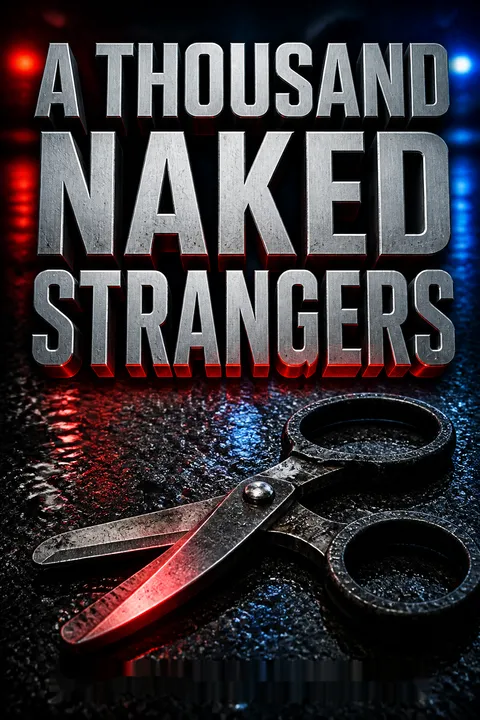
A Thousand Naked Strangers is a memoir of professional formation, but it refuses the familiar rescue-worker story in which courage steadily conquers fear. Hazzard begins as an outsider hoping emergency work will prove something about him. He becomes capable through repetition, mentorship, mistakes, and immersion in Atlanta’s uneven emergency system. Yet competence does not bring uncomplicated virtue. It can coexist with thrill seeking, arrogance, fatigue, and the ability to treat death as routine.
The book’s central tension is that the same disorder that attracts its narrator can make him useful and endanger him. The ambulance gives him a front-row seat to events most people avoid, along with unusual responsibility and a powerful bond with partners. It also exposes him to weak training environments, precarious staffing, institutional absurdity, and patients whose suffering risks becoming entertainment. His candid admission that medics may enjoy the madness is not simply a boast. It is a self-indictment that asks what kind of pleasure can coexist with care.
Its most revealing scenes turn on small decisions rather than medical spectacle: whether to move a patient, when to call for help, how to speak to someone in psychosis, whether to remain on the job. These moments show that competence is relational and contextual. A medic needs protocols, but also a partner, a functioning organization, and the humility to revise a decision. Technical confidence without those supports becomes hubris.
The narrative also gives family life its proper weight. Sabrina’s experience makes visible the unseen labor behind a night-shift career, while their son’s illness changes the calculus of staying. Hazzard leaves without a dramatic collapse, which is itself an argument: work can stop being worth its costs before a worker fails spectacularly. The book’s lasting insight is not that chaos makes people heroic. It is that some people are drawn to the intense, shared responsibility of crisis, and must still decide when that attraction has begun to consume their capacity to care.
Review Summary
A Thousand Naked Strangers offers a gritty, thrilling glimpse into a paramedic's world. Readers praised Hazzard's vivid storytelling and dark humor, though some found his tone off-putting. The book provides eye-opening insights into the physical and emotional toll of emergency work. Many appreciated the candid portrayal of burnout and the adrenaline-fueled nature of the job. While some readers were uncomfortable with the graphic content, others found it a compelling and educational read about the realities of emergency medical services.
People Also Read


Glossary
Tourist
Detached, temporary observerHazzard’s label for an EMS worker who treats the job as an interesting interlude or source of excitement, without fully investing in patient care or professional responsibility. The Tourist may perform assigned tasks but remain emotionally and intellectually outside the work. Hazzard recognizes this tendency in himself when he realizes that he has been watching emergencies more than committing to the people experiencing them.
True Believer
Devoted career medicHazzard’s term for a medic who is deeply committed to emergency work and finds meaning in its demands, patients, and unpredictability. Chris, an experienced partner, embodies this type. A True Believer is not presented as flawless or universally wise. The term describes a strong vocational attachment to EMS and the ability to renew that commitment through teaching and patient care.
Killer
Burned-out, uncaring medicHazzard’s severe label for a medic whose burnout has become indifference or harmful care. The term reflects stories told by coworkers about clinicians who neglect patients or fail to act when action is needed. It names an ethical danger rather than a formal job category: a worker can remain employed and technically present while losing the concern that patient care requires.
Perfect Call
Ideal high-intensity emergencyA fantasy Hazzard and his partner develop around the most demanding, dramatic emergency they could encounter. They imagine multiple injuries, immediate danger, and a chance to use their skills under pressure. In their definition, whether the patient survives does not determine whether the call is perfect. The concept reveals the crew’s appetite for intensity, as well as the uneasy distance between their excitement and the patient’s experience.
Rooter
Frequent Grady patientA nickname used by Grady EMS staff for patients who repeatedly arrive at the hospital. The word comes from people who once sat on a wall beside the ambulance entrance and cheered arriving crews. In practice, it describes a familiar pattern of repeat emergency visits, but it can also flatten a patient into a category, making respectful care especially important.
Download PDF
Download EPUB
.epub digital book format is ideal for reading ebooks on phones, tablets, and e-readers.








