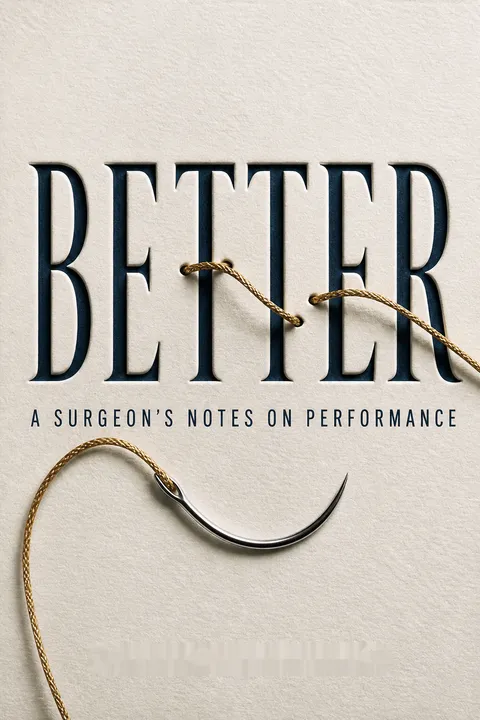


Key Takeaways
Make conscientious follow-up part of the system, not a heroic exception.
Attention changes outcomes. As a medical student, Gawande expected a sick older patient with a possible pneumonia to remain stable. His senior resident noticed subtle changes and returned to check her twice while Gawande was elsewhere. He found her developing septic shock, moved her to intensive care, and helped save her life. The difference was not a breakthrough diagnosis. It was taking responsibility for what might happen next.
The same principle appears when breast-cancer patient Virginia Magboo waits hours for a surgery slot amid operating-room shortages. Her surgeon keeps advocating, and two nurses volunteer to stay late so the operation can proceed. Individual effort matters, but the book's deeper point is that reliable care depends on people noticing problems and acting across roles.
What's striking is how ordinary the decisive acts are: another visit, another call, a nurse staying past her shift. In complex work, vigilance is not merely a personal virtue. It is a form of coordination that keeps weak signals from disappearing between handoffs. Safety engineering makes a similar distinction between blaming a person after failure and designing work so concerns are noticed early. Heroic attention can rescue an individual, but a system that needs heroes every day is still fragile.
Make the right action easier before demanding better compliance.
Knowledge is not enough. Hospital staff know that hand hygiene prevents infections, yet the book reports that clinicians washed their hands only about one-third to one-half as often as required. Alcohol gel raised compliance at Gawande's hospital from roughly 40 percent to 70 percent, but infection rates did not fall. A substantial gap remained between knowing the rule and carrying it out consistently.
At a Pittsburgh veterans hospital, engineer Peter Perreiah asked staff what made handwashing difficult. He improved bedside supplies, gave rooms their own stethoscopes, and removed practical obstacles. MRSA infections on the unit fell by almost 90 percent. The lesson is not to excuse omissions, but to inspect the work conditions that make them likely. A reminder cannot compensate for missing supplies, wasted steps, or a rushed workflow.
This is a useful corrective to the idea that performance problems mainly reflect weak motivation. Human-factors thinking asks how tools, time, and task design shape behavior, then changes the conditions before prescribing more discipline. The book also resists the opposite mistake: a convenient tool alone did not solve handwashing. Design can lower friction, but ongoing observation and accountability remain necessary, especially when a small minority of lapses can still transmit infection.
Treat ambitious goals as logistics problems, not declarations of intent.
Eradication requires repetition. In 2003, a polio case in southern India threatened to restart transmission in a region thought to be free of the disease. The response covered about 50,000 square miles. Organizers planned two rounds of vaccination, recruiting 37,000 vaccinators and 4,000 supervisors to reach 4.2 million children in three days. The work included keeping vaccine cold, finding unlisted settlements, checking who had been missed, and persuading families wary of rumors.
By the end of the campaign, about four million children had received the drops. The effort illustrates why a public promise is not an operational plan. Polio can spread through people with mild or unnoticed symptoms, so a delayed or incomplete response can undo years of progress. The campaign's ambition depended on thousands of precise, repeated tasks.
Large-scale public health is often narrated through leaders and slogans, but its real unit of success is the completed doorstep visit. This resembles distributed computing: a central goal becomes real only when many local operations work, communicate, and recover from errors. The book also surfaces an important ethical tension. A campaign can save lives while diverting scarce staff from other urgent needs. Scale and moral value do not remove the need to examine opportunity costs.
Make intimate care predictable enough that patients can trust it.
Etiquette is clinical work. Physical examinations involve vulnerability, yet American doctors in the book have no shared custom for gowns, chaperones, or how much to explain before touching a patient. Practices vary across countries: some rely on family presence, others on a medical chaperone, and some on formal dress and language. With no clear expectations, patients and doctors can misread the same encounter.
Gawande's father, a urologist, explains each examination, steps out while patients change, keeps a professional manner, and routinely includes a female assistant. Gawande adapts some of these practices, while recognizing that a chaperone can also make a routine examination feel more conspicuous. The goal is not a single ritual for every setting. It is to make the purpose, boundaries, and choices clear to the person being examined.
Clinical trust is partly built before a diagnosis is made. Predictable procedures reduce ambiguity, much as informed consent makes a technical intervention legible to the person undergoing it. Yet standardization should protect patient agency rather than turn courtesy into a rigid performance. A chaperone may reassure one patient and unsettle another. The strongest protocol offers clear options and explanations, while leaving room to learn what this particular patient finds respectful.
Own serious harm and give patients a route to honest answers.
Silence deepens injury. Dermatologist Kenneth Reed's case shows how a disputed phone conversation, conflicting pathology readings, and sparse notes can make a difficult clinical decision nearly impossible to reconstruct. Patient Barbara Stanley later died of melanoma, and her family sued. The jury found Reed not negligent, but the trial could not make the process feel fair or informative to everyone involved.
In another case, a missed finding on a chest X-ray delayed treatment for Peter Franklin's lymphoma. His father sought an investigation and help for Peter's family, but the hospital directed him to get a lawyer. The book argues that litigation is a poor substitute for disclosure: most harmed families receive neither compensation nor an apology. No-fault compensation systems, including the vaccine injury fund and New Zealand's approach, offer alternatives, though they require limits on eligibility and awards.
Accountability has two jobs that are too often confused: helping injured people and learning how to prevent recurrence. A lawsuit can expose a failure, but its adversarial structure rewards defensive records and contested narratives. A transparent review process could better support organizational learning, while compensation can address real losses without requiring a verdict about a clinician's character. Such systems still need independent oversight, since institutions cannot be expected to investigate themselves without safeguards.
Treat payment rules as part of care, not bookkeeping outside it.
Incentives shape practice. The book describes how physician fees were organized into a vast schedule that assigned payment to each service. The system tried to match fees to time, judgment, technical skill, and risk, but estimates were necessarily imperfect. Procedures often paid far more than diagnosis and counseling, encouraging a tilt toward billable interventions. Doctors also spent substantial time navigating referrals, preapprovals, rejected claims, and overhead.
One surgeon avoided insurers and charged patients directly, asking $8,500 for a gallbladder operation that insurers commonly reimbursed at about $700. A small New Hampshire health plan tried fixed salaries and shared costs, then experimented with other payment models as it grew. None solved every tension between thrift, productivity, access, and quality. The central question is how to reward useful care without making ability to pay the gateway to treatment.
Payment is not a neutral layer added after medicine; it is part of the machinery that determines which services are available and which receive attention. This is a classic principal-agent problem: patients need expertise, but payment systems may reward activity that is easier to count than benefit that is harder to measure. Still, replacing one incentive with another does not abolish tradeoffs. Salary, fee-for-service, and pooled payment each shape behavior differently, so outcomes and access need to be monitored together.
Separate technical competence from moral permission.
Skill can serve the wrong purpose. Lethal injection was designed to look like a controlled medical procedure, and courts sought medical supervision to reduce the risk of a prisoner experiencing pain or awareness. The American Medical Association opposed physician participation, including monitoring vital signs or advising on the process. Yet doctors and nurses still took part, often after being asked by prison officials or believing their presence would make the execution more humane.
Their motives differed. One physician became involved through a relationship with a prison warden; another, who opposed capital punishment, saw his role as comfort at the end of life. Gawande concludes that the inmate is not a patient in the usual sense: the person cannot refuse care, and medical expertise primarily serves the state's purpose. A humane technique does not resolve the ethical conflict over using healing skills to carry out punishment.
The case exposes a broader ethical distinction between competence and legitimate purpose. Professional skill is powerful precisely because society trusts it, so using that skill for coercive ends can alter the meaning of the profession itself. The practitioners' concern about suffering deserves serious consideration, but their presence may also lend institutional credibility to a process they do not control. Ethical boundaries matter most when good intentions make participation feel reasonable.
Fight for patients without confusing persistence with care.
Effort needs judgment. Gawande describes Mr. Thomas, whose severe Cushing's syndrome required removal of both adrenal glands. The operation controlled the hormone crisis, but complications left him in intensive care and far from the life he hoped to regain. In contrast, obstetrician Watson Bowes treated very premature babies as though they might survive, and many did. A dermatologist also found a treatment that helped Gawande's daughter after another approach had stalled.
But relentless treatment can prolong suffering without restoring a life the patient values. A young girl, Callie, faced more painful cancer treatments after several failed regimens, while her parents had to weigh slim hope against the burden. The book's standard is not simply to do more or to stop sooner. Doctors must keep asking whether the next intervention serves the patient's goals, and seek other perspectives when their own plan is failing.
Uncertainty makes both action and restraint morally risky. A useful distinction is between persistence in caring and persistence in a particular treatment: the first can continue even when the second should end. This aligns clinical judgment with shared decision-making, where prognosis, burdens, and a patient's definition of an acceptable life all matter. The challenge is that probabilities rarely settle an individual choice, so honest conversation must not disguise uncertainty as a confident recommendation.
Compare outcomes openly, then learn from the unusual high performers.
The average hides variation. Cystic fibrosis centers in the book used similar guidelines, yet their patients had strikingly different results. In the 1990s, reported life expectancy at an average center was just over 30 years, while the best center exceeded 46. Pediatrician LeRoy Matthews had once achieved far better outcomes than other programs by treating CF as a cumulative disease and beginning intensive prevention before children looked seriously ill.
The Cystic Fibrosis Foundation gathered center data, but initially kept center names confidential. When Cincinnati Children's shared its middling results with families, they did not all leave. Some joined committees to improve care. The Minnesota team, led by Warren Warwick, pressed patients on daily treatment, nutrition, and lung function. The point of comparison is not to shame average performers. It is to identify practices that help explain why some teams do better.
Transparent comparison can turn performance from private reputation into shared knowledge. The strongest use of rankings is diagnostic: they prompt questions about practices, patient mix, and context, rather than treating a score as a verdict. This distinction matters because raw league tables can punish teams serving more complex cases or encourage avoidance of high-risk patients. Openness is most useful when measurement is risk-aware and paired with a practical route for improvement.
Score what matters, then check whose outcomes the score ignores.
A simple measure changed childbirth. Virginia Apgar devised a score that rates a newborn's color, heart rate, breathing, movement, and response shortly after birth. It turned an impression into a record that clinicians could compare and act on. In the book's account, maternal death during childbirth fell from about one in 150 pregnancies in the mid-1930s to about one in 2,000 by the 1950s, with further improvement afterward.
Measurement also helped standardize care, but reliability came with tradeoffs. Cesarean sections became a predictable response to difficult labor, while forceps skills became less common. Surgery can prevent some dangers, but it brings pain, recovery time, and risks of its own. Gawande notes that newborns had a score, while maternal experience lacked an equivalent measure. A metric can direct attention, but only toward the outcomes it includes.
Apgar's power comes from making an important condition observable at the moment when action can still change it. This is a general property of good measures: they connect feedback to decisions, not merely to retrospective judgment. The danger is metric substitution, where teams optimize what is scored and neglect what is not. Measuring the infant while overlooking the mother's recovery illustrates why balanced measurement must represent the full human system, not just its easiest output.
Study performance with the tools already available before waiting for new technology.
Better systems saved wounded soldiers. The book reports that about 24 percent of wounded American soldiers died in earlier conflicts, compared with about 10 percent in Iraq and Afghanistan at the time described. The reduction did not come chiefly from a breakthrough drug. Soldiers wore protective vests more consistently, and Forward Surgical Teams brought small surgical units close to combat. They stopped bleeding and contamination, then transferred patients for further care rather than attempting every repair in one place.
Teams recorded injuries and outcomes despite exhausting conditions. Their data revealed problems and prompted changes, including improved eye protection and emergency bandages. The staged system also shortened transfer times. Survival, however, did not mean freedom from profound disability. Some survivors faced amputation, complex rehabilitation, and uncertain prospects for life outside the hospital. Better performance therefore includes not just rescue, but the care and support that follow it.
The military example shows improvement as a cycle: observe results, identify a failure pattern, alter practice, and measure again. This is close to experimental learning inside an operating system, where change is guided by real cases rather than abstract confidence. The caution is equally important: a lower death rate is not a complete account of benefit. Survival statistics must be interpreted alongside disability, rehabilitation, and the lives patients themselves consider worth living.
Ask, count, write, and change one thing you can improve.
Ingenuity starts nearby. In an overcrowded Indian hospital, surgeon Ashish Motewar developed a laparoscopic approach to perforated ulcers, a dangerous condition he encountered far more often than surgeons in wealthier settings. Elsewhere, a surgeon improvised a way to treat a child with hydrocephalus despite limited equipment. These stories do not romanticize scarcity. They show that careful attention and experimentation can improve care even when resources are constrained.
Gawande's practical habits are modest: ask an unscripted question, resist unproductive complaining, count something that matters, write down observations, and be willing to change. His own counting of retained surgical items helped reveal patterns that suggested a technical solution. Improvement becomes more likely when observations are shared, tested, and revisited, rather than left as private frustration or confidence.
These practices turn individual reflection into collective capacity. Counting creates a signal, writing preserves it, and conversation lets other people challenge an interpretation or add missing context. That sequence resembles the learning loop used in research and craft alike. The advice is deliberately small, but small experiments still need boundaries: a change in high-stakes care should be monitored, and a promising anecdote should not be mistaken for proof.
Analysis
Better treats medical performance as a moral and organizational problem, not simply a test of knowledge. Its recurring question is what happens after expertise encounters human limits: a tired clinician forgets hand hygiene, an institution cannot find an operating room, a surgeon must disclose a mistake, or a doctor cannot tell whether further treatment helps. Gawande's answer is neither perfect technique nor a charismatic leader. Betterment comes from diligence, ethical seriousness, measurement, and the willingness to revise practice.
The book's strength is its refusal to separate the bedside from the system around it. The senior resident's extra visit matters, but so do staffing, supplies, communication, and escalation. The same pattern scales from one patient to millions of children in a vaccination campaign. Stories make the principle concrete: performance is produced by networks of people whose actions must reliably connect.
Its most productive tension is between standardization and judgment. Apgar scoring, operating-room sterility, and staged trauma care make critical tasks more dependable. Yet the execution chapter and the debate over prolonged treatment show that a procedure can be technically reliable without being ethically right, and that extending life is not always the same as serving a patient. Measures help reveal variation, but any single measure can distort priorities if it excludes the experience of patients or families.
The book's optimism is therefore disciplined rather than naive. It argues that ordinary work can improve, while showing how quickly gains disappear when attention, staff, or trust falter. A modern reader can extend this insight beyond medicine: complex organizations need feedback that is close to the work, safe ways to report failure, and authority distributed to people who see problems firsthand. The essential test is not whether a system claims excellence, but whether it notices its own shortfalls and changes what happens next.
Review Summary
Better explores how doctors can improve medical performance through diligence, ethical practices, and ingenuity. Gawande shares compelling stories and insights on topics like hand-washing, battlefield medicine, and cystic fibrosis treatment. While some readers found certain sections dry, many praised Gawande's storytelling and thought-provoking analysis. The book's afterword, offering practical suggestions for becoming a "positive deviant," was particularly well-received. Overall, reviewers appreciated Gawande's ability to make complex medical topics accessible and relevant to a general audience.
People Also Read




Glossary
positive deviance
Success found within a groupA method for solving a problem by identifying people inside the affected community who achieve unusually good results despite facing the same constraints as everyone else. Instead of importing a prescribed solution, the group studies what these outliers do and helps their peers adopt useful practices. The book describes this approach in village nutrition programs and hospital infection prevention.
mop-up
Targeted vaccination after a caseA rapid campaign to vaccinate children in a wide area around a newly identified polio case. The goal is to reach enough susceptible children to stop transmission before the virus spreads further. Because polio can circulate among people with mild or unnoticed symptoms, a mop-up requires broad coverage, careful logistics, repeated rounds, and surveillance for missed communities.
Golden Five Minutes
Critical time after battlefield injuryA term used by military surgeon Ronald Bellamy for the brief interval in which a severely wounded soldier may need lifesaving care. Battlefield injuries, especially those involving major blood loss, can be more severe than typical civilian trauma. Protective equipment can extend this window, while forward surgical teams aim to bring stabilization and surgery closer to the point of injury.
Apgar score
Newborn condition ratingA quick assessment of a newborn based on five features: color, heart rate, breathing, movement, and responsiveness. Each feature contributes to a total score from zero to ten, commonly recorded shortly after birth and again several minutes later. Virginia Apgar's measure made newborn condition easier to observe, document, compare, and use when deciding whether resuscitation was needed.
surgical Apgar score
In-operation risk scoreA score proposed by Gawande's research group to summarize how a patient fares during surgery. It uses blood loss, the lowest heart rate, and the lowest blood pressure recorded during an operation. In the study described in the book, lower scores were associated with substantially greater risks of complications and death, offering clinicians a compact signal for postoperative attention.
Forward Surgical Teams
Mobile battlefield surgical unitsSmall military medical teams that travel close behind combat forces with equipment for rapid resuscitation and emergency operations. They can assemble a temporary surgical facility in less than an hour. Their goal is usually damage control: stop bleeding, limit contamination, stabilize the wounded person, and transfer them to a larger facility for further treatment.
damage control
Stabilize before definitive repairAn approach to emergency surgery that prioritizes immediate survival over completing every repair in one operation. Surgeons control bleeding and contamination, use temporary measures where needed, and transfer the patient onward for further care. The method is especially useful when injuries are severe, time is short, and the first team has limited supplies or postoperative capacity.
FAQ
What's Better: A Surgeon's Notes on Performance about?
- Focus on medical performance: The book explores the intricacies of performance in the medical field, emphasizing the need for diligence, ethical practice, and innovation to improve patient outcomes.
- Real-life narratives: Atul Gawande shares stories from his surgical career, highlighting the challenges and moral dilemmas faced by healthcare professionals.
- Systemic healthcare issues: Gawande addresses broader issues in healthcare, such as hand hygiene and disease eradication, underscoring the importance of collective efforts in enhancing patient care.
Why should I read Better: A Surgeon's Notes on Performance?
- Unique perspective: Gawande offers an insider's view of the medical profession, making it accessible and engaging for both healthcare professionals and lay readers.
- Ethical considerations: The book encourages readers to reflect on the moral responsibilities of doctors and the ethical implications of their decisions.
- Practical insights: Readers can glean valuable lessons on performance, accountability, and continuous improvement applicable to various fields beyond medicine.
What are the key takeaways of Better: A Surgeon's Notes on Performance?
- Diligence is essential: Attention to detail, such as proper handwashing, is crucial in preventing medical errors and infections.
- Moral responsibility: Doctors have an obligation to admit mistakes and prioritize patient welfare, ensuring ethical care.
- Ingenuity in healthcare: Innovative thinking and adaptability can lead to significant improvements in patient care and healthcare systems.
What are the best quotes from Better: A Surgeon's Notes on Performance and what do they mean?
- "What does it take to be good at something in which failure is so easy, so effortless?" This quote highlights the challenges of achieving excellence in the high-stakes environment of patient care.
- "Betterment is a perpetual labor." Gawande emphasizes that improvement in medicine requires ongoing effort and commitment.
- "To live as a doctor is to live so that one's life is bound up in others'." This underscores the profound responsibility and interconnectedness between doctors and patients.
How does Atul Gawande define "positive deviance" in Better: A Surgeon's Notes on Performance?
- Concept of positive deviance: It refers to individuals or groups within a community finding effective solutions to problems, often outperforming expert recommendations.
- Real-world examples: Gawande illustrates this with stories of communities addressing malnutrition through local knowledge and resources.
- Encouragement of innovation: The book advocates for learning from these positive deviants to foster creativity and improvement in healthcare practices.
How does Gawande illustrate the importance of handwashing in Better?
- Historical context: He references Ignac Semmelweis, who linked hand hygiene to infection rates in the 19th century, highlighting ongoing compliance challenges.
- Modern challenges: Despite efforts, Gawande notes low compliance rates in hospitals, leading to preventable infections.
- Systemic solutions: Innovative approaches, like alcohol-based sanitizers, are discussed to improve hand hygiene and patient safety.
What does Better say about the eradication of polio?
- Global effort: Gawande details the extensive campaign to eradicate polio, emphasizing challenges in reaching remote populations.
- Success through diligence: Meticulous planning and community involvement have significantly reduced polio cases worldwide.
- Lessons learned: The polio eradication effort serves as a model for addressing other public health challenges, stressing persistence and innovation.
How does Gawande address the issue of medical malpractice in Better?
- Personal anecdotes: He shares his experiences with malpractice suits, illustrating their emotional toll and the complexities of the legal system.
- Systemic flaws: Gawande critiques the current malpractice system, which often fails to provide justice for patients and burdens doctors.
- Alternative approaches: He suggests a more compassionate and transparent system to better serve patients and healthcare providers, fostering trust and accountability.
What role does performance measurement play in Better: A Surgeon's Notes on Performance?
- Foundation for improvement: Measuring performance is essential for identifying areas needing enhancement and ensuring accountability in healthcare.
- Data-driven decisions: Gawande emphasizes using data to inform clinical practices and guide decision-making processes.
- Benchmarking success: Comparing outcomes across healthcare settings allows practitioners to learn from best practices and strive for better results.
How does Gawande address the issue of medical errors in Better: A Surgeon's Notes on Performance?
- Acknowledgment of human fallibility: Gawande discusses the inevitability of errors in medicine, emphasizing that no system is immune to mistakes.
- Learning from mistakes: He advocates for a culture of transparency where healthcare professionals can openly discuss errors to prevent future occurrences.
- Implementing safety protocols: The book highlights the importance of establishing protocols and checklists to minimize the risk of errors in clinical practice.
What ethical dilemmas are discussed in Better: A Surgeon's Notes on Performance?
- Physician participation in executions: Gawande explores the controversial role of medical professionals in capital punishment, questioning the ethical implications.
- Balancing care and legal obligations: The book discusses the tension between compassionate care and adhering to legal and ethical standards.
- Moral responsibility: Gawande emphasizes recognizing one's moral duties as a healthcare provider, especially when faced with difficult decisions.
How does Better: A Surgeon's Notes on Performance relate to the broader healthcare system?
- Critique of systemic issues: Gawande examines flaws within the healthcare system, including inefficiencies and disparities in care delivery.
- Call for reform: The book advocates for changes in healthcare practice and management, emphasizing quality and patient-centered care.
- Interconnectedness of roles: Gawande illustrates how various roles within the healthcare system must collaborate to achieve better patient outcomes.
About the Author



Download PDF
Download EPUB
.epub digital book format is ideal for reading ebooks on phones, tablets, and e-readers.








