

Key Takeaways
Act decisively, but remember medicine's evidence never abolishes uncertainty
Medicine happens in the gap. A young gunshot patient appeared to have bullets through his bladder and rectum, but surgery found no injuries there. A boy with a tumor crushing his airway needed an immediate intervention, yet the doctors had no clear answer. They drained fluid from his chest, a risky move that unexpectedly eased his breathing. These stories introduce the book's central claim: medicine combines scientific knowledge with incomplete evidence, changing skills, and decisions that cannot wait for certainty.
Action is still necessary. The doctors sometimes succeed, sometimes cause harm, and sometimes cannot explain what happened. Their task is not to pretend uncertainty is absent, but to act as carefully as possible while recognizing its limits.
What's striking is that uncertainty here is not a temporary glitch awaiting better technology. Individual bodies vary, evidence arrives unevenly, and urgent situations force choices before all the facts are available. This resembles decision-making in other high-stakes fields, where good practice means distinguishing known facts from assumptions and preparing for more than one outcome. Candor matters because confidence can reassure patients, but false certainty can hide risk. The challenge is to communicate uncertainty without turning it into paralysis or making every possible outcome sound equally likely.
Build surgical skill through repetition, while admitting patients bear some learning risk
Expertise starts clumsily. Early in training, Gawande struggles to place a central line, a tube threaded into a major vein. He forgets equipment, misses the vein, and bruises a patient. After repeated attempts, he eventually succeeds, though he cannot identify exactly what he changed. Practice turns deliberate steps into bodily knowledge, but in surgery the practice happens on people, not harmless materials.
The curve can be steep. At London's Great Ormond Street Hospital, surgeons learning a newer heart operation had a 25 percent death rate in their first 70 cases, compared with 6 percent for the older operation. In their next 100 cases, only five babies died. Patients need progress, but the early stages of progress can expose them to greater danger.
The story makes a difficult distinction between learning as a professional necessity and learning as a patient's risk. Other fields can use simulators, practice materials, or reversible mistakes; surgery often cannot. Graduated responsibility and close supervision reduce danger, but they do not erase the ethical tension. The episode also suggests that expertise is not simply a credential earned once. It is a capacity maintained through continued practice, feedback, and humility about what remains difficult.
Turn practice into deliberate team learning, not mere repetition
Repetition alone is not enough. A study of teams learning minimally invasive heart surgery found that early operations took about three times as long as operations by proficient teams. Some teams halved their operating time over 50 cases; others barely improved. The faster-learning surgeon chose a stable team, rehearsed before the first operation, scheduled cases close together, reviewed each case in advance, and discussed results afterward.
Make learning visible. The slower team changed members frequently and did not consistently prepare, debrief, or track outcomes. These differences show that improvement depends not only on accumulating cases, but also on organizing practice so that people can notice and correct what is going wrong. The same principle applies to any complex job where mistakes affect others.
This is a useful corrective to the comforting belief that experience automatically produces mastery. Repetition without feedback can entrench bad habits, while stable teams make it easier to communicate tacit knowledge and detect small deviations. The pattern echoes research on learning organizations, where routine review turns individual experience into shared knowledge. Still, performance metrics such as speed should not become the sole measure of competence. In medicine, faster is valuable only when safety and patient outcomes improve alongside it.
Treat errors as system signals without excusing individual responsibility
Most mistakes are ordinary. A major review of hospital admissions found that nearly 4 percent involved a treatment-related complication, and about two-thirds of those complications were linked to errors in care. Gawande's failed emergency airway procedure shows how errors can combine: delayed backup, poor lighting, and clogged suction turned a crisis into a near-fatal ordeal. The Morbidity and Mortality Conference, or M&M, is a regular hospital meeting where clinicians review complications and deaths to identify what should change.
Fix conditions as well as conduct. Anesthesiologists reduced preventable deaths by improving equipment, standardizing monitors, and studying incidents rather than relying only on punishment. Yet personal accountability still matters. Gawande accepts that he should have called for help sooner. Safer care requires both systems that anticipate human error and individuals willing to examine their own actions.
The strongest safety cultures avoid two traps: blaming one person for a chain of failures, and treating systemic causes as an excuse for personal negligence. Aviation safety offers a useful parallel, since confidential incident reporting can reveal hazards before they cause catastrophe. Medicine's hierarchy complicates this work, because junior staff may see problems but fear challenging senior colleagues. A reporting system only works when it protects candor and leads to changes people can observe, not merely another meeting or a new slogan.
Automate repeatable decisions, and let doctors focus on human context
Machines can outperform experts. In a Swedish comparison, a trained computer detected 738 heart attacks in a set of EKGs, while an experienced cardiologist identified 620. The program was more consistent at weighing subtle patterns. A different model appears at Shouldice Hospital, where surgeons who concentrate on hernia repair perform the operation in 30 to 45 minutes, with a reported recurrence rate of about 1 percent.
Specialization changes performance. Repeated procedures help experts move familiar problems into automatic routines, leaving attention for unusual complications. But diagnosis also depends on details no formula may capture. Gawande describes trusting his impression that one patient had appendicitis, then making the same call in a similar case that turned out to be a different illness. Algorithms can steady judgment, but physicians remain responsible for explaining results and understanding patients' circumstances.
The useful question is not whether people or machines are better in general, but which task each can perform reliably. Rules excel when data are repeatable and outcomes can be checked; human judgment is essential when goals conflict, information is incomplete, or a patient's circumstances change the meaning of a result. There is also a risk that narrow specialization makes care efficient but fragmented. A clinician who can translate technical decisions into an intelligible human story remains necessary, even when the calculation is automated.
Believe pain even when scans cannot explain its source
A normal scan does not disprove suffering. Boston architect Roland Quinlan had disabling back pain despite images showing no clear structural cause. His experience was not unusual among people with chronic pain. The book describes the Gate-Control Theory of Pain, which proposes that signals are shaped by mechanisms in the spinal cord and by brain processes such as emotion, attention, and expectation. Later observations suggested that pain can arise even without a matching injury, as when brain stimulation triggered a patient's familiar panic-related chest pain.
Pain is not imaginary. Mood, social support, work, and life circumstances can influence pain, but that does not make it fabricated. The clinical mistake is to treat invisible pain as unreal simply because a test cannot locate its cause. Physical investigation still matters; so does taking the patient's account seriously.
This account challenges the reflex to treat a measurable lesion as the sole proof of illness. In pain, perception is not a decorative layer placed over biology; it is part of the biological event. That insight can improve care by making room for psychological and social influences without dismissing bodily experience. It also calls for restraint: social factors may shape pain, but they cannot be used as a shortcut to explain every unexplained symptom. Listening is not a substitute for diagnosis, but it is part of diagnosis.
Treat nausea and appetite as complex biology, not simple willpower
One symptom can have many triggers. Amy Fitzpatrick's pregnancy nausea resisted several drugs and became severe enough to require hospital care and intravenous nutrition. Nausea can follow pregnancy, motion, medication, or learned associations, and those different causes may respond to different treatments. A drug that reduces vomiting may not relieve nausea itself. The body does not offer one universal switch for either symptom.
Appetite is not just a choice. Vincent Caselli repeatedly lost weight and regained it before gastric-bypass surgery helped him lose more than 170 pounds and recover many everyday abilities. The operation changes how much food the stomach can hold and how food is absorbed. It helped many patients in the book's account, but some regained weight despite the surgery. Both stories resist the idea that difficult bodily problems can be solved by simply trying harder.
These cases expose the limits of moral language around symptoms. Calling overeating a failure of discipline or nausea a refusal to cope can obscure the biological, psychological, and environmental forces involved. At the same time, a medical intervention is not a guarantee of a complete cure. Gastric bypass can transform health while carrying serious risks and uncertain long-term effects; symptom treatment can help one pathway while leaving another untouched. Good care makes room for agency without pretending that agency operates outside the body.
Changing the body can change the self, without resolving every struggle
The physical and personal intertwine. Television anchor Christine Drury blushed so intensely that it disrupted her work and social confidence. After other approaches failed, she chose endoscopic thoracic sympathectomy, a procedure that interrupts nerves involved in blushing. The operation stopped her facial blushing and made ordinary encounters feel easier. She later returned to broadcasting.
A symptom is not an identity. Drury also felt ashamed that she had needed surgery and worried that others would judge her choice. Removing the physical trigger did not erase every emotional difficulty. Her experience complicates the idea that a bodily intervention is either superficial or a total solution. It can change how a person moves through the world while leaving questions of confidence, stigma, and belonging to be worked through.
The story offers a compelling reminder that bodily conditions can shape social behavior and self-conception. The usual division between physical treatment and psychological change is too neat: altering a nerve pathway can alter the situations a person fears, which in turn changes experience. Yet success should be defined by the patient's own aims, not by an observer's assumptions about what counts as vanity or authenticity. The operation also illustrates why informed choice must include side effects and the possibility that a successful procedure will not settle every personal conflict.
Let patients choose, but help them understand when choice itself becomes a burden
Autonomy has more than one shape. Some patients want to decide; others want a doctor to recommend a course or carry part of the burden. When Gawande's premature daughter struggled to breathe, he wanted her physicians to decide whether she needed a ventilator, while still pressing them for a plan. A survey described in the book found that although many people say they would want to choose cancer treatment, far fewer patients facing cancer actually want that responsibility.
Guidance is not domination. A dying patient, Joseph Lazaroff, chose risky surgery while seeming to mistake a chance of preserving movement for a chance of extending life. His case shows why clinicians must check what patients understand and what they hope to achieve. Respecting choice means supporting an informed decision, including a patient's decision to delegate, not leaving someone alone with an unbearable decision.
Autonomy is often treated as a binary: either the clinician decides or the patient does. In practice, decision-making is relational. A patient may want control over values and priorities while relying on a physician to interpret probabilities and recommend a path. That arrangement requires trust, clear explanations, and room for disagreement. The danger is that guidance can become coercion, especially when clinicians confuse their own preferences with the patient's interests. The safeguard is to ask what outcome matters most to the patient before trying to steer the choice.
Use uncertainty as a reason to verify, not to pretend certainty
Judgment needs checking. Eleanor Bratton's rapidly spreading red leg looked like an ordinary infection, but Gawande feared a rare, destructive one after seeing a similar case. The surgeon estimated the dangerous diagnosis as unlikely, yet biopsy found it. Repeated operations removed infected tissue while preserving her leg. A decision analysis built afterward suggested the biopsy should not have been done, exposing how fragile probability estimates and assumptions about outcomes can be.
Look for ways to be wrong. Autopsies once routinely checked clinical diagnoses; by the time of the book, they were performed in fewer than 10 percent of deaths. Studies cited by Gawande found major missed diagnoses in about 40 percent of autopsies. Such findings do not make every judgment worthless. They show why second opinions, postmortems, and honest review are essential checks on confidence.
Eleanor's case captures a tension between statistical reasoning and pattern recognition. A rare diagnosis should not dominate every decision, but an experienced clinician may notice details that a simple probability estimate misses. Formal analysis can expose hidden assumptions, especially about how patients value different outcomes, while clinical experience can generate hypotheses worth testing. Neither method deserves automatic authority. The practical goal is a decision process that makes evidence, uncertainty, and values explicit, then remains open to correction when new information arrives.
Intervene when a doctor becomes unsafe, and build a path back where possible
Good doctors can deteriorate. Orthopedic surgeon Hank Goodman had once been respected, but overwork and depression accompanied a pattern of rushed decisions and serious patient harm. Colleagues tried private conversations and informal safeguards for years before suspending his privileges. Estimates cited in the book suggest that 3 to 5 percent of practicing physicians may be unfit to care for patients at a given time.
Support cannot replace protection. Psychiatrist Kent Neff's assessment program evaluated troubled professionals, identified causes such as depression or addiction, and set conditions for treatment and return to work. Goodman received care and was eventually permitted to consider a restricted return under supervision. The principle is not that every unsafe doctor can return, but that prompt assessment can protect patients while treating a struggling clinician as a person rather than a monster.
This story reframes professional accountability as both a safety obligation and a form of care. Colleagues often delay action because they value loyalty, doubt their evidence, or fear destroying a career. Formal assessment helps convert vague concern into a fair process with clear restrictions and follow-up. Compassion, however, cannot mean lowering the threshold for patient safety. A system needs independent oversight, transparent evidence, and the ability to exclude someone permanently when rehabilitation does not make practice safe.
Analysis
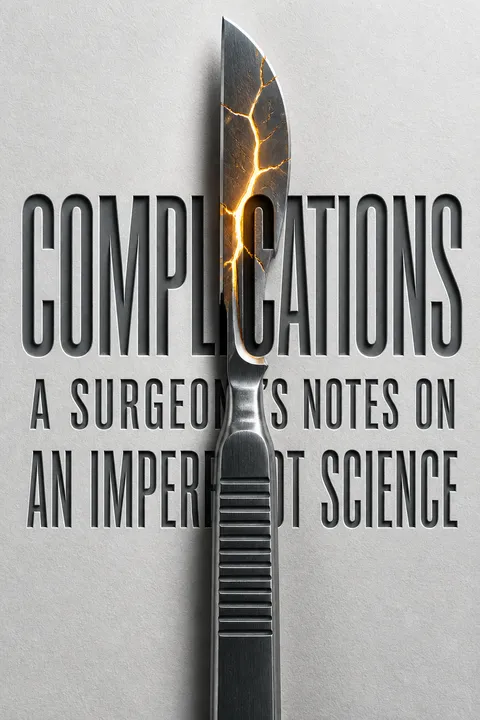
Complications is a story-driven examination of medicine's human limits, told by a surgeon who is both participant and observer. Its three movements, fallibility, mystery, and uncertainty, are not separate topics so much as escalating tests of professional confidence. First, a novice learns that competence is constructed through practice. Then cases without clean explanations challenge the assumption that every symptom has a visible cause. Finally, decisions reveal that even informed clinicians must choose with incomplete knowledge and variable judgment.
The book's force comes from refusing easy villains. A trainee can harm someone while trying to learn; a skilled surgeon can make a devastating mistake; a patient can make a choice that appears inconsistent with their deepest wishes. Gawande's answer is neither blind faith in expertise nor cynical dismissal of it. He argues for institutions that learn from error, tools that stabilize routine decisions, colleagues who challenge unsafe behavior, and clinicians who remain attentive to individual lives.
Its most important tension is between standardization and discretion. Statistical models and protocols can curb inconsistency, but a rare case may demand attention to a clue that a rule does not capture. Personal judgment can rescue a patient, but intuition is also vulnerable to recent experience, emotion, and overconfidence. The book does not resolve that tension with a universal formula. Instead, it makes the quality of a decision depend on whether its assumptions can be examined and revised.
Because the book was published in 2002, some treatments, statistics, and technologies reflect that period rather than current practice. Its larger argument remains relevant: medical progress depends not on pretending clinicians are machines, but on designing systems that acknowledge their fallibility while preserving human responsibility, curiosity, and care.
Review Summary
Complications is a thought-provoking book that offers an honest look at the medical profession. Gawande's candid approach and engaging writing style captivate readers, providing insight into the challenges and uncertainties faced by doctors. While some found parts disturbing or dull, many praise the author's ability to make complex medical concepts accessible. The book explores ethical dilemmas, medical errors, and the human side of healthcare. Readers appreciate Gawande's reflections on the imperfect nature of medicine and his call for continuous improvement in patient care.
People Also Read



Glossary
Learning curve
skill gained through practiceThe improvement in performance that occurs as a person or team gains experience with a task or new technique. In surgery, early cases may take longer and carry greater risk than later cases. The book emphasizes that learning curves vary and can be shaped by supervision, deliberate preparation, stable teams, feedback, and tracking results.
focused factory
specialized, repeated careA medical organization designed to perform a narrow set of procedures repeatedly. The Shouldice Hospital is Gawande's example: its surgeons focus on hernia repair, while the building and patient routines are organized around that work. Repetition and coordination help the hospital achieve short operations, low recurrence, and lower costs than typical hospitals.
Morbidity and Mortality Conference
clinical error review meetingA recurring hospital meeting in which clinicians examine complications, unexpected outcomes, and deaths from patient care. Participants reconstruct what happened, identify what could have been done differently, and consider lessons for future cases. The meeting can encourage accountability and learning, though focusing only on an individual clinician may overlook system conditions that contributed to the event.
latent errors
hidden system hazardsConditions embedded in a system that make mistakes more likely, even before a particular person acts. Examples include confusing equipment, inconsistent procedures, poor communication, fatigue, and inadequate staffing. These hazards may remain unnoticed until they combine with an ordinary human error and contribute to serious harm.
Gate-Control Theory of Pain
pain signals can be modulatedA theory proposed by Ronald Melzack and Patrick Wall in 1965. It holds that pain signals pass through a gating mechanism in the spinal cord that can increase or reduce their transmission to the brain. Signals from the brain, including emotion and attention, can influence this process. The theory helped explain why identical injuries can produce different pain experiences.
neuromodules
brain-generated sensory patternsA model of sensation in which the brain produces an experience through networks that draw on sensory input, memory, emotion, and other processes. In the account discussed by Gawande, pain can arise when such a network is activated, even without a current injury. The model presents pain as an active brain experience rather than a simple message traveling from damaged tissue.
endoscopic thoracic sympathectomy
nerve interruption for blushingA minimally invasive operation that interrupts parts of the sympathetic nerve pathways in the chest. The procedure was used to reduce severe facial blushing by disrupting nerve signals involved in the response. It can be effective, but may also cause side effects such as compensatory sweating, altered sweating patterns, or nerve injury, so it is not a trivial intervention.
hyperemesis of pregnancy
severe pregnancy-related vomitingAn unusually severe form of pregnancy-related nausea and vomiting that can cause substantial weight loss, dehydration, and nutritional problems. The condition may require hospital care, intravenous fluids, or nutrition. Gawande's account illustrates that common pregnancy nausea can become dangerous and that treatments may fail because different causes of nausea involve different bodily pathways.
decision analysis
structured comparison of choicesA method for making a decision by listing available options, possible outcomes, their probabilities, and their relative value to the person affected. The probabilities and values are combined to estimate which option has the highest expected utility. The method can clarify assumptions, but its results depend on uncertain estimates and on judgments about how much different outcomes matter.
necrotizing fasciitis
rapidly destructive tissue infectionA rare, aggressive infection that spreads along the fascia, the connective tissue surrounding muscles, and can destroy skin, fat, and muscle. It may initially resemble an ordinary skin infection, but can progress rapidly and become life-threatening. Antibiotics alone may not be enough; survival can require urgent surgery to remove infected tissue, sometimes including amputation.
FAQ
What's Complications: A Surgeon's Notes on an Imperfect Science about?
- Exploration of medical fallibility: The book delves into the inherent uncertainties and mistakes in the medical field, emphasizing that medicine is not a perfect science.
- Three main themes: Gawande organizes the book into three parts: Fallibility, Mystery, and Uncertainty, each addressing different aspects of medical practice.
- Human element in medicine: It highlights how doctors are fallible individuals navigating complex situations, emphasizing emotional and psychological factors in medicine.
Why should I read Complications by Atul Gawande?
- Insight into surgical training: The book provides a unique perspective on the challenges and learning experiences of surgical residents.
- Real-life medical stories: Gawande shares compelling stories that illustrate the unpredictability of medicine, making the book engaging and relatable.
- Thought-provoking reflections: The author encourages critical thinking about medical practice and the ethical dilemmas faced by healthcare professionals.
What are the key takeaways of Complications?
- Embrace fallibility in medicine: Mistakes are inevitable, and acknowledging them can lead to better outcomes and improvements.
- Importance of communication: Effective communication among medical teams is essential for patient safety and successful outcomes.
- Value of continuous learning: Doctors must continually update their skills and knowledge to keep pace with advancements in the medical field.
What are the best quotes from Complications and what do they mean?
- “Medicine is, I have found, a strange and in many ways disturbing business.” This quote highlights the complexity and unpredictability of the medical profession.
- “The gap between what we know and what we aim for persists.” It reflects the ongoing struggle to bridge the divide between knowledge and practice.
- “It is an imperfect science, an enterprise of constantly changing knowledge, uncertain information, fallible individuals, and at the same time lives on the line.” This summarizes the challenges faced by medical professionals and the high stakes involved.
How does Atul Gawande address medical errors in Complications?
- Personal reflections on mistakes: Gawande shares his own experiences with errors in surgery, illustrating their emotional toll.
- Case studies of failures: The book includes detailed case studies that highlight specific instances of medical errors.
- Advocacy for systemic change: Gawande calls for improved training, better communication, and a culture that encourages reporting and learning from mistakes.
How does Complications address the concept of "mystery" in medicine?
- Unexplained medical phenomena: Gawande explores cases where patients present with symptoms that defy clear diagnosis.
- The role of intuition: He highlights the importance of intuition and experience in making medical decisions.
- Embracing uncertainty: Gawande encourages acceptance that not all medical problems have clear solutions.
What insights does Complications provide about medical training?
- Rigorous and demanding process: Gawande describes the intense training that surgical residents undergo.
- Learning through experience: The book emphasizes the importance of hands-on experience in medical education.
- Emotional challenges: Gawande discusses the emotional toll of medical training and the need for support systems.
How does Gawande illustrate the uncertainty in medical practice in Complications?
- Case studies and anecdotes: Gawande shares real-life stories that demonstrate the unpredictability of medicine.
- Decision-making under pressure: Doctors often make quick decisions with incomplete information, leading to uncertainty.
- The evolving nature of knowledge: Medical knowledge is constantly changing, adding to the uncertainty in practice.
What role does communication play in Complications by Atul Gawande?
- Essential for patient safety: Clear communication among medical teams is vital for preventing errors.
- Building trust with patients: Honest communication with patients fosters trust and helps them make informed decisions.
- Collaboration among healthcare professionals: Effective communication enhances collaboration and improves patient outcomes.
How does Complications challenge the perception of doctors?
- Humanizing medical professionals: Gawande portrays doctors as fallible individuals facing immense pressure and uncertainty.
- Acknowledging limitations: He encourages recognition that doctors are not all-knowing and can make mistakes.
- Emphasizing empathy and compassion: Gawande advocates for a compassionate approach to patient care.
What role does patient autonomy play in Complications?
- Empowerment of patients: Gawande discusses the importance of allowing patients to make informed decisions about their care.
- Balancing autonomy and expertise: The book explores the tension between patient autonomy and the physician’s expertise.
- Real-life examples: Gawande provides examples of patients facing difficult decisions regarding their treatment.
What insights does Gawande provide about the future of medicine in Complications?
- Need for continuous improvement: Gawande argues for a culture of continuous improvement in the medical field.
- Integration of technology: He discusses the role of technology in enhancing surgical practice and patient outcomes.
- Focus on patient-centered care: Gawande advocates for prioritizing the needs and preferences of patients for better health outcomes.
About the Author


Download PDF
Download EPUB
.epub digital book format is ideal for reading ebooks on phones, tablets, and e-readers.








