

Key Takeaways
Treat the person’s life as the goal, not merely the body’s survival.
A technical success can fail. Early in his career, Gawande helped care for Joseph Lazaroff, whose widespread cancer was causing paralysis. Surgery relieved pressure on his spinal cord, but it could not restore the life he wanted. He endured serious complications and died in intensive care. The team had explained the operation’s risks, yet failed to talk plainly about what it could realistically achieve or what mattered most to him.
Care means asking what for. Medicine is powerful at treating fixable problems, but its tools can prolong suffering when the larger purpose of treatment goes unexamined. The central question is not simply whether an intervention can be done. It is whether its likely benefits serve the patient’s priorities, given the burdens and limits of the disease.
What's striking is how a consent form can document a patient's agreement without ensuring that the decision is meaningful. Informed consent is often treated as the transfer of facts, but serious illness also demands interpretation: what might this treatment preserve, and what might it cost? This distinction matters beyond medicine. In any high-stakes service, technical competence can obscure whether the service is advancing the recipient's actual aims. Still, outcomes are uncertain, and a choice that looks poor afterward may have been reasonable given what was known at the time. The ethical failure here is less the gamble than the missing conversation about its stakes.
Plan for dependence before a crisis turns safety into someone else’s decision.
Independence has an expiry date. Gawande contrasts Alice Hobson, who lived alone and prized managing her own home, with his grandfather Sitaram, who remained on his farm into extreme old age with relatives nearby. Their lives reflect different social arrangements, not simply different attitudes. In modern societies, people increasingly choose separate homes and greater freedom from family oversight. Gawande calls this preference “intimacy at a distance.”
But distance needs a plan. Alice’s falls, a car accident, and a scam exposed growing vulnerability. Her family had not understood how quickly ordinary tasks could become unsafe. The book argues for facing this transition before an emergency narrows the options. Planning does not require surrendering independence in advance. It means discussing what help might protect the parts of life a person most wants to keep.
The comparison resists easy nostalgia. Multigenerational care can provide practical support and belonging, but it can also constrain adult children and create conflicts over money, property, and control. Conversely, living alone can express genuine choice while quietly depending on resources that may disappear. This is a useful distinction between independence as a living arrangement and independence as meaningful agency. The first may be lost without the second being lost entirely. Early planning works best when it asks what a person wants to preserve, rather than treating family co-residence or institutional care as the only available endpoints.
Treat frailty as a manageable medical condition, not a personal failure.
Decline takes different roads. Gawande describes three broad patterns: sudden collapse after an acute illness, a prolonged downward course with intermittent recoveries, and a gradual loss of capacity in old age. Modern medicine has extended life, but it cannot stop the body’s systems from wearing down. Frailty is the point at which accumulated weaknesses leave a person with too little reserve to recover from ordinary setbacks.
Small fixes can preserve function. At a geriatric clinic, Jean Gavrilles seemed generally well, but her balance, foot problems, medications, and low food intake made falling a serious risk. Her doctor adjusted a drug, arranged foot care, and helped improve her nutrition. She gained weight and had no falls over the following year. In a study cited by Gawande, high-risk older patients receiving team-based geriatric care were 25 percent less likely to become disabled.
This reframing moves care from isolated diagnoses to the interactions among them. A medication may be appropriate for blood pressure but contribute to dizziness; poor foot care may turn a minor balance problem into a fall. That systems view resembles safety engineering, where accidents often emerge from several small vulnerabilities lining up. It also challenges medicine’s preference for dramatic interventions over maintenance. The evidence presented supports geriatric care, though one study cannot establish that every team or setting will produce the same results. The broader lesson is to measure success by retained function, not only by treated disease.
Safety without choice can turn eldercare into a polite prison.
Protection can erase a life. After Alice moved from her home to Longwood House, staff monitored her medications, mobility, and meals. The arrangement reassured her family, but Alice stopped cooking, ate little, withdrew from activities, and seemed diminished. Later, after a hip fracture, she entered a nursing unit where her schedule, clothing, roommates, and daily routines were largely decided for her.
Institutions inherit their priorities. Gawande traces the modern nursing home partly to hospitals seeking space for people who needed long-term custodial care. These facilities were shaped around managing patients and maintaining safety, not around helping residents continue a self-directed life. Sociologist Erving Goffman called settings that organize nearly every aspect of life under one authority “total institutions.” Their routines can provide necessary care while also stripping away privacy, relationships, and choice.
Safety is measurable: falls, medication errors, and infections can be counted. Belonging, privacy, and a sense of control are harder to audit, so they can become secondary even when they define a resident's experience. This is a classic institutional problem: organizations optimize what they can monitor, sometimes at the expense of what people value. Yet unrestricted choice is not a simple solution. Cognitive impairment and genuine hazards complicate consent, and staff also need workable conditions. The challenge is not to abolish safeguards, but to make restrictions specific, proportionate, and open to reconsideration.
Preserve the choices that let dependent people remain authors of their lives.
Help need not mean surrender. Keren Brown Wilson created Park Place after her disabled mother repeatedly asked to leave nursing homes. Residents there had private apartments, locks, their own furnishings, and control over daily routines, alongside help with meals, personal care, and medications. Early results showed improved life satisfaction and functioning, fewer cases of major depression, and costs 20 percent lower for residents receiving government support than comparable nursing-home care.
Autonomy is more than doing everything alone. Gawande distinguishes freedom from assistance from the deeper freedom to shape a life according to one’s character and priorities. Lou Sanders, for example, valued privacy, cribbage, familiar relationships, and the ability to walk. A good care setting might not restore full independence, but it can protect these defining choices instead of treating dependence as permission to take charge.
This is a relational account of autonomy: people can remain decision-makers while relying heavily on others. It resembles supported decision-making, where assistance expands a person's ability to choose rather than replacing that choice. The distinction is especially important for disability, because dependence and incapacity are not synonyms. Still, a model built around personal control requires adequate staffing, funding, and attention to risk. Without those, autonomy can become a slogan used to excuse neglect. The useful test is whether support makes a person's own priorities more achievable, not whether the setting looks home-like or uses the language of independence.
Give people a role, not just a schedule of care.
Care includes reasons to engage. At Chase Memorial Nursing Home, physician Bill Thomas saw residents dulled by boredom, loneliness, and helplessness. He launched the Eden Alternative, bringing plants, children, and animals into the facility. Residents named and cared for birds, walked dogs, and helped with daily tasks. One resident who had withdrawn after his wife’s death began caring for parakeets, eating again, and walking a dog.
Responsibility can restore participation. Over two years, prescriptions per resident fell to half the level at a comparison home, psychotropic drug use declined, total drug costs fell to 38 percent, and deaths were 15 percent lower. These results do not prove exactly why residents improved, but the changes gave people companionship and something beyond themselves to tend. The aim was not simply to entertain residents, but to make them participants in a living community.
The experiment treats purpose as part of the care environment, not as a private attitude residents must summon. That insight connects with research on perceived control: even modest responsibility can help people feel capable and involved. The design also changes staff roles, since caring for a shared home differs from processing a list of tasks. The outcome figures are striking, but a single comparison cannot isolate which elements mattered most, and the intervention may not transfer unchanged to every facility. Its strongest contribution is practical: meaningful activity can be built into ordinary care instead of relegated to occasional recreation.
Discuss goals before crisis; palliative care can accompany active treatment.
Preparation changes the default. Sara Monopoli had incurable lung cancer, but she and her clinicians kept pursuing new treatments without enough discussion of what she would want if they failed. When a crisis came, she was hospitalized and placed on a ventilator, despite having said she hoped not to die in hospital. The family had not learned how to put that preference into practice.
Palliative care is not surrender. It focuses on relief of symptoms and on matching care to a seriously ill person’s priorities, whether or not treatment continues. In a study of people with advanced lung cancer, patients who received palliative care alongside oncology treatment experienced less suffering, stopped chemotherapy sooner, entered hospice earlier, and lived 25 percent longer. The finding challenges the assumption that attention to comfort must mean giving up on time.
The important intervention is not a single end-of-life form but a relationship that makes evolving priorities discussable. Serious illness changes what people value, and the person who wants every possible treatment at diagnosis may later care more about alertness, home, or time with family. Early palliative care creates room for that change without requiring an immediate decision to stop treatment. The survival result is notable, but it should not be treated as a guarantee for every patient or illness. Its broader force is that communication and symptom support can improve care without being opposites of medical treatment.
Ask what outcomes make treatment worth its cost to this person.
Facts need interpretation. Gawande contrasts three clinician roles: the paternalistic doctor who chooses, the informative doctor who lists options, and the interpretive doctor who helps a patient identify priorities and select care accordingly. His father’s neurosurgeon asked what abilities mattered to him and helped him decide when the risks of a spinal operation were worth taking. The decision changed as the tumor affected his walking and ability to work.
Use questions that reveal values. In difficult conversations, clinicians can ask what a patient understands, fears, hopes to do, and would find intolerable. They should also clarify who should speak for the patient if decision-making becomes impossible. Gawande describes “ask, tell, ask”: first learn what information the person wants, then explain, then check what they understood. This turns a menu of procedures into guidance tied to a life.
Shared decision-making is not a compromise where the clinician supplies data and the patient bears all responsibility. It combines medical expertise with knowledge of the patient's values, two kinds of information neither party can provide alone. This can reduce both paternalism and the false neutrality of presenting options without context. A complication is that preferences may be unstable or shaped by fear, family pressure, or incomplete understanding. Good guidance therefore includes gentle challenge, not automatic deference. The clinician's task is to help distinguish a momentary wish from the person's more considered priorities, while remaining honest about uncertainty.
Use hospice to protect the life still available, not abandon it.
Comfort care is active care. Hospice nurses help manage pain, breathlessness, medication, equipment, and family needs, often at home. When firefighter Dave Galloway chose hospice for advanced pancreatic cancer, a nurse adjusted his pain treatment, arranged a hospital bed, and taught his wife how to handle symptoms. The support let them sleep, shower, and visit a favorite restaurant together. He died at home with his family nearby.
The goal changes, not the care. Standard treatment often accepts burdens now in hopes of more time later. Hospice prioritizes the best possible life in the present, as the patient defines it. In studies cited by Gawande, hospice was not associated with shorter survival for several cancers, and survival was longer for some conditions. Hospice is not right for everyone, but it should not be mistaken for medical abandonment.
Hospice makes an often-hidden form of expertise visible: anticipating symptoms and supporting caregivers before a crisis forces a hospital trip. Its value is not limited to a peaceful death; it can create more usable time, because comfort and connection are practical conditions for living. Yet access, family capacity, and financial coverage shape whether home hospice is feasible. The ideal should not become another burden placed on relatives, especially those without time or resources. The underlying principle applies more broadly: care is active when it reduces suffering and helps people do what still matters, even without a cure.
Choose risks by the life they might preserve, not by fear alone.
Courage requires facing both outcomes. When cancer blocked Jewel Douglass’s intestine, Gawande laid out choices that included risky surgery, further chemotherapy, or symptom relief at home. She wanted to attend a close friend’s wedding, eat if possible, and avoid a dangerous operation that could leave her worse. They tried a limited procedure aimed at immediate relief, stopping when the operation became too risky. She left for hospice with her nausea eased.
The ending matters, but so does each day. Psychologist Daniel Kahneman’s “Peak-End rule” describes how people often remember an experience most through its worst moment and its ending, while overlooking duration. That can help explain fear of a difficult treatment, but it cannot decide for someone. Gawande’s father chose surgery when paralysis threatened what he valued, then declined further treatment when its burdens outweighed likely gains.
This section puts decision theory into a human frame. Probabilities matter, but so do the outcomes a person considers worth reaching and the burdens they are willing to endure along the way. The Peak-End rule warns that anticipated suffering can be distorted by vivid worst-case images; it does not license clinicians to dismiss those fears. Nor can anyone promise control over an ending. The more realistic aim is to preserve room for choice within changing limits. Gawande’s final account of his father makes that aim concrete: clear wishes helped the family act, even when the course remained uncertain.
Analysis
Being Mortal is both a medical critique and a family story about a society that has made aging more survivable without making dependence easier to live with. Its structure moves from intimate failures, such as Lazaroff's surgery and Alice's institutional decline, toward alternatives in eldercare and then back to the author's own family. That return matters. The argument is not an abstract demand that doctors change; Gawande must use the practices he advocates when his father becomes ill.
The book's central distinction is between extending biological life and enabling a life a person can recognize as their own. That distinction does not make survival unimportant. It makes survival one value among others, weighed against pain, function, companionship, privacy, and purpose. The alternatives described, from assisted living to the Green House model and hospice, show that dependence need not erase agency. Their common feature is not a particular building or service. It is a willingness to organize care around a resident's or patient's priorities.
The most challenging institutional insight is that safety is easier to define and reward than a life worth living. Regulations, liability concerns, and medical routines therefore tend to privilege measurable hazards over less legible losses, such as isolation or a vanished daily role. The book does not romanticize risk: falls and complications can be devastating, and family caregivers can be pushed beyond their capacity. Rather, it asks who gets to define an acceptable risk and whose comfort the safeguards serve.
Its strongest practical lesson is conversational. Clinicians should not merely recite options or retreat into the patient's nominal freedom to choose. They should help connect medical possibilities to the person's aims, revisit those aims as circumstances change, and say plainly what medicine can and cannot do. That approach cannot make mortality predictable or every choice correct. It can prevent uncertainty from silently handing control to institutional momentum. The result is not mastery over death, but a better chance of remaining a person, with relationships and purposes, through illness and decline.
Review Summary
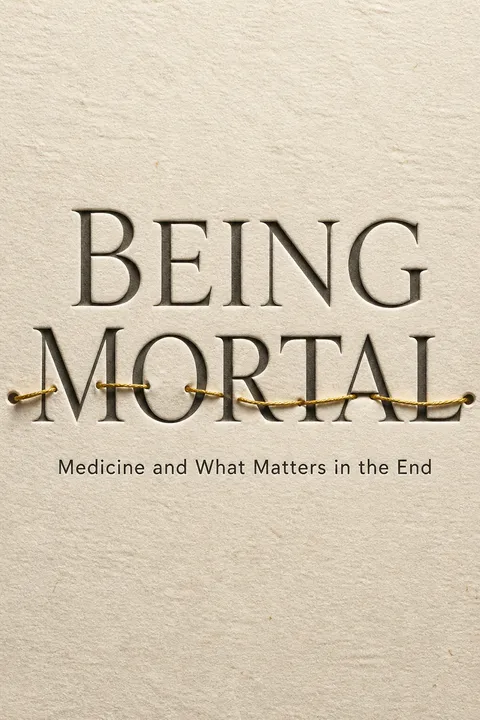
Being Mortal: Medicine and What Matters in the End explores end-of-life care and aging, advocating for quality of life over prolonging existence. Gawande combines personal anecdotes, patient stories, and research to discuss assisted living, hospice, and the importance of autonomy for the elderly and terminally ill. The book challenges the medical establishment's focus on survival at all costs and encourages open conversations about mortality. While some readers found it repetitive or emotionally challenging, many praised its compassionate approach and considered it essential reading for understanding end-of-life issues.
People Also Read









Glossary
Activities of Daily Living
Basic self-care abilitiesA clinical checklist of basic tasks used to assess physical independence: toileting, eating, dressing, bathing, grooming, getting in and out of bed or a chair, and walking. Needing help with these activities can indicate that a person requires support with daily care. The book distinguishes them from more complex tasks needed to live independently, such as managing money or medications.
intimacy at a distance
Close family, separate homesA pattern in which older adults and their adult children maintain emotional and practical connection while living separately. Gawande uses it to describe a preference enabled by pensions, savings, and greater personal choice. It offers freedom from constant family oversight, but it can leave people vulnerable when illness or frailty creates a need for daily assistance.
socioemotional selectivity theory
Goals shift as time feels limitedPsychologist Laura Carstensen's theory that people's goals depend partly on how much time they believe remains. When the future feels open, people tend to seek new experiences, information, and relationships. When time feels limited or uncertain, they focus more on emotionally meaningful relationships and present-day experience. Gawande uses this framework to explain why illness, not age alone, can change priorities.
Three Plagues
Boredom, loneliness, helplessnessBill Thomas's name for three common harms of nursing-home life. He argued that residents needed more than medical treatment and scheduled activities: they needed stimulation, companionship, and opportunities to contribute. His intervention at Chase Memorial brought animals, plants, children, and shared responsibilities into the facility to counter these conditions.
Eden Alternative
Living things in eldercareBill Thomas's approach to improving nursing homes by incorporating plants, animals, children, and everyday responsibilities into residents' lives. At Chase Memorial, the program aimed to counter boredom, loneliness, and helplessness by making the facility feel more like a living community. Gawande reports reduced medication use and deaths during a comparison study, while noting that the study did not establish exactly how the changes produced those results.
Green House
Small, home-like care settingA nursing-home model developed by Bill Thomas, designed to provide intensive care in a domestic environment. Green Houses are small communities, generally with no more than twelve residents, private rooms, shared living and dining areas, and flexible routines. Frontline caregivers support everyday life as well as personal care, while medical services remain available.
Peak-End rule
Memory favors peak and endingA finding associated with Daniel Kahneman's research on how people remember experiences. Retrospective evaluations often depend heavily on the most intense moment and the final moment, rather than on the experience's full duration. Gawande applies the idea to decisions about suffering, while emphasizing that remembered experience is only one consideration among immediate comfort, meaning, and the person's own priorities.
ODTAA syndrome
One crisis after anotherGawande's shorthand for the accumulating crises that can mark advanced illness. A patient may temporarily recover from one problem, only to face another, such as a new obstruction, infection, or treatment complication. The timing is unpredictable, but repeated setbacks can reveal a continuing decline and make earlier conversations about goals and limits especially important.
interpretive
Guidance shaped by patient valuesA model of the doctor-patient relationship in which the clinician helps a patient clarify what matters, explains the available medical options, and advises which choices best serve the patient's priorities. It differs from paternalism, where the doctor decides, and from an information-only approach, where the doctor lists options and leaves the patient to choose without guidance.
total institution
Life under one authoritySociologist Erving Goffman's term for a setting where daily activities occur in one place, under a central authority, on a tightly imposed schedule, and alongside people treated as a group. Gawande applies the concept to nursing homes, where systems designed for care and safety can also restrict residents' privacy, routines, and control.
FAQ
What's Being Mortal by Atul Gawande about?
- Exploration of mortality: The book examines the modern experience of aging and dying, highlighting the gap between medical capabilities and the actual needs of patients facing mortality.
- Personal stories: Gawande shares narratives from his medical practice and personal life, illustrating the emotional and ethical dilemmas in end-of-life care.
- Cultural critique: It critiques societal and medical approaches to aging and death, advocating for a more humane focus on quality of life.
Why should I read Being Mortal by Atul Gawande?
- Insightful perspective: Gawande combines personal stories with research, offering a relatable and informative view on aging and mortality.
- Encourages reflection: The book prompts readers to consider their own views on aging, death, and the role of medicine, sparking important discussions.
- Practical advice: It provides guidance on navigating aging and end-of-life care, valuable for patients, families, and healthcare professionals.
What are the key takeaways of Being Mortal by Atul Gawande?
- Importance of communication: Honest conversations about mortality between patients and healthcare providers are crucial for better care and meaningful choices.
- Quality of life focus: The book emphasizes enhancing life quality over merely prolonging it, advocating for understanding individual priorities.
- Redefining care: Gawande suggests care should be centered around individual needs and desires, rather than institutional protocols.
What are the best quotes from Being Mortal by Atul Gawande and what do they mean?
- “The goal is not a good death, but a good life to the very end.” This quote emphasizes living well with meaning and dignity, even as death approaches.
- “We are not just living longer; we are living better.” Reflects on medical advancements that improve life quality, not just longevity.
- “The truth is that we are all going to die.” Encourages open discussions about death, preparing for it in a way that honors individual values.
How does Atul Gawande address the medical profession in Being Mortal?
- Critique of training: Gawande notes that medical training often neglects mortality, focusing on life-saving rather than end-of-life care.
- Need for compassion: He argues for cultivating compassion and understanding in dealing with terminally ill patients.
- Call for change: Advocates for a holistic approach in medicine, considering emotional and psychological aspects of aging and dying.
How does Being Mortal by Atul Gawande redefine the concept of aging?
- Aging as a process: Gawande views aging as a complex process to be managed with dignity, not just physical decline.
- Focus on autonomy: The book advocates for maintaining control over one's life and care choices as one ages.
- Cultural shift: Calls for society to move from fear and avoidance to acceptance and understanding of aging.
What role do families play in the themes of Being Mortal by Atul Gawande?
- Support systems: Families are crucial in advocating for elderly loved ones and ensuring their wishes are respected.
- Communication challenges: Highlights the difficulties families face in discussing aging and death, encouraging open dialogues.
- Emotional burden: Addresses the emotional strain on families caring for aging relatives, advocating for support systems.
How does Atul Gawande suggest we improve end-of-life care in Being Mortal?
- Patient-centered approach: Prioritizes individual values and preferences, leading to more meaningful care.
- Open conversations: Emphasizes the need for discussions about death and dying to align treatment with patient wishes.
- Holistic care models: Suggests integrating medical, emotional, and social support for comprehensive care.
What is the Eden Alternative mentioned in Being Mortal by Atul Gawande?
- Concept of the Eden Alternative: A philosophy aiming to create vibrant environments for the elderly, combating boredom, loneliness, and helplessness.
- Focus on living beings: Encourages interaction with animals, plants, and children to enhance emotional well-being.
- Transformative impact: Shown to improve life quality in nursing homes, representing a shift towards humane, person-centered care.
What role does palliative care play in Being Mortal by Atul Gawande?
- Focus on quality of life: Palliative care prioritizes comfort and well-being for patients with serious illnesses.
- Integration with treatments: Should be combined with curative treatments for comprehensive care addressing physical and emotional needs.
- Support for families: Provides crucial support for families, helping them navigate the complexities of serious illness care.
How does Being Mortal by Atul Gawande illustrate the importance of conversations about death?
- Encouraging open dialogue: Advocates for early conversations about death to improve understanding and decision-making.
- Understanding patient values: Allows healthcare providers to tailor care to align with what matters most to patients.
- Reducing fear and anxiety: Open discussions help confront fears, leading to peace and acceptance for patients and families.
What does Being Mortal by Atul Gawande say about the medicalization of aging?
- Critique of modern medicine: Criticizes the focus on prolonging life at the expense of quality and dignity.
- Need for a paradigm shift: Advocates for prioritizing well-being and personal choice over mere survival.
- Emphasis on holistic care: Stresses addressing emotional, social, and spiritual dimensions alongside physical aspects of aging.
About the Author


Download PDF
Download EPUB
.epub digital book format is ideal for reading ebooks on phones, tablets, and e-readers.








