

Key Takeaways
In brain surgery, knowing when to stop matters as much as knowing how
Skill has a boundary. Marsh uses microscopes, computer navigation, awake mapping, and electrical monitoring, yet none can make brain surgery safe. The brain is delicate, tumours behave unpredictably, and a surgeon can cause permanent disability by taking too much. Sometimes the right operation is no operation at all. The judgment to stop is part of the craft, not a retreat from it.
His pineal tumour operation shows both sides: after a previous patient was left paralysed, he feared operating again. The new operation went well, but luck and the tumour's separability mattered alongside his experience. Technology sharpened his view; it could not guarantee the result.
What's striking is how Marsh distinguishes technical precision from control over outcomes. In safety-critical work, tools can reduce some errors while creating a false sense that risk has been mastered. His account resists that illusion without dismissing technology: better instruments matter, but judgment includes recognizing when uncertainty has become unacceptable. The principle also applies outside medicine, wherever expertise tempts professionals to treat capability as permission. A difficult question remains: how should a surgeon know when a risk is too high? Marsh's answer is not a formula, but an honest comparison of possible harms.
Compare the danger of intervention with the danger of doing nothing
Risk cuts both ways. A 32-year-old woman had a small, unruptured brain aneurysm discovered during a scan for headaches that had already improved. The aneurysm might never burst. If left alone, its estimated annual rupture risk was low; if surgically clipped, Marsh estimated a 4 to 5 percent chance of death or disabling stroke. A less invasive procedure was not suitable, so the patient had to choose between two uncertain futures.
Marsh explained that he would not have the operation himself, partly because he was older and had fewer years of risk ahead. The patient chose surgery because she could not bear the uncertainty of living with the aneurysm. It went well, but success did not make the decision simple in retrospect.
This is a vivid example of risk as a personal calculation, not merely a statistic. The same probability can feel different depending on age, family responsibilities, tolerance for uncertainty, and the consequences a person fears most. Shared decision-making is strongest when clinicians explain not only the numbers, but what those numbers mean in ordinary life. Still, a choice made under intense fear is not automatically an informed one. Marsh's account makes room for that tension: respecting autonomy requires taking a patient's values seriously while checking that anxiety has not made the options seem more certain than they are.
Judge success by the life a patient can return to, not survival alone
An operation can save a body. Marsh challenges the assumption that keeping a patient alive is always the best outcome. A cyclist with catastrophic brain injuries might survive surgery only to remain profoundly disabled. He argues that families need a plain account of that likely future, not a vague promise that doctors can try. Otherwise, they may feel pressured to accept treatment without understanding what survival could mean.
The same dilemma appears in an elderly woman with a brain bleed. She had said she would rather die than lose her independence and enter a nursing home. Her age, heart disease, and limited prospects of returning home made surgery a moral decision, not just a technical one. The team could not assume that extending life was automatically serving her wishes.
The distinction between biological survival and a life the patient would recognize is central to ethical medicine. It also exposes how easily families can be handed responsibility without being given usable information. A clinician's framing can make a decision feel inevitable, even when genuine options remain. At the same time, judgments about an acceptable quality of life can become paternalistic if professionals substitute their preferences for the patient's. Marsh's strongest safeguard is attention to the person's own stated priorities, while acknowledging that those priorities may be difficult to interpret when illness has impaired communication.
Tell patients the truth, but leave room for uncertainty and hope
Consent is not paperwork. Marsh describes informed consent as far more difficult than presenting risks and waiting for a calm, rational choice. Patients are frightened, may not understand the medical language, and often trust the surgeon because they have little basis for judging that person's skill. One patient typed unfamiliar terms into her phone as if mastering the vocabulary could restore control. Another signed a long consent form without reading it.
Marsh tries to be honest without pretending to know more than he does. With a young mother whose tumour threatened her sight during pregnancy, he explained that surgery might restore vision but could also make it worse. The operation and delivery of her baby both went well. His account shows why reassurance must not become a promise, and why uncertainty is part of the truth.
Good communication is not simply accurate information delivered in a technically correct way. It requires noticing what a listener can absorb under stress and making space for questions, pauses, and family involvement. Research on decision-making under pressure suggests that complexity can overwhelm rather than empower, so a stack of disclosures may satisfy procedure without supporting understanding. Yet withholding every frightening possibility can also undermine trust. Marsh's approach points toward a useful balance: state what is known, name what remains uncertain, and distinguish hope from a guarantee.
Own surgical mistakes before protecting professional pride
Failure leaves a patient behind. During a routine operation for a slipped disc, Marsh discovered that his trainee had severed a nerve controlling the patient's ankle. The young man, a competitive mountain biker, was left with a foot drop and might never run again. Marsh believed he had misjudged the trainee's readiness, so he accepted responsibility, documented what happened honestly, and told the patient that compensation might be appropriate.
Another case involved an infection that Marsh failed to recognize promptly after surgery. The patient was left almost paralysed, and the eventual settlement was six million pounds. He describes how shame makes surgeons want to explain mistakes away, while routine morbidity and mortality meetings often avoid candid criticism. A culture that learns from error needs more than a promise not to blame; it needs truthful accounts of what went wrong.
Marsh makes accountability personal without reducing every bad outcome to individual incompetence. That distinction matters: honest reporting protects patients and can reveal training gaps, faulty processes, or limits in professional judgment. Psychological safety, the ability to discuss mistakes without reflexive punishment, is useful only if it does not become immunity from responsibility. The strongest model combines open disclosure with investigation and repair. A surgeon's candour cannot undo injury, but it can respect the injured person and help prevent the same failure from being hidden, repeated, or mislabeled as unavoidable.
Treat hospital delays and broken systems as patient-safety risks
Care depends on infrastructure. Marsh's operating days are repeatedly disrupted by missing beds, delayed blood results, confusing computer systems, and rules that prevent staff from preparing the next patient. A dying patient can wait for an ambulance transfer; an operation can be postponed because a test arrives late; a clinic can stall while doctors struggle to retrieve scans. These are not dramatic surgical errors, but they can shape who gets timely care and what treatment is possible.
He also shows the human cost of fragmented work. Junior doctors change shifts frequently, may not know patients well, and can lose continuity with families. A manager's rota requirements, a ward's staffing shortage, and a surgeon's limited time all meet at the bedside. Marsh sometimes blames bureaucracy too quickly, but his stories make clear that clinical skill cannot compensate for a system that repeatedly obstructs care.
The book usefully widens the idea of medical risk beyond the operating room. Safety is produced by coordination among people, information, staffing, and physical capacity, so a small administrative failure can become clinically consequential. This is a systems perspective, not an excuse to ignore individual choices. Marsh's frustration with managers is understandable, though his own stories also show that institutions face genuine constraints and competing demands. The practical lesson is to examine the path a patient travels through the system, not just the final procedure. Weak links often sit between departments, where responsibility is easiest to diffuse.
Let illness remind professionals that patients are not another species
Distance has a cost. Marsh admits that doctors need some detachment to work around fear, blood, and death. Yet that distance can harden into the belief that illness happens to other people. When his infant son developed hydrocephalus, Marsh experienced the helplessness and terror familiar to parents whose child is suddenly critically ill. Years later, his mother died at home, cared for by her children. He also became a patient himself, undergoing eye surgery and breaking his leg.
Those experiences changed the way he saw hospital life. Privacy, a clean room, a good night's sleep, and clear explanations mattered far more from a patient's bed than they had from the surgeon's side. His professional knowledge helped him navigate care, but it could not make him invulnerable or remove the fear.
Clinical detachment can preserve attention and make difficult work possible, but it is not the same as indifference. Patienthood reveals how much medicine depends on seemingly minor conditions: being listened to, knowing what happens next, and retaining dignity. These are not decorative extras; they affect a person's capacity to endure treatment. Marsh's experience also warns against romanticizing empathy as something that comes automatically from personal suffering. Professionals still need to listen carefully, since no individual experience can stand in for another patient's particular fears or needs.
Good intentions do not make an ambitious operation the right one
The urge to rescue can mislead. Marsh began helping Ukrainian neurosurgeon Igor Kurilets after seeing the poor conditions in the hospitals and the hostility Igor faced while trying to modernize care. He brought equipment, taught techniques, and operated on patients who had few other options. The work could genuinely help, but it also placed Marsh in unfamiliar settings with limited support and difficult cases.
The clearest warning is Tanya, an 11-year-old with an enormous tumour others considered inoperable. Marsh brought her to London and attempted two long operations. The second caused a devastating stroke. She returned to Ukraine severely disabled and died about eighteen months later. He never learned whether the surgery had extended or worsened her life. His desire to help could not settle that question.
Tanya's story is painful precisely because it resists a tidy verdict. Refusing to intervene might have meant abandoning a child with few options; operating exposed her to harms that became real. This is the difference between benevolent intention and justified action. In global health, assistance is strongest when local expertise, resources, follow-up, and patient preferences shape the plan, rather than the visiting clinician's appetite for a challenge. Marsh does not present himself as a detached observer, and that makes the ethical problem sharper: compassion needs limits, but limits can also leave people without help.
Hope can sustain patients, but it can also prolong suffering
More treatment is not always more life. Helen had a recurrent brain tumour despite multiple operations, radiotherapy, and chemotherapy. Her family struggled to accept that another operation was unlikely to help, and Marsh agreed to operate partly because he could not face telling them that treatment had reached its limit. He later regretted the decision. In another case, he chose not to reoperate on David when surgery would probably add only a short time and make the remaining months harder.
A NICE committee deciding whether to fund an expensive cancer drug confronted a related problem. The drug's trials did not clearly show longer life or better quality of life, yet patients spoke of the days it might buy. Economic models could estimate treatment value, but Marsh questioned whether they could capture the comfort of hope. Hope matters, but it cannot substitute for evidence of benefit.
Hope is neither a medical outcome nor a delusion by definition. It can help people face frightening futures, while also making it harder for clinicians and families to recognize when treatment has become burdensome without offering meaningful benefit. The challenge is to preserve hope without attaching it only to cure or extra time. A patient may hope for comfort, a conversation, or a return home. Resource decisions add another layer: public systems must compare benefits and costs, but numerical models cannot erase the human values they simplify.
A good death depends on comfort, dignity, and people who stay
Care continues when cure ends. Marsh's mother died at home after a short illness, surrounded by family and cared for by her children. They helped her wash, move, and rest, and she was free of pain. She could speak openly about her life and death until near the end. Marsh contrasts this with hospital deaths, where patients may lie in crowded wards, surrounded by machinery, while relatives struggle to find privacy and clear answers.
The contrast is not a claim that dying at home is always possible or best. His mother's circumstances were unusually supportive. The deeper point is that a good death involves more than turning off treatment or extending life. It depends on attention to comfort, relationships, and the dying person's wishes, alongside honest recognition that the body may resist an easy ending.
This ending shifts the measure of care from what clinicians can technically fix to what people need when fixing is no longer possible. Palliative care is not simply the absence of treatment; it is active attention to pain, communication, and the patient's relationships. Marsh's mother's experience shows the value of family presence, but it should not become an idealized standard that burdens relatives or shames those who need professional support. The relevant question is not where death occurs, but whether the person's needs and preferences remain visible as medical goals change.
Analysis
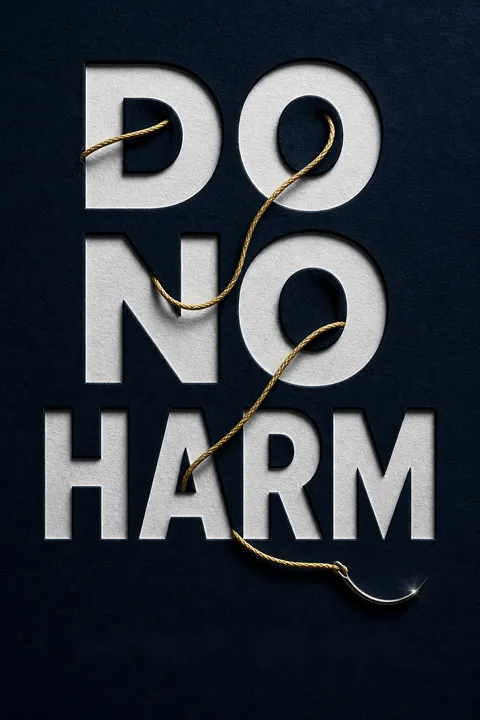
Do No Harm is a memoir of neurosurgery structured around cases, each introduced through the name of a disease or condition. The episodic form lets Marsh move between operating-room suspense, hospital absurdity, and intimate reflection without pretending that one framework can resolve every medical dilemma. Its central subject is not surgical technique alone, but responsibility under uncertainty: a surgeon must act with incomplete knowledge, then live with consequences that can be irreversible.
The book's most useful corrective is its refusal to equate technical success with moral success. A procedure may be flawless and still fail to restore a life the patient values. Conversely, restraint may protect someone from a devastating intervention, yet leave the surgeon wondering whether more could have been done. Marsh makes those choices concrete through patients with aneurysms, tumours, and catastrophic injuries, while showing how consent is shaped by fear, trust, family, and unequal expertise.
His candour is also a form of professional argument. By describing error, regret, and the desire to hide from injured patients, he challenges a culture in which competence is confused with certainty. Yet the memoir is not a neutral audit. It is narrated by a highly experienced surgeon, and its vivid personal cases cannot establish how common particular outcomes are. Marsh's anger at management sometimes narrows the view of institutional pressures, even as his own stories demonstrate their importance.
The result is neither an indictment of surgery nor a defence of it. It is a portrait of work whose rewards and harms are inseparable, and of the emotional labour required to disclose bad outcomes, accept limits, and remain present with patients. The book asks readers to judge medicine not by its heroic image or technological reach, but by the quality of its decisions and its care when certainty, cure, and control are unavailable.
Review Summary
Do No Harm is a candid memoir by neurosurgeon Henry Marsh, offering insights into the challenges and ethical dilemmas of brain surgery. Readers appreciate Marsh's honesty about his successes and failures, as well as his frustrations with NHS bureaucracy. The book provides a compelling look at the human side of medicine, detailing difficult decisions and their consequences. While some find Marsh's ego off-putting, most praise his writing style and the book's educational value. The work is described as thought-provoking, emotional, and a must-read for anyone interested in medicine or neurosurgery.
People Also Read


Glossary
Eloquent brain
Essential functional brain areasA neurosurgical term for parts of the brain where injury can produce serious losses, such as impaired movement, speech, or vision. Surgeons try to avoid these areas when removing tumours. Marsh describes awake surgery and electrical stimulation as ways to identify vulnerable functions, while emphasizing that mapping cannot eliminate the risk of damage.
Neurotmesis
Complete nerve severanceThe complete interruption of a peripheral nerve. In Marsh's account, a trainee accidentally severed a nerve root during an operation for a slipped disc. Such an injury can prevent recovery of the nerve's function, unlike a less severe injury in which some continuity remains. The term names the severity of the damage, not a treatment.
Persistent vegetative state
Wakefulness without clear awarenessA condition in which a person may appear awake, with eyes open, but shows no clear awareness or responsive interaction with the outside world. Marsh describes patients whose bodily functions continue while communication and voluntary movement are absent. He notes that research has detected brain activity in some unresponsive patients, while the meaning of that activity remains uncertain.
Quality Adjusted Life Year
Life expectancy adjusted for healthA measure used in health economics to combine how long a treatment may extend life with the quality of that additional life. A year in good health receives greater value than a year spent in severe illness. NICE committees use this kind of measure when comparing the cost of a new treatment with its expected benefit, though the calculations depend on uncertain judgments about quality.
Standard gamble
A method for valuing health statesA health-economics technique that asks people to compare a health condition with a hypothetical gamble, often involving a chance of full health and a chance of death. Their choices are used to assign a value to the health state. Marsh questions how well such imagined choices represent the experience of actual patients who are ill or nearing death.
Anaesthesia dolorosa
Painful numbness after nerve injurySevere pain experienced in an area that has lost normal sensation, often after a sensory nerve has been damaged or cut. Marsh describes a patient with facial pain following removal of a brain tumour. The condition illustrates how pain can persist even when the affected area is numb, and why removing or treating the visible nerve does not necessarily resolve pain.
FAQ
1. What is Do No Harm: Stories of Life, Death and Brain Surgery by Henry Marsh about?
- Personal neurosurgical memoir: The book is a candid account of Henry Marsh’s career as a neurosurgeon, sharing stories from the operating theatre and the emotional challenges of treating life-and-death cases.
- Exploration of mortality and ethics: Marsh reflects on the nature of death, the limits of medicine, and the ethical dilemmas faced by doctors and patients.
- Global and systemic perspective: The narrative includes experiences from different healthcare systems, highlighting both the universality of patient vulnerability and the impact of bureaucracy on care.
2. Why should I read Do No Harm by Henry Marsh?
- Rare insight into neurosurgery: The book demystifies brain surgery, offering detailed descriptions of procedures and the surgeon’s mindset.
- Humanizes doctors and patients: Marsh’s stories reveal the vulnerability, doubts, and ethical dilemmas faced by both doctors and patients, fostering empathy and understanding.
- Thought-provoking reflections: The memoir raises important questions about life, death, hope, and the limits of medicine, encouraging readers to think critically about healthcare and mortality.
3. What are the key themes and takeaways from Do No Harm by Henry Marsh?
- Inevitability of death: Despite medical advances, many brain conditions remain incurable, and doctors must balance hope with honesty.
- Burden of responsibility: Surgeons carry immense responsibility, and mistakes can have devastating consequences, leading to shame and self-doubt.
- Complexity of communication: Breaking bad news and managing patient expectations are central challenges, requiring empathy and skill.
- Systemic healthcare challenges: The book critiques bureaucracy, understaffing, and management decisions that affect patient care and doctor training.
4. What are some of the most memorable quotes from Do No Harm by Henry Marsh and what do they mean?
- “First, do no harm…”: This ancient dictum, attributed to Hippokrates, frames the ethical foundation of medicine and the surgeon’s responsibility.
- “Every surgeon carries within himself a small cemetery…”: Quoting René Leriche, Marsh highlights the emotional burden of surgical failures and regrets.
- “The best is the enemy of the good.”: This surgical maxim underscores the importance of knowing when to stop operating to avoid causing harm.
- “The idea that neurosurgery is some kind of calm and rational appliance of science is such utter crap.”: Marsh’s candid admission reveals the emotional intensity and unpredictability of brain surgery.
5. What are some key medical concepts and terms explained in Do No Harm by Henry Marsh?
- Pineocytoma: A rare, slow-growing tumour of the pineal gland, requiring delicate surgery due to its deep brain location.
- Aneurysm: A dangerous dilatation of a blood vessel that can cause catastrophic brain haemorrhage if ruptured, with both open surgery and coiling as treatment options.
- Haemangioblastoma: A benign but potentially fatal tumour made of blood vessels, requiring precise removal to avoid severe bleeding.
- Tic douloureux (Trigeminal neuralgia): A condition causing severe facial pain, sometimes treated by microvascular decompression surgery.
- Leucotomy: The now-obsolete surgical cutting of white nerve fibres in the brain, originally known as prefrontal lobotomy, with significant ethical implications.
6. How does Henry Marsh describe the emotional experience of being a neurosurgeon in Do No Harm?
- Carrying emotional burdens: Marsh uses the metaphor of a “small cemetery” to describe the lasting impact of surgical failures and regrets.
- Anxiety and vulnerability: He admits to feeling nervous before operations, especially after complications, showing the human side of surgeons.
- Balancing hope and realism: Marsh describes the tension between wanting to reassure patients and the need to be honest about risks, often feeling both dread and exhilaration.
7. How does Do No Harm by Henry Marsh portray the role of technology in neurosurgery?
- Advanced tools and their limits: Marsh discusses using computer navigation, operating microscopes, and brain stimulation to improve safety, but emphasizes that risk remains.
- Shift in surgical practice: The book explains how catheter-based coiling has replaced many open aneurysm surgeries, benefiting patients but reducing training opportunities for surgeons.
- Skill and judgment still essential: Despite technological advances, Marsh stresses that neurosurgery remains a craft requiring experience and the ability to make difficult decisions.
8. What ethical dilemmas and challenges in patient care are discussed in Do No Harm by Henry Marsh?
- Risk versus benefit: Marsh often faces uncertainty about whether to operate, especially in elderly or frail patients, balancing surgical risks against disease progression.
- Informed consent and autonomy: He highlights the difficulty patients have understanding complex information and the emotional burden of making life-altering decisions.
- Dealing with failure: The book explores the challenge of breaking bad news, managing expectations, and coping with the consequences of surgical complications.
9. How does Henry Marsh describe the experience of breaking bad news to patients and families in Do No Harm?
- Balancing truth and hope: Marsh believes in always telling the truth but rarely depriving patients of all hope, as hope is psychologically vital.
- Emotional difficulty: He admits to struggling with these conversations, feeling the weight of responsibility and uncertainty about his effectiveness.
- Patient understanding: Patients often absorb little of what is said, and their perception is influenced by the doctor’s demeanor and nonverbal cues.
- Teaching communication: Marsh notes that junior doctors often struggle with this skill, highlighting the need for better training.
10. What are some notable patient cases described in Do No Harm by Henry Marsh?
- Pineocytoma patient: A high-powered executive with a rare pineal tumour, illustrating the complexity and emotional weight of deep brain surgery.
- Melanie’s story: A pregnant woman with a meningioma causing blindness, whose successful surgery and delivery provide a rare happy ending.
- Aneurysm clipping: A high-stakes operation with technical difficulties, showcasing the tension and skill required.
- Trigeminal neuralgia in Ukraine: Marsh’s pioneering surgery on a woman with severe facial pain, demonstrating his commitment to global neurosurgery.
11. What does Do No Harm by Henry Marsh reveal about the challenges of training junior doctors and the impact of healthcare policies?
- Reduced training opportunities: Marsh discusses how reduced working hours and shift work disrupt continuity of care and limit clinical experience for trainees.
- Risks of inexperience: He recounts serious mistakes made by less experienced trainees, and the difficulty consultants face in supervising and deciding when juniors can operate.
- Management and bureaucracy: Marsh criticizes hospital management’s lack of understanding and support for clinical needs, and how administrative policies can hinder patient care.
- Frustration and burnout: These systemic challenges contribute to doctors’ frustration and threaten the future quality of medical care.
12. How does Henry Marsh’s own experience as a patient influence his perspective in Do No Harm?
- Personal vulnerability: Marsh describes ignoring his own symptoms, illustrating how even doctors can be slow to recognize their illnesses.
- Patient experience: He recounts the anxiety and vulnerability of undergoing surgery himself, deepening his empathy for patients.
- Contrast in care: Marsh reflects on differences between private and public healthcare, and the gratitude patients feel towards their doctors.
- Perspective gained: His experiences as a patient reinforce the importance of compassion and understanding in medical care.
Download PDF
Download EPUB
.epub digital book format is ideal for reading ebooks on phones, tablets, and e-readers.








