

Key Takeaways
Stop studying only the poor; ask who profits from their poverty.
Change the point of view. Matthew Desmond argues that poverty cannot be explained by examining poor people alone. The question must also reach workers, landlords, lenders, employers, voters, and taxpayers who benefit from the arrangements that keep others insecure. In Newark, an exhausted warehouse worker faced authorities deciding whether he could keep raising his children. His hardship was not an isolated failure of character. It reflected a society that accepts low wages, unaffordable housing, and thin support as normal.
Look for the advantage. Cheap services, rising property values, and investment returns can depend on workers being paid less or housing being kept scarce. The book’s central claim is not that every beneficiary intends harm. It is that personal comfort and poverty can be connected through ordinary economic and political choices.
The shift from studying hardship to studying who gains from it changes the causal question. It resembles systems analysis: instead of treating an outcome as a defect in an individual, it traces the incentives and feedback loops that reproduce it. That perspective makes responsibility more concrete without requiring a conspiracy. Still, benefit does not prove that every arrangement was designed for exploitation. Separating deliberate abuse from institutions that reward harmful behavior matters, because the remedies differ: prosecute fraud in one case, change market rules and political incentives in another.
Poverty is a pileup of pain, instability, and lost freedom.
Income is only the surface. The official poverty line records income against a threshold, but it misses much of poverty’s lived force: untreated illness, unsafe housing, trauma, eviction, stigma, and exposure to violence. Crystal Mayberry moved through more than twenty-five foster placements before adulthood. With a disability benefit of $754 a month, she paid 73 percent of her income in rent, was evicted, then lost eligibility for the benefit. Her story shows how one setback can trigger several more.
Scarcity consumes attention. Desmond draws on behavioral research describing a “bandwidth tax”: the mental burden of constantly managing immediate shortages. When a crisis dominates attention, planning and decision-making become harder. Poverty is therefore not simply low income. It is a condition that can diminish health, time, safety, and the capacity to act freely.
This account joins material deprivation to psychological load, avoiding the false choice between economic explanations and personal experience. Research on stress and cognition makes the proposed mechanism intuitive: urgent demands compete for limited attention. The concept should not be used to portray poor people as inherently less capable, however. The pressure is situational, and reducing the pressure can restore room for judgment. A broad definition of poverty also creates a measurement challenge: policymakers need income statistics, but income alone cannot show whether people have safety, stable housing, or meaningful options.
More welfare spending cannot end poverty when aid leaks upward.
Spending is not delivery. Federal spending on major means-tested programs rose substantially over several decades, yet the poverty rate showed little long-term movement. One reason is that allocated money does not always reach families. Under Temporary Assistance for Needy Families, states spent just 22 cents of each budgeted dollar on direct cash assistance in 2020. Some funds supported other services, while others went to activities far removed from poverty relief.
Access and design matter. The book also describes disability applicants who need lawyers to secure benefits, and a pandemic response that showed how direct support can reduce hardship quickly. Expanded unemployment payments, stimulus checks, rental aid, and child benefits helped poverty fall during the pandemic, including a sharp reduction in child poverty. The lesson is not that assistance fails. It is that programs must be designed, funded, and delivered so their benefits reach people rather than being diverted or recaptured.
The distinction between public spending and public benefit is essential. Budgets measure inputs, while families experience what arrives after administrative rules, state discretion, and market responses intervene. This resembles the difference between a policy’s formal design and its implementation. Direct transfers can also stabilize demand, not merely relieve individual hardship, which helps explain why cutting benefits may weaken local spending. Yet the book’s long-run comparison cannot by itself isolate every cause of stagnant poverty. Program mix, eligibility rules, housing costs, and labor markets change together, so each intervention needs outcome tracking as well as a compelling purpose.
Raise workers' bargaining power, not just the paycheck floor.
Low pay is a power issue. Julio Payes worked as many as eighty hours a week across two minimum-wage jobs, then collapsed from exhaustion. After Emeryville raised its minimum wage, he earned more, worked fewer hours, and had more time with his younger brother. Evidence from a New Jersey minimum-wage increase found no drop in fast-food employment, and Desmond notes that most subsequent studies found employment effects to be small.
Workers need collective leverage. Union membership fell from roughly one-third of workers in the 1950s and 1960s to about one in ten today. Desmond links that decline to stagnant wages, unstable work, and companies shifting jobs to contractors. He supports stronger organizing protections and sectoral bargaining, in which worker representatives negotiate baseline conditions across an industry rather than one workplace at a time.
The focus on bargaining power adds an institutional explanation to the familiar debate over education and individual effort. In labor economics, employer concentration can create monopsony: a situation in which workers have few realistic employers and therefore limited ability to negotiate. Collective bargaining and wage floors can counter that imbalance. The minimum-wage evidence is not a guarantee that every increase has identical effects in every local economy; outcomes depend on the size of the increase and firms’ responses. But the book’s examples challenge the assumption that low pay is the unavoidable price of keeping jobs available.
Poor families pay more when housing and credit offer no real exit.
A bad deal can be the only deal. Median rent rose from $483 in 2000 to $1,216 in 2021, while many renters’ incomes lagged. Desmond and economist Nathan Wilmers found that, after expenses, landlords in poor neighborhoods averaged about $100 monthly profit per unit, compared with about $50 in affluent neighborhoods. Poor tenants often face eviction records, discrimination, and few alternatives, limiting their ability to refuse a high rent or unsafe home.
Scarcity carries fees. People with little cash can be charged overdraft fees, check-cashing costs, and high-interest loans. Four out of five payday loans are renewed or rolled over, keeping borrowers in debt. Desmond calls the broader pattern predatory inclusion: people excluded from fair housing or banking are admitted to markets on damaging terms. Raising income alone may not solve the problem if landlords and lenders can capture the gains.
This is a useful corrective to explanations that treat consumer choices as fully voluntary. Choice requires alternatives, and a market can be formally open while functioning very differently for people with money and people without it. The same scarcity that makes a fee painful can also make comparison shopping impractical. That said, the housing findings do not imply every landlord in a low-income neighborhood earns unusually high profits; the estimates describe patterns across properties. Good policy therefore needs both consumer protections and more supply of safe, affordable homes and fair credit.
Count tax breaks as welfare, then fund security before privilege.
Aid often wears a respectable disguise. Government support is commonly associated with food assistance or public housing, yet tax breaks for homeowners, employer health insurance, retirement savings, and college accounts are also public subsidies. In 2021, the federal government spent about $1.8 trillion on tax breaks. Desmond’s accounting of major benefits estimates that households in the top fifth received about $35,363 per year in government support, compared with about $25,733 for households in the bottom fifth.
The revenue is not imaginary. The IRS estimated that unpaid taxes exceeded $1 trillion a year, much of it associated with wealthy households and corporations. Desmond estimates that the 2020 poverty gap, the amount needed to raise everyone below the official line up to it, was $177 billion. He argues that stronger tax enforcement and a fairer distribution of subsidies could finance much larger investments in basic security.
Making tax expenditures visible corrects a common accounting asymmetry: a direct payment looks like government action, while a tax reduction can feel like money simply left alone. Both affect household resources and public budgets. This reframing also clarifies why debates about affordability are political choices, not just arithmetic. The poverty-gap figure is a useful scale estimate, not a complete price tag for eliminating poverty: it excludes administrative costs and does not resolve housing supply, health care, or other structural problems. Its force is to challenge claims that serious relief is inherently unaffordable.
Tear down zoning walls that hoard schools, safety, and opportunity.
Neighborhoods distribute life chances. Desmond describes how affluent residents can buy access to well-resourced schools, safe streets, and reliable public services, while restrictive zoning blocks many lower-cost homes. In many American cities, roughly 75 percent of residential land permits only detached single-family houses. This makes exclusion durable without naming race directly, even though the history of such rules is closely tied to racial segregation.
Integration changes outcomes. Research discussed in the book finds that poor children exposed to high-opportunity neighborhoods have better educational and adult outcomes. A Maryland study found that low-income students in low-poverty schools outperformed peers in higher-poverty schools, even when the latter schools received intensive resources. Desmond argues for allowing multifamily housing and requiring affordable units in new developments, so opportunity is less dependent on a family’s ability to buy its way into a privileged zip code.
The neighborhood argument connects housing policy to education, health, and civic life. A school’s resources matter, but peer context, safety, and the surrounding network of opportunity can matter too. Integration is not simply a technical relocation program: families may value community ties, cultural refuge, and familiarity in their current neighborhoods. A fair approach expands choices rather than treating poor communities as places to escape. Zoning reform also needs attention to tenant protection, since adding investment without protecting current residents can make a neighborhood more expensive instead of more inclusive.
Give people real alternatives at work, home, and in finance.
Choice is protection. Desmond proposes changing the conditions that let employers, landlords, and lenders dictate terms. Sectoral bargaining could give workers in an industry shared negotiating power. More public housing and small-dollar mortgages could give renters alternatives to high-cost private rentals. A tenant cooperative, where residents jointly own and govern a building, offers another route. In Minneapolis, renters organized to buy five neglected buildings through a cooperative; their monthly housing costs fell by $100.
Agency includes family planning. The book also treats access to contraception and abortion as part of economic choice. Delaware Contraceptive Access Now helped women obtain the method they wanted and was associated with a 24 percent decline in unintended pregnancies among low-income and uninsured women. The Turnaway Study followed about 1,000 women seeking abortions and found worse economic outcomes among those denied care. Across these areas, empowerment means making a fair alternative genuinely available.
The common thread is not a single preferred provider or program, but the ability to refuse an unfair offer. That principle links labor law, housing, finance, and reproductive health without reducing them to one policy formula. The cooperative example shows how ownership can change residents from isolated customers into decision-makers. Still, alternatives require durable institutions, financing, and protections against unequal power inside the alternative itself. A cooperative can be difficult to scale, and reproductive services must be voluntary and rights-based, given the history of coercive policies targeting poor and Black women.
Turn concern into organized power, not private guilt.
Concrete wins are possible. During the pandemic, the federal government allocated $46.5 billion for Emergency Rental Assistance. After distribution systems improved, eviction filings fell sharply in several cities, including 53 percent in Albuquerque and 64 percent in Austin in December 2021. The program showed that public action can prevent displacement at scale, but weak public attention helped it remain temporary.
Movements make policy real. Desmond calls for supporting unions, tenant groups, and campaigns led by people directly affected by poverty. Individuals can also examine their workplaces, investments, banks, and purchasing habits for ways they support exploitative arrangements. He calls this broader project poverty abolitionism: political action and personal choices aimed at ending poverty rather than merely easing its symptoms. Consumer decisions matter, but organizing and policy change are necessary to alter the rules that shape millions of decisions.
The emphasis on organized action avoids making poverty a private test of moral purity. Individual choices can signal new norms, but their strongest effect often comes when they reinforce collective pressure on employers, institutions, and lawmakers. The rental-aid example also highlights a communication problem: successful administration can be less visible than failure, leaving effective programs without defenders. Celebration should not replace scrutiny, since temporary relief may not create lasting housing security. The practical standard is both moral and empirical: support affected communities, build coalitions, and preserve what demonstrably reduces hardship.
Analysis
Desmond’s most consequential move is to reverse the usual direction of explanation. Rather than asking why poor people remain poor, he asks how labor, housing, finance, tax policy, and neighborhood boundaries distribute power and returns. This creates a connected account: insecure workers have little leverage, expensive housing absorbs income, credit markets charge for financial fragility, and public policy often subsidizes affluent households more generously than poor ones. Segregation then concentrates both advantage and hardship, making these arrangements appear natural to people who rarely encounter their costs.
The book is strongest when it joins vivid lives to institutional evidence. Julio’s exhaustion makes wage policy tangible; Crystal’s cascading crises show why a single income threshold cannot represent deprivation; the Minneapolis tenant cooperative illustrates how ownership and collective action can alter daily conditions. The pandemic programs provide a particularly useful test of the claim that poverty is politically immutable: when aid arrived at meaningful scale, hardship declined quickly. Together, these cases make poverty look less like a fixed social fact than a policy outcome.
The argument also benefits from an important distinction between intention and effect. A homeowner may oppose affordable housing to protect family savings, not from an explicit wish to harm poor neighbors. Yet repeated decisions of this kind can still maintain exclusion. That distinction helps preserve moral seriousness without turning structural critique into a search for villains.
Some claims require care. Correlations between poverty, policy, and outcomes do not always isolate one cause, and the estimated cost of closing the poverty gap is not the full cost of guaranteeing security. Reforms can also produce tradeoffs: rent subsidies may be captured by landlords, while development can pressure current tenants. These complications strengthen the book’s central demand for evaluation rather than weaken it. The useful question is not whether a policy sounds generous, but whether it increases people’s power, reduces hardship, and prevents its gains from being extracted by better-positioned actors. Poverty abolition, in this account, means changing both the floor beneath people and the institutions that profit when the floor stays low.
Review Summary
Poverty, by America receives mixed reviews, with many praising its informative and thought-provoking content on poverty in the United States. Readers appreciate Desmond's analysis of systemic issues and proposed solutions. Some criticize the book's brevity and perceived bias, while others find it less engaging than his previous work, "Evicted." Despite disagreements on specific arguments, most reviewers consider it an important read that challenges readers to confront their role in perpetuating poverty and encourages action towards its eradication.
People Also Read










Glossary
bandwidth tax
Cognitive cost of scarcityThe mental burden created by persistent financial pressure and urgent shortages. When attention is consumed by rent, bills, food, or emergencies, less cognitive capacity remains for other decisions and responsibilities. The term explains how poverty can shape behavior without implying that poor people are less intelligent or capable.
leaky bucket
Aid lost before reaching familiesA metaphor for public assistance that is allocated to poverty programs but does not fully reach people in need. Funds may be redirected, spent on other purposes, absorbed by administrative processes, or captured by landlords and businesses. The image emphasizes that a program’s budget is not the same as the relief households actually receive.
predatory inclusion
Inclusion on exploitative termsA pattern in which marginalized people are brought into markets or financial systems through harmful deals after being excluded from fair options. Examples include high-cost lending and costly check-cashing services available where conventional banks provide limited access. The concept highlights that access alone does not guarantee equal treatment or meaningful choice.
private opulence and public squalor
Private wealth, neglected public goodsA reinforcing pattern in which affluent households rely on private services and withdraw political support from shared institutions. As public schools, housing, transportation, and other services deteriorate, they serve poorer communities disproportionately, encouraging further private withdrawal. The result is growing private comfort alongside weakened collective resources.
opportunity hoarding
Restricting access to advantageThe preservation of valuable opportunities for a limited group through laws, markets, or social practices that exclude others. In the book, exclusionary zoning, scarce affordable housing, and neighborhood-based access to strong schools illustrate how existing advantages can be protected and passed across generations.
sectoral bargaining
Industry-wide worker negotiationA labor model in which worker representatives negotiate common wages and working conditions across an economic sector, rather than organizing each company or worksite separately. Desmond presents it as a possible way to extend collective bargaining to workers in fragmented industries and reduce competition between employers based on cutting labor standards.
commoning
Collective resident ownershipThe creation of housing that residents collectively own and control. In tenant cooperatives, residents share responsibility for managing and maintaining the building, while housing costs and resale rules can be designed to preserve affordability. The approach offers an alternative to dependence on private landlords or scarce public housing.
targeted universalism
Shared goal, tailored supportA policy approach that sets a common goal for everyone while recognizing that different groups need different forms or levels of support to reach it. Rather than offering identical aid to all or excluding everyone above a strict income cutoff, it designs interventions around the specific barriers different communities face.
scarcity diversion
Hoarding disguised as inevitabilityA political pattern in which resources are concentrated among powerful groups, that concentration is treated as natural, and social problems are addressed only with what remains. When those limited responses fail, the failure is presented as proof that stronger action is impossible, while attention shifts away from the original hoarding.
poverty abolitionism
Collective project to end povertyA personal and political commitment to ending poverty by changing systems that exploit, exclude, or deny people economic security. It includes supporting movements led by affected communities, backing policies that strengthen workers and expand housing choice, and examining how institutions and everyday decisions may contribute to poverty.
The Turnaway Study
Study of abortion denial outcomesA study that followed roughly 1,000 women who sought abortions at clinics. Researchers compared women who received care with women turned away because their pregnancies had advanced beyond a clinic’s limit. The study found that those denied abortions faced worse economic outcomes, including greater poverty and difficulty affording necessities in subsequent years.
FAQ
What's Poverty, by America about?
- Exploration of Poverty: The book delves into the persistent issue of poverty in the United States, questioning why it exists in a nation of abundance. Matthew Desmond uses research and personal experiences to analyze systemic factors.
- Role of the Affluent: Unlike traditional poverty literature, Desmond focuses on how the affluent perpetuate poverty, arguing that understanding poverty requires examining how the privileged benefit from the suffering of the less fortunate.
- Call to Action: It serves as a rallying cry for readers to become "poverty abolitionists," urging them to recognize their complicity in systems that sustain poverty and to advocate for meaningful change.
Why should I read Poverty, by America?
- In-depth Analysis: Desmond combines personal narratives with rigorous research, making the book both informative and relatable, appealing to a wide audience.
- Challenging Perspectives: It challenges readers to reconsider their views on poverty and the poor, encouraging a deeper understanding of societal structures at play.
- Practical Solutions: Desmond proposes actionable solutions to combat poverty, inspiring readers to engage in advocacy and support policies that promote economic justice.
What are the key takeaways of Poverty, by America?
- Poverty is Systemic: Desmond emphasizes that poverty is not merely a result of individual failings but a systemic issue rooted in exploitation and inequality.
- Need for Policy Change: The book advocates for significant policy reforms, such as raising the minimum wage and expanding affordable housing.
- Empowerment of the Poor: Desmond stresses empowering low-income individuals through better job opportunities and financial services to dismantle poverty structures.
How does Matthew Desmond define poverty in Poverty, by America?
- Multifaceted Issue: Desmond defines poverty as a condition encompassing various forms of deprivation, including inadequate housing and limited access to education.
- Official Poverty Measure: He discusses the Official Poverty Measure, illustrating financial insecurity for many Americans with specific income thresholds.
- Deep Poverty: Desmond addresses deep poverty, defined as living below half the poverty line, highlighting extreme deprivation often overlooked.
What solutions does Poverty, by America propose to combat poverty?
- Policy Reforms: Desmond advocates for comprehensive policy changes, including raising the minimum wage and increasing access to healthcare and education.
- Empowerment Initiatives: The book suggests initiatives like better job training and financial literacy programs to empower low-income individuals.
- Community Engagement: Desmond emphasizes community organizing and collective action, encouraging readers to engage with local organizations.
How does Poverty, by America address the role of race in poverty?
- Racial Disparities: Desmond highlights that poverty is not experienced equally across racial lines, with systemic racism contributing to disparities.
- Historical Context: The book provides historical context, discussing discriminatory practices like redlining and their long-lasting effects.
- Intersectionality: Desmond argues for an intersectional approach, recognizing that race, class, and other factors create unique challenges.
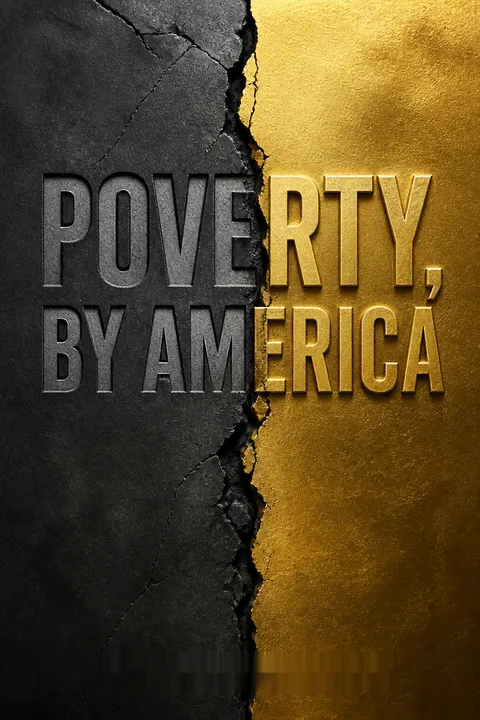
What is the significance of the title Poverty, by America?
- Collective Responsibility: The title suggests that poverty is a societal issue implicating all Americans, calling for collective responsibility.
- Critique of American Values: It highlights the contradiction between the nation’s wealth and widespread poverty, challenging readers to confront moral implications.
- Invitation to Action: By framing poverty as a problem created by America, Desmond invites readers to take action and advocate for change.
How does Desmond suggest we change our mindset about poverty in Poverty, by America?
- Shift from Blame to Understanding: Desmond encourages moving away from blaming the poor and understanding systemic factors contributing to poverty.
- Recognizing Privilege: He urges the privileged to recognize their role in perpetuating poverty and take responsibility for advocating change.
- Becoming Poverty Abolitionists: Desmond calls for adopting the mindset of "poverty abolitionists," involving personal reflection and collective action.
How does Poverty, by America propose to address the housing crisis?
- Investment in Affordable Housing: Desmond advocates for significant investments in affordable housing, including expanding public housing.
- Ending Exclusionary Zoning: The book calls for eliminating exclusionary zoning laws and promoting inclusionary zoning policies.
- Support for Tenant Organizing: Desmond emphasizes supporting tenant organizing efforts to empower renters and protect their rights.
What role do social movements play in Poverty, by America?
- Historical Impact: Desmond discusses how social movements have historically driven significant changes in poverty policy.
- Current Movements: The book highlights contemporary movements like the Poor People’s Campaign, emphasizing grassroots organizing.
- Collective Action: Desmond argues that poverty will only be abolished through a mass movement demanding change.
How does Poverty, by America critique the current welfare system?
- Inequitable Distribution: Desmond points out that the richest families receive more in government subsidies than the poorest, highlighting inequities.
- Stigma and Misunderstanding: The book addresses the stigma surrounding welfare, noting misunderstandings about social assistance programs.
- Need for Reform: Desmond calls for reevaluating the welfare system to ensure it effectively supports those in need.
How can individuals contribute to poverty abolition as suggested in Poverty, by America?
- Personal Choices: Desmond encourages examining consumer choices and investing in businesses that support low-income communities.
- Engagement in Movements: The book urges involvement in social movements advocating for poverty abolition.
- Advocacy for Policy Change: Desmond calls on individuals to advocate for policy changes addressing the root causes of poverty.

Download PDF
Download EPUB
.epub digital book format is ideal for reading ebooks on phones, tablets, and e-readers.








