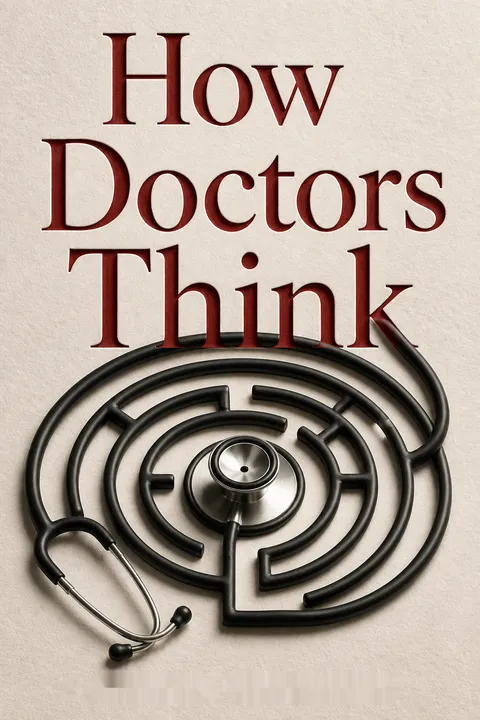


Key Takeaways
Let the patient's story challenge the diagnosis already in the chart
A history is evidence. Anne Dodge had spent fifteen years being treated for anorexia, bulimia, and irritable bowel syndrome. Her weight fell to eighty-two pounds even as she said she was eating thousands of calories. Most doctors treated that mismatch as proof she was not following instructions. Gastroenterologist Myron Falchuk set aside the thick file and invited her to tell the story from the beginning. He listened, examined details other doctors had overlooked, and considered whether food was passing through her body without being absorbed.
The overlooked cause mattered. Blood tests and an endoscopy revealed celiac disease, an autoimmune reaction to gluten. The cereals and pasta meant to help Anne gain weight were worsening intestinal damage. After changing her diet, she gained nearly twelve pounds in a month. Her eating disorder was real, but it was not the whole explanation.
What's striking is that listening here is not merely kindness. It is a diagnostic method that keeps the clinician from mistaking a familiar label for a complete account. Anne's case also shows why contradictory information deserves investigation rather than moral judgment. A patient's story is not automatically accurate in every detail, and records can contain crucial facts, but neither should be allowed to silence the other. The strongest assessment compares what the patient reports, what the body shows, and what the existing explanation fails to explain.
When a case feels settled, search for the detail that refuses to fit
Familiarity can mislead. Anchoring is settling too quickly on one explanation; availability is favoring the diagnosis that comes easily to mind; and confirmation bias is giving more weight to evidence that supports that first guess. When doctors pass a diagnosis along until it seems established, the book calls the effect diagnosis momentum. These habits help clinicians work quickly, but they can also hide contradictions.
The stories expose the cost. Emergency physician Harrison Alter saw many cases of viral pneumonia and diagnosed it in Blanche Begaye, despite a clear chest x-ray. Her rapid breathing and blood chemistry pointed instead to aspirin toxicity. She had taken several dozen tablets, though she had described the amount as a few. In another case, an elderly man assumed to have alcohol-related liver disease actually had Wilson's disease. Groopman cites estimates that roughly 15 percent of diagnoses may be wrong, often because of errors in thinking rather than missing medical knowledge.
A working diagnosis is a useful map, not the territory. The practical value of noticing a mismatch is that it creates a reason to reopen the map before a mistaken label hardens into routine. This is especially important when a patient belongs to a group that attracts easy assumptions, whether because of age, psychiatric history, or apparent behavior. Still, recognizing a bias after a case is solved is easier than catching it in real time. The aim is not to eliminate judgment, but to make room for evidence that could overturn it.
Your feelings toward a patient can distort the care you offer
Emotion affects attention. Doctors may listen less carefully to patients they find frustrating, stigmatized, or difficult. A physician who disliked a woman with many complaints became less responsive when she reported chest discomfort. Her tests were normal, but the pain came from a tear in the aorta. She later died. Disaffection had helped make the complaint easier to dismiss.
Affection can mislead, too. Groopman cared deeply about Brad Miller, a young patient receiving chemotherapy for bone cancer. Wanting to spare him discomfort, he did not complete the usual examination. An abscess went undetected until Brad developed septic shock. He survived. These examples show why good care requires both compassion and discipline: empathy should bring the patient closer, not soften the examination or narrow the search.
The difficult insight is that caring and clear judgment are not automatic partners. Compassion can improve trust and disclosure, yet it can also encourage avoidance of painful procedures or distressing possibilities. Dislike can similarly narrow attention. The answer is not emotional neutrality, which is neither realistic nor necessarily humane, but awareness paired with dependable routines. A complete examination, a pause before dismissing a complaint, or a colleague's independent view can protect patients when a doctor's emotional response is shaping what seems medically plausible.
Use fast intuition, but keep a deliberate second look in reserve
Expertise often arrives fast. Pattern recognition is the ability to identify a likely condition from a cluster of cues, sometimes before the clinician can explain the reasoning step by step. Experts may form a working diagnosis within seconds, while a classroom discussion of the same case can take much longer. During intern Jerome Groopman's first night on call, cardiologist John Burnside recognized that a patient had torn his aortic valve and acted immediately.
Speed has a blind side. Emergency doctor Pat Croskerry reassured a fit forest ranger with chest pain after early tests appeared normal. He had been influenced by how healthy the patient looked. The man returned with a heart attack. Stress also matters: the Yerkes-Dodson law describes performance as strongest at a middle level of arousal, with too little or too much tension impairing it. Good clinicians need fast recognition, but also enough composure to question it.
Intuition is best understood as compressed experience, not a mysterious substitute for reasoning. It can be lifesaving when a crisis leaves little time, as in Burnside's rapid recognition. Yet a fast judgment can also encode a stereotype or overlook how early a disease may be. The useful distinction is not between intuitive and rational doctors. It is between intuition that remains open to correction and intuition mistaken for certainty. A brief deliberate check can test whether the first impression accounts for the whole presentation.
Treat every test and score as a clue, not a final verdict
Measurements need interpretation. A scan can reveal abnormalities without proving which one causes a patient's symptoms. Groopman's hand MRI showed several cysts and other irregularities, leading one surgeon to propose three operations. Another surgeon suspected a damaged ligament that did not appear clearly on the scan. A later, higher-resolution MRI supported that possibility. The first image had not settled the question.
Readers vary, too. In a study cited in the book, radiologists disagreed about whether chest x-rays were normal about 20 percent of the time. One radiologist also changed his own interpretation of the same films on a later reading. Radiologist Dennis Orwig used a systematic checklist, examining structures beyond the one named in the referral. Algorithms and scores can organize information, but their limits, the test's conditions, and the patient's symptoms still matter.
A test result can feel more authoritative than the judgment that produced it, especially when it appears as a precise image or score. But measurement is a process: equipment, technique, context, and interpretation all shape what becomes visible. Orwig's systematic approach guards against stopping once the expected finding appears. The counterweight is that exhaustive review takes time and can produce false alarms. The goal is therefore not to treat every anomaly as meaningful, but to ask whether the finding coheres with the patient's history and examination.
Treat uncertainty as a reason to investigate, not perform certainty
Expertise has boundaries. Pediatric cardiologist James Lock learned that a familiar procedure for draining fluid around the heart could injure the heart itself if the needle went to the wrong place. He argued for using ultrasound to locate the fluid rather than repeating a traditional approach by rote. He also described a treatment threshold for a heart defect that originated in a vote among specialists, not a definitive trial. A number in a guideline can look more certain than the evidence beneath it.
Logic also has limits. Lock's specialty often presents rare problems without a proven playbook. Strict reasoning from incomplete knowledge led him to recommendations that harmed some children. He learned to distinguish established evidence from deductions that still needed testing. A doctor can acknowledge uncertainty and still act, provided the patient understands what is known, what is inferred, and why action is necessary.
Uncertainty is not a defect that expertise eventually removes. In unusual cases, it is part of the information a responsible clinician must manage. Lock's examples are particularly useful because they show how tradition and tidy logic can both acquire undeserved authority. Yet simply announcing uncertainty does not tell a patient what to do; treatment cannot always wait for ideal evidence. The productive question is what decision best manages the known risks while leaving room to revise the plan as new information appears.
Ask what else fits, what fails, and whether two problems coexist
Questions can reopen a search. When symptoms persist or worsen, patients and families can help the doctor reconsider the case. Useful prompts include asking what else might explain the symptoms, what finding does not fit the current diagnosis, and whether more than one condition could be present. These are not requests for a layperson to make the diagnosis. They are invitations for the clinician to test assumptions and consider alternatives.
New symptoms deserve fresh attention. Maxine Carlson had a history of irritable bowel syndrome, but her changing pelvic and abdominal pain came from a ruptured ectopic pregnancy. Her earlier diagnosis and extensive testing made it easy to treat the new problem as another flare. A patient can also ask for the story to be reviewed again, for a test result to be reconsidered, or for another opinion when no explanation accounts for the symptoms.
These questions work because they alter the social permission structure of the visit. A patient who fears appearing difficult may otherwise withhold the very concern that would help the clinician reconsider. Asking about alternatives is especially valuable when a familiar diagnosis has become a conversational dead end. The approach does have limits: patients may not know which possibilities are medically relevant, and repeated testing can bring costs and harm. Questions should therefore open a shared investigation, not turn the appointment into a contest over whose diagnosis wins.
Protect the time and attention diagnosis needs, especially in primary care
Routine can hide the rare. Primary care physicians see a steady stream of ordinary problems, making it easy for the unusual serious case to blur into the day's familiar pattern. Pediatrician Victoria McEvoy described how exhaustion made her irritable and more likely to dismiss calls. She changed her workload and limited the number of patients she saw in a session because she believed better attention improved care.
Time pressure has practical costs. A study of 45 doctors and 909 patients found that many physicians failed to explain how long a new medication should be taken or what side effects to expect; nearly half did not specify dose and frequency. Social context matters as well. JudyAnn Bigby found that one patient labeled noncompliant could not read her medication labels. A rushed visit can miss both the disease and the reason treatment is not working.
The book's critique is not simply that individual doctors should try harder. Attention is a limited resource, and work conditions influence whether it can be used well. A short appointment may handle a straightforward concern, but complex histories, unfamiliar symptoms, and medication barriers require more space. That makes time a feature of clinical quality, not just a scheduling preference. At the same time, longer visits alone cannot guarantee sound judgment. Clear follow-up, good handoffs, and systems that catch omissions must support careful conversation.
Ask who benefits when a treatment is marketed as the obvious answer
Marketing can reshape the diagnosis. Pharmaceutical companies promoted testosterone treatment to aging men through advertisements about fatigue, mood, and sex drive, symptoms that have many possible causes. Testosterone levels decline with age, but the book notes that healthy younger men can also show low readings at some points in the day. The evidence discussed did not establish that older men with modest declines generally benefited from treatment, despite growing prescriptions.
Incentives can reach beyond pills. Drug representatives tracked doctors' prescribing and offered gifts and dinners; surgical-device companies supported trips for surgeons. Groopman also describes spinal fusion as a lucrative operation whose value for many people with chronic back pain was disputed. Industry can help develop useful treatments, but patients should ask whether a recommendation is standard, what evidence supports it, and whether other approaches exist.
The important distinction is not that commercial involvement makes a treatment false. The book itself recognizes that industry can support valuable discoveries. The risk is that promotion changes which conditions attract attention, which evidence gets emphasized, and how quickly uncertainty is forgotten. Patients are poorly positioned to detect subtle influence, so disclosure and independent evaluation matter. A practical safeguard is to separate the clinical question from the sales story: what problem is being treated, what outcome is expected, and how strong is the evidence for this particular patient?
Make treatment fit the patient's priorities, not just the disease
The same diagnosis can call for different choices. Oncologist Stephen Nimer treated George Franklin aggressively when a rare lymphoma resisted its first chemotherapy, helping him live for years. For Vincent Rivera, an outpatient treatment with limited prospects fit better with his wish to care for his wife and remain outside the hospital. Their medical conditions mattered, but so did the lives they wanted to preserve.
Explain risks in usable terms. A relative benefit can sound large without revealing the likely personal gain. Groopman describes a colon cancer decision in which a claimed 30 percent mortality reduction translated to seven deaths rather than ten per hundred over five years. Patients also need honest expectations: Groopman's hand surgery restored about 80 percent of normal function, not perfection. A sound choice balances evidence, uncertainty, burdens, and the patient's own definition of a life worth living.
Shared decision-making is more than presenting a menu of procedures. It requires discovering which outcomes matter to the person choosing: time at home, symptom relief, longevity, independence, or the ability to care for someone else. Absolute numbers help prevent dramatic relative statistics from doing the persuading. Still, values do not remove the clinician's responsibility to recommend against futile or harmful care. The best partnership combines candor about evidence with serious attention to the patient's purposes, rather than equating either maximum treatment or minimal intervention with the right answer.
Analysis
How Doctors Think is a narrative argument about clinical reasoning, not a manual for diagnosing illness. Its recurring cases show that medical errors often arise when a plausible explanation becomes too comfortable: the fit ranger seems healthy, the distressed woman seems neurotic, the child resembles a familiar disease prototype, or a scan appears to explain pain. Groopman's central contribution is to make these invisible mental moves visible to patients as well as physicians. Stories of missed diagnoses give abstract cognitive biases consequences, while the patient's role turns the book's analysis into practical advice.
The most powerful claim is that communication is part of medical competence. Anne Dodge's history mattered because Falchuk created conditions in which she could tell it; Rachel Stein's persistence mattered because specialists treated their own uncertainty as settled knowledge. Patients cannot supply clinical expertise, but they can notice when explanations fail to match experience and ask questions that prompt reconsideration. This is a useful correction to a model of medicine in which patients merely receive decisions.
The book also risks placing too much responsibility on patients. A frightened, ill, or exhausted person may not be able to challenge a senior doctor, identify an unasked question, or seek another opinion. And awareness of bias does not itself prevent bias. The cases therefore point beyond bedside behavior toward structural safeguards: time to listen, systematic checks, feedback on diagnostic errors, and honest communication about evidence and uncertainty. These supports matter because cognition is shaped by workload and institutional incentives, not only personal character.
The book's enduring message is neither that intuition is unreliable nor that algorithms are useless. Both can help, especially in familiar situations. The danger comes when a shortcut, test, score, tradition, or specialist's confidence is mistaken for the whole answer. Good clinical judgment remains provisional: it acts when action is needed, but stays alert to the clue that does not belong. The patient's story is not an alternative to medical reasoning. It is one of the conditions that makes better reasoning possible.
Review Summary
How Doctors Think explores cognitive errors in medical diagnosis through anecdotes and analysis. Groopman examines how physicians' biases, emotions, and thinking patterns can lead to misdiagnoses. He offers insights for both doctors and patients to improve communication and decision-making. The book emphasizes the importance of patients actively participating in their care by asking key questions. While some readers found it repetitive, many praised its engaging style and valuable lessons for navigating healthcare interactions.
People Also Read




Glossary
Pattern recognition
Fast identification from cuesA clinician's rapid recognition of a familiar cluster of signs, symptoms, test results, or visual features. It allows a working diagnosis to emerge quickly, often before the doctor can explain each mental step. Pattern recognition draws on experience, but can mislead when an unusual case is forced to resemble a familiar prototype.
Heuristics
Fast mental shortcutsPractical shortcuts clinicians use to make decisions with incomplete information, limited time, or constrained resources. Heuristics make bedside thinking possible because doctors must assess and act before every fact is known. They can also produce systematic errors, especially when emotion, recent experience, or a premature assumption shapes what information receives attention.
Anchoring
Clinging to an early explanationA cognitive error in which a person settles on one diagnosis or interpretation too quickly and insufficiently considers alternatives. Once anchored, the clinician may interpret new information to fit the first idea, even when contradictory evidence appears. The result can be premature closure, in which inquiry stops before the actual problem is understood.
Availability
Judging by what comes to mindA heuristic that estimates how likely something is by how easily examples can be recalled. In medicine, a clinician who has recently seen many cases of a particular illness may overestimate its likelihood in the next patient. This can obscure less familiar diagnoses, including conditions that better explain the current patient's evidence.
Attribution error
Letting stereotypes shape diagnosisA cognitive mistake in which a patient's perceived character, social situation, or behavior influences how symptoms are interpreted. A doctor may dismiss a person as irresponsible, intoxicated, anxious, or difficult, then overlook evidence of a separate physical illness. The error can occur without conscious prejudice and can delay appropriate investigation.
Affective error
Letting wishes distort judgmentA bias in which a doctor's emotional response to a patient or hoped-for outcome influences clinical judgment. Strong affection or identification can lead to underinvestigation or avoidance of distressing procedures. A desire to reassure can also make favorable early evidence seem more conclusive than it is, while unfavorable possibilities receive too little attention.
Diagnosis momentum
A diagnosis gaining force through repetitionThe process by which an uncertain or incomplete diagnosis is passed from one clinician to another and gradually treated as established fact. Each repetition lends it authority, making colleagues less likely to revisit the original evidence. Contradictions can then be discounted because the label appears to come from a trusted source.
Search satisfaction
Stopping after finding one answerA cognitive error in which a clinician stops looking for explanations after finding one abnormality or plausible diagnosis. The first finding may be real but not account for every symptom. Continuing to ask what remains unexplained can reveal a second condition or show that the apparent finding is incidental.
Zebra retreat
Abandoning a rare diagnosisA clinician's reluctance to pursue an uncommon explanation, even when a patient's case does not fit the usual diagnosis. Rare conditions may demand unfamiliar tests, specialist knowledge, or additional resources, and clinicians may fear appearing impractical or eccentric. The concept cautions against excluding unusual possibilities solely because they are unusual.
Bayesian analysis
Updating probabilities with evidenceA mathematical approach to reasoning under uncertainty. It begins with an estimate of how likely a diagnosis is and updates that estimate as symptoms, examination findings, and test results become available. Groopman recognizes its usefulness when reliable data exist, while warning that it may not guide unusual cases with no relevant comparison group.
Yerkes-Dodson law
Arousal affects performanceA model describing a relationship between arousal or tension and performance. At very low arousal, attention may be weak; as arousal rises, focus and responsiveness can improve; beyond an effective level, excessive tension can impair thinking and action. Groopman applies the idea to clinicians working under pressure, especially in emergencies.
FAQ
What's How Doctors Think about?
- Exploration of Clinical Thinking: The book delves into the cognitive processes that physicians use when diagnosing and treating patients, highlighting the complexities and challenges they face.
- Patient-Doctor Interaction: It emphasizes the critical role of communication between doctors and patients, advocating for a partnership approach in healthcare.
- Cognitive Errors: Jerome Groopman discusses various cognitive biases and errors that can lead to misdiagnosis, illustrating their impact on clinical decision-making.
Why should I read How Doctors Think?
- Insight into Medical Practice: The book provides a unique perspective on the medical profession, revealing the thought processes behind clinical decisions.
- Empowerment for Patients: By understanding how doctors think, patients can become more active participants in their healthcare, leading to better communication and outcomes.
- Real-Life Applications: The stories and examples resonate with anyone who has experienced the healthcare system, encouraging critical thinking about medical decisions.
What are the key takeaways of How Doctors Think?
- Cognitive Bias Awareness: Readers learn about various cognitive biases that can affect a doctor's judgment, such as confirmation bias and diagnosis momentum.
- Importance of Communication: The book emphasizes the need for open dialogue between patients and doctors, highlighting how effective communication can lead to better diagnoses.
- Role of Intuition and Experience: It discusses how experienced doctors often rely on intuition and pattern recognition, balancing intuition with analytical thinking.
What are the best quotes from How Doctors Think and what do they mean?
- “The secret of the care of the patient is in caring for the patient.”: This underscores the importance of empathy and compassion in medicine.
- “When you hear hoofbeats, think about horses, not zebras.”: It emphasizes focusing on common ailments before considering rare conditions.
- “You have to be prepared in your mind for the atypical and not so quickly reassure yourself.”: This highlights the necessity for doctors to remain open to unusual diagnoses.
How does How Doctors Think address cognitive errors in medicine?
- Identification of Errors: The book identifies specific cognitive errors, such as confirmation bias, that can lead to misdiagnosis.
- Case Studies: Real-life examples demonstrate how cognitive errors manifest in clinical settings, providing a clear understanding of their impact.
- Strategies for Improvement: It offers strategies for both doctors and patients to mitigate these errors, such as encouraging open communication.
What role does patient communication play in How Doctors Think?
- Essential for Diagnosis: Effective communication is crucial for accurate diagnosis, with patients encouraged to share their symptoms in detail.
- Building Trust: Good communication fosters a trusting relationship, enhancing the quality of care.
- Empowering Patients: The book advocates for patients to take an active role in their healthcare by asking questions and expressing concerns.
How does How Doctors Think illustrate the importance of intuition in medicine?
- Intuition vs. Analysis: The book discusses the balance between intuitive thinking and analytical reasoning in clinical practice.
- Pattern Recognition: Doctors use pattern recognition to make quick decisions, which can lead to accurate diagnoses but also cognitive errors.
- Training and Experience: Intuition is developed through years of training and experience, highlighting the complexities of medical decision-making.
What specific cognitive biases are discussed in How Doctors Think?
- Confirmation Bias: This occurs when doctors favor information that confirms their initial diagnosis, potentially leading to misdiagnosis.
- Diagnosis Momentum: Once a diagnosis is made, it can gain momentum, leading subsequent doctors to accept it without question.
- Representativeness Error: This involves judging a situation based on how closely it resembles a typical case, potentially overlooking unique aspects.
How can patients use the insights from How Doctors Think to improve their healthcare experience?
- Be Proactive: Patients are encouraged to take an active role in their healthcare by asking questions and sharing concerns openly.
- Recognize Cognitive Biases: Understanding common cognitive biases can help patients advocate for themselves when their concerns are dismissed.
- Build a Partnership: The book emphasizes the importance of a collaborative relationship between patients and doctors.
What strategies does How Doctors Think suggest for improving doctor-patient communication?
- Open-Ended Questions: Doctors are encouraged to ask open-ended questions to elicit more detailed patient stories.
- Active Listening: Practicing active listening helps build trust and improve the quality of care.
- Feedback Mechanisms: Implementing feedback mechanisms allows patients to express concerns about communication, helping doctors improve interactions.
How does How Doctors Think address the issue of medical marketing?
- Influence of Pharmaceutical Companies: The book explores how marketing strategies can shape doctors' prescribing habits and influence treatment decisions.
- Creating Demand for Unproven Treatments: It discusses how marketing can medicalize normal processes, leading to unnecessary prescriptions.
- Need for Critical Evaluation: Groopman emphasizes critically evaluating evidence behind new treatments rather than succumbing to marketing pressures.
How does How Doctors Think suggest improving medical decision-making?
- Encouraging Open Dialogue: Fostering an environment where patients feel comfortable discussing symptoms can lead to more accurate diagnoses.
- Recognizing Cognitive Biases: Awareness of cognitive errors can help both doctors and patients make better decisions.
- Emphasizing Continuous Learning: Medicine is an evolving field, and doctors must remain open to new information and perspectives.
About the Author
Other books by Jerome Groopman
Download PDF
Download EPUB
.epub digital book format is ideal for reading ebooks on phones, tablets, and e-readers.








