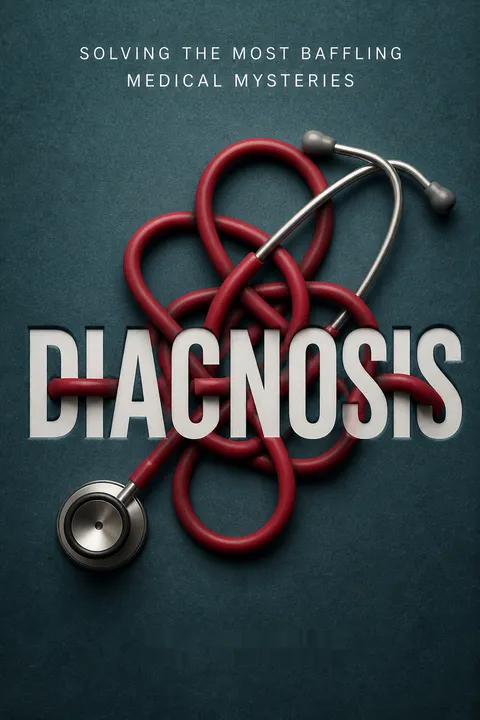


Key Takeaways
Treat diagnosis as an evolving investigation, not a one-shot answer.
Familiar patterns solve many cases. Doctors learn illness scripts: remembered patterns linking a disease to its symptoms, progression, and resolution. The introduction cites a study estimating that pattern recognition succeeds in up to 95 percent of cases. But one common symptom can have many causes. A woman returning from Kenya felt feverish and achy, much as she had during childhood malaria. Malaria seemed plausible to her and her first doctor, yet treatment failed and hospital tests found no parasite. Her own longtime physician eventually recognized a different pattern: an enlarged thyroid, racing heart, tremor, and weight loss pointed to severe hyperthyroidism.
The hard cases expose the limits. The book follows patients whose symptoms do not fit the first familiar script. Medicine has few basic ways to signal illness, but nearly 90,000 coded diagnoses. When a likely answer fails, diagnosis becomes a process of gathering clues, revising possibilities, and tolerating uncertainty.
What's striking is that diagnostic skill is not simply the ability to recognize patterns. It also includes noticing when recognition has stopped helping. Bayesian reasoning offers a useful lens: a likely diagnosis is a starting probability, and each new finding should update it. A negative test or unexpected symptom does not automatically settle the case, but it should change the odds. Pattern recognition remains indispensable because time and information are limited. The danger is treating a strong first impression as certainty, especially when the patient keeps getting worse.
When a diagnosis stops fitting, reopen the question instead of defending it.
Early answers can narrow attention. A Connecticut man developed high fever, chills, and body aches during a severe flu season. Emergency clinicians repeatedly considered whether he had influenza; when that answer seemed unlikely, attention stayed focused on familiar infections. His low white-blood-cell and platelet counts were clues, but the larger question, what was causing this illness, receded behind the narrower one, whether it was flu.
The wider search mattered. An infectious disease specialist considered less common tick-borne illnesses and ordered further testing. The man had Rocky Mountain spotted fever, despite living in Connecticut and having no rash. This is a form of anchoring: an early explanation shapes what later evidence receives attention. The book does not suggest that every unusual case needs an exhaustive search. It shows why worsening symptoms, unexplained findings, or failed treatment should reopen the differential rather than merely invite another version of the same guess.
Anchoring is a predictable feature of human judgment, not a personal failing. Once a plausible story organizes the facts, contradictory details can seem less important or be explained away. In high-stakes work, a deliberate reset can help: restate the problem without naming the presumed diagnosis, then ask which findings remain unexplained. That practice resembles red-team review in engineering, where someone actively looks for failure modes. The counterweight is proportionality. Searching endlessly for rare causes can create needless testing, so the trigger for reopening the case should be evidence such as deterioration or a mismatch.
Use the patient's baseline and body, not just the presenting symptom.
Small observations can change the case. A three-month-old stopped feeding, grew weak, and struggled to manage saliva. Routine blood, urine, and spinal-fluid tests had not revealed an infection. At the children's hospital, a resident examined her carefully: her head drooped, her limbs hung limp, and her reflexes were absent. Those physical findings suggested a sudden, widespread failure of muscle control, not simply a baby who was eating poorly.
The examination helped others reason. The resident moved her to intensive care because she could choke on pooled saliva. An experienced intensivist recognized the pattern as infant botulism, a rare paralysis caused by a bacterial nerve toxin. Treatment began before confirmation arrived. Sanders notes that one diagnostic-error study found more than three-quarters of errors occurred at the initial encounter, often through inadequate history or examination. In this case, careful observation supplied the evidence a senior doctor needed.
The case is a reminder that an examination is not an old-fashioned alternative to technology. It is a measurement process, and its value depends on asking the right question and interpreting what is observed. The baby's absent reflexes and weak swallow were not decorative details; they localized the problem and indicated immediate danger. Modern clinical tools can extend perception, but they cannot automatically decide which signal matters. A useful caution is that physical findings are not self-interpreting: training, context, and repeated assessment are essential, particularly when a patient cannot describe what is happening.
Give changing symptoms and repeat tests time to reveal their pattern.
Some diagnoses arrive in stages. A circus worker developed a severe one-sided headache. An abnormal brain scan raised concern that fluid was blocked and pressure was building. Days later, a painful rash appeared around his eye and forehead. That new clue pointed to shingles, caused by reactivation of the chickenpox virus; the scan abnormality was not an obstruction. The rash emerged after the pain, so the first doctors had not yet seen the clue that clarified the case.
Sequence can be a symptom. A man who ate barracuda first developed stomach cramps and diarrhea, then numbness and a reversal in how he sensed hot and cold. That progression suggested ciguatera poisoning from a reef toxin in the fish. Symptoms are not just a list. Their order, timing, and change can separate illnesses that initially look alike. In some cases, a repeat test becomes informative only after the body has had time to produce a detectable signal.
Clinical evidence has a clock. A test samples a biological process at one moment, while the illness itself may be changing; a result that is uninformative on Monday can become decisive later. This resembles signal detection in other fields, where weak signals become distinguishable only after a pattern accumulates. The practical lesson is not to delay urgent care while waiting for a textbook sign. Rather, clinicians can document what has changed and plan reassessment when the patient's condition permits. A timeline may be as valuable as another scan.
Invite families and colleagues to supply clues no single chart contains.
Useful evidence lives outside the exam room. A ninety-three-year-old woman had fever, aches, rash, and confusion, but hospital tests failed to find an infection. Her son remembered that flying squirrels had occupied her attic. That exposure led the team to consider epidemic typhus associated with flying squirrels, an uncommon infection in the United States. The right antibiotic helped her recover. The son had supplied a piece of environmental history the medical team had not thought to ask for.
Knowledge can be distributed. In another case, a doctor posted a professor's persistent fever and large liver mass to a medical blog. Readers pointed to reports of similar fevers caused by benign liver hemangiomas. A gastroenterologist who had seen such a case recognized the possibility independently. The mass was removed, and the fever disappeared. Families, colleagues, specialists, and online communities can widen the search when one clinician's experience is limited.
These stories resemble distributed cognition: a group can solve a problem by pooling partial knowledge held by different people. The son knew the home environment; specialists knew particular diseases; online readers could retrieve rare case reports. This is a strong argument for making consultation easy and treating caregivers as observers rather than bystanders. But a larger pool of opinions is not automatically a better answer. Suggestions still need to be checked against the patient's findings, and online anecdotes can amplify striking but weakly supported explanations. Collaboration works best when it broadens hypotheses without lowering the standard of evidence.
Read every normal test as limited evidence, not a clean bill of health.
A negative result has boundaries. A man with a sore throat later developed a dangerous clot in his jugular vein, an abscess, and heart inflammation. At his first hospital, a test for the bacteria responsible for strep throat was negative. By the time he reached a community hospital, the infection had spread into his bloodstream and the bacteria were detectable in blood cultures. The early result had not ruled out a developing infection.
Ask what the test can exclude. Tests differ in what they detect, how reliably they detect it, and when they are most useful. A normal result can lower the likelihood of a disease without making it impossible. In this case, the sore throat seemed minor beside fever and headache, and the negative test reinforced that impression. New neck tenderness and worsening illness justified a fresh assessment. The diagnostic task is to interpret results alongside the clinical course, not to let one reassuring number overrule the patient.
A test result is evidence, not a verdict. Its meaning depends on sensitivity, timing, sample quality, and how likely the illness was before testing. This is why the same negative result can reassure in one setting and leave substantial uncertainty in another. The story also shows how a result can become socially powerful: once labeled negative, it may discourage further attention to the symptom tested. A disciplined response asks what the test actually measured and whether the patient's changing condition has made the original result less relevant.
Prefer a simple explanation, but never force one onto messy evidence.
A unifying diagnosis is useful. Occam's razor is the preference for the simplest explanation that accounts for the observations. A woman arrived with fever, low blood pressure, an itchy rash, and severe kidney failure. Infection initially seemed likely, but it did not explain all the findings. Her son eventually mentioned that she had started allopurinol for gout about a month earlier. The patient had forgotten the medication, and her son had not thought of it as new.
The overlooked drug tied the clues together. Allopurinol can trigger an allergic reaction affecting the kidneys. A biopsy confirmed allergic interstitial nephritis, and she improved after the medicine was stopped. The case shows parsimony at its best: one cause explained several findings. But simplicity is a guide, not a command. The goal is not to make every symptom fit one diagnosis; it is to prefer the explanation that fits the evidence without ignoring what does not.
Parsimony is valuable because it discourages inventing a separate cause for every symptom. In science, simpler models are often easier to test and less likely to overfit. Yet simplicity can become a trap when clinicians force discordant evidence into one story or assume that a patient's medication list is complete. The son changed the case by supplying a forgotten exposure. A robust explanation should account for the central findings, survive scrutiny, and remain open to revision if important facts resist it.
When treatment fails, reconsider the diagnosis before escalating the same plan.
A treatment that misses the cause cannot fix it. A previously healthy man developed fluid around his lungs, abdomen, and heart. Doctors diagnosed Sjogren's syndrome and a related connective-tissue disorder, then tried several immune-suppressing medications. The fluid kept returning, sometimes requiring drainage of many liters. The persistence of the problem was evidence that the explanation might be incomplete, even though the autoimmune diagnosis itself was real.
Recheck the mechanism. A second evaluation focused on his enlarged neck veins and the possibility that his heart was constrained by a thickened, scarred sac. An echocardiogram showed constrictive pericarditis: the heart was pumping, but the stiff covering prevented it from filling normally. Surgery removed the damaged sac, and blood flow through the heart more than doubled. The case turns treatment failure into diagnostic information: if the expected response does not occur, ask whether the target is wrong.
Treatment response is a form of feedback. In engineering, a system that repeatedly fails to reach its intended state prompts investigation of the model, not merely more force applied to the same control. Medicine needs the same discipline, especially when treatment itself has risks. This does not mean every slow recovery disproves a diagnosis; many diseases respond gradually or incompletely. But repeated failure should trigger an explicit checkpoint: Was the diagnosis correct, was the treatment adequate, and is another process present?
Investigate abrupt mental changes medically, even when distress looks psychiatric.
A psychiatric appearance can have a physical cause. The day after her wedding, a young woman became restless, confused, and unable to speak coherently. Her first visits led to diagnoses of panic and depression, then psychosis. The MRI of her brain was normal, but psychiatrists noticed that confusion, garbled speech, and seizure-like movements did not fit neatly with the initial explanation. They tested for an immune reaction associated with a tumor.
The investigation found a treatable cause. Blood tests revealed the relevant antibody, and imaging found a small ovarian teratoma. The tumor was removed, after which her gradual recovery began. The book also describes a woman whose new depression accompanied ovarian cancer. These cases do not mean mental illness is usually a hidden tumor. They show why sudden, atypical changes, especially with neurological or physical signs, deserve medical assessment alongside psychiatric care.
The sharp divide between mind and body is clinically convenient but biologically misleading: hormones, immune signals, tumors, medications, and brain disorders can all alter mood or behavior. Parallel assessment avoids two opposite errors, dismissing a medical illness as psychological and treating ordinary psychiatric suffering as evidence of a hidden disease. New onset, rapid change, confusion, or neurological signs can justify broader investigation. The stories also underline a human point: a psychiatric label can describe what a person looks like without explaining why the change occurred.
Build follow-up systems that catch quiet risks before they become emergencies.
Unasked or untracked problems can become critical. A man recovering from a stroke later arrived with profound weakness, kidney failure, dangerously high potassium, and a heart rate in the twenties. The immediate danger seemed cardiac, but a catheter revealed a massively overfilled bladder. An enlarged prostate had blocked urine from leaving, shutting down the kidneys and disrupting the chemistry that kept his heart beating normally. Relieving the obstruction allowed his heart rate and potassium to recover.
Care needs a longer view. His doctor had focused on stroke recovery and other urgent needs, while urinary difficulties remained unspoken and unaddressed. The case prompted the doctor to recognize that asking once is not enough if a patient may mistake a new symptom for an old disability. In another story, a physician acknowledged having no system to ensure a patient completed recommended thyroid testing. Reliable care depends not only on good reasoning, but on closing the loop.
This is a human-factors problem as much as a knowledge problem. Busy clinicians naturally prioritize visible, urgent issues, while quiet symptoms and unfinished tests fall through gaps between visits. Checklists, reminders, and clear ownership of follow-up can protect against that drift, but they cannot replace conversation. Patients may conceal symptoms from embarrassment or attribute them to an existing condition. Systems work best when they make it easy to ask again, explain why a question matters, and track whether a promised test actually happened.
Analysis
Diagnosis presents medicine as inference under uncertainty, but its deeper subject is how attention is organized. A fever, a rash, or a change in behavior is not a direct label for a disease. It is a signal whose meaning depends on timing, prior probability, the patient's baseline, and the questions clinicians happen to ask. The cases show that expertise has two sides: rapid recognition of familiar patterns and the ability to suspend those patterns when they stop explaining the evidence.
The book's detective structure makes individual reasoning vivid, yet many failures arise between people and systems. A patient forgets a medication, a family member knows about an exposure, a test is performed before a disease becomes detectable, or a recommended lab is never completed. These are not simply gaps in medical knowledge. They are failures of information transfer, follow-up, and shared interpretation. The most successful cases often combine different kinds of knowledge: a patient's lived experience, a caregiver's observations, a clinician's examination, a specialist's memory, and a test that answers a carefully framed question.
There is a tension between the appeal of a satisfying solution and the reality of clinical uncertainty. A dramatic diagnosis can make a story feel complete, but real care often has to proceed before certainty arrives. The book acknowledges this by showing both the danger of missing rare conditions and the danger of overreacting to every unusual possibility. The practical standard is not to pursue every zebra. It is to notice when the common explanation no longer fits, and to choose the next question or test that could change care.
That makes diagnostic humility an active skill, not an admission of defeat. It means preserving curiosity, revisiting assumptions, and designing systems that remember what individuals forget. The cases are memorable because a clue changes the story. Their broader lesson is that good diagnosis depends on making room for that change.
Review Summary
Diagnosis is a collection of medical mystery cases presented as short stories. Many readers found it fascinating and engaging, praising the author's ability to make complex medical concepts accessible. Some appreciated the book's structure and pacing, while others felt it lacked depth or became repetitive. The book's connection to the TV show House and its Netflix adaptation were noted positively. Overall, it was well-received by those interested in medical mysteries, though some wished for more detailed explanations or patient-focused narratives.
People Also Read






Glossary
illness scripts
Remembered disease patternsIllness scripts are mental summaries clinicians build from training and experience. They connect a disease with its usual symptoms, variations, progression, and resolution. When a patient's presentation resembles a familiar script, pattern recognition can guide a quick diagnosis. The scripts are useful, but uncommon diseases and atypical presentations may not match them.
Occam's razor
Prefer the simplest fitting explanationOccam's razor is a reasoning principle that favors the simplest explanation that accounts for the evidence. In diagnosis, it encourages looking for one condition that can explain several symptoms rather than inventing separate causes for each. It is a guide to forming hypotheses, not proof that every patient has only one disease.
review of systems
Structured symptom questionsA review of systems is a systematic set of questions about symptoms across different parts of the body. It helps clinicians look beyond the immediate complaint and identify problems or risks that might otherwise remain unmentioned. The book's closing case illustrates how focusing only on urgent concerns can leave important symptoms unexplored.
FAQ
What's Diagnosis: Solving the Most Baffling Medical Mysteries about?
- Exploring medical mysteries: The book delves into real-life medical cases with baffling symptoms, showcasing the complexities of diagnosis.
- Patient stories: Each chapter focuses on different symptoms, illustrating how doctors and patients collaborate to solve medical puzzles.
- Educational insights: Readers gain an understanding of the diagnostic process and the challenges in uncovering the truth behind illnesses.
Why should I read Diagnosis: Solving the Most Baffling Medical Mysteries?
- Engaging storytelling: Lisa Sanders presents medical cases like detective stories, making complex concepts accessible and engaging.
- Real-world relevance: The book highlights challenges faced by patients and doctors, emphasizing the importance of communication in healthcare.
- Educational value: It offers insights into medical conditions and diagnostic techniques, valuable for both professionals and laypeople.
What are the key takeaways of Diagnosis: Solving the Most Baffling Medical Mysteries?
- Importance of patient history: Listening to the patient's story is crucial, as many diagnoses rely on thorough history-taking.
- Collaboration in diagnosis: Diagnosis often involves teamwork among specialists, highlighting the need for consultation and resource utilization.
- Uncertainty in medicine: The book discusses the discomfort of uncertainty, emphasizing persistence and open-mindedness in seeking answers.
What are the best quotes from Diagnosis: Solving the Most Baffling Medical Mysteries and what do they mean?
- “The onus doesn’t fall solely on the patient.” This quote emphasizes shared responsibility in diagnosis between patients and doctors.
- “Seeing the solution makes it possible to recognize how it might have been missed.” It highlights the retrospective nature of diagnosis.
- “These are the cases that elude immediate recognition and diagnosis.” This speaks to the complexity of certain medical conditions.
How does Diagnosis: Solving the Most Baffling Medical Mysteries illustrate the diagnostic process?
- Step-by-step analysis: Each chapter details the diagnostic journey, from initial presentation to tests and physician thought processes.
- Integration of knowledge: The book explains conditions and treatments in an understandable way for lay readers.
- Real-life implications: By showcasing real patients, it emphasizes the stakes involved in accurate diagnosis.
What diagnostic methods are discussed in Diagnosis: Solving the Most Baffling Medical Mysteries?
- History-taking: Emphasized as critical, with patient stories providing essential diagnostic clues.
- Physical examination: Thorough exams reveal important clues about a patient's condition.
- Diagnostic testing: Tests like blood work and imaging help confirm or rule out diagnoses.
How does Diagnosis: Solving the Most Baffling Medical Mysteries illustrate the doctor-patient relationship?
- Collaboration and trust: Effective communication and collaboration are essential for accurate diagnosis.
- Empathy in practice: Understanding a patient's emotional state influences health outcomes and builds trust.
- Patient advocacy: Family and friends often play a crucial role in navigating healthcare complexities.
What role does technology play in the diagnostic process as described in Diagnosis: Solving the Most Baffling Medical Mysteries?
- Consulting the Internet: Doctors use online resources to explore rare conditions and expand their knowledge.
- Imaging and testing advancements: Advanced techniques revolutionize the ability to visualize and understand health issues.
- Telemedicine implications: Technology enhances communication, making it easier to share information and seek second opinions.
What is stress cardiomyopathy as described in Diagnosis: Solving the Most Baffling Medical Mysteries?
- Definition: Known as "broken heart syndrome," it occurs when stress hormones weaken the heart muscle.
- Symptoms: Patients may experience chest pain and shortness of breath, mimicking a heart attack.
- Treatment: Focuses on supportive care, with a generally good prognosis if treated timely.
How does Diagnosis: Solving the Most Baffling Medical Mysteries address the theme of uncertainty in medicine?
- Embracing ambiguity: Uncertainty is inherent in medical practice, encouraging appreciation for the complexity of health.
- Persistence in diagnosis: Many diagnoses require multiple visits and tests before a clear answer emerges.
- Learning from mistakes: Recognizing incorrect diagnoses and remaining open to new information is crucial.
How does Diagnosis: Solving the Most Baffling Medical Mysteries address the theme of collaboration in medicine?
- Team-based approach: Different specialists collaborate to solve complex cases, showcasing the importance of diverse expertise.
- Consultations and referrals: Emphasizes that no single physician has all the answers, highlighting teamwork.
- Shared knowledge: Sharing insights among professionals can lead to breakthroughs in understanding and treatment.
What are some rare conditions discussed in Diagnosis: Solving the Most Baffling Medical Mysteries?
- Catamenial Pneumothorax: Lung collapses related to the menstrual cycle, often linked to endometriosis.
- Paraneoplastic Syndromes: Disorders triggered by immune responses to tumors, leading to psychiatric symptoms.
- Stevens-Johnson Syndrome: A severe allergic reaction causing rashes and blisters, often triggered by medications.
About the Author
Other books by Lisa Sanders
Download PDF
Download EPUB
.epub digital book format is ideal for reading ebooks on phones, tablets, and e-readers.








