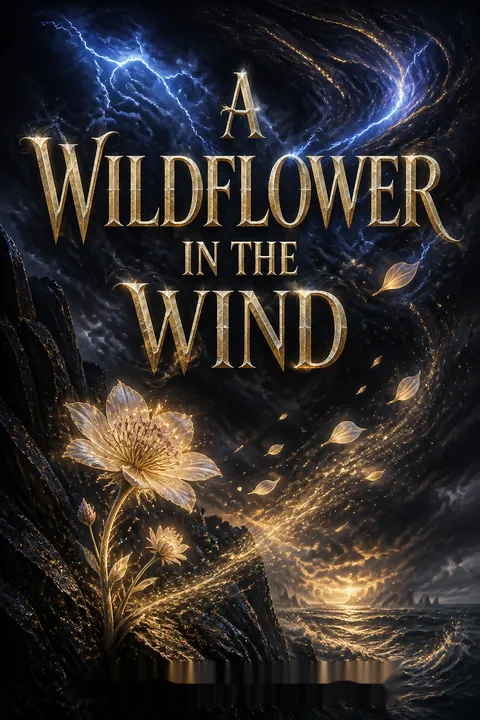


Plot Summary
Prologue
In a rain-soaked garden, a cloaked woman gathers white moonflower petals from a thorned vine. A man with familiar green eyes kills her before she can use them, and the petals blacken into ash in her blood.
Far away, a seer wakes with a prophecy: a goddess-blessed woman will bring evil down and command death. The murder destroys the victim’s hope of peace, while the prophecy turns her death into the first sign of a future still unfolding.
The opening links a private murder to a political and supernatural future without explaining how they connect. The moonflowers are not merely beautiful or medicinal: their brief, fragile bloom represents a chance to interrupt death, and their corruption makes betrayal visible in the natural world. The killer’s recognizable eyes complicate the violence, suggesting that danger comes from intimacy as well as power. The seer’s prophecy answers the murder with certainty, but not comfort. By placing a promise of salvation beside an irreversible death, the prologue establishes the book’s central tension between inherited fate and the human cost of waiting too long to act.
The Flowers Bloom Too Late
In Bearswillow, Lea1 tends a healing garden and hopes its rare moonflowers can stop the Lonely Death, an illness that has already taken her mother.10 When young Anthony Coughlan16 falls sick, Lea1 plants the flowers and waits through the night for their one brief bloom. Her mother10 had taught her that the petals could halt death, but never explained exactly when to pick them.
The town bell announces Anthony’s16 death before the buds open. Lea1 watches the white petals turn black in her hands, then gathers an ordinary bouquet for his grieving family, the same small kindness her mother10 once offered mourners. She still cannot cure the disease, but grief sharpens her resolve to leave the life that has kept her waiting and begin seeking answers.
Lea’s first defining failure is not a lack of care but the mismatch between care and control. She has inherited a possible cure, yet no reliable knowledge of how to use it; the illness makes her mother’s legacy feel like an obligation without instructions. Her bouquet for Anthony’s family matters because it distinguishes practical healing from communal consolation. She cannot reverse the death, but she can refuse to let mourning become isolation. The scene also gives her ambition a concrete origin: she wants to defeat the illness because she has watched it take people she loves, not because she seeks power for its own sake.
The Commander Intervenes
At Bearswillow’s crowded market, Lea1 joins her blacksmith friend Thomas3 at his weapons stall. Thomas3 secretly uses magic to make his blades unusually strong, a dangerous practice under King Nestruir’s9 rule. When Lea1 accidentally spills a soldier’s drink, he corners and assaults her.
A towering commander named Gray2 intervenes, binding the man with shadows and forcing him to face punishment. Gray’s2 power frightens the crowd, but the current that passes between him and Lea1 when she touches his arm unsettles them both.
Thomas3 arrives after the danger has passed, and Gray2 sharply criticizes him for leaving Lea1 alone. Lea1 leaves with Thomas,3 yet feels an inexplicable pull toward the commander,2 whose protection conflicts with his uniform and allegiance to the Crown.
The market makes the book’s political order intimate: Crown power is not an abstraction when a soldier can treat a human woman as property. Gray’s intervention is ethically clear, but his methods remain coercive, exposing the contradiction that will shape Lea’s view of him. He protects her while embodying the same hierarchy that places her at risk. Thomas’s delayed arrival also introduces a difference between affection and protection: his concern is sincere, yet Gray is the one who acts. The unexplained bodily connection turns attraction into a plot question, not simply a romantic preference.
The Fire Night Attack
During Bearswillow’s spring Fire Celebration, Lea1 dances among friends and senses Gray2 watching from another fire. Thomas3 nearly confesses his love, but a scream from his little sister Nora11 cuts through the music. Lea1 follows him toward his home and finds a pack of fenrir, enormous black wolves, attacking the hill. Thomas3 shields Nora11 with a sword while villagers fight below.
When a wolf turns on Lea,1 Thomas3 calls on her to raise her blade; his hidden magic transforms her small dagger into a glowing weapon. A fenrir bites her arm before Gray2 arrives and kills the beasts with sword and storm. He revives Lea’s1 failing heartbeat, but Thomas’s3 public use of magic exposes him to the Royal Army.
The attack turns private magic into public evidence. Thomas’s power is first shown as an act of care for Nora and Lea, which makes the Crown’s coming judgment feel morally different from the law’s description of his crime. Lea’s choice to run toward danger repeats her attempt to save Anthony, but this time she receives a weapon and survives through others’ intervention. Gray’s storm makes his power appear almost inseparable from the violence he commands. The celebration’s communal warmth collapses into an emergency, revealing how little safety the villagers possess when the kingdom’s old protections fail.
A Prisoner’s Promise
Thomas3 and his family are taken to the army camp, while Gray2 orders the injured Lea1 to stay home and avoid the coming trial. Nora11 remains with Lea,1 and the two girls grieve the family’s separation. Once Gray2 leaves, Lea1 disguises herself and sneaks toward the camp. When a guard finds her, she unleashes a sudden gust that sends fire racing across the dry grass, creating a path to Thomas’s3 tent.
Thomas3 is relieved to see her, then urges her to flee before the soldiers discover she knew about his magic. He kisses her and reveals that he has loved her for years. Gray2 enters before Thomas3 can say more, and Thomas3 agrees to confess if Gray2 will keep Lea1 and his family safe.
Lea’s escape shows that protection can become another form of confinement. Gray’s warning is rational, but Lea experiences obedience as abandonment of the people who have repeatedly sustained her. Her untrained magic helps her reach Thomas, yet the fire she creates risks others and foreshadows the consequences of acting before she understands her power. Thomas’s confession arrives under the pressure of possible separation, making love inseparable from sacrifice. His bargain with Gray gives Lea safety at the cost of choice: both men decide what she must do, even while claiming to act for her good.
The Trial Turns Against Her
Prince Alaric4 finds Thomas3 guilty of hiding magic and announces his sentence. Lea,1 disguised in the crowded meeting hall, steps forward and claims that she was the one using magic. Thomas3 denies her story, trying to shield her, while the villagers argue over which friend is lying. Alaric4 tests them with fire.
Thomas3 protects himself with his limited power, but Lea1 stands inside the flames without being burned, thanks to a potion she drank before entering the hall. Gray2 intervenes privately with Alaric4 and persuades him to spare them, arguing that Thomas’s3 weapons and Lea’s1 apparent healing talent are useful to the Crown. Instead of execution, both are sentenced to lifelong service at the palace.
Lea’s confession is an act of loyalty, but it also reveals how little she knows about the force she claims to possess. The potion lets her survive Alaric’s test while making her apparent magic difficult to interpret. Her sacrifice does not free Thomas; it binds both of them more tightly to royal power. Gray’s appeal saves their lives through usefulness rather than justice, exposing a system in which human worth is measured by service. The reprieve therefore feels double-edged: survival opens a future, but the Crown has already claimed the right to decide what that future will contain.
Gray Has Another Name
On the journey to Auropera, Gray2 keeps Lea1 close as her assigned guard. Their enforced proximity turns into intimacy, but after Prince Alaric4 notices their closeness, Gray2 grows distant and tells Lea1 their encounter was a mistake. At the palace gates, Alaric4 reveals the truth: Gray2 is Evander Nestruir,2 the Black King’s9 younger son2 and the feared Prince of the Night.2
The revelation recasts Gray’s2 authority and his warnings about the palace, but Lea1 has little time to absorb it. Evander2 and Erik5 escort her before the king9 and princes.4 Alaric4 threatens to execute her; the king9 instead assigns her as a maid in Evander’s2 quarters, leaving her under the control of the very man whose identity she has just discovered.
The identity revelation changes the meaning of every earlier scene without erasing what happened in them. Gray’s care now exists inside a royal family that governs through threat, and his secrecy becomes both a protective strategy and a breach of trust. His sudden withdrawal after intimacy demonstrates how fear can masquerade as rejection: he believes distance may keep Lea safe, but she receives it as another loss of agency. The palace sentence transforms their relationship from a chance encounter into daily proximity under unequal conditions. Lea enters the court knowing the man she desires is also part of the system she resents.
A Burn Becomes Proof
Lea1 begins work in Evander’s2 wing, where servant Elise8 and her daughter Emma7 teach her the routines and hidden passages of the palace. Alaric4 watches her closely and punishes anyone who helps her. When he sets fire to stable worker Joshua’s15 arm for fetching water, Lea1 rushes to him and instinctively heals the severe burns.
Evander2 recognizes that her ability is real, though Lea1 still believes she has no magic. He sends Joshua15 away with a cover story and warns Lea1 to hide what happened because Alaric4 would see her gift as a threat. Meanwhile, Thomas3 finds work forging weapons and visits Lea,1 renewing his declaration of love while hinting that a resistance movement is forming inside the palace.
The healing scene makes Lea’s power undeniable to everyone but herself. Her response to Joshua is immediate and relational: she acts because a person is suffering, not because she is trying to demonstrate an ability. That distinction separates her magic from Alaric’s use of fire as discipline. Evander’s secrecy protects her from immediate discovery, yet it also keeps her dependent on his judgment. The servant community offers a counterweight to royal power, but the threat to Joshua proves that kindness has a cost inside the palace. Thomas’s resistance hint links personal danger to a larger political struggle.
The Garden Answers Back
Erik5 secretly takes Lea1 to an underground training room and explains that her magic draws strength from the sun. He teaches her to summon fire, then helps her practice healing in the palace gardens. Janelle,6 Lea’s1 loyal friend from Bearswillow, has followed her to Auropera and joins her as a servant, restoring a piece of home.
With sunlight and soil beneath her hands, Lea1 heals a cut and makes herbs grow rapidly, discovering that her gift can serve the work she once did for her village. Evander2 gives her access to a sunlit balcony and later assigns her to the palace gardens. For the first time since leaving Bearswillow, Lea1 has meaningful work and friends nearby.
The garden reconnects competence with pleasure. Lea’s earlier identity as a healer was defined by failed attempts to stop death; here, growth gives her visible evidence that her actions can change something. Erik’s instruction converts power from a mysterious emergency response into a skill she can practice, while the sunlight reveals that her body itself participates in the magic. Janelle’s arrival matters because it restores a relationship not organized around romance or royal duty. Yet access to the garden is still granted by Evander, so Lea’s growing independence develops inside a structure she has not chosen.
Alaric Breaks Her Body
After Alaric4 repeatedly humiliates Lea1 at royal dinners, he catches her speaking privately with Thomas3 in a laundry room. He throws her down, burns her face, kicks her ribs and breaks her back while Thomas3 watches, unable to intervene without risking both their lives. Thomas3 carries her to her room and seeks help.
Evander2 arrives, heals her injuries as much as he can, then attacks Thomas3 in fury for failing to protect her. He moves Lea1 into rooms beside his own and vows to keep her safe. When she wakes, Evander2 admits that he can feel her pain through their connection and that his anger nearly made him destroy the palace. His care deepens, but so does Lea’s1 dependence on his power.
The attack exposes the limits of affection when it is not backed by action. Thomas loves Lea, but his fear leaves him a witness; Evander’s response is effective, yet shaped by possessiveness and violence. The novel does not let protection remain purely comforting: Evander’s threats may oppose Alaric’s abuse, but both men assert control through force. Lea’s injuries make her vulnerable and draw her closer to Evander, complicating any simple distinction between rescue and ownership. His ability to feel her pain suggests a bond beyond ordinary attraction, but she still lacks the information needed to consent to its full meaning.
The Illness Has an Author
Thomas3 tells Lea1 that the Lonely Death is not contagious disease but the Black King’s9 magic, which targets people with magic so he can harvest their life force. He says Evander2 and Erik5 knew what the king9 was doing and failed to stop it. Lea1 realizes they concealed the truth about her mother’s10 death and confronts Evander;2 her anger erupts into both fire and shadows.
Evander2 warns her that her simultaneous command of day and night magic makes her a target, then leaves rather than risk her power spiraling further. Lea1 tells Thomas3 about her abilities and learns he has joined the resistance. When Evander2 later sends a letter admitting he knew her mother10 was vulnerable, Lea1 remains torn between his regret and his silence.
The revelation reorganizes Lea’s grief: the illness that seemed arbitrary is revealed as a political technology for concentrating power. Her mother’s death becomes both intimate bereavement and evidence of state violence. Evander’s failure is not necessarily direct murder, but his knowledge and silence compromise the protective identity he has offered Lea. Her dual magic emerges through anger, suggesting that emotional rupture unlocks capacities that controlled instruction could not reach. Thomas supplies truth, but he also has an agenda; the resistance gives Lea an alternative account of justice without resolving whether its methods or leadership are trustworthy.
Fire Meets Shadow
After Lea1 drinks a potion guided to her by the wind, she goes to the garden and finds Alaric4 waiting. He burns and chokes her, demanding that she reveal her magic, but the potion has left her unable to call on it. Evander2 arrives with Erik5 and fights Alaric.4 The king9 intervenes, tests Lea1 for magic, and declares that she has none, unaware that the potion has concealed her gifts.
When the king9 orders her execution, Evander2 shields her and announces that she is his fated mate, invoking an ancient law against harming another Fae’s mate. Erik5 carries Lea1 away while Evander2 confronts his father.9 In a field beyond the castle, Evander2 finds her alive and begins explaining their bond and his long effort to protect her village.
The garden confrontation joins bodily danger to political exposure. Lea’s potion protects her by hiding what she is, while her vulnerability forces Evander to make the bond public before she has chosen what it means. His declaration is strategically effective, but it also turns intimacy into a legal shield and a claim. The ancient law offers protection because the Crown fears public consequence, not because it has become just. Evander’s defense is therefore both loving and politically calculated. Lea survives, but safety arrives through a revelation that will reshape her identity and bind her future to a conflict she did not initiate.
A Wedding Becomes a Battlefield
Evander2 explains that he recognized Lea1 as his mate years earlier, protected Bearswillow from royal scrutiny, and placed a charm in her necklace to shield her from the Lonely Death. He admits he knew her mother10 was at risk but did not act soon enough, and says he once comforted her mother10 as she died. Lea1 cannot immediately forgive him, though she accepts that he did not cause the illness.
Because Alaric4 can still attack her without public consequences, Evander2 asks her to marry him without sealing their bond. Lea1 agrees for safety, despite wanting a freely chosen love. Thomas3 urges her to flee, but she refuses; he leaves to join the resistance, giving her a sword designed to hold a moonflower.
This decision is not a romantic resolution but a negotiated survival strategy. Lea accepts marriage while preserving emotional distance, insisting that protection cannot erase the damage caused by secrecy. Evander’s confession gives her a fuller account of her mother’s final hours, but it cannot restore the choice she was denied when he withheld the truth. Thomas’s departure marks the cost of her divided loyalties: he remains devoted, yet his political commitment and his hope for a life with Lea pull him away. The moonflower sword binds the personal and political plots, carrying both a weapon and the cure Lea still hopes to grow.
Thomas Chooses the Rebellion
Before the wedding, Thomas3 asks Lea1 to leave Auropera with him, insisting the royal family will destroy her. Lea1 admits she loves Evander2 but cannot promise that she has forgiven him; she refuses to abandon the life and protection she has chosen for herself. Thomas3 calls her an enemy of the resistance if she marries the prince,2 then leaves for the rebels’ planned action.
Evander2 offers Lea1 friendship rather than demanding her love, and teaches her to sense his emotions through their bond. She feels his love and relief directly, easing some of her fear. On the wedding day, Emma7 and Janelle6 prepare Lea’s1 dress, while Thomas3 visits to give her the moonflower sword and warn that he is leaving the capital.
Lea’s refusal of Thomas is significant because it is her first clear choice between two futures, not a decision made for her by a prince or a law. Her feelings remain unresolved, but she stops treating Thomas’s lifelong devotion as a debt she must repay. Evander’s offer of friendship lowers the emotional pressure, though the bond still makes his feelings unusually present to her. Thomas’s political ultimatum reveals how the rebellion can reproduce the coercion it opposes: personal loyalty is demanded as proof of political virtue. The wedding preparations create temporary community, but the sword and warning make clear that this private ceremony is occurring on the edge of war.
The Ceremony Explodes
At the chapel, Evander2 makes private vows promising honesty and protection, but before the public ceremony can begin, explosions shatter the windows and fire spreads through the grounds. He orders Lea1 to run toward the training room while soldiers try to secure the castle. Thomas3 pulls her through the smoke, then turns back to find Emma7 and Janelle.6
Lea1 reaches the river, where Alaric4 intercepts her and attacks. Her magic surges: wind, lightning, fire, and shadows answer her as she fights back. Evander2 arrives and clashes with Alaric,4 but Thomas3 drags Lea1 away before she can help. Through their bond, she feels Evander’s2 fear and love as she is carried from him.
The interrupted wedding converts a proposed private union into public crisis. Evander’s vows promise a repaired relationship, but the attack prevents words from settling into security. Lea’s powers finally act together under immediate threat, making her neither merely protected nor fully in control. Thomas’s return to rescue her demonstrates that affection survives their political disagreement, while his decision to carry her away also repeats the pattern of others choosing for her. The bond lets Lea feel Evander’s emotions across distance, but that connection intensifies helplessness rather than offering command over events.
The Eclipsed King Emerges
Thomas,3 Emma,7 Janelle,6 and Lea1 reach a fortified training room beneath the castle, where hundreds of rebels gather. Their leader, Vincent,12 announces the movement’s readiness to overthrow the Black King.9 Lea1 cannot stop thinking about Evander,2 whose injury she feels through their bond until a magical barrier cuts off the pain. Then Evander2 enters, bloodied but alive.
The crowd kneels to him, revealing that Vincent12 has been the rebellion’s public face while Evander2 secretly directed it for more than a century. Thomas,3 who had believed he was following Vincent,12 bows in shock. Evander2 tells Lea1 that the uprising is underway and asks her to prepare both her fire and shadows. The book ends as she stands beside him at the beginning of a war.
The final revelation recasts Evander’s long silence as strategic concealment, but does not automatically absolve his earlier choices. He has been opposing his father from within the army, using his authority to gather resistance without exposing it. That strategy explains why Thomas could be recruited by Vincent without knowing the true leader, and why Evander could serve the Crown while preparing its overthrow. The cliffhanger refuses a clean reconciliation: Lea must decide how to use power she barely controls, while the people she loves stand on opposing sides of a rebellion. Her story shifts from surviving royal decisions to helping shape what replaces them.
Analysis
A Wildflower in the Wind builds its fantasy conflict around a question of who gets to define care. Lea’s1 village treats care as labor: growing herbs, feeding neighbors, making funeral bouquets, and trying again after the moonflowers fail. The monarchy recasts care as possession, claiming magic and human labor as resources belonging to the Crown. Gray2 complicates that opposition because he protects Lea1 while repeatedly withholding information and making decisions on her behalf. His motives may be loving, but the effects still limit her agency. The romance gains force when Lea1 begins to judge him not only by his tenderness but by what he conceals and what he is willing to change. Thomas3 offers a different complication: his devotion is genuine, yet he too wants to decide what Lea1 should do, and his resistance politics eventually demand that she choose sides. The novel does not make love a cure for structural violence. The mate bond can protect Lea1 from immediate harm, but it cannot undo the king’s9 extraction of magic, restore her mother,10 or reconcile her loyalties. Likewise, Lea’s1 dual magic is not a simple answer to oppression; it is a power she must learn to control while others try to claim it. The ending makes the private and public plots inseparable. Gray’s2 hidden leadership of the resistance gives his secrecy political purpose, but the revelation arrives only after Lea1 has been hurt by his silence. Her next challenge is therefore not just to defeat the Crown. It is to remain an agent in a struggle where every faction believes it knows what is best for her.
Review Summary
A Wildflower in the Wind received mixed reviews, with many praising its engaging plot, well-developed characters, and romantic tension. Readers enjoyed the fantasy elements, world-building, and tropes like enemies-to-lovers and fated mates. Some criticized the female protagonist as naive or frustrating, while others found her relatable. The book's spicy scenes and mysterious twists were frequently highlighted. Many reviewers eagerly anticipate the sequel, though a few found the writing repetitive or the plot predictable.
People Also Read





Characters
Lea
Wildflower with hidden powerLea, formally Azalea Delphinium Astrantia, is a human healer and gardener raised in Bearswillow. Her mother’s10 death and her repeated failure to grow moonflowers quickly enough to save the sick make her attentive to suffering, but also prone to taking responsibility for outcomes she cannot control. She is impulsive when loved ones are threatened and resists being managed, even by people who sincerely want to protect her. Her practical knowledge of plants and remedies sits beside a growing, unexplained magical inheritance. Lea’s central psychological struggle is learning to distinguish devotion from self-erasure: she loves fiercely, yet must claim the right to choose whom she trusts and what kind of life she wants.
Gray
Night-magic commanderGray is a formidable commander whose shadow magic and severe discipline make him feared by soldiers and villagers alike. Beneath that intimidating exterior, he is vigilant, protective, and deeply practiced at withholding information when he believes disclosure could endanger someone. That instinct is both his strength and his flaw: he intervenes decisively against immediate threats but often makes choices for others without asking what they want. His connection with Lea1 unsettles the control he has built around duty and secrecy. He sees himself as morally compromised, yet his actions reveal a persistent effort to protect people from the Crown’s worst abuses. His tension between private tenderness and public authority shapes his choices.
Thomas
Blacksmith and loyal friendThomas is Lea’s1 childhood friend, a skilled blacksmith who secretly uses magic to strengthen the weapons he makes. He supports his widowed mother and many siblings, and his hidden ability reflects a practical desire to provide for them rather than a thirst for status. His long affection for Lea1 is sincere, but he has kept it unspoken until danger forces a confession. Thomas is brave when protecting his family, yet his fear and political commitments complicate his ability to show up for Lea1. He wants a better kingdom and a future with her, but must confront the difference between loving someone and deciding what is best for them.
Prince Alaric
Cruel heir to the throneAlaric is the Crown Prince of Desia, a polished public figure whose calm manners conceal vindictiveness and a taste for control. He uses fire magic to punish people, intimidate servants, and assert his authority over those with less power. His rivalry with his younger brother2 shapes much of his conduct, and he treats other people as instruments in that conflict. Alaric is not merely impulsive: he observes relationships and deliberately exploits what he learns. His entitlement allows him to mistake cruelty for governance, while his insecurity makes any challenge to his position feel personal.
Erik
Loyal second-in-commandErik is Gray’s2 trusted second-in-command, a warm, humorous soldier whose easy manner makes him approachable in a harsh military world. He helps Lea1 escape isolation by teaching her about magic and offering companionship, while his loyalty to Gray2 sometimes leads him to conceal truths from her. His protective instincts are sincere, but he must balance friendship with allegiance to a leader who keeps dangerous secrets. Erik’s humor softens tense scenes without making him careless about the stakes.
Janelle
Fearless village friendJanelle is Lea’s1 outspoken, quick-handed best friend, a small figure with a fierce instinct for defending people she loves. Her thefts are more thrill-seeking than predatory, and she often repays what she takes. She resents being shut out of Lea’s1 plans, not because she wants control but because loyalty, to her, means sharing danger. Her blunt humor gives Lea1 relief, while her willingness to cross borders and enter the palace shows that her courage is more than bravado.
Emma
Kind palace roommateEmma is a gentle palace servant and Elise’s8 daughter. She welcomes Lea1 into the servant community, teaches her the routines of palace life, and offers practical kindness when Lea1 is homesick or frightened. Her creativity appears in the wedding dress she designs, while her quiet attentiveness lets her recognize when others need company rather than interrogation. Emma believes that affection and choice can coexist with difficult circumstances, making her a steady counterpoint to the palace’s coercive atmosphere.
Elise
Motherly palace stewardElise manages the palace kitchens and looks after its servants with brisk competence and generous affection. She feeds Lea1, arranges her work and living space, and notices distress others overlook. Her motherly care extends beyond her daughter Emma7 to the young people in her charge. Elise understands that the palace is dangerous, so she pairs warmth with practical warnings about where secrets can be overheard.
King Nestruir
The Black KingKing Nestruir rules Desia through the Crown’s control of magic and the military. He presents himself as a strategist and sees people primarily in terms of their usefulness to the kingdom. His power and authority allow him to make violence seem administrative, while his sons’4 rivalry offers him another tool of rule. The king’s calmness is more unsettling than open rage: he can treat a life-and-death judgment as a matter of policy.
Adelaide
Lea’s healer motherAdelaide was Lea’s1 mother, a skilled healer who cultivated herbs and taught her daughter1 the rituals of tending the sick and comforting mourners. Her guidance around moonflowers and her protective necklace leaves Lea1 with both practical knowledge and unanswered questions. Even after her death, her letter and remembered teachings shape Lea’s1 understanding of magic, family, and responsibility.
Nora
Thomas’s young sisterNora is Thomas’s3 young sister, whose frightened cry during the Fire Celebration draws him into the fenrir attack. She is sheltered by her brother3 and later kept close to Lea1 during the family’s separation. Her dependence makes the costs of royal punishment immediate and personal.
Vincent
Resistance spokesmanVincent is a powerful, heavily tattooed Fae whom Thomas3 meets through the resistance. He serves as a public figure capable of rallying people who oppose the Crown. His grave presence and disciplined gestures suggest a movement built on preparation as well as anger.
Danielle
Blunt village friendDanielle is one of Lea’s1 close friends in Bearswillow. She is practical, sharp-tongued, and impatient with evasions, but belongs to the circle that gives Lea1 a sense of family after her mother10 dies.
Solomon
Village friend and skepticSolomon is a village friend who distrusts the Royal Army and rushes to help when Lea1 is threatened. His loyalty is expressed through action, even when his improvised weaponry is less impressive than his confidence.
Joshua
Palace stable workerJoshua is a palace worker whose simple offer to fetch water for Lea1 brings him into Alaric’s4 path. His injury becomes the first clear public evidence of Lea’s1 healing gift.
Anthony Coughlan
Young village patientAnthony is the young boy Lea1 tries and fails to save from the Lonely Death. His death gives her determination a specific human cost and echoes the loss of her mother10.
The Queen
Desia’s royal consortThe queen is the beautiful consort of King Nestruir9 and mother to the princes4. She appears within the palace’s formal rituals, where her silence contrasts with the open conflict between her husband9 and sons4.
Herald
Royal day-magic adviserHerald is a senior royal adviser associated with day magic. He attends the king’s9 formal dinner and represents the officials who help maintain the palace’s ceremonial authority.
Plot Devices
Moonflowers
A cure that cannot waitLea’s1 mother10 leaves her a wreath of preserved moonflowers and the knowledge that their petals can stop death when harvested at the right moment. The living blooms last only briefly, and Lea’s1 early attempts fail because she cannot make them flower quickly enough. They represent the healing work Lea1 hopes to continue, but also the gap between inherited knowledge and mastery. Thomas’s3 sword later includes a space for a moonflower, joining his faith in Lea’s1 future cure to her determination to save others. The book ends before she discovers how to use the plant successfully.
Necklace and Potions
Protection with hidden instructionsAdelaide’s10 necklace carries amethyst, jasper, and a dark star fragment supplied by Gray2. It grounds Lea1, helps shield her from the Lonely Death, and ties her to the people and magic surrounding her. Her mother10 also leaves sealed vials whose contents become useful when the wind guides Lea1 to drink them. One potion protects her from supernatural effects long enough to survive Alaric’s4 fire test and conceal her magic from the king9. The objects work as both practical tools and delayed messages: Lea1 must learn to interpret them as her understanding of her family’s secrets deepens.
Day and Night Magic
Power divided and reunitedIn Desia, magic is associated with the sun or the moon, and a person’s abilities strengthen under their corresponding light. Lea’s1 healing, fire, and plant growth connect her to day magic, while her shadows reveal an extraordinary second affinity. Gray2 commands night magic and can manipulate darkness, storms, and force. These powers are not interchangeable with moral character: Alaric4 uses fire to punish, while Lea’s1 emerging gifts respond to care, fear, and anger. The duality raises the stakes of her survival, since the royal family seeks control of magic and her abilities could alter the balance of power.
The Lonely Death
A weapon disguised as illnessThe Lonely Death appears to be a contagious disease that strikes Lea’s1 village and takes her mother10, Thomas’s3 father, and other residents. Thomas3 later reveals that the king’s9 magic targets people who possess magic, allowing him to steal their life force and grow stronger. The Crown removes the bodies, denying families graves and public mourning while concealing the extraction. This truth transforms Lea’s1 personal grief into evidence of political violence. The moonflowers’ rumored ability to stop death become more urgent once the illness is understood as deliberate, though the method of curing it remains unknown.
The Mate Bond
A connection with legal forceLea1 and Gray2 feel an unexplained pull and electric response to one another’s touch before either understands its cause. Gray2 eventually identifies Lea1 as his fated mate, a rare bond that can convey emotion and pain and strengthen healing. An ancient law forbids harming another Fae’s mate, so Gray2 uses the bond’s public recognition to protect Lea1 from the king9 and Alaric4. The bond creates intimacy and a form of safety, but it does not substitute for consent or trust. Lea1 must still decide whether to accept its full consequences, and the book ends before that question is settled.
Magic of the Wildflowers Trilogy Series


Download PDF
Download EPUB
.epub digital book format is ideal for reading ebooks on phones, tablets, and e-readers.








