

Plot Summary
Prologue
Ruskin Blackcoat, the feared fae bargain-maker, accepts an old man's memories in exchange for repairing his failing heart. As he works, Ruskin discovers a fatal growth in the man's lungs but keeps the knowledge to himself: their agreement covers only the heart.
He channels the memories into power he needs, then watches the grateful man leave with his childhood erased. The bargain shows how Ruskin turns human desperation into a transaction, and how a promise can be fulfilled while its cost remains hidden.
The opening frames Ruskin's bargains as morally more complicated than simple deception. He does what the man requests, but his narrow reading of the agreement lets him ignore a danger that could make the repair nearly useless. The old man's gratitude and Ruskin's private knowledge occupy the same scene without cancelling each other out. That uneasy split prepares the central question of the novel: whether a person acting within the letter of a bargain can still claim to have acted justly. Ruskin's power is presented as both magical and ethical, because he decides which consequences count as his responsibility.
A Market Turns Cruel
At the monthly market between Styrland and Faerie, Eleanor Thorn sells jewelry made by her own hands and trades for augium ore, a rare ingredient for her experiments. She sees the fae Galaphina punish Clara, a seamstress, for missing a deadline by stealing years from her body. Clara flees to the poisonous fairy ring and dies after eating its mushrooms.
Eleanor cannot stop the cruelty, but she refuses to treat it as ordinary. Her father, Isaac, is grieving and struggling to fish; the village is hungry under King Albrecht's rule. Eleanor hopes her alchemy can eventually make food and fuel affordable. The market's bargains already feel dangerous, but Clara's death makes their danger immediate.
Clara's death establishes the novel's moral landscape through an event Eleanor cannot undo. The fae's punishment follows a broken bargain, yet its grotesque excess exposes the gap between contractual permission and humane justice. Eleanor's choice to approach Clara, despite knowing she cannot safely challenge the fae, marks her as someone whose compassion is not merely private sentiment. Her gold-making project grows from the same impulse: she wants practical means to reduce other people's vulnerability. The story thus joins invention to ethics early, making Eleanor's talent more than a route to personal advancement.
Gold Under Arrest
Back in her workshop, Eleanor nearly turns an iron nail into gold, but the unstable metal blackens before it can hold its shape. Thatch, a handsome villager who assumes she will marry him, dismisses her work until he glimpses the experiment. Later, royal soldiers drag him before Albrecht for poaching. To escape punishment, Thatch claims Eleanor is his betrothed and can repay his debt with gold.
The soldiers find her workshop and mistake a bright metal pendant for the real thing. At court, Eleanor watches Albrecht force his young son to shoot a prisoner, then sentence hungry villagers while accepting bribes. Rather than let Thatch face the king alone, she claims she can make gold, placing both their lives in Albrecht's hands.
Eleanor's crisis arises from other people's assumptions about her: Thatch treats her future as his to arrange, while Albrecht sees her skill as a resource to seize. Her decision to protect Thatch is generous, but it also reflects a recurring habit of accepting risk when someone else is in danger. The court scene sharpens the contrast between her productive craft and the king's extractive rule. Albrecht can command violence and wealth, yet his power creates the hunger that makes poaching necessary. Eleanor's promise is courageous, but the conditions surrounding it make clear that a freely chosen bargain is difficult to distinguish from coercion.
The Golden Bride
Given the king's resources and a fresh supply of augium, Eleanor adjusts her formula and produces a genuine gold coin. Albrecht's jeweler verifies it, and the king releases Thatch from his poaching debt. Eleanor expects the experiment to earn her room to continue helping her village.
Instead, Albrecht claims her as his future queen, intent on keeping the secret of gold-making for himself. He confines her to a workshop and orders her to spin gold thread while their wedding approaches.
Eleanor turns the material into a heavy net and a fragile dagger, disguising escape tools as ornaments. When she springs her trap on the guards, she escapes the room but loses the dagger and becomes lost in the castle. With soldiers closing in, she reaches for the forbidden rhyme that summons Ruskin.
The gold coin proves Eleanor's brilliance, but its immediate consequence is captivity. Albrecht converts a public achievement into private ownership, revealing that wealth alone does not free someone from power when the ruler controls the conditions of exchange. Eleanor's escape plan shows her practical intelligence under surveillance: she makes the king's demanded material serve a purpose he does not recognize. Its failure is not a failure of courage so much as a reminder that ingenuity cannot guarantee control over an unequal environment. Summoning Ruskin becomes her final available choice, linking her childhood fear of fae bargains to the danger she must now knowingly enter.
The Blackcoat Bargain
Ruskin appears as guards break into the room, and his magic seals the door with living branches. Eleanor offers him the gold she has saved, but he refuses it. When she explains that she can make more, he becomes interested and agrees to take her away in exchange for her alchemical skill.
Eleanor insists that the bargain cannot include locking her up; Ruskin accepts the condition, then hurls the guards aside and carries her through the castle window. Instead of falling into the moat, they pass through a chain of pools and emerge in the Kilda, the perilous forest near Faerie. The crossing overwhelms Eleanor, and she collapses. When she wakes, she is in Ruskin's palace, far from Isaac and Styrland.
Eleanor enters this bargain with more caution than the desperate humans in Ruskin's prologue, naming a condition that protects her from one obvious form of captivity. But the agreement's imprecision still leaves Ruskin room to define what freedom means. His rescue is both real and compromised: he removes her from Albrecht's immediate control while taking her to a realm she never chose. The sequence makes the novel's central power imbalance tangible. Eleanor can negotiate, but only within a crisis created by people stronger than she is. Her collapse after crossing also marks the bodily cost of entering a world whose rules she does not yet understand.
A Palace Made of Leaves
Eleanor wakes in the Seelie Court, where Halima, Ruskin's armored guard, escorts her through a palace grown among trees and vines. A human servant she knows as Fiona warns her not to eat fae food, which can incapacitate humans. Ruskin clarifies the bargain: he does not want more gold. He wants Eleanor to find a way to reverse the transformation and return gold to its original state.
He keeps her in the palace until she completes the work, arguing that her promise did not specify when he must grant her freedom. Eleanor recognizes the trap in the wording but has no immediate way to escape. She begins to learn the court's customs while searching for allies and a route home.
The true purpose of Eleanor's work shifts the story from economic invention to a problem with consequences for an entire realm. Ruskin's request appears impossible by the scientific rules Eleanor knows, but his confidence in her is not yet reassuring because he has withheld the stakes. The palace offers beauty and comfort alongside control, complicating the familiar image of a dungeon without changing Eleanor's lack of consent. Fiona's warning supplies useful knowledge, while Halima's escort embodies the court's surveillance. Eleanor responds by observing and gathering information, treating curiosity as a survival skill rather than a distraction.
The Thorn Garden
Eleanor recognizes Galaphina, the fae who destroyed Clara, and confronts her in the palace. Galaphina's friends seize Eleanor and force her into a hawthorn bush during a party. They command musicians to play a tune that compels her to dance, driving her against the thorns until her skin splits. Destan, a courtier loyal to Ruskin, stops the music before Eleanor is killed.
Ruskin arrives, frees her with his magic, and punishes Galaphina by having roots crush her throat. The court resumes its celebration around the body. Destan leads Eleanor away, and Ruskin gives her a dark rose petal that can guide her back to him. Her protection in the palace now depends on his claim over her.
The scene turns the court's beauty into an instrument of organized cruelty: music, flowers, and ceremony all become tools for hurting Eleanor. Her earlier confrontation with Galaphina has consequences, but the violence is not a proportionate response to insult; it reveals a culture where amusement can erase another person's humanity. Ruskin saves Eleanor, then kills Galaphina with startling force, offering protection that reproduces the violence it opposes. Eleanor's relief at being treated as his possession is psychologically revealing. In a setting where anyone may attack her, dependence on one powerful protector can feel safer even as it deepens her captivity.
The Hunt Returns
At a court dinner, Eleanor watches Ruskin dismiss her as an insignificant debtor while keeping her beside him because the other nobles might harm her. A messenger interrupts with news that Lord Zastel has been mauled in the Emerald Forest. He survives after healers repair his lungs, but reports that a unicorn attacked him in a rabid frenzy.
Lady Rivera argues that the Wild Hunt should resume to track dangerous animals. Ruskin objects, then permits it, warning the court not to violate the treaty. Eleanor sees that the prince's public manner hides something, though she cannot yet tell what. The attack convinces her that neither escape through the forest nor continued delay is safe, so she agrees to begin working on his problem.
Ruskin's public insult and private protection make his behavior difficult for Eleanor to read. His courtly performance preserves authority, but it also humiliates the person he is trying to keep safe. The mauling gives the court a tangible reason to revive the Wild Hunt, an institution whose history Eleanor does not yet know. Ruskin's reluctant concession suggests his power has political limits, even when his magic appears overwhelming. For Eleanor, the decision to work is not a surrender of judgment. It is a pragmatic response to danger, made while she still lacks the information that would let her evaluate the task fully.
A Servant's Wounds
While gathering tools in the Low Fae district, Eleanor meets Fiona and learns that she has spent years serving Lady Rivera. Later, Eleanor finds Rivera whipping Fiona for a mistake involving the linens prepared for a party.
Eleanor takes Fiona to her workshop, cleans and bandages her wounds, and hears why the servant fears retaliation. Fiona then shares a dangerous possibility: a fae's true name can give another person power over them. She believes the Seelie founding stone records Ruskin's name and might let Eleanor dissolve their bargain.
Fiona also tells her that Ruskin banished his half-sister Cebba, whom Rivera believes should have inherited the throne. Eleanor sees a possible exit that depends on learning more about Ruskin and his court.
Eleanor's response to Fiona echoes her earlier response to Clara, but here compassion produces an exchange of knowledge rather than helpless witness. She uses her healing skills to offer immediate care, then listens to the larger constraints shaping Fiona's life. The true-name idea gives Eleanor a possible path to freedom, yet it also places her in a morally complicated position: she may need to gain leverage over someone she barely trusts. Fiona's account of succession introduces factional conflict as a practical danger, not distant lore. Eleanor's desire to escape now intersects with the court's struggle over legitimacy.
The Sleeping Queen
On the night of the Harvest Moon Ball, Eleanor uses Ruskin's rose petal to find a hidden garden in his quarters. There she discovers Queen Evanthe, his mother, preserved in an enchanted sleep after a human king tortured her. Ruskin explains that her magic kept her alive when healers could not save her.
Eleanor tells him about losing her own mother, and he listens with a tenderness she has not seen at court. The moon brings out his Unseelie features and intensifies his desire. They kiss, but Eleanor breaks away before their intimacy goes further, determined not to lose sight of her plan to learn his secrets and secure her freedom.
The garden gives Eleanor access to a private grief that Ruskin's public role usually conceals. His mother's suspended life mirrors Eleanor's own history of loss, creating recognition without making their experiences identical. That moment of intimacy changes the emotional terms between them, but Eleanor's retreat matters as much as the kiss: she refuses to confuse attraction with freedom or trust. The harvest moon intensifies Ruskin's desire, yet the scene leaves open whether his intensity is vulnerability, magic, or both. Eleanor's divided response captures the novel's central romantic tension: closeness can reveal a person while also making it harder to judge them clearly.
Gold in Gryphon Blood
Eleanor joins Ruskin in the Emerald Forest to search for plants that might reverse the gold. When a feral gryphon attacks, Ruskin kills it after it throws Eleanor from their horse. He is furious that she was endangered, then helps her collect unfamiliar plants. Eleanor secretly samples the gryphon's blood and later tests it in her workshop.
The result shows flecks of gold in the animal's body. She checks spoiled fruit and vegetables from the kitchens and finds the same contamination there. The sick animals and tainted food are linked: gold is spreading through living things and making them ill. Eleanor now understands that her assignment concerns more than Ruskin's private interests.
The forest episode converts an abstract assignment into material evidence. Eleanor's scientific method depends on close attention to bodies and substances, while Ruskin's magic enables him to track and kill the threat. Their different ways of knowing briefly complement each other, though he still controls what information she receives. The gold in blood and spoiled produce makes the curse's cost visible as an ecological crisis. It also gives Eleanor a reason to persist beyond the bargain: the contamination threatens animals, food, and people across Faerie. Her discovery arrives through observation rather than confession, underscoring her capacity to make knowledge even when authority withholds it.
The Heart of the Curse
Eleanor confronts Ruskin with her test results, forcing him to explain the contamination. Cebba, his half-sister, once conspired with her father, Ilberon, to have their mother attacked by a human king using cold iron. Evanthe survived in enchanted sleep, and Ruskin eventually took the Seelie throne's power through the founding stone.
Cebba had partially passed its trials before Ruskin banished her, and her curse now gives him a heart turning to gold. Because the ruler's magic is bound to the land, the change is spreading through Faerie's plants and animals. Eleanor realizes Ruskin needs her ability to reverse gold, and agrees to help. She also insists that Destan and Halima be told, bringing his closest allies into the crisis.
The revelation reframes Ruskin's secrecy as a response to a threat, but it does not erase the harm caused by keeping Eleanor uninformed. His curse links private bodily damage to ecological collapse, making the ruler's body a vulnerable part of the realm rather than an untouchable source of power. Cebba's partial success at the founding stone explains both the instability of succession and the reach of her magic. Eleanor's insistence on involving Destan and Halima challenges Ruskin's isolation as a governing strategy. She moves from being a useful captive toward acting as a collaborator who demands shared responsibility.
Iron in Cebba's Rooms
Eleanor, Ruskin, Destan, and Halima search Cebba's sealed rooms for one of the rings she used in the curse. A hidden trap drives cold-iron shards into Destan's chest. Since fae healing magic cannot counter iron, Eleanor uses a lightning-struck lodestone to draw out the metal without touching it.
The extraction saves Destan, and the healers repair the remaining wounds. Ruskin leaves the workshop rather than show his fear, but Eleanor finds him and comforts him as he admits how much his old friend matters. Destan's survival strengthens the group, while the iron trap proves Cebba planned for intruders long before Eleanor arrived.
The rescue puts Eleanor's human knowledge in direct opposition to a fae vulnerability. Magic cannot solve the crisis, but a lodestone and careful extraction can; competence, not supernatural rank, determines who can help. The episode also makes Ruskin's emotional dependence visible through what he does after Destan is safe: he retreats because fear is harder for him to manage than combat. Eleanor's reassurance does not solve the larger curse, but it begins to change the group's emotional structure. Ruskin is no longer the only person carrying the threat, and his allies are no longer merely instruments of his command.
A Name and a Door
After learning how the founding stone names an heir, Eleanor asks Ruskin for the one thing that would let her end their bargain: his true name. He initially resists, then leads her to a hidden Monarch Gate that opens only when his name is spoken. The door offers a one-way passage to Styrland. Ruskin gives her his true name and lets her test the lock.
Eleanor could leave at once, but she shuts the gate and chooses to stay until she has helped him and his kingdom. For the first time, her choice is not enforced by their contract. She and Ruskin then meet in private as lovers, with a trust that neither of them can claim came from the bargain alone.
The gate turns freedom from an abstract promise into a physical threshold Eleanor can cross. Ruskin's decision to reveal his true name is a profound surrender of control, while Eleanor's decision to remain gives her agency that the original contract denied her. Her choice is not simple self-sacrifice: it reflects attachment, commitment, and a desire to prove that trust can exist without coercion. The scene's romantic intimacy follows that changed power relation. Their relationship becomes more ethically legible because Eleanor could leave. Yet the one-way gate ensures that choosing to stay carries real cost and cannot be treated as a harmless gesture.
Gold Moves at Her Will
Back in the workshop, Eleanor finds that Cebba's gold ring shifts under her attention. When a group of young fae corner her and one threatens her with a gold-handled dagger, Eleanor pulls the weapon away and turns its blade against its owner. She recognizes that the gold responds to her directly, beyond anything she can accomplish with tools.
She asks Ruskin whether humans can possess magic, but he evades the question. Eleanor then tries to contact Maidar, her Unseelie trader friend, for answers. Halima stops the message and explains that the courts remain close to war; any contact could expose Ruskin's vulnerability. Eleanor agrees not to send it, though the explanation leaves her with more questions.
Eleanor's emerging power grows from the material she already understands, making magic feel like an extension of her craft rather than a wholly foreign gift. The dagger incident is defensive, but it reveals a capacity that could alter the balance between her and the fae. Ruskin's evasiveness frustrates her precisely because their relationship has begun to depend on trust. Halima's warning complicates Eleanor's search for answers: information is not neutral in a court shaped by old war. Her decision to withhold the message shows that she can accept a limit when she understands its collective stakes, even if she resents being kept in the dark.
The Snake in Bed
A snake is placed in Eleanor's bed and coils around her throat while she sleeps. Unable to call for help, she uses Cebba's ring, reshaping it into a tightening band that cuts through the snake's body. Ruskin rushes to her room when she reaches him through the rose petal. He concludes that someone deliberately bypassed the palace protections and orders Halima to investigate.
Eleanor is treated by healers, while Ruskin's fury drives him away to punish those responsible. The attack confirms that her growing closeness to him has made her a target. It also turns the gold-working ability she once viewed as a scientific problem into a means of immediate survival.
The snake attack makes Eleanor's bodily vulnerability impossible to romanticize. She survives not because Ruskin arrives in time, but because she can act with the power she has been discovering. The ring's transformation is a practical breakthrough under lethal pressure, joining invention, instinct, and magic. Ruskin's response is protective but also alarming: his anger promises consequences whose scale Eleanor cannot control. The incident exposes the cost of being near a ruler, since even palace safeguards cannot guarantee safety. It also alters the meaning of the gold in Eleanor's hands. What once represented a way to feed her village now functions as a weapon against captivity and death.
The Price in Years
The next day, Ruskin shows Eleanor a grieving human family through a magical pool. Their dead father had traded ten years of life for a better harvest; the strain of working through the abundance may have hastened his death. Eleanor challenges Ruskin over the cost of his bargains, then sees his guards executed after they leave their post near her room.
The violence breaks her confidence in him. She decides to return to Styrland and tells Fiona she has learned Ruskin's true name. Fiona urges her to leave, then gives her an apple for the journey. Eleanor eats it and collapses: the fruit is fae food. She wakes bound in a hunting lodge, where Fiona reveals herself as Cebba.
The family in the pool complicates Eleanor's judgment of Ruskin by showing that his bargains can bring real benefit and still extract a devastating price. His insistence that he must face the consequences does not answer her deeper concern about whether necessity has become an excuse. The executed guards make his capacity for violence immediate, not theoretical, and push Eleanor to choose safety over her attachment. Fiona's betrayal then weaponizes the trust Eleanor formed with another captive. The apple is a particularly sharp reversal: the warning Fiona once gave Eleanor becomes the means by which she incapacitates her. Eleanor's search for freedom has been compromised by the person she hoped to save.
Cebba's Hunting Maze
Cebba reveals that she posed as Fiona to learn Ruskin's true name, then tortures Eleanor for it and severs one of her fingers. Alone in the lodge, Eleanor uses her new power to turn her chains into gold and break free. She crosses the forest, evades Cebba's enormous wolves by imitating the alpha gryphon's call, and tricks a nixie into leaving her passage.
Cebba's hunt drives her into a labyrinth filled with illusions of her dead parents and her own fears. Ruskin finds her there, and together they confront Cebba. Eleanor controls the gold on Ruskin's sword and propels it through Cebba. As Ruskin's curse spreads, Eleanor's declaration of love coincides with the golden threads retreating from his body.
Eleanor's escape is a sequence of learned adaptations: she transforms the chains, borrows a sound Ruskin used, and exploits the nixie's exact bargain. Survival depends on memory and attention rather than brute force. The labyrinth then attacks her through grief and self-doubt, making the external pursuit inseparable from her inner vulnerabilities. Her ability to recognize the illusions gives her a route forward, while Ruskin's arrival reconnects the emotional and political plot. The curse's retreat after her confession gives love a magical consequence, but its force depends on the relationship's prior transformation: she stays and fights when she has already been free to leave.
The Gate Back Home
Healers restore Eleanor's wounds, though her lost finger cannot be recovered. Ruskin and his court begin securing the realm after Cebba's death, and Eleanor recognizes that her power over gold has grown beyond laboratory alchemy. But a final uncertainty remains: an illusion in the maze had warned her not to trust Ruskin. Eleanor uses Destan's life debt to learn the truth.
Before Eleanor was born, Ruskin made a bargain with her mother, Leah Thorn; Destan does not know what Leah gave in exchange. Eleanor leaves Ruskin's bed, crosses the palace alone, and speaks his true name to open the one-way Monarch Gate. She steps through into the gray fields of Styrland, heading home without knowing what the bargain cost her mother.
The ending refuses to let the curse's resolution settle into uncomplicated romantic closure. Eleanor has helped save Ruskin and Faerie, but her mother's connection to him reopens the story's central problem of consent and hidden costs. The true name that once offered Eleanor a choice now provides a literal route away from a relationship she still loves but cannot fully trust. Her use of Destan's debt shows her agency has grown: she can demand information rather than wait for Ruskin to volunteer it. The one-way gate makes her return both an act of self-preservation and a genuine separation, while the unknown bargain leaves a consequential question unresolved.
Analysis
The novel makes bargaining its central political and intimate problem. Eleanor begins in a human economy where scarcity leaves villagers exposed to a king who hoards food, then enters a fae court where contracts give cruelty an official shape. In both settings, the powerful defend extraction as legitimate because the vulnerable technically agreed. The story does not equate every bargain: Eleanor's careful language, Ruskin's costly deals, and Cebba's coercion differ in motive and consequence. But it repeatedly asks whether consent is meaningful when desperation narrows the available choices.
Eleanor's craft provides a countermodel to domination. She studies matter, tests hypotheses, and uses practical knowledge to protect people, first through alchemy and later through gold magic. Her competence is not a rejection of emotion. The same attention that lets her identify contamination also drives her to treat Clara, Fiona, Destan, and Ruskin as lives rather than instruments. Her development consists partly in learning to make care compatible with boundaries: she can love Ruskin, but still leave when his secrecy makes trust impossible.
Ruskin's rule is organized around concealed vulnerability. His public cruelty protects a political position threatened by mixed heritage, factional conflict, and Cebba's curse. Yet secrecy becomes a self-reinforcing habit: he withholds the crisis, then expects Eleanor to solve it without context. His eventual revelation and the true-name gift matter because they transfer meaningful power to her. The romance becomes credible not simply through attraction, but because Eleanor receives the ability to leave and chooses to stay.
The ending complicates that choice rather than sealing it. Ruskin's prior bargain with Eleanor's mother reveals that intimacy has not yet produced full transparency. Eleanor's return to Styrland is therefore neither a rejection of love nor a failure to keep her promise. It is a demand for the information and autonomy that love cannot replace. By ending at the gate, the book makes trust a continuing decision, not a reward automatically granted after danger has passed.
Review Summary
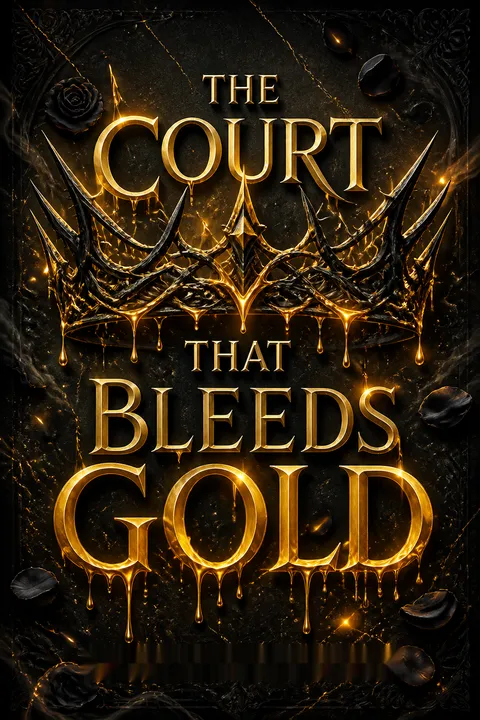
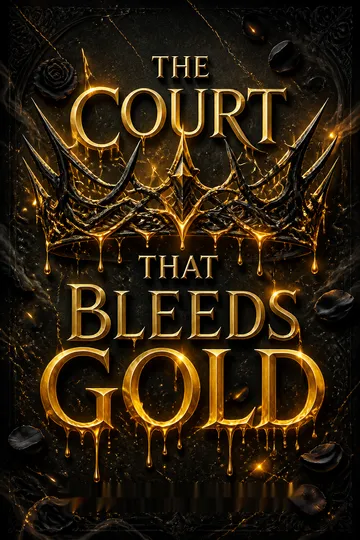
The Court that Bleeds Gold receives mixed reviews averaging 3.88/5 stars. Positive reviewers praise the clever protagonist Eleanor, engaging enemies-to-lovers romance with Ruskin, and the Rumpelstiltskin/Beauty and the Beast retelling. Many commend the fast pacing, world-building, and plot twists, calling it comparable to ACOTAR. Critics cite lack of character development, rushed romance, derivative plotting, and excessive "telling" rather than "showing." Several note the relationship feels forced and question its "dark fantasy" label. Character descriptions are reportedly lacking. Most agree it's an impressive debut with entertaining side characters, though some find it too similar to existing romantasy books.
People Also Read

Characters
Eleanor Thorn
The Gold WeaverEleanor is a resourceful young craftswoman whose experiments grow from her late mother's notes and her wish to ease her village's hunger. She is observant, generous, and stubborn enough to challenge cruelty even when she lacks the power to stop it. Her curiosity is both a strength and a source of danger: she asks questions that other people prefer to leave alone, then acts on the answers. Eleanor's care for her father and friends is not passive devotion. She makes tools, medicines, plans, and bargains to protect them. What drives her most is the desire to be valued for her own mind and work, rather than treated as an echo of her celebrated mother or as a resource for rulers.
Ruskin Dawnsong
The divided princeRuskin is the powerful regent of the Seelie Court, known to humans as Blackcoat because he answers desperate summons and offers bargains. He is intelligent, controlled, and difficult to read, shifting between a terrifying public manner and moments of unexpected tenderness. His mixed heritage leaves him politically suspect among those who want an entirely Seelie ruler, and he responds by keeping nearly everyone at a distance. Ruskin believes responsibility requires him to bear burdens alone and make hard choices without explanation. That conviction gives him resolve, but it also encourages secrecy and coercion. Eleanor unsettles him because she questions his methods while seeing the person beneath the performance.
Isaac Thorn
The grieving fishermanIsaac is Eleanor's father, a fisherman whose grief after his wife's death has left him withdrawn and increasingly unable to provide. He loves his daughter but often fails to meet the practical demands of their life together. Eleanor's care for him is affectionate rather than resentful: she sees his pain without pretending it makes their hardship disappear. Isaac represents the home and ordinary human tenderness Eleanor keeps trying to reach, even when her ambitions and dangers pull her far away.
Sanna
Eleanor's village anchorSanna is Eleanor's closest friend, a practical young woman who shares her worries about poverty and the village's failing food supply. She teases Eleanor about Thatch and admires her generosity, but she also understands how much Eleanor carries for other people. Sanna's family life gives her a grounded view of the community Eleanor hopes to help. She offers companionship without fully knowing the scale of Eleanor's experiments or the dangers of the fae market.
Thatch
The presumptive suitorThatch is a handsome villager who assumes Eleanor will marry him and imagines a conventional domestic future for her. He is self-absorbed rather than perceptive, overlooking her intellectual ambitions until her gold-making work catches his attention. His fear under arrest leads him to claim Eleanor can pay his debt, exposing how easily he treats her talent and future as resources available to him. He is not simply malicious, but his entitlement has real consequences.
Maidar
The cautious traderMaidar is a horned fae trader Eleanor knows from the monthly market. Unlike many fae she encounters, he deals in tangible goods and does not pressure her to surrender years, talents, or memories. His patience with Eleanor's questions makes him a rare source of genuine intellectual exchange. He embodies the possibility that difference from the polished High Fae does not equal danger, and that trade can involve curiosity as well as appetite.
Clara
A market's warningClara is a human seamstress whose failed delivery to a fae customer exposes the brutality hidden inside the market's bargains. Eleanor recognizes her from the neighboring town and is shaken by the punishment she suffers. Clara's fate gives Eleanor a concrete reason to distrust the claim that a bargain's terms make its consequences fair.
King Albrecht
The hoarding human kingAlbrecht rules Styrland through appetite and intimidation, hoarding imported food while his subjects struggle to survive. He treats punishment as entertainment and accepts bribes or people as payment when it benefits him. Eleanor's ability to make gold turns her into a possession in his eyes. His rule demonstrates that human authority can be as predatory as fae power, even without magic.
Halima
The sworn swordHalima is Ruskin's formidable guard, disciplined, direct, and often more attentive to danger than to social niceties. Her strength and swordsmanship make her an imposing presence, while her mixed ancestry gives her a personal connection to the divisions within the Seelie Court. She is committed to protecting Ruskin and preserving peace between the courts, a duty shaped by her parents' memories of war. Halima initially treats Eleanor as a security problem, but her sense of responsibility is more principled than possessive.
Destan
The irreverent courtierDestan is Ruskin's longtime friend, a stylish and witty High Fae who often meets danger with humor. His apparent frivolity conceals loyalty and emotional insight; he can read a room and recognize the burdens Ruskin refuses to discuss. Destan is one of the few people who knew Ruskin before court duty transformed him into a guarded ruler. His friendship offers Eleanor a less intimidating point of connection to the Seelie Court, though his loyalty to Ruskin can place him between truth and discretion.
Fiona
The human confidanteFiona is the human servant Eleanor meets in the Seelie palace, a figure who appears to understand the isolation and vulnerability of being human among the fae. She warns Eleanor about dangerous food and shares knowledge of true names and court history. Her guarded manner suggests long experience with punishment and dependence. Eleanor responds to her with compassion, seeing in her a fellow captive whose safety matters beyond the immediate terms of Eleanor's own bargain.
Galaphina
The cruel court mistressGalaphina is a high-ranking fae who uses beauty, status, and magic to punish those she considers beneath her. Her treatment of Clara reveals a casual appetite for domination, while her social confidence depends on the court's willingness to treat cruelty as entertainment. She resents Ruskin's authority and sees his protection of Eleanor as a chance to challenge him. Galaphina represents a court culture in which the powerful make suffering public and call it amusement.
Fiona's mistress
The red-haired nobleLady Rivera is a prominent Seelie noblewoman with red hair, polished manners, and a reputation for punishing servants who displease her. Her household includes the human servant Eleanor knows as Fiona. Rivera's status and political confidence let her speak openly among the court's elite, while her treatment of those under her authority exposes the distance between courtly elegance and actual mercy.
Cebba
The absent royal heirCebba is Ruskin's half-sister, a royal figure whose claim to the Seelie succession remains part of the court's political unease. She was raised amid competing expectations about bloodline and inheritance, and her connection to the court's pro-purity faction makes her a focus of resentment and rumor. Cebba's history is bound up with Ruskin's rise to power, though much of what happened between them is contested or deliberately concealed.
Queen Evanthe
The sleeping High QueenEvanthe is Ruskin's mother and the Seelie queen whose rule once brought peace between the fae courts. She is remembered for looking beyond political stability toward a more generous future. Her choices shaped the uneasy succession that followed, and her absence continues to define Ruskin's duties. Even in enchanted sleep, she remains a powerful emotional presence in his life and a symbol of the court's unfinished history.
Ilberon
The ambitious stepfatherIlberon is Cebba's father and Evanthe's second husband, a political figure associated with the faction that favors a purely Seelie succession. His ambition and influence shape the family conflict surrounding the throne. He represents the court's tendency to treat lineage and power as more important than personal loyalty.
Plot Devices
Fae bargains
Rules with sharp edgesFae bargains bind their participants to the words used, not necessarily to the humane intention one party imagines. Eleanor learns to phrase offers carefully, but Ruskin still uses the unspecific timing of their agreement to keep her in Faerie until she completes her work. The device shapes the plot at every scale: a bargain can save a life, extract a cost, or turn a desperate request into another form of captivity. It also creates the novel's recurring ethical question: whether obeying the contract is enough to make an action just.
Alchemical gold
Wealth turned into dangerEleanor's process transforms base metal into durable gold, first giving her a way to help her village and then attracting the attention of both Albrecht and Ruskin. The gold is not merely treasure: its unusual properties become central to the contamination spreading through Faerie. Eleanor's practical experiments provide the method by which she identifies the crisis, while her growing ability to affect gold without tools transforms the substance into a means of defense. Its changing meaning tracks Eleanor's movement from craftswoman to an active magical force.
The golden curse
A ruler's sickness spreadsCebba's curse makes Ruskin's heart turn to gold and, because a High Monarch's power is bound to the land, carries the transformation into plants and animals. The contaminated living things become sick, dangerous, and potentially destructive to the realm's food supply. This device joins Ruskin's private vulnerability to the public crisis that Eleanor must investigate. It also creates urgency without making the solution a simple contest of strength: Eleanor must understand what gold is doing before anyone can reverse it.
True names and gates
Freedom with a priceFae true names carry power, and Eleanor believes the Seelie founding stone may record Ruskin's. In fact, his spoken true name opens a hidden Monarch Gate that leads one way to Styrland. The name ends the force of their bargain and gives Eleanor a genuine choice about whether to remain. The gate is not just an escape route: its one-way design makes every decision consequential, and its existence turns trust into a practical risk rather than a romantic abstraction.
Eleanor's gold magic
Craft becomes self-defenseEleanor's ability begins in experiments and intuition, then develops into direct influence over gold. She can draw a gold-handled weapon from an attacker, reshape a ring, and alter metal without laboratory tools. When trapped, she uses this power to escape chains and survive threats that ordinary human strength could not overcome. The ability is introduced gradually through observed changes in rings and gold-bearing materials, so its later use in danger grows from earlier evidence. It also gives Eleanor an independent source of power in a world where nearly everyone else has more physical and political force.
The Gold Weaver Series
About the Author
Download PDF
Download EPUB
.epub digital book format is ideal for reading ebooks on phones, tablets, and e-readers.








