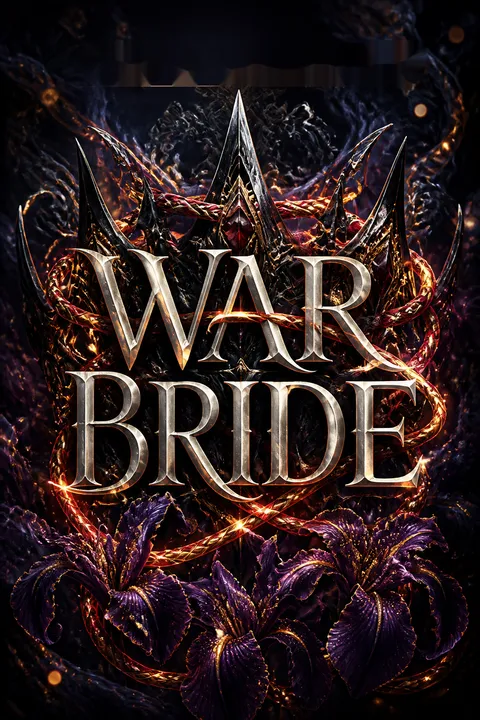


Plot Summary
Prologue
Dragged from a cage before a jeering fae crowd, Ilsevel expects death, until she realizes the captors mean to sell her as a warbride. She has already watched them take her younger sister, Aurae, and learned how little courage can do against armed monsters. Now she stands alone on a scaffold, bruised and exposed, while strangers bid for the right to claim her. Her only shield is the fury she has left.
The opening turns a familiar rescue fantasy inside out. Ilsevel once imagined a hero arriving to defeat the monsters, but the scaffold offers no such comfort: survival itself is being auctioned. Her anger is not simple bravado. It is the last form of agency available to someone treated as a political object by both human kings and fae warlords. The scene also plants the novel’s central question: whether protection can be distinguished from possession when every powerful figure seems to claim a woman’s future.
The Letter at Ashryn
On her Maiden’s Journey, Princess Ilsevel prepares for a marriage arranged by her father, King Larongar, to the Shadow King of Mythanar. She fears the alliance will turn her into property and sees no reason to trust the troll king chosen for her. Her sister Aurae urges her to take the vows seriously, but a message arrives from Artoris Kelfaren, the mage she has loved since girlhood.
Ilsevel slips away from the ceremony and finds him waiting with ten red-cloaked followers. Believing he has come to free her, she leaves Aurae behind and rides with him. Her sister’s warning that flight may not bring freedom goes unanswered, as Ilsevel chooses an old romantic hope over the marriage designed by her father.
Ilsevel’s decision is understandable precisely because it is not fully informed. Her father has made marriage a political transaction, so Artoris appears to offer a way out of a system that has never treated her consent as relevant. Yet her attachment rests on letters and memory, not present knowledge of the man she meets again. Her rejection of one imposed future therefore leads her into another form of dependence. Aurae’s appeal to their people’s safety complicates the escape: Ilsevel is not merely resisting a father, she is also choosing personal survival over a fragile alliance.
Fire Across the Shrine
Across the valley, Taarthalor, king of the Licornyn riders, waits with his scout Ashika and his unicorn Elydark for news of Artoris. Taar’s mission is to capture the death mage and seize a talisman believed to open the hidden routes into Evisar.
Lord Lurodos, a Noxaurian warlord, urges the Licornyn to use virulium, a demonic battle drug that strips away judgment. Taar refuses and circles his riders behind the shrine as Lurodos’s poisoned force attacks. The clash reveals Ilsevel’s strange sensitivity to the licorneir, whose magical song overwhelms her.
Artoris kills a rider with death magic. At the burning guesthouse, Aurae unexpectedly kills a fae attacker while protecting her sister, then collapses. Taar captures Artoris, but a red-cloaked fighter carries the mage away.
The raid joins two distinct motives in one destructive encounter. Taar seeks strategic access to Evisar, while Ilsevel believes she is escaping a forced marriage; neither understands the other’s purpose. Their collision exposes how civilians become expendable in contests between rulers. Taar’s refusal of virulium signals a moral boundary, but not innocence: he still leads an assault that burns a shrine and leaves the sisters trapped. Ilsevel’s perception of the unicorns also marks her as unusual before she understands her own gift. The violence makes the cost of political maneuvering immediate and bodily.
A Bid Against Lurodos
The fae take Ilsevel and Aurae with the surviving priests, while Artoris escapes in the hands of the red-cloaked fighter. In the crowded transport, Ilsevel sings to calm the prisoners, but the journey ends with Aurae dragged away and Ilsevel left behind. Taar returns to the Grimspire with fewer riders than he led out, carrying the talisman but not the captured mage.
He learns the prisoners will be sold, and that women are auctioned as warbrides. When Lurodos bids for Ilsevel, Taar risks his entire payment from the failed mission to outbid him. His purchase saves her from Lurodos for the moment, but Noxaurian law makes the winning bidder responsible for marrying and consummating the union before dawn.
Taar’s bid is both an act of protection and an exercise of ownership, a contradiction the story refuses to smooth over. He acts because he cannot tolerate Lurodos’s cruelty, yet the only recognized way to remove Ilsevel from danger is to buy her. His spent earnings also convert the deaths of his own riders into a personal obligation, making the rescue costly rather than purely romantic. For Ilsevel, the auction literalizes the political logic of her earlier betrothal: men keep deciding which powerful household will possess her. The difference lies not in the transaction, but in what Taar does next.
A Bond Before Dawn
Taar brings Ilsevel to his camp and has the young priest Onor Vamir perform the first Licornyn marriage rite, a protective handfasting. Ilsevel does not understand the sacred vows, and Taar does not explain that Noxaurian law still demands consummation before dawn or transfers her to the next bidder. The prince Ruvaen confirms the threat.
In his pavilion, Taar gives Ilsevel the choice to refuse him, but refusal would leave her to Lurodos. He explains that his people’s custom makes the bride’s pleasure essential to the marriage, a principle foreign to Ilsevel’s experience of men. She finally chooses to trust him for the night, but the law has forced the choice into a brutal corner.
The handfasting gives the relationship a spiritual vocabulary before either character can freely choose it. Taar treats the rite as binding, while Ilsevel experiences it as another contract imposed on her body. Their unequal knowledge matters: he understands the ceremony’s significance, but withholds the danger of the dawn deadline until circumstances make it unavoidable. His insistence on her consent is ethically meaningful, yet it cannot erase the coercion surrounding her options. The scene’s tension comes from this difference between interpersonal care and structural freedom. A considerate captor is still a captor when the world outside his tent is more dangerous.
Pleasure Without Possession
Ilsevel enters the night expecting Taar to take what the marriage law requires. Instead, he asks what she wants and moves slowly, checking how each touch affects her. Her memories of Artoris’s forceful advances make Taar’s patience difficult to trust, but she gradually discovers pleasure she had never expected from intimacy.
When she reaches release, Taar declares the Licornyn consummation complete and turns away rather than claiming her virginity. He intends to free her and return her to her people after dawn.
The tenderness leaves Ilsevel unsettled: it gives her a new experience of desire without changing the fact that she was bought. Before either can decide what the night means, Lurodos arrives to enforce the Noxaurian interpretation of the law.
The scene shifts the meaning of intimacy from a husband’s entitlement to an encounter governed by attention and response. For Ilsevel, pleasure is not merely sensation; it challenges the belief, learned from court and from Artoris, that a woman’s body exists to satisfy a powerful man. Taar’s restraint gives her room to recognize her own wishes, but it does not make the surrounding bargain consensual. His refusal to take her virginity is both protective and a form of separation: he will save her without assuming she belongs to him. The emotional complication is that care creates attachment even as he plans to leave.
The Bloodtrial for Ilsevel
Lurodos argues that Taar has failed to meet the Noxaurian requirement and claims Ilsevel as his next prize. Ruvaen backs the law, then offers Taar virulium to improve his chances in a fight. Taar refuses the drug, which grants savage strength at the cost of reason, and accepts a duel to the death instead.
In the arena, Lurodos doses himself and attacks from a reptant mount. Taar and Elydark fight as one, but Lurodos’s flail knocks Taar from the saddle and a poisoned blade wounds his arm. Taar finally drives a knife into Lurodos’s heart. The crowd cheers, and Ilsevel survives, but the contaminated wound carries virulium into Taar’s blood.
Taar’s victory is morally compromised by the arena that stages it as entertainment, but his refusal of virulium preserves a crucial distinction between strength and surrender to appetite. He will risk death rather than become the kind of fighter who cannot distinguish enemy from ally. The cost is not abstract: Lurodos’s blood poisons him through the wound. Ilsevel, meanwhile, becomes the public prize over which men wager and fight, even as Taar’s actions protect her from a worse claimant. The scene makes honor consequential rather than decorative. His restraint does not spare him violence; it determines what kind of violence he is willing to use.
Aurae's Last Veil
With Lurodos dead, Taar learns from a pixie that Aurae was bought by Ravagol, a brutal warrior serving Lord Dormaris. He takes Ilsevel to the Lunulyrian camp, hoping Dormaris will help them reach her sister. Instead they find tents torn apart, bodies scattered, and a pyre. Dormaris explains that Aurae’s dormant War Gift erupted when Ravagol tried to consummate their forced marriage.
She killed Ravagol and attacked those around her before Dormaris’s people subdued her. Ilsevel recognizes Aurae’s prayer veil among the burned remains and collapses into grief. Taar carries her away from the pyre. Her sister’s gentleness had concealed a power she never knew how to control, and the discovery leaves Ilsevel unable to separate love from guilt.
Aurae’s fate turns the story’s recurring problem of misread identity into tragedy. Her softness was not evidence of weakness, but neither did hidden power guarantee control or safety. The War Gift becomes catastrophic because it awakens under sexual violence, in a setting where a captive woman is treated as a purchasable object. Ilsevel’s grief is sharpened by survivor guilt and by the belief that her own escape set the chain of events in motion. Taar cannot repair that loss; he can only keep her from facing it alone. His physical act of carrying her becomes a form of witness, not a solution.
A Poisoned Farewell
After Taar carries her away from the pyre, Ilsevel turns her anger on him and slashes his arm with the knife he gave her. She escapes into the Forest of Wanfriel, whose living trees seize at her clothes and body. Taar fights through the grove and pulls her free.
They then travel through a temporary gate into the human realm, and Taar takes her toward Cramaer, where she claims she can find help. He gives her food, clothing, and money, then rides away. The poisoned cut from Lurodos’s blade begins to blacken and spread. Taar falls from Elydark’s back, and the unicorn returns alone to the town, seeking Ilsevel’s help.
Ilsevel’s flight is less a reasoned rejection than an attempt to escape the intolerable fact of surviving Aurae. She directs grief at Taar because he is present, powerful, and implicated in the war that destroyed her sister. His decision to honor his promise and leave her in her own world looks like respect, but the bond between them is not yet understood. The poison makes that separation physically impossible to sustain. The forest’s attack further externalizes the peril of moving alone through a realm whose rules Ilsevel cannot read. Her return will be a choice, but one made under the pressure of both danger and attachment.
The Song That Holds
Elydark brings Ilsevel back to Taar, whose poisoned blood has driven him into a virulium frenzy. Blinded by black fluid and overwhelmed by hunger, Taar tells her to run, then pursues her as prey. Elydark erupts in flame and stands between them, breaking the first charge of Taar’s madness.
As Taar flees toward the forest, Ilsevel follows the unicorn’s plea and catches up with him near a group of townspeople. Taar has killed a donkey but turns toward a frightened child hiding by a cart. Ilsevel rides Elydark into his path, jumps down, and gets the child to flee. When Taar seizes her, she calls his name in song, briefly forcing him back before his power knocks her unconscious.
The poisoning makes Taar’s private fear of virulium brutally concrete: the drug’s appetite returns through a wound, without his consent, and threatens to make him the danger he has spent years resisting. Ilsevel’s first instinct is to flee, but she acts to protect the child when Taar’s attention shifts. Her song does not cure him or restore him; it creates a moment in which his identity can still be reached. Elydark’s intervention is equally important, because loyalty here means restraining a beloved rider rather than obeying him. The scene tests care under genuine threat, not under the safer conditions of the pavilion.
A Voice Makes Whole
Ilsevel wakes in the forest after the encounter and finds Taar and Elydark gone. A faint glimmer of the velra bond leads her onward until she reaches a river, where Taar kneels beside his silent unicorn, close to death from the poison. She recognizes the wound on his arm as the source of the corruption.
Elydark gives her the healing melody Taar used when he mended her hand, and Ilsevel adds her own voice to it. Her gods-gift finds a harmony that draws the poison from Taar’s flesh. He wakes, alive but changed, and Elydark warns through song that recovery will not return him unchanged. Ilsevel has finally used her gift as more than a way to soothe others: it has helped keep a life from breaking apart.
The healing resolves the novel’s central conflict between Ilsevel’s contempt for her gift and its actual capacity. Her music is not a weapon in the conventional sense, nor a passive ornament; it perceives discord and supplies a relation that makes repair possible. The crucial act is collaborative. Ilsevel cannot channel Elydark’s power alone, and Elydark cannot safely pour it directly into Taar. Their joined song creates a third possibility that neither could produce independently. The scene also refuses a clean reset. Taar survives, but the warning that he will be changed preserves the cost of his encounter with virulium and leaves the future unsettled.
The Cord Pulls Back
Taar wakes beside the river and learns that Ilsevel returned and healed him. She wants to leave, but the invisible velra cord tightens whenever either tries to go. Taar explains that the first Licornyn rite is followed by a second ceremony at the new moon a month later, with the couple expected to remain together until then.
The bond should have faded after hours, yet Ilsevel’s gods-gift may have awakened it. Taar proposes taking her to Onor Gantarith in the Hidden City, where they can seek a way to sever it, then carry her back to human lands. He reveals that he is king of the Licornyn and that his homeland, Licorna, has been ravaged. Ilsevel must travel with him into Cruor.
The bond transforms an improvised protective rite into a shared constraint neither character intended. Its magic is intimate, but its effect is not romantic freedom: it removes their ability to separate and forces them to negotiate what proximity means. Taar’s authority as king adds a political dimension to their private predicament, while his admission of the lost homeland gives Ilsevel a first glimpse of the history behind his war. The practical decision to seek Onor Gantarith matters because it replaces denial with a plan. Yet the plan depends on entering a dangerous land together, making their alliance necessary before either can decide whether it is wanted.
Soulflower Under Stars
At a small camp in the winter forest, Taar asks Ilsevel to share her real name. She gives it at last, explaining that her father named her after a wildflower he once saw. Taar recognizes the word as Licornyn for soulflower, the blossom used to make the cord that binds them. The coincidence awakens hope that their meeting may have meaning beyond accident.
Ilsevel does not reveal that she is King Larongar’s daughter or that she still expects to return and marry the Shadow King. She grieves Aurae, resents Taar’s role in her loss, and is also relieved that the cord keeps them together. She silently vows not to fall in love with him, even as she prepares to travel toward his people.
The name revelation links Ilsevel’s identity to the magic that has constrained her, but it does not settle what that connection means. For Taar, soulflower offers a possible sign of providence; for Ilsevel, it intensifies a contradiction she cannot resolve. She wants freedom from being assigned to men and kingdoms, yet the bond prevents her from leaving, and part of her welcomes that enforced closeness. Her secrecy preserves the political self she may still have to become, while her private grief resists being folded into Taar’s hopes. The ending offers no completed romance or restored homeland. It leaves two wary people bound together at the start of a dangerous journey.
Epilogue
At a cliff’s edge, Shanaera, Taar’s former beloved, feels no fear of death because she is already unnaturally preserved. Artoris, who has escaped with her, wants to return to King Larongar and report Ilsevel dead, then seek another bride for the Shadow King.
He also needs the lost talisman to reach Evisar. Shanaera intends to return to Cruor, gather licorneir blood to sustain herself and the warped dead under her command, and find Taar. She believes he has rescued Ilsevel and plans to reclaim him, imagining that they will rule Licorna together.
The epilogue changes the apparent meaning of Taar’s battlefield vision: Shanaera was not simply a memory conjured by grief, but a living presence in a corrupted form. Her return makes his old guilt politically dangerous, because the person he once loved now commands the same kind of predatory force he has spent years resisting. Artoris remains focused on strategy and dynastic replacement, reducing Ilsevel to a missing instrument in an alliance. Shanaera’s certainty that Taar belongs with her creates a darker mirror of the novel’s marriage plot: devotion can become possession when one person’s imagined future overrides another’s will.
Analysis
WarBride begins with a political fact that becomes bodily: Ilsevel’s father has arranged her marriage as an alliance, and the fae later turn that same logic into an auction. Across both systems, powerful men describe women as instruments of peace, property, or reward. Taar’s care matters because he resists some of that logic, especially by asking what gives Ilsevel pleasure and refusing to take more than she agrees to give. Yet the novel does not confuse kind conduct with freedom. He still captures her, buys her, and makes choices that affect her life before she can understand the stakes. Their attraction develops inside an unresolved imbalance.
The book’s strongest counterpoint is the contrast between Ilsevel’s underestimated music and the violence valued by rulers. Her gift does not defeat armies through force. It steadies frightened prisoners, reaches Taar when his identity is nearly consumed by virulium, and finally works with Elydark’s power to heal him. That pattern makes music a practice of attention, not a decorative talent. It also gives Ilsevel a form of agency that her father’s court has failed to recognize. Aurae’s War Gift, by contrast, erupts without her understanding or consent, showing that power alone cannot guarantee control or safety.
Taar’s struggle with virulium echoes Ilsevel’s struggle with the stories she tells herself. He has to admit that refusing the drug does not make him immune to its consequences. She has to revise her idealized memory of Artoris and acknowledge that escape can reproduce captivity in a new form. Their growth is therefore less about discovering a perfect rescuer than learning to question the bargains that make rescue necessary.
The ending deliberately withholds closure. Ilsevel’s identity remains hidden, Aurae’s loss is unresolved in her heart, the velra bond compels a journey neither planned, and Shanaera’s return threatens the fragile alliance between Ilsevel and Taar. The story closes not with freedom achieved, but with a more difficult possibility: two people who distrust the systems around them may learn to choose one another without mistaking constraint for devotion.
Review Summary
People Also Read


Characters
Ilsevel
The unwilling princessA princess whose father treats marriage as statecraft, Ilsevel resists being traded between powerful men. Her gods-gift makes her music unusually affecting, though she has long dismissed it as useless because it does not resemble the combat or political gifts her father values. She is quick-witted, proud, and more frightened than she wants others to see. Her loyalty to her sisters anchors her moral life, while her desire for independence can lead her to mistake escape for freedom. Ilsevel’s central struggle is not simply whether to trust Taar, but whether she can recognize her own wants after years of being told what a woman should want.
Taarthalor
The Licornyn kingKnown as Taar, he leads the Licornyn riders, a people displaced from their homeland and caught in a war against the human realm. He is formidable in battle but defined as much by restraint as strength, especially in his refusal to use virulium. The losses he carries make him cautious about power and wary of becoming the sort of ruler who spends lives carelessly. Taar’s instinct to protect can become a burden he takes on without understanding why, and his formal sense of honor sometimes collides with the consent and freedom he wants to defend. He is both a king responsible for a people and a man uncertain what to do with intimacy.
Aurae
The gentle dancerIlsevel’s younger sister, Aurae is compassionate, devout, and naturally attentive to other people’s distress. Her gift for dance reflects a grace that contrasts with Ilsevel’s restless defiance, but she is not merely a soothing presence in her sister’s life. Aurae often sees the consequences Ilsevel would rather ignore and tries to protect both her family and strangers. The sisters love one another deeply, although their imposed roles have left them with much to discover about who the other is beyond princess and sibling.
Artoris Kelfaren
The cherished first loveA powerful mage trained among the Miphates, Artoris occupies a central place in Ilsevel’s memory of first love. Their past began when he helped her recover after her gods-gift manifested, and years of secret correspondence kept her attachment alive. He is ambitious and willing to use magic and force to secure his aims. The contrast between Ilsevel’s remembered image of him and the choices he makes in the present gives her a painful measure of how memory can preserve desire while concealing character.
Lurodos
The virulium warlordA Noxaurian lord and brutal battlefield commander, Lurodos treats violence as both entertainment and entitlement. He uses glamour to mask a more monstrous appearance and encourages his warriors to take virulium, which strips away restraint. His contempt for Taar’s mixed heritage fuels their rivalry, while his appetite for domination makes him a direct threat to captives. Lurodos represents a political order in which law can dress predation in respectable language.
Ruvaen
The calculating princePrince of Noxaur, Ruvaen commands a coalition of fae and mercenary forces while maintaining a careful balance among dangerous allies. He is shrewd, socially polished, and capable of recognizing the brutality of his own followers without being able to control them completely. His alliance with Taar serves a shared military purpose, but their goals are not identical. Ruvaen’s charm is a political tool, and his guarded motives make even his moments of apparent sympathy difficult to trust.
Elydark
The heart-bound unicornTaar’s licorneir is a powerful magical being bonded to him in spirit, sharing sensation and communicating through song rather than ordinary speech. Elydark is fierce in battle and deeply protective of his rider, but his loyalty does not mean unquestioning obedience. He recognizes danger in Taar’s choices and responds to Ilsevel as someone whose unusual perception can reach the Licornyn song. His bond with Taar offers a model of connection built on mutual dependence rather than ownership.
Faraine
The guarded elder sisterIlsevel and Aurae’s eldest sister, Faraine is serious, emotionally perceptive, and burdened by a gods-gift that makes other people’s feelings painful to experience. Her vulnerability has kept her at the margins of court life, where Ilsevel has often been more visible and favored. Faraine’s quieter presence helps establish how differently the same family can shape its daughters according to their perceived usefulness.
King Larongar
The bargaining fatherIlsevel’s father and king of Gavaria, Larongar treats his daughters’ gifts and marriages as possible instruments of power. His disappointment in gifts he cannot readily use has helped shape Ilsevel’s belief that she is valued chiefly as a bride. He is a political strategist and a controlling parent, more attentive to alliances than to his daughters’ private wishes.
Kildorath
The grieving secondTaar’s second-in-command and a trusted Licornyn warrior, Kildorath is fiercely loyal to his king and protective of their people. His distrust of humans is bound to personal grief, making his objections to Taar’s choices more than simple prejudice. He believes a ruler must place communal survival above private attachment, and he is willing to confront Taar when he thinks that duty is being forgotten.
Ashika
The keen scoutA Licornyn rider and skilled scout, Ashika brings Taar the intelligence that puts the attack on Ashryn Shrine in motion. She is perceptive, practical, and willing to use humor to puncture the solemnity surrounding her king. Her loyalty is clear, but she is not so deferential that she hides her opinions from him.
Shanaera
Taar's former belovedA Licornyn warrior with a charged history with Taar, Shanaera remains an emotionally significant figure in his life. Her connection to Taar and her relationship with her brother Kildorath shape the way both of them think about loyalty, love, and the cost of battlefield choices. She is associated with fierce courage and an intensity that complicates Taar’s memories of their past.
Mage Morthiel
The death mage's masterThe most powerful Miphato of his era, Morthiel trained Artoris and is connected to the death magic that makes the Miphates a threat to both human and fae powers. Though largely absent from the immediate action, his influence shapes the hunt for Artoris and the conflict around Evisar. He represents a wider magical authority whose ambitions reach beyond the shrine and its prisoners.
Onor Vamir
The young Licornyn priestAn eighteen-year-old priest of the Goddess of Unity, Vamir performs the first marriage rite between Taar and Ilsevel. He is earnest and somewhat nervous, but takes his sacred duties seriously despite his youth.
Onor Gantarith
The Hidden City's elderA Licornyn religious authority in the Hidden City, Gantarith is the person Taar believes can advise them about the unusual marriage bond. His knowledge offers their journey a practical destination.
Lord Dormaris
The Lunulyrian lordA refined and formidable commander, Dormaris leads the Lunulyrian force allied with Ruvaen. He approaches warfare as both a subject of study and a source of influence. His measured manner makes him less openly brutal than Lurodos, but his composure does not make him harmless.
Ravagol
The brutal bridegroomA warrior serving under Dormaris, Ravagol is feared for his physical brutality and inability to attract a willing bride. He represents the violent end of the Noxaurian custom that turns captive women into prizes.
Pompkin
The paper-hungry pixieA pixie paid by Taar for information, Pompkin is quarrelsome, proud of his warrior clan, and susceptible to the written word. His gossip helps Taar learn where Aurae has been taken.
Plot Devices
Ilsevel's gods-gift
Music that alters and mendsIlsevel’s gift makes her singing unusually vivid to those who hear it, drawing listeners into memories of safety and home. She has long judged it worthless because it cannot win battles or advance her father’s political aims. In practice, it reaches people and creatures through a kind of musical perception that conventional magic does not explain. The gift helps calm captives, momentarily interrupts Taar’s virulium-driven violence, and eventually allows her to join with Elydark’s healing song. Its function develops from something Ilsevel resents into a means of recognizing and repairing discord. The story frames this power as relational: its greatest effects emerge when she listens and responds, rather than trying to dominate.
The velra bond
A vow made physically bindingDuring the first Licornyn marriage rite, a priest wraps Taar and Ilsevel’s forearms in velra, a magical cord woven from ilsevel blossoms. The visible cord soon disappears, and Taar expects its influence to fade within hours. Instead, Ilsevel’s gods-gift appears to awaken the rite, leaving an invisible connection that tightens when either tries to leave the other. Licornyn tradition includes a second ceremony a month later, when the bride may confirm or reject the union. The bond forces the pair to seek guidance in Taar’s homeland, turning a temporary rescue into an ongoing journey. Its magic creates proximity, but it cannot manufacture trust or resolve their conflicting loyalties.
Virulium
Power purchased with reasonVirulium is a dark substance drawn from the Rift and used by Noxaurian fighters to intensify their strength and aggression. Its immediate effect is devastating, turning warriors into frenzied attackers who may no longer distinguish friend from foe. Taar forbids his Licornyn riders from taking it because he has seen its lasting hold on those who use it. The drug first appears as a choice Taar rejects, then returns as a contaminant in Lurodos’s blood, spreading through Taar’s wound and forcing him into a similar frenzy. This development makes the danger more than a matter of voluntary temptation: violence can pass its corruption to someone who refused the drug.
The Evisar talisman
A key to hidden routesArtoris carries a triangular talisman etched with Miphates spell-writing and set with a rotating dark sphere. Taar’s mission is to capture the mage partly because the talisman may open secret paths through the obscuring magic around Evisar, where members of his people have been taken captive. Taar manages to seize it during the attack, even though Artoris escapes. The object therefore turns a failed capture into a partial strategic success and gives Ruvaen a possible route toward the citadel. Its possession also becomes a point of conflict between the human mages and the fae coalition, tying Ilsevel’s personal escape to a larger war.
The Grimspire and gates
A foothold between worldsThe Grimspire channels magic into the magic-poor human realm, allowing fae forces to survive there and return to strength. Ruvaen uses its power to create temporary gates through the Forest of Wanfriel, a strange between-worlds passage that can connect the fae realm with human lands. Taar and Elydark use one such gate to carry Ilsevel toward Cramaer after the camp crisis. Crossing it is dangerous for mortal bodies and unpleasant even for Taar, making travel a physical ordeal rather than a convenient escape. The tower also concentrates the forces and political tensions surrounding the campaign, so leaving its radius means choosing vulnerability in exchange for distance from the fae camp.
WarBride Series Series
About the Author


Download PDF
Download EPUB
.epub digital book format is ideal for reading ebooks on phones, tablets, and e-readers.








