

Plot Summary
The Arrow She Cannot Loose
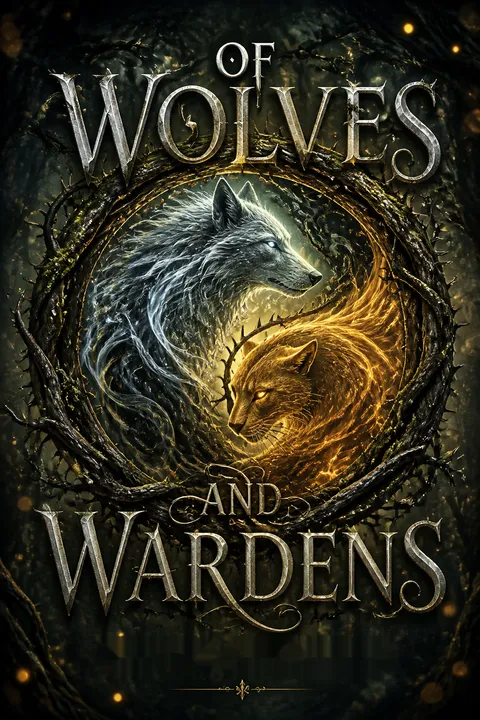
Brielle Normas has been bound for seven years to her grandmother, Elorata Dorrel, after her sister Valera bargained with the witch to save Brielle's life. Now Granny sends the nineteen-year-old huntress to kill Dreg, a red werebeast. Brielle finds the creature weeping beside a pool and cannot make herself shoot. Dreg charges; a gray werewolf named Dire intervenes, defeats her, then lets her escape.
He explains that Brielle's assignment is to kill Dreg, while his own is to keep Brielle alive. Brielle resents his interference, especially when he reminds her that Granny owns her service. Her first hunt ends with a broken bow and no trophy, but the encounter leaves her less certain that a monster is simply something that deserves to die.
Brielle's hesitation is the story's first small act of resistance. She has been trained by hardship to survive through competence, not tenderness, so the crying creature unsettles the moral shortcut Granny has given her: that killing is mercy. Dire's intervention sharpens the contradiction. He is visibly monstrous, yet he protects both Dreg and Brielle, while the respectable family authority behind the hunt demands a death. The scene makes perception itself unstable. Brielle cannot yet trust her sympathy, but she can no longer pretend she feels none.
The Monster Hunter's Supper
Brielle returns to Granny's iron-walled home empty-handed. Elorata responds by summoning Conrad Torosson, a scarred professional Monster Hunter, and arranging for him to train Brielle while bringing back Dreg's head. At dinner, Granny uses magic to force Brielle into courtly manners and silence her protests. Dire serves the meal, watching the bargain become a death sentence.
Afterward, Brielle finds him grieving before a mounted weredeer head. Her careless question about the dead creature makes him seize her, then collapse as the name Misery breaks through his confusion. Brielle sees that the werewolf's rage conceals grief, but she has no time to understand it: Granny has made certain that Conrad, unlike Brielle, will complete the hunt.
The dinner table stages power as etiquette. Elorata's glamours make a crude meal and a ruined house seem sumptuous, while her commands turn Brielle's body into another instrument of display. Conrad's presence adds professional violence to the family's coercion: what Brielle hesitates to do, a paid specialist will do efficiently. Dire's grief complicates the category of trophy. The mounted head is not merely evidence of Granny's power; it is a person whose loss still governs him. Brielle's brief encounter with that grief offers no rescue yet, but it makes emotional recognition part of the danger.
Dreg's Last Hunt
The next day, Brielle follows Conrad into Whispering Wood and helps him track Dreg. Dire had allowed the red werebeast to flee after Granny released her from service, but freedom has only delayed the danger. Conrad follows the trail until he can kill Dreg swiftly and take her head. Brielle watches without joining in, yet her silence cannot undo what happens.
Back at Granny's house, she struggles with the knowledge that Dreg's death was treated as the natural end of a bargain. Elorata wastes no time assigning another errand: Brielle must retrieve a golden tarathieli apple from the Quisandoral's garden before the witches arrive for supper. Dire is ordered to accompany her, leaving Brielle no chance to grieve or refuse.
Dreg's fate exposes the false generosity of release under Elorata's rule. The witch can withdraw a servant's immediate obligation without surrendering control over the conditions that make survival possible. Conrad's clean efficiency does not make the killing less brutal; it makes the moral work easier to avoid. Brielle's witness position matters. She neither commits the act nor escapes its consequences, a familiar trap for someone whose choices are constrained but whose conscience remains intact. The next errand converts that unease into forward motion, carrying Brielle and Dire into danger together.
The Owlkin's Shadow
To reach the Quisandoral's garden, Brielle opens a Hinter Path using the shadow of an owlkin, a predatory woodland creature disguised as a bird. Dire helps provoke it into flight, then saves Brielle from its talons; when the path opens, she guides him through the terrifying space between worlds. The garden beyond is beautiful and poisonous.
A vine drags Brielle away from Dire, and the Quisandoral's hypnotic song lures her toward a feast of fruit that briefly reveals itself as severed heads. Dire attacks the demon to break its hold. Brielle shoots an arrow into its third eye, takes the topmost golden apple, and escapes with Dire through the gate. He recognizes the fruit's scent and fears Granny's purpose for it.
The garden turns beauty into an instrument of predation. Its poison is not limited to plants: the Quisandoral's song makes surrender feel like relief, especially to a girl already exhausted by compulsory service. Brielle survives by combining her practical skill with the warning Dire gives her, while Dire survives because she refuses to leave him behind. Their cooperation is not yet trust without reservation, but it is reciprocal action under pressure. The apple becomes more than a magical ingredient. It is an object Brielle has won at real cost, and therefore a choice she may still be able to make.
The Coven Counts Missing Apprentices
At supper, Granny hosts the surrounding ward witches, including Mother Ulla, who challenges Elorata over apprentices who never emerge from her training. She also raises rumors of Black Magic, but the coven is too wary to confront Granny directly. Months pass. Brielle completes other hunts and patrols, while Dire silently shadows her.
During one patrol, Mother Ulla warns that something is distorting Granny's ward and marks a boundary tree with a hidden rune. Soon afterward, Granny tells Brielle that Dire's twenty-year term ends at dawn and orders her to kill him before he can retaliate. She adds that Conrad will accompany the hunt. Brielle accepts the command, but the thought of killing Dire turns her familiar obedience into dread.
The coven's meeting reveals institutional complicity without making every witch equally culpable. Mother Ulla can name the pattern, yet she has no proof strong enough to force a reckoning, and the others retreat before Elorata's threat of a Witch Trial. Brielle's patrol work places her between those larger powers, enforcing the ward while increasingly sensing its corruption. Her coming assignment concentrates the conflict in one intimate demand: kill the person whose conduct has begun to contradict her training. The external command and her private reluctance now point in opposite directions.
The Arrow Turns Aside
At dawn, Dire's service ends and Elorata briefly releases him from her control. Brielle and Conrad track him through Whispering Wood. Dire leads them past the owlkin's hollow and the oak where he once urged Brielle to resist Granny, then waits beside the pool where Brielle first hunted Dreg. She raises her bow, but when the moment comes, she fires into the ground instead of at Dire.
Conrad's arrow only grazes him. Dire flees toward a cliff, and Brielle tackles Conrad to spoil his shot. Conrad knocks her down and stabs her shoulder. Dire throws the hunter over the cliff, then carries Brielle away before she bleeds to death. He takes her to his abandoned family home, Phaendar Hall, and uses his medical training to stitch her wound.
Brielle's refusal is not a clean escape from coercion. She still arrives at the pool under Granny's command, and her body pays for resisting once violence erupts. Yet the choice changes the relationship between her and Dire: she risks herself to stop Conrad, and Dire answers by saving her rather than treating her as an enemy. The familiar pool makes the scene echo her first failure, but now hesitation has consequence and direction. She does not merely fail to kill a supposed monster. She acts to keep a person alive.
Phaendar Hall Remembers
While Brielle recovers in Phaendar Hall, she finds portraits that show Dire as the young man he once was. He tells her that he studied medicine and loved a magically gifted girl named Omylia. Elorata took Omylia's power, transformed her into the weredeer Misery, and bound her to service.
Dire agreed to twenty years as Granny's servant in exchange for Omylia's release, but Elorata never lifted her curse, and Misery died. Brielle recognizes the cruelty beneath the bargains she has been taught to obey. As she heals, Dire proposes that she escape into Faerieland instead of returning to Granny. They plan to attend Glorandal Night and seek news of Valera among the visiting fae.
Dire's history reframes his curse as the product of desire exploited through unequal bargaining. His first mistake was not simply loving Elorata, but mistaking her constructed tenderness for a relationship in which he retained agency. His later bargain repeats that pattern in another form: he gives up his own freedom for someone else's, but Elorata controls what the promised freedom means. Brielle recognizes the same structure in her own service. Their intimacy grows through a shared understanding of how care can be weaponized, without erasing the very different histories that brought them there.
A Wish at Glorandal
On Glorandal Night, the festival's magic holds Dire in human form and draws Brielle and him into the dance. They separate to ask the fae about Valera, whom they know was taken as a bride to Faerieland. A lavender-skinned fae offers information in exchange for Brielle's first heartfelt wish.
Brielle gives up her private longing for Dire's embrace, and learns that Lord Dymaris of Lunulyr has returned with a Moonfire Bride, possibly Valera. Later, Brielle and Dire find each other in the crowd and kiss in the forest. When midnight ends the festival's protection, Dire begins transforming and panics at Brielle seeing him. He runs into the Wood, while Brielle is left with the answer she sought and a bond she had hoped not to want.
The festival makes longing public and bargains private. Brielle can ask the fae for information, but the price they demand reaches past ordinary property into desire itself. Her wish is not a careless exchange: it reveals what she has begun to want, then removes her ability to imagine that desire being fulfilled. The kiss with Dire briefly offers a different kind of contact, one that feels mutual rather than extracted. His flight at the return of the curse interrupts that possibility, leaving Brielle to distinguish the magic of the night from the feelings that survived it.
The Witch Takes Control
As Brielle walks back toward Phaendar Hall for her weapons, Granny appears through the body of another werebeast and reasserts the binding of their blood bargain. She orders Brielle to kill Dire and bring back his head. At dawn, Granny takes over Brielle's body and approaches Dire in bed, using Brielle's face and the fae-given wish to draw him into a false seduction.
She produces a knife and strikes for his eye. Dire evades the blow and escapes through a window, wounded but alive. Brielle remains aware inside her own body, horrified that Granny has used her desire to manipulate them both. The witch summons her back to the house, where the heads of former werebeasts line her path.
The stolen wish becomes a mechanism of violation, not a romantic obstacle. Granny turns Brielle's private longing into leverage, commandeering her body and making intimacy indistinguishable from attack for a time. Dire's escape prevents the scene from becoming a simple tragedy, but neither character emerges untouched: he has been lured through Brielle's face, while she has been made an instrument against someone she chose to protect. The Hall of Heads that follows gives this personal violation its wider context. Granny's control has repeatedly turned former apprentices into objects, then displayed what remains.
The Apple Seeds Blacken
Granny has Brielle witness a new apprentice between two werebeasts while she grinds the seeds of the golden apple into a potion meant to steal the girl's magical potential. Mother Ulla's warning about Black Magic now has a visible target.
Brielle pushes against Granny's compulsion, takes the decanter, and smashes it before the spell can finish. Elorata's glamours crack; she cannot immediately force Brielle back into obedience. The witch answers with another curse, transforming her granddaughter into a golden-striped werecat and sending her into the night.
Granny's command to kill Dire remains entangled with the new transformation, but Brielle's resistance has disrupted her grandmother's control. The apprentice survives the interrupted ritual, while Brielle flees into the Wood in a body she cannot yet govern.
Brielle's rebellion becomes consequential when it protects someone who cannot protect herself. The apprentice is not an abstraction or a magical resource; she is a young person standing where Brielle once stood, which makes inaction a form of complicity. The golden apple's conversion from sacred fruit to a tool of extraction clarifies Elorata's method: she does not merely accumulate power, she takes the futures of other people and calls the taking instruction. Brielle's success is real but costly. Breaking one layer of control triggers a new curse, so resistance opens a path without making it safe.
The Werecat in Gilhorn
Granny sends the newly transformed Brielle into Gilhorn to provoke Dire into defending the townspeople. In her werecat form, Brielle attacks oxen and nearly kills a young watchman before Dire tackles her. He recognizes her beneath the curse and tries to stop her without killing her. Crossbow bolts strike Brielle as she escapes into the Wood.
Dire follows her bloody trail to a stream, binds her wounds with leaves, then carries her to Mother Ulla's border. Ulla uses her staff and boundary magic to pull Brielle across into her own wardship, where Granny's commands cannot reach as easily. She explains that Elorata's use of Black Magic on her own blood has weakened the binding, though Brielle's animal curse remains.
The town attack shows how coercion can make a victim appear to be the threat. Brielle's actions are dangerous, and the townspeople are justified in defending themselves, yet Granny has engineered the encounter to draw Dire out and make others punish Brielle for a violence she did not choose. Dire's response refuses both easy extremes: he does not deny the harm, but he does not abandon Brielle to it. Mother Ulla's intervention introduces a boundary that is more than geography. It is a fragile limit on the authority Granny has made seem absolute.
Two Beasts Choose
Mother Ulla heals Brielle and explains that her grandmother's compounded curses have loosened the binding but not undone the werecat transformation. She also warns that Dire's curse is tied to heartsblood and will not end simply with Granny's death. Ulla urges Brielle to flee deeper into the Wood.
Instead, Brielle follows Dire's scent, finds him in werewolf form, and joins him in a wild run through the forest. By dawn, they return to human shape, clasp hands, and admit their love. Brielle then tells Dire she intends to return and stop Elorata. He does not try to decide for her; he agrees to go with her. Their brief tenderness becomes a choice to face the witch together.
Brielle's decision differs from both her old self-reliance and Granny's control. She does not choose danger because she believes she can master every outcome; she chooses it because another apprentice remains at risk and because she now accepts help without surrendering agency. The run as animals gives the lovers a form of connection that bypasses speech, shame, and the wish Granny corrupted. Their declaration at dawn then makes that connection conscious. Love does not dissolve the curse or guarantee survival. It gives them a reason to act without pretending they can command the result.
The Hunter Stands Down
As Brielle and Dire approach Granny's house, they smell Conrad and the two remaining werebeasts. Brielle separates from Dire, defeats the werebeasts without killing them, and insists she has come to end Granny's rule. Conrad attacks, but Dire overpowers him before Brielle stops the fight. She explains that Granny made the werebeasts and ordered their deaths; Conrad recognizes the injustice and agrees not to hinder them.
The pair reach the iron gate, which opens as if welcoming them into a trap. Inside, they see Granny's true estate beneath its glamours: a ruined castle and a garden rotting with decay. Elorata appears enlarged by the magic she has gathered, and Brielle and Dire advance together to confront her.
Conrad's change of position is deliberately limited. He does not become a witch-hunter or erase his role in Dreg's death; he listens to the new evidence and chooses not to continue the violence. That modest decision contrasts with Elorata's totalizing power, which depends on making every servant appear to have no alternative. Brielle's treatment of the two werebeasts similarly refuses to reproduce Granny's logic of disposable bodies. The ruined estate reveals that the witch's polished authority rests on concealment. By entering together, Brielle and Dire accept risk without mistaking it for certainty.
Heartsblood Breaks the Curse
Elorata attacks with red magical spears, keeping Dire behind a barrier and throwing Brielle from the air. One spear pierces Dire's chest. As he begins to die, Brielle remembers Ulla's explanation that his curse depends on heartsblood mingling with Elorata's. She pulls the spear free and presses her own wounded chest to his, choosing to share her blood rather than accept the witch's terms.
Elorata's next spear pierces them both. Their blood mingles in the wound, and a surge of ancient magic breaks through the estate. The curse collapses, restoring Dire's true name, Eadmund, and freeing them from their transformations. Elorata vanishes in the destruction of her own magic, leaving the ruined grounds and the two lovers alive.
The climax converts a condition designed for possession into an act of mutual consent. Elorata's heartsblood spell imagines the body as a means to secure her claim on Eadmund; Brielle's choice makes shared blood an exchange between equals, not a submission to the witch. The resolution does not come from greater force or superior magical technique. It comes from interpreting the curse differently and accepting bodily risk for one another. Eadmund's recovered name matters because the witch's power has depended on reducing people to assigned identities: servant, monster, trophy. Their survival interrupts that system at its source.
Into Whispering Wood
Brielle and Eadmund wake amid the scorched remains of Granny's garden, both alive and free of the curses. They recover clothes and Brielle's weapons from Phaendar Hall, then persuade a Gilhorn priest to marry them. Eadmund declines to reclaim his old place in the county; after twenty years, he chooses a future with Brielle over trying to restore the life he lost.
The new apprentice and the other werebeasts remain unaccounted for, so Brielle plans to ask Mother Ulla to look for them. She and Eadmund set out into Whispering Wood to find Lunulyr and learn whether the Moonfire Bride is Valera. Brielle began by entering the Wood to serve Granny; she leaves it now by choice, with a partner and a sister to seek.
The ending resolves the opening's problem of ownership by changing what movement means. Brielle first enters the Wood because a family bargain has made her service compulsory; she departs because she has chosen both her companion and her destination. Eadmund's refusal to reclaim Phaendar Hall recognizes that the past cannot simply be restored after twenty years of coercion. Marriage gives the couple a public bond, but it does not close the story's wider obligations: the apprentice and surviving werebeasts still need help, and Valera remains missing. Their future is therefore not a retreat from consequence, but a shared journey toward it.
Analysis
Of Wolves and Wardens builds its conflict around the difference between protection and possession. Elorata is entrusted with guarding a border between ordinary life and the dangers of Faerieland, yet she converts that protective office into a private system of extraction. Her glamours conceal decay, her bargains disguise captivity as consent, and her trophy hall turns former people into evidence of her authority. The horror is therefore institutional as well as magical: the coven suspects wrongdoing but hesitates, while a professional hunter can be hired to enforce it without knowing whom he is killing.
Brielle's development is measured through repeated moments when she could obey more easily than she chooses to. She cannot save Dreg, but she refuses to shoot her. She cannot prevent Dire's first death sentence, but she turns her arrow aside. Later, she stops the apprentice's transformation and chooses to return to the witch rather than escape alone. These are not effortless victories. Each refusal exposes her to pain, punishment, or renewed control. The novel treats agency as a practice built from decisions made under constraint, not as a sudden escape from all coercion.
The romance between Brielle and Eadmund grows from reciprocal recognition. He sees that her hesitation is moral judgment, not weakness; she sees that his monstrous body does not erase his grief or responsibility. Their bond contrasts with Elorata's model of love, which demands ownership and confuses desire with entitlement. The Glorandal wish scene makes that contrast especially sharp: a private longing can be stolen, but it cannot manufacture the mutual trust the lovers build through action.
The final heartsblood reversal gathers the book's central questions into one physical choice. Elorata's curse defines intimacy as a claim she can control. Brielle and Eadmund survive by making the connection mutual, and the spell collapses along with the identity imposed on him. Their ending is hopeful without being tidy: they are free to move, but the apprentice, the other werebeasts, and Valera still require attention. The story closes not with a restored past, but with two people choosing what they will do next.
Review Summary
People Also Read


Characters
Brielle Normas
Reluctant monster huntressBrielle is a nineteen-year-old archer and woodcraft expert whose life has been shaped by poverty, responsibility, and the disappearance of her older sister, Valera. She keeps herself alive by acting before fear can slow her, and her sharpness often disguises how much she feels. Her grandmother's binding forces her into service as a huntress, but Brielle's defining struggle is not whether she can fight. It is whether she can trust her own judgment when authority insists that obedience is the same as duty. Her familiarity with Whispering Wood gives her practical power in a magical world, while her guardedness makes dependence difficult. She is drawn to people who reveal humanity where she has been taught to see only danger.
Eadmund, called Dire
Cursed wolf and protectorDire is the name Elorata gave Eadmund, a man trapped in an alternating cycle of human awareness and wolfish violence. He has spent decades in the witch's service, guarding her home and obeying commands he despises. His heightened senses make emotion almost physical, yet the curse often leaves him unable to communicate what he knows. He responds to danger with fierce protectiveness, but he fears that his animal nature makes tenderness unsafe. His history has taught him to regard hope as a path to fresh manipulation. Brielle unsettles that defense because she is neither passive nor easily controlled, and because she recognizes the person beneath the form.
Elorata Dorrel
Glamoured ward witchElorata is Brielle's grandmother and the senior ward witch responsible for keeping the dangers of Whispering Wood from ordinary communities. She presents herself as beautiful, gracious, and impeccably composed, using glamour and ceremony to make her authority appear effortless. Beneath that performance is a calculating ruler who treats bargains as instruments and other people's gifts as resources to claim. Her affection is possessive: she wants loyalty, admiration, and intimacy on terms that preserve her control. Elorata's beauty and public status are not incidental disguises; they help her make exploitation resemble protection. She is most threatened by people who can name the difference.
Valera
Brielle's missing sisterValera is Brielle's older sister, once her closest source of protection and guidance. More tender and cautious than Brielle, she tried to keep her younger sister away from the dangers of Whispering Wood. Her disappearance into Faerieland left Brielle with grief, guilt, and a mission she could not complete by ordinary means. Valera's bargain with Elorata saved Brielle's life but placed Brielle in years of service, a choice made from love and desperation rather than indifference. Though absent from most of the story, Valera shapes Brielle's sense of obligation and remains the person Brielle hopes to find.
Mother Ulla
Blunt neighboring witchMother Ulla is the ward witch of Ellee County, where Brielle and Valera grew up. Blunt, watchful, and unimpressed by elaborate glamour, she distrusts Elorata's methods and notices distortions in the boundary between their wards. Her earlier refusal to help Brielle search for Valera left a lasting grievance, so her later assistance does not turn her into a comforting mentor. Ulla is practical about the limits of magic and willing to act when danger becomes undeniable. She represents imperfect solidarity: she cannot undo every harm, but she can offer refuge, knowledge, and a chance to choose.
Conrad Torosson
Professional monster hunterConrad is a broad, tattooed, one-eyed Monster Hunter who accepts paid work across the wardships. He is disciplined, physically formidable, and accustomed to treating a hunt as a necessary job, even when the quarry unsettles him. His professional code gives him a boundary, but it does not initially protect him from being used by Elorata. Conrad is not cruel for cruelty's sake; he has learned to suppress doubt in order to do difficult work. That makes his recognition of the werebeasts' humanity significant, though it does not erase the harm he has already caused.
Omylia, called Misery
Dire's lost belovedOmylia is the magically gifted young woman Eadmund loved before Elorata's curse. Dire remembers her under the name Misery, a name imposed during her life as a werebeast and servant. Gentle and shy by temperament, she nevertheless had ambitions of becoming a ward witch. Her story reveals the cost of Elorata's appetite for power and the way a stolen identity can obscure the person who existed before a curse. Omylia remains important to Eadmund's emotional history without becoming a rival to Brielle; she represents a love lost to an earlier version of his life.
Dreg
Red werebeast captiveDreg is a red werebeast held in Elorata's service before Brielle is sent to hunt her. Dire knows her as a fellow prisoner, and Brielle first sees her weeping alone beside a pool. Her terror and vulnerability disrupt Brielle's assumption that every werebeast is simply a threat. Dreg's brief appearance gives the story its first clear example of how Elorata's servants can be both dangerous and victimized.
The new apprentice
Unwitting magical noviceThe young apprentice is brought to Elorata to be trained as a ward witch. She arrives hopeful and unaware of the danger hidden inside the witch's methods. Her presence gives Brielle a chance to confront the pattern of vanished apprentices directly, rather than treating it as rumor. She represents the future Elorata wants to seize before its owner understands its value.
Plot Devices
Service bargains
Turn duty into captivityElorata binds people through bargains that appear to offer rescue, training, or protection, then controls what those promises mean in practice. Brielle serves because Valera agreed to the terms to save her life. Eadmund offers twenty years of service to secure Omylia's release, only to learn that Elorata can leave the curse intact. The bargains give the witch legal and magical leverage while forcing her victims to question whether they chose their own confinement. Their structure makes resistance difficult without making it meaningless.
The shifting curse
Make the body a battlegroundEadmund's curse shifts him between human and wolf forms according to the day, leaving him most animal at night and gradually more human toward dawn. The cycle affects his speech, judgment, senses, and ability to act with dexterity. It also changes how Brielle reads him: sometimes he can explain his past, sometimes he can only protect her through instinct. Granny's later curse on Brielle creates a comparable struggle with a werecat form, linking their bodily transformations to the larger question of whether a person can remain themselves under imposed conditions.
Hinter Paths
Cross perilous worlds quicklyBrielle opens paths through a strange in-between realm by using shadows and small amounts of magic. The paths shorten journeys through Whispering Wood, but expose travelers to an immense reality that can overwhelm the senses. They provide access to places such as the Quisandoral's garden and become a practical expression of Brielle's unusual knowledge of the Wood. For Dire, entering a path is terrifying; Brielle's guidance helps him cross. The paths therefore serve both as a travel mechanism and as an early test of whether the pair can rely on each other.
The golden tarathieli apple
Sacred fruit becomes stolen powerElorata sends Brielle to retrieve a specific golden apple from the center of the Quisandoral's poisonous garden. The apple appears to be an ingredient for a spell, but Dire recognizes its scent as dangerous. Its seeds later become part of Elorata's attempt to strip magic from a new apprentice. The fruit connects Brielle's dangerous expedition to the witch's larger practice of taking power from those she claims to train. Its transformation from sacred object to magical tool makes the errand's hidden purpose visible.
Heartsblood
Turn a curse's condition inside outMother Ulla explains that Eadmund's curse contains a condition involving his heartsblood mingling with Elorata's. The witch intends the condition as part of her own claim over him. At the climax, Brielle acts on the same condition by pressing her own bloodied chest to Eadmund's wound. Their shared blood breaks the spell in a way Elorata did not intend. The device makes the resolution depend on prior knowledge, but its meaning changes through consent: what was designed as possession becomes a bond chosen by the two people the witch tried to control.
About the Author


Download PDF
Download EPUB
.epub digital book format is ideal for reading ebooks on phones, tablets, and e-readers.








