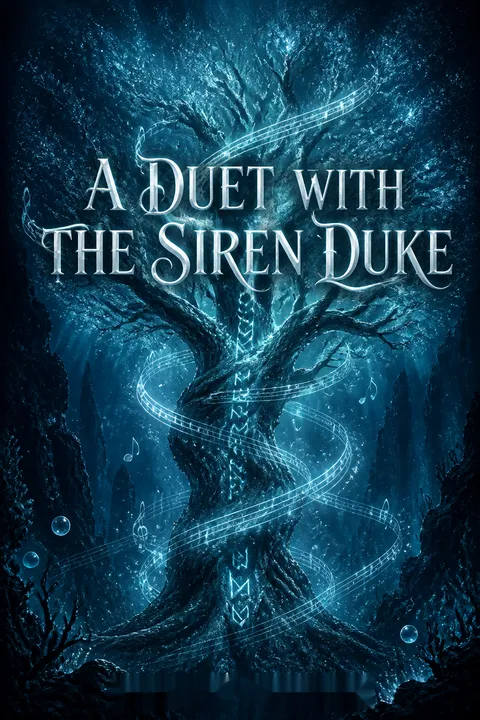


Plot Summary
Prologue
At eighteen, Elizabeth Datch marries Charles Vakstone, a lighthouse keeper who takes her to an isolated island and gradually turns affection into control. When she finds the letters he hid from her, she learns that her family never abandoned her, as he had claimed. She escapes by boat, but a wave throws her into the sea, where a siren duke rescues her from drowning.
He offers five more years of life in exchange for her future service, and she accepts. His magic leaves a colored mark on her arm and removes her wedding ring. She takes the name Victoria and walks toward the mainland, believing she has escaped Charles and bought herself time.
The opening makes freedom both a physical act and a contested belief. Victoria can untie the boat herself, yet Charles's lies still pull her toward the shore more strongly than the current. Finding the letters gives her evidence that contradicts his version of her family, but evidence does not instantly undo the habits of fear he has taught her. The siren's rescue complicates her escape: she survives through a bargain that restores her agency while placing another claim on her future. The prologue establishes the story's central tension between chosen obligation and coercive possession.
Freedom Comes With a Bill
Four and a half years after escaping the lighthouse, Victoria receives the council's final judgment at her family's Tilted Table tavern. Her marriage to Charles is dissolved, and the annual payments end, but the council demands twenty thousand crons within a year. If she cannot pay, her parents and younger sister Emily may be imprisoned or forced to replace her at the lighthouse.
Victoria hides the judgment's terms while her family celebrates her freedom. She has only six months before the siren's promised claim, and she refuses to let the debt fall on them. When her employer, Lord Kevhan Applegate, arrives needing a captain for the dangerous north route, Victoria accepts the voyage as her last chance to earn enough.
The judgment turns legal freedom into a debt that reproduces the coercion Victoria thought she had escaped. Her family is not merely a source of comfort; under Tenvrath's rules, they become collateral for her choices. Hiding the ruling protects their happiness for a moment, but it also repeats her established pattern of carrying danger alone. Her decision to sail is generous and self-punishing at once: she acts from love, while still measuring her worth by how much hardship she can absorb for others.
A Crew Shares the Risk
Victoria tells her crew that the north run crosses the Gray Passage, where siren songs, storms, and wrecks have made other voyages fatal. She offers every sailor the chance to stay ashore and promises they can rejoin her later. Her first mate, Jivre, asks why Victoria needs the voyage; Victoria explains the council's demand and admits she has often surrendered part of her own pay to the crew.
Instead of refusing, the sailors offer their shares of the coming profits. Their loyalty moves Victoria, but the money still will not cover the debt. She keeps her private deadline secret and prepares the ship, resolved to protect her family before the siren comes to collect her.
The crew's response challenges Victoria's assumption that care must flow in one direction. She has treated leadership as a debt she repays through wages, protection, and personal sacrifice; the crew answers by choosing to support her. Their decision does not erase the danger or solve the financial problem, but it exposes a form of loyalty she has trouble receiving without guilt. The scene prepares the later loss of the crew by showing that they are not simply dependents in her care. They are people who knowingly choose to stand beside her.
The Passage Takes Its Due
With Kevhan aboard, Victoria guides the vessel into the Gray Passage using flags, a compass, and a small bell meant to disrupt siren songs. A deeper voice reaches her through the storm, drawing her attention away from the crew. She tries to hurry the ship onward, but enormous tentacles rise from the water and crush it.
Victoria sinks among wreckage and dying sailors, certain their deaths are her fault. Ilryth, the platinum-haired siren who saved her years earlier, finds her and pulls her from the leviathan's reach. He tells her that the time has come to fulfill their bargain. Victoria fights to return to her crew, but Ilryth carries her away into the depths.
The disaster breaks the identity Victoria has built as a captain who never loses a sailor. Her guilt is intensified by the fact that the crew trusted her and chose the risk with open eyes, a distinction she cannot yet accept. Ilryth's arrival repeats the structure of the first rescue, but its meaning has changed: she is no longer a drowning stranger who can bargain for a future. She is a leader watching the life she built disappear while another person decides what happens to her next.
The Duke Claims His Offering
Ilryth takes Victoria past the Gray Trench and into the Eversea, a hidden siren realm protected from a spreading red rot. He reveals that her arm markings identify her as an offering to Lord Krokan, the god of death, and says her presence has begun an anointing that cannot be reversed.
Victoria insists that their bargain gave her six more months and demands to return to her family. Ilryth explains that leaving the Eversea would make her fade away. He also claims her crew's deaths were demanded by Krokan, not by him. Victoria refuses to accept the sacrifice quietly, but learns that the world above and the sirens' home are both entangled in the bargain.
The Eversea transforms the familiar image of the monster beneath the waves into a society with its own laws, history, and vulnerabilities. Yet Victoria's first experience of that society is confinement: she is valuable as an offering before she is treated as a person. Ilryth's explanation asks her to distinguish his intentions from the harm caused by his world, a distinction she is not ready to make. His claim that her crew's deaths were not his choice does not relieve her grief, but it opens a question the story will test repeatedly: how much responsibility belongs to the person acting, and how much to the system around them?
The Captain Saves the Duke
After Ilryth returns badly injured from fighting a monster near the Gray Trench, Victoria breaks through the magical restraint around her chamber and swims to him. His sister Lucia needs help restoring him, so Victoria places her hands on his temples and enters a vision of his childhood.
She sees Ilryth as a frightened boy who could not accept the duties surrounding his mother's sacrifice, then watches his adult self punish that younger version for failing her. When a wraith begins breaking into the memory, Victoria sings and brings Ilryth back. He apologizes for lashing out at Lucia. Victoria, recognizing the damage of a man turning pain against others, tells him her family faces imprisonment unless she can pay its debt.
Victoria's rescue of Ilryth establishes a moral boundary she has struggled to hold in her marriage: suffering may explain cruelty, but it does not excuse it. She helps him without pretending his anger was acceptable, and he responds with an apology rather than demanding forgiveness. The vision also makes their connection reciprocal. Ilryth once gave Victoria life; now she reaches into the part of him he most despises and helps him return. Her request for help follows this act of trust, though she remains careful to frame the relationship as an exchange.
Silver Becomes the Bargain
Ilryth agrees to help Victoria get money to her family, but his underwater hoard of human objects cannot cover the council's demand. Victoria recognizes the route to a solution: the silver cargo still lies in her shipwreck in the Gray Passage. She will need twenty thousand crons, and the wreck holds enough silver to exceed that sum.
Ilryth maps the route through the Gray Trench and explains that the Fade separates the Natural World from Midscape. Wraiths can cross it by possessing the living, while the Lifetree's wood can destroy them. He agrees to accompany her and teach her the old songs, because the journey will require magic strong enough to protect them.
The silver plan converts Victoria's grief into a concrete task, but it does not make the journey a simple recovery mission. To save her family, she must revisit the place where her crew died and depend on the siren who brought her into this crisis. Ilryth's promise is practical, yet their growing cooperation rests on a more difficult exchange: Victoria must learn powers that will erase parts of her identity. The map gives her a route through the danger, while the need to sing points toward a cost no compass can chart.
Songs Cost Her Memories
Ilryth teaches Victoria to sing the old gods' words, while Lucia and Fenny add colored markings to her skin. The songs grant power, but each word requires her to surrender a memory, first allowing her to choose what to lose. Victoria deliberately gives up early memories of Charles, believing she can remove his hold by removing him from her mind.
She learns that her body is becoming more magic than flesh: wounds close instantly, and she no longer needs food or sleep as before. The process strengthens her for the trench, but the blank places in her history widen. Victoria keeps practicing, convinced that protecting her family and the Eversea justifies the cost.
The anointing makes forgetting a literal form of labor. Victoria has spent years trying to escape Charles's influence, so surrendering memories of him initially feels like reclaiming control. Yet the power's price is not a clean deletion of pain. It gradually threatens the memories that make her more than a useful instrument. Her willingness to proceed echoes her habit of making herself expendable, even when she calls the choice her own. The magic therefore tests whether self-sacrifice can remain freely chosen when the person making it is losing the history that shaped the choice.
A Court Wants a Duchess
Fenny brings Victoria before several noblewomen, presenting the human as both a sacred offering and a possible courtly curiosity. Victoria holds her composure despite unfamiliar customs, and Ilryth's attention to her unsettles the guests. The gathering is really Fenny's attempt to push her brother toward choosing a wife and producing an heir.
Ilryth resists the pressure, while Victoria recognizes the familiar strain of being told that a person's life is incomplete without the expected relationship. She advises him to treat any future spouse with honesty and respect. Their shared discomfort draws them closer, but Victoria still believes her own future is too short to include another love.
The court scene places Victoria's impending death beside Ilryth's expected marriage, making both characters confront roles assigned by other people. Fenny's pressure is not simply vanity: she fears for the duchy and wants a stable successor. Victoria understands the force of obligation, yet her advice to Ilryth reflects the hard lesson of her own marriage. Her ability to counsel him does not mean she has fully forgiven herself or learned to imagine a future for herself. The scene builds intimacy through shared recognition rather than instant certainty.
Yenni Breathes Again
Ilryth takes Victoria to Sheel's home, where Sheel's daughter Yenni is covered in the red rot that has poisoned her body. Victoria has never used the old songs to heal anyone, but Ilryth steadies her and urges her to search the markings for words that fit. She sings, surrendering another cherished memory as the magic spreads through the room.
The rot vanishes from Yenni's skin and the girl's eyes open. Her parents embrace her, while Victoria understands that her power can do more than prepare her for death. The success strengthens her confidence and gives Ilryth reason to believe she is ready to enter the trench.
Yenni's recovery changes the meaning of Victoria's anointing. Until now, its benefits have mainly made her a more effective offering; this time, the magic preserves a life in the present. That difference matters to someone who has defined her value through what she can do for others, but it also risks deepening the same pattern. Ilryth encourages her ability without asking whether the memory cost is sustainable. The scene offers genuine hope while leaving an ethical question unresolved: healing others is meaningful, but should it require Victoria to erase herself?
Down Through the Trench
Victoria and Ilryth leave the protected Duchy of Spears carrying Dawnpoint, the ancient wooden spear that shields their route through the Gray Trench. Sheel warns that taking it weakens the duchy's protection, but Ilryth believes they need its power. In the trench, red rot darkens the water and wraiths try to drag their thoughts toward fear and regret.
Victoria sings the old words while Ilryth strikes the spear to hold the spirits back. They find stone altars built around dead roots of the Lifetree, where Ilryth grows temporary protective trees. The passage reveals that the blight reaches deep into the old world, not merely the sirens' inhabited waters.
The journey turns the Eversea's hidden crisis into geography. The dead roots make visible what the sirens' institutions have treated as an abstract threat, while the repeated need to pause and create protection exposes the limits of their inherited defenses. Ilryth risks the security of his own duchy by taking Dawnpoint, and Victoria joins him as an active partner rather than cargo. Their progress depends on coordinated song, a form of cooperation that anticipates the larger duet they have not yet understood.
The Wreck Sings Back
The wreck of Victoria's ship lies split open in the Gray Passage, with the silver scattered through its hold. She recognizes Kevhan's body among the debris and nearly loses control, but Ilryth lets her work while he guards the wreck. Jivre appears as a wraith and lunges at Victoria; Ilryth destroys the spirit before she can be taken.
More wraiths close in, some bearing the faces of sailors Victoria loved. She sings the old words and releases a burst of light that destroys them. The magic saves her and Ilryth, but she realizes she has ended those spirits forever. She fills Ilryth's bag with silver and leaves the wreck carrying both money and grief.
The wreck makes Victoria confront the difference between remembering the dead and being able to save them. Jivre's familiar face tempts her to treat a wraith as the person she knew, but Ilryth forces her to recognize the danger. Victoria's own power then gives the spirits a final release, at a cost she cannot undo. The silver is the practical reason for the journey, yet its recovery is inseparable from the crew's remains. She leaves with the means to protect her family and a new responsibility for what her magic can destroy.
The Chorus Puts Them on Trial
Ilryth brings the silver back to his treasure room, where Victoria packs it into a chest and leaves her name on the lid. He has also recovered her broken compass from the wreck, which she adds so her family will understand she will not return. At the traveler pools, the Duke of Faith, Ventris, intercepts them and accuses Ilryth of touching the offering and using the pools without approval.
He escorts Victoria to the central castle and takes Ilryth into custody. Before the chorus, Victoria explains that the return to her world was necessary to sever her ties and prepare for the offering. The elders accept her account provisionally, but Ventris continues to challenge Ilryth's judgment.
The chest and compass give Victoria a way to care for her family without leaving them false hope. The gesture marks a shift from trying to keep every relationship alive to accepting that some goodbyes must be made honestly. Ventris's intervention then reveals the political cost of Ilryth's choices. The chorus is not a single villainous authority; its members weigh tradition, risk, and testimony, while Ventris uses procedure to protect his own standing. Victoria's ability to speak before them depends on the sacred status she once resented.
The Root Beneath the Beach
As Ilryth continues her anointing, Victoria visits the Lifetree's island and sees the old cuts on its roots still bleeding. Touching one, she hears a song unlike the sirens' hymns, and recognizes pain in it. She suspects that the tree is not simply a barrier against the rot but a wounded presence.
Ilryth cannot accept that interpretation, though he does not dismiss her outright. The two grow closer as he shows her the island's sacred beaches, and they begin a secret physical relationship despite the rules meant to keep the offering detached. Victoria tells herself the intimacy can remain physical, even as their shared songs bind them more deeply.
Victoria's response to the root matters because she treats the tree as a voice to be heard, not merely a resource to be managed. That instinct unsettles the explanations she has been given and foreshadows the need to question the Eversea's inherited account of its gods. At the same time, her intimacy with Ilryth gives her a reason to remain attached to life even as the ritual demands detachment. Their private relationship is not a simple escape from duty; it makes the coming sacrifice emotionally and ethically more complicated.
Victoria Forgets Her Own Song
As the summer solstice approaches, the anointing accelerates and Victoria learns that she will eventually lose every memory, not only the painful ones she chose to surrender. She continues singing, believing she can make peace with the cost. Ilryth tries to preserve their closeness, but Victoria increasingly cannot recall her family, her childhood, or the details of her life.
When she no longer recognizes him, he stops their intimacy rather than take advantage of her confusion. Victoria still knows her name and obligation, but the woman who chose the sacrifice is slipping away. Ilryth withdraws, grieving the loss while refusing to treat her diminished memory as consent.
The memory loss exposes the difference between obedience and meaningful consent. Victoria agreed to the anointing, but the process eventually removes the context that made her choice intelligible to her. Ilryth's refusal to continue their intimacy recognizes that consent cannot be borrowed from a former version of a person. His restraint is painful, yet it protects Victoria's agency at the point when she can no longer reliably exercise it. The scene also makes her identity more than a collection of memories: she remains committed, but the loss of her history changes what that commitment can mean.
The Offering Reaches Krokan
At the ceremony, the sirens adorn Victoria with their prayers and hopes for calmer seas. They send her into the Abyss, where she descends through the realm of the dead, guided by the Lifetree's fading traces. Lord Krokan receives her and explains that he never wanted the sacrifices his people have been making.
He hoped Victoria could host the spirit of Lady Lellia, but her mortal body cannot do so. His rage comes from grief and the refusal of souls to pass beyond the Veil, not a desire to punish the living. He reveals that Lellia is trapped and dying within the Lifetree, and that the Blood Moon gives them only three years to free her.
The apparent climax of the sacrifice becomes a revelation about failed interpretation. The sirens have built an entire ritual around a message they misunderstood, turning a god's grief into a system of human offerings. Krokan's explanation does not absolve the damage caused by the old order, but it redirects the conflict from appeasing him to freeing Lellia. Victoria's inability to serve as a vessel is not a personal failure. It is proof that the problem was never hers to solve by disappearing.
A Duet Restores Her
Ilryth crosses into the Abyss after Victoria, marked with the old songs so he can reach her. He sings the melody they have made together, and Victoria's memories return with each phrase, including the love she had forgotten. Ilryth asks Krokan to let them return rather than continue the failed sacrifice.
Victoria adds her own song, and together they move the god. Krokan grants them a chance to free Lellia before the Blood Moon, warning that the world will face ruin if they fail. He teaches Victoria Lellia's song and sends them upward. Their new task is not to replace one sacrifice with another, but to bring the trapped goddess back to her husband.
The duet restores more than Victoria's memories. It shows that identity can be reassembled through relationship without being owned by another person. Ilryth's song reaches her, but it does not command her; she answers with her own voice and helps shape the bargain. Krokan responds to their mutual expression rather than to the old ritual's solitary offering. Their return is conditional, not a guarantee of safety, so love becomes a source of courage rather than an exemption from consequence.
Kevhan Walks Out of Death
While climbing out of the Abyss, Victoria spots Kevhan Applegate trying to scramble toward the Gray Trench. He has not accepted that he is dead and believes he must return to his daughters. Rather than leave him to become a wraith, Victoria explains that the passage will destroy what remains of his mind.
Ilryth helps her guide Kevhan away from it, and the three travel by the lava river and the Lifetree's guidance back toward the Eversea. Victoria gives Kevhan a shell necklace to help him control his thoughts. Before entering the siren realm, she hides him among the tree's roots, promising to protect him while she and Ilryth seek a way to free Lellia.
Kevhan's presence tests whether Victoria's promise to leave no one behind survives beyond the life of her crew. She cannot restore him to his former life, but she can keep grief from hardening into the rage that creates a wraith. This act extends the story's idea of rescue: it may mean accompanying someone through a loss rather than reversing it. Kevhan also carries knowledge of the Natural World into a conflict the sirens have treated as entirely their own.
The Wedding Ring Returns
At the Lifetree, Victoria and Ilryth find Fenny carrying Dawnpoint and claiming the title of Duchess of Spears while Ilryth is treated as a traitor. The chorus brings them to trial. Victoria explains what Krokan revealed, but the elders hesitate to believe that freeing Lellia is possible.
Fenny then produces Victoria's old wedding ring, which she had secretly kept rather than discarded. Ilryth learns that Victoria was married, and Fenny uses the fact to cast doubt on her honesty and suitability as an offering. Victoria admits the truth: she ended the marriage to escape Charles. The chorus ignores her account and orders both her and Ilryth confined before they can act.
The ring turns Victoria's private history into political evidence at the moment she most needs the chorus to trust her. Fenny's action may protect the duchy as she understands it, but it also repeats the harm of treating a woman's past as more authoritative than her present testimony. Ilryth's shock is not merely about the marriage; he must confront that Victoria withheld a truth from him. Her admission stops the concealment from growing, even though it cannot undo the consequences or force the council to believe her.
Axes at the Lifetree Door
Imprisoned inside a woven chamber of Lifetree roots, Victoria and Ilryth refuse to abandon their plan. Lucia arrives with news that she and Fenny have arranged a guard change, giving them a brief opening. Victoria contacts Kevhan and asks him to draw the guards away, while Sheel and loyal warriors move to support them.
As Kevhan's distraction pulls the sentries from the beach, Ilryth joins the defense and Victoria takes an axe from the sand. She sings Lellia's forgotten hymn while striking the woody bars across the tree's door. The roots crack and release silver sap. Victoria tears away the final barrier and opens the chamber where Lellia has been held for centuries.
The escape succeeds because the characters combine different forms of agency: Lucia and Fenny manipulate the guard rotation, Kevhan risks himself as a distraction, Sheel chooses loyalty over the chorus, and Victoria acts directly at the door. No single hero can solve the crisis alone. The axe matters, but so does the song that lets Victoria address Lellia as a person rather than an object of ritual. The silvery sap distinguishes the goddess's living core from the rot outside, confirming that the tree's apparent protection has also become a prison.
A New Keeper Takes Root
Victoria carries the weakened Lellia out of the tree and places her in Krokan's reach. Reunited, the old gods promise to stop the rot and allow souls to cross the Veil again. Krokan offers Victoria a boon, but she chooses to remain as the anchor for the Lifetree's surviving magic.
Ilryth refuses to leave her alone and descends with Krokan, trusting that their shared song will keep them connected. Victoria enters Lellia's chamber and sings herself into the tree, where her voice sustains life across the world. The choice costs her freedom of movement, but it is not made to earn love or repay a debt. She accepts the role because she wants the world's future to continue.
Victoria's final decision resembles her earlier sacrifices, yet its motive has changed. She no longer treats suffering as proof that she deserves to be loved; she chooses a responsibility after discovering that she is already worthy. The act also transforms the story's central image of confinement. The tree once trapped Lellia, but Victoria enters it knowingly and with the power to shape her role. Ilryth's descent prevents their union from becoming a simple rescue fantasy: they share the work of sustaining a world, even when it separates them.
Epilogue
Four years later, Victoria has learned to leave the Lifetree for short visits while remaining its living anchor. She emerges to find Kevhan still protected among the sirens and learns that the Eversea has recovered; Lucia has become Duchess of Faith, and Fenny still leads the Duchy of Spears. Ventris has stepped down.
Ilryth returns from the depths, his markings now mirroring Victoria's, and the two reunite with the understanding that each must eventually return to their own domain. They choose to spend the time they have together, no longer pretending their bond is only a bargain or a brief pleasure. Their duet continues, joining life and death without ending either.
The ending grants Victoria and Ilryth a future, but not one that cancels the cost of their choices. Victoria can leave the tree only temporarily, and Ilryth remains tied to the depths, so their love must accommodate duty rather than defeat it. The four-year interval also shows that the world can recover through the work of people who remain behind: Kevhan, Lucia, and Fenny all have places in the renewed order. The lovers' reunion is therefore not a return to an untouched life. It is a negotiated form of freedom within lasting responsibilities.
Analysis
The novel makes freedom difficult because its heroine has learned to experience love as obligation. Charles controls Victoria by presenting dependence as protection; later, Victoria tries to control the consequences of her choices by paying, sailing, and sacrificing until no one else can suffer. Her growth comes not from abandoning care, but from learning that care need not require self-erasure. The crew's shared wages, Ilryth's protection, Emily's concern, and Kevhan's trust all contradict her belief that she must earn affection by being useful.
The fantasy plot gives these psychological conflicts material form. Contracts bind souls, anointing turns memory into currency, and the Lifetree's protective roots become a prison. These are not interchangeable symbols: each shows a different cost of trying to preserve safety through control. The sirens' sacrifice tradition has survived because inherited authority mistakes a partial message for an unquestionable rule. Victoria's outsider perspective lets her notice that the tree's wounds are evidence, not decoration, and her willingness to ask what Lellia wants changes the terms of the crisis.
Romance works as a counterpoint to possession. Ilryth begins with a bargain that claims Victoria's future, but their relationship develops through acts that restore choice: he listens to her, apologizes, stops intimacy when her memory no longer permits informed consent, and follows her into the Abyss without trying to decide her final sacrifice for her. Their love does not make duty vanish. Instead, it gives them a way to share responsibility without treating either person as property. The ending preserves that tension: Victoria becomes the Lifetree's anchor and Ilryth remains connected to the depths, but their duet lets them return to one another. The book's final claim is not that sacrifice proves love, but that meaningful duty must be chosen, understood, and shared.
Review Summary
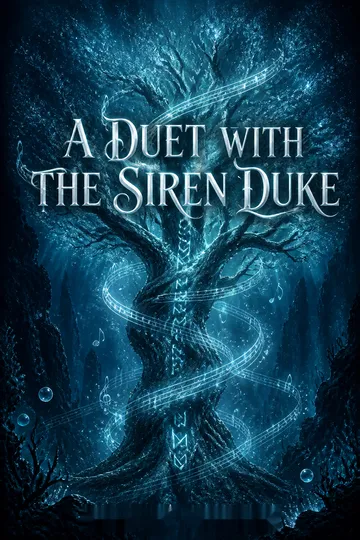
Reviews for A Duet with the Siren Duke are mixed, averaging 3.57/5. Praise highlights the underwater worldbuilding, emotional character development, slow-burn forbidden romance, and the Orpheus/Eurydice and Little Mermaid inspirations. Many readers loved Victoria and Ilryth's complex backstories and the bittersweet ending. Critics found the pacing sluggish, the romance lacking chemistry, and the plot confusing or overlong. Several noted it as the weakest entry in the Married to Magic series, while others called it the best, making reader experience highly subjective.
People Also Read


Characters
Victoria Datch
The restless sea captainVictoria is a capable captain whose instinct is to keep moving, solve the immediate danger, and shield everyone around her. She is generous with her wages and attention, but often treats care as a debt she must repay by being useful. Her failed marriage leaves her wary of intimacy and vulnerable to believing that she is difficult to love. She is also curious, bold, and unusually willing to challenge the explanations offered by authority. Her central struggle is not simply whether she will sacrifice herself, but whether she can recognize the difference between freely chosen responsibility and the compulsion to prove her worth through suffering.
Ilryth Granspell
The burdened siren dukeIlryth is the Duke of Spears, a warrior and leader who measures his choices by the safety of his people. He carries guilt over his mother's fate and over every life lost under his command, which can make him protective to the point of secrecy. His fascination with human ships and objects reveals a curious, tender side beneath his disciplined authority. He respects bargains, though his first deal with Victoria also places her inside a system she does not understand. Their relationship forces him to balance duty with the desire to choose something for himself.
Charles Vakstone
The controlling lighthouse keeperCharles is Victoria's former husband and a lighthouse keeper whose grief and need for control shape the life he builds with her. He presents himself as her protector while isolating her from her family and limiting her choices. His manipulation works partly because he first meets a young woman hungry for adventure and recognition. Charles is not simply a romantic disappointment; his control teaches Victoria to distrust her judgment and to confuse being needed with being loved.
Emily Datch
The devoted younger sisterEmily is Victoria's younger sister, affectionate, perceptive, and more willing than Victoria to insist that her sibling's happiness matters. She works within the council and understands the machinery that threatens her family. Emily's humor softens tense moments, but her loyalty is not passive: she challenges Victoria's dangerous plans and recognizes when she is hiding bad news. She represents the family connection Victoria wants to protect but has trouble allowing herself to lean on.
Victoria's father
The steady tavern keeperVictoria's father runs the Tilted Table and helps create the warm home she repeatedly fears she has burdened. He supports both daughters without demanding that they follow a particular path. His pride in Victoria is quieter than Emily's, but his willingness to celebrate her freedom shows that her family's affection does not depend on her reputation or achievements.
Victoria's mother
The traveling traderVictoria's mother is a resourceful trader whose restless nature and practical skill shape her daughters' understanding of work and independence. Her travels help support the family tavern, while her lessons in negotiation give Victoria tools for surviving a world that treats contracts as power. She is part of the loving family Victoria fears she has disappointed.
Kevhan Applegate
The generous trading lordKevhan is Victoria's employer, a trading lord who gives her the chance to prove herself as a captain when few others will. He rewards skill with personal loyalty and treats her as family rather than a disposable worker. His interest in ships and commerce makes him a practical ally, while his kindness gives Victoria another example of trust that she does not always know how to receive. He is also a father, deeply invested in the well-being of his daughters.
Jivre
The steadfast first mateJivre is Victoria's trusted first mate, a steady sailor who can read her silences and question her decisions without undermining her command. She helps hold the crew together and understands that loyalty must include honest challenge. Her confidence in Victoria comes from shared risk, not blind devotion.
Fenny
The dutiful elder sisterFenny is Ilryth and Lucia's elder sister, a practical organizer who feels responsible for the Duchy of Spears. She is direct, politically alert, and impatient with what she sees as Ilryth's avoidance of leadership duties. Her care for her family and people is genuine, though her confidence in tradition can put her at odds with Victoria's unorthodox approach.
Lucia
The faithful healerLucia is Ilryth and Fenny's sister, trained in the traditions of the Duchy of Faith and skilled in healing songs. She balances loyalty to the old customs with deep concern for her brother and the people around her. Lucia is careful about emotional attachment because she understands the cost of the offering, yet her compassion repeatedly draws her toward Victoria.
Ventris Chilvate
The rigid faith dukeVentris is the Duke of Faith and heir to a respected religious office. He is protective of the rules surrounding the offering and resentful of Ilryth's willingness to act outside the chorus's authority. His formal manner conceals insecurity about his father's legacy and his own ability to interpret the old gods. He sees procedure as a safeguard, but his certainty can become an obstacle to listening.
Sheel
The guarded generalSheel is a scarred warrior and military leader in Ilryth's duchy. He values order, preparedness, and protection for his family and people. His suspicion of Victoria comes from fear that the offering process could be disrupted, not from cruelty. He understands the dangers of the Gray Trench firsthand and measures leaders by whether they share the risks they assign to others.
Yenni
The threatened young daughterYenni is Sheel and Sanva's daughter, a young siren whose illness brings the distant danger of the rot into an intimate family home. Her vulnerability gives Victoria a chance to use her emerging magic for healing rather than preparation for sacrifice.
Sanva
The steadfast motherSanva is Sheel's partner and Yenni's mother. She stays beside her sick daughter, singing to comfort her even when the rot has made touch dangerous. Her devotion makes the threat to the sirens' families immediate and personal.
Remni Quantor
The weary chorus leaderRemni is the eldest member of the ruling chorus and its conductor. She is practical, authoritative, and impatient with arguments that distract from the Eversea's urgent problems. Her manner suggests that leadership means managing competing claims, though the weight of tradition can limit how quickly she accepts an unfamiliar truth.
Lord Krokan
The grieving death godKrokan is the ancient god of death, whose realm lies beneath the Gray Trench. The sirens fear his power and interpret the upheaval in their seas as his hostility. He is immense and difficult for mortals to comprehend, but his connection to the passage of souls makes him essential to the balance between life and death. His story is bound to the fate of the Lifetree and the goddess who remains within it.
Lady Lellia
The goddess within the treeLellia is the ancient goddess of life, whose power is rooted in the Lifetree and sustains the living world. Her history survives in fragments of song and memory, while the sirens' traditions preserve only a partial understanding of her role. She is associated with creation, care, and the difficult bond between divine beings and the mortal lives they nurture.
Duke Renfal
The lost scholar dukeRenfal was Ventris's father and a former Duke of Faith who studied the old gods' songs. His work helped shape the Eversea's understanding of the offerings and the protective use of Lifetree wood. His legacy influences both Ventris's authority and Ilryth's choices.
Plot Devices
The five-year bargain
Life exchanged for serviceIlryth rescues Victoria from drowning by promising her five more years of life in exchange for her eventual service as an offering. The mark on her arm links her to his magic and, eventually, to the old gods. The bargain gives Victoria time to build a new life, but its terms remain a source of uncertainty because she does not understand the world or power behind them. It also binds her escape from Charles to a new obligation, making the story ask whether a contract can be both lifesaving and coercive.
The anointing songs
Power purchased with memorySiren songs carry magic, while the old gods' hymns let Victoria draw on power beyond her own. The anointing marks her body and soul so she can approach Krokan, but each word she learns consumes memories to make room for that power. The process begins with memories she chooses to surrender, then threatens the entire history that gives her identity and consent meaning. Singing also becomes a means of communication and cooperation, especially when Victoria and Ilryth create a duet.
The Lifetree and its roots
Life's anchor and prisonThe Lifetree supplies the sirens with protection, weapons, and the magic that holds life in the Eversea. Its roots reach into the Gray Trench, where rot and death have begun to overtake them. Sirens treat the tree as a sacred source of safety, while Victoria gradually recognizes that its wounded roots carry a voice and a history of their own. The tree connects the characters' immediate survival to the fate of the old gods and the wider world.
The Gray Trench and Fade
A passage between worldsThe Gray Trench links the sirens' Eversea to the Natural World and the Abyss, while the Fade separates Midscape from human lands. Wraiths and monsters move through these dangerous boundaries, and living travelers risk losing their bodies or minds in the crossing. Victoria's knowledge of the sea helps her navigate the trench, while Ilryth's spear and their songs create temporary protection. The route makes physical the story's recurring crossings between life and death, duty and freedom.
Victoria's compass
A keepsake that marks homeThe compass is the first valuable object Victoria buys for herself and an emblem of the independence she builds as a captain. It guides her through the sea and helps her claim a place in Kevhan's trading fleet. When Ilryth recovers it from the wreck, Victoria puts it in the chest of silver sent to her family. Its return tells them she is gone and cannot come home, transforming a tool for finding direction into a deliberate farewell.
Married to Magic Series

About the Author


Download PDF
Download EPUB
.epub digital book format is ideal for reading ebooks on phones, tablets, and e-readers.








