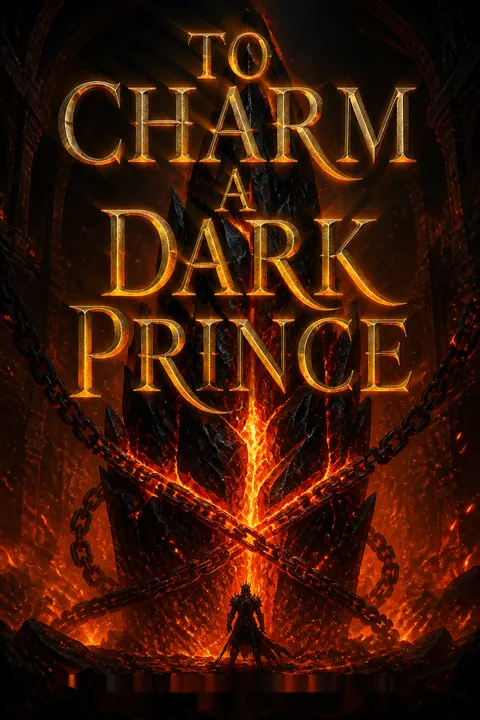


Plot Summary
Prologue
Mordred, the Prince in Iron, patrols the failing keep and repairs the Iron Crystal, a prison holding Avalon’s magic. Its cracks are widening, and a fragment escapes in the shape of a wounded black cat.
The creature tears open a portal and vanishes before Mordred can catch it. He fears the escape may bring down the fragile order he has forced upon Avalon, but he cannot yet know where the shard has gone or whom it will involve.
The opening makes Mordred both jailer and caretaker: he maintains the prison because he believes its collapse would destroy Avalon, yet the Crystal itself is deteriorating under his control. His ritual repairs cannot resolve the underlying danger, only postpone it. The escaped cat gives this political crisis a small, bodily form, something vulnerable enough to slip through a gap in the system. The prologue therefore sets up the book’s central tension before Gwen appears: containment may preserve lives, but it cannot make the forces being contained disappear. Mordred’s fear is not simply of losing power. He fears that his attempt to prevent catastrophe has become another way of preparing it.
The Cat Opens a Door
At nineteen, Gwen Wright is stranded on her family’s Kansas farm while her friends leave for college. A photo from Boston shows her boyfriend, Mick, kissing another girl, and his confession ends their relationship. Gwen tries to salvage the evening with pizza and a movie, but her ancient barn cat, Merlin, bolts into the house and knocks over a candle.
The fire spreads with impossible speed, trapping Gwen upstairs. In the flames, Merlin walks unharmed through the blaze, scratches open a ragged hole in the air, and jumps through. With the house burning around her, Gwen follows. Instead of reaching safety, she falls from the sky toward an unknown world and blacks out.
Gwen’s departure begins not with a chosen quest but with a pileup of exclusions: her friends left, her boyfriend betrayed her, and her family’s fears have kept her close to home. The fire turns that emotional confinement into a literal trap, while Merlin’s portal offers escape without explanation or consent. Gwen’s leap is less a confident embrace of adventure than an emergency choice made when every familiar route is blocked. That distinction matters throughout the story. She enters Avalon already practiced at feeling left behind, but her willingness to jump also reveals a capacity for action that her anxious self-image keeps underestimating.
Avalon Names Its Price
Gwen wakes naked in a burning crater, yet the fire leaves her unhurt and her hair has turned crimson. Merlin speaks, explains that they are in Avalon, and admits he used nearly all his power to bring them there. Their lives are now linked, so a fatal wound to either would harm both; he promises he can send her home only after regaining his strength.
As they reach a village, Gwen steals clothes from a washing line, then accepts shelter from Valessa. When Gwen admits she came from Earth, Valessa raises the alarm. Mayor Grigory takes charge, offers hospitality, and questions her about the fiery impact that villagers witnessed.
The new world immediately makes Gwen’s body evidence: the crater, fireproof skin, altered hair, and shared life bond all announce that she has been changed before she understands how. Merlin frames their dependence as practical necessity, but his contempt leaves Gwen with little reason to trust him. Her instinct to accept Valessa’s kindness shows that she still expects ordinary social rules to hold, even in a place that warns her otherwise. That expectation is soon exploited. The scene establishes a recurring problem for Gwen: she must make decisions with incomplete information, while more powerful people treat her confusion as either a weakness to manage or an inconvenience to dismiss.
The Prince Takes Notice
Grigory chains Gwen to a post while waiting for the Prince in Iron, hoping to avoid being accused of harboring her. When Mordred arrives on a vast dragon made of iron, Gwen catches fire in terror, but the flames do not hurt her. Mordred identifies her as an elemental and kills a villager who tried to shoot her, then breaks Grigory’s neck for violating Avalon’s law of hospitality by drugging her.
He frees Gwen, shapes an iron necklace that suppresses her uncontrolled fire, and covers her with a knight’s cloak. Though he calls her his prisoner, he carries her to his keep on the dragon, leaving her stunned by the contrast between his violence and his careful attention to her safety.
Mordred’s first appearance makes it impossible to reduce him to either rescuer or monster. He protects Gwen from an attempted killing and punishes Grigory for abusing hospitality, but he does so through immediate, lethal force. His iron necklace is simultaneously protection and restraint: it prevents Gwen from burning uncontrollably, while making her dependence on him visible. The power imbalance is not hidden beneath romance; it is the condition in which their relationship begins. Gwen’s fear is therefore rational, even as she notices his gentleness. The scene asks readers to hold both facts at once, refusing the comfort of a simple first impression.
Arthur's Nephew at Dinner
After waking in a keep cell, Gwen finds Merlin and learns that he expects her to help overthrow Mordred and destroy the Crystal. Merlin withholds much of the plan, warning that capture would expose them both. Mordred instead invites Gwen to dinner, gives her clothes, and treats her as a guest under the rules for prisoners of war.
As she questions him about Avalon, he reveals that he knew King Arthur personally: Arthur was his uncle, and Mordred was present when the king came to Avalon mortally wounded. Gwen learns that she is titled Princess in Flames because she is a free elemental, though she remains under Mordred’s control. The revelation makes the Arthurian legends suddenly immediate and dangerous.
The competing invitations define Gwen’s first real dilemma. Merlin offers a mission but not enough knowledge to judge it; Mordred offers information and relative comfort while keeping her captive. His connection to Arthur turns familiar legend into personal history, shrinking the distance between Gwen’s old interests and her new danger. The title of princess is similarly unstable: it recognizes her elemental power but grants no meaningful freedom. Gwen’s curiosity becomes a survival tool, allowing her to question the world rather than accept either man’s version of it. Yet curiosity alone cannot settle whether Mordred’s order is protection, domination, or both.
Fire Learns to Yield
Gwen explores the keep, meeting Galahad, Mordred’s tall Knight in Gold, and Maewenn, the bustling cook made from gathered metal. Mordred begins training Gwen with a sword, first startling her with a floating blade and then teaching her to shift her balance instead of resisting every blow.
He applies the same lesson to her fire: when Gwen stops fighting the power inside her and moves with it, she extinguishes the flames for the first time. Over dinner, Mordred explains that Avalon’s elementals once fought constantly, and that the demon Grinn’s bid to destroy the island forced him to seek their help. After the threat was defeated, the elementals turned against Mordred, who imprisoned them rather than kill them.
Training turns an abstract magical condition into a bodily practice. Gwen does not gain control by suppressing fear or obeying Mordred blindly; she learns to notice the force within her and respond with timing. That lesson also reflects her larger predicament, where rigidly choosing between trust and resistance may be as dangerous as either extreme. Mordred’s account supplies a rationale for the Crystal, but it is still his account, delivered by the person who benefits from the order it created. The scene lets Gwen acquire a useful skill while preserving her skepticism. Progress is real, but it does not equal agreement.
Lancelot's Ride Into Doubt
Lancelot, Mordred’s Knight in Silver, takes Gwen riding and tells her why he despises the prince. After Arthur died, Lancelot and the other knights tried to kill Mordred so Arthur might receive the elemental power they believed he deserved. Mordred killed them, then used his mother’s magic to restore them as bound servants, each with a crystal embedded in the chest.
Lancelot cannot act against his master without suffering the curse that enforces his obedience. He urges Gwen to use Mordred’s attraction to her to get close enough to destroy the Crystal. The ride turns frightening when a black bear confronts the hounds; Gwen rides between the animal and Eod, driving the bear away and revealing a courage she did not know she possessed.
Lancelot offers Gwen an alternative history, but his proposal also makes her body a political instrument. His appeal is understandable: he describes captivity, a failed uprising, and a curse that prevents him from acting freely. Yet he asks a young stranger to risk intimacy and violence on behalf of a cause she barely understands. Gwen’s intervention with the bear provides a counterpoint to that imposed role. She acts decisively when an animal is in immediate danger, not because someone has assigned her symbolic importance. Her competence emerges most clearly when she responds to concrete need, suggesting that her agency will depend on her own judgment rather than the grand narratives others place around her.
A Slap Changes the Lesson
As Gwen spends time with Mordred and Lancelot, their rivalry sharpens, and Mordred’s warnings about Lancelot become harder to separate from jealousy. During a training session, Mordred turns his anger about her alliance with Lancelot into a punishing fight. Gwen refuses to continue, throws down her sword, and slaps him for treating her as an outlet for his rage.
Later, Mordred acknowledges that his behavior was unfair and apologizes while sharing the hot spring with her. He admits his isolation and offers her freedom if she swears fealty and reveals everything she knows. Gwen does not accept. Their attraction grows, but so does her awareness that tenderness from a captor cannot by itself make the terms of captivity fair.
Gwen’s refusal to keep fighting is a crucial boundary-setting act, not a victory in physical strength. She interrupts a pattern in which Mordred’s power and pain have made everyone around him accommodate his moods. His apology shows that he can recognize harm, while his offer of freedom remains conditional on loyalty and disclosure. Intimacy therefore cannot erase coercion; it makes the contradiction more emotionally difficult to ignore. Gwen is attracted to Mordred, but she does not mistake attraction for trust. Her growing capacity to confront him suggests that courage in this relationship begins not with defeating him, but with refusing to let his authority define what she must endure.
The Scarecrow Wants Revolution
Mordred takes Gwen to a city where residents fall silent or retreat when they see him. He explains that magic leaking from the Crystal becomes dangerous shards, which he uses to make his armored servants and dragon. In an antique shop, Gwen discovers Bertin, a talking pumpkin head attached to a scarecrow body, who asks her to help organize a revolution against Mordred.
She helps Bertin escape through the back of the shop, though his plan to gather hidden allies is vague and poorly equipped. The encounter adds another faction to the pressure on Gwen: Merlin, Lancelot, and now Bertin all treat her arrival as the opening they have been waiting for. Mordred remains unaware that she has helped the rebel leave.
Bertin’s improvised rebellion makes Avalon’s political conflict feel lived-in rather than confined to the prince and his knights. His straw body and antique-shop hiding place contrast sharply with Mordred’s imposing military power, while his confidence exceeds his resources. Gwen’s assistance is small, but it marks her first covert action against Mordred’s rule. The city scene also complicates the image of his creations: they are made from magic gathered from the prison, which ties his orderly society to the very suffering he claims to contain. Gwen is increasingly surrounded by people who want her to act, yet each faction offers urgency instead of certainty.
Camelot's Broken Table
Mordred flies Gwen to the ruins of Camelot, where she recognizes the Round Table and statues of Arthur’s knights, including Mordred himself. Arthur is buried there. Mordred explains that Merlin brought the wounded king and his company to Avalon in hopes of saving him, but the island chose Mordred for its iron power instead.
Arthur passed his sword and crown to his nephew, who promised to protect Avalon despite never being accepted as king. Gwen sees that Mordred’s rule is bound to duty and to life in Arthur’s shadow, and she comforts him. Their tenderness deepens, but Lancelot later confronts Mordred, accusing him of using Gwen. Mordred strikes him, and the rivalry grows openly dangerous.
The ruins give Mordred’s history a physical setting: the broken table and statues preserve an ideal of fellowship that no longer exists. His account explains why the crown matters to him without proving that his methods are just. Gwen’s embrace is compassionate, but it also risks turning understanding into absolution. The scene’s aftermath prevents that emotional closeness from settling the conflict. Lancelot’s accusation exposes the danger of treating Gwen as a prize or strategy, even as Mordred’s reaction confirms that he is emotionally invested. The book’s romance and political argument become inseparable: private tenderness can humanize power, but it cannot erase the people harmed by it.
Galahad Chooses the Cage
Gwen finds Galahad remembering Zoe, an elemental of air trapped in the Crystal. Despite his loss, Galahad believes the imprisoned elementals must remain contained because their wars killed ordinary people, including families caught in the fighting.
His account finally persuades Gwen that freeing the Crystal could unleash another catastrophe. She goes to Mordred and reveals that Merlin brought her to Avalon, that their lives are bound, and that Merlin wants the Crystal destroyed so he can regain his power and send her home.
Mordred thanks her for the truth, then sets off to kill Lancelot for conspiring against him. Gwen blocks his path and begs him to spare the knight. Mordred changes course, but brings her along to witness the punishment he chooses instead.
Galahad’s grief matters because it does not automatically make him an advocate for release. He loves someone imprisoned by Mordred, yet believes the memories of civilian casualties outweigh his private hope. That testimony gives Gwen a moral framework beyond the competing men’s claims. Her confession to Mordred is an act of trust, but it also forces a consequence she cannot control: he uses the new information to identify Lancelot as a threat. Gwen’s plea shows her attempting to protect both the captive and the man she cares for. Her choice is no longer simply which side to join; it is how to limit harm when every available action carries a cost.
Lancelot Enters the Crystal
Mordred takes the unconscious Lancelot to the chamber beneath the keep where the Iron Crystal hangs above a pool of glowing shards. Gwen hears the voices of the imprisoned elementals begging for freedom and understands that they remain conscious inside their confinement. Mordred gives Lancelot the choice between death and imprisonment; Lancelot accepts the Crystal and asks Gwen to free the others.
Mordred draws the knight’s life and body into the prison, leaving Gwen to collapse in flames and terror. When she wakes, Lancelot is gone, and Mordred is still guarding the Crystal. The voices, the knight’s disappearance, and the magic that sustains the keep leave Gwen unable to regard the prison as merely an abstract safeguard.
The Crystal changes meaning when Gwen experiences it directly. Until now, she has heard arguments about order, rebellion, and sacrifice; the chamber gives those arguments voices. Lancelot’s removal is not only a punishment but an irreversible demonstration of what Mordred’s system does to individuals. Yet the scene does not erase the civilian deaths Galahad described, so Gwen’s new certainty is emotional as well as political, not a simple proof that one side is wholly right. Her collapse registers the cost of being made witness. She now has a personal reason to act, but she still lacks the power to guarantee that her chosen remedy will not reproduce the violence she fears.
Blueberry Muffins and Betrayal
Gwen decides that she must try to free Lancelot and the other prisoners, though she still cares for Mordred. She obtains sleeping powder from Maewenn and chooses to enter Mordred’s room, where their mutual attraction becomes an intimate encounter. Afterward, she searches his belongings and steals more of the powder, then uses it to bake a blueberry muffin for him.
Mordred enjoys the gift and eats it without suspecting what she has done. As the drug takes effect, Gwen apologizes and cushions his head before he loses consciousness. Merlin joins her, and they slip past guards who let them descend to the Crystal chamber. The private tenderness Gwen shared with Mordred now sharpens the guilt of the betrayal she is carrying out.
The muffin makes betrayal domestic. Gwen does not attack Mordred openly; she uses the same care that has drawn them together, baking something he has never tasted and turning it into a means of incapacitating him. Their intimacy is not presented as false, which makes her deception more painful rather than less. She is acting from an urgent wish to free the prisoners, but the method depends on exploiting the trust she has begun to build. The scene exposes the ethical cost of instrumentalizing affection, even for a cause that feels necessary. Gwen’s guilt is not evidence that she should do nothing; it shows that she understands the person she is risking as well as the system she hopes to break.
The Prince Breaks His Prison
Gwen melts through the iron doors and directs her fire at the Crystal, but even when she pushes her power to its limit, the prison remains intact. Mordred arrives, weakened by the sleeping powder, and catches her at the attempt. Rather than imprison her, he declares that she will see the chaos she has chosen and deliberately cracks the Crystal himself.
Its chains snap, magic erupts through the chamber, and Gwen runs from the keep as the blast tears stone from the cliff. A shock wave throws her against a rock and knocks her unconscious. Mordred survives among the ruins, sends Eod after her, then turns to Galahad and Percival and announces that they must go to war. The book ends with Avalon’s magic free and Gwen’s fate unknown.
The climax overturns the expected contest: Gwen’s fire cannot defeat Mordred, and Mordred himself chooses to destroy the prison. His decision is not reconciliation but a brutal attempt to make Gwen witness the consequences he predicted. He converts a moral disagreement into a test conducted on the whole island, leaving no one a safe position outside the conflict. Gwen’s unconsciousness prevents her from knowing whether the release brings liberation or renewed slaughter. Mordred’s final declaration restores the language of war that his Crystal had supposedly ended. The ending therefore refuses a clean victory: the cage is broken, but the political and emotional consequences have only begun.
Analysis
The novel’s central conflict is not simply whether Mordred is a tyrant or a protector. It asks what a person may do to prevent a feared catastrophe, and whether preservation becomes morally indistinguishable from domination when the preserved world cannot choose its own future. Mordred’s memories of betrayal and war make his logic intelligible, but the Crystal’s conscious prisoners expose the human cost his logic suppresses. Galahad’s grief sharpens the dilemma: even someone with a beloved inside the prison can believe release would cause greater suffering.
Gwen enters this conflict looking for escape from a life others have narrowed for her. Her anxiety is real, but it does not make her passive. She repeatedly acts when someone vulnerable is in front of her, whether facing a bear, challenging Mordred’s treatment of her, or trying to free Lancelot. The people around her keep naming her as their hope, yet the book’s strongest account of her agency is more modest and more persuasive: she gathers evidence, changes her mind, and accepts responsibility for choices whose consequences she cannot command.
The romance intensifies rather than resolves the political problem. Mordred’s tenderness is sincere, but sincerity does not undo his power over Gwen or his violence toward others. Gwen’s betrayal is equally sincere in its motive, but affection does not make deception harmless. Their intimacy makes both characters more exposed, not more innocent. The final act converts their private conflict into a public disaster: Mordred breaks the Crystal to prove what its destruction may unleash, while the island’s freed magic makes renewed war possible. The ending leaves the story’s key question open. Order has been shattered, but freedom has arrived without any guarantee that its people can live together without repeating the violence that created the prison.
Review Summary
To Charm a Dark Prince receives mixed reviews averaging 3.71 stars. Readers praise the Arthurian-inspired world-building, morally grey villain Mordred, and slow-burn romance with sexual tension. Common criticisms include the immature, passive FMC Gwen who acts younger than nineteen, juvenile writing tone reminiscent of YA despite adult content, lack of character depth, and rushed pacing. Many found Mordred more compelling than advertised as a villain. The cliffhanger ending left readers wanting more, though some felt the story was underdeveloped and dialogue clunky.
People Also Read
Characters
Gwendolyn Wright
An anxious firebrandGwen is a nineteen-year-old farm girl from Kansas whose panic attacks, financial limits, and family’s protectiveness have narrowed the future she imagined for herself. She longs for education, movement, and a life that feels chosen, yet she tends to underestimate her own ability to act. In Avalon, her curiosity helps her question competing accounts rather than accept the first confident voice she hears. Her affection for animals and instinctive care for vulnerable people reveal a practical empathy that is stronger than her self-doubt. Gwen is not fearless; she learns to act while afraid, and she resists being reduced to a pawn, a prisoner, or someone else’s promised salvation.
Mordred
The iron-bound rulerMordred is Avalon’s ancient Prince in Iron, a formidable elemental who rules from a keep on a cliff and maintains the prison that holds the island’s magic. He believes strict control is the only alternative to the wars that once devastated Avalon. His long experience of betrayal has made suspicion feel like wisdom, while loneliness has left him hungry for connection and quick to distrust it. He can be attentive, funny, and capable of remorse, but his authority is absolute and his punishments lethal. Gwen unsettles his settled habits because she sees his motives without accepting his methods. His central conflict is between the duty he has chosen and the human need he has tried to master.
Merlin
The sharp-tongued familiarMerlin is the battered black cat who has lived on Gwen’s family farm for years, concealing both speech and magical ability. He drags Gwen into Avalon and insists that she help him regain his power, but reveals his plans grudgingly and treats her fear as an obstacle. His sarcasm can read as cruelty, though his urgency comes from long confinement and desperation to escape it. Merlin understands more about Avalon than Gwen does, yet his secrecy makes him difficult to trust. He functions as guide and instigator at once: he opens the way into the story, but leaves Gwen to decide whether his promised route home is worth its cost.
Lancelot
The silver knightLancelot is Mordred’s Knight in Silver, a charming and capable warrior whose polished manners conceal deep resentment. He remembers serving King Arthur and believes Mordred’s rule is an illegitimate answer to Avalon’s history. His captivity gives his opposition real moral weight, but his interest in Gwen is entangled with the hope that she can change the balance of power. He is persuasive, flirtatious, and willing to risk himself, yet he sometimes treats Gwen’s choices as tools for a cause she has not fully embraced. His bond with her is genuine enough to complicate the political strategy he asks her to pursue.
Galahad
The grieving golden knightGalahad, the Knight in Gold, is Mordred’s trusted companion and one of Avalon’s strongest fighters. His gentleness and measured manner contrast with the violence of the court around him. He carries a private grief that informs how he sees the imprisoned elementals, but he does not let personal longing alone determine what he believes is right. To Gwen, he offers an older perspective on both Mordred’s rule and the cost of the wars that preceded it. His loyalty is complicated by the fact that he serves a ruler who controls the terms of his service.
Maewenn
The metal-hearted cookMaewenn is the keep’s lively cook, a metal creation who fusses over Gwen with the warmth of an affectionate aunt. She finds purpose in feeding the few people around her and uses practical care to soften the keep’s cold routines. Her advice is plainspoken rather than grand, and she recognizes that both Mordred and Lancelot may have motives beyond their attention to Gwen. Maewenn offers food, bandages, and a place to speak without turning every conversation into a political test. Her daily kindness shows that the keep contains relationships and habits beyond its ruler’s ambitions.
Percival
The wary copper knightPercival, the Knight in Copper, is blunt, watchful, and less inclined than Galahad to soften his doubts. He questions Mordred’s decision to keep Gwen free, suspecting that the prince’s personal interest may compromise his rule. His caution reflects the keep’s atmosphere, where even loyal service is shadowed by fear and old grievance. Percival is not a constant confidant to Gwen, but his challenges expose the pressures Mordred faces from those closest to him.
Eod
Gwen’s loyal houndEod is one of Mordred’s large native hounds, a friendly, food-motivated dog who quickly becomes attached to Gwen. He offers uncomplicated companionship in a place where almost every relationship carries political or personal risk. Gwen feeds him, takes him into the woods, and protects him when a bear threatens the dogs. Eod’s loyalty is not strategic, which makes his affection feel especially precious to Gwen and to Mordred, who understands how painful attachment can become.
Valessa
The frightened villagerValessa is a village woman who initially welcomes the cold, lost Gwen into her home and offers her warmth and shelter. Her fear of outsiders and of the Prince in Iron quickly overcomes that kindness when Gwen reveals she is from Earth. Valessa shows how danger and rumor shape ordinary people’s behavior in a society that has seen no visitors for centuries.
Grigory Lamor
The compromised mayorGrigory is the mayor of the village where Gwen first arrives. He presents himself as a helpful host, then chooses to protect his community by handing her over to Mordred. His conduct reflects the fearful calculations of a local leader living under a powerful and unpredictable ruler.
Bertin
The rebel scarecrowBertin is a talking pumpkin head attached to a makeshift scarecrow body, hidden in a crowded antique shop. He wants to organize resistance against Mordred and treats Gwen’s arrival as a chance to begin. His enthusiasm is larger than his resources, lending the rebellion an improvised, almost comic quality without making its political discontent disappear.
Tiny
Mordred’s iron dragonTiny is the enormous dragon made from twisted iron that carries Mordred and Gwen through Avalon. Its movements are mechanical and imposing, but it can understand speech and seems to have its own opinions. Gwen gives it a name and thanks it for a ride, responding to the creature as more than a weapon.
King Arthur
Mordred’s legendary uncleArthur is the former king whose illness brought Mordred and his knights to Avalon in search of a cure. He is remembered as a just and capable ruler, but also as a family member whose legacy leaves Mordred with an impossible standard. Arthur’s sword, tomb, and ruined hall keep his authority present even after his reign has ended.
Zoe
Galahad’s belovedZoe is an elemental of air whom Galahad remembers with enduring tenderness. Her absence shapes his private grief and informs his view of what should happen to the imprisoned elementals. Through Galahad’s memory, she represents the intimate human cost of Avalon’s political order.
Grinn
The Ash KingGrinn is an elemental who once sought to reduce Avalon to destruction. Mordred describes him as the threat that first compelled the island’s rival elementals to cooperate. Though absent from the present action, Grinn embodies the catastrophic danger Mordred believes his prison still prevents.
Morgana
Mordred’s formidable motherMorgana is Mordred’s fae mother, a powerful enchantress whose magic is part of the history behind his unusual fate and the knights’ continued existence. Others remember her as ruthless and ambitious, though the story leaves uncertainty around key parts of her family history.
Mick
The distant ex-boyfriendMick is Gwen’s longtime friend and boyfriend, now away at college in Boston. His betrayal ends the future Gwen had imagined with him and sharpens her sense of being left behind. His brief role provides the immediate emotional rupture that precedes her arrival in Avalon.
Tristan
The Knight in TinTristan is one of the knights whose name and metal title appear among the memorial statues at Camelot. His place in the old fellowship helps show the scale of the history surrounding Mordred and Arthur.
Gawain
The Knight in CobaltGawain is a knight identified by the cobalt statue among the ruins of Camelot. His named place in the former circle of Arthur’s companions underscores how much of that fellowship has been reduced to memory.
Bors
The Knight in NickelBors is a knight represented by a nickel statue in Camelot’s ruined hall. He is part of the company whose remembered titles preserve the shape of Arthur’s old court.
Plot Devices
The Iron Crystal
Avalon’s magical prisonThe Crystal confines the island’s elementals and their magic, while Mordred repairs its growing cracks to keep Avalon from returning to open war. Its leaking shards also provide the power used to create his dragons and armored servants. The voices Gwen hears inside it reveal that its prisoners remain conscious, transforming a political institution into a direct moral horror. The Crystal is the central physical and ethical object of the story: preserving it may prevent violence, but maintaining it requires ongoing captivity and the use of the magic it contains.
The Iron Necklace
A magical restraintMordred fashions the necklace for Gwen after her uncontrolled fire threatens to overwhelm her. Iron suppresses Avalon’s magic, making the necklace both a practical safeguard and a visible symbol of her captivity. Removing it gives Gwen access to her elemental power, but also makes her more dangerous to the keep and to herself. Its purpose shifts in Gwen’s understanding as she learns to control her fire, exposing how protection and control can occupy the same object.
The Shared Life Bond
A mutual survival tetherMerlin links his life to Gwen’s when he brings her through the portal into Avalon. Each depends on the other’s survival, and Merlin says that restoring his power will let him break the bond and send Gwen home. This arrangement gives Gwen a reason to cooperate even while she distrusts him, while making his secrecy more consequential: his plans can endanger her as well as himself. The bond also complicates the idea that Gwen’s fire is entirely her own, tying her magical identity to the escape that brought her into the conflict.
Elemental Power
Magic made bodilyAvalon’s magic chooses people as conduits and manifests in distinct forms, including Gwen’s fire and Mordred’s iron. Elementals can change their appearance, and their powers shape both their status and their vulnerability. Gwen’s flame first answers fear, making her power feel like a physical extension of panic; training teaches her to attend to it rather than simply suppress it. The system gives the romance and political struggle their material stakes: Gwen and Mordred are not only arguing about rule, they embody opposing forces that can alter the island.
Soul-Forged Creations
The ruler’s magical workforceMordred uses magic that leaks from the Crystal to shape dragons and servants from iron, making the keep function despite the surrounding population’s distrust. The creations have individual forms and can speak or respond, as Tiny and Maewenn demonstrate. Gwen learns that their existence is bound to the same magic Mordred claims to contain, complicating her view of them as mere machines. They make his rule visibly powerful while also showing how the Crystal’s influence reaches into ordinary domestic life, from cooking and guarding to travel and military force.
The Iron Crystal Series Series
About the Author
Other books by Kathryn Ann Kingsley


Download PDF
Download EPUB
.epub digital book format is ideal for reading ebooks on phones, tablets, and e-readers.








