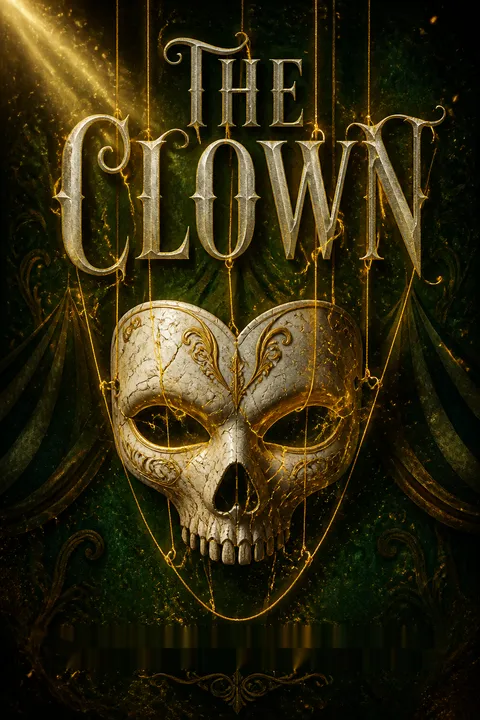


Plot Summary
Prologue
An opening essay by M. L. Harrow argues that death is not simply an individual's disappearance. The dead become part of the living world, feeding what continues after them, and the same possibility may apply to the soul as well as the body.
Its calm, philosophical tone makes the Faire's appetite feel less like an exception to nature than a brutal version of an ordinary exchange. Cora is about to discover that, in this place, a person can be consumed and still remain part of what survives.
The essay supplies a conceptual lens rather than a plot summary: it challenges the assumption that a self is sealed inside its body and ends when the body fails. Its language makes transformation sound almost peaceful, but the story tests that comfort against the terror of losing agency. The difference between becoming part of life and being taken by force becomes crucial. By placing this meditation before Cora's transformation, the book makes her new existence both a supernatural crisis and a question about what remains of a person after the world that shaped them is gone.
The Contortionist's New Tent
Cora wakes inside Harrow Faire's Inversion, a sealed darkness without stars, weather, or a familiar world beyond it. Her chronic pain has vanished, and she can bend her body in ways that would once have injured her. She understands that she is now the Contortionist, one of the Faire's Family, but has no guide to explain what that means.
The mute Clown leads her through the silent park and shows her a striped tent painted with her new performing image. The sight confirms that the Faire had chosen her before she understood its designs. Cora recognizes that her old life is gone, yet the restored body gives her a first, unsettling reason to imagine that this new one might be livable.
Cora's physical relief arrives alongside a profound loss of context: she is healthier, but the world that made her recognizable to herself has disappeared. The Faire's gift is therefore not uncomplicated healing. Her body is newly capable, yet that capability belongs to an institution that has already assigned her a role. The tent turns private transformation into public expectation. Clown's gentle welcome offers a contrasting model of belonging, one based on attention rather than command. Cora's uncertainty matters because she does not mistake comfort for freedom. She can appreciate the absence of pain while still asking what price, and what identity, came with it.
A Sponsor's Bloody Welcome
Cora approaches the stage with Clown, but Simon arrives furious that another member of the Family has shown her the tent before him. As her Sponsor, he insists that introducing her to her stage is his right. When Cora defends Clown, Simon uses his invisible strings to cut the mime into pieces. He then freezes Cora and forces a kiss on her, turning a tradition into a display of ownership.
Cora bites him, slaps him, and makes clear that she will decide who receives her company. She kisses him on her own terms, then walks away. Clown's body will be restored by the Faire, but the immediate consequence is lasting: Cora has found a way to resist Simon without denying her attraction to him.
The scene establishes the central contradiction in Cora and Simon's bond: desire does not cancel coercion, and attraction does not grant ownership. Simon treats sponsorship as a legitimate claim because the Family's customs give him authority, but Cora distinguishes responsibility from possession. Her violence is not a simple reversal of his power; it is a refusal to let his rules define what her consent means. Clown's apparent death makes the danger literal, while the expectation that he will return reveals how ordinary brutality has become within this community. Cora's response matters because she neither romanticizes Simon's behavior nor retreats from her own complicated desire.
Canes Above the Stage
Though she has vowed not to train, Cora returns to her tent because she wants to understand her new abilities. Simon guides her onto hand-balance canes, and she discovers that impossible poses feel natural rather than painful.
While she folds herself into a contortionist's shape, she loses consciousness and experiences a vision of falling, breaking, and being approached by a top-hatted figure. Simon catches her before she hits the stage.
The earlier assault by Duncan still makes intimacy frightening, so when Simon begins to seduce her, Cora panics and stops. Later, Simon's gentler shadow visits her dream and offers the tenderness his waking self struggles to show. Cora is left with a new skill and a clearer sense of the fear she still carries.
The stage makes Cora's transformation bodily and practical: she does not merely receive a title, she learns through movement what her changed body can do. Yet discovery is not a clean triumph. The vision interrupts her performance with images of violence, and her panic during intimacy shows that supernatural healing has not erased psychological injury. The dream version of Simon offers affection without taking control, making the split between the man's cruelty and tenderness emotionally legible. This section refuses a simplistic cure narrative. Cora can be physically remade and still need to decide, moment by moment, whether closeness feels safe.
Porcelain and Applause
At a party meant to welcome her, Simon tries to deter other men by publicly implying that Cora belongs to him. He also boasts about their private encounter, disregarding her request not to expose her. Cora presses a knife to his throat, then smashes a plate across his face and warns him that she will not accept being treated as property.
The Family applauds her rather than condemning her, and Turk welcomes her into their circle. When he announces her debut, Cora steps onto the stage and performs, twisting through poses she has learned by instinct. The audience sees her as a genuine attraction, not merely a newcomer. Her first performance turns the role the Faire imposed into a skill she can claim for herself.
Cora's public confrontation changes the social meaning of her relationship with Simon. She refuses to let his desire set the story others tell about her, and the Family's applause gives that refusal communal recognition. Her performance then offers a second kind of authorship: the Faire may have selected her, but she supplies the movement, timing, and presence that make the act hers. The sequence joins anger to emergence without suggesting that anger is her only source of power. Cora's success depends on learning what her body can do, while the room's response confirms that she can belong without surrendering her boundaries.
The Ten-Dollar Kiss
After Cora's performance, Simon kisses her and wins a ten-dollar wager with Aaron, who had doubted he could get her to do so. When Cora learns that her affection was made part of a bet, she pours wine over Simon and leaves the party in anger. He follows her to her boxcar, and this time she chooses to continue the encounter under strict conditions: she sets the pace, forbids him to touch or speak, and expects him to stop if she changes her mind.
Simon obeys, and Cora's panic does not take over. Later, she allows him to touch her, and he stays beside her through the night. In the morning he admits that his fixation has become more than physical appetite, though neither can name what their bond is becoming.
The wager exposes Simon's impulse to convert intimacy into proof of possession, while Cora's response prevents the betrayal from being brushed aside as harmless teasing. She does not respond by pretending she feels nothing; instead, she makes consent concrete through rules that Simon must honor. His compliance is significant because it gives Cora evidence she can use, not a promise she must simply trust. The encounter also unsettles Simon's own self-image. He expects satisfaction to end his obsession, but remaining beside her reveals that the need has expanded beyond sex. The scene makes intimacy a negotiation whose emotional stakes neither character fully controls.
Ludwig's Last Breath
As Cora settles into daily life, she spends time with Simon and the Family, learns about the Faire's cycle, and hears how its arrivals erase themselves from former visitors' memories. Her growing sense of belonging is interrupted when Ludwig, the kind Strongman who once sheltered many of the Family, reaches the end of his seity.
Turk and the others gather around him as Clown consumes what remains and Ludwig dies. At his lakeside funeral, the Family shares stories and laughter alongside its grief. Cora, who never had time to know Ludwig, understands how deeply his generosity shaped them. She also tells Turk she is choosing Simon despite his danger. Later, missing Simon's company, she goes to his boxcar and asks to share his bed.
Ludwig's death gives Cora a concrete view of the cost hidden inside the Faire's promise of extended life. The Family does not escape mortality; it experiences a drawn-out depletion in which identity can fade before the body stops. Their funeral stories resist that erasure by locating Ludwig in the relationships he created. Cora's choice to seek Simon afterward does not confuse him with Ludwig or mistake danger for virtue. She recognizes the risk and still wants connection. The section's emotional movement from communal grief to private closeness suggests that belonging is not secured by immortality, but by the difficult act of letting another person matter.
Simon Waite's Puppet Show
Simon warns Cora that his mental fractures can make him dangerous, then withdraws after a quiet morning together. He draws a woman who resembles Suzanna, his lost fiancée, and spirals into a violent breakdown.
Cora keeps her promise not to approach him, though the sounds from his boxcar leave her distressed. In a nightmare, Simon attacks her before directing her to his tent. There he uses puppets and scenery to recount his mortal life: he was a gifted young artist from an affluent English family, engaged to Suzanna, and traveling in America when a hooded stranger transformed him at Harrow Faire.
Suzanna no longer recognized him and fled. Simon explains that he rejected his grief by casting it into his shadow, leaving himself cruel and emotionally divided.
The puppet show turns Simon's past into staged evidence, but its form also reveals his need to control how that past is seen. He narrates his own wound as a tragedy with a fixed ending, casting the loss of Suzanna as the point at which tenderness became impossible. Cora's presence challenges that script without disputing what happened. The split between Simon and his shadow externalizes a familiar defensive maneuver: feelings that cannot be endured are treated as if they belong to someone else. The performance makes his cruelty comprehensible, not excusable. Cora's task is not to restore his former self, but to decide what kind of relationship she can have with the person he is now.
The Puppeteer Chosen
After telling his story, Simon insists he cannot become the man he was before the Faire. Cora answers by making clear that she is not asking for that man; she wants the Puppeteer who stands before her. Simon's restraint breaks into urgent, rough intimacy, but Cora trusts that she can stop him if she needs to.
When he later wakes with only fragments of what happened, she tells him that he revealed his past and that she accepted him as he is. The admission changes their bond: Simon no longer has to perform the hope of being redeemed before she can choose him. Cora, meanwhile, distinguishes her desire from a wish to repair him. They return to one another with affection that now includes the danger they both understand.
Cora's acceptance is powerful precisely because it is not a promise to cure Simon. She refuses the familiar romantic bargain in which a woman's love is expected to recover a man's lost goodness. Instead, she names the present person as the one she chooses, while retaining the ability to judge his actions. Simon's response is emotionally destabilizing because it offers him intimacy without requiring a return to an identity he believes is dead. The scene also tests the difference between consent and surrender: Cora's trust is meaningful because she believes she can withdraw it. Their attachment grows through acknowledged risk, not through the denial of it.
A Voice in the Shadow
For a brief stretch, Cora and Simon share meals, jokes, and ordinary work, and she begins to feel that the Inversion might become a home. Simon's shadow, however, starts speaking inside his mind, urging him to be kinder and admitting the feelings he tried to discard. Simon resents the voice and fears that his new happiness is making him less stable.
The Family's closeness also grows: Cora is invited into other performers' acts and learns more of their private histories. During dinner, Clown insists that she come with him to the lake. Simon bristles at being left behind, but Cora goes. Once alone together, Clown tells her that he is about to die and asks her to listen, signaling that the apparent calm around them is about to break.
The speaking shadow makes Simon's emotional division harder to maintain. What he once treated as a discarded fragment now challenges his habits in real time, exposing the cost of his self-protection. Meanwhile, Cora's growing participation in the Family supplies an alternative to the isolation Simon would prefer: she can belong to him and to others. Clown's summons interrupts this fragile domestic rhythm with a different kind of intimacy, one rooted in long observation rather than romance. The juxtaposition matters. Simon's story concerns feelings he tried to bury; Clown's impending revelation concerns a role and burden he has carried in silence.
Clown's Final Gift
Clown explains that he has not run out of life; he has chosen to end a stagnant existence and pass on the power connected to death. He tells Cora that the Family's dead join the Faire, and that someone must carry his ability to consume seity. He asks her to place her hands over his heart. Shadowy force moves through her and takes Clown's remaining life, though Cora has little control over the transfer.
She screams and collapses. Simon reaches her first, but Turk assumes he is responsible and attacks him. Simon refuses to surrender Cora, carries her to her boxcar, and stays beside her while she remains unconscious. His shadow joins him in watching over her, sharing the fear that she may not wake.
Clown's death is both a chosen ending and an involuntary beginning for Cora. He frames the transfer as necessary change, but the scene preserves the violence of what she experiences: her body becomes the passage through which another being is consumed. The distinction between intention and control, already central to Cora's relationship with Simon, now operates on a supernatural scale. Simon's response also marks a shift. Rather than treating Cora as an object of possession, he protects her when the Family turns suspicion toward him. His fear is no proof that he is harmless, but it demonstrates that her survival has become part of his emotional life.
The Ship Beneath Her
While unconscious, Cora experiences a storm at sea through the body of a man aboard a ship. An unseen presence promises to keep him from drowning if he keeps it alive. When she wakes in her own bed, she remembers Clown's death and realizes she was the force that consumed him. Simon helps her test whether she can summon that power, holding her hand over his heart.
Instead, Cora's eyes become empty voids and another presence speaks through her. It tells Simon that it needs him, warns him to stop reaching for powers that are not his, and claims a deep affection for him. Cora collapses again. When she wakes, Simon identifies the presence as Harrow Faire itself, leaving them both to face a bond and a purpose neither understands.
The final vision connects Cora's private transformation to the Faire's hidden agency. The shipboard encounter suggests a relationship of mutual dependence, but the waking scene refuses to make that relationship transparent: Cora is at once a person, a conduit, and a vessel for something older. Simon's attempt to test her power becomes an encounter with the institution that has shaped them both. The Faire's affection is unsettling because it does not resemble ordinary care; it treats Simon as valuable and claims Cora as its means of acting. The book closes not with mastery, but with a new boundary around what the couple can safely know or control.
Epilogue
A closing meditation returns to the idea of seity, the value a person creates through action and relationship. Life's mark is treated as a limited currency, passed on when someone dies.
The essay reframes the Faire's hunger as part of a universal exchange, though not a gentle one: people leave the world, and what they made becomes available to those who remain. After Cora's encounter with the Faire, the claim that the dead feed life carries a sharper implication. The self may continue, but not necessarily in a form it chose.
The coda extends the opening essay while making its metaphor more transactional. Seity is not simply a soul or a body, but the accumulated consequence of a person's actions, and death redistributes that consequence. The idea complicates the comfort of continuity: being remembered or absorbed does not guarantee that one's agency survives intact. This is especially pointed after Cora becomes a conduit for Clown's power and the Faire's presence. The book leaves her with a question more urgent than whether the Faire is alive: if it can consume and preserve, who gets to decide what a person becomes after death?
Analysis
The book's central problem is not whether Cora can love a monster, but whether love can coexist with clear judgment and self-possession. Simon's desire is often expressed as control: he claims, stages, and narrates. Cora's resistance makes those actions visible as choices rather than irresistible signs of passion. Their intimacy advances when he respects limits, not when she excuses his behavior. This distinction gives the romance its psychological tension. Cora can want danger and still demand that danger remain answerable to her consent.
The Faire offers a parallel pressure on identity. It heals Cora's body while removing her from her former world, then assigns her a role that converts her abilities into public spectacle. The Family supplies companionship, but its rituals also normalize violence and dependence. The Inversion sharpens this contradiction: the performers are protected from ordinary time, yet confined within a cycle they did not choose. Their connection to the outside world is both nourishment and erasure, because visitors feed the Faire and later forget it.
Seity gives this setting a moral economy. A life is measured not only by biological survival but by the marks it leaves in other people. Ludwig's generosity endures through the stories told at his funeral; Simon's cruelty has made him feared, while Cora's arrival begins to alter how others see him. Clown's transfer forces Cora to confront the cost of continuing life through another person's end. The final revelation then widens the problem: the Faire is not merely a place that consumes people, but an intelligence capable of acting through them. Cora and Simon have found a fragile form of mutual trust, but the novel closes by making clear that intimacy is now entangled with a power neither understands.
Review Summary
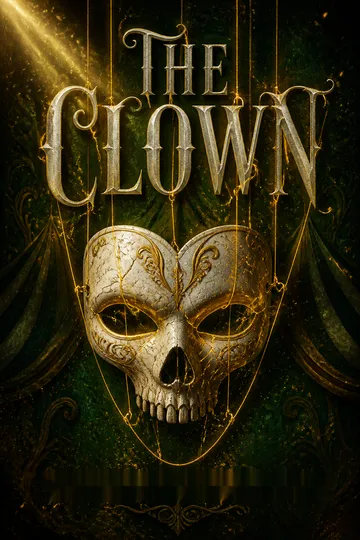
The Clown, the third book in the Harrow Faire series, focuses on Cora and Simon's developing romance while introducing the mysterious Clown character. Readers praised the intense chemistry, Simon's complex characterization as a possessive yet vulnerable anti-hero, and the author's handling of sensitive topics like trauma and consent. Many appreciated Cora's strength and the steamy scenes. Some critics felt the plot moved slowly, with too much focus on romance over worldbuilding, repetitive dialogue, and insufficient character development. The ending's cliffhanger left readers eager for the next installment despite mixed opinions on pacing.
People Also Read




Characters
Cora Glass
Newly chosen performerCora enters the Faire after a life marked by chronic pain, grief, and a damaging experience of intimacy. Her new role as the Contortionist gives her a body that is suddenly strong and flexible, but it does not erase her need for safety or self-determination. She meets Simon's forcefulness with humor, anger, and explicit boundaries, even while her attraction to him unsettles her. Cora is observant and practical, quick to learn the Family's customs while remaining skeptical of their explanations. Her central tension is not whether she can become powerful, but whether she can use that power without surrendering authorship of herself.
Simon Waite
The cruel PuppeteerSimon is the Faire's theatrical Puppeteer, a brilliant artist whose frightening command of silver strings matches his appetite for control. He mocks, threatens, and manipulates the Family, yet Cora's presence draws out reactions he cannot neatly master. Their connection begins in desire and conflict, but he gradually confronts his capacity to care for someone without owning her. His past as a mortal artist and the loss of his fiancée have shaped the defenses he relies on, though understanding those defenses does not excuse his cruelty. Simon's psychology is divided between a practiced identity built from power and feelings he once tried to remove from himself.
Clown
Mute witness to changeClown is a skull-faced, green-haired performer who communicates through expressive pantomime and wordless sounds. Unlike Simon, he approaches Cora with patience and delight, guiding her toward her tent and celebrating her arrival. He has lived among the Family for an immense span of time and watches its members with unusual tenderness. His humor can be crude, but his attention is thoughtful: he notices what others overlook and worries about the futures of people he cares for. Clown's role in the Family is bound to the passage between endings and beginnings, giving his warmth a quiet gravity.
Simon's Shadow
Simon's tender remainderSimon's Shadow appears in dreams and on walls, with cyan eyes and a more openly affectionate manner than Simon usually permits himself. It jokes with Cora, seeks her company, and offers reassurance when her fear of intimacy rises. Its existence gives visible form to the emotional divide at the heart of Simon's personality. The Shadow is neither a separate romantic rival nor a simple reflection; it expresses needs Simon has tried to silence. Its increasing presence unsettles him, but also reveals how much of his supposed indifference depends on refusing to hear himself.
Turk
The protective RingmasterTurk is the Family's Ringmaster and one of its oldest members. He values solidarity and kindness, and he speaks of Ludwig as the example the others should follow. His authority places him between the Family's rules and its unpredictable members, especially Simon. Turk is protective of the Faire and wary of anything that might threaten its balance, but he treats Cora with warmth and offers her practical guidance about belonging. His concern can become suspicion when a crisis arrives, reflecting the difficulty of governing a group whose members possess dangerous powers and complicated histories.
Ludwig
The generous StrongmanLudwig is the Family's Strongman, remembered for his warmth, generosity, and willingness to shelter others. He has spent much of his long existence supporting people who arrive at the Faire in distress. Cora knows him only briefly, but his kindness has left a strong mark on the Family, and his example offers a contrast to Simon's self-protective cruelty. Ludwig's story is connected to the cost of giving too much of oneself, making him a quiet moral center even before Cora understands the full meaning of his place in the group.
Jack
The loyal RiggerJack is the Rigger, a handsome and supportive member of the Family who checks on Cora when she first arrives. He worries that Simon will hurt her and struggles to respect her choice when she grows close to him. Jack's concern is genuine, but it can make him imagine himself as a protector in a story where Cora is capable of making her own decisions. He represents the more conventional kindness available within the Faire, as well as the limits of good intentions when they overlook another person's agency.
Aaron
The irrepressible BarkerAaron is the Barker, a flirtatious showman who reads incoming visitors and supplies much of the group's teasing banter. He is forward with Cora, but she can reject him without losing the easy joking friendship they develop. His moonshine and wagers add levity to the Family's bleak circumstances, while his quick wit exposes how its members cope with confinement. Aaron's behavior can be self-serving, yet he generally accepts Cora's boundaries and helps make the Family feel less like a collection of threats.
Amanda
The welcoming AerialistAmanda is the Aerialist, an outgoing performer who welcomes Cora into the Family and helps prepare her first costume. She is affectionate, sociable, and eager to draw Cora into new routines. Her warmth gives Cora a friendly point of entry beyond Simon, showing that the Faire contains forms of companionship not organized around his attention. Amanda also supports Turk and helps maintain the community's everyday bonds.
Maggie
The wry SoothsayerMaggie is the Soothsayer, an older woman whose fortune-telling persona shifts between an invented accent and her ordinary speech. She is irreverent about her own act and offers Cora cryptic warnings rather than easy explanations. Maggie's humor keeps her approachable, while her knowledge suggests that she recognizes more about the Faire's patterns than she openly says. She challenges Cora to pay attention to what is happening inside her own mind.
Louis
The charming MagicianLouis is the Magician, a charismatic performer who once traveled with his brother as part of an illusionist act. He has lost his former connection to the outside world and carries that absence with quiet sadness. His relationship with Elena gives him a source of present-day affection, and he treats Cora kindly, even inviting her to take part in a trick. Louis represents a survivor who has made a life inside the Faire without pretending that his old life meant nothing.
Elena
The affectionate SeamstressElena is the Seamstress and Louis's partner. She is gentle, affectionate, and delighted by the possibility of making costumes for Cora. Her work gives practical form to the Family's performances, while her easy tenderness with Louis offers Cora an example of intimacy that does not depend on intimidation. Elena is one of the first people to make Cora feel welcome as a performer.
Anastasia
The aloof DivaAnastasia is the Diva, a former star whose elegance and old-fashioned glamour make her seem distant from the rest of the Family. She is proud of her past fame and sharply aware of how the present world differs from the one she remembers. Her aloofness is not simple hostility; she protects her identity through performance and refinement. Cora's encounters with her reveal how each Family member carries a lost self into the present.
Rudy
The unsettling ZookeeperRudy is the Zookeeper, a quiet, muscular man with animal-like features and an unsettling intensity. He tends to keep to himself and is more comfortable among the strange creatures he tends than in casual conversation. His presence reminds Cora that the Family's talents can be far more dangerous than their show titles suggest. Despite his intimidating manner, he is part of the same community and occasionally approaches Cora with a seriousness that signals concern.
Bertha
The sociable Bearded LadyBertha is the Bearded Lady, a tattooed, good-humored member of the Family who enjoys books, drink, and lively conversation. She offers Cora a welcome distraction from Simon and a glimpse of the ordinary friendships possible inside the Faire. Her romance collection and easy laughter make her a source of comfort, though she is also part of a community shaped by long experience and loss.
Bruce
The blunt FirebreatherBruce is the Firebreather, a direct, practical member of the Family who joins in its parties and conversations. He has a dry manner and takes part in the group's shared rituals, including its memorial gatherings. Bruce helps make the Family feel lived-in rather than purely theatrical: he brings ordinary appetites and blunt judgments into a world governed by supernatural rules.
Donna
The friendly FlyerDonna is the Flyer and Rick's partner. She welcomes Cora at the party and joins the Family's teasing, giving Cora another friendly connection beyond Simon.
Rick
The easygoing partnerRick is Donna's partner and a relaxed presence at Family gatherings. He observes Cora's confrontations with Simon with amused respect and helps make the celebrations feel communal.
Pierre
The French JugglerPierre is the Juggler, a French performer who speaks with theatrical flair. He adds to the Family's crowded social world and shares information about the creatures Rudy keeps.
Maksim
The stern MaestroMaksim is the Maestro, a severe-looking musician who supplies the accompaniment for Cora's debut. His playing supports her instinctive performance without taking it over.
Lauren and Phil
The conjoined coupleLauren and Phil are married performers who arrived at the Faire as two people and now share a joined body. Their unusual condition is presented with affection and mutual loyalty, offering Cora a glimpse of the strange forms of togetherness the Faire can create.
Mr. Harrow
The unseen proprietorMr. Harrow is the reclusive authority behind the Faire, rarely seen outside his boxcar. His decisions shape the Family's membership and the rules governing their lives. Even in his absence, the performers orient themselves around his power, making him an unsettling presence in a community that has little control over its own larger circumstances.
Suzanna
Simon's lost fiancéeSuzanna is the woman Simon loved during his mortal life. She is associated with the artistic future and emotional security he once hoped to build. Her memory remains central to how he understands himself, even as Cora's presence challenges the story he has constructed around that loss.
Duncan
Cora's former partnerDuncan is Cora's former partner, whose past treatment of her left her wary of intimacy. Though absent from the Faire, the relationship's lingering effect shapes what Cora needs in order to feel safe and retain control.
Plot Devices
Seity
The currency of a lifeSeity is the accumulated force of what a person does and leaves behind. The Faire feeds on it, and a Family member's supply can dwindle over time. The idea connects the supernatural plot to the book's central question about identity: a person is more than a body, but their choices and relationships also make up what they are. Ludwig's decline shows the cost of depletion, while Clown's power makes the transfer of seity a direct physical event. The concept also frames the final essay, where death becomes an exchange rather than a clean disappearance.
The Inversion
A world outside timeThe Inversion is the dark, skyless state into which the Faire retreats. Inside it, the Family waits between periods of drawing crowds and feeding on their seity. People who encountered the Faire forget it when the cycle turns, leaving the performers isolated from the ordinary world. For Cora, the Inversion makes her new life feel like a cage, even as the quiet gives her time to train and form relationships. Its altered landscape also signals that the Faire operates beyond ordinary rules of time, memory, and place.
Sponsorship
A bond of obligationA new Family member is assigned a Sponsor who introduces them to their role and helps them learn the work of the Faire. Simon sponsors Cora, which gives him a formal reason to train and supervise her, but his personal desire distorts the arrangement into a claim of possession. The sponsorship also links their well-being, as Simon feels Cora's pain. The device therefore creates both practical mentorship and a dangerous intimacy, giving Cora repeated opportunities to separate care from control and to insist that obligation does not replace consent.
Simon's Shadow
A divided inner lifeSimon can cast a vivid, expressive shadow that appears in dreams and behaves more tenderly than his waking self. It becomes Cora's first experience of affection from Simon without the same overt pressure, while its existence hints at feelings he has deliberately disowned. As the shadow begins speaking inside Simon's mind, the division becomes harder to keep in place. The device makes psychological defense visible and gives the romance a supernatural dimension: Simon's capacity for attachment was not destroyed, but split away from the identity he built to survive.
The Keeper of Death
Power passed through lossClown's ability to consume a Family member's remaining seity is tied to a larger connection with the Faire. When he chooses to pass that power to Cora, she becomes the conduit through which his life ends. The transfer links the story's opening meditation on death to its central supernatural mystery: dying changes the living as well as the dead. Cora's inability to fully control the process establishes a new danger, and the presence that speaks through her suggests that the power is part of a larger intelligence rather than a gift she can simply master.
Harrow Faire Series
About the Author
Other books by Kathryn Ann Kingsley



Download PDF
Download EPUB
.epub digital book format is ideal for reading ebooks on phones, tablets, and e-readers.








