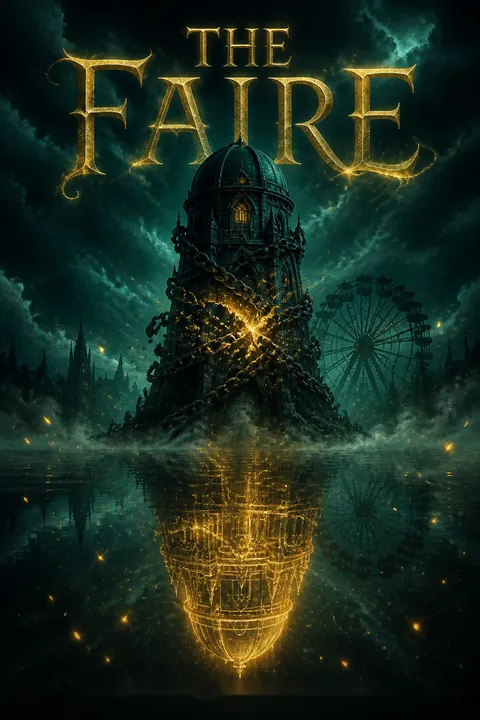


Plot Summary
Duncan Comes Back
After Harrow Faire returns from the Inversion, Cora wakes beside Simon, the dangerous Puppeteer she has come to love. The return has also brought back Duncan, the man who abused her years earlier. When he attacks Emily, Cora's former friend, she uses her new ability to drain his seity.
Duncan survives, but the person inside him is effectively erased, and Cora is shaken by how much she hated doing it and how much satisfaction she felt. She admits to Lazarus, the Faire's strange presence, that she will oppose Ringmaster, whom she must kill to protect Simon and the Family. Before she can act, Ringmaster's followers seize Simon. Cora's revenge has made her an immediate threat to Turk's plans.
Cora's act is both protection and retaliation, and she cannot comfortably reduce it to either motive. That ambiguity matters: the book refuses to let love excuse violence, or trauma explain it away. Cora knows she stopped Duncan from hurting Emily, but also recognizes that hatred powered her choice. Her new ability therefore arrives with a moral cost, not as a clean instrument of justice. The incident also shifts her from private survivor to public danger. By defending Emily, Cora has chosen a side in a conflict whose stakes she still only partly understands.
The Trial Vanishes
Before Ringmaster's people reach her, Maggie, the Soothsayer, warns Cora that Simon has already been captured and urges her to rely on him when the moment comes. Cora barely has time to absorb the warning before Turk arrives. The Family's rules require a hearing before anyone is sent to the tower, but Turk fears Cora will use a trial to reveal that he has been starving Harrow Faire and deceiving its residents.
He and Jack bind Cora and Simon, then carry them to the observation tower instead of letting the Family judge them. Jack confirms that he knows the Faire's fate and believes its inhabitants should not exist. Cora watches the tower doors open, realizing that the people she trusted have chosen secrecy over her chance to speak.
The tower sentence is not simply punishment. It is Turk's attempt to control who gets to define reality. He invokes rules when they strengthen his authority, then breaks them when an honest hearing might undo it. Jack's decision adds a more painful complication: he acts from conviction, not mere malice, believing that destroying the Faire will prevent future harm. Cora's isolation therefore begins in competing claims of care. Each person says they are protecting others, but only Cora is denied the chance to make that choice for herself.
The Tower Below
Inside the tower, Turk sends Cora down a chain into its inverted lower half and hangs Simon by his ankles from the rafters above. Cora lands on a jagged metal sculpture that pierces her throat and limbs; her body repeatedly tries to heal, but she cannot free herself or breathe properly. Simon remains suspended, his hands disabled by a lockbox that prevents him using his strings.
Lazarus appears to Cora but admits he is too weak to help. He stays beside her, telling stories as she drifts between consciousness and agony. Above her, Simon hears only silence from the pit and has no way to reach her. Turk leaves them there, intending to let the Faire starve and the prisoners die with it.
The tower makes power brutally literal: Turk alone controls movement inside it, while Cora and Simon endure separate forms of helplessness. Her body cannot complete its healing, and Simon's characteristic control is neutralized by restraints designed specifically for him. Lazarus's stories offer companionship but no rescue, exposing the limit between affection and agency. The scenes also strip away the romantic fantasy that devotion automatically grants power over suffering. Cora and Simon are connected emotionally, yet the structure keeps them physically apart, forcing each to confront what care means when intervention is impossible.
A Shadow Pays
As Simon weakens above the pit, the living shadow he has long treated as separate from himself confronts him with the truth: it is the part of him that holds the feelings he refuses to face. Simon finally accepts that he loves Cora and would sacrifice himself to save her. The shadow uses its remaining strength to pull her from the sculpture, then fades away.
With the tower still locked and Simon still hanging, Lazarus offers Cora another way out: she can take more of the Faire into herself and become powerful enough to challenge Turk. Cora chooses the bond, plunges into the void beneath the tower, and returns changed. Her new darkness breaks open the doors, and she frees Simon, though he falls hard enough to suffer a concussion.
The shadow's sacrifice turns Simon's emotional partition into a concrete cost. He has treated tenderness as a weakness that could be stored elsewhere, but the shadow's final act proves that compassion was never foreign to him. Cora's decision mirrors that choice without duplicating it: she knowingly accepts a transformation because inaction would leave both of them trapped. Neither sacrifice is uncomplicated or freely chosen in a calm setting. Yet each makes love visible through risk, shifting the story's central question from whether these characters can care to what they are willing to lose for that care.
The Family Hears
Cora and Simon arrive at breakfast bloodied and exhausted, and Cora refuses Turk's request to speak privately. She tells the Family that Mr. Harrow is not the one running the Faire: Turk holds the Key and has been starving the creature, intending to kill it and everyone bound to it. Rather than attack Turk at once, she proposes a vote so the Family can decide whether they want to live.
She also explains that the Faire needs only tiny traces of seity from its patrons, but Turk's deliberate starvation has forced it to take more. When Cora invites Lazarus to appear before everyone, the ancient presence manifests in Clown's familiar form. His tenderness and obvious attachment to the Family complicate their image of him as a simple monster.
Cora's first act with her new authority is procedural rather than violent. She could use force to remove Turk, but instead creates a way for the Family to hear the truth and disagree with her. That decision distinguishes leadership from possession: power becomes legitimate through the consent it makes possible. Lazarus's public appearance further unsettles the categories on which Turk's crusade depends. The Faire is frightening and dependent on human seity, but it also behaves as a caretaker that wants companionship. Cora asks the Family to judge that contradiction rather than accept a verdict imposed by either ruler.
A Vote Needs Trust
During the week before the vote, Cora faces the Family's suspicion and answers questions about her new power and the harm Harrow Faire causes. She admits that she and Simon may have been capable of terrible violence in the lives they left behind, but argues that the Family's affection and shared life are also real.
Rudy explains that he gave up his former identity to protect his twin sister, then learns from Lazarus that her descendants are alive; the news gives him peace and confirms his support for Cora.
Jack remains unconvinced when Cora tells him she will not punish him or anyone else for voting against her. Simon performs a story that unsettles easy distinctions between hero and monster, while Cora continues trying to build trust rather than command it.
Cora's campaign is a test of whether her principles survive fear. She does not pretend the Faire is harmless, and she does not demand that Jack erase his reasons for opposing it. Rudy's history gives the debate a human scale: life in the Family has required losses, yet those losses sometimes protected people beyond its walls. Jack's refusal shows that understanding is not the same as agreement. Cora's effort to preserve dissent is therefore more than strategy. She is trying to prevent the new order from reproducing Turk's central wrong, deciding other people's lives without their consent.
Simon Makes His Wager
While Cora tries to win the Family's trust, Simon approaches Turk with a secret bargain. He claims he wants the Faire kept alive only until he dies, then offers to turn Cora into one of his dolls so Turk can continue his campaign.
To secure Turk's promise, Simon demands something Turk loves as leverage: Amanda, the Aerialist and Ringmaster's partner. Turk agrees, and Simon transforms Amanda into a wooden puppet whose memories and identity are badly damaged.
He also hangs Jack in the tower, keeping him from the vote and making him suffer for helping imprison Cora. When Amanda misses her performances, Jack searches for her and confronts Simon, but Simon denies knowing where she is. Cora cannot discover what has happened before the Family gathers to vote.
Simon turns the language of loyalty into a weapon, offering Cora's body and Amanda's identity as bargaining pieces. His proposal appears to confirm every suspicion that he is incapable of placing anyone above himself. Yet the plan also exposes how thoroughly he understands Turk's need for leverage and his own appetite for control. The danger is not that Simon has suddenly become a conventional villain; it is that his genuine attachment coexists with cruelty and self-interest. By keeping Cora ignorant, he makes trust the experiment itself, with Amanda and Jack bearing its consequences.
The Vote Turns Bloody
At the meeting, Cora promises that even opponents will remain free to leave or stay if she wins. The Family divides: Rudy, Bertha, Louis, Donna, Rick, Bruce, Aaron, and Anastasia side with Cora, while the Twins, Pierre, Jim, Elena, and Maksim choose Turk. Maggie abstains, and Jack and Amanda are absent. Cora's side wins by one vote.
She asks Turk to end the dispute privately, hoping to avoid more bloodshed, but he draws his whip and refuses to surrender. Cora expects a fight with Ringmaster. Instead, Simon comes up behind her and snaps her neck. She collapses, unable to move, while the people around her shout and a figure in a top hat looms over her. Her last awareness is that Simon has betrayed her.
The vote gives Cora the authority she sought, but it cannot make the conflict emotionally clean. Her narrow victory reflects a divided community, not unanimous trust, and her promise to protect dissenters is tested immediately. Turk's refusal to honor the outcome confirms that procedure alone cannot restrain someone who believes his cause outranks consent. Simon's apparent betrayal strikes at Cora's deepest vulnerability: the fear that love will again leave her powerless. The neck snap also echoes the opening nightmare, turning an old image of bodily helplessness into a moment whose meaning has not yet been revealed.
The Queen's Countermove
Cora wakes tied to a chair on Simon's stage, beside her own finished porcelain doll. Simon explains that he made the bargain to test whether she would still love him after believing he had betrayed her, and to punish Turk, Jack, and Amanda for what they did to her. Amanda appears as another doll, unable to remember Turk.
Simon releases Cora and admits that he loves her, then lets her decide what happens next. Cora uses her power to drain Turk's seity, ending his life and taking the Key that only passes when its holder dies. She also drains Amanda, whose remaining self has been devastated by the transformation. The darkness recedes, leaving Simon alive on the ground and Cora holding victory with grief rather than triumph.
The revelation does not cancel Simon's cruelty. He really did use Amanda, torture Jack, and make Cora believe he had chosen Turk over her. His confession changes the motive behind the deception, not the harm it caused. Cora's response is equally complex: she kills Turk to end his control, then ends Amanda's damaged existence rather than leave her as a hollow puppet. The Key passes to her through death, tying political authority to a personal act she cannot undo. Victory here means accepting responsibility for consequences, not escaping them through a declaration of good intentions.
A Key, A Goodbye
After the fight, Cora rescues Jack from the tower and explains how Simon used him and Amanda in his plan. Jack grieves Amanda and Turk, then admits he may not be able to remain in the Faire. Cora offers him the choice to leave rather than forcing him to stay; he departs with Maggie, his mother. The Family's former Soothsayer gives Cora her tarot deck and follows her son out.
Cora takes the Key to the tower's upper landing, where Simon approaches with roses and an antique-style ring. She is furious at his test and knows he may hurt her again, but she still loves him. When he finally says so plainly and asks her to marry him, she accepts, choosing the relationship without pretending his betrayal was harmless.
The aftermath refuses a simple reconciliation. Cora does not punish Jack for leaving, because the freedom she promised must include the freedom to reject her home. Maggie's departure makes that cost intimate: the new leader loses people she cares about even after winning. Simon's proposal is not a cure for what he has done; Cora's anger remains part of her answer. Her acceptance expresses a chosen attachment, not blind trust. The Key gives her control over the Faire, but the more consequential change is her willingness to lead without demanding that love, loyalty, or forgiveness be compulsory.
The Faire Hits The Road
The next day, the remaining Family gathers around Cora and asks where they should go. The Twins leave because they have had enough of their existence, but the others choose to travel rather than remain trapped by the lake.
Cora and Lazarus organize trucks to replace the old boxcars, preserving the Faire's vintage look while making modern travel possible. Simon claims the passenger seat and immediately discovers the truck's digital controls. Cora drives the first vehicle, with the rest of the Family following; even Rudy takes the wheel after Cora teaches him.
They head south for the winter, with plans to visit the coast and later travel west. Their departure turns survival into a practical, shared future rather than a victory confined to the Faire's grounds.
The road changes the meaning of Harrow Faire's enclosure. The Family remains bound to the creature and to one another, but they are no longer confined to a single place or to Turk's chosen fate. Their decision to travel is communal, made after the people who want to leave have been allowed to do so. Modern trucks and digital controls also create a gentle collision between old identities and an unfamiliar world. Cora's authority is measured in ordinary responsibilities: teaching Rudy to drive, planning a route, and making room for everyone else's wishes.
Epilogue
On the road, Cora recruits Peter, a heartbroken bodybuilder, into the Family as its new Strongman. She and Simon marry, and Rudy brings them an egg that hatches into a small feathered, black creature Cora names Shadow. Louis discovers a Wisconsin attraction advertising the Impossible Julian Strande, whose mismatched eyes resemble his own, and the Faire changes course to visit him.
Later, in Nashville, Rudy catches a woman trying to break into an animal trailer. Cora stops him from attacking and recognizes the frightened intruder as someone who may become the next Ringmaster. The Family's life continues through new arrivals, old grief, travel, and the uneasy work of deciding who belongs.
The epilogue makes freedom concrete by showing the Family in motion, not simply declaring that Turk's rule is over. Cora's recruitment of Peter repeats the Faire's old pattern of finding people at a crisis point, but now she approaches him with choice rather than coercion. The wedding and Shadow's hatching offer intimate forms of renewal without erasing the deaths that made them possible. Louis's connection to Julian opens another family's history, while the would-be animal rescuer suggests that the Faire's next generation will arrive with its own fears and convictions. Cora's leadership is therefore ongoing work, not a settled moral victory.
Analysis
The Faire is less a backdrop than a political body whose survival depends on a resource it cannot produce alone. That makes the central conflict difficult to settle through familiar moral labels. Turk is right that the Faire consumes human essence; he is wrong to treat this fact as permission to decide everyone else's fate. Cora, in turn, argues for continued life without claiming the Faire is harmless. The conflict turns on who has the authority to weigh harm, survival, and consent.
Cora's leadership develops through a repeated refusal to reproduce the coercion she suffers. She could kill Turk as soon as she escapes, but instead lets the Family hear the truth and vote. She later permits Jack to leave, even though his choice wounds her. These acts do not make her morally pure; she kills Duncan, Turk, and Amanda. Rather, they show that she understands authority as an obligation to leave other people room to choose. The book measures power by how its holder treats dissent, not merely by the scale of what that power can destroy.
Simon complicates the romance by making affection inseparable from danger. His humor, artistry, and perceptiveness draw Cora toward him, while his pleasure in manipulation repeatedly confirms her reasons to distrust him. His final confession cannot erase the cruelty of his test. Cora's acceptance is therefore not a reward for his transformation into a safer man; she chooses him with knowledge of his continuing capacity to hurt her. That choice remains unsettling, but it is also distinct from submission because Cora retains the power to refuse, punish, or leave.
The novel finally treats family as chosen relation rather than moral absolution. The Family contains abusers, victims, caretakers, and people who cannot agree on whether they deserve to live. Cora's claim that they belong together does not mean their actions are excused. It means responsibility persists inside attachment. The traveling Faire carries that unresolved argument into the world: survival is possible, but only if care becomes more than a promise and consent remains part of the bargain.
Review Summary
The Faire, the fifth and final book in the Harrow Faire series, receives mostly positive reviews (4.35/5). Readers praise the unique premise, complex villain protagonist Simon who remains unapologetically evil, and Cora's character development. Many appreciate the emotional, satisfying conclusion and found family dynamics. Common criticisms include the series being stretched to five books instead of three, repetitive sections, excessive quipping, and editing issues. Some felt the ending was anticlimactic or had concerns about cultural representation. Fans particularly loved Simon's psychotic yet lovable personality and the dark fantasy romance elements.
People Also Read

Characters
Cora Glass
The reluctant ContortionistCora arrives at Harrow Faire carrying chronic pain, loneliness, and the aftermath of an abusive relationship. She is observant, dryly funny, and wary of anyone who offers affection with strings attached, yet she longs to belong somewhere. The Faire gives her a role and a community, but also forces her to confront the violence she is capable of and the costs of becoming powerful. Her instincts are compassionate, though compassion does not make her passive: she can be furious, decisive, and frightening when someone is threatened. Cora's central struggle is to preserve other people's choices while accepting that she herself has become part of a world she cannot simply leave behind.
Simon Waite
The dangerous PuppeteerSimon is Harrow Faire's brilliant, theatrical Puppeteer, a man who treats wit as armor and control as both craft and pleasure. His art reveals an acute eye for contradiction, but his insight rarely makes him gentle; he enjoys unsettling people and distrusts obligations that might limit him. Cora attracts him because she meets his cruelty with humor and sees beauty in the damaged person beneath his performance. He is capable of tenderness, but tenderness frightens him because it makes another person's pain matter. Simon's pull between affection and self-preservation gives the romance its danger: he wants intimacy while resisting the vulnerability that intimacy requires.
Lazarus
The Faire's ancient voiceLazarus is the ancient intelligence behind Harrow Faire, a vast being who experiences the human world through limited forms and familiar faces. He is curious about people and wants the Family to be happy, yet his scale of thought makes him capable of treating human lives as pieces in a much larger reality. His conversations with Cora reveal affection, grief, and genuine uncertainty about what people need. He is neither an ordinary caretaker nor a human confidant, and his kindness cannot erase the danger of his power. Lazarus embodies the book's question of whether a being can care for others without fully understanding the harm it causes.
Turk
The embattled RingmasterTurk leads the Family with the discipline of a soldier and the self-image of a man carrying an unbearable duty. He believes Harrow Faire's appetite makes it a threat to humanity, and he is willing to sacrifice its inhabitants to prevent that danger from spreading. His love for Amanda is sincere, as is his attachment to the Family, but he repeatedly treats his judgment as more important than their right to decide. Honor gives him structure and pride; it can also become a justification for secrecy and coercion. Turk is most dangerous when he believes that a terrible choice has already been made for him.
Amanda
The devoted AerialistAmanda is the Aerialist and Turk's beloved partner. She is warm, optimistic, and devoted to the people she loves, often acting as Turk's emotional compass when his sense of duty narrows his view. Her affection does not make her naïve about his convictions, but it binds her to the choices he makes. Amanda's bright presence offers a counterweight to the Faire's violence and to the Family's guarded personalities. She wants the people around her safe, and she tries to soften the cost of hard decisions without pretending that love can make those decisions painless.
Jack
The principled RiggerJack, the Rigger, is a loyal friend to Cora and a longtime ally of Turk. His history of confinement and mistreatment leaves him convinced that Harrow Faire is fundamentally harmful. He is gentle in manner but firm in belief, and he sees opposition to the Faire as a moral responsibility rather than a personal grudge. That conviction can make him hurt people he cares about while believing there is no better option. Jack's bond with Maggie, his mother and the Soothsayer, gives him a family tie beyond the circus and shapes his sense of duty.
Rudy
The watchful ZookeeperRudy is the Zookeeper, a shape-shifter whose temper and instincts are close to the animals he tends. He is blunt, solitary, and more comfortable among his creatures than in a crowded room, but his loyalty runs deep once he accepts someone as part of his pack. Long ago, he gave up his former life to protect his twin sister, a choice that explains both his guardedness and his fierce sense of kinship. Rudy dislikes uncertainty and respects strength, yet he can recognize a leader who listens rather than merely commands.
Maggie
The neutral SoothsayerMaggie, the Soothsayer, is an elderly woman whose rough humor and cigarettes disguise a patient understanding of people. She can recognize patterns and likely futures, but she knows that unpredictability defeats even the best prediction. Maggie refuses to choose sides in the Family's conflicts, though she gives Cora one crucial piece of personal advice about trusting Simon. As Jack's mother, she has a private stake in the people she claims to observe neutrally. Her role is less to decide the future than to prepare others to face the moment when prediction runs out.
Aaron
The irrepressible BarkerAaron is the Barker, a sociable storyteller whose jokes and appetite for gossip make him a bridge between Cora and the rest of the Family. He is more perceptive than his comic manner suggests and is quick to notice when an official explanation does not fit the people he knows. His loyalty is grounded in shared history rather than unquestioning obedience. Aaron uses humor to make tense rooms bearable, but when a decision violates the Family's trust, he is willing to risk his standing to say so.
Bertha
The protective Bearded LadyBertha, the Bearded Lady, is strong in body and temperament, with a fierce affection for the people and animals she considers hers. She is not easily intimidated and tends to judge people by how they treat the vulnerable. Her history of loving animals gives her a direct, unsentimental understanding of loyalty and grief. Bertha can be abrasive, but she is also a dependable friend who offers Cora warmth without demanding that she become less complicated.
Louis
The inventive MagicianLouis is the Magician, a clever maker and problem-solver whose curiosity often points beyond the immediate crisis. He is devoted to Elena and protective of the life they have built together. Louis values freedom and discovery, but he understands that the people he loves may reach different conclusions about what safety requires. His practical intelligence makes him useful in the Faire, while his family ties hint at histories that may extend beyond its grounds.
Elena
The caring SeamstressElena, the Seamstress, is affectionate, attentive, and happiest when she can care for people through small acts of making and mending. She is married to Louis and often looks to him for reassurance, though her feelings and convictions are her own. Elena fears losing the Family and is troubled by the possibility that preserving the Faire may demand more suffering. Her gentleness should not be mistaken for indifference: she is deeply invested in the people around her and in the cost of every choice.
Anastasia
The imperious DivaAnastasia, the Diva, cultivates glamour and theatrical self-possession, making every decision seem like an entrance. Beneath the performance is a practical survivor who wants to keep living and refuses to confuse elegance with self-sacrifice. Her dramatic habits can make her difficult to read, but they also allow her to claim space in a world where other people often decide what she should want.
Maksim
The exacting MaestroMaksim, the Maestro, is a gifted composer who guards his work and his standards with formidable seriousness. He prizes craft, order, and personal ethics, and he dislikes being treated as a tool for someone else's ambitions. His reserve makes him hard to approach, but his refusal to set aside his principles is a form of moral clarity, not simply aloofness.
Duncan
Cora's abusive former partnerDuncan is Cora's former partner, whose abuse left her with lasting fear and anger. His return forces her to face both the person who harmed her and the violence she can now inflict in response.
Lauren and Phil
The inseparable TwinsLauren and Phil are the conjoined Twins of the Family. Their deep attachment to one another shapes how they think about belonging, risk, and the possibility of separation. They speak and decide as a pair, but their shared life does not mean they see every choice the same way as Cora.
Bruce
The blunt FirebreatherBruce is the Firebreather, a direct and sociable member of the Family. He values the chance to experience ordinary freedoms beyond the Faire and tends to express his wishes without much ceremony.
Donna and Rick
The loyal Flyer coupleDonna and Rick are Flyers and partners whose affection for one another is easy to see. They are quieter than many members of the Family, but their loyalty is steady. Their relationship gives Cora a glimpse of the ordinary tenderness that can exist inside Harrow Faire's strange, dangerous life.
Peter
The searching StrongmanPeter is a bodybuilder encountered by the traveling Faire at a low point in his life. He appears imposing, but heartbreak and disappointment have left him isolated and uncertain about what comes next.
Plot Devices
Seity
The cost of survivalSeity is the life-force or personal essence that Harrow Faire consumes to remain present in the human world. Patrons surrender tiny amounts through the Faire's attractions, though prolonged starvation can force it to take much larger portions. The Family members are bound to the creature and have their own histories of violence and loss. The concept makes survival an ethical problem rather than a simple good: the Faire must feed, but the amount taken and the consent of those affected matter. Cora's ability to drain seity turns this hidden cost into an immediate source of power and danger.
The Key
Control made tangibleThe Key is an ancient metal crest that allows its holder to command Harrow Faire. Turk keeps it, so Cora can communicate with or influence the Faire but cannot fully direct it. The Key cannot simply be stolen; it passes only by its holder's choice or upon that holder's true death. Its physical form gives the conflict over authority a clear object, while its transfer rules ensure that control is tied to personal allegiance and mortality.
The Inverted Tower
A prison beyond powerThe observation tower has a mirrored, upside-down counterpart beneath its visible structure. Within this inverted space, ordinary powers fail, leaving only the person who holds the Key in control. The tower contains a central pit and a grotesque metal sculpture capable of trapping prisoners in cycles of injury and healing. Its architecture turns the Faire's surreal logic into physical punishment, and its two levels separate captors from captives while making rescue seem impossible.
The Keeper Bond
An anchor between worldsHarrow Faire needs a keeper, a living anchor that lets the immense creature remain connected to the human world. A separate Key can channel the keeper's influence and limit the danger of direct contact. Taking more of the Faire into oneself increases power but risks changing the keeper's mind and identity. The bond makes Cora's transformation more than a supernatural upgrade: it asks how much of a self can change while still remaining continuous, and whether accepting a burden can be an act of care as well as surrender.
The Family Vote
Consent under pressureCora proposes that the Family decide whether Harrow Faire should survive, rather than letting Turk make the decision for them. The vote gives each member a voice, including people who distrust Cora or believe the Faire should end. Its narrow division reveals that the Family is not a single moral unit, even when its members share a home and history. The vote is both a political mechanism and a test of Cora's stated commitment to protect dissent, especially when the outcome does not guarantee a peaceful resolution.
Harrow Faire Series
About the Author
Other books by Kathryn Ann Kingsley


Download PDF
Download EPUB
.epub digital book format is ideal for reading ebooks on phones, tablets, and e-readers.








