

Plot Summary
Maze's Three Exits
Abigail enters Valroy's shifting Maze as a newly made Seelie fae, still unsure what it means to solve a place with no fixed center. The task is part of a bargain: before spring she must solve the Maze or marry Valroy, the Unseelie prince whose plans threaten both the fae worlds and humanity. She also carries a cursed blade capable of killing him, though the thought turns her stomach.
Wandering to the lake, she finds Anfar, a lonely sea creature mourning Astasha. He asks whether Abigail would kill Valroy if she could. She admits she does not know. Their conversation is cut short when Valroy appears and invites her to dinner, leaving her to choose between remaining alone and accepting his company.
Abigail's predicament is not simply a choice between love and duty. Each available route demands that she become someone she cannot yet imagine: a queen, an assassin, or a solver of a Maze whose rules remain hidden. Her hesitation over the dagger establishes that she measures morality through particular lives, not abstract numbers. Anfar's grief makes that difficulty intimate. Killing Valroy might save worlds, but it would also mean choosing a death she already feels reluctant to cause.
A Dangerous Dinner
At Valroy's table, Abigail discovers that her friends Bayodan and Cruinn are safe, despite the prince's calculatedly alarming hints. Their reunion settles her fear, but Valroy's teasing and physical attention unsettle her in a different way.
The Unseelie courtiers treat affection and desire openly, while Abigail keeps measuring every touch against the war Valroy intends to wage. Later, beside a fire, his stories reveal an unexpected respect for fallen enemies and a loneliness beneath his swagger.
He asks for a kiss without offering a bargain, and she gives it. The kiss becomes their first sexual intimacy, and she falls asleep in his arms. By morning, she admits she cannot understand the Maze without exploring it, so Valroy offers to let her see its dangers.
The dinner does not erase the political conflict; it makes it harder for Abigail to keep that conflict emotionally simple. Valroy's humor, his history, and his tenderness coexist with his violence, and the friends who surround him do not behave as though affection requires allegiance. Abigail begins to see that intimacy need not mean agreement. That distinction gives her room to desire him without yet forgiving his plans, but it also removes the moral distance she hoped would make killing him easy.
Below the Living Maze
Abigail asks the Maze to reveal itself, and the ground opens beneath her. She falls into glowing caverns, is swept through a sudden change in gravity, and nearly drowns in an underground lake before a frightening water creature pulls her out.
A single passage leads her into a furnace-hot cavern, where a huge blacksmith makes weapons for Valroy's wars. He explains that he chose endless labor over death because forging is all he believes he is. Abigail recognizes how purpose can become a prison, though his certainty that war always returns gives her no easy answer.
After hours underground, she emerges near Valroy's hoard of stolen human objects and finds him playing a mournful piece on a pipe organ. His music moves her; he takes her to bathe and care for her.
The Maze teaches Abigail through bodily disorientation rather than a solvable riddle. Its beauty and violence are inseparable, and its inhabitants embody the costs of the order Valroy maintains. The blacksmith's identity has narrowed until he cannot imagine surviving without the work that harms others. Valroy's music offers a counterimage: he can make something that expresses grief rather than power. Abigail's response complicates her judgment, while the bath shows how care can exist within a relationship still shaped by danger and unequal power.
The Spy in Fur
A shaggy dog named Puck appears in Valroy's bed, and the prince recognizes him as Robin Goodfellow, a Seelie spy under a curse. Abigail refuses to let Valroy kill him, so Valroy permits Puck to stay on the condition that Abigail herself will kill him if he betrays them. She takes Puck to Perin, a selkie sailor who welcomes her and listens as she struggles to reconcile her desire for Valroy with his plans for war.
Perin confirms that Valroy loves her. Before the hunt begins, the prophetic hag Belladonna visits Perin and sends him to support Anfar, though she gives him only an obscure warning to go left. Abigail leaves Puck with Perin, then walks alone into the Maze as the moon lowers.
Puck's arrival turns Abigail's compassion into a wager with real consequences. She knows Valroy may be right about the spy, yet refuses to treat suspicion as proof of guilt. Perin's conversation gives her a rare space to name her conflict without being coaxed toward either side. Belladonna's cryptic instruction also links the quiet companionship of Perin and Anfar to larger events, suggesting that even characters who feel politically insignificant may be necessary to what follows.
The Hunt Ends
Valroy begins the promised hunt as the moon sets, and Abigail transforms into a deer to flee through the Maze. The paths close behind her; roots bind her, so she escapes as a swarm of bees, then runs from a pack of enormous wolves that Valroy has conjured.
Exhaustion finally leaves her trapped in a clearing with the prince. He tells her she can end the encounter by refusing, and she chooses to continue. After she scratches his face, he pins her down and they have their first full sexual encounter.
He carries her afterward to warm water and tends her cuts. Abigail admits that she ran because she wanted him to chase her, yet she cannot reconcile that desire with his threat to destroy two worlds. She kisses him willingly, but their conflict remains.
The chase makes desire legible as an active choice rather than a simple surrender to Valroy's power. Abigail's changing forms let her resist, evade, and fight, even as the Maze itself helps him corner her. Her consent matters precisely because the encounter is designed to resemble capture. The scene does not settle the political problem; it intensifies it. Physical closeness gives both characters a language for need, but Abigail still refuses to treat that need as evidence that Valroy's intended war is acceptable.
The Weeping Willows
Wanting to hate Valroy enough to stop him, Abigail asks to see the worst the Maze contains. He sends her to a grove where Seelie prisoners have been chained together upside down and slowly encased in willow trunks. Their terror reaches her through the roots, and a surviving Seelie grove-keeper explains that Valroy uses the trees to punish captives.
Abigail refuses to leave them suffering. She forces the Gle'Golun, the living thorn-vines bound to her, through the Maze's resistance and destroys the grove, freeing the prisoners and killing the keeper who chooses not to flee. Because the Maze is linked to Valroy, the attack injures him too. Bayodan carries the exhausted Abigail out to recover with him and Cruinn.
Abigail's act is compassionate and politically consequential at once. She does not destroy the grove to win favor or weaken Valroy; she responds to the captives' pain as something that obligates her. Yet the Maze's link to its master means mercy cannot remain private or consequence-free. The destruction exposes a limit in Abigail's strategy: she cannot separate the lives she wants to save from the institutions that confine them. Her refusal to accept torture as an inevitable feature of fae rule becomes an act of war, whether or not she intends one.
The Queen's Verdict
When Abigail wakes, Bayodan explains that destroying the grove has put the courts on the brink of war. He and Cruinn take her to the Unseelie market, where he urges her to make the customary apology, which would involve submitting to the crowd. Abigail refuses because she believes freeing the prisoners was right.
She escapes into a stall and meets Gregory Wilson, a headless inventor who shelters her through the night and shares what he has learned about fae society. At dawn, Seelie soldiers seize Abigail with iron chains and drag her before Queen Titania. Titania blames her for giving Valroy grounds to attack and condemns her to execution at dusk, while allowing Valroy one last chance to negotiate.
Abigail's refusal tests whether moral action can survive political ritual. Bayodan sees apology as a way to prevent mass death, while Abigail sees the demanded submission as a punishment for ending cruelty. Neither position is costless. Gregory's kindness briefly interrupts the courts' logic, but Titania's response turns Abigail from a potential asset into a scapegoat. The scene also reveals the gap between good intentions and consequences: Abigail did not seek war, yet her choices have become instruments in a conflict older than she is.
A Bride Buys Peace
At dusk, Valroy arrives with Anfar and Perin to negotiate, while Abigail kneels in iron chains before the Seelie rulers. Valroy refuses to accept her execution, and Titania insists that she will not hand Abigail over to become his captive bride. Abigail interrupts them with a bargain of her own: she will marry Valroy willingly if he postpones war against the Seelie and humans for a thousand years.
She admits that she regrets the harm to the Maze but will not deny why she freed its prisoners. Valroy accepts the delay, and Titania agrees to the marriage and truce. Valroy releases Abigail's chains and takes her to recover, promising that she will still face consequences for what she did.
Abigail converts the same vulnerability that made her a pawn into bargaining power. She does not pretend that marriage will reform Valroy or that a thousand years resolve the underlying hatred. Instead, she negotiates a delay long enough to protect lives now. Her offer preserves her agency by making the marriage her decision, even though every available option remains shaped by violence. Valroy's agreement is emotionally revealing, but it is not a conversion: he accepts peace as a gift to the woman he wants, not as a rejection of conquest.
Penance in Public
After Abigail heals, Valroy exacts the private penance he promised for the destroyed grove, and their intimacy becomes rougher than before. He still pauses for her willingness, while she discovers that she wants more than she had expected.
At a later celebration, the Unseelie gather to meet their future queen. Abigail asks Bayodan and Cruinn whether their loyalty remains with her; they reaffirm it, and she forgives them for maneuvering her toward the market. Valroy brings her among his courtiers, and she remains at his side as they watch the revelry.
When she asks to take the lead with him in front of the crowd, she chooses the terms of their public intimacy. She tells him she is falling in love, and he answers with a tenderness she has not seen from him before.
The shift here is not that Abigail becomes comfortable with every Unseelie custom. She remains wary, but begins to distinguish what she chooses from what others expect of her. Her demand for honesty from Bayodan and Cruinn sets a boundary within relationships that otherwise depend on games and leverage. With Valroy, taking the lead publicly lets her claim desire without presenting herself as a conquered trophy. The emotional declaration brings them closer, yet the political difference between them remains unresolved beneath the celebration.
The Dagger Returns
Before the wedding, Abigail visits Titania and tells her that the queen once asked her to kill Valroy. Though she had considered the mission, she can no longer promise it: she loves him and will not enter their marriage hiding a weapon behind her back. Abigail returns the cursed dagger, which Titania reveals was stolen from Valroy after a mysterious visitor gave it to him.
Titania accepts Abigail's decision and says she will not ask her to murder the man she loves. The two women part as friends, even though they remain on opposing sides of the coming marriage. Abigail returns to Valroy, who is waiting in his room, and falls asleep beside him as they prepare for the ceremony.
Returning the dagger is a choice about honesty as much as allegiance. Abigail does not declare Valroy innocent or abandon her concern for the people his wars could harm. She refuses instead to build a marriage on a concealed plan to murder him. Titania's acceptance grants Abigail room to act without forcing her to deny either affection or political judgment. The dagger's unexplained origin broadens the story's danger beyond the two fae courts, but for now the immediate consequence is intimate: Abigail enters the wedding without a secret weapon.
Silver Crowns at Moonrise
The wedding celebration begins before the full moon reaches its height, with Seelie and Unseelie initially keeping to opposite sides of the hall. Small acts of contact begin to bridge the divide: Bayodan dances with the elf Uri, while Gregory talks with curious courtiers.
Abigail wears a silver-and-emerald gown and keeps her owl talisman close. Valroy allows Puck to attend despite his dislike of the dog. During the handfasting, Abigail willingly joins Valroy, and the court places the silver crowns on them both.
Bayodan conducts Valroy's coronation, making him king, while Abigail becomes queen beside him. The gathered courts celebrate a peace that has never before taken this form. For a brief moment, their marriage appears to have made a shared future imaginable.
The ceremony stages a political possibility that the characters have not yet earned: two hostile peoples gathered in one hall, recognizing a mixed royal pair. The small social crossings matter because they make peace visible as behavior, not only treaty language. Yet Valroy's private hatred of the Seelie persists beneath the pageantry, and Abigail's crown cannot erase it. The scene's brightness is therefore fragile by design. The marriage can symbolize a new order, but symbols cannot protect themselves from those who believe the old violence is necessary.
The Wedding Coup
During the celebration, Bayodan draws Abigail into a dance and holds her under his control as Titania attacks Valroy with the cursed dagger Abigail returned. Oberon follows with a sword through Valroy's body. Anfar is occupied by Cruinn, who approaches disguised as Perin and stabs him. Valroy survives the dagger's wounds, but he kills Oberon with the same blade before collapsing.
The Seelie take him away and pin him to a tree with iron nails and barbed chains. When Abigail is left among the bloodied remains of the wedding, Bayodan admits that he helped Titania because the courts feared Valroy's rule and wanted Abigail on the throne instead. Abigail rejects his claim to serve her, and he disappears before her vines can reach him.
The coup reveals the cost of treating peace as a temporary tactic rather than a shared commitment. Titania's fear of Valroy may be politically intelligible, but her attack makes the wedding's promise impossible to sustain. Bayodan's betrayal is more intimate: he claims to protect Abigail by overriding her choice and making her queen through violence. The simultaneous deception of Anfar through Cruinn's disguise shows that even personal trust has been recruited into the political struggle. The ceremony's public unity collapses into competing private loyalties.
A Queen Without Allies
Abigail removes the silver crown and kneels amid the blood, unable to accept a throne won through a betrayal she did not choose. Bayodan has vanished, while Valroy is alive but imprisoned by the Seelie, held fast by iron and barbed chains. The marriage has made Abigail queen in title, but neither court has secured her loyalty, and she has no way to reach her husband.
Valroy's last thoughts remain fixed on her as he endures his captors' restraints, hoping she will survive what comes next. The story ends with the thousand-year truce broken almost as soon as the crown is placed, leaving Abigail to decide whether she can trust anyone who claims to act for her.
The ending refuses the expected reward of a wedding: union does not produce safety, and a crown does not guarantee authority. Abigail's grief is sharpened by the fact that Bayodan's explanation offers a political rationale without repairing the betrayal. Valroy's imprisonment reverses the power dynamic that governed the Maze, but it does not resolve the threat he represents or the love Abigail has chosen. The cliffhanger leaves her with the opening dilemma in a harsher form: how to protect two worlds without surrendering her own judgment.
Analysis
The novel places Abigail between two moral systems that both demand sacrifice. Titania asks her to kill Valroy for the survival of the Seelie and humanity. Valroy's Maze asks her to accept cruelty as part of an order that protects the Unseelie from extinction. Abigail refuses to reduce individual suffering to a strategic abstraction, which is why she frees the prisoners even though she understands that doing so may provoke war. Her compassion is not politically innocent: every rescue changes the balance of power.
The romance develops through a related tension between desire and agency. Valroy's pursuit is theatrical, possessive, and physically overwhelming, but the narrative repeatedly makes Abigail's decision to continue consequential. She can want the hunt without endorsing his ambitions, and she can love him without claiming that his violence is harmless. The distinction lets intimacy deepen without resolving the conflict that gives it danger. Valroy's vulnerability is genuine, yet his love does not transform him into a safer ruler.
The Maze functions as a political ecology. Its trees, creatures, and passages are not background scenery but extensions of the structures that govern their inhabitants. When Abigail attacks the grove, she wounds both the system and its keeper. When the wedding gathers Seelie and Unseelie under one roof, ceremonial unity briefly becomes visible, but the courts' assumptions of treachery remain intact. The assassination that follows shows how easily a peace built on a personal bargain can be broken by those who fear the person meant to embody it.
The ending withholds resolution because Abigail has gained a crown without gaining control. Valroy is imprisoned, Bayodan has exposed his own competing loyalty, and the treaty has collapsed almost at its birth. Abigail must now confront the original question in a more difficult form: whether love can remain a choice when the people around her keep turning it into a weapon.
Review Summary
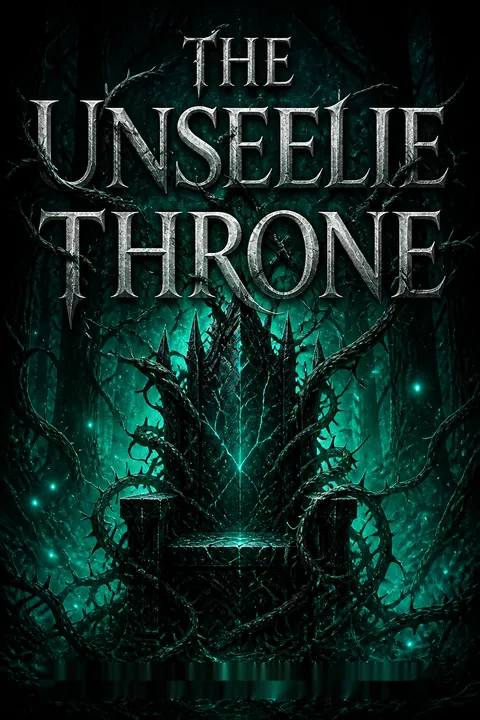
The Unseelie Throne receives mixed reviews averaging 3.98 stars. Critics cite excessive purple prose, repetitive internal dialogue, and slow pacing, particularly Abigail's prolonged maze-solving. Many find the writing flowery and the plot stagnant across books. However, fans praise the dark romance between Abigail and villain Valroy, their chemistry, and explicit scenes. The cliffhanger ending frustrates readers invested in the conclusion. Character development concerns focus on Abigail's indecisiveness, while Valroy's vulnerable yet villainous nature captivates. Side characters and world-building receive appreciation, though some desire more lore depth.
People Also Read


Characters
Abigail Moore
The thorned Seelie brideAbigail is a human-born woman transformed into a powerful Seelie fae, with the ability to shift shape and command the living vines of the Gle'Golun. Her instinct is to protect individuals in immediate danger, even when political leaders insist that sacrifice is necessary. This compassion gives her courage, but it also makes her vulnerable to being used by courts that frame obedience as duty. She is drawn to Valroy's danger and tenderness while remaining troubled by his plans for war. Her central struggle is not simply whether to trust him, but whether she can love him without surrendering her moral judgment.
Valroy
The Maze's brutal princeValroy is the half-demon ruler of the Maze and heir to the Unseelie throne. He is a formidable warrior, a manipulator of space and its creatures, and a collector of human objects, music, and suffering. His humor and theatrical cruelty conceal a deep need to be loved without being treated as a source of power. He pursues Abigail possessively, yet her resistance and independent choices fascinate him. His affection does not erase his ambition or the brutality of his rule, making him both a genuine emotional presence and a danger to the worlds he hopes to conquer.
Anfar
The lonely sea demigodAnfar is a powerful sea creature who can take human form and prefers solitude, drink, and sleep to court politics. His grief over Astasha reveals how loneliness can attach itself to an imagined relationship as much as to a person. He is one of the few beings who understands Valroy's inner life, though he does not excuse the prince's cruelty. Beneath his dour manner is a capacity for quiet companionship and unexpected tenderness. His growing connection with Perin challenges his habit of treating isolation as the only safe choice.
Bayodan
The calculating goat lordBayodan is a powerful Unseelie lord, tactician, and trusted companion to Valroy. His composure and political intelligence make him an influential voice when the courts debate war, succession, and Abigail's safety. He cares for Abigail and offers her protection, but he also believes he must make difficult choices on her behalf. That mixture of affection and control makes him difficult to read: he can be a guardian, a strategist, and a participant in the court's games at once. His bond with Cruinn is openly affectionate and rooted in long familiarity.
Cruinn
The glass-bodied shapeshifterCruinn is a shapeshifter whose body resembles finely joined glass, and Bayodan's mate. Playful and physically affectionate, Cruinn helps Abigail navigate Unseelie customs and offers her comfort without demanding that she understand everything at once. Their loyalty to Bayodan shapes their political judgments, while their connection to Abigail makes the consequences of those judgments personal. Cruinn brings warmth and humor to a court where tenderness often appears alongside danger.
Perin
The sailor selkiePerin is a selkie and former sailor who lives in a modest cabin near the shore. His practical kindness makes him a confidant for Abigail, who can speak openly with him about her fear and attraction. He is not a court strategist and often feels out of his depth among powerful fae, but his honesty and willingness to help matter precisely because he has little political authority. His growing friendship with Anfar offers both men a chance to choose companionship rather than accept loneliness.
Puck
The shaggy court companionPuck first appears as a large, affectionate dog who follows Abigail and quickly wins her protection. His playful habits soften tense moments, while his presence puts her loyalty to the test when Valroy demands a guarantee against betrayal. Puck's devotion to Abigail and his wary relationships with other Unseelie creatures make him an unpredictable presence in the Maze. He connects the story's court intrigue with its quieter scenes of care and companionship.
Titania
The guarded Seelie queenTitania rules the Seelie court with a sharp political intelligence and a strong instinct for protecting her people. She distrusts Valroy and views Abigail as both a powerful asset and a possible danger. Her methods include secrecy, manipulation, and strategic patience, which can make her seem callous even when she believes she is preventing a greater catastrophe. Titania is not simply a benevolent counterweight to Valroy: she has her own agenda and expects others to serve it. Her changing relationship with Abigail is shaped by respect, rivalry, and the demands of leadership.
Oberon
The Seelie kingOberon is Titania's husband and fellow ruler of the Seelie court. He tends to remain less outspoken than his queen, but he stands beside her in decisions that affect both courts. His position embodies the authority and political history of the Seelie, while his relationship with Titania gives the royal partnership a personal dimension. He is a quiet presence whose actions carry weight because of the office he holds.
Belladonna
The twilight prophetBelladonna is one of the prophetic hags, a figure who appears briefly to Perin with an obscure request concerning Anfar. She speaks through parables and directions that make little sense until events unfold, reflecting the limits of foresight as much as its power. Belladonna does not explain the future in a way that removes choice; she gives Perin a task and leaves him to discover its meaning.
Gregory Wilson
The headless inventorGregory Wilson is a headless inventor living among the Unseelie. Curious and generous with his knowledge, he shelters Abigail when she has nowhere safe to wait. His eager explanations reveal the intellectual life of the courts beyond their rivalries, while his unusual body makes him an outsider even among supernatural beings.
Astasha
Anfar's lost companionAstasha is a sea creature whose death leaves Anfar grieving. His reflections suggest that he loved the possibility of companionship as much as the person herself. Though she is absent from the main action, her loss exposes the loneliness Anfar tries to bury beneath drink and solitude.
Plot Devices
The Maze
A shifting moral landscapeValroy's domain changes its paths, distorts magic, and contains dangers ranging from underground lakes to living forests. Abigail cannot solve it by drawing a map, so she must encounter its inhabitants and understand what sustains it. The Maze is also linked to Valroy, making damage to its structures affect him. Its shifting geography turns exploration into a test of judgment: each place presents a different version of the violence and survival that shape Unseelie life.
The Gle'Golun
Life that can also destroyThe Gle'Golun is a living growth of crimson flowers and thorned vines bound to Abigail. It gives her a means of fighting and protecting others, but the Maze can suppress its power. When Abigail forces it through that resistance to destroy the Weeping Willows, the vines free the captives while also turning her act into a political strike. The power makes her compassion materially effective, but it also gives her actions consequences beyond the people she intends to save.
The Cursed Dagger
An answer with a hidden costThe black dagger is said to inflict wounds that cannot heal and kill beings otherwise beyond death. Titania gives it to Abigail as a possible means of ending Valroy, but Abigail later returns it rather than enter marriage with a concealed assassination plan. Titania had previously taken the blade from Valroy, who received it from a mysterious visitor. Its use at the wedding exposes the difference between being wounded and being killed, changing the balance of power in the courts.
Fae bargains
Desire turned into leverageDeals, conditions, and exchanges govern relationships across the Maze and both courts. Valroy repeatedly frames Abigail's choices as bargains, while she learns to negotiate on terms that protect people beyond herself. The central political agreement trades her marriage for a thousand years without war from Valroy. Because a bargain can secure a pause without changing anyone's beliefs, it becomes both a real form of protection and a fragile substitute for reconciliation.
The Weeping Willows
Torture made into a forestThe willows are created by binding Seelie prisoners together with iron and letting the trees slowly grow around them. Abigail experiences their fear through the roots and destroys the grove, ending their suffering. The grove is more than a shocking discovery: it makes the cruelty of Valroy's rule impossible to treat as rumor, and its destruction creates the immediate political crisis that leads to Abigail's capture, the marriage bargain, and the courts' final confrontation.
Maze of Shadows Series
About the Author
Other books by Kathryn Ann Kingsley




Download PDF
Download EPUB
.epub digital book format is ideal for reading ebooks on phones, tablets, and e-readers.








