

Plot Summary
The Florist Becomes a Bride
Maia Fremont,1 a hardworking florist who inherited her father’s fragile business, arrives at the castle hoping her flowers for Princess Liliana’s4 wedding will win her lasting royal work. Instead, Liliana4 reveals that her father5 is marrying her to a troll prince2 for peace, then uses her magic to draw Maia1 into a sudden bond of sympathy.
When Liliana4 learns Maia1 cannot marry without losing control of her business, she appoints her as the only attendant who will stand beside her at the altar. Maia1 hesitates, but the princess’s4 authority and the king’s5 reputation make refusal feel dangerous. Maids dress Maia1 in a white gown and veil, leaving her with the uneasy sense that the ceremony has begun to turn her into someone else.
Maia’s first turning point is not a choice between two suitors but a collision between economic independence and inherited power. She has protected her business by refusing marriage, yet the royal household can recast her labor and body as instruments of state policy. Liliana’s apparent intimacy is both recognition and coercion: she sees Maia’s loneliness, then uses that knowledge to enlist her. Maia’s silence is a learned survival strategy, not consent, although the court treats it as such. The bridal clothing makes this political substitution visible before Maia understands its purpose.
Ragnar’s Unwanted Prophecy
Far from the castle, Ragnar2 prepares to obey his troll king6 and marry a human princess.4 He believes the treaty will give his people stronger elven blood and help secure peace, but resents being chosen because he considers humans weak and repellent. His brother Gunnar3 tries to steady him, while the Bone Reader7 confirms a fated bond and warns that Ragnar’s2 prejudices will make the road harder.
She marks his eyes with white paint, urging him to see the bride beyond his expectations. Ragnar2 rejects the warning. He imagines a powerful troll wife and assumes the human princess4 will be a political burden, not a partner. The ceremony now has two unwilling participants, each entering it with a different understanding of what is being exchanged.
Ragnar’s contempt is not merely personal taste; it is a defensive history compressed into a judgment about an entire people. He has made his healer’s identity depend on serving the troll community, so the marriage feels like a demand that he sacrifice both desire and cultural loyalty. The Bone Reader’s warning places perception at the center of his arc: the obstacle is less the bride’s appearance than his insistence on seeing only what confirms his inherited hatred. His preparation contrasts with Maia’s because he knows the political plan, yet remains blind to the individual who will bear its cost.
The Wrong Bride Leaves
At the wedding, King James5 positions the veiled Maia1 beside Liliana4 and holds a knife against her back when she tries to leave. The trolls arrive expecting the princess,4 and Ragnar2 sees a small, broad-shouldered bride whose face remains hidden. He performs the binding ceremony but tells Maia1 privately that he will never truly be her husband.
Then he carries her from the castle and runs for the forest with his people. The royal crowd does not stop him. Maia1 is left to understand that the king5 has traded her life for his daughter’s4 freedom, while Ragnar2 believes the human court has cheated his people by offering the wrong woman. Neither yet knows the whole deception, and their marriage begins inside mutual distrust.
The wedding makes political violence intimate: James’s knife turns Maia into a substitute body, while the public ceremony gives that coercion the appearance of consent. Ragnar’s private rejection adds a second injury, because he mistakes Maia for an agent of the betrayal rather than its victim. Both kingdoms treat the marriage as an exchange between rulers, but Maia is the person forced to inhabit its consequences. The image of the silent king watching her departure exposes the treaty’s hollowness. Peace has been announced in public, yet its first act is abandonment.
A Forest Without Welcome
Ragnar2 carries Maia1 through unfamiliar woods at a punishing run, and the jolting journey leaves her sick, injured, and terrified of what the trolls will do when she explains the mistake. He assumes she is the princess4 and interprets her reluctance to argue as weakness or deceit.
At their first camp, he orders her into a stream to wash and laughs at her unfamiliarity with troll customs. His brother Gunnar3 challenges Ragnar’s2 treatment, prompting the healer to bring Maia1 clothes and consider her needs.
When Ragnar2 expects her to flee, he finds her scrubbing herself in the water instead. Their attempts to understand one another remain clumsy, but Maia1 begins to see that his cruelty is mixed with concern, while Ragnar2 starts noticing that she endures more than he expected.
The journey makes cultural difference physical: Maia’s body absorbs the force of troll speed, cold water, and a world in which she has no knowledge or status. Ragnar’s expectation that a proper troll wife should fight reveals that he mistakes learned quiet for a fixed character flaw. His small acts of care do not erase his aggression, but they complicate his own self-image as someone who simply despises her. Their early bond develops through practical misreadings, not instant trust. Each has to learn that the other’s behavior carries a history the first glance cannot explain.
Blood Reveals the Bond
As they approach the Blood Witch,8 Maia1 finally erupts at Ragnar2 for demanding that she speak up after a lifetime of being punished for doing so. He welcomes the anger, then leads her to the witch,8 who reads their magic through blood. Ragnar’s2 healing power is strong; Maia’s1 is a modest green gift connected to plants, not the deep elven power promised by the treaty.
The trolls waiting outside turn against her, and Ragnar2 initially drags her toward them, believing she has deceived his people. The Blood Witch8 insists Maia1 is his destined mate. Ragnar2 chooses her over the mob, carries her away, and hears her explain that she is a florist, not a princess.4 He believes her and accepts her as his wife.
The blood reading overturns the political measure by which Maia has been judged. Her worth cannot be calculated through royal ancestry or the scale of her magic, yet the trolls initially use those measures to condemn her. The Blood Witch reframes the mismatch as relational: Ragnar may need the kind of strength Maia offers, rather than the strength he expected. Maia’s outburst matters because it is the first time her anger becomes legible as agency. Ragnar’s choice to protect her is not yet proof of trust, but it is his first decision that places a person above the treaty’s arithmetic.
A Home Bought at a Cost
Ragnar2 brings Maia1 into Trollveggen, where King Egil6 calls her an abomination and orders her killed for being the wrong bride. Ragnar2 refuses and gives up his claim to his family’s inheritance rather than surrender her.
His brother Gunnar3 supports him, though the king6 allows Maia1 to live only provisionally. The pair leave the court for Ragnar’s2 home, passing a city of glowing trees, markets, and carved stone. Maia1 begins to understand that trolls have a complex society far beyond human tales of cave-dwelling monsters.
At home, Ragnar2 gives her emerald earrings and explains the honor of decorating a troll wife. His gestures soften their hostility, and their first intimacy follows, but he still has much to learn about what Maia1 needs beyond protection.
Ragnar’s public sacrifice gives material force to a bond he has barely begun to understand. He relinquishes inherited security, not because the king’s judgment has changed, but because he refuses to let Maia’s life be treated as expendable. Trollveggen’s beauty also unsettles the hierarchy of civilization that Maia grew up accepting: the supposedly bestial people have craft, infrastructure, and communal life. Yet romance does not automatically dissolve power differences. Ragnar’s gifts are meaningful within troll custom, while Maia still needs the right to define herself and her place in the home.
The Mountain Breaks Open
A violent quake tears through Trollveggen, collapsing homes and injuring its people. Ragnar2 spends hours healing the wounded until his magic nearly empties, and Maia1 joins him by coaxing medicinal plants to produce more healing leaves.
Her small gift lets them treat more survivors together. The quake proves to have been caused by humans attacking an entrance to the mountain; Ragnar2 joins a war band that retaliates against the attackers. While he is away, trolls blame Maia1 for the disaster because she is human.
At the market, they throw stones and threaten her until Ragnar2 returns and shields her. He admits responsibility for the human deaths, then heals her injuries and apologizes. Their growing affection now has to survive the violence of both peoples.
The disaster turns the couple’s bond into a working partnership. Maia’s magic does not rival Ragnar’s healing, but it changes what his power can accomplish, challenging the assumption that value must arrive in overwhelming force. Their joint care also makes her vulnerable: trolls accept her help when they need it, then retreat into suspicion when fear resurfaces. Ragnar’s retaliation shows that he remains capable of the cruelty he condemns in humans. The scene refuses a simple moral division. Care and violence coexist in both communities, and intimacy requires each partner to face what their own side has done.
The Garden Opens Its Ear
After a troll mob turns against her, Inkeri10 brings Maia1 into the women’s community and explains that a troll wife belongs to the mountain and its shared magic, not simply to her husband. Maia1 then meets Birger,12 a hostile old gardener who lets her work only after discovering that plants answer her in ways other trolls cannot hear.
Their bond gives Maia1 a place where her talent matters. Meanwhile, the king’s6 council debates how to respond to human attacks. Some generals want to confine Maia1 or treat her as expendable, but Ragnar2 objects. The conflict sharpens the stakes around her new home: she is gaining skills and relationships even as Trollveggen’s leaders debate whether a human can ever belong there.
The women’s glen offers Maia a model of kinship that is not organized around possession. Inkeri’s teaching makes the title of troll wife expansive, linking it to communal power and inherited care. Birger’s garden then gives that idea sensory proof: Maia’s gift is not simply a tool she uses, but a capacity for attention that others have overlooked. His initial hostility tests whether she can remain present without shrinking herself. At the same time, the council’s suspicion shows how quickly a community under threat can convert uncertainty into exclusion, even toward someone already helping it survive.
A Parley Turns Bloody
When another troll war band returns injured from fighting humans, Maia1 helps Ragnar2 treat the wounded and asks him to try speaking with a nearby village before retaliating. Gunnar3 leads the parley, but the human commander mocks the trolls and a disguised woman shoots him with a dart. The trolls charge.
Maia1 stays behind until a soldier knocks her down and tries to assault her; she stabs him in the thigh, and Ragnar2 kills him before he can hurt her further. The battle leaves both sides bloodied, while Maia1 is shaken by the force she used to survive. Ragnar2 takes her away to recover, tells her about his lost friend Bjorn,13 and admits how deeply he fears failing those he loves.
Maia’s appeal to negotiate is a test of whether empathy can interrupt a cycle that both societies have normalized. The village’s staged treachery answers her hope with violence, but the story does not treat her hope as foolish; it reveals the cost of trying to act ethically when others exploit restraint. Her self-defense marks a change from submission to chosen action, though survival leaves her frightened by her own capacity for force. Ragnar’s confession about Bjorn lets care move in both directions. He is no longer only the protector who carries her; he becomes someone willing to expose the guilt that governs him.
The Bride Returns to Court
As the trolls prepare for more attacks, Ragnar2 tells Maia1 that King Egil6 wants her to return to the human court. The king6 hopes her testimony will persuade human women to join Trollveggen willingly, strengthening troll magic through freely chosen bonds. Maia1 doubts that women will risk leaving familiar lives for a people they have been taught to fear, but she agrees to try.
Troll wives prepare her for the journey, and Ragnar2 walks beside her through the town where she once lived. At the banquet, Maia1 tells the gathered crowd that the trolls are skilled, generous, and willing to offer women a home and agency. Her appeal angers the men in the room. King James5 responds by triggering an explosion that throws Maia1 and the trolls into chaos.
The mission gives Maia a public voice, but it also risks turning her into another instrument of statecraft. The difference is that she chooses to speak and shapes the appeal around women’s lived constraints, not only the kings’ bloodline ambitions. Her message contests the human court’s ownership of women as well as its propaganda about trolls. The explosion exposes the limit of persuasion when power depends on keeping people afraid and uninformed. James does not answer her claims; he attacks the gathering itself. The return to court therefore tests whether Maia’s new agency can operate inside the institution that first silenced her.
The King’s Hidden Arena
The blast leaves the trolls scattered, and James’s5 guards capture Ragnar,2 Gunnar,3 and other survivors. Maia1 wakes in a hidden cell after clearing a drug from her body with borrowed healing magic. There she meets Rose,14 a traumatized prisoner who explains that the king5 forces captives to fight in a labyrinth for noble spectators.
In another cell, Ragnar2 learns the same truth from Princess Liliana,4 who reveals that the arena is meant to turn trolls into entertainment. Maia1 chooses to be sent to the troll fighter rather than remain passive under the guards’ control. When James5 brings the surviving prisoners into the arena, Ragnar2 spots Maia1 among the women offered as prizes and begins fighting toward her.
The labyrinth is the human court’s hidden underside, a place where its polished manners depend on organized torture. The explosion and imprisonment strip away the public language of diplomacy, exposing the king’s actual use for both trolls and women. Maia’s choice to seek the troll is an act of imperfect but deliberate solidarity: she does not know who will receive her, yet refuses to wait helplessly for the guards to decide. Ragnar’s recognition of her makes the arena emotionally legible amid its spectacle. Their bond becomes a source of orientation in a system designed to reduce every person to a contestant or prize.
The Bull Remembers His Name
As Ragnar2 fights through the labyrinth, he encounters the Bull,13 a horned troll so consumed by years of imprisonment that he attacks without recognizing anyone. Ragnar2 recognizes him as Bjorn,13 the friend he believed dead, and briefly reaches the man beneath the rage. Bjorn13 agrees to help Ragnar2 escape, though the two separate to continue fighting.
The guards give Maia1 to Bjorn,13 expecting a monster to frighten her, but she approaches him without screaming. She reminds him that Ragnar2 and the trolls did not abandon him knowingly. Bjorn13 reveals a weak section of wall and an escape plan that requires him to stay behind and distract the guards. Maia1 accepts the plan, even as she understands what it will cost him.
Bjorn’s transformation into the Bull dramatizes what captivity does when survival is reduced to repeated violence. His lost identity is not a natural expression of troll nature but an imposed condition, maintained for the entertainment of spectators. Maia’s refusal to treat him as a monster offers a different kind of recognition from the arena’s gaze. Her compassion does not erase his agency or his anger; it gives him room to remember both. The escape plan turns memory into action. Bjorn’s willingness to risk himself is meaningful precisely because he chooses it, rather than being used as a prize or spectacle.
A Wall Gives Way
With the arena fight worsening, Maia1 jumps from the spectators’ stands into the labyrinth and runs toward Ragnar,2 who has been searching for her. They reunite, and Ragnar2 tells her he loves her before she can explain Bjorn’s13 plan. The trolls break through the weakened wall and find a route out.
Bjorn13 arrives with another injured prisoner, then refuses to leave with them; he stays behind to delay the guards so the others can escape. Ragnar2 takes Maia1 and the surviving trolls through the passage while Bjorn13 turns toward the approaching soldiers. The escape succeeds, but it does not free everyone. The trolls return to their mountain carrying injuries, grief, and the knowledge that Bjorn13 remains in the king’s5 hands.
The reunion brings the romantic arc to its clearest expression, but it does not cancel the danger surrounding them. Ragnar’s declaration matters because it names a commitment he has long acted on without articulating. Maia’s arrival, however, is equally active: she crosses the boundary between audience and arena instead of waiting to be rescued. The broken wall turns an overlooked structural weakness into an exit, while Bjorn’s decision to remain behind prevents escape from becoming a clean victory. Love here is not a private refuge from political violence; it is a reason to keep returning for those still trapped.
A Rescue Still Unfinished
Back in Trollveggen, Maia1 and the rescued trolls recover in enchanted hot springs, where troll wives help them wash away blood and regain a sense of safety. Rose14 struggles with her injuries but later tells King Egil6 that her sister is a trained court spy who may help the trolls reach the prisoners still held in the labyrinth.
Egil6 agrees to pursue that route rather than launch another costly assault. He also reveals that his son may be the key to a new royal future and needs a half-elven bride. Ragnar2 and Maia1 have escaped, but Bjorn13 remains captive, and the king’s6 plan to recruit human women still rests on dangerous political ground. The book closes with rescue possible, not yet secured.
Recovery is shown as communal work rather than a single act of healing. The hot springs, the wives’ care, and Rose’s decision to contribute knowledge each answer violence with a different form of support. Yet restoration is incomplete: Bjorn’s captivity and the king’s strategic marriage plan preserve the political structures that created the crisis. Rose’s proposal offers a less destructive route, but it depends on trust across a divided court and on the willingness of another woman to act. The ending therefore gives the characters a direction without granting closure. Hope becomes a plan that must still be tested.
Epilogue
Still imprisoned, Bjorn13 endures a public whipping for the amusement of the human nobility. This time, however, he remembers who he is: the son of a troll father and a human mother who taught him kindness. The memories keep the arena from claiming his whole identity.
Bjorn13 knows the trolls escaped and expects them to return. He survives the torture by holding to that hope, then promises himself that he will one day come back and destroy the place that has made a spectacle of his suffering.
Bjorn’s epilogue changes the meaning of survival from mere biological endurance to the recovery of a self that captivity tried to erase. His mother’s love complicates the simple division between human and troll: the human is not only a source of danger but also the source of his earliest moral memory. He remains physically trapped, so the scene offers no false liberation. Instead, memory becomes a form of resistance and the basis for future action. The final promise turns the labyrinth’s violence back toward its makers, keeping the story’s unresolved political conflict alive.
Analysis
The novel makes the struggle over marriage inseparable from the struggle over political power. Maia1 is first treated as a substitute for a princess,4 then as a possible source of magical value, and finally as a person whose consent and judgment matter. Her development does not depend on becoming fearless. She remains frightened, but increasingly acts while afraid: she argues with Ragnar,2 helps injured trolls, defends herself, and speaks publicly against the human court. That progression distinguishes agency from invulnerability.
Ragnar’s2 transformation is equally tied to how he sees. He begins by reducing humans to an enemy category, even while his work as a healer requires him to respond to individual suffering. Maia1 exposes the contradiction. His protective instincts initially take the form of control, but intimacy requires him to listen, disclose his own failures, and let her choose risk. Their bond is most meaningful when it enlarges each person’s capacity rather than replacing one ruler’s authority with another’s.
The book refuses to make either people innocent. Human violence appears in James’s5 deception, the attack on Trollveggen, and the arena; troll violence appears in retaliation and in the community’s willingness to blame Maia.1 This symmetry does not imply equal power or equal responsibility. It shows how fear becomes institutional when rulers convert people into leverage and communities mistake vengeance for safety. The women’s fellowship, Maia’s1 garden work, and shared healing offer alternative forms of social power based on care and mutual participation. Yet the ending leaves the political conflict unresolved. Bjorn13 remains captive, and the proposed rescue still depends on a risky alliance. Hope is present as work to be done, not a problem already solved.
Review Summary
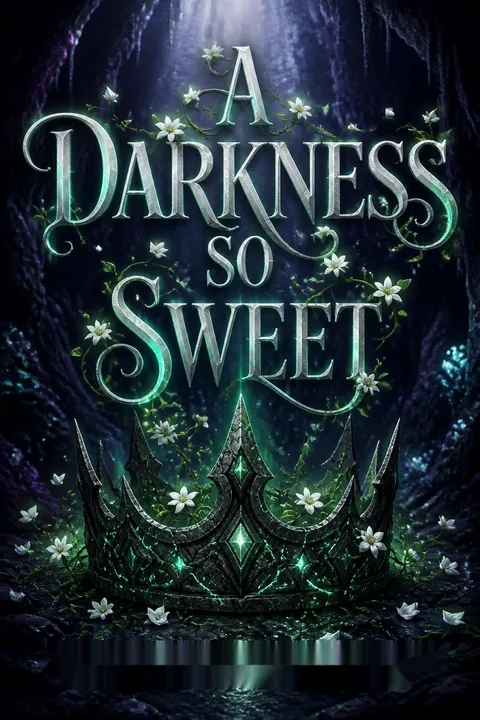
A Darkness So Sweet receives polarized reviews with an overall 3.98 rating. Positive reviews praise the spicy romance, unique troll lore, world-building, and Ragnar as a devoted romantic lead with strategic piercings. Critics frequently cite problematic pacing, underdeveloped enemies-to-lovers progression, and Ragnar's initial cruelty without adequate apology. Many readers dislike the passive protagonist Maia, noting she acts as a doormat and fails to establish boundaries. The couple spends minimal time together, making their love feel rushed and unearned. Some found plot inconsistencies and contradictions regarding troll values versus their treatment of Maia frustrating.
People Also Read


Characters
Maia Fremont
The stubborn flower keeperMaia is a florist who inherited her father’s business and built her life around keeping it independent. Years of being told to stay quiet have taught her to appease powerful people, even when she knows something is wrong. Her gift for tending plants reflects a wider habit of noticing needs others ignore. Maia is curious, observant, and more resilient than she initially believes, but she is not fearless; her courage grows through repeated choices to speak, help, and defend herself. Her relationships challenge her learned assumption that love and safety require self-erasure.
Ragnar
The reluctant troll healerRagnar is a powerful healer chosen to marry a human as part of a treaty intended to strengthen troll magic and protect his people. He is dutiful, blunt, and shaped by generations of conflict, so his contempt for humans initially feels to him like common sense. His healer’s instinct to care for others exists alongside a fierce capacity for violence, creating a tension he does not easily resolve. Ragnar values honor and keeps his promises, but must learn that protection is not the same as deciding for someone. His relationship with Maia1 forces him to question which parts of his hatred are inherited and which he is willing to keep.
Gunnar
Ragnar’s teasing brotherGunnar is Ragnar’s2 broad-shouldered brother and a capable warrior who uses humor to ease tension. He is loyal to his family and community, though the conflict forces him to confront how suspicion can distort that loyalty. He often sees what Ragnar2 avoids acknowledging, especially when his brother’s feelings become obvious. Gunnar’s relationship with Ragnar2 is affectionate but not passive; he challenges him, argues with him, and stands beside him when the risks become real.
Liliana
The half-elven princessLiliana is King James’s5 daughter, a princess with considerable elven magic and a life governed by dynastic expectations. She recognizes loneliness in Maia1 and responds with a mixture of apparent warmth and royal authority. Her polished beauty and courtly status conceal a more calculating awareness of how power works around her. Liliana’s choices reveal the limited freedom available even to someone born at the top of the human kingdom.
King James
The human kingJames rules the human kingdom through intimidation, political calculation, and a public image of authority. He treats the proposed peace with the trolls as a tool for managing threats rather than a commitment to mutual safety. His control over Maia1 and Liliana4 shows how royal power reaches into private lives, especially women’s. James is patient when deception serves him and openly ruthless when events escape his control.
King Egil
The troll kingEgil leads Trollveggen and carries responsibility for a people whose safety and future are tied to scarce magical lineages. He is pragmatic, proud, and willing to make hard political choices, but his strategic thinking can reduce individuals to what they might provide the kingdom. His relationship with Ragnar2 reflects the tension between royal authority and personal honor. Egil’s rule is shaped by the fear that one failed decision could leave the trolls exposed to human attack.
The Bone Reader
The keeper of prophecyThe Bone Reader uses bones and ritual to interpret the future for the trolls. She confirms Ragnar’s2 coming bond while warning that his own prejudice will make the relationship harder. Her authority comes from a tradition that can guide decisions but cannot force people to understand what those decisions mean.
The Blood Witch
The reader of magicThe Blood Witch reads magical strength and connection through blood, using a painful ritual to reveal what ordinary observation cannot. Her predictions place value on compatibility and balance rather than simple power. She is respected and feared because her knowledge can challenge the expectations of both rulers and families.
Hulda
The generous troll croneHulda is an elder troll wife who helps newcomers understand the customs and communal bonds of Trollveggen. She is warm without being sentimental, and her support gives Maia1 an early experience of belonging that does not depend on pleasing a man. Hulda treats tradition as something carried between generations, not merely a list of rules.
Inkeri
The guiding troll wifeInkeri is a troll wife with courtly knowledge and a sharp understanding of the women’s role in Trollveggen. She can be severe when Maia1 misunderstands her people, but she also offers practical care and a community to lean on. Inkeri’s guidance helps Maia1 distinguish belonging from ownership and gives her room to recover at her own pace.
Rota
The lively troll maidenRota is a young troll maiden whose humor and curiosity make her an easy companion for Maia1. She belongs to the women’s circle that supports Maia1 and helps explain how troll customs connect individuals to a wider community. Rota is lighthearted without being careless, and her affection makes unfamiliar rituals feel less intimidating.
Birger
The prickly garden keeperBirger is an elderly gardener known for his sharp tongue and fierce protectiveness toward his plants. He expects people to prove themselves through attention and work rather than charm. His demanding mentorship gives Maia1 a chance to develop her unusual connection to plant life. Beneath his surliness is a deep respect for the living things he tends.
Bjorn
Ragnar’s vanished friendBjorn is a warrior from Ragnar’s2 past whose strength and history are entangled with old guilt. He represents the cost of mistakes made in the name of care, as well as the possibility that a person can be more than the damage done to him. His human mother’s influence is part of his moral inheritance, complicating the antagonism between the two peoples.
Rose
The wary human survivorRose is a human woman who has endured prolonged captivity and learned to read danger quickly. Her fear is not weakness but an adaptation to conditions designed to make resistance costly. She is cautious about trusting others, yet retains a strong concern for people still trapped in the same system. Her knowledge of the human court gives her a perspective the trolls lack.
Gorm
The hardline troll generalGorm is a military leader who argues for decisive retaliation against human attacks. His fear for troll families and children makes him favor security over accommodation. He represents the pressure on the kingdom to answer violence with more violence.
Bodil
The outspoken war generalBodil is an experienced general who speaks bluntly about the military danger posed by humans. She has little patience for sentiment when she believes the community is at risk, and her judgments expose how easily strategic thinking can become contempt for an individual.
Plot Devices
The treaty wedding
A peace built on substitutionThe marriage agreement is meant to join human and troll kingdoms and strengthen troll bloodlines through elven ancestry. King James5 corrupts that arrangement by placing Maia1, a florist, beside Liliana4 and allowing the trolls to believe she is the princess4. The wedding gives the political deception a public form, while the private coercion behind it remains hidden. This device drives Maia1 and Ragnar2 into forced proximity, reveals how each court treats women as political resources, and makes the possibility of genuine consent central to the later conflict.
The mate prophecies
Destiny challenged by prejudiceThe Bone Reader7 and Blood Witch8 interpret the future and the characters’ magic through ritual. Their separate readings confirm a bond between Ragnar2 and Maia1 even though she lacks the powerful elven blood the trolls expected. Prophecy does not make their relationship effortless or remove their choices. Instead, it confronts Ragnar2 with the possibility that his assumptions are inadequate and gives him a reason to reconsider abandoning Maia1. The prophecies frame destiny as a responsibility that must be lived rather than a guarantee of harmony.
Shared troll magic
Two gifts become stronger togetherThe Blood Witch’s8 ritual links the couple’s magic, allowing each to strengthen and eventually draw on the other’s abilities. Ragnar’s2 healing power can work alongside Maia’s1 connection to plants, extending the reach of medicine during emergencies. Their bond also gives the troll king6 evidence that willing human and troll pairings may produce different results from earlier coercive unions. The magic therefore functions as both an intimate expression of trust and a political resource that rulers may try to claim. Its ethical meaning depends on whether the people involved are willing.
Trollveggen’s hidden world
A feared place becomes homeThe mountain kingdom initially exists in human imagination as a dangerous darkness filled with monsters. Maia’s1 arrival reveals a thriving city of carved homes, markets, magical lights, gardens, and communal customs. This contrast changes her understanding of the trolls and gives her a place to build relationships beyond Ragnar2. Trollveggen also remains physically vulnerable: the humans discover an entrance and attack it, turning the mountain’s beauty into something its people must defend. The setting joins the emotional question of belonging to the political struggle over who has a right to safety.
The king’s labyrinth
Captivity turned into spectacleKing James5 hides a fighting arena beneath the human castle, where captured trolls are forced to battle for the amusement of masked nobles. Human women are assigned to surviving fighters as prizes, making the labyrinth a concentrated expression of the court’s power over bodies. Its walls and changing passages appear designed to prevent escape, but Bjorn13 knows of a weakened section that can be broken. The labyrinth drives the final conflict, brings Ragnar2 face to face with his lost friend, and forces Maia1 to choose action within a system built to deny her agency.
About the Author
Other books by Emma Hamm







Download PDF
Download EPUB
.epub digital book format is ideal for reading ebooks on phones, tablets, and e-readers.








