


Plot Summary
The Goatpath to Lux
Lore, a half-elf with growing command of moon magic, travels the Stygian Peaks with Abraxas, the last known dragon, and their companions. They carry two eggs sealed inside a box that only the King of Umbra can open, so they seek the warlock who made its spell. The King remains a danger, and Abraxas must hide his dragon form to avoid drawing attention.
Their party includes Goliath, a practical dwarf; Beauty, an injured fighter; Zephyr, the King's hidden half brother; and Draven, an elf who has recently joined them. The climb is slow, but they reach the foot of the mountains and Lux Brumalis, a city of witches and warlocks that may hold the answer.
The quest begins with a problem that is both magical and intimate: Abraxas has spent years guarding the eggs, but protection has become another form of captivity. Lore’s willingness to enter Lux Brumalis signals her practical courage, while the group’s dependence on one another makes the journey feel less like a lone hero’s quest than a fragile household moving through hostile territory. The eggs concentrate the stakes into something tangible. Their future depends on finding the person whose old spell still controls them.
A Midnight Mistake
Lore arranges a private meeting with Abraxas, hoping they can finally act on their feelings. Instead, Draven arrives first. The young Ashen Deep elf has followed the group because he wants to be near Lore, and he takes her mistaken welcome as an invitation. Abraxas catches Draven holding her and nearly kills him before Lore convinces the dragon that nothing has happened.
The encounter destroys their long-awaited moment and leaves Abraxas ashamed of how possessive his anger became. Draven stays with the travelers, then tells Abraxas that elven acceptance could give Lore a life the dragon cannot offer. Abraxas rejects the idea, but the possibility lodges in his mind and unsettles his confidence in their future.
The interruption exposes how differently the three characters understand belonging. Draven sees Lore’s elven lineage as a route back into a community that rejected her; Abraxas sees love as a bond he must defend; Lore refuses to be treated as property or a prize. Her intervention protects Draven and forces Abraxas to confront the violence beneath his devotion. The rivalry matters less as a romantic contest than as a test of whether Abraxas can love Lore without confusing care with ownership.
The City Wants a Price
Lux Brumalis opens its golden gates without guards, but its enchanted streets and lavish shops conceal a ruthless market in magical power. At a bar, Lore and Abraxas learn that people may trade information for pieces of magical creatures.
A moving portrait identifies Lore as the celebrated savior of Tenebrous, drawing greedy patrons toward her and revealing that the rebellion has made her famous without her consent. The couple reunites with Goliath and Draven as a crowd closes around them; Beauty and Zephyr return separately and cannot reach the group.
A hooded woman leads Lore, Abraxas, Goliath, and Draven through the bar's hidden exit to her emerald manor. She introduces herself as Amalia and offers shelter in exchange for dragon scales and help finding the warlock.
The city makes exploitation look beautiful. Its magic decorates ordinary life, yet the same culture treats living beings as ingredients and public fame as a claim on Lore’s body. The portrait also shifts her danger from private pursuit to public spectacle: people can identify her before she has chosen what her reputation means. Amalia appears more honest than the crowd because she states her price, but her bargain repeats the city’s governing logic. Safety is available, though never without someone trying to own a piece of it.
The Moon Is Drained
Amalia finds a dark witch who claims to know the King's warlock, and the witch insists on meeting Lore alone. Lore recognizes the risk but accepts, hoping the information will free the eggs. At a hidden garden, the coven siphons her Silverfell moon magic into vials, then leaves her unconscious without revealing the warlock's location.
Abraxas witnesses the extraction but waits, knowing an attack could endanger Lore and expose them all. A younger dark witch secretly shields him from the coven and helps him carry Lore away in daylight, when the witches sleep. Abraxas returns to Amalia, forces her to reveal the warlock's last known refuge, the Hall of Heroes, then kills her after she refuses to release his companions.
Lore’s sacrifice is not a simple mistake. She knowingly accepts danger because she believes the group’s need outweighs her safety, but the coven exploits that ethic by making payment a trap. Abraxas’s delay is equally consequential: restraint protects Lore from a chaotic rescue, even as it leaves him watching her suffer. His killing of Amalia restores a crude balance of power, but it also unsettles his sense of himself. Goliath’s later concern about the lives Abraxas has taken gives that act a moral cost beyond its immediate necessity.
A Brief Unburdening
Lore wakes in the witches’ meadow, and she and Abraxas quarrel over her decision to go alone and over Draven’s claim that elves could offer her acceptance. Abraxas also fears that Lore will be forced into ruling Umbra after the eggs hatch, while she wants no throne. Neither can resolve the argument, so Lore leaves for a forest beyond Lux Brumalis.
Abraxas follows; the two finally reconcile beside a hidden pool and spend three days alone together. When they return to the others, the city gates have turned red in response to Amalia’s death, making it clear they cannot safely go back. The group sets out for the Hall of Heroes, carrying the warlock’s name and Lore’s still-unanswered fears.
Their reconciliation does not erase the conflict; it gives them a way to continue while disagreeing. Lore’s choice is explicit: she values a life with Abraxas more than the acceptance Draven imagines for her, and she rejects the political identity others may impose on her. The three days away from the group are not an escape from responsibility so much as a rare interval in which desire and affection are not interrupted by crisis. The sealed city then closes that interval, returning them to a journey in which private love must coexist with public danger.
Death in the Prophecy
At the Hall of Heroes, a protected archive maintained by monks, Lore searches for records of an elven prophecy while Abraxas and Draven investigate strange magical rooms. A young monk guides her toward the elven shelves, where she finds a prophecy about a half-elf who will overturn the kingdom and die. Its final warning says the half-elf walks beside Death.
Draven tells her his mother believed the prophecy concerned Lore, explaining why many elves feared her. Lore resents that Abraxas had kept this from her and insists she will choose her own future. At the same time, Abraxas follows a trace of the warlock’s distinctive magic away from the Hall and discovers a secluded hut by the sea.
The prophecy converts Lore’s private uncertainty into a public narrative about what she is supposed to become. It also explains the prejudice against her without excusing it: the elves have treated her as a threat before she could define herself. Her anger at Abraxas is about more than withheld information. He has made a choice on her behalf, repeating the kind of control she has resisted throughout her life. The Hall’s archives suggest that history can preserve knowledge, but they cannot decide what a person should do with it.
The Warlock's Quiet Hut
Abraxas confronts the warlock, Lindon, whom he remembers as the man who helped the first King enslave him. Lindon is now an old, isolated man who admits he used forbidden power, faked his death, and fled when he could no longer bear what he had become. He does not ask Abraxas to forgive him.
Abraxas refuses to kill him, recognizing that death would grant Lindon the escape he seems to want, and instead demands that he undo the curse on the egg box. Lindon explains that he transferred the box’s summoning power to the King, but agrees to break its protective curse if Abraxas brings it to the hut. Abraxas returns to Lore with their only chance to free the eggs.
Lindon’s remorse complicates, but does not cancel, his responsibility. He names the harm he caused without claiming that regret repairs it, leaving Abraxas to decide what justice should mean now. The dragon’s refusal to kill him is a departure from the immediate, retaliatory instinct he showed with Amalia. It is not forgiveness; it is a refusal to let Lindon choose an easy ending. Their bargain also shifts the story from hunting a villain to asking whether the person who caused the imprisonment can use what remains of his power to undo it.
Two Dragons Wake
Lindon spends the last of his magic breaking the curse, and Lore opens the box. Two scaled eggs remain, one emerald and one sapphire, with an empty space where a third once rested. Abraxas asks Lore to choose one as her own; she takes the sapphire egg. On a hidden island, he buries both eggs in heated sand and uses dragon fire to prepare them for hatching.
The emerald egg opens first, revealing a boy. The sapphire egg stays still until Lore speaks to the frightened hatchling and breaks its shell with moon magic. She names the girl’s bond with her, while the dragons later identify themselves as Hyperion and Nyx. Nyx finds a sea cave’s memory pool, revealing that the young dragons carry knowledge their father no longer remembers.
The eggs turn abstract hope into responsibility. Lore does not merely witness a return of dragons; she chooses a bond that will require care, and she intervenes when tradition would leave Nyx trapped inside a shell. Her action is compassionate, but also an act of cultural change: inherited practice proves inadequate for the creature before her. The missing third egg prevents the scene from becoming a complete restoration. The new family begins amid loss, with the young dragons carrying memories that Abraxas cannot supply and a future none of them can yet control.
The Savior Returns
Abraxas brings Lore, Beauty, and the dragonlings to the Umbral Castle, where magical creatures cheer Lore as a savior. Margaret, the rebellion’s leader, has turned that image into a rallying point and now warns that Zander plans to retake the throne with an army of Umbral Knights.
The rebellion has only a few hundred trained fighters, while the King can summon far more shadow soldiers. Lore challenges Margaret’s reliance on reputation and proposes using magical light to expose and destroy the Knights.
She also recruits Thalia, a lamia spellcaster, who helps gather other practitioners. Abraxas trains the fighters, while Beauty and Zephyr build a close partnership and care for Hyperion and Nyx, giving Lore a family to protect as battle approaches.
The castle makes Lore’s unwanted fame material: people kneel to her before they know what she wants. Margaret treats that reverence as a useful instrument, while Lore tries to turn it toward collective action rather than personal authority. Her plan depends on teaching magical creatures to trust their own innate powers instead of measuring themselves against witches. The domestic subplot matters too. Beauty and Zephyr’s growing closeness, alongside their care for the hatchlings, creates a fragile alternative to the King’s hierarchy, one based on mutual protection rather than bloodline and command.
The Dwarves Below
Lore and Goliath search for old dwarven weapons beneath the battlefield, hoping to arm the rebellion. They find a vast underground forge where dwarves are chained to their stations and forced to manufacture armor and weapons for Zander’s army. An Umbral Knight patrols the workers, and the hidden stockpile reveals that the King knows where the rebels intend to fight.
Lore and Goliath escape toward their own camp, but shadows rise through the tunnels and briefly possess Goliath. Lore’s pleas help him force the magic out of himself. Abraxas returns from scouting Solis Occasum with news that Zander has released a massive wave of shadow magic toward them. Draven arrives with a hundred Ashen Deep fighters, and their Matriarch joins the defense.
The forge exposes the material machinery behind Zander’s power. His army is not only conjured from shadows; it is built through the coerced labor of the very people it will attack. The discovery also punctures the rebels’ assumption that secrecy gives them an advantage. Goliath’s struggle against possession mirrors the larger conflict in miniature: survival requires resisting an invading force from within, not merely striking an enemy outside. The Ashen Deep’s arrival broadens the rebellion, but the King’s head start means their alliance begins under immediate pressure.
The Night of Armor
The rebels prepare to use archers and Abraxas’s fire to destroy the Knights’ armor, leaving the shadows without vessels. The Ashen Deep can use their soul-hungry grimdags to kill the spirits permanently, but Lore is told to remain in camp. She disobeys when she hears the battle worsening, raises a moonlit blade, and rallies frightened fighters into a second attack from behind.
She teaches them to work in pairs: one fighter opens the armor, another smashes it. The tactic slows the Knights, but the fighting grinds on through the night. Zander arrives, and a giant Knight brings its mace down toward Lore. Goliath takes the blow instead, saving her and dying on the battlefield. Lore turns on the killer with a power she has never used before.
Lore’s decision to enter the battle comes from a moral refusal to let others bear danger while she remains a symbol at a safe distance. Her tactical command grows from the same instinct: she makes frightened fighters more effective by giving them a specific task and a partner. Goliath’s death makes that courage painfully costly. He has been Lore’s longest-standing source of grounded affection, the friend who remembers her before prophecy and legend. His loss converts the battle from an abstract defense of a people into a personal reckoning with what violence takes.
The Half-Elf's Last Stand
Lore destroys the giant Knight with moon magic, then refuses Draven’s attempt to pull her from the field. She enters a circle of light and confronts Zander alone. Silverfell spirits, including her mother, guide her as she blocks his attacks and turns his cruelty back against him. Her power overwhelms the King’s stolen shadows; she drives a hand through his chest and tears out his heart.
The spellcasters’ light then strips the battlefield of the Umbral Knights. As Lore lifts Zander’s heart, she becomes radiant magic and disappears. Abraxas reaches the circle too late. The King is left dying, Goliath is dead, and the rebellion has won, but no one can find Lore’s body.
The prophecy reaches fulfillment in an unsettling form: Lore destroys the existing order, but the victory appears to consume her as well. Her transformation is not a simple triumph over fate, because she knowingly walks toward a danger she fears and leaves her loved ones without certainty. Yet the climax also shows that she is not merely the passive subject of a prediction. She chooses to fight, and her own power, ancestral memory, and tactical decisions shape how the prophecy becomes real. The victory saves the kingdom while denying Lore the ordinary future she wanted.
The Empty Place
After the light fades, Abraxas finds Zander alive only long enough to say Lore is gone. Draven carries Goliath’s body, and the survivors gather around the circle where Lore vanished. Silver magic spreads across the ground like roots, forming a bright mark at the place of her last stand. Abraxas finally feels the full force of his loss and collapses in grief.
The Ashen Deep and the other magical creatures kneel with him, mourning the woman they had once treated as a distant savior. The King’s army is defeated, but the victory cannot return either Lore or Goliath. Abraxas is left with the dragonlings and a promise to protect them, while the survivors begin to face a future without their leader.
The aftermath refuses the usual equation of victory with emotional resolution. Zander’s defeat ends his immediate rule, but the people who fought for freedom must live with the deaths that made it possible. The circle of light becomes a public memorial, turning Lore’s disappearance into a shared loss rather than a private wound belonging only to Abraxas. The gathering also corrects the distance created by her legend: the creatures who once worshipped her now mourn her as someone whose choices and love bound her to them.
Epilogue
Unable to live among the places that hold Lore’s memory, Abraxas decides to leave Umbra with Nyx and Hyperion and search for the dragons’ homeland, Dracomaquia. He takes Lore’s mother’s dagger as the one object he cannot leave behind, and has the young dragons carried in metal cages because they are not yet able to fly.
Beauty, Zephyr, Draven, and the survivors try to persuade him to stay, but he believes distance is the only way to keep grief from breaking his mind. He flies toward the sea without looking back. The final glimpse of the battlefield shows a faint pulse of magic, leaving open the possibility that Lore’s story is not finished.
Abraxas’s departure is both an act of care and an act of avoidance. He chooses the dragons’ survival over his own wish to follow Lore into death, but he cannot remain in a place where every corridor recalls her. Taking her dagger preserves connection while refusing the comfort of her old home. The cages sharpen that contradiction: he is moving the young dragons toward freedom by temporarily restricting them. The final pulse of magic does not undo the grief or promise a return. It simply keeps the story’s last door ajar.
Analysis
Brave Heart binds a political struggle to a series of intimate acts of care. Lore’s central problem is not simply that a prophecy predicts her death; it is that nearly everyone around her tries to define what her life should mean. The elves treat her as a dangerous half-blood, the witches as a source of extractable power, Margaret as a public emblem, and Abraxas sometimes as someone whose safety he must control. Lore’s resistance is clearest when she chooses for herself: she enters the witches’ territory, claims a dragon as her own, intervenes to help Nyx hatch, and leads frightened fighters rather than remaining an image of salvation.
The novel repeatedly contrasts power that consumes with power that sustains. Lindon’s old magic and the witches’ extraction depend on taking from others. Lore’s moon magic also draws from an external force, but its moral meaning changes through how she uses it: to defend, to connect, and ultimately to destroy the King’s shadow army. Abraxas’s arc likewise depends on distinguishing force from responsibility. His instinct is to punish threats, yet Goliath’s challenge and Lindon’s encounter make him consider what violence leaves behind. His restraint toward Lindon is not absolution. It is a refusal to let vengeance dictate every ending.
Family in this story is made through commitment rather than blood. Goliath has been Lore’s chosen kin since childhood; Beauty and Zephyr build trust across political divisions; Abraxas and Lore become parents to dragons they did not create. The eggs’ release offers a future for a nearly extinguished people, but the missing egg and Lore’s apparent sacrifice prevent restoration from becoming easy triumph. The ending leaves the survivors with both a victory and an absence. Its final flicker of magic preserves uncertainty, while the emotional truth remains plain: rebuilding a world does not return the people who gave themselves to save it.
Review Summary
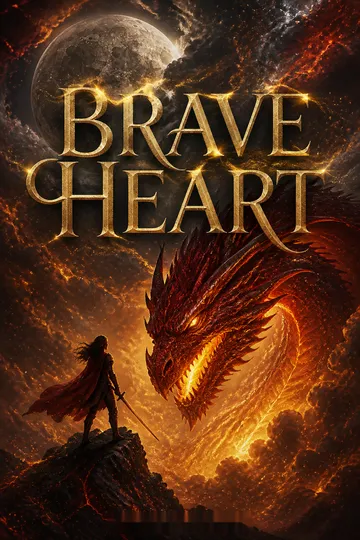
Brave Heart receives overwhelmingly positive reviews, with readers praising its emotional depth, character development, and engaging plot. Many found it the best in the series so far, with a perfect balance of adventure, romance, and fantasy elements. Readers particularly loved the relationship between Lore and Abraxas, as well as the introduction of baby dragons. The book's ending left many in tears and eagerly anticipating the next installment. Some criticized pacing issues and character inconsistencies, but overall, the book was highly rated for its immersive storytelling.
People Also Read


Characters
Lore
The reluctant saviorLore is a half-elf of the Silverfell line, raised in the poverty and danger of Tenebrous. She survives through quick judgment, stubborn courage, and a distrust of power that asks others to pay its price. Her moon magic marks her as unusual, while elven rejection has taught her to build a family by choice. She loves Abraxas but refuses to let his protectiveness decide her life for her. Lore is drawn toward the people who suffer unseen, even when helping them puts her own safety at risk. Her central tension is between her longing for a quiet, private life and the growing demands others place on her as a symbol.
Abraxas
The last crimson dragonAbraxas is an ancient dragon who has spent centuries guarding the last dragon eggs and serving the rulers who controlled him. He is powerful, watchful, and more accustomed to solving danger with force than with conversation. His attachment to Lore gives him a life beyond duty, but it also awakens possessiveness and fear of abandonment. He struggles to trust witches, mortals, and even his own judgment after a warlock once deceived him. Beneath his imposing nature is a creature capable of tenderness, loyalty, and shame. His challenge is to distinguish protecting those he loves from controlling what they choose.
Goliath
Lore's steadfast anchorGoliath is a dwarf, a seasoned survivor of Tenebrous, and Lore’s oldest friend. He offers practical advice, humor, and the kind of loyalty that does not depend on her being heroic. He can challenge Abraxas without flinching and notices when Lore is carrying more fear than she admits. His affection is active rather than sentimental: he helps with camp, watches over the younger companions, and keeps the group moving when the journey stalls. Goliath’s groundedness gives Lore a connection to her earlier life, before rebellion and prophecy made her a public figure.
Margaret
The rebellion's strategistMargaret is a powerful Darkveil elf who leads the rebellion and believes survival requires discipline, secrecy, and control. She is politically sharp and willing to shape a public story if it helps gather support. Her methods often place her at odds with Lore, whose authority comes less from command than from personal trust. Margaret’s exhaustion and overuse of shadow magic reveal the cost of treating herself as the only person capable of carrying a cause. She is neither a simple ally nor an uncomplicated antagonist; she and Lore share an aim while disagreeing about who should decide how it is achieved.
Draven
The Ashen Deep heirDraven is a young elf of the Ashen Deep, raised in isolation and shaped by a culture that prizes strength, secrecy, and inherited memory. His attraction to Lore initially makes him careless about her boundaries and fuels tension with Abraxas. He is also observant, resourceful, and more capable of loyalty than his guarded manner suggests. Draven wants to protect his people and prove himself worthy of their legacy, though he sometimes reaches for the harsh methods that legacy has taught him. His relationship with Lore gradually shifts from pursuit and rivalry toward a more complex alliance.
Beauty
The quick-witted fighterBeauty is a human fighter and one of Lore’s closest companions. A twisted ankle slows her during the mountain journey, but it does not diminish her sharp mind or her willingness to challenge the others. She is practical, warm, and protective, often helping the group remember that a person can be injured without becoming a burden. Her growing closeness with Zephyr gives the story a quieter thread of trust and young love amid political danger.
Zephyr
The hidden royal brotherZephyr is the King’s half brother, hidden away for years and left without the training or confidence expected of a royal. He is cautious, gentle, and uncomfortable with conflict, but his kindness allows him to form a sincere bond with Beauty. A charm he found helps conceal the dragon eggs from the King’s summons. Zephyr’s life raises the question of whether family history determines a person’s character, or whether a different upbringing can create a different kind of leader.
Zander
The deathless KingZander is the ruler of Umbra, sustained by a curse inherited from his father’s reign. He uses shadow magic to command the Umbral Knights and has learned to treat fear as a tool of government. As a boy, he was isolated and abused by a father who discouraged ordinary friendships, leaving him hungry for approval and inclined to dominate those around him. His history helps explain his need for control, but it does not excuse the harm he chooses to inflict. Zander is both a political enemy and a portrait of how cruelty can be reproduced across generations.
Lindon
The vanished warlockLindon is the warlock whose magic helped bind Abraxas and seal the dragon eggs. His reputation was built on formidable knowledge and service to the old King, but his story raises questions about what happens when a practitioner recognizes the person their power has made them. He lives apart from the institutions that once gave him influence. Lindon is difficult to trust because his past actions caused lasting harm, and his regret cannot erase the consequences. His presence forces Abraxas to consider whether justice must always end in death.
Amalia
The emerald witchAmalia is a wealthy green witch of Lux Brumalis who understands that magical power is traded as readily as money. She offers shelter to Lore’s group while pursuing resources that could strengthen her own spells. Her frank bargaining distinguishes her from the city’s hidden predators, but it does not make her trustworthy. Amalia’s ambition grows from a sense that the city’s magic is controlled by an elite, leaving her hungry for the leverage to compete.
Nyx
The sapphire dragonlingNyx is the sapphire dragon hatchling Lore chooses to bond with. She is quiet, perceptive, and carries an unusual connection to ancestral memories. Her first instinct is to hide from a frightening world, but she responds when Lore promises to stay beside her. Nyx’s early awareness gives her a seriousness beyond her age, though she remains a young creature who needs care, play, and protection.
Hyperion
The emerald dragonlingHyperion is the emerald dragon hatchling, bold and restless from the moment he breaks free of his egg. He admires Abraxas and quickly assumes a protective posture toward Lore and Nyx. His confidence often exceeds his size, leading him to challenge people he has only just met. Hyperion represents the dragons’ return as a living, growing responsibility rather than an abstract hope.
The Ashen Deep Matriarch
The ancient clan leaderDraven’s mother leads the Ashen Deep, an elven people who have survived by withdrawing from the wider world. She is formidable, wary, and responsible for a community with a long memory of violence. Her support for the rebellion is conditional on protecting her people, but she recognizes that the King’s advance threatens more than one clan. She represents a tradition that can choose solidarity without giving up its identity.
Thalia
The lamia spellcasterThalia is a lamia with a talent for spellcasting who approaches Lore to offer help. Initially self-conscious about her appearance and abilities, she responds to Lore’s insistence that magical creatures need not measure themselves by witches’ standards. She helps gather other spellcasters and embodies the quiet confidence Lore tries to awaken in the rebellion.
Plot Devices
The sealed dragon egg box
Keeps the future locked awayThe box holds the last known dragon eggs and is bound by a spell created by Lindon. Its curse makes opening it dangerous, while its summoning power remains linked to the King. Zephyr’s charm helps the group keep it from being recalled during their journey. The box makes Abraxas’s hope concrete and gives the quest its practical goal: find Lindon, break the curse, and allow the eggs to hatch. Its removal from the King’s control does not restore the dragons automatically; the eggs still need heat, protection, and a willing bond.
The half-elf prophecy
Makes fate a personal threatAn elven prophecy describes a half-elf who will overturn the kingdom and die, accompanied by Death. Lore finds it in the Hall of Heroes and learns that some elves have long interpreted it as a warning about her. The prophecy shapes Abraxas’s fear and Lore’s anger at being denied information about her own life. Rather than functioning as a simple prediction, it creates pressure between self-determination and the stories communities impose on people. Its meaning remains connected to Lore’s choices, her power, and the sacrifices made in battle.
Silverfell moon magic
Turns inheritance into actionLore’s Silverfell heritage gives her access to power drawn from the moon, visible as silver light on her skin. Dark witches can siphon this magic, making Lore valuable and vulnerable in Lux Brumalis. The same power later lets her shield herself, rally fighters, and confront Zander. Its importance is not merely that it makes Lore stronger. It connects her to ancestors and a lineage that rejected her, allowing her to reclaim inherited power on her own terms.
The Umbral curse
Gives Zander an endless armyThe King’s curse binds shadow spirits to armor, producing the Umbral Knights and allowing Zander to replenish his forces. Destroying an armored body can disperse a Knight temporarily, but the shadow may seek another vessel. Grimdags wielded by the Ashen Deep can destroy the spirits more permanently, while Lore’s light magic ultimately attacks the darkness itself. The curse makes the conflict unequal: the rebels have limited fighters, while Zander can exploit shadow and coerced labor to create more soldiers.
Dragon memory pools
Restore what history erasedAfter hatching, Nyx finds a glowing sea cave where crystals and lights carry ancestral memories. The memory pool allows her to recover knowledge that Abraxas has lost after centuries without other dragons. It gives the hatchlings a connection to their people beyond their father’s personal recollections and suggests that dragon history survives in scattered places across Umbra. The device expands the dragons’ future from simple survival toward rediscovering traditions, while also establishing Nyx as unusually receptive to the past.
The Dragon of Umbra Series
About the Author
Other books by Emma Hamm

Download PDF
Download EPUB
.epub digital book format is ideal for reading ebooks on phones, tablets, and e-readers.








