


Plot Summary
The Empty Place Beside Him
After Lore dies in battle, Abraxas flies from Umbra with Nyx and Hyperion, his young dragon children, locked in human-made cages. He has promised Lore he will keep them safe, but grief keeps distorting the flight: he sees her riding his back, then remembers she is gone.
The loss threatens the mind of a crimson dragon, whose mate bond makes separation a danger as well as a sorrow. At a small island where he once sheltered with his mother, he releases the children to rest and struggles to keep moving. Lore’s absence leaves him with one duty he can still fulfill: take their children to a place where no one can hunt them.
The opening makes grief operational. Abraxas cannot simply mourn; he must carry two vulnerable dependents across an ocean while his own mind begins to fracture. His promise to Lore gives him structure, but it also binds survival to duty, a pattern that will challenge him throughout the book. The cages sharpen the irony: the children are protected by human craft even as Abraxas curses the mortals who endangered his family. His first act of care is therefore also an act of exile.
The Dead Return
While Abraxas grieves across the sea, Lore claws out of the earth where her companions have been mourning her. To her, the interval feels like seconds; Beauty tells her she has been gone for six months. Lore’s hands turn translucent, one eye has become silver, and memories return in broken flashes until she recalls sacrificing herself against the King.
She rides to the castle expecting Abraxas, only to learn he has taken their children to Dracomaquia because he feared grief would make him dangerous. Margaret is maneuvering to claim the throne, while Zephyr and the others warn that the kingdom is unstable. Lore refuses to stay and solve their crisis. She leaves to find Abraxas before his grief consumes him.
Lore’s return refuses the usual reassurance of resurrection. Her body is present, but its altered appearance and her missing memories make survival feel provisional. She also returns to a world already assigning her a public meaning, goddess, ruler, solution, while she is focused on a private bond. Her refusal to remain is not simple selfishness: it is a rejection of the familiar bargain in which her needs disappear beneath everyone else’s emergencies. Yet the unresolved kingdom ensures that escape cannot remain uncomplicated.
Three Eggs in Stone
Abraxas reaches Dracomaquia and finds Rowan, an ancient elf who has waited there with Tanis, the last amethyst dragon. The island holds the ruins of a massacre that destroyed its dragon community, but it also holds hope: Tanis has sealed three eggs in a mountain cave.
She asks Abraxas to help recover and hatch them so dragons can survive beyond his own children. He agrees, though he refuses her suggestion that he replace Lore’s bond with another. As he clears the cave, Nyx and Hyperion explore their dragon ancestry and grow rapidly, eventually learning human forms.
Grief, isolation, and the mate bond then leave Abraxas feverish and weak. His children show him their transformation, giving him a reason to endure, even as he struggles to believe he can live without Lore.
Dracomaquia offers Abraxas a future, but not an easy cure. Tanis’s eggs transform his grief into purposeful labor, while her proposal that he redirect his attachment exposes how differently dragons understand loss and continuity. He refuses to treat Lore as replaceable, yet the children’s growth forces him to recognize obligations that outlast his own despair. Their new human forms make that tension visible: they are no longer only dependents to protect, but people becoming capable of choosing their lives.
A Stolen Passage
Lore slips out of the castle at night, stealing a difficult-to-tame stallion and packing for the journey to Dracomaquia. Draven, her dark-elf companion, catches up despite her attempt to leave him behind; he fears watching her disappear again and insists on helping. At the harbor, Lore finds Allura, a siren captain who once owed her a favor.
Allura initially rejects the dangerous voyage, but agrees when Lore offers whatever payment she wants and explains that Abraxas is waiting. On the ship, Allura’s touch leaves Draven spellbound, so Lore locks him in their cabin until the enchantment passes. As the ship leaves Umbra, Lore discovers that her hands reveal hidden marks on the sailors’ map, showing hazards no one else can see.
The escape changes Lore’s solitude into a negotiated dependence. She chooses the journey herself, but it succeeds only through Draven’s persistence and Allura’s skill. Each relationship carries a different kind of friction: Draven’s care feels intrusive, Allura’s help has a price, and Lore’s own emerging power complicates her claim to be merely an elf seeking her partner. The map revelation turns her altered body into practical knowledge, suggesting that her new abilities are not only dangerous; they may expose what ordinary perception misses.
Leviathan at Sea
Weeks into the crossing, a storm moves against the wind and a leviathan rises beneath the waves. The creature drains the air of wind, leaving Allura’s ship trapped, while the sailors recognize that escape is unlikely. Lore orders the sails raised and supplies the wind herself, driving the ship across the sea as the leviathan pursues.
When the beast catches them, its tentacles crush the deck and pull sailors into the water. Draven escapes his cabin and severs a tentacle; Allura fights beside him while Lore carves a spell circle into the deck. She channels lightning through it, striking the leviathan until it releases the ship and sinks. The storm clears, but the battered vessel reaches Dracomaquia with its crew diminished.
The sea battle makes Lore’s power both rescue and cost. She chooses to use it because the crew has no alternative, but the victory is not clean: people die, the ship is damaged, and her magic seems to act with a will beyond her understanding. Draven’s physical intervention and Allura’s command matter as much as Lore’s spell, preventing her from becoming a solitary savior. The episode also tests her return to agency: she acts decisively, yet cannot be certain what that agency is drawing from her.
Shore of the Living
At dawn, the ship beaches on Dracomaquia’s shore, and Lore sees Abraxas waiting above the cliffs. She swims to him; he fears she is another vision until her touch and scent convince him she is real. Their reunion breaks months of grief into relief and renewed love.
When they reach the clearing, Nyx and Hyperion, now enormous dragons, face the sailors defensively. Arrows fly, but Lore’s magic destroys them before they can strike. She runs through Abraxas’s protective wing and embraces her children, who recognize her as their mother.
Abraxas lowers his threat only after Lore explains that the sailors brought her across the sea. Their family is together again, but the crew’s fear of dragons and Lore’s uncontrolled power remain immediate dangers.
The reunion resolves the book’s emotional engine without restoring the past. Abraxas and Lore meet as changed people: he has survived by carrying duty, while she has returned with a body and power neither understands. The children’s recognition gives their reunion a wider consequence, turning a lovers’ return into a family’s recovery. Yet arrows still fly, and Lore must stop them with magic she cannot control. Intimacy and danger arrive together, so the shore is not a safe ending but a new shared beginning.
The Price of Power
After Lore uses her power to shield the dragons, she suffers a violent episode that leaves her convulsing. Rowan gives her poison and herbs to force the magic to fight itself, warning that using power on the scale of killing a leviathan has a price he cannot predict. While unconscious, Lore meets the memory of her mother, who tells her that she must recover what happened during her time away or her body may fail.
Lore wakes beside Abraxas but remembers little. She knows she returned from a peaceful, dark realm, yet cannot explain why she came back or what changed her. Abraxas promises to help her find answers, while Lore fears that the power inside her is becoming something other than herself.
The story reframes magic from a gift into a bodily negotiation. Lore’s strength protects others, but the consequences are paid through her own nervous system, and no healer can identify a simple remedy. Her mother’s appearance offers information without comfort: memory is necessary, but access to it remains blocked. Abraxas can support Lore, not solve the mystery for her. That distinction matters, because their bond cannot substitute for her own understanding of the force inhabiting her.
The Buried Archive
Restless under the camp’s insistence that she recover, Lore sneaks away with Hyperion to run through the forest and see Nyx’s sapphire pools. There she notices a concealed stairway beneath the earth. Inside, she finds an ancient archive of elven scrolls, spells, and histories preserved behind runes.
A projection of Tanis appears and explains that the old elves prepared the chamber for someone like Lore, though neither of them understands why it exists. Tanis recognizes Lore’s swelling power as an urgent problem and asks to meet her in person. Abraxas finds Lore in the archive before she can carry away all the scrolls. Instead of scolding her, he helps gather them and agrees to take her to Tanis.
The archive gives Lore a task that is neither combat nor passive recovery. Her need to contribute becomes a route into the buried history of her people, and the chamber makes that history materially present through scrolls she can touch and translate. Hyperion’s companionship also begins to repair the time she missed with her children through shared exploration rather than apology alone. The unexplained preparations for Lore complicate her sense of choice: others anticipated her, but she still has to decide what their knowledge means.
Eggs Mistaken for Betrayal
Abraxas brings Lore to meet Tanis in her dragon form, where three ancient eggs rest against her. Lore sees a crimson egg beside the amethyst dragon and assumes Abraxas has chosen another mate to continue dragonkind. She leaves before Tanis can explain, hurt by what looks like a betrayal even though she wants the dragons to survive.
Abraxas does not understand her anger until Draven points out how the scene appeared to a woman returning after six months away. He takes Lore aside and explains that Tanis hid the eggs centuries before Abraxas was born; they are not his. Lore admits she leapt to conclusions, and Abraxas reassures her that his bond has never shifted. Their reconciliation lets Lore rejoin the work of rebuilding dragonkind.
The misunderstanding is credible because it arises from unequal information, not a sudden failure of affection. Lore sees evidence that activates her fear of replacement; Abraxas sees a mission whose history he has not explained. Draven’s role is to translate perspective, showing that intimacy can require an outside witness when grief has narrowed both partners’ attention. The scene also refuses an easy opposition between love and collective survival. Lore wants dragons to flourish, yet still needs reassurance that she is not being asked to disappear inside that future.
A Crimson Egg Awakens
When Tanis’s eggs begin hatching, the gold and amethyst hatchlings move, but the crimson egg remains still. Tanis’s maternal instincts make her suspicious of anyone approaching, yet she allows Lore to try. Lore senses that the unborn dragon is afraid to leave the quiet realm where it has rested for centuries.
Rather than force it awake, she shares her own memories of choosing life and tells it that another crimson dragon, Abraxas, is waiting. The hatchling responds and begins to fight its way out. As Rowan and Tanis welcome the three newborns, Lore collapses from another surge of power. Rowan warns that her condition is worsening, and Abraxas carries her back to camp as Tanis prepares to enter Lore’s mind.
Lore’s success depends on recognizing fear rather than treating hesitation as weakness. She does not overpower the hatchling; she offers it a relationship and a reason to risk the unknown. The act echoes her own return to life, connecting birth and resurrection through a choice made in the presence of uncertainty. Yet the same power that lets her reach the egg overwhelms her afterward. Her gift is relational in its best use, but its cost makes connection inseparable from danger.
The Wall in Memory
Tanis enters Lore’s mind to find the memories she cannot reach alone. In a misty realm, Lore recognizes a stone wall she built herself, while Tanis helps her understand that another dangerous episode may be fatal. Lore follows ancient runes that direct her to find the old elves, then later meditates at a ruined shrine with Abraxas.
When Nyx slips from the platform, Lore’s power catches her, but the rescue pulls Lore out of her body and reveals a golden thread joining mother and daughter. Her grandmother appears and leads her toward the hidden memories. Lore crosses the broken wall into a luminous glade and sees the women of her ancestry, who tell her that her power is tied to their connections, not hers alone.
The mind’s wall literalizes a defense that once protected Lore but now obstructs survival. Tanis can guide her toward it, yet cannot make the passage on her behalf. The shrine’s crisis with Nyx reveals that the power responds most readily to attachment, while the golden thread gives that attachment a visible structure. Lore’s discovery of ancestral women revises the fantasy of solitary exceptionalism: her capacity is inherited and shared, but the burden of learning how to use it has fallen to her.
The Mothers’ Tangle
In the ancestral glade, Lore learns that generations of women gave her their magic, but tangled connections made it surge unpredictably through her body. She must unravel the threads rather than cut them. Once she does, her mother shows her what is happening in Umbra: Margaret has seized control, imprisoned Zephyr, and allowed magical people and poor families to suffer while the kingdom deteriorates.
Lore refuses to treat her earlier victory over the King as the end of her responsibility. She reaches Zephyr through the vision and promises to bring him home. The revelation gives the ancestral gift a purpose beyond Lore’s private survival: she must use the power with care, return to the kingdom, and confront the damage left behind.
The threads turn inheritance into both resource and responsibility. Lore’s power became dangerous not because connection itself is harmful, but because its interdependence was ignored and left knotted. Her family’s correction is therefore not to make her independent, but to help her work with relation rather than against it. The vision of Umbra punctures the fantasy that defeating one tyrant automatically repairs a political system. Lore’s next duty is not imposed by prophecy alone; she chooses it after seeing specific people suffer.
One Last Journey
Lore wakes after three days, telling Abraxas that the dangerous episodes are over and that she understands where her power comes from. She also tells him Zephyr is imprisoned and Beauty’s safety is uncertain, so they must return to Umbra. Abraxas agrees, though he had hoped to build a quiet life with her on Dracomaquia.
They say goodbye to Nyx and Hyperion, who will remain with Tanis and Rowan until they can travel safely. Draven chooses to stay behind with the dragons, while Allura and her crew sail away. Abraxas carries Lore on his back as they set out, leaving their reunited children and the growing dragon family behind. The book ends before they reach Umbra, with Margaret’s rule and Zephyr’s imprisonment unresolved.
The ending completes the intimate arc without pretending that love can insulate the couple from public consequence. Abraxas can now choose to live beyond grief, but that does not mean he and Lore choose ease over justice. Their departure is a conscious return to responsibility, balanced by a painful separation from children they have only just regained. The unresolved destination keeps the political conflict open, while the family’s changed composition signals that the next struggle will be undertaken with more allies and a firmer sense of choice.
Analysis
Torn Heart places private grief inside a problem of collective survival. Abraxas’s mate bond makes his loss physically destabilizing, while Lore’s return forces both lovers to confront the limits of devotion: love can sustain life, but it cannot by itself resolve political collapse, inherited violence, or the demands of a threatened species. Their reunion is therefore a midpoint in responsibility, not an escape from it.
The novel repeatedly tests the difference between care and control. Abraxas protects through vigilance, sometimes trying to keep Lore from risk; Lore protects through action, often treating her own body as expendable. Neither strategy is sufficient. Their relationship improves when they begin to recognize the other’s fear without confusing it for authority. The same problem appears in parenting: Nyx and Hyperion need guidance, but their rapid growth requires their parents to let them become agents in their own right.
Magic is presented as relational and embodied. Lore’s power does not belong to her as a simple tool. It moves through ancestral ties, responds to love, and exacts a physical price when she uses it without understanding. The ancestral threads offer a model of inheritance that is neither a chain nor a clean break. Lore must loosen the knots while preserving the connections. This is a specific alternative to the fantasy of the solitary chosen hero: exceptional action matters, but it is made possible by a network of prior lives and present relationships.
The political plot extends that insight. Defeating the King liberated magical people from one form of rule, but Margaret’s ambitions and Zephyr’s imprisonment show that victory did not repair the institutions left behind. Lore’s decision to return to Umbra recognizes that freedom needs sustained care, not merely a decisive battle. The book closes before that work begins, leaving its central ethical question active: how can people who have spent their lives surviving learn to build a future without reproducing the coercion that made survival necessary?
Review Summary
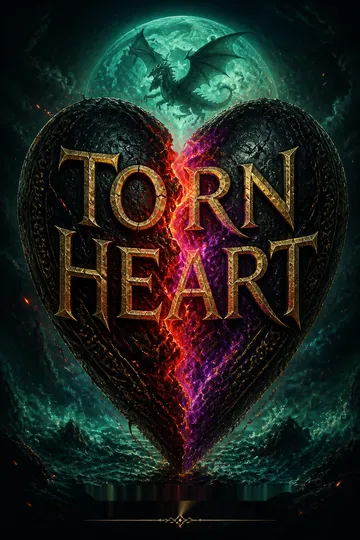
Torn Heart is the emotionally charged fourth book in Emma Hamm's Dragon of Umbra series. Readers praise its exploration of grief, family dynamics, and character growth. The story follows Abraxas coping with loss and Lore's return with new powers. While some found pacing issues, most appreciated the depth of character development and world-building. The book serves as a bridge between previous installments and the upcoming finale, leaving readers eager for the series conclusion. Overall, fans found it a heartfelt and engaging addition to the series.
People Also Read


Characters
Lore
Resurrected elven fighterLore is an elven survivor shaped by a life of danger, coercion, and hard choices. She is quick to act, suspicious of anyone who tries to claim authority over her, and fiercely protective of the people she considers family. Her devotion to Abraxas is profound, but it does not erase her appetite for movement or her resistance to being made into a symbol. She tends to turn fear into action and guilt into self-punishment, which can put her at risk. Her central tension is learning that accepting help does not mean surrendering agency, and that responsibility for others need not require abandoning herself.
Abraxas
Grieving crimson dragonAbraxas is a crimson dragon whose size and strength are matched by a deep capacity for devotion. He thinks of protection as a promise that must be honored, even when it costs him rest, safety, or emotional honesty. The loss of Lore destabilizes him because their mate bond makes love a foundation of his identity, not merely a relationship. As a father, he is vigilant and sometimes overprotective, especially when his children face risks he understands better than they do. His challenge is to remain present without turning care into control, and to discover that a future can hold grief without being ruled by it.
Nyx
Sapphire dragon daughterNyx is Abraxas and Lore’s daughter, a sapphire dragon with an unusually deep store of inherited knowledge. She is observant, self-possessed, and impatient with being treated as younger or less capable than she feels. Her confidence can tip into bluntness, particularly when she believes she sees a practical truth others avoid. Beneath that sharpness is a strong loyalty to her family and a desire to understand the history that has shaped her people. Nyx’s growth asks her to balance the advantage of knowledge with the emotional work of learning, trusting, and allowing herself to remain young.
Hyperion
Emerald dragon sonHyperion is Abraxas and Lore’s son, an emerald dragon whose playfulness often hides a thoughtful sensitivity. He is drawn to forests, movement, and the memories carried by living trees. Compared with Nyx, he is less intent on proving his maturity, though he is just as curious about the world and eager to test his limits. He responds strongly to affection and takes pride in becoming capable, but he also needs reminders that responsibility does not require rushing out of childhood. His bond with Lore is built through shared adventure, especially when she treats his curiosity as a strength rather than a problem.
Tanis
Amethyst dragon keeperTanis is an ancient amethyst dragon who preserves the memories of dragonkind through crystals and guards the possibility of its future. She is practical, perceptive, and accustomed to thinking across centuries rather than individual lifetimes. That long view can make her blunt when another person’s grief seems to obstruct collective survival. Yet her investment in the eggs and in the young dragons is deeply personal, not merely strategic. Tanis must negotiate between traditions that once protected her people and new methods that may give them a better chance to live.
Rowan
Dragon tender and guideRowan is an elderly elf who has remained beside Tanis through centuries of waiting. He is hospitable, resourceful, and knowledgeable about the island’s history, though his age does not make him passive. He welcomes the returning dragons while managing the practical needs of a growing camp, from shelter to medicine. Rowan often serves as a mediator when stronger personalities collide, but he is willing to make difficult choices with incomplete information. His care is expressed through work, tending wounds, preparing spaces, and preserving what knowledge he can.
Draven
Stubborn dark-elf allyDraven is a dark elf whose quick wit and physical courage conceal a persistent fear of losing the people he loves. He follows Lore because he worries she will take dangerous risks alone, even when she resents his interference. His feelings for her complicate his loyalty, but he remains useful through practical judgment and a willingness to fight beside her. Draven also sees social situations from angles that Abraxas misses, making him an unexpected interpreter between the couple. His protectiveness is strongest when it respects Lore’s choices rather than trying to make them for her.
Allura
Siren ship captainAllura is a siren captain whose beauty, authority, and lethal abilities make her difficult to intimidate. She commands a ship with confidence and understands that survival at sea depends on skill, timing, and discipline. Her first instinct is to weigh a request against its cost, but loyalty and curiosity can persuade her to accept a dangerous bargain. Allura is direct with Lore and comfortable challenging her choices, making their friendship less sentimental and more useful. She gives Lore passage across a sea that most captains avoid.
Beauty
Lore’s steadfast friendBeauty is one of Lore’s human companions and a source of loyalty during the aftermath of the war. She is emotionally open, often carrying grief visibly rather than disguising it as strategy. Her concern for Lore is genuine, though she is caught between wanting her friend close and recognizing that Lore has the right to leave. Beauty’s compassion gives the story a human measure of the cost of political upheaval and loss.
Zephyr
Uncrowned royal heirZephyr is the brother of the former King and a young man caught between inherited status and personal responsibility. He is thoughtful and cautious, sometimes struggling to speak plainly when the stakes are high. His loyalty to Lore’s cause comes from a belief that people deserve protection regardless of their magical nature or political rank. Zephyr represents the possibility of a different kind of ruler, one whose authority might be grounded in service rather than entitlement.
Margaret
Ambitious elven powerbrokerMargaret is an elf with political skill, a strong sense of her people’s grievances, and a willingness to pursue control when she believes others will fail. She is suspicious of Lore’s influence and adept at turning uncertainty into an argument for her own authority. Her convictions are entangled with anger toward humans, making it difficult for her to distinguish protection from domination. Margaret is not driven by simple cruelty; she sees herself as guarding a threatened people, even when her methods deepen the danger.
Goliath
Lore’s chosen brotherGoliath is Lore’s beloved brother in all but blood, remembered for his loyalty, humor, and willingness to stand beside her in danger. His importance to her comes from the family he chose to build with her, not from rank or power.
Edmund
Young sailor seeking escapeEdmund is a young sailor who joins Allura’s voyage to earn money after hardship at home. He is brave enough to warn the ship when danger appears, though his inexperience makes him vulnerable. His story gives the crew a personal stake beyond the promise of treasure.
Plot Devices
The Mate Bond
Love with physical stakesThe bond between Lore and Abraxas makes their love more than emotional attachment. For a crimson dragon, losing a mate can fracture perception and threaten the mind itself. The bond drives Abraxas to leave Umbra with their children, sustains his grief, and makes Lore’s return a profound restoration. It also raises a question the story does not settle with easy romance: devotion can give someone a reason to endure, but it can also become so absolute that survival feels impossible without the beloved.
Memory Crystals
Dragon history preservedCrystals hold memories from generations of dragons. Tanis uses them to preserve her people’s history, while Nyx and Abraxas encounter their influence in different ways. Nyx gains access to old knowledge without being wholly overtaken by it; Abraxas struggles to separate inherited memory from his own. The crystals make history tangible, but also show that preservation is not neutral. Memory can guide the living, shape identity, and burden those who inherit it.
Ancestral Threads
Power carried through kinshipLore’s magic is connected to the women who came before her and to the living descendants linked to her. In the ancestral realm, those relationships appear as golden threads. Their knots explain why the power surges unpredictably through Lore’s body; she must unravel the tangles rather than sever the connections. The device recasts magic as inherited relationship rather than private possession, making Lore’s eventual understanding depend on accepting both her ancestry and her ties to the people she loves.
The Elven Archive
History hidden for LoreAn underground chamber preserves elven scrolls, spells, and records behind ancient runes. The archive was prepared for someone like Lore, although neither Lore nor Tanis initially understands how or why. It gives Lore access to lost knowledge and supplies Rowan with material for understanding her condition. Its secrecy also emphasizes how much of elven culture has been erased or scattered, and turns research into an active part of Lore’s journey rather than a pause between battles.
The Glass-Hatched Dragons
A new way to hatchAbraxas once discovered that dragon eggs could be warmed in molten glass made from sand and his fire, allowing him to hatch Nyx and Hyperion without a female dragon. The method challenges old assumptions about how dragonkind can continue. Tanis’s eggs use a different, traditional process, which makes Lore’s intervention necessary when the crimson hatchling refuses to emerge. Together, the methods suggest that survival depends not on preserving every custom, but on finding ways that meet the needs of the living.
The Dragon of Umbra Series
About the Author
Other books by Emma Hamm

Download PDF
Download EPUB
.epub digital book format is ideal for reading ebooks on phones, tablets, and e-readers.








