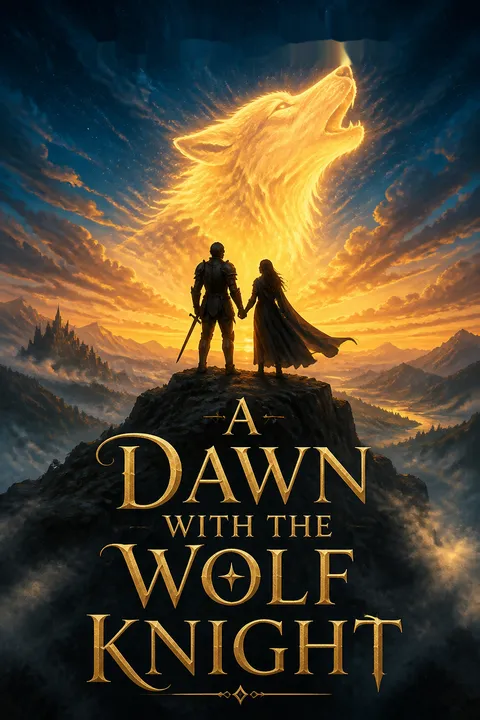


Plot Summary
The Moonstone in the Moss
At twenty-two, Faelyn is the last weaver witch guarding the boundary between human settlements and the lykin woods. Alone beneath an ancient redwood, she buries her grandmother’s ashes and grieves the two people she has lost: her family’s matriarch and the hunter’s son who once left her waiting. Then a silver-haired stranger crashes into the clearing, pursued by the wolf king.
The woman smashes a moonstone ring in a desperate ritual, and the released magic enters Faelyn instead of returning to its owner. Calling herself Aurora, the stranger admits she was seeking freedom. Faelyn could exploit the power now bound to her, but promises instead to help Aurora reach the old gods and reclaim her own essence.
The encounter turns bereavement into a moral test. Faelyn is not offered companionship under easy circumstances: Aurora arrives carrying a history of coercion and a power that could make Faelyn formidable. Faelyn’s first consequential choice is therefore not to claim what has entered her, but to treat it as something lent without consent. Her grandmother’s death leaves her without the person who taught her how to belong to the woods, while Aurora’s arrival gives that loss a new direction. The promise to help Aurora is both an ethical commitment and Faelyn’s first step out of isolation.
Ashes Beyond the Ribbons
Faelyn leaves Aurora resting at the cottage while she walks to market, trading protective charms for food and boots for their planned journey. On her return, she finds the cottage ablaze. The wolf king’s lykin have crossed the boundary, burned the home, and taken Aurora. Faelyn cannot command enough magic to save the house, but Folost, her small fire spirit, and Mary, her marigold spirit, survive because Folost shielded what he could.
Faelyn carries them from the ruins, attaches Folost to a shard of the hearth, and follows the lykin’s tracks into the woods. The destruction strips away her last reason to stay home. With her inheritance reduced to a cloak, tools, and two friends, she sets out to retrieve Aurora.
The burning cottage changes the meaning of Faelyn’s promise. Before, helping Aurora was a choice made by someone with a home to return to; afterward, the home itself has been taken from her. The practical details matter: Folost protects Mary, the spirits survive, and Faelyn preserves a piece of her grandmother’s hearth. Her inheritance is no longer a place but a set of living relationships and skills she can carry. The attack also exposes the fragility of the treaty Faelyn has maintained. Her sense of duty cannot keep others safe when the powerful decide that the rules do not apply to them.
The Rope in the Clearing
Following Folost’s guidance, Faelyn reaches a clearing where the lykin knights Evander and Bardulf have tied Aurora to a tree. Bardulf has beaten her while demanding the missing ring; Evander restrains him but remains part of the party returning Aurora to the wolf king, Conri. Faelyn burns through Aurora’s ropes, and the women flee, only for Bardulf to attack Faelyn and pin her beneath his wolf form.
Aurora’s captors discover the ring’s power has passed into Faelyn, making her the living vessel of half the moon spirit’s essence. Killing her could lose that power, so Evander takes both women to Conri. At the Fade, a shadow spirit named Rhave grants passage, and Faelyn crosses into Midscape with Aurora’s fate bound to her own.
Rescue here is not a clean escape but a shift in who bears the danger. Faelyn’s courage gets Aurora off the tree, yet it also places Faelyn directly in the conflict that surrounds the ring. The revelation that the power lives in her makes the bond more than accidental intimacy: both women are now politically valuable and physically vulnerable. Evander’s divided behavior introduces a useful uncertainty. He protects Faelyn from Bardulf’s attack, but still carries them toward Conri. Crossing the Fade makes their predicament larger than the human woods, while Rhave’s response hints that the spirits are not merely background forces.
A Bride for the Wolf King
Once Faelyn reaches Midscape, the weak forms of Folost and Mary can finally recover their strength. They leave her to commune with the old gods, trusting that she can call them when needed. Conri greets Aurora with the tenderness of a long-lost companion, but she stiffens beneath his touch.
When he learns that Faelyn holds the moon spirit’s power, he declares her his destined mate and announces that he will marry her. He claims the union will secure the lykin and restore their lost lands, while Faelyn hears the threat beneath his public affection.
Conri’s people have little food because earlier packs hunted the plains nearly bare. The scarcity complicates Faelyn’s judgment: Conri’s concerns may be real, but his claim over her and Aurora is not consent.
Conri’s power rests on making possession look like intimacy and necessity look like destiny. His public declaration gives Faelyn a social role before she has agreed to one, and his people’s visible scarcity makes refusal feel morally complicated. The problem is not that Conri’s concerns are entirely invented. The plains are depleted, and the lykin face genuine decline. Rather, he converts those shared problems into a justification for controlling Aurora and Faelyn. The spirits’ departure offers a contrasting model of relationship: they can love Faelyn and still leave to restore themselves. Their choice quietly challenges Conri’s assumption that dependence entitles him to ownership.
The Charm Beneath the Crown
Conri’s attention makes Faelyn’s body answer him even when her judgment resists. Aurora explains that the wolf king’s magical charm draws mortal women toward him, and that the cloak protects Faelyn only partly. In Evander’s tent, he recounts how Aurora once loved the first wolf king, Bewulf, gave him a ring containing part of her power, and was kept in the lykin lands after his death.
Successive kings traded her as a source of legitimacy. Conri now intends to use Faelyn’s body and the power within her to secure his rule. Faelyn begins secretly resisting him, using her grandmother’s sewing to strengthen her cloak and seeking private relief to blunt his influence. Evander helps her heal but keeps her under watch.
This section makes desire politically legible. Faelyn’s attraction is not simply a feeling she can trust or dismiss; it is an environment shaped by Conri’s magic, so bodily response cannot serve as proof of consent. The cloak becomes a practical countermeasure and a symbol of inherited knowledge, but neither offers total protection. Evander’s account of Aurora’s history also reveals how political systems can preserve coercion by making it ceremonial and useful. The distinction Faelyn begins to draw is crucial: need, arousal, and genuine choice can coexist, but they are not interchangeable. She starts to treat self-knowledge as a form of resistance.
A Witch Calls the Earth
As the pack travels between camps, Faelyn and Aurora practice reaching the magic within her. Faelyn calls Brundil, an ancient spirit of earth, and persuades her that a weaver witch can be capable despite her small stature. Brundil agrees to bind with her, giving Faelyn another ally. The new skill changes how Faelyn sees herself: she can make connections that her grandmother never had time to teach her.
She also learns to work around Conri’s attention, meeting Aurora in private and sewing wards into her cloak. Along the way, Conri invites Faelyn to hunt and forage with him. His curiosity about her knowledge, and his willingness to hear her views on the land, make him seem more reasonable than Aurora and Evander have warned.
Brundil’s bond gives Faelyn more than additional power. It confirms that she can approach an ancient being as a person with judgment, not as a supplicant begging a superior to notice her. Her ability to form this relationship grows out of the ethics she established with Aurora: respect, honesty, and a willingness to accept refusal. At the same time, Conri’s apparent openness is emotionally persuasive because it meets a real desire in Faelyn to help both worlds. The scene sets up the danger of confusing constructive conversation with changed character. Faelyn’s hope is not foolish, but it remains vulnerable to the king’s skill at presenting control as cooperation.
The King Shows His Teeth
Conri takes Faelyn on a hunt, then watches as she uses Mary’s guidance to find food growing on the plains. Their conversation turns to Aurora’s captivity and the lykin’s future. Conri suggests a witch might help him protect his people while freeing Aurora, and Faelyn allows herself to wonder whether he could change. Evander distrusts the promise but cannot persuade her to abandon the possibility.
That night, he leads Faelyn to a tent where Conri is speaking with several alphas. They hear the king admit that the marriage is a performance: at the sacred grove, he intends to cut out Faelyn’s heart and feed it to the great wolf spirit, hoping to draw the moon power into his bloodline. The revelation ends Faelyn’s hope of an alliance.
The betrayal is effective because Conri’s offer was not empty in every respect: he did acknowledge a real ecological crisis and entertain Faelyn’s knowledge. But the overheard plan clarifies the hierarchy beneath that conversation. He can value her ideas while still regarding her life as an instrument. Faelyn’s mistake is not believing that change is possible; it is granting Conri’s statements more evidentiary weight than his history and conduct warrant. The lesson is psychological rather than cynical. Hope can remain a strength, but it requires boundaries and verification. Evander’s intervention gives Faelyn information without demanding that she accept his judgment in advance.
A Forest Bought with Magic
Faelyn summons Brundil before the lykin and asks her to grow a copse where game can thrive. The earth spirit raises mature trees around the camp, but the effort drains Faelyn’s strength. Conri turns the feat into proof that his future queen can serve the pack and agrees to let her travel with Evander to find more spirits.
Before leaving, Faelyn explains to Aurora that the display was a tactic to gain time, not a gift to Conri. Aurora forgives her and accepts the escape plan: Faelyn will prepare a route, shelters, and supply caches toward the elves. Evander accompanies her, promising to return. The concession gives Faelyn a head start, while Aurora remains in Den under Conri’s watch.
Faelyn’s public act works on two levels. The new grove answers a material need for the lykin, but its political value is captured by Conri, who presents her power as an extension of his rule. Faelyn accepts that distortion because it buys a practical opening. Her honesty with Aurora repairs the deeper relationship that the performance threatened. Their reconciliation depends not on Faelyn being faultless, but on her explaining her choices and restating whom she serves. The departure also turns a private hope into a logistical plan. Shelters, caches, and routes matter as much as courage: escape requires care for bodies, weather, and distance.
Threads Through Lykin Woods
Away from Conri, Faelyn and Evander travel through the forest, marking a route with enchanted thread and building a shelter for Aurora’s eventual escape. Faelyn binds with Volst, the spirit of water, after honestly asking for help against the wolf king.
Evander shares fragments of his past, and their growing tenderness becomes a physical relationship. Faelyn also tells him about the hunter’s son she once loved and the night he failed to meet her beneath the redwood.
Their time together gives her both practical resources and a glimpse of life without Conri’s surveillance. Yet when they approach the lykin border again, the refuge is temporary: their route leads back toward Den, where Aurora is still waiting and the threat of the planned wedding remains.
The forest journey gives the romance a setting in which trust can be practiced rather than merely declared. Faelyn and Evander exchange practical labor, stories, and vulnerability, while her new bond with Volst enlarges the escape plan beyond one person’s strength. Her grief for the absent hunter’s son also shows that she has not simply replaced an old attachment with a new one; she is trying to understand what abandonment taught her to expect. The tenderness between the pair is genuine, but the journey remains embedded in danger. Their reprieve sharpens the cost of returning, and makes the next rupture more consequential.
Bardulf Names the Charm
Bardulf finds Faelyn bathing and threatens to expose her relationship with Evander to Conri. When Faelyn refuses to submit, Bardulf attacks. Evander fights him in wolf form, and Faelyn calls on Volst, who hurls Bardulf away with a surge of water. Bardulf survives, then reveals that the wolf king’s knights inherit part of Conri’s seductive charm.
Faelyn turns on Evander, demanding to know whether he used it to draw her into his bed. Evander denies doing so, but admits he can wield the power. Unable to separate his feelings from the concealed fact, Faelyn leaves with Bardulf for Den and orders Evander to stay behind. The separation wounds them both, while Bardulf gains control of the return journey.
The reveal destabilizes Faelyn’s trust precisely because it touches the question she has been struggling to answer: whether her desire belongs to her. Evander’s silence may have been protective in his mind, but it deprived Faelyn of information she needed to choose freely. Bardulf exploits that breach, not to defend Faelyn’s autonomy, but to injure Evander and regain leverage. The contrast matters. A valid grievance can be manipulated by someone acting in bad faith. Faelyn’s decision to leave is therefore neither irrational nor a simple misunderstanding; it is a boundary drawn in the absence of certainty, with dangerous consequences.
Fire Takes the Accuser
On the journey back, Bardulf uses the knights’ charm to press Faelyn toward him. When he threatens to assault her, she calls Folost and asks him to summon Devlan, a powerful fire spirit. Devlan burns Bardulf to death. Evander arrives after hearing Faelyn call for him, and she asks directly whether he ever used the charm. He says he did not.
Then he reveals that he is Liam, the hunter’s son who left her waiting years earlier. His father had taken him across the Fade to claim his lykin birthright; Conri attacked them, killed his father, and forced Evander into service. Evander had chosen survival because he hoped to see Faelyn again. She understands why he left, but their trust must now be rebuilt.
Faelyn’s first deliberate killing marks the point at which defense acquires a lasting moral cost. She saves herself from Bardulf’s assault, but the fire cannot be reduced to an uncomplicated victory. Evander’s return brings a second shock: her old abandonment and her present love belong to the same person. His explanation changes the meaning of his disappearance without erasing its pain. Crucially, Faelyn does not have to pretend the past did not hurt in order to understand it. Their reunion becomes possible because Evander finally gives her the history she lacked, and because she can distinguish coercive survival from a choice to discard her.
The Bride Returns to Den
Faelyn and Evander return to Den, where she tells Conri that she killed Bardulf after he threatened her and tried to use the charm against her. Conri accepts the story because it preserves his authority, then orders the wedding for the following night. He chains Evander and confines him, while Faelyn is told to prepare for the ceremony.
Aurora and Faelyn decide to escape that evening, using a fertility ritual and a bonfire as cover. They slip toward the grove with the young guard Farkolf, who is not part of their plan. Faelyn gives him a stark choice: flee Den or die if he raises the alarm. He runs. Faelyn and Aurora then use Brundil to clear their route and cross the lake, hoping to reach the forest before Conri’s patrols close in.
The return to Den compresses several kinds of danger into a single decision. Faelyn must perform loyalty in front of Conri, preserve Evander’s life, and make room for Aurora’s escape without exposing their plan too early. Her treatment of Farkolf reveals how much her power has changed: she can frighten him into silence, yet chooses to give him a way out rather than use him as a disposable obstacle. The escape depends on deception, but not on abandoning her values. Brundil’s assistance also makes visible the distinction between alliance and command: Faelyn asks for help, while the spirit decides how to give it.
The Wolf Refuses the Vows
Evander catches up to Faelyn and Aurora in the woods, but Conri follows and corners them near the edge of lykin territory. When the wolf king takes Evander captive, Aurora threatens to kill Faelyn rather than be returned to bondage. Conri releases Evander and orders everyone back to Den, where he hastens the wedding.
At the grove, the great wolf spirit Ulfryk refuses to join Conri to Faelyn because her soul is already bound. The alphas recognize Evander’s claim to the crown through the moon power. Conri attacks anyway. Aurora uses Faelyn’s knife to kill him, then lies mortally wounded. With her consent, Faelyn ends Aurora’s pain and absorbs the rest of her power. The lykin kneel to recognize Faelyn and Evander as their new rulers.
The climax brings the book’s central conflicts into one place: bodily autonomy, political legitimacy, and the difference between stewardship and possession. Ulfryk’s refusal exposes the limits of Conri’s authority, but it cannot stop him from choosing violence. Aurora’s final actions are not passive sacrifice. She waits until she can act beyond the lykin’s borders, kills the king who held her, and directs Faelyn to make an informed choice about her death and power. Faelyn’s grief is inseparable from consent: she cannot save Aurora in the form she loves, but she can honor Aurora’s explicit wish and end the captivity that defined her life.
The Crown Left Behind
The lykin recognize Evander as king and Faelyn as keeper of the moon spirit’s power. At first they try to govern Den together, but the alphas bring old habits of suspicion and contest into every council. Four months later, assassins attack Evander in the grove. Faelyn joins the fight with a knife, and Evander kills the attackers.
He sees that ruling through the same violent system would only place a new man in Conri’s position, so he chooses to leave the throne. Faelyn goes with him. They run from Den toward a future neither has inherited from blood or title. The crown remains behind among the silver trees, while the pair chooses a life made through mutual loyalty rather than the power to command.
The resolution refuses the easy fantasy that replacing a tyrant automatically repairs the institutions that enabled him. Evander can inherit Conri’s authority, but the assassination attempt makes clear that the throne still organizes political life around elimination. His choice to leave is not indifference to the lykin; it is a refusal to mistake access to power for the capacity to transform its logic. Faelyn’s willingness to go with him completes her movement from guardian of a fixed border to maker of a chosen home. Their freedom remains complicated by responsibility and loss, but it is no longer defined by someone else’s claim.
Epilogue
After leaving Den, Faelyn and Evander travel across Midscape to the Lifetree, where they hope the old gods can restore Aurora’s power. Lady Victoria, the Old Goddess of Life, draws the moon essence out of Faelyn and returns it to Aurora, who reappears as a spirit.
Faelyn can no longer understand her words, but Aurora’s farewell makes clear that their friendship endures. The couple continue toward a new home, carrying the promise of a life shaped by their own choices rather than the lykin crown. In a vision glimpsed during the transfer, Faelyn sees Evander with children who are theirs without sharing their blood.
The epilogue completes the promise that began with Faelyn’s refusal to treat Aurora’s power as property. Restoration requires giving that power back, even though doing so ends the form of closeness Faelyn has known with Aurora. Their inability to share language afterward is not framed as the end of intimacy: they have already learned to recognize care through action, attention, and ritual. The vision of a family also answers Evander’s fear that his oath made him unfit for a future. The ending replaces inherited status with chosen bonds, while leaving the couple’s next home open rather than defining belonging as a throne or territory.
Analysis
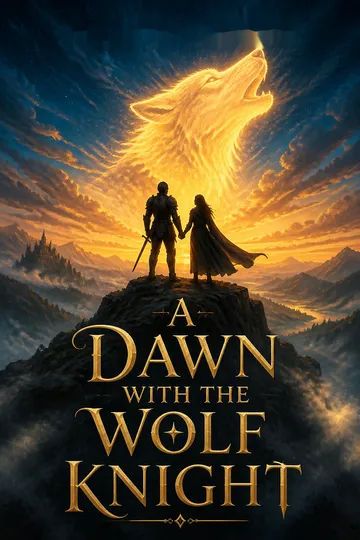
A Dawn with the Wolf Knight treats power less as a substance than as a relationship. The same magic can protect, seduce, bind, or restore, depending on whether the person receiving it has a choice. Faelyn’s craft is built around this distinction: a spirit’s bond is meaningful because it is offered, while Conri’s rule repeatedly converts reliance into ownership. The plot’s romantic conflict sharpens that question. Faelyn must learn that desire can be real without being freely chosen, and that trust requires disclosure rather than intensity alone.
The story also makes ecological damage politically consequential. The lykin’s barren plains are not a decorative hardship; they are the material result of generations of hunting and warfare. Conri is right that his people need a future, but his answer is to seize a woman and her power. Faelyn’s creation of a grove offers a different model: repair through cooperation, with the spirit’s consent and a benefit that does not depend on conquest. Her act is imperfectly absorbed into Conri’s propaganda, which shows how even generous labor can be appropriated by a ruler.
Grief threads through the central relationships. Faelyn loses her grandmother, her home, and then the mortal form of Aurora, yet she does not treat loss as evidence that attachment is foolish. Evander’s history revises the meaning of an earlier abandonment without erasing its wound. Their eventual choice to leave the throne is therefore not a retreat from responsibility, but a refusal to reproduce a system that equates leadership with violence. The ending suggests that belonging is made through mutual care, not bloodline, territory, or command.
Review Summary
A Dawn with the Wolf Knight receives mixed reviews averaging 3.72/5 stars. Readers praise the chemistry between protagonists Faelyn and Evander, the Little Red Riding Hood retelling elements, and improved pacing compared to previous series installments. Common criticisms include Faelyn being too naive and gullible, rushed romance development, predictable plot twists, weak world-building, and disappointment that the finale doesn't tie together the broader series. The villain Conri often steals scenes despite his antagonist role. While some find it the series' best entry, others feel it lacks substance and suffers from uneven pacing.
People Also Read

Characters
Faelyn
The boundary-keeping witchFaelyn is a young weaver witch who maintains the charms separating human settlements from the lykin woods. Raised by her mother and grandmother, she learned to treat magic as a relationship with the natural world rather than a resource to command. Her inherited cloak, sewing tools, and practical knowledge give her both protection and a language for working with spirits. Grief and isolation have made her wary of depending on others, yet she repeatedly chooses care over possession. Faelyn’s defining tension is between a deep hope that people can change and the need to judge them by what they actually do. Her courage grows through action: she negotiates, plans, protects, and accepts help without surrendering her own judgment.
Aurora
The captive moon spiritAurora is an ancient spirit living in a human form, a being who once sought mortal intimacy and now carries the cost of that choice. She is proud, perceptive, and weary from centuries of being treated as a source of political power. Her reserve is not coldness so much as self-protection: she has learned that promises can become chains when made by people who want to own her. With Faelyn, she finds a rare relationship in which her wishes matter. Aurora’s experience gives her a long view of power and its corruptions, while her lingering hope for freedom keeps her from becoming merely resigned to suffering.
Evander
The scarred wolf knightEvander is one of Conri’s knights, a formidable lykin whose reserved manner conceals grief, anger, and a fierce sense of obligation. His history has taught him to survive by keeping his feelings private and his actions carefully controlled. He understands the customs of the lykin and knows how to navigate their power structures, but he is uneasy with the cruelty they normalize. His bond with Aurora begins in duty and respect; his connection with Faelyn draws out a tenderness he believes he has no right to offer. Evander’s central struggle is whether survival under an unjust ruler must mean becoming complicit in that ruler’s violence.
Conri
The possessive wolf kingConri rules the lykin through personal authority, inherited custom, and a supernatural charm that makes others feel drawn to him. He sees his people’s scarcity and political weakness as urgent problems, and he believes that concentrated power is the answer. His skill at reading others lets him alternate between warmth and threat, making control appear like protection. Conri is not simply a vain ruler: he can recognize genuine needs and present plausible solutions. What defines him, however, is his insistence that other beings exist to secure his vision. He treats Aurora’s power and Faelyn’s choices as political instruments, revealing how a leader’s stated concern for a community can serve private domination.
Bardulf
The brutal wolf knightBardulf is a lykin knight whose aggression makes him a direct threat to Aurora and Faelyn. He resents Evander’s authority and looks for opportunities to expose or weaken him. Unlike Conri, Bardulf rarely disguises his contempt with tenderness, though he also uses the knights’ magical influence when it serves him. His appetite for domination makes him a foil to Evander: both operate within the same brutal hierarchy, but Bardulf embraces its cruelty rather than questioning it.
Faelyn's grandmother
The last family teacherFaelyn’s grandmother raised her after her mother’s death and taught her the practices of a weaver witch. She passed on a protective cloak, knowledge of spirits, and a disciplined respect for the natural world. Her guidance continues to shape Faelyn’s choices after her death, especially when power could be used for selfish ends. The grandmother’s influence is practical as well as emotional: she leaves Faelyn tools and habits that help her survive far from home.
Liam
The hunter's sonLiam is the young man Faelyn loved before the story begins. As the son of a hunter, he offered companionship to a girl whose life was otherwise confined to her grandmother and the woods. His unexplained absence from a promised meeting becomes one of Faelyn’s earliest experiences of romantic rejection. The memory leaves her wary of trusting attachment, even as she longs for the intimacy she once imagined sharing with him.
Folost
The hearth's fire spiritFolost is the small fire spirit who lives in Faelyn’s hearth and shares her home with Mary. He communicates through flames, gestures, and simple answers, and his loyalty is expressed through practical protection. When the cottage burns, he saves what he can and helps Faelyn find Aurora. His spirit is modest in scale but not in importance: he represents the trust and daily care that have sustained Faelyn since childhood.
Mary
The marigold spiritMary is a plant spirit bound to the marigold in Faelyn’s cottage. Gentle and attentive, she communicates through scent, flowers, and vines, often guiding Faelyn through dense growth. Her bond with Faelyn rests on long familiarity and reciprocal care. Mary’s presence shows how affection can be expressed through tending: water, soil, protection, and the patient recognition of another being’s needs.
Brundil
The ancient earth spiritBrundil is a powerful spirit of earth who can appear as a small rooted figure or a vast force reshaping the land. She is proud of her strength and impatient with being treated as a tool. Faelyn earns her respect by approaching her honestly and defending her own capability without claiming equality of power. Brundil’s help is substantial but never automatic, keeping the relationship reciprocal rather than obedient.
Volst
The still water spiritVolst is an ancient spirit of water, more constant than his active counterpart Gruvun. He speaks through currents and shifting water, and responds to Faelyn when she approaches with humility and clear intentions. His presence lets Faelyn understand that a spirit’s assistance is a choice, not a command issued by a witch.
Gruvun
The moving tide spiritGruvun is a spirit of tides who carries travelers across water and communicates through waves. Restless and mobile, he contrasts with the steadier Volst. His help offers a glimpse of how lykin and spirits cooperate through established bonds.
Rhave
The Fade's gatekeeperRhave is the shifting spirit who inhabits the Fade, the boundary between the Natural World and Midscape. He can take the outlines of different creatures and speaks in the language of spirits. His willingness to open a passage shows that the boundary is not merely a wall, but a place inhabited by beings with their own judgments.
Ulfryk
The great wolf spiritUlfryk is the immense wolf spirit whose power is bound to the lykin’s transformations and royal customs. Ancient and difficult to impress, he has little patience for mortal demands. His authority is spiritual rather than political, but the lykin rely on his presence to validate their traditions. He embodies the distance between possessing power and using it to intervene.
Bewulf
The first wolf kingBewulf is the first wolf king, remembered for uniting the lykin and for his love for Aurora. His relationship with the spirit began a political tradition that later rulers converted into a source of authority. Through his legacy, the story distinguishes an intimate promise from the institution built by those who came after.
Faelyn's mother
The vanished forest witchFaelyn’s mother was a witch who taught her daughter how to survive in the forest before dying when Faelyn was young. Her lessons about shelter, food, and the living world remain part of Faelyn’s practical inheritance. The loss helps explain both Faelyn’s early loneliness and her determination to preserve the knowledge her family passed down.
Evander's father
The last pack's protectorEvander’s father brought him up away from the lykin power structure, teaching him how to live in the forest and protecting his identity. He carries the memory of a community that valued independence and knowledge of spirits. His choices shape Evander’s understanding of loyalty, survival, and the cost of resisting a king.
Farkolf
The uncertain young guardFarkolf is a young lykin guard hoping to improve his standing in Conri’s pack. He is eager to prove himself but lacks the hardened certainty of the king’s older knights. His nervous manner makes him seem harmless, though Faelyn must still decide whether she can trust him with a dangerous secret.
Weylyn
A rival pack alphaWeylyn is an alpha from one of the packs that joins Conri’s traveling group. He participates in the political discussions around Faelyn’s place in the lykin hierarchy. His presence helps show that Conri’s authority depends on keeping other powerful leaders aligned.
Drena
A skeptical pack leaderDrena is an alpha who questions the practicality of Conri’s plans and the place of a human bride in lykin succession. Her skepticism reveals that the pack’s leaders are not of one mind, even when they publicly follow their king.
Devlan
The powerful fire spiritDevlan is a fire spirit summoned by the lykin and far more powerful than Folost. His presence demonstrates that spirits can be called into service by beings other than witches, though the relationship is not necessarily one of mutual care.
Lady Victoria
The old goddess of lifeLady Victoria is an ancient goddess connected to the Lifetree and the power to shape life. She is more approachable and humorous than Faelyn expects from an old god, but her ease does not diminish her authority. Her presence represents a source of restoration beyond the political claims of the lykin.
Kevhan
The Lifetree's keeperKevhan is the humanlike keeper of the Lifetree, entrusted with its care. His relaxed manner and imperfect formality make him an unexpected figure at the edge of the old gods’ domain. He helps ground the encounter in the ordinary human qualities that can coexist with immense magic.
Plot Devices
The weaver witch's cloak
A portable family wardFaelyn’s red cloak has been worn and embroidered by generations of weaver witches. Its stitched symbols hold protective magic, and Faelyn adds new designs to strengthen it against Conri’s charm and to mark her bonds with spirits. The cloak also carries the knowledge and labor of her family, making it both a practical defense and a link to the dead. Its limits matter: it can help Faelyn resist magical influence, but it cannot keep the lykin from pursuing her or prevent every attack.
The broken moonstone ring
A power seeking a new bearerAurora’s ring contains part of her ancient essence and has long served the lykin as a token of royal authority. When Aurora breaks it while trying to reclaim her power, the magic enters Faelyn instead. This transforms a personal escape into a political crisis: the lykin need the power to legitimize their king, while Aurora needs to recover it to become whole. The ring’s destruction also prevents the power from being transferred by ordinary mortal means.
The Fade
A threshold between worldsThe Fade separates the Natural World from Midscape and limits the movement of magical peoples. Faelyn’s ancestors drew power from the world beyond it while maintaining boundaries around the human lands. Crossing the Fade takes Faelyn into a place where spirits are stronger, but it also removes her from the familiar protections and resources of home. The boundary is inhabited by Rhave, a spirit who can grant passage, showing that crossing depends on acknowledging the beings who live there.
The wolf king's charm
Desire as magical leverageConri’s power makes mortal women feel drawn to him, complicating Faelyn’s ability to distinguish attraction from magical influence. His knights inherit a portion of this charm, which becomes a source of doubt when Bardulf reveals it. Faelyn’s cloak, her growing self-knowledge, and her accepted bond with Evander help her resist the influence. The charm turns consent into a central practical question: bodily desire alone cannot prove that a choice is freely made.
Threaded spirit bonds
Magic through reciprocal tiesWeaver witches use thread, needles, ritual, and intention to hold magic in cloth and establish relationships with spirits. Faelyn uses this craft to reinforce her cloak, call upon spirits, and mark routes through the forest. The bonds do not make spirits possessions: each spirit retains its own judgment and may offer aid by choice. The yellow thread Evander ties around Faelyn’s finger also becomes a personal symbol of their connection, linking inherited witchcraft to a bond they must choose for themselves.
Married to Magic Series
Download PDF
Download EPUB
.epub digital book format is ideal for reading ebooks on phones, tablets, and e-readers.








