

Plot Summary
A Bride Sold for a Book
Katria Applegate spends her mornings riding Misty, the horse her missing father gave her, because home has become a decaying manor ruled by her stepmother, Joyce. Joyce has sold nearly everything to finance her ambitions, and now negotiates Katria’s marriage without asking her.
Hidden behind a wall, Katria hears that the suitor wants a treasured old book once kept by her birth mother, not the nonexistent trading ships Joyce offers as a dowry. The stranger’s servant agrees to pay Joyce four thousand pieces, and the marriage papers are signed at once. Katria is told she will leave within the hour. She is now bound to a man whose name she does not know, while the book that connects her to her mother is carried away.
The marriage begins as a transaction imposed on Katria, but the book makes the bargain intimate: Joyce sells access to a part of Katria’s past she had tried to erase. Katria’s father once made her promise to keep the book’s meaning secret, so its transfer strips away more than property. Her decision to leave is not consent, but it is also an opening. She can no longer remain the household’s unpaid caretaker, even if freedom arrives under another person’s terms.
The Lord Behind the Door
Katria’s youngest sister, Laura, is affectionate but powerless in the house; Helen, Joyce’s favored daughter, warns that Katria’s new husband may be a monster. The journey ends at Lord Fenwood’s secluded manor beside the forbidden forest. His butler, Oren, gives Katria a room and three restrictions: remain on the estate’s front grounds, stay out of the woods, and never leave her wing after dark.
Katria asks to meet her husband, but he agrees only if she keeps her back to him. He treats the marriage as an obligation and promises they need not cross paths again. That night, screams wake Katria. The door to her wing is locked, and she retreats to bed, unable to learn who was screaming.
Fenwood’s rules echo the confinement Katria has already endured, so material comfort cannot by itself make her feel safe. Yet the blind meeting introduces a difference: her husband’s refusal to be seen is a boundary he names openly, rather than a punishment disguised as care. Katria still has little power in the arrangement, but she tests it by asking to speak with him. The unanswered screams deepen the central tension between protection and control, a distinction she has been taught to mistrust.
A Fae at the Wall
As Katria settles into lonely routines, she plays her lute in a clearing and speaks with Fenwood from behind a tree. He rebukes her for testing the nighttime rule, but agrees to leave her door unlocked if she promises to stay inside after dark.
Later, while repairing Oren’s neglected garden, Katria sees a bloodied girl beyond the estate wall. She reaches for the child, who reveals herself as a predatory fae and drags Katria into the woods. Fenwood and Oren fight the creature; Fenwood carries Katria home with her shoulder injured and head bleeding.
He explains that fae glamour can disguise their appearance, and admits he hunts them. Their closeness grows through blindfolded conversations, even as Katria learns that her husband has withheld the nature of his world.
Katria’s rescue attempt is an act of recognition: the apparent child resembles Laura, and Katria responds to vulnerability before calculating risk. The fae exploits precisely that instinct. Fenwood’s anger afterwards comes from fear and responsibility, but his locked-door logic still resembles the coercion Katria has survived. Their compromise matters because she articulates what safety must include. Trust begins here not with perfect honesty, but with a negotiated boundary and the first evidence that each can listen.
The Book Enters the Fire
When Helen and Laura visit, Helen questions Katria’s strange marriage and warns that her husband’s wealth may not be secure. That night, Katria finds a letter from Fenwood leaving her his estate in case he never returns. She follows footsteps through a hidden passage and into the forest, where Oren and four fae perform a ritual with her mother’s book.
Their leader is Fenwood, whose true name is Davien. Katria rushes to save the book from the fire, falls into it, and wakes alive in a world beyond the mountains. Davien says she has taken the ancient kings’ magic meant for him. He and his companions must take her to a fae healer, because humans are not supposed to survive in Midscape.
The book’s destruction and Katria’s fall collapse the two mysteries that have structured her life: what her mother left behind, and who her husband really is. Katria acts to protect memory, not to claim power, yet her intervention changes the political future of the fae. The fire therefore turns an inherited object into an involuntary inheritance. Davien’s secrecy has protected his mission, but it has also denied Katria the chance to understand the danger before she is made part of it.
The Human Who Survives
In the Bleeding Woods, Davien’s companions explain that Midscape is a separate magical world and that humans usually wither there. Katria’s wounds heal anyway, suggesting the kings’ power is keeping her alive. The group’s contempt and Davien’s impatience make her feel like cargo, so she escapes during a night watch.
Davien catches her at a creek, and she demands to be treated as a person if he expects her cooperation. He agrees to start again and carries her above the forest on his damaged wings. A shadow-wielding Butcher attacks them in midair. Katria’s power erupts without warning, killing the attacker and healing Davien’s shoulder. She has become both the group’s vulnerable human and its most dangerous weapon.
Katria’s first magical act is defensive, not ambitious. It emerges when she refuses to accept that survival requires surrendering her agency, and the consequence is both protection and a death she must emotionally absorb. Her demand at the creek also changes the terms of the journey: Davien must earn cooperation instead of assuming it. The power that keeps her alive is inseparable from a political burden she never chose, making her autonomy a practical question as well as a moral one.
A Song in Dreamsong
After a punishing march, Katria collapses outside Dreamsong, a refuge ruled by Vena, an ally of Davien’s cause. Vena confirms that Katria’s magic may be why she can eat and remain alive in Midscape, but warns that she may wither when it leaves her. In the city, a quick-footed child named Raph offers to guide her in exchange for a dance.
Katria discovers that fae bargains can carry hidden consequences, then plays her lute at the Screaming Goat and wins over its musicians. She also learns that Davien is the lost heir of Aviness, whose family was hunted by the ruling Boltovs. While Dreamsong’s exiles welcome her cautiously, Katria finds the first place where her music and practical skills are valued.
Dreamsong gives Katria something her old manor withheld: a public space where her skill can be witnessed without being treated as a nuisance. Her performance is a small act of self-definition, but it also begins to connect her to a community with its own losses and political loyalties. The bargain with Raph introduces a different danger from physical violence: in this world, language can bind as surely as a locked door. Katria’s usefulness is no longer limited to service; it can become chosen contribution.
The Crown’s Borrowed Power
Vena recruits Allor, a Butcher who claims to have found records describing how one ruler can pass royal magic to another. Using a glass pendant as a vessel, Katria and Davien attempt the transfer, but the ritual bursts apart. Davien instead teaches Katria to use small rituals, and she helps build a lantern for Dreamsong’s planned escape tunnel.
During an autumn festival, Katria plays before the city and dances with Davien; their attraction becomes impossible to ignore. They agree to physical intimacy without love, a bargain Katria believes will protect her from heartbreak. Later, she overhears Davien tell Shaye that he loves her but expects to send her home and eventually marry someone suitable to his crown.
The failed ritual makes the romance and the political plot mirror one another: neither can be forced into a clean transfer simply because someone wants an outcome. Katria’s success with the lantern shows that magic responds to patient collaboration, while her intimacy with Davien rests on a false belief that desire can be contained by rules. His confession confirms that the emotional risk is not imagined. Katria’s resistance is not a lack of feeling; it is an attempt to avoid reproducing the destructive model of love she learned at home.
Allor Leads Them North
With King Wotor Boltov preparing an assault on Dreamsong, Vena sends Katria and Davien toward the Lake of Anointing, hoping its ancient waters will help transfer the power. Allor promises to misdirect Boltov, but Katria questions her and receives no clear assurance that the travelers will be safe. Davien dismisses her suspicions and insists they continue.
Inside the fog surrounding the lake, Giles disappears and the group loses its bearings. Allor then attacks Katria and Davien. Shaye stays behind to fight her, giving the pair time to flee on one horse. Davien admits Katria was right, but they cannot return for Shaye or Giles without risking the pendant and the mission.
Katria reads Allor’s evasions accurately, but Davien’s need to restore his power makes him treat doubt as delay. The resulting ambush turns a conflict of trust into an immediate cost: Shaye and Giles are separated from them, and the party loses its safe route. Davien’s belated acknowledgment does not erase the harm, but it exposes a weakness in his leadership. Loyalty cannot mean accepting a plan simply because its goal is urgent; a leader must also take warnings seriously.
The Lake Takes Its Toll
A song associated with the Aviness family guides Katria and Davien through the fog to the lake and its abandoned keep. There, Katria is anointed as an heir and begins moving the kings’ power into the glass pendant. Before she can complete the transfer, Butchers attack.
The spell breaks, the protective fog vanishes, and Katria escapes with the pendant while Davien remains to hold off their pursuers. Giles finds her later, injured but alive, and leads her back toward Dreamsong.
They discover the city burned and its survivors taken to the High Court. Raph has hidden a group of children in the mountain, including friends he gathered during the attack. With no safe refuge left, Katria decides to carry the pendant into Boltov’s stronghold herself.
The lake ritual brings Katria close to returning the power, but its interruption forces her to choose between the man she loves and the larger danger the power represents. Leaving Davien behind is not a clean heroic decision; she acts under his command and must live with the possibility that he will die. Dreamsong’s destruction then expands the stakes beyond a royal claim. Raph’s hidden children embody the people the rebellion exists to protect, giving Katria a concrete reason to continue even after her refuge has vanished.
The Minstrel’s Way In
Katria, Giles, and Raph reach the High Court, where Shaye reunites with them after surviving Allor by feigning death. She and Giles create a distraction so Katria and Raph can enter the city through a damaged water channel. Rather than force the castle gates, Katria approaches a troupe of musicians who once played in Dreamsong.
She wins a place among them by matching their leader in a musical duel, with Raph as her companion. The performers escort them through the castle entrance, where Katria sees captured Dreamsong residents, including Raph’s father, Hol, displayed in cages. She must keep her identity hidden while the troupe plays for Boltov’s court, waiting for a moment to reach Davien.
Katria’s most reliable instrument is not the pendant but the lute she has carried since childhood. Music earns her access where force would fail, and it lets her turn a skill once suppressed by Joyce into tactical agency. The performance also depends on trust among people who are not uniformly loyal to one another. Raph’s presence sharpens the moral cost: Katria is using a child’s courage in a dangerous plan, even as his knowledge of the city makes him indispensable.
The Heir Takes the Power
Boltov stages a public execution to announce the end of the Aviness line, bringing the chained Davien before his court. Katria turns the troupe’s music into a deliberate distraction, then reveals the pendant as bait. Raph snatches it and gets it to Davien while Katria completes the abdication ritual aloud.
The pendant shatters as the power enters Davien, freeing him from his chains and restoring his wings. He seizes Boltov’s crown and fights the Butchers as Vena and the freed Dreamsong captives join the battle. Katria and Raph reach the prisoners below the hall, where they find Shaye, Giles, and Vena held in a torture room. They free them, and the resistance helps Davien overcome the remaining guards.
The transfer succeeds because Katria changes the setting and uses the skills available to her: performance, timing, and Raph’s nimble movements. The ritual is no longer a private exchange between a king and a vessel; it becomes a public refusal of Boltov’s claim. Davien’s restored power matters, but so does the community’s action after his return. The climax resists the fantasy of solitary rule by showing that liberation requires captives and allies to act together, not merely a rightful heir to appear.
Boltov Falls, the Crown Refuses
As the battle turns, Katria follows Boltov’s blood trail through a hidden passage to his rooms. She finds him trying to flee and holds him at knifepoint, but he insists Davien is not the true heir and that the crown will reject him. Boltov attacks; both plunge through a window. Katria catches the stonework and stabs him with a dagger, killing him before he can drag her down.
Davien survives the battle and is ready to be crowned, but the glass crown slips from his head and falls. He accepts the result rather than forcing it, promising to govern until the true Aviness heir is found. The victory ends Boltov’s rule, but the kingdom’s succession remains unsettled.
Katria’s confrontation with Boltov reverses the old pattern of her being pushed from a height and told the resulting injury was her fault. This time she acts, survives, and ends the threat. Yet political victory does not guarantee legitimacy: the crown’s refusal forces Davien to confront the possibility that years of sacrifice have not made him the rightful sovereign. His willingness to search for another heir distinguishes his claim to leadership from Boltov’s, who treated power as something to seize and keep.
The Missing Heir’s Book
While Davien governs as an interim ruler, Katria’s blurred memory of her childhood fall returns. In Boltov’s chambers, she notices the Aviness mark on the bookshelves and a gap where her mother’s book once belonged. Davien explains that the volumes recorded the destinies of lost Aviness heirs, and that the book he burned came from that collection.
Katria recognizes it as one of the two keepsakes her father protected, alongside her mother’s lute. Her mother was Talahani, the missing Aviness heir who escaped Boltov and settled in the human world. Katria’s childhood wings had been cut and her scars concealed; the power went to her because she was the true heir. Davien places the crown on her head, and it stays.
The revelation changes Katria’s apparent accident into a history of survival. Her father’s secrecy, the book’s presence in the manor, her songs, and her ability to live in Midscape become parts of one lineage rather than unrelated curiosities. The recovered memory is painful because it exposes how adults framed injury as proof that Katria was monstrous. Her inheritance does not erase that history, but it gives her a new account of herself, one in which her difference was neither defect nor wrongdoing.
A Queen Chooses Home
Months after her coronation, Katria travels with Davien to her childhood manor. She intends to reclaim Misty and confront Joyce rather than slip away unnoticed. Laura greets her first, and Katria urges her to leave before Joyce and Helen extinguish her kindness. With stablehand Cordella’s help, Katria retrieves Misty and tells Joyce that she will never control her again.
Laura chooses to leave with Katria, while Helen and Joyce remain behind. Katria promises her sister a place in her life and rides toward the passage back to Midscape. She returns not as a girl being sold into marriage, but as a queen with a chosen family, a beloved horse, and the authority to decide what home will mean.
The return to the manor resolves the opening wound through action rather than a sudden change in the family. Katria does not persuade Joyce to become kind or wait for Helen to approve; she takes Misty, protects Cordella from retaliation, and gives Laura a genuine choice. Her new authority does not make the past harmless, but it changes who controls the next step. The closing ride echoes her childhood escapes, except that she no longer imagines freedom from a distance. She chooses it openly and brings someone she loves with her.
Analysis
The novel makes the question of who controls Katria’s life concrete at every scale. Joyce controls her labor and marriage, the Faerie King’s enemies control movement through a regime of wards and violence, and even Davien initially assumes that protecting Katria gives him the right to withhold information. Katria’s growth is not a simple movement from weakness to power. She begins by surviving through careful observation, practical work, music, and selective silence. Those skills remain essential after she gains magic. Her strongest choices come when she refuses the false alternatives others offer: obedience or danger, love or self-erasure, political duty or personal desire.
The romance tests Katria’s inherited definition of love. She has watched her father excuse Joyce’s cruelty and concludes that attachment makes a person helpless. Davien’s love is meaningful not because it removes every conflict, but because he eventually listens, apologizes, and accepts that Katria’s judgment may be better than his. The relationship becomes credible only when she can disagree with him and still choose to stay. Her fear is not cured by declarations; it changes through repeated experiences of being treated as a person with her own authority.
The political plot similarly questions inheritance as a measure of worth. Davien’s exile makes him devoted to restoring his people, but the crown rejects him, and Katria’s hidden lineage reveals that history is more complicated than the rebels believed. Her legitimacy does not arise from ambition. She repeatedly acts to protect others before she knows what her ancestry means. This makes her eventual queenship a continuation of her character rather than a reward detached from it.
The book’s final return to the Applegate manor completes its opening movement. Katria once rode toward the woods because freedom seemed impossible at home. She returns with power, but the decisive change is internal: she names the harm, takes Misty, and offers Laura a choice. Home becomes something she can build with chosen relationships, rather than a place assigned to her by birth or marriage.
Review Summary
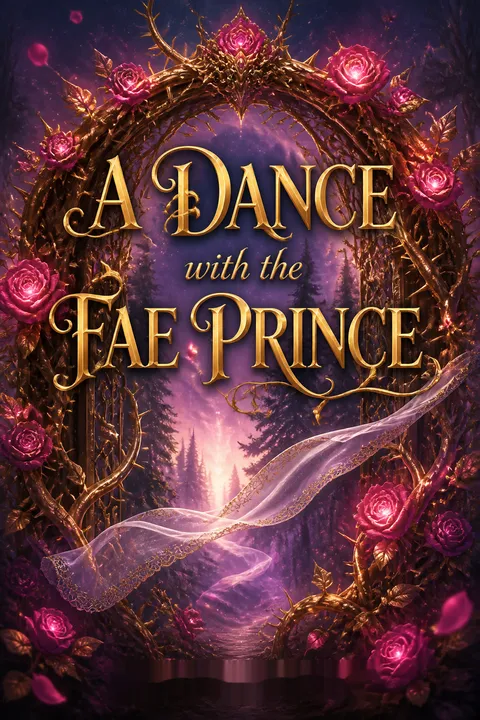
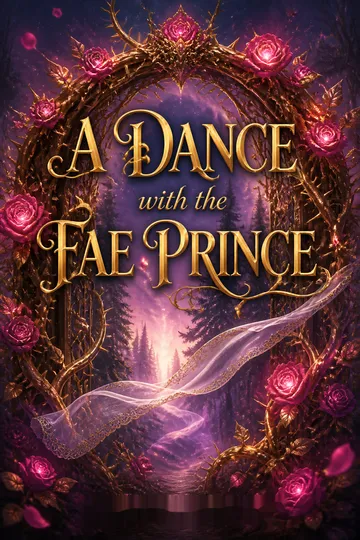
Reviews for A Dance with the Fae Prince are mixed, averaging 3.82/5. Many readers praise the whimsical world-building, Cinderella/Psyche-and-Eros inspiration, and slow-burn arranged marriage romance. Common criticisms include predictable plot twists, repetitive inner monologue, underdeveloped characters, and a rushed romance lacking genuine chemistry. The pacing is frequently called slow, particularly in the middle. Most agree it improves upon the first series installment, and the stunning cover receives near-universal praise. Readers seeking light, straightforward fantasy romance tend to enjoy it most.
People Also Read






Characters
Katria Applegate
The unwilling heirKatria is a resourceful young woman raised in a household that treats her labor as owed and her desires as inconvenient. She repairs a decaying manor, rides to the edge of the woods for brief freedom, and keeps music alive despite her family’s efforts to silence it. Her instinct is often to protect others, even when doing so puts her in danger. Years of coercion have made her wary of dependence and convinced her that love means surrendering herself. Her practical intelligence, emotional perceptiveness, and capacity to learn become as important as her unexpected magic. She wants not simply safety, but the right to decide what she gives, whom she trusts, and where she belongs.
Davien
The exiled fae princeDavien is a fae raised in the human world after his family was targeted by the ruling Boltovs. He enters marriage seeking an old book and a path back to his people, while concealing his identity and weakness from Katria. His focus on duty can make him impatient with uncertainty, especially when the restoration of his power seems close. Beneath that ambition is a thoughtful man who listens closely, values music, and wants to repair a political order built on fear. Katria challenges his habit of deciding what others need without asking them. He must learn that leading a people is not the same as pursuing a throne.
Joyce
The calculating stepmotherJoyce is Katria’s stepmother and the force governing the Applegate manor after Katria’s father disappears. She is preoccupied with wealth, social status, and the appearance of prosperity, even as the estate deteriorates. She treats marriage as business and expects Katria to serve the household without complaint. Joyce’s control is often exercised through denial, punishment, and claims that Katria has misunderstood events. She is not merely a stern authority figure; she teaches Katria to distrust her own perceptions and to associate care with obligation. Her influence explains why Katria initially sees love as a trap rather than a source of mutual regard.
Helen
The polished tormentorHelen is Joyce’s daughter and Katria’s stepsister. Sharp, disciplined, and skilled at identifying another person’s vulnerabilities, she reinforces Joyce’s authority and belittles Katria’s hopes. She presents her warnings as practical concern, which makes her harder to dismiss than a simple antagonist. Helen has learned to seek security by aligning herself with power and maintaining control over those beneath her. Her treatment of Katria contributes to the latter’s distrust of intimacy and family obligation.
Laura
Katria’s gentle sisterLaura is Joyce’s youngest daughter and Katria’s closest family ally. She is affectionate, imaginative, and drawn to magic, music, and the prospect of a romantic future. Her kindness survives in a household that pressures her to become more like Joyce and Helen. Laura cannot protect Katria consistently, but she offers the warmth that makes the manor bearable. Her relationship with Katria is built on tenderness rather than obligation, and Katria’s concern for her helps turn escape into an effort to make a choice possible for someone else.
Oren
Davien’s loyal guardianOren is Davien’s butler, caretaker, and long-serving protector. In the human world he appears to be a reserved older servant, but he is a fae who helps guard Davien’s identity and estate. He is practical and dutiful, sometimes too committed to rules for Katria’s comfort. His care is more visible in actions than conversation: he feeds her, maintains the house, and intervenes when danger reaches the garden. His divided role as servant and guardian helps connect Davien’s hidden past to his return.
Shaye
The escaped ButcherShaye is a fierce fae warrior who escaped a life of training under the Boltov regime. She is blunt, vigilant, and difficult to impress, especially when she believes someone is being careless with their safety. Her hard manner protects a fierce commitment to personal agency; she understands what it means to be shaped into a weapon by someone else. Shaye becomes both a strategic ally to Davien and a model for Katria, showing that survival can include defining one’s own worth. Her bond with Giles develops at her pace, not according to anyone else’s expectations.
Giles
The irreverent fae builderGiles is a fae from the Court of Pillars, a skilled builder with a teasing manner that often hides his seriousness. He helps Davien’s cause and contributes his knowledge of rituals and construction to Dreamsong’s defenses. Giles is especially patient with Shaye, respecting the damage she carries rather than demanding an immediate response to his affection. His humor offers relief, but it does not make him careless about danger. He recognizes Katria’s emotional strain and helps her understand that being treated with respect is something she deserved all along.
Vena
Dreamsong’s steady leaderVena leads the refuge of Dreamsong and serves as a political and magical adviser to Davien. She is composed, strategic, and attentive to the needs of a displaced community. Vena supports Davien’s return but does not simply indulge his impatience; she insists on research, preparation, and the protection of her people. Her authority comes from experience and practical judgment rather than the promise of a crown. She also recognizes Katria’s unusual condition and helps the group treat it as a problem requiring knowledge rather than guesswork.
Raph
The nimble young guideRaph is a quick-footed fae child who knows Dreamsong’s alleys and hidden routes. He enjoys bargaining and showing off, but his curiosity is matched by loyalty to his family and friends. His first deal with Katria reveals how easily a harmless request can carry unintended power in fae society. Later, he proves resourceful under pressure and takes responsibility for people his age should not have to protect. Katria treats him as capable without forgetting that he is still a child.
Hol
Raph’s protective fatherHol is a fae craftsman and Raph’s father, connected to the displaced Court of Leaves. He is protective, practical, and committed to the community sheltering in Dreamsong. His concern for Raph can sound stern, but it comes from a desire to keep his son safe in a world shaped by political violence. Hol’s family life gives Katria a glimpse of care that corrects without cruelty and affection that does not have to be earned through obedience.
Felda
Raph’s affectionate motherFelda is Raph’s mother and Hol’s partner. Warm and candid, she welcomes Katria to her family table and disciplines Raph without withdrawing affection. Her easy embrace of her son unsettles Katria because it contrasts with the conditional approval she knew at home. Felda’s ordinary domestic kindness becomes a quiet but powerful example of a family that can correct a child and still make him feel loved.
Allor
The guarded informantAllor is a Butcher with access to information from inside the High Court. She is pragmatic, self-protective, and skilled at keeping her motives difficult to read. Her help comes with conditions, and her evasive answers make Katria wary even when others accept her claims. Allor embodies the political compromises created by an oppressive regime: people may resist it, serve it, or try to survive within it without fitting neatly into a single moral category.
King Wotor Boltov
The reigning usurperWotor Boltov rules the fae through inherited authority, the glass crown, and a force of trained Butchers. He is calculating and theatrical, using public violence to discourage anyone from questioning his claim. His apparent frailty should not be mistaken for weakness; he remains dangerous through magic, political control, and the fear surrounding him. Boltov represents a regime that tries to make its version of history seem permanent by eliminating every person who might challenge it.
Cordella
The kind stablehandCordella is the stablehand who tends Misty and quietly helps Katria keep the horse her father gave her. She understands the limits imposed by Joyce but makes small acts of kindness where she can. Her practical loyalty offers Katria companionship without judgment, and her help remains important when Katria returns to claim Misty.
Talahani
Katria’s absent motherTalahani is Katria’s birth mother, known to her chiefly through blurred childhood memories, songs, and the keepsakes left behind. Katria remembers her as loving and musical, though years of family upheaval have made those memories difficult to hold. The lute and old book associated with her preserve a connection Katria’s stepfamily tried to erase. Her absence shapes Katria’s longing for an earlier, kinder home.
Plot Devices
Katria’s sense of lies
Detects falsehood by scentKatria smells smoke when another person lies and tastes metal when she lies herself. The gift helps her recognize that Davien is truthful even when his motives are painful or incomplete, and it makes Allor’s evasions especially troubling. It does not give Katria perfect knowledge: people can omit information, speak ambiguously, or tell truths that conceal their intentions. The ability sharpens her judgment but cannot replace conversation, evidence, or trust.
The mother’s old book
Links two hidden historiesThe worn book, marked by a star and crown, is one of the few objects Katria’s father preserved from her birth mother. Davien seeks it because its binding is needed for a ritual to restore the ancient kings’ power. Its destruction brings Katria into Midscape, while its origin later helps connect her family history to the fae throne. The book begins as a private keepsake and becomes evidence in a political and personal mystery.
Fae ritual magic
Turns intention into actionFae magic depends on rituals, which may use words, materials, markings, location, and deliberate movements to shape power. Katria initially experiences magic as an involuntary force, then learns to participate in small acts such as making a lantern. The ritual system makes knowledge and preparation essential, while allowing Katria’s intuition and music to guide her toward actions that formal instructions do not fully explain.
The glass crown and pendant
Measures and transfers sovereigntyThe glass crown embodies the old Aviness claim and responds to a true heir. A glass pendant can temporarily hold the ancient kings’ power, making it central to the attempted transfer from Katria to Davien. The crown’s rejection of Davien contradicts the group’s assumptions and forces them to reconsider who the rightful heir is. The crown is not merely a royal ornament; it acts as a test of legitimacy that political claims cannot override.
The lute and old songs
Makes memory a routeKatria’s lute is a keepsake from her mother and one of the few joys she preserves against Joyce’s attempts to silence her. Music gives Katria a way to express herself, build relationships, and gain access to Boltov’s court. An old Aviness melody also guides her through the fog to the Lake of Anointing. The songs therefore connect private memory to public action, turning artistic skill into both emotional refuge and practical knowledge.
Married to Magic Series

About the Author


Download PDF
Download EPUB
.epub digital book format is ideal for reading ebooks on phones, tablets, and e-readers.








