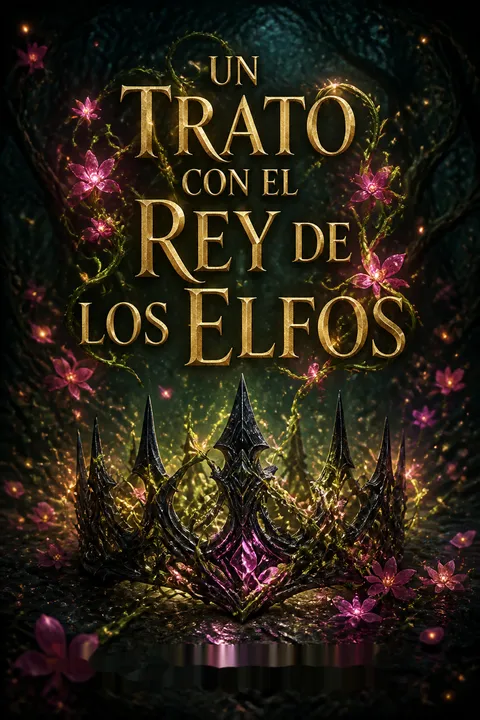


Plot Summary
A Healer's Refusal
In Capton, herbalist Luella Torrnet works through a backlog of remedies while the town waits for the elves to claim their next Human Queen. The chosen woman has not appeared in a year, and the spreading Weakness is shortening lives that should have lasted far longer. Luke, her childhood friend and a Keeper of the Fade, arrives with travel supplies and asks her to flee with him.
He confesses his love; Luella returns it, but refuses to abandon patients and a community that funded her education. At breakfast, Luke tells her parents they are engaged, though Luella never agreed to marry him. She drags him outside to challenge the claim, still believing his urgency comes from fear of the elves’ arrival.
Luella’s first defining choice is not between two men but between private desire and a promise she has made to a community. Her refusal to run is not simple self-denial: the town’s investment in her education has become a moral bond, and her patients make that bond immediate. Luke’s declaration seems to offer a life beyond duty, yet his unilateral announcement of marriage already blurs love with entitlement. The pressure of the missing queen intensifies this conflict, turning an ordinary romance decision into a choice made under political threat.
The Hidden Queen
At the town hall, the Elf King arrives demanding the missing queen and threatening to search every home. When Emma collapses, Luella treats her before the king, who recognizes the magic in her healing.
He tears away the necklace Luke gave her, and Luella’s hidden power erupts: plants reclaim the square and her sight opens to the living magic around her. Luke admits he identified her as the queen years earlier and used the necklace’s black obsidian to suppress her power and its labradorite to shield her from elven detection.
He meant to take her away rather than surrender her. Luella rejects his claim of love, then stops the king from killing him and demands a human trial. The king orders her across the Fade and insists they marry immediately.
The revelation reframes Luella’s past without making her responsible for it. Her healing, once understood as learned skill alone, is also a suppressed inheritance, while the necklace becomes a material record of Luke’s choice to manage her future without consent. Luella’s refusal to let the Elf King execute Luke matters: even in shock, she insists that justice should not become another form of arbitrary control. Her emerging power gives her force, but her first use of it is ethical restraint, not revenge.
A Wedding Across Worlds
With Midscape’s border weakening, Luella is hurried through a wedding ceremony before she can properly prepare for either marriage or queenship. Eldas uses magic to make her compliant during the vows, and she realizes the ceremony has been forced.
He nevertheless allows her a brief farewell with her parents, who hold her as she leaves Capton behind. The path through the Fade carries her into Quinnar, a cold elven city built beneath the mountains.
There, Eldas explains that he is not immortal and that the Human Queen is bound to each Elf King in turn. Luella learns that the queen’s magic connects Midscape to the Natural World. Eldas gives her a labradorite ring to guard her true name, then leaves her with General Rinni to prepare for court.
Luella’s departure is a double severance: she loses home and bodily autonomy in the same day. The forced wedding exposes the pact’s central contradiction, which claims to preserve peace while denying its human participant meaningful consent. Eldas’s brief permission for a farewell does not undo his coercion, but it introduces a more complicated figure than the monster Luella expected. The ring and the true-name system also establish that identity is politically vulnerable here. Protection and possession can look remarkably alike when power belongs to someone else.
Spring Costs a Body
Eldas expects Luella to sit on the redwood throne, but neither warns her that it will draw on her life. When she obeys, roots and plants flood her awareness, demanding nourishment until she collapses. By morning, the dead gray landscape outside has turned green: her magic has restored spring to Midscape.
Still weak, she is subjected to Prince Harrow’s cruel welcome, as he and his friends test her with painfully spiced food and mock her place as queen. When Harrow traps her in the room, her anger animates the roses into a thorned growth that threatens everyone, including herself. She eventually controls the vines. Eldas finds her injured and agrees to teach her magic, though he continues to treat her as a duty rather than a partner.
The throne makes the cost of Luella’s new role bodily rather than abstract. Midscape’s renewal is not a reward she can enjoy without consequence; the land draws on the very life she is meant to restore. Harrow’s prank repeats, in a smaller but revealing register, the coercion she has already endured from Luke and Eldas. Her uncontrolled roses show that anger can give her power, but not yet mastery. The decisive change is her willingness to learn, despite a court that keeps confusing service with obedience.
A Name Reclaimed
During their first serious lesson, Eldas insults Luella’s work in Capton, then uses her true name to force her toward the throne. She breaks his control by changing her own essence, a feat he calls the Being, and walks out before he can resume the lesson. From a hidden passage, she later overhears Eldas admit to Rinni that he has been isolated while waiting for the queen and fears her power may be the last of its line.
In the greenhouse, healer Willow introduces her to the past queens’ journals, which contain practical notes on magic as well as evidence that earlier queens wanted lives beyond the throne. Luella decides to seek a way out of the cycle herself, rather than accept that existence is her only purpose.
The true-name confrontation crystallizes the difference between being known and being owned. Eldas’s knowledge gives him command until Luella discovers that her identity is not fixed by his access to it. Her counter-magic is an act of self-definition, not merely a lesson in technique. The journals then broaden her rebellion beyond personal escape: she recognizes a history of women whose private observations survived even when their public roles did not. Their records give her both a method and a lineage of dissent.
The Wolf Knows Home
Luella climbs down the castle using vines, hoping to cross the Fade and return to Capton. In its darkness, the enormous wolf she glimpsed as a child finds her and leads her to a keystone, where Eldas catches up with her.
He explains that the Human Queen must periodically feed the redwood throne or Midscape will wither; at midsummer she returns to the Natural World to renew her strength. The cycle binds her to the king, but Luella argues that another arrangement might balance the worlds without sacrificing queens.
Eldas agrees to let her investigate for three months, provided she shares her findings and does not attempt another escape. The wolf, whom Luella names Hook, follows them back to the castle, becoming her first steady companion in Midscape.
The failed escape changes the terms of Luella’s resistance. She learns that leaving physically cannot dissolve the system, but the system is not therefore beyond question. Her proposal asks Eldas to exchange inherited certainty for shared inquiry, and his agreement creates the first genuine partnership between them. Hook’s appearance complicates the boundary between worlds: the Fade is not merely a wall but a living space capable of relation. Luella’s growing attachment to the wolf foreshadows how belonging may emerge through care rather than title.
A Queen Under Siege
As Luella trains with Eldas and Willow, she learns to exchange plant life for controlled bursts of magic. Rinni takes her into Quinnar disguised in borrowed clothes so she can choose furniture for her rooms; during the outing, Luella notices Aria, Harrow’s friend, meeting a horned fae.
Before Rinni can get her safely back, fae abductors drug Luella and try to carry her away. She breaks free by tearing at one captor’s necklace, then summons Hook with a whistle.
Eldas arrives as the captor threatens her and kills him with wild magic, despite Luella’s plea to spare him. Back in the castle, Eldas comforts her and explains that rebels resent the elves’ control of contested territory. The attack leaves Luella safer, but unsettled by the king’s capacity for violence.
The kidnapping makes political conflict intimate: Luella is not only a symbol of the treaty but a target whose body can be used to bargain over land. Her rescue depends on skills she has begun to develop and on Hook’s loyalty, not on the protections of her rank. Eldas’s killing of the attacker then exposes a moral divide. He sees a threat neutralized; Luella sees a person denied trial. Their intimacy grows alongside a real disagreement about justice, preventing romance from erasing the violence embedded in his rule.
Medicine and Mead
Luella treats Harrow after finding him feverish and incoherent, then heals him again when he collapses following another night out. He eventually confides that he has become dependent on glimmer, a fae substance that lets elves feel closer to the Veil and escape their thoughts.
Luella promises to help without exposing his confidence. Meanwhile, she repairs her friendship with Rinni and asks Eldas to share a private dinner. Their awkward conversation opens a window onto his loneliness and his affection for Alice, the previous queen whose journal Luella lends him.
After wine and a tumble against the hearth, Eldas kisses Luella, then withdraws when he remembers she plans to leave. His retreat leaves their new closeness unresolved, even as Luella recognizes that her feelings are no longer simple curiosity.
Harrow’s glimmer use and Luella’s attraction to Eldas are not equivalent, but both involve the temptation to suspend painful awareness. Harrow seeks relief from a life in which he feels dispensable; Luella risks confusing intimacy born under constraint with a freely chosen bond. Her promise of medical privacy gives Harrow a rare space without judgment, while her dinner with Eldas creates one for mutual recognition. His withdrawal after the kiss shows that affection alone cannot settle the question of choice, especially when Luella’s future remains structurally uncertain.
A Garden Between Worlds
When snow returns to Quinnar, Luella sits on the redwood throne again, enduring its drain so Midscape can keep its seasons. She grows weaker, and searches the stored belongings of earlier queens for clues, finding a hidden journal and a dark wooden pendant.
Eldas takes her to the secluded queen’s cottage, a refuge where transplanted plants from the Natural World help restore her strength. They tend the gardens, share meals, and finally choose each other without wine or threat. Their intimacy deepens, but neither forgets the approaching coronation or Luella’s plan to leave.
At Westwatch, Eldas’s brother Drestin and his pregnant wife Carcina welcome them. Luella tends Carcina’s needs as a healer, while a long-hidden journal begins to suggest that the first queen left more than personal reflections behind.
The cottage gives Luella a rare experience of life not organized around court spectacle or the throne’s demands. Its garden demonstrates that exchange between worlds can nourish rather than extract, a practical counterimage to the queen’s usual depletion. Eldas’s domestic ease lets Luella encounter a self he rarely shows, while their chosen intimacy makes departure more painful rather than less necessary. Carcina’s welcome also reveals that care can become a form of participation in Midscape, even as Luella continues to investigate whether participation must mean permanent sacrifice.
Carron Turns Hostile
At Westwatch, Harrow fails to arrive with his mother. Drestin reports that Harrow’s guard and horse were found mutilated near Carron, where Aria is performing. Luella recognizes the connection and helps Eldas track Harrow through the town, while Hook follows the scent to a hidden passage.
Eldas enters first, but Luella disobeys his order to wait and follows with Hook. Inside the fae woods, she finds Harrow drugged and Eldas fighting a monstrous beast.
Aria takes Luella hostage and demands the return of fae lands, revealing that she has aided a rebel faction and used Harrow’s glimmer dependence to draw him out. Luella turns her own blood and briar magic against the attackers, capturing Aria while Eldas kills the remaining rebels. The rescue saves Harrow but leaves Luella drained.
The Carron plot joins the private and political strands that had seemed separate. Harrow’s dependence makes him vulnerable to manipulation, while Aria’s loyalties expose the cost of treating diplomatic access as harmless. Luella’s decision to follow Eldas is not blind defiance: she has information and abilities the others lack. Her magic can restrain and protect, but its use drains her and damages the ground. The scene tests whether her ethic of healing can survive conflict without becoming passivity, and whether Eldas can accept her as an active participant in danger.
The Heartroot Answer
After the rescue, Eldas confronts Luella for withholding Harrow’s glimmer problem; they part in anger before she can tell him what she feels. In Quinnar, Luella discovers that the hidden journal belonged to Lilian, the first Human Queen.
Its clues connect the redwood throne’s origin, the pendant, a statue of the queen planting something, and the memory-bearing heartroot. Luella concludes that Lilian designed a way to balance the worlds without future queens. She plants the heartroot and pendant beneath Capton’s great redwood, creating a natural counterpart to the throne, then waits for proof.
Five days later, an elf messenger confirms the throne has grown leaves and the seasons can continue without her. The messenger also reports that Eldas considers her work finished. Luella has succeeded, but the words do not bring relief.
The heartroot solution is a discovery made by interpreting objects, not by gaining a superior force. Luella joins the practical knowledge of plants to historical traces that the official account has neglected. Her method restores balance through a counterpart rather than destroying the old structure, which makes the solution materially and ethically distinct from conquest. Yet success does not resolve her emotional life. The messenger’s report turns freedom into an immediate test: now Luella must decide what she wants without the old system deciding for her.
A Chosen Return
Back in Capton, Luella reunites with her parents but finds that her old room and the town’s celebration cannot restore the person she was. At the public welcome, she runs from the stage, unable to pretend she still belongs only to her former life.
Her mother listens as Luella admits she loves Eldas, then reminds her that Capton can survive without making her its sole healer. Eldas has already arranged for another herbalist to serve the town, removing Luella’s last practical reason to stay. She returns through the Fade with Hook’s help and reaches Quinnar during the spring festivities.
In front of the court, she declares her love for Eldas. He returns it, and they postpone the coronation briefly before taking their thrones together. Luella becomes queen by choice, not because the cycle requires her sacrifice.
Luella’s return completes the distinction between obligation and commitment. She does not abandon Capton because it matters less; she leaves only after her mother helps her see that care need not mean making herself indispensable. Eldas’s arrangement for another healer makes that freedom concrete rather than rhetorical. Her public declaration is therefore not a surrender to romance or royal expectation. It is an act made possible by having tested life outside Midscape and returned with the ability to choose. The new coronation retains shared responsibility while rejecting the old system’s compulsory logic.
Analysis
The novel makes a political system legible through the body. Midscape’s seasons depend on Luella’s recurring depletion, so the treaty’s apparent stability is not neutral: it is maintained by assigning one woman’s life force to an entire world. The book’s central conflict therefore is not simply whether duty matters, but who gets to define duty and whether care can be separated from compulsory sacrifice.
Luella’s identity as an herbalist gives her a way to resist that system without rejecting the people who depend on her. She investigates, observes, compares records, and tests remedies. The same habits that once made her a local healer let her read the queens’ journals and recognize that history contains usable evidence. The heartroot solution reflects her method: balance comes through a living counterpart, not through destroying one world to save another.
Romance sharpens rather than replaces this ethical problem. Luke claims love while deciding Luella’s future for her. Eldas initially treats her as a necessary function, then must confront the difference between protection and control. Luella cannot be sure her feelings are free while every circumstance binds her to the king, so leaving becomes essential to making a meaningful return possible. Her final choice has force because it follows an actual alternative, not because desire magically dissolves political constraints.
The ending does not erase responsibility. Luella returns to Midscape and accepts a role in governing it, but the queen’s survival is no longer the mechanism that keeps the seasons turning. The resolution preserves care while changing its terms. It suggests that the most durable forms of loyalty are not those that make a person indispensable, but those that allow them to choose where and how they serve.
Review Summary
A Deal with the Elf King received mixed reviews. Many readers enjoyed the Hades/Persephone and Beauty and the Beast inspired elements, as well as the arranged marriage and enemies-to-lovers tropes. The slow-burn romance and world-building were praised by some. However, others found the characters underdeveloped, the plot predictable, and the pacing inconsistent. Some reviewers criticized the magic system as confusing and the dialogue as juvenile. While some readers found it a fun, light fantasy romance, others felt it didn't live up to its potential.
People Also Read



Characters
Luella Torrnet
The reluctant Human QueenLuella is a nineteen-year-old herbalist raised in Capton, where she has built her identity around skilled work and service to the people who helped educate her. Practical, observant, and stubbornly compassionate, she trusts remedies she can test with her hands more than customs she is told to accept. Her difficulty is not a lack of courage but a tendency to treat self-sacrifice as the surest proof of love and usefulness. When magic and royal duty overturn her plans, she relies on the habits of a healer: notice what is wrong, seek evidence, and keep trying. Her deepest need is to distinguish a freely chosen life from one assigned by family, community, or power.
Eldas
The guarded Elf KingEldas is the Elf King, a ruler whose authority rests on ancient magic and whose daily life has been shaped by strict succession customs. He is controlled, formal, and often cutting, especially when he fears that uncertainty will endanger his kingdom. Years of isolation have taught him to treat duty as both identity and defense; he struggles to express care without turning it into an order. His relationship with Luella challenges his assumption that a queen’s role can be understood without knowing her as a person. Beneath his severity are grief, loneliness, and a capacity for tenderness that he has rarely practiced. He must learn whether protecting someone can mean making room for her choices.
Luke
The childhood KeeperLuke is Luella’s lifelong friend and a Keeper of the Fade, the order charged with guarding Capton’s border with the magical world. Familiar and affectionate, he has long imagined a future with Luella, but his idea of devotion is tangled with the urge to protect her from decisions he fears she will make. His position gives him access to sacred objects and knowledge, while his closeness to Luella gives him emotional influence. He is shaped by fear of the approaching crisis and by a belief that escape can solve what duty cannot. His presence forces Luella to examine the difference between love that respects choice and love that assumes ownership.
Rinni
The king's steadfast generalRinni is Eldas’s general and closest adviser, a disciplined soldier who has spent much of her life serving the royal household. Her sharp manner initially keeps Luella at a distance, but she is more perceptive and generous than her formal role suggests. She understands how traditions can narrow a person’s choices because she has also followed a path shaped by family expectations. Rinni balances loyalty to Eldas with the courage to tell him when he is behaving badly. Her private interest in painting reveals a quieter self beneath her armor and makes her a useful guide to the pressures of life at court.
Willow
The thoughtful royal healerWillow is a young healer trained under his grandmother, Poppy, and one of Luella’s first kind companions in Quinnar. Gentle, curious, and eager to please, he helps her understand Midscape’s history and elven magic without treating her questions as foolish. His work in the greenhouse gives Luella a place to use her knowledge, while his access to past queens’ journals helps her pursue her own research. Willow’s warmth contrasts with the castle’s formal distance. He is also devoted to Hook, whose presence brings out his playful, openly affectionate side.
Harrow
The unruly royal brotherHarrow is Eldas’s youngest brother, a prince whose charm often arrives wrapped in provocation. He uses jokes and reckless social outings to keep others from seeing how uncertain he feels about his place in the royal family. His closeness to friends such as Aria gives him a life beyond court, though that freedom also exposes him to risk. Harrow resists being managed, especially by Eldas, but responds to Luella’s directness because she treats him as a patient rather than a political problem. His vulnerability sits beneath the brashness, making him more complicated than his public mischief suggests.
Aria
The bold court performerAria is an acrobat and performer whose confidence and teasing manner help her command attention. She moves easily among Harrow’s circle and has connections to both elven and fae society, giving her a position between communities. Ambitious about her artistic future, she values independence and knows how to use charm as a form of influence. Luella finds her difficult to read, partly because Aria can shift from playful to guarded in a moment. Her divided heritage and social ties place her close to the political tensions that shape Midscape.
Hannah Torrnet
Luella's perceptive motherHannah is Luella’s warm, outspoken mother, a red-haired woman who loves her daughter fiercely and is unafraid to challenge the assumptions of Capton’s leaders. She dislikes the custom of sending a young woman away as a queen, even while understanding the danger the treaty is meant to prevent. Hannah’s instincts are practical as well as emotional: she notices when duty is consuming Luella and tries to make space for her to want something of her own. Her affection offers Luella a model of love that supports rather than directs.
Oliver Torrnet
Luella's steady fatherOliver is Luella’s father and a member of Capton’s council. A careful, measured man, he tries to balance public responsibility with the fear that the town’s customs may be failing. He has spent years preparing civic business and debating how best to respond to the missing queen, but he remains attentive to the cost those decisions impose on families. His love for Luella is quieter than Hannah’s but no less deep. He represents the community’s investment in her education and the complicated gratitude Luella feels toward the people who helped her build a life.
Poppy
The veteran castle healerPoppy is Willow’s grandmother and a healer from a long line of royal medical attendants. Blunt, lively, and unafraid to correct princes, she is one of the few people in the castle who can challenge Harrow without ceremony. Her practical kindness helps Luella feel less alone in unfamiliar surroundings. Poppy’s experience connects the present court to generations of care, even as she recognizes that old traditions do not always serve the people expected to uphold them.
Alice
The remembered queenAlice was the previous Human Queen and the sister of Mr. Abbot in Capton. Her journals record herbs, magic, and details of a life that official custom tends to reduce to the title of queen. To Eldas, she was a rare source of kindness during his isolated childhood; to Luella, her writing becomes a way to hear from a predecessor as a person rather than a distant symbol. Alice’s surviving records reveal how much knowledge a queen could preserve even when her public role appeared narrow.
Lilian
The first Human QueenLilian is the first Human Queen, a historical figure remembered through a statue, scattered records, and the traditions that grew around the founding of the pact. She belongs to the earliest moment when humans and elves had to invent a way to share power and keep their worlds apart. The surviving traces of her life invite questions about what the official story leaves out. Luella approaches Lilian not as a flawless founder but as a woman whose choices may have been more deliberate and complex than later generations understood.
Drestin
The duty-minded elder brotherDrestin is Eldas’s older brother, a military leader stationed at Westwatch along the boundary with the fae lands. Direct and pragmatic, he believes responsibility can steady a younger sibling who has too much freedom and too little direction. His marriage to Carcina shows a more affectionate side than his blunt views on royal duty initially suggest. Drestin’s work at the border places him close to the tensions between elves and fae.
Carcina
Drestin's warm-hearted wifeCarcina is Drestin’s pregnant wife, a gracious woman who meets Luella with warmth despite the awkwardness of court etiquette. She is patient with her own discomfort and quick to make another person feel welcome. Her relationship with Drestin has a teasing ease that offers Luella a glimpse of a marriage built on affection as well as arrangement. Carcina also recognizes Luella’s medical knowledge and invites her to help.
Sevenna
The king's formidable motherSevenna is Eldas’s mother and the former king’s consort, a sharply composed woman who is fiercely protective of Harrow. Her relations with Eldas carry years of family tension, and her suspicion of Luella reflects a history Luella does not initially understand. Sevenna values closeness with her younger son and is accustomed to defending him from the pressures of royal life. Her sternness conceals a more complicated family loyalty.
Emma
Luella's longtime patientEmma is Luella’s childhood friend, a young woman with a weak heart whom Luella has cared for since they were girls. Their history began with improvised remedies in the woods, making Emma one of the first people to trust Luella’s healing instincts.
Ruth
Emma's protective motherRuth is Emma’s mother. Fear for her daughter can make her suspicious and quick to blame, but she trusts Luella enough to let her treat Emma when panic gives way to necessity.
Mr. Abbot
The lonely old patientMr. Abbot is an elderly Capton resident who welcomes Luella’s regular visits as much as he values her tea. His memories of his sister Alice give Luella a human connection to the queens of the past.
Jalic
Harrow's sardonic friendJalic is one of Harrow’s friends, a sharp-witted man who enjoys teasing and social gatherings. His easy familiarity with the prince places him within Harrow’s close circle.
Sirro
Harrow's quiet companionSirro is a reserved member of Harrow’s circle, often more interested in his book than in the group’s jokes. His quietness makes him a watchful presence among the prince’s louder friends.
Hook
The Fade's loyal wolfHook is a huge wolf with a damaged ear who moves through the Fade and appears at crucial moments in Luella’s life. His intelligence and steady loyalty make him more than a strange animal companion. He responds to Luella’s whistle and seems to understand her intentions, while his connection to the Fade links her to the unsettled border between worlds. Hook offers companionship without demands, a contrast to the human and royal relationships shaped by duty.
Plot Devices
The Fade
A border between worldsThe Fade separates the Natural World, where humans live, from Midscape, the realm of elves and other magical peoples. It is also a living, unstable threshold that can be crossed at certain points and maintained through keystones. Its condition affects both political security and the movement of magic. Luella’s experience of getting lost inside it and later returning with Hook makes the border a physical test of belonging, not merely a map feature. Eldas’s power lets him guide people through it, while its weakening allows danger to pass between worlds.
The Redwood Throne
A living seasonal engineThe throne is the physical seat of the Human Queen and the channel through which her life-giving magic reaches Midscape. Sitting on it revives the land, but it also draws on the queen’s strength, so its seasonal renewal is both essential and dangerous. Luella gradually learns that the throne is connected to deep roots and a hidden seed at its center. The arrangement makes political duty bodily: a kingdom’s fertility depends on one woman repeatedly giving power to it.
True Names
Magic as personal commandElven onomancy allows an elf who knows a person or object’s true name to alter it through magic. The Knowing discovers that essence, while the Being can change it. Labradorite can shield a person from elven detection, and black obsidian can suppress magic. Luke’s necklace uses both stones to hide Luella’s identity and power; Eldas later uses her name to control her, forcing her to learn that her own essence can be reclaimed. These mechanics turn the question of who knows a person into a question of who can command them.
The Queens' Journals
A history in private handsThe Human Queens’ journals preserve practical knowledge about plants, magic, and life in Midscape that official traditions tend to overlook. Luella reads them as both a student and a potential predecessor, finding evidence that earlier queens wanted purposes beyond sitting on the throne. Eldas also reads Alice’s journal and gains a more personal view of the women who shared his role. The journals turn scattered individual experience into a body of knowledge that can challenge the assumption that the old arrangement is inevitable.
The Heartroot
A memory-bearing counterweightThe heartroot is a rare plant whose mature flowers can strengthen antidotes and whose deeper properties involve memory. Luella first encounters it in Midscape’s greenhouse, where her touch makes it bloom and briefly opens her to memories held by the plant. Later, clues in the first queen’s records connect the heartroot, a wooden pendant, the redwood throne, and the need for balance between worlds. Luella uses that understanding to create a living counterpart on the Natural World side. The plant converts botanical knowledge into the key to ending the queens’ compulsory role.
About the Author


Download PDF
Download EPUB
.epub digital book format is ideal for reading ebooks on phones, tablets, and e-readers.








