


Plot Summary
A Name in the Dark
Eighteen-year-old Valera Normas works long hours stitching gowns to keep herself and her younger sister, Brielle, fed. Their father drinks away the family’s money and strikes Valera when Brielle challenges him. That night, an unseen presence watches Valera in her cold bedroom. Half asleep, she answers its request and gives her name.
At dawn, the candle flame turns blue, and the witch Mother Ulla finds magic gathering around the house. She warns Valera that a fae has begun a marriage ritual: giving her name has made her half claimed, and the new moon will complete the bond. Valera has spent her life avoiding magic, but now an old family curse and a stranger’s attention have reached her doorstep.
Valera’s first consequential act is not a bold choice but an unguarded answer, a small lapse made under exhaustion. That matters because the danger enters through a human habit of courtesy rather than through a grand magical transgression. Her ordinary life has already trained her to suppress her needs: she works hungry, absorbs her father’s violence, and measures each decision by Brielle’s safety. The fae bargain exploits that narrow freedom. Magic does not interrupt a stable world so much as reveal how little control Valera possessed within it.
The Threshold Bargain
Mother Ulla explains that Valera can break the half-marriage by staying inside her father’s house from sunset to sunrise. She wards the doors and windows, but Brielle remains out working and Father returns in a rage, threatening the witch. When goblins gather outside, they offer wealth and invoke Brielle’s name.
Their voices suggest the girl is in their hands, then a scream convinces Valera the danger may be real. Ulla insists the fae cannot truly harm Brielle, yet Valera cannot bear to wait behind the ward. She opens the door and steps into the garden, choosing what she believes is her sister’s rescue over her own safety. Darkness takes her, and the fae carry her away.
The choice is formally Valera’s, but its emotional conditions have been engineered: the fae use the vulnerability she has spent years protecting. The scene distinguishes consent from mere movement across a threshold. Valera acts voluntarily in the narrow sense, yet she is responding to a threat she cannot verify and to responsibilities that have defined her identity since childhood. Her decision is neither simple foolishness nor uncomplicated heroism. It is an expression of care made under coercive pressure, and that ambiguity becomes the story’s central moral problem.
A Husband Without a Face
Valera wakes in a sumptuous chamber in Orican, surrounded by jewels, fine clothes, and a bathing pool. Her captor appears only as a shadow after the fire dwindles. He identifies himself as Erolas, Lord Dymaris, gives her his true name, and promises that she will be treated as mistress of the house.
He also declares that fae marriage law binds her to him for a year and a day, after which he will return her home. Their one rule is that she must never see his face. Valera tests the power of his name, but it cannot make him send her home at once. She refuses his gifts and his food, insisting that comfort does not make captivity acceptable.
Erolas presents himself as courteous, but his courtesy operates inside a situation he created without Valera’s permission. His offer of comfort and her authority over the household do not dissolve the fact that he controls the duration and terms of her confinement. The true name complicates this imbalance: it grants Valera leverage, yet also creates an intimate bond she did not seek. Her refusal of gifts is a practical defense against being emotionally purchased. She understands that luxury can soften the daily experience of captivity without changing its structure.
Orican Behind the Glass
By daylight, Valera discovers that Orican’s corridors and rooms obey her spoken commands, though the palace is sealed within a strange fold of reality. A window reveals a waterfall and a distant landscape under moonlight; a chapel holds the same gods she knows, while a shadow kneels before their statues.
Ellie, a green-skinned servant, guides her through the house, where goblins steal food and torment the staff. Erolas later brings water from the Starglass Mirror, allowing Valera to see Brielle in Whispering Wood. Her sister is alive, but cannot hear her warning to stay away. Erolas promises to watch over Brielle, and Valera eats his food at last, accepting help without mistaking it for freedom.
Orican makes captivity disorienting by combining lavish domestic care with an inaccessible outside world. Valera can command doors and receive nearly anything she requests, but those powers govern the interior of her prison, not her return home. The mirror offers real reassurance, yet communication remains incomplete: she can see Brielle but cannot make her understand. That asymmetry preserves Valera’s central anxiety even as she begins to accept care from Ellie and Erolas. Her adjustment is not evidence that the captivity is harmless; it is the human mind learning to function within constraints.
The Bridegroom’s Silence
As Valera settles into a routine of meals, baths, and sewing, she studies the stained-glass windows and finds a violent story of a crowned queen and a dark-skinned man. She begins to suspect Erolas is cursed and that her presence may be required to break it. In their nightly conversations, he listens to her talk about tailoring and asks about her family.
Valera learns that his mother was killed and every other man of his line, including his brother Taerel, is dead. When she asks how they died, Erolas cannot answer. Meanwhile, he confirms that Brielle keeps trying to enter the wood, and his servant turns her back. Valera’s guesses gain weight, but the curse remains hidden.
The story’s mysteries emerge through what Erolas cannot say, not through an explanatory revelation. His missing male relatives and the stained glass suggest a historical violence that reaches into the present, while his silence makes Valera do the interpretive work. That process gives her a kind of agency: she is no longer merely enduring the house but building a theory about it. At the same time, her concern for Brielle remains the emotional counterweight to curiosity. Knowledge might help her escape, but every new clue also draws her deeper into Erolas’s danger.
The Petal-Woven Gown
Erolas sends Valera fabric spun from flowers in the garden, a material she has never encountered. She spends the day designing a gown, absorbed in work with a freedom she never had at Mistress Petren’s shop. When she accuses him of manipulating her into happiness, Erolas admits he wanted to offer something she could genuinely enjoy.
He sees her sewing as a form of magic, though Valera rejects the idea. The two grow closer through conversation, but she does not forget that he has taken her. When the gown’s first design fails, Erolas listens as she explains her frustration and asks what she would create if she could choose her own life. Valera begins to imagine a future as an artist, not merely a provider.
Creative work gives Valera an experience of selfhood that is not organized around survival or caretaking. The gift is ethically complicated: Erolas intends kindness, but the pleasure it brings also makes confinement easier to bear. Valera recognizes that danger and names it, refusing to confuse happiness with justice. Her emerging ambition matters because it is not simply a new career plan. For the first time, she describes a life organized around curiosity and invention, rather than around the needs of her father and sister. The gown becomes evidence of a desire she had learned to suppress.
Glorandal Under Moonlight
After finishing the petal gown, Valera accepts Erolas’s invitation to attend Orican’s Glorandal celebration. The garden fills with shadowy dancers and music from another fold of the house. She wears her creation, tastes a little fae drink, and lets Erolas dance with her beneath the moon. His arms lift her from the ground, and for a moment she rests against his warm chest.
When his claw brushes her cheek, fear returns; she retreats before asking for the fourth kiss that would complete their marriage. The next morning she finds seven lockets from Erolas. Inside are magical fabrics made of wind, starlight, sunlight, mist, and shadow. Her delight in the gift leaves her admitting to herself that she is not ready to go home.
The dance makes intimacy bodily rather than theoretical. Valera has spent weeks negotiating Erolas through darkness and speech; now his warmth, strength, and claws coexist in a single encounter. Her retreat is not a rejection of desire so much as an insistence that desire cannot substitute for trust. The lockets then extend the conflict: they offer materials that expand her creative freedom, but they also deepen her attachment to the world holding her captive. The scene’s emotional force comes from Valera recognizing that she can want what is offered and still remain unsure whether accepting it is safe.
A Voice at the Door
After Glorandal, Erolas stops visiting for more than a week. A commanding woman’s voice knocks at Orican’s front door, claims to know Erolas, and tells Valera that he has taken many mortal brides and intends to claim her physically. Valera resists the visitor’s urge to open the door, but the voice and its accusations trigger visions of violence filling the palace.
She runs through the halls and calls Erolas’s name. He returns and tells her that Brielle has eluded the servant sent to guard her, disappearing deeper into Whispering Wood. Valera feels betrayed by his failure to keep Brielle safe. Their argument ends with her ordering him from her room, though he insists he would explain everything if the curse allowed it.
The visitor’s attack works because it attaches itself to Valera’s real uncertainty rather than inventing a wholly new fear. She already knows Erolas has power over her, and she has not seen his face; the claims about earlier brides give those facts a predatory interpretation. The resulting visions turn private doubt into a sensory assault. Erolas’s return with news of Brielle compounds the rupture: the promise he made to reassure Valera has failed, regardless of whether he acted in good faith. Her anger is therefore grounded both in fear of sexual coercion and in the responsibility she feels toward her sister.
Eight Years Beyond Orican
Valera pours her grief and frustration into a garment sewn from the wind locket. With goblin Birgabog and the others holding a safety rope, she tests it from a roof. The wind carries her far above Orican, where she sees the palace surrounded by endless forest. In a clearing, she spots Brielle. Soon afterward, her sister reaches the front door, now a grown huntswoman armed with a bow.
Brielle explains that eight years have passed in her world, though Valera believes only weeks have gone by. She has searched for Valera since glimpsing her through the Starglass. Valera learns that Brielle and their still-living father have lost their old home, and that her sister has survived by hunting for the market.
The wind garment turns Valera’s craft into literal mobility, but its first use reveals the scale of her confinement rather than offering escape. From above, she sees the forest that separates Orican from ordinary routes home. The time discrepancy then recasts her private adjustment as a cost paid by someone else: while Valera explored a new identity, Brielle grew up searching for her. The reunion carries both tenderness and estrangement. Valera still sees the child she protected; Brielle arrives as an adult who has learned to protect herself. Their changed ages expose the limits of Valera’s old role as surrogate parent.
Brielle’s Red Candle
Brielle urges Valera to leave Orican with her, arguing that Erolas has manipulated her into accepting captivity. She gives Valera a red candle, claiming its light will break his spell if Valera looks at his face. Brielle says the path out will soon close and promises to return at dawn.
Valera is torn between her sister’s certainty and her own experience of Erolas’s care, but his silence about the years passing makes her doubt him. She hides the candle and prepares a plan. Rather than simply run, she asks Erolas to lie beside her without touching her, hoping his willingness to respect that boundary will prove she is safe. He agrees, and they spend the night together without a kiss.
Brielle’s arrival restores a relationship Valera has treated as the measure of every sacrifice, but it also forces the sisters to confront incompatible accounts of what Valera’s life has become. Brielle sees coercion where Valera sees both captivity and genuine tenderness. The candle makes that conflict actionable: it promises certainty, but only through a violation of Erolas’s central rule. Valera’s request for a night beside him is her attempt to test trust without surrendering consent. Her plan is simultaneously wary and intimate, revealing how carefully she has begun to negotiate desire rather than simply obey it.
The Pale Queen Arrives
While Erolas sleeps beside her, Valera lights the red candle and sees his true face: a striking fae lord with horns, dusky skin, and sharp teeth. He wakes in alarm and knocks the candle away, recognizing the Pale Queen’s magic.
Before Valera can understand what that means, the palace begins to collapse. Erolas shields her from falling stone and leads her through shattered passages. He explains that he claimed Valera after the Starglass showed him his true love, hoping their marriage would keep the Pale Queen from reaching him and his people.
A winged envoy calls him the Sunfire King and announces that his bride awaits. Erolas kills the envoy when it threatens them, then continues fleeing with Valera as Orican is swallowed by a spreading darkness.
Valera’s forbidden sight supplies knowledge but not the uncomplicated release Brielle promised. The revealed face confirms Erolas’s otherness without proving the visitor’s accusations, while the immediate attack shows that the candle has exposed them to a larger conflict. Erolas’s explanation reframes the marriage as an attempted shield against a threat that has hunted his family, but it does not erase the coercion of his choice. The winged envoy’s language further unsettles the story’s moral categories: apparent holiness arrives as an armed claimant, while the supposed monster protects Valera. The crisis leaves trust unresolved as survival becomes urgent.
The Forest Takes Orican
Erolas uses Valera’s wind garment to clear air as they flee, then wraps her in the shadow cloth from her necklace. He opens Orican’s front doors onto the green forest and orders her to run. Before pushing her through, he admits that the Starglass showed him the woman he truly loved and says he had hoped to save his people by marrying her.
He tells Valera she could have helped break the curse, but urges her not to follow. The palace collapses behind her. Valera wakes alone in a birch clearing, with no sign of Erolas, Ellie, the goblins, or Orican. Holding the lockets he gave her, she vows to find him and break the curse, choosing pursuit over a return to safety.
The ending returns Valera to a forest threshold, but reverses the first crossing: she is no longer lured by the apparent danger to Brielle, and the person sending her away is the one she has learned to love. Erolas’s sacrifice gives her freedom while depriving her of the chance to decide whether she would stay. That contradiction prevents the rescue from feeling like a neat romantic reward. Alone with the lockets, Valera converts grief into a chosen purpose. Her vow does not resolve the curse or reunite the lovers; it marks the beginning of agency that no longer depends on being someone’s protected bride.
Analysis
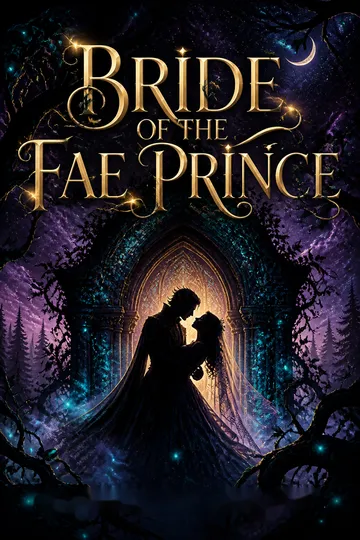
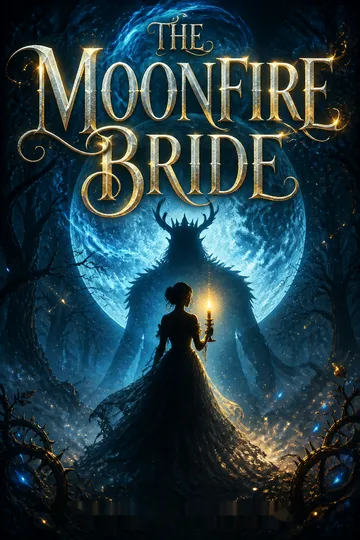
The Moonfire Bride builds its romance around a conflict it does not allow the reader to forget: Erolas can be attentive, restrained, and emotionally responsive while still having abducted Valera and arranged the terms of her life without her knowledge. His tenderness matters, but it does not retroactively make the original choice consensual. Valera’s resistance is therefore more than a delay in a love plot. It is her effort to preserve the ability to decide what intimacy means when every other condition is controlled by someone stronger.
The story also links care with labor. Valera’s devotion to Brielle has been expressed through feeding, protecting, and earning; her creative gift has survived as a practical skill, never a claim she feels entitled to make. In Orican, making clothes for Ellie and the goblins becomes a route toward self-recognition. The magical garments do not simply reward her talent. They give physical form to a capacity that her impoverished life had kept constrained. Yet the time distortion complicates this liberation: Valera’s private weeks cost Brielle eight years, making refuge itself ethically costly.
Names, thresholds, and sight all become tests of agency. Valera gives her name before understanding its force, crosses a threshold under emotional pressure, and finally violates the rule against seeing Erolas because her sister presents that act as the only path to freedom. Each choice is real, but none is made with full information. The book’s central tension lies in this difference between acting and choosing freely.
The ending refuses the easy resolution of either reunion or romantic surrender. Erolas sends Valera away, and she chooses to pursue him rather than accept safety as the final answer. That decision does not erase his betrayal or prove that love can repair coercion. It gives Valera a new position from which to act: not a dependent bride waiting for a promise to be fulfilled, but a craftswoman who intends to discover the truth and decide what comes next.
Review Summary
People Also Read

Characters
Valera Normas
The captive seamstressValera is an eighteen-year-old seamstress who has spent years making herself useful to keep her younger sister safe. Poverty, hunger, and her father’s violence have taught her to suppress her own ambitions and treat endurance as duty. She is observant, practically skilled, and more compassionate than she believes herself to be, but her protective instincts can make her vulnerable to manipulation. Sewing gives her a way to think with her hands and gradually reveals a creative self that has had little room to develop. Her central struggle is not simply whether to trust Erolas, but how to distinguish care from control and desire from obligation. She is cautious, yet capable of choosing a dangerous path when she believes someone she loves needs her.
Erolas Dymaris
The unseen fae lordErolas is the master of Orican, a powerful fae lord whose shadowed presence and elaborate manners make him difficult for Valera to read. He claims to need a wife under fae law, yet promises not to touch Valera without her permission and tries to make her confinement comfortable. His restraint and curiosity suggest a capacity for tenderness, while his decision to take Valera without informed consent exposes the danger of his power and self-interest. He is guarded by a curse that limits what he can explain, so silence becomes both a genuine constraint and a source of mistrust. Erolas is shaped by grief, a sense of responsibility for his people, and a longing to be understood beyond his frightening appearance.
Brielle
Valera’s fearless sisterBrielle is Valera’s younger sister, an impulsive, bright-haired girl drawn to Whispering Wood and impatient with the dangers that frighten her older sister. She loves Valera fiercely and resists the family’s helplessness with a courage that sometimes becomes recklessness. As a child, she relies on Valera’s protection; in the world beyond Orican, she must make her own choices and pursue her own search. Brielle’s directness contrasts with Valera’s cautious patience, though both are driven by loyalty and a refusal to abandon one another. Their bond is loving but not simple: each believes she must rescue the other, and each can misjudge what the other needs.
Mother Ulla
The warding village witchMother Ulla is the blunt, watchful witch responsible for keeping fae influence from spilling freely into the human settlement. She knows Valera’s family history and recognizes the signs of moonfire magic before Valera understands them. Her practical knowledge is useful, but her confidence does not make her omniscient, and her counsel leaves Valera facing a choice rather than offering a clean rescue. She is suspicious of fae bargains and protective of her ward, yet she does not take responsibility for every hardship in the Normas household.
Valera’s father
A grieving, violent parentValera and Brielle’s unnamed father was once part of a wealthier family, but poverty and drink have narrowed his life into bitterness. He lashes out at his daughters and takes money they earn, making Valera the household’s practical caretaker. His grief over his dead wife helps explain his collapse but does not excuse the harm he causes. Valera continues to feel compassion for him, a response rooted in family attachment and an unwillingness to let hatred define her.
Ellie (Ylylyly)
The green-skinned attendantEllie is a long-serving, green-skinned fae attendant with antennae, elongated limbs, and a language Valera cannot initially understand. She is fiercely devoted to her work and expresses care through bathing, dressing, feeding, and steering Valera through Orican. Her rough treatment of goblins contrasts with her gentleness toward Valera. When Valera gives her a name and makes clothes for her, their relationship becomes less like that of captor’s servant and captive, though Ellie remains part of Erolas’s household.
Birgabog
The mischievous goblin helperBirgabog is a quick, long-nosed goblin who enjoys absurd tricks and treats clothing as a toy rather than something to wear properly. He helps Valera find materials and supports her experiments, including her risky test of the wind garment. His playful, chaotic nature gives the palace a comic energy, but his help also shows how Valera’s relationships with its inhabitants grow through making and sharing.
The Pale Queen
The distant fae pursuerThe Pale Queen is a powerful figure associated with the violent history shown in Orican’s stained glass and with the danger surrounding Erolas’s family. She is not a conventional onstage antagonist for most of the story; her reach is felt through warnings, magical interference, and the threat of pursuit. Her presence makes the palace’s apparent isolation feel temporary. Valera knows too little about her motives to judge whether the queen’s claims, power, or enemies are as they appear.
Mistress Petren
The demanding dressmakerMistress Petren employs Valera as a stitch-girl and depends on her unusual eye for fit and drape. She values Valera’s skill but gives her little time or status to pursue original designs, representing the limited prospects available to a poor young craftswoman.
Lady Leocan
Valera’s wealthy clientLady Leocan is a pregnant noblewoman whose changing figure requires Valera to alter an elaborate gown. Her trust in Valera’s judgment briefly lets the young seamstress do more than routine stitching, offering an early glimpse of her talent.
Taerel
Erolas’s remembered brotherTaerel is Erolas’s late brother, remembered as mischievous, fearless around dangerous animals, and lacking cruelty. Erolas’s lively childhood story about him offers a rare glimpse of his family before tragedy.
Plot Devices
True names
Power through namingIn the fae world, a name is more than identification. Valera gives her name to the unseen presence, allowing a marriage claim to begin, while Erolas gives her his true name as a pledge and a source of leverage. Saying his name lets Valera issue commands and sense a connection between them. The device makes intimacy and authority inseparable: a name can protect, bind, or expose its bearer. It also gives Valera a tool inside a relationship in which Erolas otherwise controls the setting, the rules, and the information.
Claiming and Choosing
A threshold becomes consentThe fae marriage custom treats a mortal’s crossing of a threshold as a choice, provided no explicit threat or bargain was made. The goblins do not formally promise harm to Brielle, so Erolas argues that Valera’s decision to leave the warded house counts as consent under fae law. This rule drives the abduction and exposes the gap between technical agreement and informed, freely given consent. Valera crosses the threshold to protect her sister, not because she understands the consequences, making the law’s definition of choice a source of conflict throughout the story.
The folded palace
A beautiful, shifting prisonOrican exists across folds of reality, connected to places Valera can glimpse through windows but cannot reach. The palace opens its internal doors to her commands, and its gardens and rooms offer comfort, work, and exploration, while its surrounding forest and shifting boundaries prevent an ordinary escape. The folds also make time pass differently from Valera’s human world. This setting gives the story its central contradiction: Valera can exercise limited authority and discover new parts of herself inside Orican, yet the world’s structure keeps her separated from Brielle and from home.
Starglass water
A window between worldsWater from the Starglass Mirror allows a person who knows someone’s face to locate and see them across distance. Erolas uses it to show Valera that Brielle is alive, then gives Valera the chance to make contact herself. The images offer reassurance without full communication: Brielle can see Valera, but cannot hear her words. The same magical means that first allowed Erolas to find Valera also ties the sisters’ separate storylines together, revealing that sight alone cannot resolve their fear or misunderstanding.
The seven lockets
Craft made from magicErolas gives Valera seven lockets containing materials associated with different forces, including wind, sunlight, starlight, mist, and shadow. Valera uses her sewing skills to shape them into garments, and the wind garment lets her fly. The lockets turn the practical craft that once helped Valera survive into a way of testing the possibilities of her new world. Their importance grows when she uses the wind and shadow fabrics during Orican’s destruction, making them both instruments of creative freedom and the means of her escape.
Of Candlelight and Shadows Series
About the Author

Download PDF
Download EPUB
.epub digital book format is ideal for reading ebooks on phones, tablets, and e-readers.








