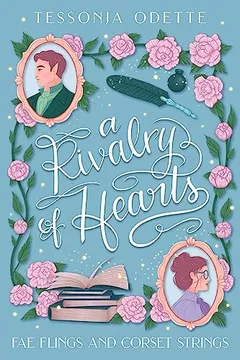


Plot Summary
The Late Author Arrives
Two weeks behind schedule after a storm delays her voyage, Edwina Danforth reaches Floating Hope still carrying the consequences of missed trains, wrong turns, and a mischievous will-o'-the-wisp. She has come to Faerwyvae to promote her newest romance and prove she deserves a publishing contract.
Outside Flight of Fancy Bookshop, publicist Monty Phillips tells her the tour has not been canceled, but another author has joined it. Inside, that author, William Haywood, dismisses her novel as trash while signing books for his waiting fans.
Edwina takes her seat, retrieves the copy he has slighted, and answers his insult by naming herself its author. The tour is no longer simply her chance to be seen. It is a contest with a rival already certain she will fail.
Edwina’s lateness is comic, but it also exposes the vulnerability beneath her bravado. She has crossed a border between nations and publishing cultures, only to find that opportunity depends on arriving at the right place at the right time. William’s insult sharpens that insecurity into anger, and her public correction marks a first act of self-advocacy. Their rivalry begins not with an abstract clash of personalities but with a disagreement over whose work deserves respect. Edwina’s imagination has repeatedly made her miss practical cues; here, it also supplies the nerve to claim her work aloud.
The Readers Know Her
At first, William’s crowd seems to confirm Edwina’s fear that no one came for her. Then a reader arrives with copies of all seventeen of Edwina’s books, explaining that Queen Gemma’s Book Club has praised them for a year.
The discovery restores Edwina’s confidence, but a conversation behind the bookshop’s back room reveals a new stake: Fletcher-Wilson plans to offer only one author a lucrative three-book contract, with a major marketing campaign and the possibility of living in Faerwyvae to research future books.
William has already built a following through interviews and appearances, while Edwina has just arrived. He tells her the contract is now a competition between them. Their tour companion status becomes a direct threat to each author’s ambitions.
The turn from apparent obscurity to devoted readership changes Edwina’s sense of her own worth, but it does not immediately free her from measuring herself against William. The queen’s book club offers a model of literary influence that differs from the prestige she has sought in Bretton: readers can make an author consequential even when traditional gatekeepers do not. Yet the publishing contest converts that affirmation into scarcity. Both writers must now treat attention as a limited resource, even as their distinct genres make the rivalry feel partly manufactured by their publisher.
A Bargain Over Desire
At dinner, William needles Edwina about her work and she challenges his poetry in return. After she drinks Cloud Dive, a fae liquor that first sharpens her confidence and later leaves her confused, their insults turn into a dare about seduction.
Monty helps set terms: by the end of the tour, whoever has shared more private physical intimacies with lovers wins, and the loser must refuse Fletcher-Wilson’s contract. Edwina and William shake hands before fully reckoning with what a fae bargain means.
Their agreement becomes magically binding. William privately realizes he had meant to tempt Edwina into his own bed, not send them both after strangers. By the time she understands the danger of her decision, neither can simply withdraw without the other’s cooperation.
The bargain is funny because it literalizes the characters’ habit of turning every feeling into a contest. It is also a consequential failure of judgment: Edwina mistakes heightened confidence for clear consent to risk, while William uses a wager to disguise his attraction as banter. Monty’s rules make the terms legible, but they cannot make the choice emotionally wise. The magical contract gives their rivalry real force, while leaving each responsible for how they treat the other within it. Their private motives already diverge from the public terms, creating the tension that will eventually make the game harder to sustain.
A Night Edwina Forgets
As Cloud Dive overwhelms Edwina, William stops a lion fae from taking advantage of her and carries her to her room. He gives her water, removes the pins tangled in her hair, and stays nearby while she sleeps. The next morning she fears they slept together, but William explains that he only helped her remove vomit-soaked clothes and kept watch.
On the train, Jolene Vaughn, a fan who has joined the tour, tells Edwina that William never went to bed with anyone that night. Edwina also remembers confessing that her romantic scenes come from imagination, not experience, and hearing William admit he is a fraud too. Instead of asking to end the bargain, she decides she can use its challenges as research for her writing.
William’s care matters because it contradicts the seductive persona he uses to provoke Edwina. He respects her vulnerability when she cannot protect herself, and the morning-after clarification lets her distinguish desire from exploitation. Edwina’s choice to continue the wager is not a simple return to recklessness: she reframes it as work, an area where she feels capable and in control. That reframing also conceals her fear of intimacy. By calling experience research, she can approach a personal risk without admitting how much she wants to be desired on her own terms.
The North Wing Lesson
At Hyperion University, Edwina discovers that William studied performing arts before becoming a poet. A party at Somerton House draws her to its notorious north wing, where couples perform intimate acts before spectators.
William follows to make sure she is safe, then admits that public love scenes once defeated him as an actor. He had won the lead in the stage adaptation of Edwina’s novel, The Governess and the Rake, but panic made him vomit on his acting partner and later on the celebrated Greta Garter during rehearsal.
The director dismissed him, and William was reduced to a minor part. Edwina’s book, the source of his humiliation, becomes the first subject through which they speak honestly. She sees that his arrogance guards a career wound rather than simple disdain for her.
The north wing reverses Edwina’s expectations: she approaches it as a living reference library, while William finds it saturated with a humiliating memory. Their different responses make intimacy look less like a universal instinct than a performance shaped by personal history. William’s failure is especially painful because it occurred in a role tied to Edwina’s work, which explains why his first insult carries more than casual snobbery. Yet his decision to tell her the story suggests trust beginning to replace the defensive roles they have both adopted.
Jealousy Takes a Seat
Back at Somerton House, Edwina and William use other guests to provoke one another. William draws Jolene close, while Edwina lets postgraduate student Archie sit her in his lap during a card game. Their public flirtation makes Edwina feel powerful until Archie kisses her and asks to spend the night together. She brings him to her room, but his touch does not awaken the desire she has felt around William.
They kiss, then Edwina abandons the encounter to write down a scene that has taken shape in her imagination. Archie leaves disappointed. Jolene later tells Edwina that she and William spent the night apart, with William reciting poetry instead of sleeping with her. Edwina earns a point from her kiss with Archie, while William earns none.
The episode exposes how poorly the wager measures what the characters actually want. Edwina can secure a point through a socially successful kiss, yet the encounter leaves her creatively energized rather than romantically fulfilled. William’s refusal to sleep with Jolene likewise complicates his reputation as an effortless seducer. Their jealousy is not merely competitive theater: each uses an audience to test whether the other will react, then struggles with the feelings those reactions disclose. Edwina’s retreat to her notebook is both her familiar refuge and a revealing choice to turn an unsatisfying experience into art.
The Queen Meets Her Author
In the Winter Court, Edwina expects another quiet signing beside William. Instead, a line of readers fills the bookshop, and Queen Gemma, who has championed Edwina’s books through her club, comes to meet her. The queen invites both authors to a reading after the signing.
When the club asks William to perform a scene from The Governess and the Rake, he takes the role of its hero. Edwina and William act out the lovers’ reconciliation, and their onstage kiss feels less like a performance as William asks permission and she answers within the scene.
The audience applauds, but the kiss does not count toward their wager because it happens in public. William’s friend Zane appears afterward, and Monty suggests the old friends may spend the night together.
The scene gives Edwina the recognition she once thought she lacked, then makes that recognition the setting for an intimacy she cannot easily classify. William’s consent-seeking gesture breaks through the fictional scene without fully abandoning its cover. The audience sees performance; Edwina experiences a more personal exchange. The distinction matters because both characters are skilled at hiding behind invented roles. The queen’s presence also connects private creative work to public consequence: the book that helped establish Edwina’s career once undermined William’s acting ambitions, yet now provides the language through which they can approach each other.
The Free Pass Burns
Fearing that William will spend the night with Zane, Edwina crosses to his hotel room and invokes the free pass he had promised her. Zane has already left, but William insists she must choose an intimacy or the pass is wasted. She asks for a kiss, then lets him guide her into a slower, more attentive exchange.
Edwina explores his body and brings him to climax with her hand, discovering pleasure in her ability to affect him. She stops before the encounter becomes more, keeping the choice and the pace her own. The intimacy earns her another point in their wager and leaves William with the pass to use next. Edwina’s confidence now rests on an experience she has actually chosen, not a story she has invented.
This is a shift from performing expertise to gaining it. Edwina’s earlier lie to Jolene protected her from judgment; here she experiments without having to claim knowledge in advance. William’s willingness to let her set the limits gives her agency, while her decision to stop prevents the scene from becoming a conquest or a cure for insecurity. The wager still frames the encounter, but the emotional content exceeds its bookkeeping. Edwina begins to understand that sexual confidence need not mean imitating the fearless heroines she writes.
A Flower Beneath the Poet
In Lumenas, a hotel overbooking sends the tour party to opera singer Zane’s grand apartment, where Edwina and William have more time together. William takes her to a small theater for a burlesque adaptation of her novel, and she is moved by seeing her work brought to life. On the walk home, he finally shows her his fae nature: he is a flower fae who can conjure petals and blossoms, though he considers the gift useless.
Edwina recognizes the flower petals he has slipped into his poetry book and treats his magic as beautiful rather than inadequate. Their growing closeness is interrupted by news from home. Edwina’s Bretton publisher terminates her contract, while William learns Cassie’s scholarship application has been rejected.
The flower reveal gives William a concrete form for grief and shame. His magic is delicate rather than powerful, and he has learned to measure it by whether it can solve a practical crisis. Edwina’s response does not erase that history, but it offers a different standard of value: beauty can matter without being useful. The simultaneous letters then test the comfort they have found. Their professional ambitions are no longer merely competitive desires. Each faces a material deadline, making every act of closeness more costly and every compromise harder.
Two Futures Narrow
William asks Edwina to end their bargain and compete only through book sales. She refuses because she cannot risk losing the contract after William’s head start on the tour.
He explains that he needs the advance to pay Cassie’s remaining debts and tuition; she reveals that the loss of her Bretton contract leaves her with no reliable income or home of her own. At the Spring Court, William’s younger sister Cassie arrives, lively despite using a cane, and confirms how fiercely he worries about her.
During preparations for the literary gala, event coordinator Aubrey proposes auctioning a date with William. He accepts. When he asks Edwina for a reason to stop him, she cannot give one, and he leaves her to face the consequences of keeping the wager alive.
Both protagonists are right about the stakes, which prevents their conflict from resolving through a simple appeal to generosity. Edwina’s pride is partly defensive, but her financial precarity is real; William’s protectiveness is intense, but Cassie’s education and debt are not symbolic concerns. Their refusal to dissolve the wager turns love into a problem of resource allocation. The episode also marks a change in Edwina: she can no longer pretend William is only an opponent, yet she still cannot risk her future for a relationship whose permanence remains uncertain.
A Secret in the Pages
After Aubrey approaches William, Edwina returns to her room intending to deliver the annotated book they had offered for the charity auction. Inside, she discovers a message assembled from page numbers: William has written that he is falling for her.
She finds him in the recreation room, where he admits the confession is real and explains that he could not go through with Aubrey’s date. They choose each other, and their first full sexual encounter gives their rivalry a tenderness neither can dismiss.
Afterward Edwina asks about June, the supposed lost love behind William’s poetry. He finally reveals that he does not write the poems: Cassie wrote them, and William performs as their author. Edwina feels deceived, accuses him of taking credit from his sister, and leaves before they can repair the rupture.
The coded confession is an intimate answer delivered through the very object that has carried their banter. Its form suits two people who struggle to speak plainly when vulnerable. But physical closeness does not automatically produce trust. William has made a real confession about his feelings while withholding a consequential truth about his public identity. Edwina’s anger is therefore not a misunderstanding she can simply kiss away. It joins her own history of being undervalued as a woman writer to her fear that William’s tenderness may be another performance.
Cassie Explains the Arrangement
The next day, Edwina meets Cassie for lunch and learns why William agreed to present Cassie’s poetry under his own name. Cassie wanted her work published without entering public life, while the advance helped keep her out of the workhouse and pay family debts.
The book credits Cassie as writer and William as performer; the mysterious June refers to a month, though William encouraged readers’ speculation as part of his public persona. Cassie also tells Edwina that her illness is serious and her prognosis limited, explaining William’s fear of failing the people he loves.
Edwina understands the arrangement more fully and forgives him, but Cassie faints before they can return together. Edwina stays until Cassie wakes and is stable, delaying her arrival at the gala.
Cassie’s account complicates Edwina’s moral judgment without invalidating it. William’s arrangement protects his sister’s privacy and meets an urgent financial need, but it still places a man’s face between a woman’s work and its public reception. The novel refuses to make either artistic integrity or survival an easy absolute. Cassie’s illness also clarifies William’s overprotection as a response to grief and anticipated loss, not simply control. Edwina’s decision to stay with her signals a more mature form of care: she does not abandon her own goals, but she recognizes another person’s immediate need.
The Heart Becomes a Bid
Edwina reaches the gala as William’s date is being auctioned. From the back of the crowd, she offers two hundred sapphire rounds, then adds the dissolution of their bet and her heart. The audience is bewildered, and the event coordinator warns that the auction is magically binding.
Edwina withdraws the dangerous personal bid and returns to the money. No rival tops her offer, so she wins the date. William leaves the stage and meets her in the crowd, where they admit their love and embrace.
The public confession does not erase the practical danger between them, but it changes the terms of their rivalry: neither is pretending the wager is only about winning anymore. Edwina’s arrival also confirms she has chosen to act rather than keep waiting for William to make the first move.
The auction makes the book’s central metaphor literal: affection can be mistaken for something to trade, and a public bid can expose what private pride conceals. Edwina’s first offer is emotionally sincere but dangerously imprecise, so the scene preserves the story’s comic attention to fae rules even at its romantic climax. Her willingness to risk embarrassment before readers and peers marks a departure from the guarded writer who once used imagined lovers as a substitute for being seen. William’s response matters because he meets her declaration without demanding that she surrender her ambitions.
Rivals Choose the Future
The next day, Edwina and William take the date she won at the literary gala, strolling the Darlington Hills promenade and speaking more honestly about their pasts. At a hidden garden bridge, they agree to dissolve their magically binding wager, including the free-pass rules.
Their rivalry remains, but future competition will depend on book sales rather than seduction. Edwina then wins Fletcher-Wilson’s three-book contract at the tour’s final meeting. William accepts the result without resentment and decides to pursue acting rather than continue as the public face of Cassie’s poetry.
Edwina offers to help fund Cassie’s education, and William accepts. The outcome gives Edwina a route to citizenship and a career in Faerwyvae, while William begins choosing a future that reflects his own ambitions as well as his sister’s needs.
Ending the wager is not equivalent to ending competition. Instead, the couple separates rivalry from intimacy, allowing each to pursue a career without turning affection into leverage. Edwina’s victory matters because it validates the work she has built without requiring William’s defeat to become humiliation. William’s decision to return to acting restores an ambition he had abandoned after a public failure, while his acceptance of Edwina’s help loosens his belief that love must mean carrying every burden alone. Their solution is collaborative but not self-erasing: each remains an artist with independent aims.
Epilogue
Six months later, Edwina returns to Faerwyvae after securing citizenship and finds William waiting at the port with peonies. Their letters have kept them close while she was away, and he has secured a role in a play, so they plan to make Lumenas their home during rehearsals. Cassie is attending the arts college Edwina helped fund, and their friends welcome Edwina back.
In the bonus epilogue, a year later, Monty is fired from Fletcher-Wilson but offered a job writing a romance advice column. He runs into Daphne in her seelie form and brushes aside her invitation to reconnect, calling her a pet before leaving. His new position gives their unresolved attraction a fresh beginning.
The main epilogue answers Edwina’s old fear that written affection will collapse when tested in person. This time, correspondence strengthens a relationship whose partners have already seen one another’s flaws and chosen to return. Her homecoming is not a retreat from ambition: she comes back with citizenship, a contract, and a future that includes William’s acting career and Cassie’s education. The bonus epilogue deliberately shifts the emotional register. Monty’s new job suits his appetite for other people’s romantic complications, while his dismissal of Daphne exposes his own fear of closeness. Their story is left unresolved, but the scene shows that the novel’s secondary characters carry their own unfinished bargains.
Analysis
A Rivalry of Hearts uses the machinery of a romantic comedy to ask who gets to define an artist’s value. Edwina has talent, readers, and a vivid imagination, yet she arrives in Faerwyvae accustomed to being underpaid and dismissed. William appears to possess everything she lacks: beauty, popularity, and the ease of a practiced performer. Their competition initially makes those inequalities seem personal. The tour’s sales contest is deliberately crude, reducing artistic work to measurable attention, but it also exposes the unequal conditions beneath the numbers. William has already spent weeks manufacturing visibility; Edwina’s audience has been built through a queen’s book club and the devotion of readers who have quietly sought out her books.
The novel’s treatment of performance connects their romantic conflict to their work. Edwina invents experiences she has not lived, then discovers that real desire cannot be mastered simply by describing it. William performs a poet’s identity while hiding his acting ambitions and his dependence on Cassie’s writing. Neither deception is identical: Edwina’s lie protects her from being judged, while William’s persona protects his sister and supports their finances. Still, the revelation hurts because genuine affection cannot make concealment harmless. Trust requires more than good motives. It requires allowing another person to respond to the truth.
Their eventual compromise is not a rejection of ambition or competition. Edwina wins the contract, William turns back toward acting, and they dissolve the magically binding wager so that their relationship no longer depends on seduction as a score. Their love becomes credible when it makes room for separate careers, Cassie’s autonomy, and practical help freely offered rather than imposed. The story’s deepest argument is that care should widen a person’s choices, not quietly take them over. Edwina’s imagination remains her defining gift, but by the end she can use it not only to invent a life, but to recognize and choose one.
Review Summary
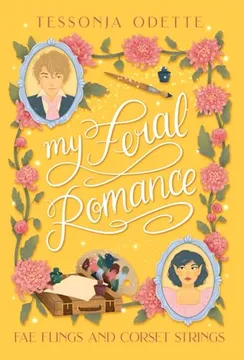
A Rivalry of Hearts receives an overall positive reception (3.9/5), with readers praising its witty banter, enemies-to-lovers tension, and charming historical fantasy setting. Many describe it as a cozy, fun romantasy blending Regency vibes with fae worldbuilding. Standout elements include the chemistry between rivals Edwina and William, engaging side characters, and spicy scenes. Common criticisms include pacing issues in the middle section, an occasionally silly premise, and underdeveloped worldbuilding. Readers frequently compare it to Pride and Prejudice and Divine Rivals, and most eagerly anticipate the next installment.
People Also Read



Characters
Edwina Danforth
Imaginative romance novelistEdwina is a thirty-year-old human romance novelist from Bretton whose unruly imagination is both her greatest creative tool and a source of everyday distraction. She prizes independence because the publishing world around her has repeatedly treated women’s fiction as inferior, yet pride can make her mistake vulnerability for defeat. She is observant, curious about Faerwyvae, and often more comfortable analyzing desire than experiencing it. Her writing gives her a way to claim territory in a world that doubts her, but it can also become a shelter from uncertainty. Beneath her sharp temper is a longing to be respected without having to trade away her work, her freedom, or her complicated self.
William Haywood
Guarded fae performerWilliam is a young fae poet and former stage actor whose beauty and practiced charm make him an easy favorite with readers. His public persona is polished, seductive, and faintly melancholy; his private self is more competitive, protective, and unsure of what he is allowed to want. He measures his worth through performance and fears repeating the failures that have shaped his career. Responsibility to his family makes him ambitious, but it also tempts him to treat self-sacrifice as proof of love. His teasing relationship with Edwina unsettles the careful distance he keeps from other people and reveals a man capable of tenderness beneath his cultivated arrogance.
Monty Phillips
Mischievous tour publicistMonty is Fletcher-Wilson’s junior publicist, responsible for shepherding the authors through the tour while frequently encouraging the chaos around them. Quick-witted, irreverent, and fond of wagers, he treats romance like a puzzle whose pieces can be nudged into place. His humor makes him appear careless, but he pays close attention to other people’s weaknesses and knows when a practical intervention is needed. Monty enjoys provoking William and Edwina because their rivalry entertains him, yet his role is not simply comic. His own guardedness and appetite for mischief hint that he understands how painful intimacy can be, even when he pretends to find it amusing.
Daphne
Feral pine marten editorDaphne is a sharp-tongued pine marten fae who works as an intern at Fletcher-Wilson. She is practical, perceptive, and deeply resistant to being treated like a pet or a novelty. Her unseelie form lets her move unnoticed through crowds, while her less-used humanoid form carries expectations she finds uncomfortable. Daphne often punctures Monty’s jokes with blunt assessments, but she is not merely cynical; she wants to be valued for her judgment and work. Her reserve protects her from other people’s assumptions, even as it limits how readily she lets them see what she wants.
Cassie Haywood
Ambitious young artistCassie is William’s nineteen-year-old sister, a creative young woman who resists being defined by her health or by her brother’s protectiveness. She is mischievous, outspoken, and drawn to stories with love, danger, and happy endings rather than moral lessons. Cassie wants an education and a chance to create work for the stage, but she also values privacy and control over how her art reaches an audience. Her complicated arrangement with William reflects both practical pressures and a genuine bond between siblings. She can appreciate his devotion while still insisting that her own choices belong to her.
Jolene Vaughn
Romance reader and modisteJolene is a young human woman who works at a modiste and admires Edwina’s novels. Sociable and curious, she joins the tour partly to meet her favorite authors and partly to explore her own romantic freedoms. Her enthusiasm helps Edwina see how readers receive her work, while her assumptions about Edwina’s experience sometimes put pressure on their friendship. Jolene is more worldly than Edwina expects, but she is also sincere and generous. She values marriage and independence as compatible choices, a perspective that contrasts with Edwina’s suspicion of conventional domestic life.
Zane
Antlered opera starZane is a celebrated fae opera singer and one of William’s oldest friends. A deer in unseelie form, Zane is gracious, stylish, and perceptive about the emotional truths William tries to avoid. They provide the tour party with a home in Lumenas and use humor to challenge William’s stubbornness without diminishing their loyalty to him. Their artistic success gives them a perspective on performance that helps them recognize the difference between a public role and private desire.
Queen Gemma Rochester
Author's royal championQueen Gemma is the Winter Court’s human queen and the devoted host of a book club that has championed Edwina’s novels. Warm, composed, and generous with her influence, she treats literary enthusiasm as a communal practice rather than a private indulgence. Her support helps Edwina understand that her readership has been growing beyond the narrow judgments of her publisher in Bretton.
Mr. Fletcher
Publisher with a prize contractMr. Fletcher leads the Faerwyvae publishing house Fletcher-Wilson and oversees the tour’s high-stakes contract offer. He is commercially minded, willing to invest in authors who can attract readers, and attentive to the market evidence generated by the tour. His decisions create the professional pressure that sets Edwina and William against each other.
Arwen
Enchanted bookshop keeperArwen is a sylph who runs Flight of Fancy Bookshop. She uses air magic to move books around the store and welcomes the tour party into the local social world.
Grayson Somerton
William's former acting mentorGrayson is a former acting mentor and the host of Somerton House, an unconventional gathering place for artists. His home exposes Edwina to a social world beyond the formalities she knows.
Aubrey
Spring gala coordinatorAubrey is a winged fae who coordinates the Spring Court literary gala. Her proposal to auction a date with William turns the tour’s romantic rivalry into a public event.
Lydia
William's beloved mother figureLydia is Cassie’s mother and the woman who raised William. An actress devoted to the stage, she shaped the siblings’ artistic lives and remains central to William’s understanding of family and responsibility.
Dennis Feverforth
Edwina's disillusioning suitorDennis is a man Edwina corresponded with during college after he admired one of her stories. Their romance shaped her caution about confusing written ideals with what another person can truly offer.
Greta Garter
Celebrated stage actressGreta is a renowned actress who was William’s scene partner during the production that damaged his confidence as a performer. Her presence is part of the painful history he carries about the stage.
Plot Devices
The seduction bargain
Turns rivalry into obligationEdwina and William agree to compete by gaining more intimate partners during their joint book tour. Because a fae has agreed to the terms, the bargain becomes magically binding. Its rules, including the requirement that encounters happen in a bedroom and the later exchange of a free pass, keep their attraction entangled with career competition. The wager is both a comic engine and a test of whether the characters can distinguish chosen desire from strategic behavior.
The Heartbeats Tour
Makes readers countFletcher-Wilson’s tour places two authors before audiences across Faerwyvae and uses their sales to determine who receives an unusually valuable three-book contract. The route through distinct courts supplies repeated opportunities for public performance, private rivalry, and new cultural discoveries. Because the prize could determine where each author lives and whether their work can continue, every signing carries professional consequences beyond applause.
The annotated poetry book
Carries a hidden confessionWilliam’s copy of his poetry collection becomes a shared object when he repeatedly slips it onto Edwina’s signing table. They fill its pages with insults, altered poems, and teasing drawings. The playful exchange gradually records their changing relationship, making the book a private channel when direct speech feels too exposed. It also links the story’s public literary competition to the personal language the characters build together.
William's public persona
Conceals art and needWilliam performs the role of a brooding poet for readers, complete with a romantic backstory that helps sell his collection. His theatrical training allows him to inhabit a public character, while fae truth-telling rules make performance a meaningful boundary between role and ordinary life. The persona protects private feelings and family matters, but it also complicates Edwina’s ability to know when his attention is genuine. The contrast between his practiced charm and unguarded behavior drives both romantic tension and a major breach of trust.
About the Author

Download PDF
Download EPUB
.epub digital book format is ideal for reading ebooks on phones, tablets, and e-readers.








