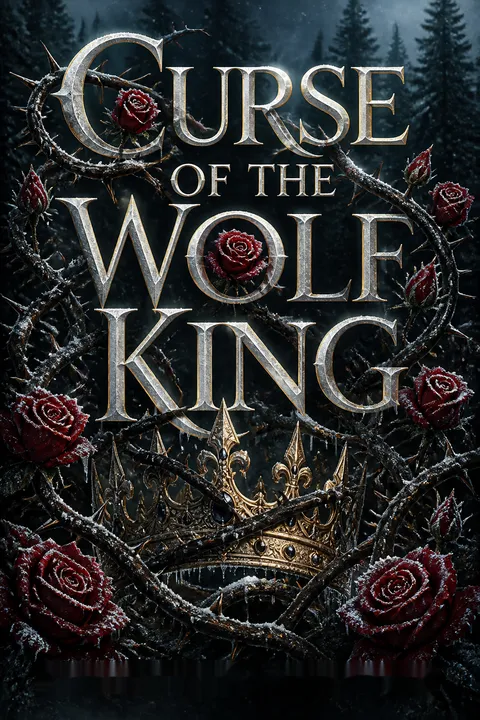


Plot Summary
A Job Beyond Vernon
Newly settled in Vernon, a human town in the Winter Court, Gemma Bellefleur longs for the sunlit Isola she left after her mother’s death. Her father’s sudden quartz fortune has rescued the family financially, but he now expects Gemma to return to the only future he approves: marriage.
In Bretton, she had managed the family’s accounts and household, then lost her reputation when the Viscount of Brekshire, her lover, abandoned her after their affair became public. Imogen Coleman, assigned by Gemma’s father to keep her respectable, repeats the town’s rules about husbands and scandal.
Gemma secretly applies for work, though employers reserve the better positions for men. When an interview invitation arrives for a house steward at a remote address, she accepts before fear can stop her.
Gemma’s first act of resistance is practical rather than romantic: she wants wages, a profession, and somewhere to live beyond her father’s reach. Her competence has already sustained her family, yet that history grants her no recognized authority now that the crisis has passed. The scandal also shapes how she moves through Vernon. A crowded street can revive the public humiliation she endured, so the confident persona she performs is both shield and prison. Books offer a private counterworld in which women’s desires lead somewhere other than punishment. The job interview becomes more than an escape from marriage; it tests whether Gemma can reclaim the capable self her family once used and then discarded.
The White Wolf’s Trap
Gemma follows Whitespruce Lane into the woods and finds the path blocked by snarling wolves. A huge white wolf attacks the pack before it can reach her, then tries to turn her gratitude into a debt. When another wolf charges, Gemma flees, only to find the white wolf apparently bleeding and missing a leg.
She kneels to help, notices the wound is tomato sauce, and realizes the injured creature is baiting her. The wolf becomes a one-legged fae man, and his pack surrounds her. They carry Gemma to the very manor where her interview was meant to take place, remove her blindfold, and bind her to a chair. The supposed rescue was the first move in a kidnapping scheme, and the house steward’s vacancy was a lure.
The ambush turns Gemma’s careful skepticism about fae folklore into a new kind of danger. She has reasoned that wolves are part of the natural landscape, but she has underestimated the social intelligence behind the teeth. The white wolf’s counterfeit injury exploits the very virtue his staged rescue tried to manufacture: compassion. Gemma’s quick recognition of tomato sauce matters because it shows her practical mind surviving panic, even when it cannot yet save her. The manor also folds work and captivity into one location. Her route toward economic independence has been designed by someone who sees human need as an opening for manipulation.
A King Without a Name
The white wolf identifies himself as Winter’s Unseelie King, though a curse has erased his name and made him difficult for others to remember. He explains that, after killing five humans in unlawful revenge, he was sentenced to five years under a curse. It has trapped him and the fae who stayed in his manor, stripped him of magic and his wolf shape except at the full moon, and steadily taken their memories.
At the sentence’s end, he will lose his immortality and become mortal, with his age catching up almost at once. A rose in the courtyard loses petals as the deadline approaches. Gemma also meets Micah, a hungry young fae the king calls Scrappy, and gives him a name he chooses to keep.
The king’s predicament is introduced as a conflict between punishment and identity. He treats his wolf shape as the self he must preserve, while the curse erodes the memories that let him understand who he is. His failure to learn the lands under his rule helped cause the unlawful killings, but his isolation has also hardened into resentment toward the humans who now live nearby. Micah complicates the king’s picture of his own household: the child is frightened, hungry, and responsive to kindness, not simply a member of a menacing pack. Gemma’s decision to name him is a small act of recognition that quietly challenges the curse’s erasure.
A Bargain with Teeth
The king explains that a human could break his curse by caring enough to sacrifice their greatest treasure. Gemma sees a way to secure what she needs without returning to her father’s control. She proposes that the king court Imogen, whose hunger for marriage, status, and wealth makes her a plausible target.
Gemma will manage the manor and coach him in human society; in exchange, he must provide room, board, a weekly salary, and twenty thousand quartz rounds if the curse is broken. He agrees, despite his contempt for humans and distaste for the plan. Gemma begins reorganizing the household, recruits the pack for work, and finds a cook in Bertha, a kind bear fae who has been secretly helping the king.
The bargain gives Gemma agency by making her expertise legible as labor. She understands accounts, household management, and the social performance required to make a poor home appear prosperous. The king, meanwhile, knows the cost of a bargain but has never understood how to earn genuine regard; his previous strategy substituted fear and manufactured gratitude for relationship. Gemma’s plan uses Imogen’s ambitions against her, an ethically compromised choice that reveals how readily Gemma can turn her own experience of being judged into a weapon. The arrangement is mutually useful, but neither participant begins from trust. Their bargain creates a shared project while preserving an exit each hopes to control.
The House Takes Shape
Gemma hires Foxglove, a fae interior designer, and Amelie, a seamstress, to make the neglected manor suitable for human guests. Foxglove brings furniture, while Amelie measures the king for clothes and a prosthetic helps him move more easily. Gemma assigns jobs to the fae who have long been trapped without purpose, then sends word of her employment to her family.
Her father arrives in anger, accusing her of repeating her earlier scandal. The king intervenes, identifies himself as a royal, and orders Gemma’s father off his property. Nina, Gemma’s younger sister, also comes to see her. Hurt that Gemma left without a proper goodbye, Nina gives her a book and asks her not to disappear from her life.
Repairing the manor makes Gemma’s managerial skill visible in a way her family’s household never did. The transformation is collective too: the cursed residents accept tasks, and an abandoned royal home begins to function as a place where people can contribute. Elliot’s intervention with Gemma’s father changes the balance of power, but it does not erase her dependence on family ties. Nina’s hurt makes that cost personal. Gemma wants independence, not emotional severance, yet she has learned to leave before anyone can stop her. Her new home therefore becomes a test of whether self-determination can coexist with loyalty and tenderness.
The Dinner’s Sharpest Cut
Once the manor is ready, Gemma arranges a dinner so Imogen can meet the king, introduced publicly as Elliot Rochester. Imogen arrives with her family and the Astons, including Gavin, who still mistakes Gemma’s reading habits for proof that they share the same tastes. The guests question the king about wolves, fae customs, and his lineage.
Imogen then uses the Viscount of Brekshire scandal to suggest Gemma has been intimate with another man. The remark brings Gemma’s old public humiliation rushing back, and she leaves the table. Elliot rebukes Imogen for insulting his steward, damaging the courtship Gemma had carefully staged. Later, in the garden, he asks what the viscount has to do with her, and Gemma decides to tell him.
The dinner tests whether social polish can conceal the violence of Vernon’s manners. Gemma has arranged the event to display the king’s suitability, yet the guests treat him as a curiosity and her as a servant whose history is open for inspection. Imogen’s insinuation collapses the distinction between past and present for Gemma, showing how shame is sustained by repetition rather than by the original event alone. Elliot’s defense is emotionally significant but strategically costly. He refuses to let the scheme dictate his response to cruelty, foreshadowing the growing conflict between the role Gemma has assigned him and the person he is becoming.
Petals Fall Too Fast
Walking with Elliot after the dinner, Gemma recounts how Oswald, the Viscount of Brekshire, promised to leave his royal engagement, drew her into a secret affair, then blamed her when their relationship became public and married the princess.
Her father and former friends judged Gemma instead of Oswald. Elliot responds with anger at those who shamed her, though his outrage also comes from his distrust of human society. As they speak, Gemma insists there is good in people, and their hands briefly meet.
A rose petal falls in the courtyard after midnight. Gemma finds several more already on the snow, revealing that the countdown is accelerating. With the curse suddenly urgent, she starts the next stage of the plan: bringing Imogen closer to Elliot.
Gemma’s account gives Elliot the context for her polished defenses, while his response offers her a rare experience of being heard without moral correction. Their connection is real, though not yet uncomplicated: he condemns human society broadly, and Gemma cannot accept that her oppressors define everyone. The rose’s accelerated fall converts their private intimacy into a logistical emergency. Time does not wait for either character to resolve what they feel. The scene joins two forms of vulnerability, Gemma’s fear of being judged and Elliot’s fear of losing his remaining life, while the petals make both impossible to keep at a safe distance.
A Ball in the Snow
Gemma continues the courtship strategy with an invitation for Imogen to visit the manor. Elliot struggles to make conversation, but he walks with Imogen through the gardens while Gemma and Ember follow as chaperones. A snowball fight between Ember, Micah, and the other children interrupts the walk. Ember’s bonnet falls, revealing turquoise hair and fae heritage that her stepfamily forces her to hide.
Imogen ignores the moment and announces that Elliot has agreed to host a ball, hoping to use the event to secure his attention. Gemma recognizes that dancing could deepen Imogen’s attachment, despite her own dread of returning to society. She asks Foxglove to teach Elliot the dances, while Amelie prepares formal clothing for the king.
The proposed ball escalates the courtship from private conversation to public display, exactly the arena where Gemma’s trauma is strongest. Imogen interprets access to a royal household as social opportunity, while Gemma calculates how to turn that ambition into attachment. The snowball fight offers a contrasting social scene: children and Ember play without the rigid performances demanded by the adults. Ember’s uncovered hair makes visible the pressure placed on her identity, a parallel to Gemma’s own practiced mask, though their constraints differ. The episode also reveals Gemma’s growing investment in the household. She is no longer merely arranging furniture and appearances; she is protecting people who have begun to matter to her.
The Waltz Changes Everything
At the ball, Elliot enters in the suit Amelie made and impresses the assembled families with his poise. When the first waltz begins, he panics at the watching crowd and asks Gemma to dance instead of Imogen. She accepts, and their awkward first steps turn into an intimate rhythm that exposes feelings neither has named. Elliot later dances with Imogen as planned.
During the evening, Micah tells Gemma that the curse has erased his memory of his mother, and fears losing everyone he knows. Gemma comforts him, then returns to the ballroom determined to end the uncertainty. She tells Imogen that Elliot is the cursed Unseelie King and may die within days unless a human willingly sacrifices their greatest treasure.
The first dance shifts the story’s central question from whether Elliot can perform courtship to whom he feels safest beside. Gemma’s role as his coach collapses for a moment into mutual ease, making the later return to strategy painful. Micah’s lost memory gives the curse a concrete human-scale consequence: it does not threaten only a king’s crown or life, but the child’s connection to his mother. Gemma’s decision to tell Imogen the truth is driven by this urgency, but her account still selects and arranges facts to produce a desired response. The effort to save the household remains entangled with manipulation.
A Bride’s Price
Outside the ball, Imogen reacts to the king’s danger less with grief than alarm over the time she has invested in him. Once Gemma explains that a human must offer their greatest treasure, Imogen agrees to sacrifice her beauty, but only after Elliot marries her and vows not to abandon her.
Her condition exposes the insecurity beneath her social ambition: her family’s money is dwindling, and she sees marriage to a royal as protection against financial ruin. Gemma is unsettled by the real cost Imogen may face and recognizes that desperation, not simple vanity, drives her. She returns to the manor and tells Elliot that Imogen expects marriage before she will make the sacrifice.
Imogen’s condition complicates Gemma’s convenient portrait of her as shallow. Beauty matters because it is one of the few forms of capital a woman in Vernon is taught to possess, and Imogen’s family finances make that capital feel precarious. Her demand for marriage is coercive, but it is also a strategy for securing a future in a system that offers her few reliable alternatives. Gemma recognizes the resemblance between them: both scheme for autonomy, though their desired forms differ. Sympathy does not erase the harm Imogen has caused, but it makes Gemma’s plan harder to treat as a harmless lesson.
The Memory He Cannot Lose
Elliot refuses to marry Imogen, saying the prospect feels like a betrayal of his heart, and admits he loves Gemma. She returns his feelings, and they spend the night together. Before dawn, Elliot goes to the rose intending to break the curse himself, sacrificing his wolf form. But he cannot do it.
He has come to value the memories of Gemma and the person he has become more than his former shape. He cannot explain this clearly before Gemma’s old abandonment wounds take over. Believing he regrets their intimacy and has deceived her, she ends their bargain and leaves for her father’s house. Elliot releases her rather than force her to stay.
The lovers’ intimacy makes the curse’s abstract terms emotionally precise. Elliot discovers that his priorities have changed, but the change does not feel liberating to him: preserving his memories means preserving a self shaped by love, guilt, and empathy. Gemma hears his hesitation through the template left by Oswald’s betrayal, so she treats a failure of explanation as proof of another false promise. Neither is simply irrational. Elliot tries to protect her from sacrificing her freedom, while Gemma protects herself from being made a secret or a second choice. Their separation grows from care and fear, not indifference.
Home Is No Refuge
Back under her father’s roof, Gemma withdraws until he orders her to receive Gavin Aston, who plans to propose. Nina urges her to refuse and asks what happened with Elliot. Gemma admits she loved him and feels betrayed, though she cannot share the full story. When Gavin arrives, she explains that her past affairs were consensual and that she will not hide them to suit a suitor.
He cannot accept her openness, so he leaves without proposing. Her father then reveals that Gemma’s independence reminds him of her mother, whose choice to visit the unsafe mine preceded the collapse that killed her. He blames that defiance and Gemma’s for their suffering, then orders Gemma out of the house by morning.
Gemma’s confrontation with Gavin is a decisive move away from the performance of respectability. She gives him information that could cost her security, then watches whether he can love a person rather than an idealized bride. His retreat confirms the limits of his acceptance, but Gemma has chosen honesty over a safer disguise. Her father’s confession links his control to grief: he has converted fear of loss into a demand for obedience, then mistakes compliance for love. Nina offers a counterexample by supporting Gemma even while fearing separation. The eviction strips Gemma of shelter but also ends the fiction that her father’s home can protect her.
A Fortune, Then a Race
On the morning Gemma prepares to leave Vernon, Bertha arrives with a coach, a chest of quartz, and a letter from Elliot. He has sent one hundred thousand rounds and prepaid the coach and driver for a year, telling Gemma to go wherever she chooses. The gift gives her a route out, but its farewell tone alarms her.
Before she can depart, Imogen confronts her, angry that Elliot has avoided her and refused to marry her. She says he gave Gemma’s name as his reason. Gemma realizes the curse remains unbroken and that the last rose is nearly spent. She admits she wronged Imogen by drawing her into the scheme, then orders the driver to take her back to Whitespruce Lane.
Elliot’s gift honors Gemma’s stated desire for freedom, but its scale and finality make it feel less like a simple payment than a deliberate release. He provides material independence without demanding reconciliation, which leaves Gemma free to choose whether to return. Imogen’s accusation supplies the information Gemma has avoided: Elliot has neither married her nor escaped the curse. Gemma’s apology matters because it does not erase the manipulation; she acknowledges her own part even while refusing Imogen’s insults. Her return is not a surrender of independence. It is a choice made with knowledge of the danger and the person she may lose.
The Rose’s Clever Wording
At the manor, the full moon has turned the household into wolves, and Gray no longer remembers Gemma. Micah does, and his fear that the curse will erase the children’s memories drives her to the courtyard.
Elliot explains that he could not sacrifice his wolf shape because his most precious treasure has become his memories of Gemma. Knowing he will die rather than forget her, Gemma plucks the last rose and willingly offers her own greatest treasure.
In a violet vision, she sees how much Elliot changed her and accepts that she may lose their shared past. The curse breaks. The fae curse-maker, Nyxia, reveals that the terms required willingness, not an actual sacrifice. Elliot’s name, memories, magic, and wolf form return, and Gemma chooses him freely.
The climax resolves the conflict through a distinction between willingness and loss. Gemma makes a genuine emotional choice, but the curse’s language does not require that the choice destroy her. Her growth is therefore not measured by surrendering independence; she can risk loving someone without treating self-erasure as the proof of love. Elliot’s refusal to sacrifice his memories similarly recognizes that transformation has become part of his identity. Nyxia’s riddle exposes how both characters, and the king’s council, assumed that care must be paid for through irreversible harm. The final reunion follows only after each has chosen the other without coercion.
Epilogue
One year later, Gemma and Elliot share the manor with the fae who survived the curse and the children who have become their family. Micah and Jenny move between human and wolf forms, while other residents join a dinner crowded with stew, fresh bread, and the pack’s less conventional meal.
Gemma’s sister Nina arrives with her new husband, and bookseller Mr. Cordell brings the latest Governess in Love novel. A letter from Ember waits in Gemma’s pocket. The household is no longer a prison or a stage set for courtship. It is a home where Gemma can work, read, love, and belong without giving up her freedom.
The epilogue makes domestic life the visible measure of the characters’ change. The manor that once held a captive and a forgotten pack now accommodates chosen family, guests, work, and ordinary disorder. Gemma’s independence is not represented by isolation or flight; she has a home, a profession, and a relationship she has chosen on her own terms. The children’s movement between forms also makes the household’s difference ordinary rather than threatening. Books remain part of Gemma’s private pleasure, but they no longer need to substitute for a life she believes cannot happen. The unfinished letter from Ember keeps that wider life open, suggesting community can continue to grow beyond the manor.
Analysis
The story’s central bargain is not simply whether a king can be made lovable. It asks what a person must give up to become legible to others, and who gets to decide the price. Gemma has learned that society treats female desire as evidence against a woman, so she seeks money and distance as safeguards. Elliot has learned to equate his wolf form with freedom and his human body with humiliation. Both beliefs are understandable, but each narrows the future they can imagine. Their relationship changes those calculations: Gemma discovers that independence need not mean solitude, while Elliot finds that preserving his old identity at any cost would erase the self he has become.
The novel also distinguishes intimacy from performance. Gemma can choreograph a ball, select a suitor, and script courtship, but she cannot manufacture the regard the curse demands. The scheme works only insofar as it brings the characters into situations where they must respond to one another honestly: a disclosure of sexual shame, a frightened child’s lost memory, a dance that stops being practice. At the same time, Gemma’s treatment of Imogen shows that social survival can make the injured reproduce the very instrumental logic that hurt them. Her eventual apology recognizes that insight without pretending the harm did not occur.
The curse’s resolution turns on a legalistic distinction between intending to sacrifice and actually losing something. That twist does not cheapen Gemma’s choice, because her willingness is emotionally real; it does challenge the assumption that love proves itself through self-destruction. The ending lets her choose attachment without surrendering autonomy. In that sense, the romance answers the opening conflict directly. Gemma does not need to become obedient, respectable, or alone to be free. She can build a life in which love is a chosen relation rather than a condition imposed on her.
Review Summary
Curse of the Wolf King receives mostly positive reviews, praised for its unique Beauty and the Beast retelling with a fae twist. Readers enjoy the charming characters, witty dialogue, and slow-burn romance between Gemma and Elliot. Many appreciate the book's light tone and cozy atmosphere. Some criticize the one-sided POV and underdeveloped secondary characters. Overall, it's considered an enjoyable, quick read for fans of fantasy romance, though a few readers found it lacking depth or originality.
People Also Read

Characters
Gemma Bellefleur
The defiant house stewardGemma is an eighteen-year-old human who has managed a household and its finances, but her father expects her to trade competence for a respectable marriage. After a previous lover publicly blamed her for their affair, she wears a polished, haughty persona to keep strangers from seeing how deeply their judgment wounded her. Romance novels give her a private language for desire and happy endings, even as she claims not to believe in either. Gemma is sharp with numbers, resourceful under pressure, and quick to turn social knowledge into strategy. Beneath her guardedness is a strong capacity for care, especially toward people denied agency. She wants financial independence and the freedom to decide where and how she belongs.
Elliot Rochester
The feral winter kingElliot is the Winter Court’s Unseelie King, a powerful fae who is more comfortable in his wolf shape than in human society. He is proud, blunt, suspicious of humans, and unused to the ordinary courtesies Gemma asks him to perform. A war injury has left him with one leg, and his dependence on a staff or prosthetic sharpens his discomfort with his human form. He resists both help and vulnerability, often using contempt to keep others at a distance. Yet he is capable of loyalty and unexpected gentleness, particularly toward the young members of his household. His struggle is not simply to appear respectable, but to understand what a life beyond instinct and power might contain.
Nina Bellefleur
Gemma’s steadfast younger sisterNina is Gemma’s younger sister, warm-hearted and socially at ease where Gemma feels exposed. She is engaged and often hopes Gemma will accept love rather than treat every attachment as a threat. Her gentleness does not make her passive: she challenges Gemma when she thinks fear is making her retreat, and she stands up for her sister when others attack her. Nina’s affection is a rare form of family support that does not demand obedience in return.
Richard Bellefleur
A father ruled by fearGemma’s father is a mine owner whose financial fortunes recover after the family has endured grief and public scandal. He expects his daughters to protect the family’s standing through obedience and marriage, and interprets Gemma’s independence as a challenge to his authority. His strictness is tied to the loss of his wife, but rather than face his grief, he turns it into blame and control. His relationship with Gemma is strained by the gap between the father she remembers and the man who now judges her.
Imogen Coleman
Vernon’s ambitious matchmakerImogen is a socially ambitious young woman who believes marriage is a woman’s surest path to security and status. Her polished manners conceal a sharp appetite for advantage, and she uses gossip as both entertainment and leverage. She considers herself Gemma’s friend, though her concern often takes the form of correction and pressure. Imogen’s confidence rests on familiar social rules, but her family’s financial vulnerability gives her ambitions a practical edge. She is calculating, competitive, and more fearful of losing control than she admits.
Ember Montgomery
The hidden fae musicianEmber is Imogen’s half-sister, a talented pianist whose fae heritage and appearance are kept out of sight by her stepfamily. She is quiet in company where she has little power, but her humor and warmth emerge when she is allowed to choose for herself. Ember understands exclusion from inside the household and treats Gemma with kindness rather than judgment. Her bonnet and music both mark the tension between the identity she carries and the one her family permits her to show.
Micah
The hungry young wolfMicah is a young fae in the king’s household, wary of humans but hungry enough to accept Gemma’s bread. He has no remembered name when she meets him, and her offer of one begins their friendship. His boldness often hides a child’s need for safety and affection. Micah is especially vulnerable to the household’s fading memories, and his attachment to Gemma makes the danger of the curse immediate rather than abstract.
Bertha
The generous bear cookBertha is a bear fae who brings food to the king and his household, often without being asked. Warm, practical, and discreet, she sees past the king’s gruff manner and quietly ensures his people are fed. Her good nature makes her a bridge between the secluded manor and Vernon, where she gathers supplies and carries messages. She is one of the first people to make Gemma feel that the manor might become a community.
Blackbeard
The king’s loyal guardBlackbeard is a fae warrior who has remained with the king through years of isolation. His loyalty is direct, though he can be dryly humorous about the household’s troubles. He helps Gemma understand the people living under the curse and takes pride in serving the king. His rough appearance contrasts with a serious sense of duty.
Gray
The battle-worn veteranGray is an elderly fae warrior who has survived war and carries herself with blunt confidence. She is skeptical of sentiment and quick to challenge anyone who romanticizes the household’s hardship. Beneath her sharp manner is concern for the children and the people who cannot easily leave the manor. She understands the costs of loyalty because she has lived with them.
Gavin Aston
The eager Vernon suitorGavin is Mrs. Aston’s son and a young man who mistakes a chance encounter over a book for evidence of deep compatibility. He is confident in his own intelligence and eager to praise women when they fit his ideas about modernity. His manners are more polished than his insight, and he struggles when Gemma refuses to hide her desires or past to make courtship comfortable for him.
Mr. Cordell
Gemma’s bookseller confidantMr. Cordell runs Vernon’s bookshop and shares Gemma’s love of romance novels. He reserves new books for her and treats her enthusiasm as a pleasure rather than a flaw. His shop offers Gemma a rare refuge from gossip and social performance. He is a kindly older man whose respect for her tastes helps her feel seen.
Foxglove
The extravagant fae designerFoxglove is a fae interior designer whose ideas often collide with Vernon’s narrow sense of propriety. He is flamboyant, sociable, and unembarrassed by his own taste, even when clients reject it. His professional work gives Gemma the materials to restore the manor, and his easy acceptance of difference offers a glimpse of a broader fae society.
Amelie Fairfield
The perceptive fae seamstressAmelie is a skilled seamstress with fae heritage and a direct, confident manner. She understands both human fashion and fae custom, making her a valuable ally as Gemma prepares the king for public life. Amelie is curious about the people around her but respects privacy when asked. Her practical artistry helps others present themselves without reducing them to appearances.
Maddie Coleman
Imogen’s status-conscious motherMaddie Coleman is Imogen’s mother, a socially calculating woman who prizes wealth, lineage, and the appearance of refinement. She encourages Imogen’s pursuit of an advantageous match and shows little patience for people who do not fit her expectations. Her treatment of Ember reveals the cruelty that can hide beneath polished manners.
Oswald
The faithless viscountOswald, the Viscount of Brekshire, was Gemma’s lover in Bretton while already engaged to the princess. He promised that he would end the arranged match, but when their affair became public, he protected his own standing by shifting blame onto Gemma. His betrayal becomes the source of the shame and distrust she carries into Vernon.
Marnie Bellefleur
The estranged elder sisterMarnie is Gemma’s eldest sister, married and living in Bretton after the family’s move. She joined their father in judging Gemma’s affair with Oswald, leaving a rupture that no letter has repaired. Her response reflects the family’s investment in reputation over solidarity.
Clara Coleman
Imogen’s indulged sisterClara is Imogen’s younger sister, a privileged and easily bored member of the Coleman household. She joins in excluding Ember and expects others to accommodate her moods.
James
Nina’s patient fiancéJames is Nina’s fiancé, a steady presence in her life and a quiet contrast to the more controlling men around Gemma. He appears chiefly through his relationship with Nina.
Jenny
A child in the manorJenny is one of the young fae living at the manor. She asks Gemma for a name and for bedtime stories, revealing how deeply the children need care and recognition.
Nyxia
An enigmatic fae authorityNyxia is a powerful fae figure whose arrival is tied to the rules governing curses and royal punishment. She is composed, sharp-tongued, and comfortable with riddles that leave other people guessing.
Susan
The discreet household maidSusan is a maid in the Bellefleur household whom Gemma trusts to keep a confidence. She helps Gemma communicate privately and offers practical support while Gemma remains under her father’s roof.
Charlie
One of the manor’s childrenCharlie is one of the children raised among the king’s household. Like the others, Charlie moves between human and wolf forms and brings youthful energy to the manor.
Plot Devices
The Cursed Rose
A visible countdownA rose in the manor courtyard loses petals as the king’s sentence approaches its end. Its steady decline first gives Gemma a rough measure of how much time remains, then becomes alarming when several petals fall in a single night. The rose turns an invisible magical punishment into a daily, countable threat. It also anchors key emotional scenes: the king watches it alone, Gemma discovers the accelerating loss, and the final petal becomes the object around which the sacrifice must be made. The device carries both deadline and choice, because the flower signals death while offering the means to challenge the curse.
The Fae Bargain
Terms shape the allianceFae bargains bind characters through carefully stated conditions, making wording as important as intention. Gemma uses that structure to secure a position, room, board, and payment in exchange for helping the king court Imogen. The bargain formalizes their mutual dependence without creating trust, and its financial terms expose Gemma’s need for an independent future. The curse’s own conditions create the central dilemma: a human must willingly offer their greatest treasure. At the climax, the distinction between willingness and actual loss proves decisive. The device makes language a force that can constrain, protect, or mislead, depending on who understands the terms.
The Performed Persona
Masks manage social dangerGemma adopts a poised, haughty manner to keep Vernon’s gossip and her painful memories at bay. She then teaches Elliot to perform the reserved gentleman expected by Imogen, using clothing, posture, conversation, and dance to make him appear socially desirable. These performances help the courtship scheme, but they also expose the difference between persuasion and intimacy. Gemma’s mask protects her while isolating her; Elliot’s persona gives him access to human society while forcing him to confront the body and emotions he resents. As their trust deepens, each becomes more capable of being seen without relying entirely on a role.
Books as Emotional Mirrors
Fiction rehearses feelingGemma reads romance novels because their heroines survive scandal and reach endings she doubts are possible in her own life. Her favorite series shapes her expectations of courtship and supplies the language she uses to coach Elliot. The king’s library initially unsettles him because human stories make him feel grief and empathy he cannot explain. A bittersweet story about a boy and a dog becomes a shared reference point for Gemma’s changing beliefs about love, loss, and sacrifice. Books do not predict the plot so much as let the characters practice emotions before they can fully name them in life.
Shifting Forms
Identity made physicalThe fae move between seelie and unseelie forms, while the curse restricts the king and his household to human bodies except at the full moon. For Elliot, the wolf shape represents instinct, freedom, and a self he believes he cannot surrender. His human form brings pain, disability, and emotional experiences he has long resisted. The children’s and other fae’s transformations make the household’s mixed identities visible, while the full moon marks a temporary return to the forms the curse has taken away. Shifting turns an internal conflict about identity into something the characters and readers can see.
Entangled with Fae Series
About the Author
Download PDF
Download EPUB
.epub digital book format is ideal for reading ebooks on phones, tablets, and e-readers.








