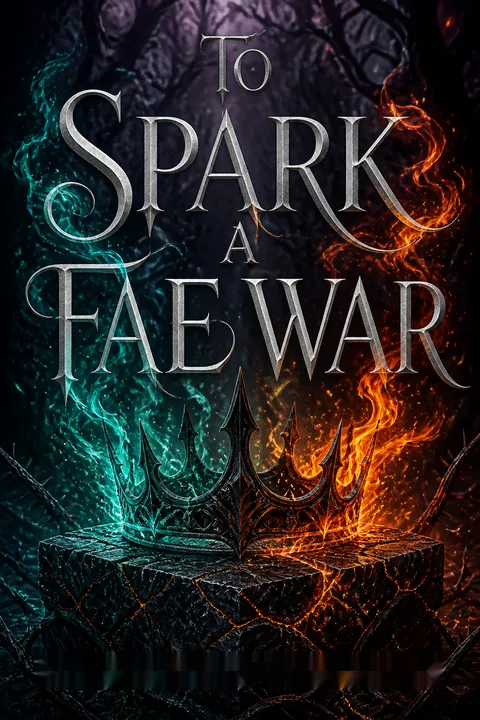


Plot Summary
The Briar House Burns
A week after a human councilman, Henry Duveau, shot her mother, Evelyn returns to Grenneith to find him and punish the Briar House, where he traffics captured fae. Disguised as a human patron, she learns from Mikaela, a wingless pixie, that the brothel holds fae, human servants, and children sold for experiments.
Evelyn secretly directs them to escape, then sets the building alight after they reach the alley. She guides the freed captives toward Faerwyvae, melts their iron cuffs, and collapses beneath grief and guilt over the people she has killed. Seeking refuge in her firefox form, she cannot find her way back to herself. For five days, she lives as a fox in the forest, barely remembering who she was.
Evelyn’s rescue is both an act of protection and an attempt to make grief obey her. She can free the captives only by using the violent power she has come to fear, so the apparent victory sharpens rather than resolves her distress. Her prolonged fox state makes that conflict literal: rage can keep her moving, but it cannot preserve her identity. The story begins with a queen acting alone because she believes action is the only alternative to helplessness, then immediately shows the human cost of that belief.
Five Days as a Fox
Prince Franco, a psy vampire and Aspen’s friend, startles Evelyn back into human form and explains how long she has been missing. He had searched the Briar House before finding her in the woods, and gently acknowledges their past attraction while accepting that she loves Aspen.
His news ends the private refuge: the rebel rulers have called an emergency meeting about Evelyn. At Selene Palace, she reunites with Aspen, whose bloodied clothes reveal a recent skirmish at the Solar border.
The meeting introduces the opposition as the Renounced and the rebels as the Alpha Alliance. Queen Estel, who has secretly spied for Nyxia, reports that the Renounced plan to install a pretender at Irridae Palace, Evelyn’s newly claimed Fire Court seat, to seize hidden iron weapons there.
Franco’s search turns friendship into a practical act of care, while his conversation with Evelyn closes the possibility that affection must become possession. Her reunion with Aspen is less easy: his fear for her safety exposes how their bond can support them and intensify conflict at once. Politically, the meeting reframes the abandoned Fire palace as more than a symbol of Evelyn’s claim. Its weapons make her private inheritance a strategic target, pushing her from solitary revenge into a war that will require cooperation.
A Queen Chooses Her Court
After the meeting, Evelyn and Aspen quarrel over her secret trip to Grenneith and her refusal to let him manage her decisions. Their argument turns into a passionate reconciliation, but Evelyn also makes clear that she will rule Fire on her own terms.
Aspen ultimately supports her choice to appoint Lorelei, her trusted friend, as ambassador. At an outdoor court, Evelyn addresses the Fire fae and selects Breeda, an eager fire sprite, to accompany her to Irridae. She also decides to bring Amelie, her estranged sister, out of Nyxia’s dungeon.
Evelyn does not trust Amelie, who once served Cobalt, Aspen’s rival brother, but refuses to leave her vulnerable or beyond her watch. She binds Amelie with commands against harm and escape, then joins the party traveling to Fire.
Evelyn’s first exercises of queenship are intimate as well as administrative. Appointing Lorelei is an effort to place trust beside authority, while Aspen’s eventual support marks a shift from conflict toward partnership rather than submission. Bringing Amelie reveals the limit of Evelyn’s confidence: she will assume responsibility for her sister, but can offer only surveillance in place of trust. Her commands protect the group while reproducing the coercion Amelie has suffered, establishing that power used for safety can still wound.
Irridae Opens Its Doors
Queen Estel uses a star-powered Chariot to transport Evelyn’s small party to Irridae Palace, where a djinn named Fehr attacks them with a storm of sand. Evelyn identifies herself as Fire’s queen and takes Fehr’s hand, allowing the palace’s magic to judge her claim. Her flames rise without harming her, and Fehr kneels, accepting her authority as the palace steward.
He explains that King Caleos bound him to the palace long ago, and leads Evelyn’s party toward its dungeon. Iron weakens Aspen and the other fae, but not Evelyn or Amelie. At the bottom, Evelyn finds a barred chamber filled with iron weapons. She cannot lift its iron bar, but learns that human allies of the late King Ustrin were able to enter and handle the weapons.
The palace test makes Evelyn’s legitimacy a bodily fact rather than a title granted by an alliance. Her fire answers the palace, yet the iron chamber immediately complicates that triumph: she alone can approach it, but cannot control what the hidden weapons might enable. Fehr’s service begins under constraint, mirroring Evelyn’s own uneasy inheritance of power. The dungeon also makes the human-fae alliance tangible, revealing that the old conflict has already crossed boundaries the public politics pretend to maintain.
A Sister's Fire
Keeping Amelie close, Evelyn discovers that her sister wakes from sleep disoriented by memories of commands Cobalt imposed through her true name. Amelie admits she chose to help him because he promised an ideal future for both sisters and their partners, though his control later clouded her actions.
When Evelyn suggests that Amelie may share her fire, the younger woman conjures a flame, and Evelyn immediately forbids her from using it. That night, a human intruder breaks into Irridae and reaches the weapons room.
He ignores the iron arsenal and grabs a glowing orb beside a Chariot. Evelyn shifts into her fox form, fights him, and catches the orb before it falls. Her fire kills him; with his final breath, he warns that Duveau has sent mainland forces against the fae.
The sisters’ conversation unsettles Evelyn’s clean division between victim and betrayer. Amelie’s agency is real, but so is the manipulation that narrowed her choices, and the newly discovered fire makes her both kin and possible danger. Evelyn responds with a command before she can metabolize that ambiguity. The intruder then converts private suspicion into an external emergency: the hidden object matters more than the weapons, and the danger comes not only from fae rivals but from a human power already moving toward the isle.
The Star Bomb
At Irridae, Evelyn presents the glowing orb and the human Chariot to the assembled Alpha Alliance. Estel identifies the orb as the Parvanovae, a living star made into a bomb by her sister during the first war with humans. It was intended as a last resort and could destroy nearly everyone on the isle. The intruder’s warning confirms that mainland warships are coming.
Flauvis, the Winter King, urges the alliance to use the bomb against the humans, while Evelyn and other rulers reject mass killing. Estel proposes converting its energy into an enchantment that would extend the boundary wall around Faerwyvae. To win the Renounced’s cooperation, Evelyn offers them the iron weapons after the human war, intending to melt them before delivery.
The Parvanovae concentrates the story’s central ethical problem into a weapon that promises security through indiscriminate destruction. The alliance’s disagreement is not simply between brave and cowardly rulers: each imagines a different population as expendable. Evelyn’s counterproposal uses deception to avoid handing over weapons, but also demonstrates that she is becoming a political actor rather than an innocent outsider. Protection here demands ingenuity, shared labor, and limits on what the alliance is willing to do in the name of survival.
Dahlia Demands Evelyn
At the Fire-Solar border, Evelyn tells Queen Dahlia that a human invasion threatens every fae court and offers a temporary ceasefire, with the iron weapons as payment. Dahlia refuses, then proposes a different price: Evelyn must surrender her crown and herself.
Evelyn rejects the demand, but Dahlia reveals that Cobalt has seized Amelie from the alliance camp. Amelie appears conscious yet trapped in pain by Evelyn’s order not to leave the tent. Aspen warns that the Renounced never intended a fair exchange, and Evelyn attacks Dahlia with an iron dagger.
The Alpha Alliance and Renounced charge one another. Evelyn fights a winged soldier, burns her wings, then recoils from killing someone whose only known crime is serving the enemy. A pixie’s yellow dust incapacitates Evelyn, and the Renounced carry her away.
Dahlia’s demand tests whether Evelyn still sees herself as a sacrifice capable of buying peace. She refuses, but the attack that follows shows the political cost of refusing an opponent who treats people as bargaining pieces. Amelie’s pain is caused by Evelyn’s protective command, so the sisters’ fractured trust becomes a weapon in the enemy’s hands. Evelyn’s hesitation with the winged soldier is equally important: she can fight decisively, yet recognizes that military allegiance does not reveal a person’s moral character.
The Lighthouse Prison
Evelyn awakens after two days in an unknown dungeon, bound in icy water beside Amelie. Aspen can reach her through their Bond but cannot affect the prison. Cobalt visits, and Amelie drives him away by speaking his true name with her own power.
The sisters argue over their guilt for their mother’s death; Evelyn finally admits that she, too, made choices that contributed to it. She shifts into a fox, slips her restraints, melts the steel bars, and frees Amelie. They find themselves at Varney Cove, in human territory, beside a mainland army camp.
Aspen learns their location through the Bond, but soldiers discover the sisters before he can arrive. Duveau appears with Queen Dahlia, threatens Amelie with a revolver, and orders both women onto a boat bound for his warship.
Captivity forces Evelyn and Amelie into the same cold, bodily danger, stripping away the protection of political titles. Their confession does not erase responsibility; it breaks the false symmetry by letting Evelyn recognize her own choices without claiming that they were the only cause. Evelyn’s fox form and elemental skill turn that recognition into action, but freedom leads directly into a larger trap. The lighthouse reveals that the human threat is no longer rumor or distant strategy. It has established a military foothold on the island.
The Sea Takes Cobalt
On the boat, Duveau uses Amelie to control Evelyn, while Cobalt arrives and Amelie commands him to attack the human soldiers. Franco flies onto the vessel, disables its controls, and disrupts the guards just as Duveau threatens to cut off Amelie’s fingers. Evelyn unleashes fire, then leaps into the sea with her sister.
In the water, Evelyn relives her mother’s execution in the Twelfth Court and hears her mother insist that the choice of her death was her own. Amelie finds Evelyn underwater and brings her to the surface. On shore, Amelie pursues Cobalt, determined to kill him herself. When a grenade lands near her, Cobalt shields her and dies from the blast. Elsewhere, Evelyn and Aspen combine their powers to break the human warship apart.
The rescue is built from competing forms of attachment: Franco risks himself for a friend, Amelie saves the sister she has hurt, and Cobalt’s final act complicates the cruelty that defined their relationship. Evelyn’s encounter with her mother changes the meaning of grief, not by absolving her but by restoring her mother’s agency. Yet Amelie’s pursuit of revenge shows that insight does not instantly heal either sister. The warship’s destruction is a joint achievement, a rare moment when Evelyn and Aspen’s power becomes explicitly collaborative.
The Bomb Is Gone
After the battle, Nyxia returns with Estel and the captured Dahlia, who acknowledges Evelyn’s rightful rule. The human forces have retreated, but Estel realizes that Duveau may have used the stolen Chariot to reach Irridae and take the Parvanovae.
Evelyn and Amelie travel back to the palace and find the weapons chamber empty of the star bomb. Evelyn falls into despair, convinced that the island’s destruction is now inevitable. Aspen helps her endure the uncertainty by imagining a future in which they survive, build a home between Fire and Autumn, and marry.
The reprieve becomes practical when Marie Coleman, a human who chose to remain in Faerwyvae, brings Evelyn a letter from her uncle, Sableton’s mayor. He claims to have information about the island’s safety.
Victory over the Renounced does not end the crisis because the decisive weapon has slipped past every faction. The discovery exposes the fragility of Evelyn’s victories: she can defeat an enemy in front of her and still lose control of the larger event. Aspen’s imagined future offers no evidence that disaster will be avoided; its value is psychological, giving Evelyn a reason to remain emotionally present. Marie’s letter then converts that fragile hope into a new avenue of action, linking human cooperation to a conflict that had been framed as human versus fae.
Duveau's Last Bargain
Mayor Coleman meets Evelyn and Aspen near the wall and confirms that King Grigory intends to sacrifice the island, including its human population, to destroy the fae. In exchange for protection, the mayor agrees that the Fair Isle will come under fae rule. He also reveals where Duveau is departing for the mainland. Evelyn races to Port Denyson, but the ship has already left.
A kelpie offers to bring Duveau back in return for a life, and Evelyn bargains away the councilman’s. The kelpie returns with Duveau, whom Evelyn disarms and controls through glamour. He reveals that the king has the Chariot and bomb and plans to detonate it beyond the wall in five days, using a tank. Evelyn releases him to the kelpie, honoring their bargain.
The mayor’s plea breaks the moral convenience of treating humans as a single enemy. King Grigory is prepared to destroy his own subjects, while Coleman asks the fae to protect people who have helped persecute them. Evelyn’s bargain makes that protection conditional on political surrender, a choice that carries consequences beyond the immediate battle. Her exchange with the kelpie is darker: she gets crucial intelligence by agreeing to Duveau’s death. The scene tests whether justice can remain clean when every available path has a human cost.
Freedom Without A Bargain
Evelyn returns with Duveau’s timetable and gathers the rulers to prepare for the coming invasion. Fehr offers to break the old boundary wall and build a protective one around the island, but asks to be released from his bond to Irridae.
Evelyn frees him without demanding a bargain, warning only that betrayal will have consequences. She then releases Amelie from the command that bound her, and the sisters embrace as equals for the first time since Amelie returned.
Their alliance joins the military plan: Fehr will rebuild the wall, the fae will confront the human landing at Port Denyson, and Estel will enchant the completed barrier with the bomb’s power. At the port, the attack begins with tanks and soldiers. Evelyn enters one tank, learns it is a diversion, and survives another by escaping into the Twelfth Court.
Evelyn’s choices here distinguish authority from ownership. She can release Fehr without securing his future service, and she can relinquish Amelie’s name without pretending their history is settled. These acts do not eliminate risk; they create relationships that depend on voluntary return. The battlefield then punishes any assumption that trust alone is enough. Evelyn’s freedom of action is tested by iron, weapons, and deception, while her ability to enter the Twelfth Court offers a different kind of knowledge: she can see through the apparent battle to the plan hidden behind it.
The Bomb Takes Flight
In the Twelfth Court, Evelyn sees that none of the tanks carries the Parvanovae. She returns to ordinary time and spots an airship crossing Eisleigh toward Faerwyvae, with the bomb aboard.
Evelyn and Estel use a Chariot to reach the airship, where gunfire wounds Evelyn and Aspen briefly appears through their Bond to report that Fehr has completed the wall. Estel then reveals that the bomb can power the enchantment only if she absorbs its detonation, a process she will not survive.
She teleports into the hull while Evelyn distracts the crew, then Evelyn escapes by Chariot. A blinding burst becomes a dome of invisible protective magic instead of destruction. Estel’s sacrifice seals the wall; the human attack is defeated, and the surviving soldiers are sent away from the island.
The airship exposes the limits of military victory: the fae have won the visible battle while the decisive threat travels overhead. Estel’s decision is not a sudden heroic impulse but the consequence of knowledge she withheld until the moment action became unavoidable. Evelyn cannot prevent the sacrifice without undoing Estel’s agency, a painful echo of the lesson she learned about her mother. The enchantment transforms destructive energy into a boundary, making protection depend on a sacrifice that is chosen rather than imposed. Survival is achieved, but not without loss.
A Promise for Both Peoples
After the battle, Evelyn helps treat the wounded alongside human healers sent by Mayor Coleman. She amputates Flauvis’s ruined leg when iron injuries make saving it impossible, then promises a human veterinarian that she will defend people on both sides, despite disagreement among the fae.
Lorelei confirms that Estel’s enchantment prevents humans from crossing the new wall without a fae escort. Evelyn returns to Irridae with Aspen, Amelie, and the survivors, while Fehr freely resumes service and Foxglove and Lorelei reunite with them.
The alliance has defeated the invasion, but the future of the island remains unsettled. Evelyn ends the immediate crisis not with a claim of perfect peace, but by choosing to protect humans, fae, and the fragile bonds that connect them.
The aftermath refuses to equate victory with moral resolution. Evelyn’s surgery makes her old identity as a healer newly relevant, while the human veterinarians make cooperation concrete rather than ceremonial. Her promise to protect humans does not erase the prejudice or political conflict within the fae courts; it commits her to resisting them. The return to Irridae gathers the surviving relationships around her, but the cost of the victory remains visible in injuries, bereavement, and a new border. Her queenship is measured by whom she includes in the work of survival.
Epilogue
One year later, Evelyn and Aspen tour a new palace built where the Fire and Autumn Courts meet. Foxglove designed it to blend desert stone, red leaves, and warm gardens; Amelie has filled Evelyn’s wardrobe with gowns of her own making. Evelyn and Aspen are married, and their households are settling into the palace while political correspondence continues.
A teasing interruption from Breeda briefly delays the couple’s private celebration, but they turn the interruption into laughter. Their future is no longer only an imagined escape from disaster. It is a home assembled with friends, family, and work still waiting beyond its doors.
The epilogue gives the couple the future Aspen once invited Evelyn to imagine, but it does not present that future as withdrawal from responsibility. The palace is a shared creation, shaped by Foxglove’s artistry, Amelie’s craft, and the labor of both households. Letters and trade proposals still press on the rulers, while domestic humor offers a counterweight to their public burdens. The concluding intimacy matters because it is chosen within a life that remains politically and emotionally unfinished, not outside it.
Analysis
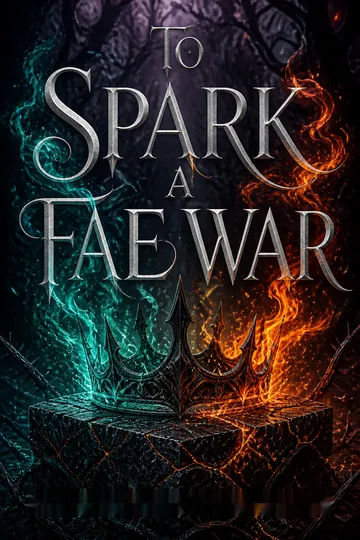
To Spark a Fae War makes its fantasy conflict hinge on an intimate moral problem: what does protection become when fear gives one person power over another? Evelyn uses fire, true names, glamour, and political authority to protect people, but each tool can also coerce or destroy. Her commands to Amelie are meant to prevent betrayal, yet they reproduce the controlling magic that has fractured her sister’s memory. Her growth depends not on abandoning power, but on distinguishing responsibility from possession.
Grief is the emotional engine of Evelyn’s choices. She initially tries to make it useful by pursuing Duveau and burning the Briar House. That action saves captives, but it cannot restore her mother or quiet her guilt. The Twelfth Court dramatizes what rage avoids: Evelyn has to enter sorrow, accept that her mother made choices of her own, and stop treating pain as evidence of weakness. This emotional learning becomes tactically important. Her developing command of the elements depends on connecting thought, instinct, duty, and feeling rather than relying on anger alone.
The political plot broadens the book’s question of responsibility. Human institutions persecute fae, fae rulers consider mass retaliation, and King Grigory is willing to sacrifice his own population. Neither species forms a morally uniform bloc. Evelyn’s bargain with the humans is imperfect and contested, but it makes protection reciprocal rather than a prize reserved for her allies. The wall can prevent violence while also dividing communities, so its value depends on the relationships built around it.
The romance with Aspen offers a model of partnership that the political alliances struggle to achieve. Their Bond gives them closeness, but their disagreements require each to respect the other’s agency. Estel’s sacrifice and Amelie’s reunion with Evelyn carry the same warning: love cannot mean deciding someone else’s choices for them. The ending offers no effortless peace. It offers a queen willing to keep negotiating among grief, power, and attachment, while trying to make survival include people she once had reason to fear.
Review Summary
To Spark a Fae War received mixed reviews, with ratings ranging from 1 to 5 stars. Many readers enjoyed the action-packed conclusion to the trilogy, praising the character development, world-building, and romance. However, some found the protagonist Evie frustrating and disliked her behavior towards Aspen. Critics noted pacing issues and a lack of focus on secondary characters. Despite mixed opinions, fans appreciated the series' overall arc and looked forward to exploring more of the author's work set in the same world.
Characters
Evelyn
The fire court's human-born queenEvelyn is a surgeon by training, a quarter-fae woman newly ruling the Fire Court, and a protagonist whose instincts are split between healing and retaliation. Her mother’s death by a human councilman has left her with grief she repeatedly tries to convert into action. Fire gives that impulse visible force, while her medical knowledge keeps her attentive to bodies, wounds, and consequences. Evelyn is intelligent, stubborn, and often afraid that emotion will make her an ineffective ruler. Her struggle is not to become powerful, but to decide what power should protect. The more she accepts grief, affection, and uncertainty without treating them as weakness, the more she can lead people whose histories and loyalties differ from her own.
Aspen
Evelyn's bonded stag kingAspen is the Stag King and Evelyn’s mate, a ruler whose composed manner conceals fierce protectiveness and a long history of political conflict with his brother Cobalt. His bond with Evelyn lets him sense her emotions and communicate across distance, making their intimacy unusually powerful but not always easy. He wants to keep her safe, yet must learn that care cannot become control, especially when she is building her own court. Aspen’s physical strength and command of earth and water make him a formidable ally, but his most important contribution is emotional steadiness. He encourages Evelyn to imagine a life beyond the next crisis and meets her at her side rather than asking her to follow behind him.
Amelie
Evelyn's estranged sisterAmelie is Evelyn’s younger sister, a gifted maker of clothes whose warmth and charm once made her the easy center of their family. She is also shaped by a complicated history of desire, fear, and choices she regrets. Cobalt’s use of her true name has left her memory fragmented, so she cannot always trust her own account of what she has done. Amelie’s wish to be forgiven competes with a fierce appetite for vengeance, and her new fire magic gives that anger a dangerous outlet. She is neither simply an innocent victim nor a simple betrayer. Her relationship with Evelyn depends on whether the sisters can acknowledge harm without reducing either woman to the worst choice she made.
Franco
The raven-winged vampire princeFranco is Nyxia’s brother, a psy vampire who can read and feed on emotion. His wit and flirtation often disguise loneliness, since sensing other people’s feelings can make his own seem distant or absent. He once shared a charged attraction with Evelyn, but respects her love for Aspen and continues to act as her friend. Franco takes risks on Evelyn’s behalf, using flight, shadows, and his unsettling ability to frighten opponents. His loyalty is not romantic competition so much as chosen kinship, though he enjoys provoking Aspen and watching the king’s jealousy flare.
Nyxia
The formidable Lunar QueenNyxia rules the Lunar Court with theatrical elegance and a talent for making her authority feel effortless. Her shadow magic can bring fear to the surface, and she is shrewd about political loyalties, intelligence, and the cost of appearing vulnerable. Beneath her sharp humor and appetite for spectacle is real concern for Evelyn and the alliance. Nyxia can be impatient with idealism, especially when lives are at stake, but she is not indifferent to those lives. Her complicated history with Lorelei gives their exchanges an edge that suggests old hurt may coexist with renewed affection.
Lorelei
Evelyn's trusted ambassadorLorelei is a practical, sharp-tongued wood nymph and one of Evelyn’s closest friends. Once a lady’s maid, she understands what it means to be underestimated and is quick to notice political and personal risks Evelyn misses. Her roots give her formidable defensive power, while her guarded manner keeps strangers at a distance. As Evelyn’s ambassador, she balances loyalty with useful disagreement, refusing to flatter her queen when a plan needs scrutiny. Her old grief and complicated feelings about Nyxia remain part of her, but do not prevent her from forming new attachments.
Foxglove
The court's flower-fae diplomatFoxglove serves Aspen as an ambassador and becomes an ally in Evelyn’s household. He is observant, sociable, and highly attuned to appearance, etiquette, and the emotional temperature of a room. His fascination with human objects and self-fashioned beauty comes partly from feeling judged by his own family for his unseelie form. Rather than accept those judgments, he makes elegance into a personal art. Foxglove’s diplomacy is gentle where Lorelei’s is blunt, and his interest in Fehr opens a possibility of companionship for someone long denied it.
Fehr
The bound djinn stewardFehr is the powerful djinn bound to Irridae Palace as its steward. He is proud, formidable, and openly resentful of a life shaped by ancient punishment and the rulers who have treated him as property. His first response to Evelyn is suspicion, and he measures a queen by whether she rules through fear or grants others meaningful choice. Fehr’s mastery of several elements makes him an essential protector of the palace, but his deeper conflict concerns whether service can ever become voluntary. His cautious connection with Foxglove offers a glimpse of a life beyond duty.
Estel
The Star Queen and inventorEstel is the Star Queen, a being of shimmering particles whose magic can move people through time and space. She is reserved, perceptive, and accustomed to carrying knowledge that others cannot yet use. Her Chariots make her politically valuable, but her history with her inventive sister has left her wary of technology built for war. Estel’s measured manner can obscure what she fears or intends, making trust in her a recurring question. She believes protection must be designed as carefully as a weapon, and she approaches enormous risks with the composure of someone who understands their true cost.
Cobalt
Aspen's rival brotherCobalt is Aspen’s brother, a nix prince whose political ambitions are tangled with his attachment to Amelie. He seeks to reshape the fae courts through a radical seelie rule and relies on the power of Amelie’s name to command her. His promises offer an idealized future, but his methods reveal a willingness to override another person’s agency. Cobalt is difficult to reduce to a single motive: ambition, love, and control coexist in him, each distorting the others. His relationship with Aspen is both a family wound and a contest over what kind of ruler Faerwyvae should accept.
Queen Dahlia
The Summer Queen's hard rivalDahlia rules the Summer Court with a polished manner that can turn quickly into open contempt. She is politically calculating and sees concessions as dangerous unless they strengthen her position. Her rivalry with Evelyn grows from competing claims to authority and differing ideas about how peace should be secured. Dahlia treats negotiation as leverage, which makes her difficult to trust even when she speaks in the language of cooperation. Her butterfly wings and graceful bearing contrast with the ruthless practicality she brings to power.
Henry Duveau
The human councilman's schemerDuveau is a human councilman who has profited from secret arrangements between human leaders and the late Fire King. He is accustomed to treating law as a tool for preserving his status and believes political survival can justify cruelty. Evelyn’s mother’s execution makes him personally hateful to her, but his motivations are not only personal malice: he fears disgrace, lost influence, and the collapse of the world he has tried to manage. His willingness to bargain with fae rulers shows how easily he treats other lives as currency.
Mayor Coleman
A desperate human negotiatorMayor Coleman is Marie’s uncle and a human political figure who once stood against Evelyn. He values family, social standing, and civic order, but is forced to confront the danger posed by his own king. His instinct is to negotiate from the position he still holds, even when that position is crumbling. Coleman’s relationship with Evelyn is cautious and strained, shaped by their shared history in Sableton and by his recognition that the human population cannot survive without help.
Marie Coleman
The human who chooses FaerwyvaeMarie is the mayor’s niece and a human who chooses to remain among the fae rather than return to a life arranged by her family. She is spirited, curious, and more willing to take risks than Evelyn thinks sensible. Marie’s desire for freedom is not an abstract rebellion; she wants the chance to choose her own work, relationships, and future. Her presence helps Evelyn see that human lives cannot be reduced to the people who persecute fae, and her family connection becomes a channel for vital information.
Flauvis
The combative Winter KingFlauvis is the wolf-shaped King of Winter, a blunt and combative ruler who favors overwhelming force. He delights in provoking his peers and is quick to treat mercy as weakness. His appetite for violence makes him a persistent challenge to Evelyn’s efforts to keep the alliance from repeating the destruction it opposes. Beneath the aggression is a ruler who believes survival depends on striking first and hard, a conviction that can make him useful in battle and dangerous in council.
King Aelfon
The broad-shouldered Earth KingAelfon is the King of the Earthen Court, a massive, steady ruler with horns and a strong sense of responsibility for his people. He is less theatrical than Flauvis and more concerned with what can actually be built, defended, and sustained. His command of earth makes him central to any plan involving the island’s walls. Aelfon is cautious about sacrificing lives for political ideals, but he can be persuaded when a proposal offers the courts a practical chance to survive.
Queen Tris
The outspoken Spring QueenTris rules Spring and can shift between a tiny pixie shape and a taller, flower-crowned form. She is proud, impatient with being underestimated, and determined to preserve her seelie principles even while joining an alliance that seeks to restore older fae traditions. Her refusal to endorse the destruction of humans gives the coalition an important internal counterweight. Tris is sensitive to how others perceive her size and authority, but does not let that sensitivity make her silent.
Queen Minuette
The Wind QueenMinuette is the airy Queen of Wind, whose blue hair and clothing seem constantly stirred by an unseen breeze. She is perceptive, quick to challenge proposals she considers unfair, and attentive to the practical division of power among the courts. Her lightness of movement should not be mistaken for indecision; she takes the alliance’s risks seriously and expects Evelyn to account for the consequences of her bargains.
Breeda
Evelyn's devoted fire spriteBreeda is a tiny red fire sprite who treats service to Evelyn as an honor of the highest order. Her exuberance can interrupt tense moments, but her loyalty is more than ceremony: she carries messages, keeps watch, and insists on protecting her queen.
Dune
The kitsune route guideDune is a white kitsune who helps guide Fire Court travelers through the Star Court. He is proud of his tribe’s abilities and eager to prove himself useful, even when challenged by the unreliable wisps.
Queen Phoebe
The winged Solar rulerPhoebe rules Solar and commands winged soldiers. Her martial presence makes her a formidable political opponent, while her court’s alliance with Dahlia gives the Renounced a powerful aerial force.
King Ustrin
The dead Fire KingUstrin is the former ruler of Fire, whose secret arrangements with human allies left a dangerous legacy inside Irridae Palace. His rule relied on weapons, coercion, and control of those bound to his household.
Plot Devices
True names
Commands with a costKnowing a fae’s true name gives Evelyn power to impose commands, protect allies, and, in some cases, release someone from a binding. The power has limits: commands can conflict, last too long, or cause severe harm when they force a person to resist another command. Amelie’s experience under Cobalt makes the device more than a magical convenience. It raises the question of whether safety imposed without consent can become another form of captivity.
The Twelfth Court
A path through instinctThe Twelfth Court is the realm where fae discover and inhabit their unseelie forms. Evelyn’s connection to it lets her shift into a firefox, whose senses and movement help her survive forests, prisons, and battlefields. In moments of danger, the Court also alters her perception of time and physical matter, allowing her to see through a tank and escape a grenade. Its power depends on her ability to face, rather than simply suppress, the emotions driving her.
The Bond
Love across distanceEvelyn and Aspen’s Bond allows them to sense each other’s emotional states and communicate when they are apart. It is a source of comfort, but also a reminder that intimacy does not erase boundaries: Aspen cannot always intervene physically, and Evelyn must still make her own decisions. The Bond carries worry, desire, and warning across battlefields, linking their private relationship to the political crisis without making either partner omniscient.
The Chariot
Travel through spaceThe Chariot is a small star-powered device made by Estel. It transports its user to a place they have already visited, but its uses are limited until it can recharge beneath starlight. Because it can move someone across the island almost instantly, possession of a Chariot changes the balance of military power. Evelyn’s party uses one to reach Irridae, while human access to another makes secret travel, invasion, and the theft of the Parvanovae possible.
The Parvanovae
Destruction remade as protectionThe Parvanovae is a living star contained in a crystal orb, devised by Estel’s sister as a weapon during an earlier war. Its destructive force threatens all life on the island, not only the intended enemy. Estel believes its energy can be transmuted into an enchantment around the wall, but activating that protection requires her to absorb the blast. The bomb turns political conflict into a test of whether survival must mean annihilation, and whether a weapon can be redirected without escaping its cost.
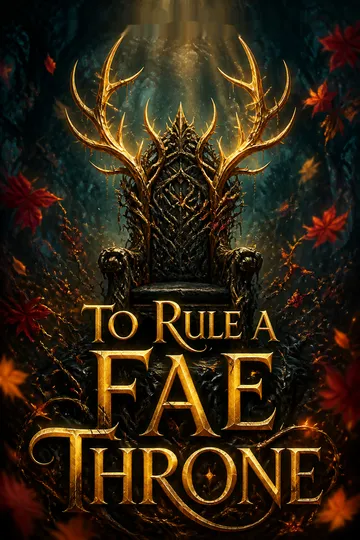
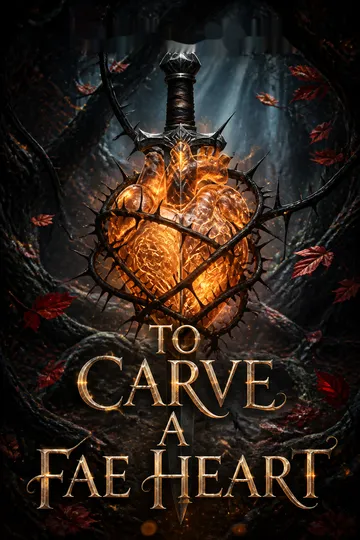
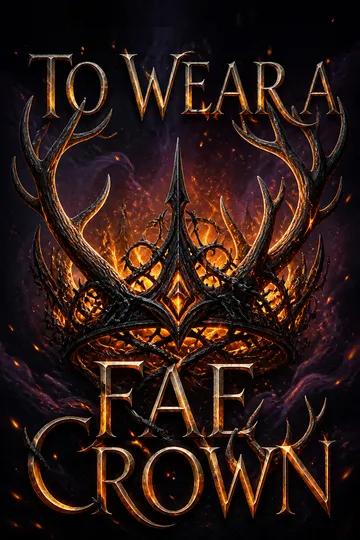
The Fair Isle Trilogy Series
About the Author

Download PDF
Download EPUB
.epub digital book format is ideal for reading ebooks on phones, tablets, and e-readers.








