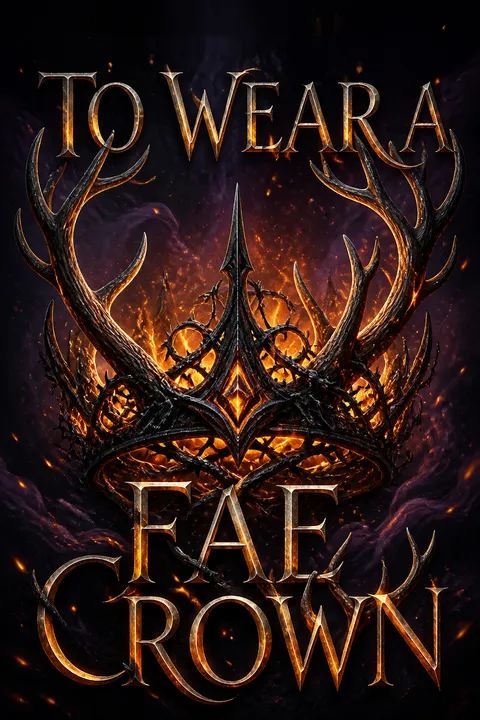


Plot Summary
The Treaty Comes Undone
An official letter reaches Bircharbor Palace on the eve of Evelyn Fairfield’s wedding to Aspen, the Autumn King, declaring their pairing invalid and threatening the peace treaty between humans and fae.
Aspen refuses to explain the letter fully, while explosions from the beach announce an attack on workers sealing the coral caves against his brother Cobalt’s forces. Evelyn leaves their argument to help surgeon Gildmar treat three injured guards, using her medical knowledge where fae healing alone may not suffice.
Queen Melusine, Aspen’s estranged mother, then asks Evelyn to persuade him to protect her from Cobalt. As the treaty collapses around them, Evelyn is pulled between her love for Aspen and the lives endangered by the coming conflict.
The opening makes private and public rupture happen at once: the letter cancels a marriage, while the explosions make political breakdown bodily and immediate. Evelyn responds to catastrophe by treating wounds, a practical reflex that defines her more reliably than royal titles do. Her choice also establishes the story’s central tension: she thinks in terms of lives that can be saved, while Aspen sees a treaty that has repeatedly turned people into bargaining pieces. Melusine’s appeal introduces a further complication. Evelyn is asked to mediate between a mother and son just as her own relationship with Aspen becomes uncertain.
A Choice That Hurts
Foxglove, Aspen’s ambassador, reveals that the human council suspects Evelyn and her sister Amelie have fae blood. It offers Aspen a last chance to preserve the treaty: accept new Chosen sisters, Maddie and Marie Coleman, and complete the alliance rites with Maddie within a week.
Maven Fairfield, Evelyn’s mother, is imprisoned for concealing the sisters’ heritage and may be executed if the arrangement fails. Aspen refuses the offer rather than lose Evelyn, but she insists that preserving peace matters more than their future together.
She leaves for the human town of Sableton with Foxglove and Lorelei, Aspen’s loyal attendant, intending to prove the accusation false and protect Maven. Aspen cannot promise the choice Evelyn wants, and she cannot promise she will return.
Evelyn’s departure is not a rejection of Aspen so much as an attempt to stop love from becoming an excuse for political negligence. She believes that a ruler must accept personal cost if it prevents mass suffering. Aspen’s refusal exposes a different moral priority: he regards a system that demands Evelyn’s replacement as already violent, even before war begins. Their disagreement is emotionally credible because each is trying to protect the other and the wider population, but neither trusts the other’s definition of sacrifice. Maven’s threatened execution makes the conflict concrete and removes the comfort of treating it as a lovers’ quarrel.
Sableton Sets a Trap
At Mayor Coleman’s manor, Evelyn learns that the council will not disclose its evidence until Maven’s treason trial, set for two weeks later at the Spire. The mayor blames Aspen for choosing Evelyn and insists the king must accept the Colemans or risk war. The council’s Henry Duveau arrives with the authority to detain Evelyn, but Mr. Meeks, her former medical mentor, persuades him to let her stay at his home instead.
Duveau warns that Evelyn and Amelie must attend the trial or Maven will die, and that failing to appear will bring a bounty on the sisters. Lorelei chooses to remain with Evelyn despite the danger and the strain of being outside Faerwyvae, while Foxglove leaves with Maddie and Marie for Autumn.
The human authorities make coercion look procedural: a delayed trial, undisclosed evidence, and a conditional promise of mercy. Duveau’s decision to permit Evelyn some freedom does not reduce his control, because Maven’s life is made the guarantee of her attendance. Mr. Meeks appears to offer a humane alternative, but the contrast between his kindness and Duveau’s threat also leaves Evelyn dependent on people whose motives she cannot fully verify. Lorelei’s choice to stay matters because it reverses their earlier antagonism. She accepts vulnerability in the human world to keep Evelyn from facing a hostile legal system alone.
Maven Names the Bloodline
In Sableton’s jail, Maven confirms that Evelyn and Amelie are part-fae. Maven herself is half-fae, the daughter of Caleos, the Fire King exiled after his human lover was executed and he retaliated by burning a village. Maven survived on the mainland by moving often, but brought her daughters to Eisleigh because life away from Faerwyvae’s magic weakened them.
She concealed their ancestry partly to keep them safe: Caleos’s descendants were also meant to remain exiled, and King Ustrin, his cousin and successor, has reason to fear their return. Ustrin recently attacked Maven’s apothecary, exposed her fire magic, and helped turn the council against her. As Evelyn’s anger rises, she melts the iron bars with her hands.
The revelation changes Evelyn’s problem from false accusation to inherited liability. Her mother’s secrecy was protective, but it also deprived her daughters of knowledge they needed to understand their own bodies and political danger. The family history repeats a pattern of violence disguised as law: a human execution, a fae king’s retaliation, then an exile that reaches across generations. Evelyn’s first uncontrolled fire is not simply a power awakening. It emerges while she is arguing about blame, suggesting that her magic responds to the moral pressure she has tried to manage through logic alone.
The Mentor’s Laboratory
Back at Mr. Meeks’s home, Evelyn agrees to help with research into her newly confirmed heritage. Meeks instead drugs and restrains her in a hidden laboratory, where jars of body parts reveal that he and the brutal hunter Mr. Osterman have been collecting fae for experiments. Meeks cuts Evelyn to study her healing, while Osterman holds Lorelei in iron restraints and plans to hand her to the Briar House.
Evelyn’s rage ignites her fire: she melts her cuffs, slashes Meeks’s throat with a scalpel, then frees Lorelei. As flames spread through the laboratory, they escape outside, where Osterman pursues them. Lorelei uses her earth magic to impale him with a root. The two women flee toward the faewall, each carrying the shock of having killed.
Meeks’s betrayal devastates Evelyn because it attacks her trust in knowledge and care at the same time. He treats scientific curiosity as permission to disregard consent, turning the medical room into a site of captivity. Evelyn survives by combining the skills he once helped cultivate with a force he cannot control. Her violence is defensive, but it leaves a moral injury rather than a triumphant sense of empowerment. Lorelei’s killing of Osterman follows the same pattern: survival demands action, yet neither woman can make that action feel clean. Their flight shifts the story from legal vulnerability to fugitive danger.
Shelter Beneath the Moon
Evelyn and Lorelei cross the faewall and travel to the neutral Lunar Court, where Queen Nyxia grants them shelter. Lorelei’s history with Nyxia, her former lover, makes the welcome tense, but the queen keeps her promise.
Nyxia’s brother, Prince Franco, escorts Evelyn through Selene Palace and introduces its nocturnal inhabitants, including the court’s observatory and the Wishing Tree. Nyxia then proposes that Evelyn claim the Fire throne as an unseelie ruler, arguing that the treaty’s eventual collapse could free Caleos’s descendants from exile.
She suggests an alliance through Franco, but Evelyn refuses to make a mate choice part of her claim. As Evelyn struggles with nightmares and separation from Aspen, her connection to him begins to reach across distance in vivid dreams.
Lunar offers refuge without offering neutrality of motive. Nyxia’s hospitality is real, yet she immediately frames Evelyn as a political opportunity capable of changing the balance between courts. Evelyn’s refusal to bind her claim to Franco marks an early insistence on agency: she will not exchange one form of constraint for another simply because it promises safety. The court’s strange beauty also broadens her imagination. She begins to encounter unseelie life as a society rather than a threat, even while dreams of Aspen keep her emotionally tied to the world she left.
The Wedding She Misses
On the night Aspen is expected to marry Maddie, Evelyn attends Lunar’s full moon revel with Lorelei and Franco. The moon wine loosens her grief, and she dances among creatures she once would have feared.
A brief kiss with Franco gives way to the realization that she still wants Aspen, and she thinks she sees the king watching from the hall. The next morning, Aspen is physically at Selene Palace, having abandoned the wedding. He tells Evelyn that he refused Maddie and that Cobalt secured the treaty instead, taking the Autumn throne under the council’s rules.
Aspen now claims the Unseelie kingship through the Old Ways, supported by rebel rulers, while Evelyn learns that Cobalt has also claimed the Sea Court after accusing her of murdering Melusine.
The revel gives Evelyn a temporary experience of pleasure that is not organized around duty, but the kiss with Franco reveals how little distraction can settle her attachment to Aspen. His arrival then collapses the fantasy of a clean separation. Both have acted against the other’s wishes while believing they were choosing necessity. Political developments mirror the emotional fracture: the council recognizes Cobalt, while Aspen turns to the older order. Evelyn’s missing dagger and the accusation against her make intimacy and authority equally vulnerable to manipulation.
A Sister’s Refusal
Amelie’s message reaches Evelyn through Franco: she has heard of Maven’s trial but will not leave Faerwyvae to attend. Evelyn cannot know whether Cobalt forced the message or whether Amelie chose her new life, but the consequence is the same: the council may use her absence to condemn Maven and Evelyn.
Foxglove explains that Aspen’s refusal, Dahlia’s maneuvering, and Cobalt’s claim have split the fae rulers into rival camps. He urges Evelyn to seek the Fire throne, then proposes a treaty amendment that would lift Caleos’s descendants’ exile.
Evelyn agrees to pursue the plan, though it requires winning human support, rallying the Fire fae, and defeating Ustrin. Nyxia introduces her to displaced Fire creatures, who question whether a human-blooded woman can represent them.
Amelie’s refusal makes Evelyn confront the limits of sisterly loyalty: she cannot rescue someone who may not want rescue, and she cannot know whether that refusal is free. The resulting plan is ambitious because Evelyn refuses to choose only one constituency. Foxglove sees political leverage in her ancestry, while Evelyn sees a chance to prevent both exile and war. The Fire fae’s skepticism is an important check on her self-image. Bloodline alone cannot make her their queen; she must earn trust from people whose customs and losses she barely understands.
The Bargain at Selene
Before Evelyn can build support, Ustrin arrives at Selene Palace under a promise of peaceful exchange. He offers Prince Franco a Seelie kingship, then has a guard stab him with iron when Franco rejects it. Ustrin demands to speak with Evelyn and threatens Franco’s life unless she reveals herself.
Evelyn steps out of Lorelei’s glamour and bargains: she will attend Maven’s trial and accept exile if the humans let her and her mother leave unharmed, and she will never return. In exchange, Ustrin and the council will not attack the rebels while she remains on the isle. Evelyn treats Franco’s wound with her healing ability. She then recognizes that the wording may protect the rebels without giving up her chance to negotiate with the humans.
Evelyn’s bargain shows her learning to use the fae’s own legalism rather than merely suffer under it. She accepts a promise that sounds like surrender, but carefully limits its conditions and preserves room for another outcome. The immediate price is personal: Ustrin’s threat forces her to expose herself, and Franco’s injury makes the danger tangible. Her decision to save him is not a romantic exchange or a political calculation. It is a medical response to a wounded person, consistent with the identity she is trying to bring into a world that rewards leverage.
One Last Night
After several days preparing her case, Evelyn leaves for Grenneith with Foxglove, Aspen, and Franco. In the Spire’s prison, she tells Maven that Amelie will not attend and admits she found happiness with Aspen. Their conversation gives mother and daughter a moment of understanding before the trial. When Duveau arrives unexpectedly, Franco carries Evelyn out through a window before guards can catch them.
In an alley, Aspen confronts her about the kiss with Franco and her bargain to save him. Evelyn admits she wanted that kiss but refuses to treat herself as Aspen’s property; she also makes clear that her attachment to him has not ended. They begin to reconcile, but Franco returns with news that the trial has started hours early.
The visit to Maven turns a legal countdown into a family farewell, though neither woman knows yet how final it may be. Evelyn’s honesty about Aspen allows her mother to see the life she has built in Faerwyvae, while also exposing how much remains unresolved between the lovers. The alley argument is not settled by jealousy disappearing. Instead, Evelyn claims the right to make choices even when those choices hurt Aspen. Their renewed closeness rests on that autonomy, making the sudden announcement of the trial more than a plot interruption: it cuts short a reconciliation just as it becomes possible.
The Spire Turns Bloody
Evelyn reaches the courtroom to find Maven bound in iron, submerged in cold water, and already judged guilty. Duveau declares that Amelie’s absence voids the offered exile and sentences both women to death. When Evelyn asks to renegotiate the treaty, he refuses and offers to spare her only if she submits to sexual exploitation at the Briar House.
Maven rejects the humiliation on her daughter’s behalf. Evelyn invokes Duveau’s name, but he has hidden the birth name that would give her command over him. As guards seize Maven, Evelyn uses the Legacy Bond to restrain Duveau’s trigger hand, but cannot stop him from shooting Maven. Aspen arrives in stag form, wounds Duveau, and carries Evelyn away as her grief erupts into uncontrollable fire.
The trial reveals that legality is not a neutral process when the person controlling it can alter its timing, dictate its terms, and exploit a daughter’s absence. Duveau’s offer exposes the sexual violence beneath his language of mercy. Maven’s final defense of Evelyn restores a boundary the court tries to erase: survival bought through degradation is not freely chosen. Evelyn’s power can momentarily interrupt the machinery of violence, but it cannot reverse the bullet. Her failure to save her mother marks the limit of competence and magic, forcing grief to become the next crisis.
The Crown’s Refugees
Aspen brings the burning Evelyn to Lunar’s moon baths, where moonlit water and moss soothe her injuries. As she recovers, she accepts that the treaty and its Reaping must end, and tells Aspen she intends to stay in Faerwyvae and claim the Fire throne.
She also admits her love for him, and he returns it. Refugees from Autumn arrive at Selene Palace, including Marie Coleman, who escaped rather than marry Aspen and explains that he promised she would not be forced into marriage.
Their arrival confirms Aspen’s household remains loyal despite Cobalt’s takeover. Nyxia agrees to shelter them, and Evelyn asks her to summon the Fire fae. For the first time, Evelyn accepts responsibility not just for surviving the crisis but for shaping what follows.
The moon baths provide physical recovery, but the deeper change is Evelyn’s decision to stop treating Faerwyvae as a temporary ordeal. She chooses it as home without pretending the choice is uncomplicated or free of loss. Her reunion with Aspen follows an honest declaration rather than a political arrangement. Marie’s escape also complicates the story’s treatment of the Reaping: individual refusal is possible, but only because another person in power chooses not to enforce the custom. Evelyn’s emerging authority is therefore measured by whether she can make such choices less exceptional.
A Name Breaks the Treaty
Evelyn meets the Fire fae again and claims the title of Unseelie Queen, promising to defend their freedom and oppose Ustrin. The gathering remains skeptical until Ustrin and Duveau arrive, threatening the refugees held near the border and surrounding the crowd with armed guards. Ustrin demands Evelyn leave the isle, while Duveau tries to compel her through the inherited Legacy Bond.
Evelyn resists by redefining her true name as Evelyn, Unseelie Queen of Fire. Duveau repeats it in an attempt to command her, but the declaration instead severs the Legacy Bond. Ustrin recognizes that the treaty has now been broken. Duveau flees, while Ustrin accepts that he must face Evelyn for the Fire throne under the Old Ways.
The naming scene turns identity into an act with legal and magical consequences. Duveau assumes that a person’s power can be fixed at birth and controlled through inheritance; Evelyn answers by claiming a name that describes what she is choosing to become. The result is not a neat victory. The treaty breaks, and the danger it was designed to contain remains. Yet the moment shifts authority away from the council’s paperwork and toward Evelyn’s public claim, making self-definition politically consequential rather than merely personal.
The Firefox Takes Fire
Evelyn accepts Ustrin’s challenge and enters the Twelfth Court, where the All of All reveals her true form: a white firefox wreathed in multicolored flame and crowned with fire. Ustrin, an enormous fire lizard, destroys the physical crown and attacks her with blasts of flame.
Evelyn uses her smaller size, speed, and knowledge of the clearing to draw him toward a hollow tree. Her fire weakens the trunk until it falls across him. When Ustrin refuses to submit and continues healing, Evelyn bites through his throat.
The Fire fae recognize her as their queen, then ask to burn, eat, or harvest the fallen king. Evelyn permits their customs while preventing a fight over the remains. Only afterward does she let herself mourn Maven and the lives she has taken.
Evelyn wins through attention rather than superior force. Her medical habit of observing bodies and conditions becomes tactical intelligence: she notices the tree’s decay and turns Ustrin’s aggression into the cause of his defeat. The transformation into a firefox makes her mixed inheritance visible without making her choose one side of herself. Yet victory does not erase the cost of killing. Her struggle to return to human form and grieve shows that a ruler’s legitimacy cannot be reduced to combat success; she must also remain capable of feeling the consequences of power.
Amelie Returns in Chains
After a night by the stream, Evelyn begins dealing with petitions from the Fire fae, who already ask when she will lead them home. At Selene Palace, Nyxia tells her that Amelie has arrived alone and claimed protection through a peaceful exchange. The sisters meet in the dungeon, where Amelie looks exhausted and says she escaped Cobalt.
She wants Evelyn’s protection and offers to help kill him, claiming she holds the power of his name. Evelyn warns that Amelie may still be acting under a command, so Amelie gives Evelyn her own true name instead. The gift transfers power over her sister to Evelyn. Shaken by this one-sided bond, Evelyn thanks Amelie coldly and leaves, ending the book with her new crown and a new burden.
The ending gives Evelyn the return she wanted, but not the reunion she imagined. Amelie arrives as both a sister in need and a possible political danger, and the power she offers is inseparable from coercion. Evelyn must decide how to protect someone without repeating the systems that made names instruments of control. Her response is deliberately guarded: she neither accepts Amelie’s account without question nor rejects her outright. The unresolved bond echoes the larger conflict of the novel, where love, security, and authority repeatedly become difficult to distinguish.
Analysis
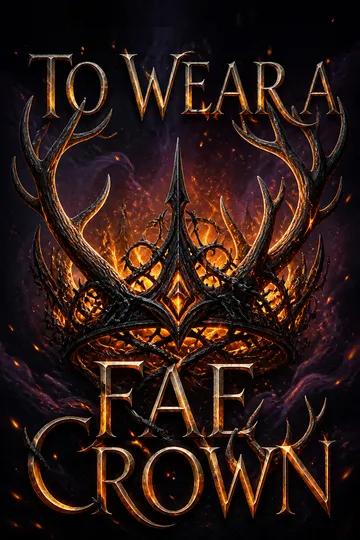
To Wear a Fae Crown makes the treaty’s moral problem visible through the people it asks to pay for peace. Evelyn is first selected as a bride, then treated as an ineligible claimant, a suspect, and finally a possible ruler. Each institution describes its demands as necessary, yet the human council’s trial and the fae council’s succession rules repeatedly turn women and mixed-heritage descendants into instruments of policy. The novel’s strongest counterargument is not that all law is useless, but that law without consent becomes an efficient form of violence.
Evelyn’s healing and fire magic develop along the same line. She begins by trusting observable injuries and rational procedure, but she discovers that care also requires emotional engagement and action under uncertainty. Her anger is not presented as a virtue by itself. Uncontrolled, it burns her; directed toward a concrete danger, it lets her resist captivity and challenge Ustrin. The story asks her to integrate feeling with judgment rather than replace one with the other.
Romance reinforces that political question. Aspen’s protectiveness can resemble control, and Evelyn refuses to let love erase her independence. Their reconciliation becomes possible when they acknowledge that neither owns the other’s choices. The parallel is deliberate: a freely chosen bond differs from a Legacy Bond used to compel a family, just as a chosen alliance differs from a treaty enforced through threatened brides.
The ending grants Evelyn a crown but not closure. Maven is dead, the treaty is broken, and the fae conflict remains unresolved. Amelie’s arrival adds a final ethical problem: protecting someone who has given away her name risks reproducing the very power Evelyn has fought. Her new authority will matter only if she can govern without turning care into command.
Review Summary
To Wear a Fae Crown receives mostly positive reviews, with readers praising its plot twists, character development, and world-building. Many find it an improvement over the first book, with increased political intrigue and action. The romance between Evie and Aspen garners mixed reactions, with some enjoying their dynamic while others find it frustrating. New characters, particularly Prince Franco, are well-received. Some criticize pacing issues and Evie's decision-making. Overall, readers appreciate the emotional roller coaster and are eager for the final installment.
People Also Read


Characters
Evelyn Fairfield
The reluctant fire queenEvelyn is a human-raised healer whose medical training makes her attentive to pain, evidence, and the practical needs of injured people. She is skeptical of magic and political ceremony, but she does not confuse skepticism with indifference: she keeps asking what will preserve life and dignity. Her sense of responsibility can become self-erasure, especially when she assumes that she alone must absorb the cost of peace. Relationships with Aspen, Maven, Lorelei, and Amelie expose different sides of that impulse, from romantic vulnerability to family loyalty and earned friendship. Evelyn’s defining tension is between the calm, analytical identity she trusts and the intense fire she is only beginning to understand.
Aspen
The divided Autumn kingAspen rules Autumn with a hard exterior that conceals a history of violence, grief, and deep protectiveness. He distrusts political institutions because he has seen them turn agreements into weapons, while Evelyn continues to believe that flawed structures can still prevent immediate suffering. Their love is intense, but their disagreements are not simply misunderstandings: each has to reckon with the other’s right to choose. Aspen’s antlered stag form embodies both his physical power and his instinctive side, while his careful acts of care reveal a gentleness he rarely displays publicly. He is at his most vulnerable when he cannot protect Evelyn by force or decide what sacrifice she should make.
Maven Fairfield
A mother guarding old truthMaven is Evelyn and Amelie’s mother, an herbalist whose practical craft carries a deeper connection to magic. She has spent centuries balancing her ancestry against the danger of being discovered, and her secrecy comes from a desire to keep her daughters safe rather than from contempt for them. That protection has a cost: Evelyn and Amelie grow up without the knowledge that might have prepared them for their inheritance. Maven is tender but not passive, and she understands that care sometimes means allowing her daughters to make painful choices. Her family history links private love to the political violence of the Fair Isle.
Amelie Fairfield
The vanished elder sisterAmelie is Evelyn’s older sister, elegant, socially adept, and accustomed to imagining security through romance and status. She has a lighter temperament than Evelyn, but that apparent ease conceals a strong wish to escape the limits imposed on her. Her relationship with Evelyn mixes affection with the ordinary rivalries and differences of sisters who have not always understood one another. Amelie’s ties to the fae make her choices increasingly difficult for Evelyn to interpret, raising questions about consent, loyalty, and the effects of magical bargains. She remains emotionally important even when physically absent from Evelyn’s life.
Lorelei
The steadfast wood nymphLorelei is a wood nymph in Aspen’s household and a healer with command of earth magic. Her first impressions can be sharp, but beneath them is a fierce capacity for loyalty shaped by grief and past betrayal. She becomes Evelyn’s friend through mutual recognition rather than easy compatibility: both have reason to distrust the other’s people, and both learn to revise those judgments. Lorelei does not merely comfort Evelyn; she challenges her habit of treating her own life as expendable. Her history with Nyxia and Malan gives her a private emotional life that continues to shape how she responds to danger and intimacy.
Foxglove
The anxious royal ambassadorFoxglove serves as Aspen’s ambassador, using diplomacy, knowledge of bargains, and a keen sense of political language to navigate human and fae institutions. His nervous gestures can make him seem less formidable than he is, but he is capable of standing his ground when Evelyn’s safety or rights are at stake. He treats her as someone entitled to the truth, even when Aspen would prefer to shield her from it. Foxglove’s loyalty is strategic as well as personal: he understands that a carefully worded agreement can create room for action. He also has a shy admiration for Prince Franco.
King Ustrin
The entrenched Fire rulerUstrin is the ruler of Fire and a powerful supporter of the Council of Eleven Courts. His reptilian appearance reflects his court’s elemental character, but his political identity depends on institutions rather than the older fae customs those institutions displaced. He fears disruption to his authority and treats both humans and unseelie fae as pieces to be managed. His connection to Caleos’s history makes Evelyn’s ancestry a direct challenge to his position. Ustrin is not merely a force of physical danger; he understands threats, promises, and public legitimacy, which makes him difficult to oppose through strength alone.
Queen Nyxia
The calculating Lunar queenNyxia rules the Lunar Court, a nocturnal refuge for creatures unwelcome elsewhere. Powerful and self-possessed, she reads fear and dreams with unusual skill, and she is rarely careless about political advantage. Her past relationship with Lorelei remains emotionally charged, mixing real affection with jealousy and a resistance to monogamy. Nyxia offers Evelyn protection, but she also sees the strategic value of a possible Fire queen who might weaken Ustrin and the council. Her support is sincere without being selfless. That combination makes her a useful ally and a person Evelyn must continue to assess.
Prince Franco
The teasing Lunar princeFranco is Nyxia’s brother, a silver-haired Lunar prince who can take raven form and sense the energy of dreams. He uses flirtation and provocation to test people, often hiding attentiveness beneath a playful manner. Evelyn’s company amuses him, but he also helps her reach Amelie and takes risks when the human authorities close in. His bond with Nyxia is affectionate but complicated by her dominance and his own desire for independence. Franco is more perceptive than his jokes suggest, and his capacity for care becomes clearer when Evelyn treats him as a patient rather than a political asset.
Cobalt
Aspen’s ambitious brotherCobalt is Aspen’s brother and a claimant to power in Autumn. His ambition makes him willing to exploit the weaknesses of both fae and human institutions, and his relationship with Amelie gives his political maneuvers a personal dimension. He is clever enough to use the treaty’s procedures to his advantage, while his actions leave others uncertain where coercion ends and choice begins. Cobalt’s rivalry with Aspen is not only about succession; it reflects competing visions of how power can be secured and what people may be sacrificed to obtain it.
Henry Duveau
The council’s legal enforcerDuveau is a powerful human councilman whose legal authority is reinforced by an inherited magical bond to Maven’s family. Controlled and observant, he can sound reasonable while narrowing another person’s choices until only submission remains. His interest in Evelyn’s family is political, but he also takes personal satisfaction in making the vulnerable plead for mercy. Duveau’s calm manner makes his cruelty more unsettling: he treats threats and punishments as orderly business. He represents the danger of rules that are written to protect authority rather than the people subjected to it.
Queen Melusine
The imperiled Sea QueenMelusine is Aspen’s mother and the ruler of the Sea Court. She is proud, politically forceful, and accustomed to making other people serve her purposes, but fear complicates her confidence when Cobalt threatens her position. Her request for Aspen’s protection forces Evelyn to consider whether an old enemy can become a necessary ally. Melusine’s relationship with her sons is strained by her earlier political choices, and she struggles to admit when those choices have left her exposed.
Queen Dahlia
The sunny court powerbrokerDahlia rules Summer and presents herself with warmth, beauty, and polished concern. Her longstanding familiarity with Aspen lets her move close to his political and personal life, while her charm makes her motives difficult for Evelyn to read. Dahlia understands how to make a proposal seem reasonable to a divided council. Beneath the bright presentation is a ruler alert to opportunity and influence, whose presence reminds Evelyn that danger in Faerwyvae does not always arrive looking openly hostile.
Mr. Meeks
Evelyn’s medical mentorMeeks is an aging surgeon who trained Evelyn and encouraged her interest in medicine. He values observation and experimentation, qualities that once made him a mentor she admired. His curiosity about fae biology exposes the ethical boundary he is willing to cross in pursuit of knowledge. Meeks’s relationship with Evelyn is paternal in tone, which makes his scientific ambitions especially difficult for her to reconcile with the trust she placed in him.
Mr. Osterman
The iron-wielding hunterOsterman is a human hunter infamous for using iron against fae. He is physically imposing and treats captured fae as prey, showing little interest in their lives beyond what he can take from them. His presence embodies the bodily danger humans pose to fae, while his connection to the Briar House links violence to exploitation and commerce.
Maddie Coleman
The chosen bride rivalMaddie is Mayor Coleman’s confident, socially ambitious niece and the eldest of the new Chosen. She is accustomed to imagining marriage as a route to status and regards Evelyn as an obstacle to the future she expected. Her poise can conceal how much her plans depend on other people’s political decisions. Maddie’s relationship with her younger sister is shaped by their unequal confidence and differing readiness for the life being arranged for them.
Marie Coleman
The unwilling younger ChosenMarie is Maddie’s fifteen-year-old sister, quieter and more reflective than her older sibling. She is frightened by the prospect of being sent into an alliance marriage, despite being told that the Reaping has always been a possibility. Her hesitation makes visible the human cost hidden inside the treaty’s formal language. Marie is capable of seeking help even when she has little power, and her presence challenges the assumption that tradition amounts to consent.
Plot Devices
The Reaping Treaty
Peace with a human costThe thousand-year treaty between humans and fae requires human girls to be sent to Faerwyvae as Chosen, with mate, Bonding, and wedding rites used to secure the alliance. Its rules can be amended, but the councils control when and how. The treaty gives Evelyn and Aspen a reason to marry, then becomes the instrument through which the human council invalidates their pairing, demands new Chosen, and threatens Maven. Its political purpose is to prevent war, yet its continuation depends on treating young women as diplomatic resources. It also creates the central question of whether peace is meaningful when maintained through coercion.
True Names and Bonds
Identity becomes commandFae bargains and true names can grant one person power over another, while a Bond can link people across distance or pass through family lines as a Legacy Bond. Aspen and Evelyn experience their mate Bond as a channel for distant visions, while Duveau’s inherited Bond gives him authority over Maven’s descendants. The device makes intimacy, law, and coercion overlap: a name can express identity, but it can also be used to compel obedience. The story repeatedly tests whether words merely describe a person or can alter the conditions under which that person is allowed to live.
The Twelfth Court
A test beyond council lawThe Twelfth Court is the mystical realm associated with the All of All, outside the rules imposed by the Council of Eleven Courts. It appears in Evelyn’s earlier trials and becomes relevant to her fire magic, transformation, and claim to rule. Unlike a conventional contest, its judgments are difficult to predict and can be expressed through symbolic tokens or a change in form. The court offers an alternative source of legitimacy to political inheritance and council recognition, but it does not guarantee an easy victory. Evelyn must interpret what it reveals about her rather than simply obey a formal procedure.
The Faewall and Axes
A border crossed both waysThe faewall separates Faerwyvae from the human lands, while magical axes allow travel between the courts and along the boundary. Crossing into Eisleigh weakens fae magic and can make the fae physically unwell. For Evelyn, whose heritage is mixed, the wall also marks a personal divide between the human life she remembers and the magical world she has entered. Its routes determine whether she can seek help, return to the human authorities, or find shelter in another court. The wall is both a political border and a practical limit on what characters can do.
Fire Heritage
Anger becomes a source of powerEvelyn inherits fire magic through her mother, Maven, the daughter of the exiled Fire King Caleos. The power first appears in moments of anger, but fire also connects to life force, healing, passion, and transformation. Evelyn’s medical instincts and her magic are therefore not separate talents: both involve sustaining or redirecting a person’s inner vitality. Uncontrolled fire can injure Evelyn as well as her enemies, making emotional regulation a practical necessity rather than a moral abstraction. Her changing relationship with anger becomes central to how she survives and understands herself.
The Fair Isle Trilogy Series
About the Author
Download PDF
Download EPUB
.epub digital book format is ideal for reading ebooks on phones, tablets, and e-readers.








