


Plot Summary
Prologue
A year after working together on a successful book tour, Daphne sees Monty leaving Fletcher-Wilson Publishing after being fired. She has grown fond of the reckless publicist and hopes to tell him about her new life, her art, and the confidence she is trying to build.
Instead, Monty brushes off her invitation to share a meal, pats her head as if she were still a pet, and leaves. Daphne turns away hurt, convinced their friendship meant less to him than it did to her.
The opening gives their romance a bruise before it gives it a beginning. Daphne’s new body and artistic ambitions represent a life she is trying to inhabit openly, but Monty responds to her vulnerability with a gesture that reduces her to the animal form she has worked to move beyond. His dismissal reads as casual cruelty to her, though later events reveal that distance is also his defense against intimacy. The prologue therefore makes their reunion more than a second chance at flirtation: it asks whether affection can survive injury when one person cannot yet explain why they ran.
Paws on the Canvas
One year later, Daphne is an editorial assistant with a chance to become a full-time illustrator if she can complete four covers for romance novelist Edwina Danforth. Her first drawing of a male hero has paws instead of hands and a body shaped like a weasel. She discovers she can draw women well because she uses herself as a model, but she cannot convincingly draw men.
The deadline matters for more than her career: a drunken handfasting with her friend Clyde binds her to Cypress Hollow unless she can prove her life and ambitions are rooted in Jasper. A promotion might free her; marriage is her backup plan. She decides she needs a husband, and a model.
Daphne’s artistic problem is not simply a technical weakness. Her successful figure comes from observing herself, while her failed hero exposes how little access she has had to male bodies and to her own desire. The comic mismatch of human anatomy and mustelid paws makes her creative anxiety visible, but the deeper pressure comes from the handfasting: her future is being judged through evidence of belonging. Art becomes both a vocation and a claim to place. She must learn to inhabit the seelie body she has chosen, not merely use it as a disguise for work.
A Fired Friend Returns
Monty returns to Fletcher-Wilson with a manuscript of romance advice, hoping to turn his successful Ask Gladys column into a book. Publisher Mr. Fletcher likes the idea but demands a real courtship case study before considering a contract. Monty needs that contract and a long-term Gazette job because a predatory lender is demanding weekly payments on a debt he can no longer manage.
On the editorial floor he spots Daphne, now in the humanlike form he has barely seen, but hesitates to approach. He witnesses her awkward attempt to accept an old date invitation from coworker Brad Folger, who is already engaged. Monty apologizes for their estrangement and directs her to a place where she can study male anatomy.
Monty’s professional plan mirrors his emotional habits. He can analyze courtship from a safe distance, but Mr. Fletcher demands evidence from lived experience, forcing him to involve another person rather than manipulate romance from the sidelines. His debt gives the experiment urgency without making him honest about its full stakes. Daphne’s failed approach to Brad shows that her difficulty is not lack of desire but uncertainty about social timing and cues. Their reunion begins when Monty offers practical help, a form of care that lets him approach without yet risking a direct confession.
The Ring Beneath the Factory
Daphne follows Monty’s address to an illegal bare-knuckle boxing club operating inside a condemned textile factory, bringing the newly emerged book sprite Araminta as company. An enchanted blackberry-cordial candy softens the noise, and Daphne watches the fighters with fascinated intensity.
Then Monty removes his shirt and enters the ring himself. He is disqualified after choking an opponent who had insulted Daphne, and the fighter knocks him unconscious with a forbidden kick.
While Daphne waits beside him in the recovery room, she asks him to model for her. Monty agrees only if she becomes the subject of his courtship experiment. Their magically binding bargain trades each of his modeling sessions for one lesson she completes, with both arrangements due to end by July.
The factory club brings Daphne’s artistic eye into contact with a kind of spectacle she has previously treated as dangerous noise. She finds composition in movement, muscle, and blood, and Monty becomes the model who joins her private artistic interests to her public ambitions. His disqualification also reveals how quickly his protectiveness can overrule the rules he knows. The bargain converts attraction into labor with carefully stated terms, giving both characters a reason to meet while letting them deny that they want more. Its magic makes their chosen boundary consequential, even as their feelings begin to exceed it.
A Model in the Mirror
At Daphne’s apartment, Monty poses for her first proper study, gripping a pillow where the illustrated heroine’s hips would be. As she positions his hands and studies his body, he holds still long enough for her to produce a strong sketch, which her supervisor later approves. During the session, Daphne explains that she was handfasted to Clyde at last year’s Lughnasadh festival after drinking too much.
The ritual lasts a year and a day; if she cannot prove she belongs in Jasper, village elder Rhisha may bind her permanently to Clyde. Daphne hopes her promotion will count as proof, but fears the commission may fail. Monty learns that her wish for a husband is a practical escape plan, not a love match.
The session puts Daphne’s ambition and vulnerability in the same room. She is learning to look closely at a man, but she is also converting marriage into an instrument for protecting her career. Monty’s discomfort with the role contrasts with his ease at teasing, suggesting that being genuinely useful matters more to him than he admits. The handfasting makes the stakes legible: Daphne’s independence depends on persuading a community that she has chosen another home. Her art is not a decorative hobby; it is the strongest evidence she has that her life in Jasper is real.
Carnival Lessons in Rain
Monty’s first courtship lesson takes Daphne to a traveling dryad carnival, where he teaches her to socialize for enjoyment instead of treating every outing as a hunt for a husband. Araminta engineers an introduction to her new companion David and his friend Conrad, giving Daphne an apparent suitor to assess. Monty outlines how to avoid chasing an uninterested man, then grows visibly jealous as Conrad flirts clumsily.
A shooting game gives Daphne and Monty an excuse to compete and trade provocative teasing. When rain begins, Monty ignores the crowd’s shelter and runs with her across the soaked park because he knows she loves the rain. He becomes ill from the cold, so she brings him home and warms him in her pine marten form.
Monty’s first lesson quietly contradicts the premise of his book: he asks Daphne to seek pleasure in an outing rather than treat every encounter as a route to marriage. The carnival lets her practice social exposure without being forced to manufacture attraction. Her ease with games and rain shows that she is not socially incapable in every setting; she is most alive when she can act without translating herself into polite performance. Monty’s attention to what calms her turns instruction into intimacy. His rain sensitivity then reverses their roles, making her care for him rather than simply rely on his guidance.
The Fox Beneath the Friend
After Monty wakes in Daphne’s apartment, she insists their shared sleep meant nothing, unaware that her reassurance repeats the dismissive response he once gave her. On the roof, she explains how a cruel debutante mocked her until Daphne bit off and ate the girl’s ear, ending her attempt to enter high society.
Monty admits that, as a child, he treated a visiting fox fae like a pet, and that he later mistreated his first love, Cosette, rather than face his feelings. He says he avoids lovers because he fears hurting people and is bound by secrets he cannot share. Daphne accepts that friendship does not require total disclosure. He offers another lesson: trust actions over promises.
The rooftop conversation exposes how each character interprets rejection as proof of personal defect. Daphne learned to anticipate ridicule by monitoring her speech and body; Monty learned to leave first and then blame himself for the separation. His fox story gives emotional depth to the prologue’s petting gesture without erasing its impact on Daphne. Her acceptance of partial honesty is generous, but it does not solve his fear. The courtship principle about actions and words also becomes an inadvertent warning: Monty can explain intimacy beautifully while continuing to behave as though he cannot risk it.
A Wedding Invitation
Daphne persuades Monty to take her to his best friend Thorne Blackwood’s wedding in the Star Court, hoping to sketch the famous ballroom. On the train, she meets Monty’s younger sister, Angela, and learns that the bride, Briony Rose, was once Monty’s fiancée. Their engagement was arranged, but neither wanted it; Briony fell in love with Thorne instead.
At the hotel, Daphne meets the couple and their adopted daughter, Tilly, while Monty struggles with the unexpected reminder that his closest friend has built a family without him knowing. Daphne links fingers with him when he falters. The gesture steadies him, and she sees how much emotion he hides beneath his joking public manner.
The wedding journey widens the story beyond the pair’s private bargain. Angela’s account of Monty’s family and former engagement complicates his self-presentation as a carefree rake, while the reunion with Thorne reveals the cost of his habit of withdrawing from people he loves. Daphne’s small, hidden touch offers support without demanding disclosure. The scene also gives her a new relational model: family can be made through deliberate care rather than status or bloodline. That example prepares her to question the purely practical marriage she has planned for herself.
The Ballroom Takes Flight
Briony takes Daphne into the Cyllene Ballroom, whose painted dome recreates a meteor shower without magic, and gives her time to sketch it. She also tells Daphne that Cosette was not only Monty’s first love but a manipulative friend who used Angela and tried to interfere with Briony’s engagement. Later, Monty arrives after Thorne’s stag party, disheveled from being made to dance sober.
To prove he does not hate dancing, he leads Daphne through a series of dances that spill from the floor onto tables and chairs. Their play becomes charged when they waltz close together, but Monty steps away before they kiss. He asks her to read his manuscript, especially its practical chapter on sex.
The ballroom makes art and courtship occupy the same space. Daphne first records beauty at a safe distance, then Monty turns the room into an arena for shared movement, asking her to trust improvisation rather than perfect technique. His dancing also corrects the story he told Briony during their engagement, revealing that he once used a false dislike to push people away. The near-kiss shows their growing intimacy, but his retreat preserves the division between what he feels and what he permits himself to do. The scene’s joy is real, yet the unfinished movement leaves desire suspended.
Chapter Eight, Practiced
Before the wedding ceremony, Daphne admits she has been reading Monty’s chapter on better sex and asks whether she can try its advice with him. He agrees to demonstrate foreplay but insists they not kiss, because he considers kissing more emotionally intimate than sex. In front of a full-length mirror, Daphne guides his hands to her breast and thigh, then asks him to teach her how to communicate what she wants.
Monty watches her responses, adjusts his touch, and brings her to orgasm. He refuses to let her treat the encounter as a debt she must repay, telling her that pleasure need not be transactional. Daphne accepts the lesson, though she wishes the boundary between them were less strict.
The mirror turns instruction into self-recognition. Daphne watches her own pleasure instead of judging whether she is performing femininity correctly, and Monty treats her bodily cues as meaningful information. This is a sharp contrast to her past lovers, who ignored her needs. Yet the no-kissing rule reveals that Monty’s boundary is not emotionally neutral: he marks one form of intimacy as dangerous precisely because it might make the truth undeniable. Daphne consents to the limit, but the encounter does not make her feelings smaller. It teaches her that sexual skill can be shared while leaving the more vulnerable question of love unanswered.
Vows Beneath the Stars
At Thorne and Briony’s ceremony, the couple exchange vows and formally welcome Tilly as their daughter. Monty is overcome by the sight of his best friend choosing a family with tenderness, and Daphne helps him recover when emotion threatens to spill into public view. At the reception, Monty begins to ask Daphne to dance, but Patrick Wright, a respectable attorney, asks first.
Monty withdraws rather than interrupt, and Daphne follows Monty’s courtship lesson by dancing with Patrick. Patrick treats her work seriously and asks to call on her the following week. Daphne’s interest in a practical husband begins to falter as she realizes she wanted the dance, and the evening, with Monty.
The wedding offers Daphne a model of commitment that is neither arranged convenience nor social performance. Thorne and Briony’s vows include Tilly, making family a promise of sustained care rather than a biological entitlement. Monty’s tears show how deeply he longs for that kind of belonging, while Daphne’s quick instinct to protect him reveals her own attachment. Patrick’s decency matters because he is not a villain to reject; he is a genuinely plausible match. Daphne’s confusion therefore comes from having to choose between a safe solution and a desire she can no longer pretend is absent.
The Heir's Empty Promise
After the wedding weekend, Monty’s father, Lord Phillips, meets them at the station and assumes Daphne is a prospective bride. Monty calls her insignificant to deny the appearance of courtship, then withdraws from her during the cab ride home. He reveals that his publishing deal matters because he owes a dangerous lender a large sum and needs stable work to qualify for a legitimate loan.
He also urges Daphne to give Patrick a chance, presenting her courtship with the attorney as the proper ending to his case study. Monty says that actions should match words, yet his own behavior denies the tenderness he has shown her. Daphne returns to Jasper hurt and uncertain whether his distance is rejection or fear.
This section turns Monty’s advice into a test he fails. He tells Daphne to judge conduct rather than potential, while using a cold performance to conceal care and fear. His father’s presence makes the cost of public attachment visible, but Monty does not explain the bargain behind his refusal to court. Daphne has only the evidence he chooses to give her, and his account of the debt makes his professional project seem more urgent than their relationship. The emotional injury is therefore produced not by a lack of feeling, but by a mismatch between what Monty feels and what he is willing to do.
The Date That Ends
Daphne meets Patrick for dinner, but his impeccable manners and elegant restaurant cannot draw her attention from Monty. When Patrick explains that he wants a wife through a practical, deliberate courtship, Daphne recognizes how closely that once matched her own plan. Patrick sees that her feelings lie elsewhere and asks her to state her answer plainly rather than leave him guessing.
Daphne admits she could likely become fond of him, but does not want to build a marriage while hiding her true self or longing for someone else. She ends the date without blaming Patrick, then runs through Jasper toward the boxing club where Monty fights on Fridays. For once, she moves toward possible rejection instead of retreating from it.
Patrick’s directness gives Daphne a new kind of agency. He does not pressure her to perform attraction, and his request for an explicit answer makes clear that politeness can become a way of avoiding responsibility. Daphne recognizes that the marriage she planned would protect her from immediate uncertainty, but it would also ask her to silence the self she is beginning to accept. Rejecting a good match costs her something; it is not a triumph over a bad man. Her choice matters because she makes it in favor of honest desire, despite knowing Monty may not return it.
The Fennec Secret
Daphne reaches the boxing club as Monty fights butcher Gabby Stabbington. He is exhausted and visibly bruised, and Gabby knocks him down in the final round. Monty drags Daphne outside, angry that she came while on a date, but the rain forces them into a sheltered alley. He admits the fight was fixed and that his missed payments have moved the deadline on a twenty-thousand-round loan closer.
His lender plans to expose a secret that could ruin his family. Daphne connects his rapid healing and sensitivity to cold rain with the truth: Monty is half fae. He suffers physical pain as she guesses, but she reassures him that she discovered it without his telling and did not make him break his bargain.
The revelation rearranges details that previously appeared as isolated quirks: Monty’s quick recovery, his rain sickness, his father’s anxiety about courtship, and his guardedness around family. Daphne solves the mystery through observation rather than confession, a distinction that allows Monty to remain within the terms of his silence. The debt has also shifted from abstract pressure to a deadline capable of exposing a family secret. His fixed fights show how he converts bodily pain into money and punishment. The alley becomes a place where physical evidence makes emotional concealment harder to maintain.
Blood in the Alley
Monty explains that his father bound him not to reveal his fae lineage and to return to the family if he courted or married. Before they can decide what to do, loan collectors Cane and Meathands arrive to punish him for a missed payment, while another fighter has paid them to injure him.
Monty takes the first blows to shield Daphne, but she bites a chunk from Meathands’ hand and forces both men to promise they will stop attacking Monty. When Monty laughs from shock, Daphne fears he is disgusted by her animal violence. Instead, he asks her to repeat her confession of love, kisses her, and accepts her bloodied mouth. They make love in the alley, with Monty affirming that his feelings are real.
Daphne’s bite is both an act of protection and the return of the self she once learned to suppress. Her fear afterward shows that the old shame remains active even when the danger has passed. Monty’s response gives her a different experience of being seen: he does not praise a sanitized version of her, but desires her while she is visibly feral and bloodied. His kiss breaks the rule he made in the mirror scene, converting an arrangement based on pleasure into an acknowledged relationship. The action is not a cure for their fears, but it is a choice to face them together.
Two Bargains Broken
After spending the night together, Monty decides to stop managing his father’s secrets for him. He confronts Lord Phillips in public, offers the lender’s debt balance, and demands release from both family bargains in exchange for the chance to settle the loan. His father revokes them, and Monty confirms he is free by openly revealing his lineage to a stranger.
Meanwhile, the Modesty Committee’s campaign forces Fletcher-Wilson to postpone Daphne’s covers and promotion, and she leaves for Cypress Hollow to end her handfasting herself. Araminta tells Monty where she went. He embraces his newly accessible fae magic, shifts into a fennec fox for the first time in years, and races after Daphne’s train.
Monty’s confrontation changes the direction of his growth: instead of framing self-sacrifice as the only way to protect Angela, he gives his father responsibility for the harm he caused. The public setting matters because it reverses the family’s investment in appearances; Monty uses the very social reputation his father cherishes as leverage. Daphne’s career setback arrives at the same moment, preventing the lovers’ reunion from depending on her professional success alone. Monty’s first intentional shift is a physical expression of accepting a heritage he has spent his life suppressing. He moves toward Daphne without waiting for certainty that she needs him.
Cypress Hollow Unbound
Monty catches Daphne on the train to Cypress Hollow and asks her to leave with him and marry immediately. She refuses to turn marriage into another emergency solution, explaining that she will relinquish her village citizenship instead. That choice means surrendering the refuge she has kept as an escape from life in Jasper.
When they reach Cypress Hollow, Daphne begins to tell Clyde she cannot become his mate, but discovers he is already bonded to a marmot. The encounter ends with the couple fleeing a thrown knife, then laughing together in the forest. Daphne’s decision to leave the village’s rules behind is no longer needed to escape Clyde, but it remains her own chosen commitment to the life she wants.
The train scene resolves the romantic problem without making marriage the price of safety. Monty’s proposal is sincere, but Daphne refuses an elopement driven by panic, showing that love does not require her to abandon her own judgment. Her plan to surrender citizenship is an act of authorship: she chooses which home governs her future. Clyde’s unexpected bond removes the immediate threat, but it does not undo the meaning of her decision. The absurd, knife-throwing breakup lets the novel resolve a serious bind in its comic register, while keeping Daphne’s freedom grounded in her own choice.
Epilogue
One year later, Daphne returns to Cypress Hollow in her seelie form, now a full-time illustrator whose popular covers are protected by dust jackets. Monty has left the Ask Gladys column and begun competing seriously in mixed martial arts.
At the Lughnasadh festival, he proposes during the shooting game they once played at the carnival. Daphne accepts, and Araminta celebrates with black confetti. A bonus coda follows Araminta as Detective Whitwood arrests her for stealing mourning gowns, while she mistakes his custody for a charged romantic encounter.
The final proposal revisits the carnival game where Daphne and Monty first turned competition into flirtation, but now neither needs a bargain to justify being together. Daphne has built the career she once feared losing, and she returns to her village without returning to her old habit of hiding in animal form. Monty’s new work lets him fight by choice rather than under a lender’s control. Their engagement is therefore not a rescue or a substitute for independence; it comes after both have reclaimed the right to choose. Araminta’s arrest supplies a comic afterbeat, ending on the series’ appetite for unruly romance.
Analysis
The romance is built around a conflict between observation and participation. Monty can identify sparks in other people and formulate rules for courtship, yet he treats his own desire as a danger that must be managed through distance. Daphne, meanwhile, understands social life as a set of rules she can memorize, but this competence has often required her to conceal the very instincts that make her feel most alive. Their bargain temporarily disguises emotional risk as professional exchange: he models, she practices, and both can claim that intimacy is simply useful.
The book repeatedly tests that disguise through bodies. Daphne’s inaccurate male drawings reveal the limits of imagination without experience; the boxing ring makes movement and violence part of her artistic language; the mirror turns her attention toward her own responses. These scenes complicate the idea that self-knowledge comes from introspection alone. Daphne learns by looking, touching, asking, and adjusting. Monty learns that attention is not the same as control, and that keeping a secret to protect someone may still injure the relationship he hopes to preserve.
Their opposing forms and social positions give those lessons material stakes. Daphne can retreat to animal shape and a village that promises familiarity, while Monty can hide behind aristocratic performance, comic lechery, and debt-driven work. Both defenses offer temporary safety but narrow the futures they want. The story’s resolution does not ask them to abandon their histories or instincts. Daphne keeps her fierce appetite and artistic ambition; Monty keeps boxing and his irreverence. What changes is their willingness to choose openly, accept consequences, and stop letting fear make decisions on their behalf. Love becomes less a cure for damage than a practice of seeing another person accurately and staying present.
Review Summary
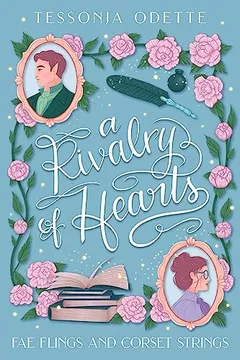
My Feral Romance receives overwhelmingly positive reviews, averaging 4.1/5 stars. Readers praise the charming friends-to-lovers romance between pine marten fae shifter Daphne and witty matchmaker Monty, highlighting their exceptional chemistry, banter, and individual character growth. The book is celebrated for its unique blend of historical romance and fantasy, cozy yet spicy atmosphere, and slow-burn tension. Most reviewers recommend reading the first book, A Rivalry of Hearts, though this works as a standalone. The side character Araminta is frequently noted as a delightful scene-stealer.
Characters
Daphne
Feral-hearted illustratorDaphne is a three-century-old pine marten fae who can shift into a humanlike form. She is observant, blunt, socially anxious, and more comfortable with concrete rules than ambiguous social cues. Art gives her a reason to risk public life, while her love of rain, climbing, raw food, and violent spectacle keeps her connected to her animal instincts. She wants to belong without being made to imitate a version of femininity she does not understand. Her central tension is between the safety of retreat and the desire to be seen, especially when being seen might bring judgment.
Monty Phillips
Rake with a guarded heartMonty is a witty former publicist, romance columnist, amateur boxer, and the son of a powerful human representative. He uses humor, sexual bravado, and matchmaking to manage other people’s relationships while keeping his own at a distance. His generosity often appears as teasing or practical help, but his self-image is burdened by guilt and fear of repeating past harm. He is drawn to challenges and quick to treat vulnerability as a danger to be contained. Beneath the rake’s performance is a perceptive man who notices what others need, even when he struggles to admit what he needs himself.
Araminta
Paper sprite troublemakerAraminta is a book sprite who has recently emerged from a bookworm’s long existence as a paper creature. She chooses an elaborate title, wears stolen mourning gowns, and treats ordinary social rules as optional suggestions. Her confidence and appetite for novelty contrast with Daphne’s caution, though she becomes an unexpected companion and occasional instigator. Araminta is vain, curious, sexually frank, and far less emotionally invulnerable than her comic boasts suggest.
Angela Phillips
Monty's devoted sisterAngela is Monty’s younger sister, a human raised within the Phillips family’s expectations and privileges. She is warm, well-mannered, and more perceptive than Monty’s protective attitude toward her allows him to acknowledge. Her affection for him remains strong despite their distance, and she values the people who have become family to her. Angela’s steadiness helps reveal the emotional cost of Monty’s secrecy and his desire to protect her future.
Thorne Blackwood
Monty's blunt best friendThorne is Monty’s oldest and closest friend, a baker and estate owner with a sharp tongue and a deep capacity for loyalty. Their friendship is built on insults, practical demands, and a long history of knowing how to provoke one another. Thorne can see through Monty’s performances, but he does not always know what lies beneath them. His commitment to Briony and Tilly offers a living example of chosen family.
Briony Rose
Dancer and dream faeBriony is a succubus with dream magic, a gifted dancer, and Thorne’s partner. She was once engaged to Monty through an arrangement neither of them wanted, and their history leaves room for teasing without lasting hostility. Briony is frank about Monty’s flaws and attentive to the people around her. Her choices show a commitment to love built on genuine desire rather than family plans.
Tilly Blackwood
The Blackwoods' adopted daughterTilly is a young fae girl with rabbit ears and a shy but affectionate manner. She is being welcomed into Thorne and Briony’s family and takes joy in dancing. Her presence makes the wedding’s promises tangible, as the adults commit not only to each other but to caring for a child.
Edwina Danforth
Author and Daphne's advocateEdwina is a popular romance novelist and one of Daphne’s closest friends. She discovers Daphne’s private sketches and recommends her for a cover commission, recognizing artistic talent that Daphne has kept hidden. Edwina’s encouragement is direct and generous, though her work also creates the professional opportunity Daphne must prove herself capable of handling.
William Haywood
Actor and Edwina's partnerWilliam is an actor and a friend Daphne and Monty made while managing a book tour. His relationship with Edwina grew during that trip, becoming one of Monty’s favorite examples of a connection he helped notice. He is part of the pair’s shared past and a reminder that Monty’s talent for reading other people can coexist with his reluctance to risk his own heart.
Mr. Fletcher
The demanding publisherMr. Fletcher runs Fletcher-Wilson Publishing and is both Monty’s former employer and a gatekeeper for Daphne’s illustration career. He gives Monty’s manuscript a conditional chance, insisting that advice must be tested in real life. He also considers Daphne for professional advancement based on her work. His standards create pressure, but they make both characters turn their ambitions into demonstrable work.
Clyde
Daphne's old handfasting partnerClyde is a honey badger woodworker from Daphne’s hometown and a longtime friend who has hoped to be her mate. His place in the village’s traditions makes Daphne’s drunken handfasting a serious obligation. He is not defined by the role Daphne fears he will impose on her; he has his own desires, loyalties, and life in Cypress Hollow.
Elder Rhisha
Cypress Hollow's elderElder Rhisha is a formidable honey badger who helps govern Cypress Hollow according to its old fae customs. She is sharp, dryly amused, and protective of the village’s traditions. As Clyde’s aunt, she has authority over the handfasting customs that shape Daphne’s dilemma, making her a figure whose judgment carries real weight.
Patrick Wright
The practical suitorPatrick is a wealthy young attorney who meets Daphne at Thorne and Briony’s wedding. He is courteous, interested in her career, and frank about seeking a wife through deliberate compatibility rather than a sudden romantic revelation. His decency makes him a meaningful test of Daphne’s priorities, not an antagonist to defeat.
Lord Phillips
Monty's powerful fatherLord Phillips is the Human Representative of the Earthen Court and the patriarch of a prominent family. He is concerned with reputation, inheritance, and maintaining the appearance of propriety. His relationship with Monty is shaped by expectations and control, while his influence continues to affect his children long after Monty has left the family home.
Cosette Dervins
Monty's first loveCosette was part of Monty’s aristocratic circle and became his first serious romantic attachment. She is also connected to Angela’s childhood, which makes her place in the family history complicated. Monty remembers their relationship through guilt and hurt, while others recall a more calculating side of her.
Étaín
A vanished Fire Court faeÉtaín is a fae woman associated with Monty’s childhood and a life in the Fire Court. For years, her connection to him remains hidden behind a memory of an animal companion. Her history intersects with the Phillips family’s carefully maintained public image.
Brad Folger
Daphne's unavailable coworkerBrad works in marketing at Fletcher-Wilson. He once invited Daphne for drinks, but by the time she answers, he is engaged and declines both a date and a modeling request.
Conrad
Araminta's awkward dateConrad is David’s friend and an inept carnival companion who becomes interested in Daphne. His clumsy flirting helps Monty recognize his own jealousy.
David
Araminta's first companionDavid meets Araminta at the boxing club and quickly becomes her romantic companion. He is earnest and attentive, qualities that Araminta finds appealing and, at times, overwhelming.
Gabby Stabbington
The formidable butcher-boxerGabby is a butcher and a skilled fighter at the factory club. She faces Monty in a fixed match and proves a formidable opponent, delivering the blow that ends their bout.
Grave Danger
Monty's taunting rivalGrave Danger is a scaly fae fighter who provokes Monty during a match. His taunts exploit Monty’s temper and personal vulnerabilities, turning a sporting bout into a dangerous confrontation.
Cane and Meathands
The lender's collectorsThe two fae collectors enforce Monty’s weekly debt payments and relay the lender’s threats. Cane carries a walking stick; Meathands knits scarves while working as a thug. Their comic ineptitude does not make the violence they threaten harmless.
Detective Whitwood
The persistent detectiveDetective Whitwood handles private cases and accompanies a passenger connected to Monty’s past. He is controlled, observant, and serious about his work, qualities that contrast with Araminta’s interpretation of their encounter.
Plot Devices
Binding fae bargains
Magic makes promises costlyFae bargains turn spoken conditions into enforceable magical obligations, making careless agreements dangerous. Daphne’s handfasting threatens to determine where she lives and whom she must mate with, while Monty’s family bargains restrict what he can reveal and whether he may marry. The story uses these agreements to externalize the characters’ fear of losing control: a choice made in grief or under pressure can outlast the emotion that caused it. The rules also distinguish what someone intentionally reveals from what another person discovers, allowing Daphne to infer Monty’s secret without making him break his silence.
Two fae manifestations
Identity shifts with the bodyMost fae can inhabit an unseelie form, which may be animal, elemental, or spiritual, as well as a humanlike seelie form. Daphne’s pine marten and Monty’s fennec fox forms connect their social lives to instincts they have tried to hide. Shifting is not only a fantasy ability but also a measure of emotional access: Daphne learns not to use her smaller form solely to escape, while Monty must reconnect with fae magic he has suppressed. Their eventual acceptance of both forms links intimacy with self-acceptance.
The courtship case study
Advice forces real participationMonty’s romance guide cannot win a publishing deal without a real subject testing its advice. Daphne agrees to attend lessons and outings, while Monty poses for her illustrations in return. Their binding bargain gives the plot a repeating structure: each courtship exercise creates a reason for them to spend time together and each modeling session turns observation into physical closeness. The experiment also exposes the limits of treating relationships as rules. Monty’s principles help Daphne identify a suitable suitor, but they cannot decide what she wants or make Monty act honestly about his own feelings.
The secret-backed loan
Debt turns concealment urgentAfter being disinherited, Monty borrows from a lender who accepts secrets as collateral and uses fixed boxing matches to meet weekly payments. Rising interest moves the deadline closer whenever he misses a payment. The loan ties his financial survival to his effort to publish a courtship guide, while the lender’s power over a family secret turns every setback into a threat to Angela and the Phillips name. Boxing is therefore both a sport Monty loves and a coerced means of repayment. Once the debt is addressed, he must decide whether secrecy is still worth the damage it causes.
Art as a model
Looking becomes a form of knowingDaphne’s commissions require her to draw romantic couples, but she initially struggles to render male bodies convincingly. Monty’s live modeling gives her a concrete subject, while the paintings and sketches record growing attraction in ways neither character can initially state aloud. The full-length mirror, in particular, lets Daphne observe her own pleasure rather than only imagine it. Art functions as both profession and emotional language: the more honestly she sees Monty and herself, the more vividly she can create. Her completed covers also become material evidence that she has established a life in Jasper.
About the Author







Download PDF
Download EPUB
.epub digital book format is ideal for reading ebooks on phones, tablets, and e-readers.








