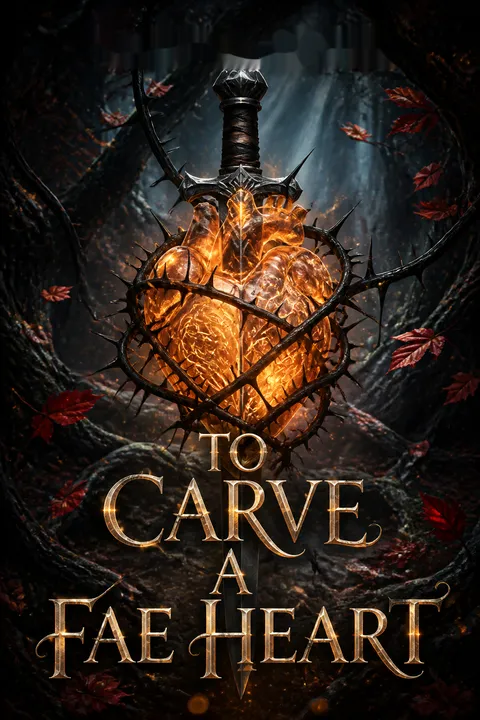


Plot Summary
Bread at the Faewall
Eighteen-year-old Evelyn Fairfield visits the boundary between human Eisleigh and fae Faerwyvae on the eve of the Hundred Year Reaping. Her mother taught her to leave bread and milk there so the fae would spare her and her older sister, Amelie, from being chosen as brides. A cloaked fae intercepts her and offers the names of the selected girls in exchange for Evelyn’s name.
She refuses to give her true name, but accepts the narrower bargain of sharing her first name. When the stranger threatens her, Evelyn raises her iron dagger and proves she will defend herself. He tells her that Theresa and Maryanne Holstrom, two girls from her own village, have been selected. Relieved, Evelyn walks home believing the danger has passed.
Evelyn begins by treating danger as a problem that can be managed through rules: use iron, guard the exact wording of bargains, leave a modest offering. Her refusal to surrender her true name shows both intelligence and the limits of her control. The fae stranger’s interest in her courage quietly overturns her assumption that staying unremarkable will keep her safe. The opening therefore makes her practical skepticism a source of strength, but also foreshadows how little she understands about the forces deciding her future.
Freedom Has a Destination
When Amelie wakes Evelyn with news that the Holstrom sisters were chosen, Evelyn hides that she already knew. She announces her plan to attend medical school on the mainland, where she hopes to become a surgeon rather than remain an apprentice.
Their mother, Maven, objects, and their argument exposes the old wound between them: four years earlier, Maven’s reliance on folk remedies nearly cost Amelie her life, while surgeon Mr. Meeks saved her. Evelyn still believes medicine means measurable action.
At work, she assists Meeks in amputating hunter Hank Osterman’s mangled arm. Hank says a fae tricked him into a bear trap, and Meeks explains that rowan berries may protect against glamour. The injury unsettles Evelyn’s easy belief that fae danger is only a matter of superstition.
Evelyn’s ambition is not simply a wish to escape village life. It is a moral response to helplessness: after watching Amelie nearly die, she trusts trained intervention over intuition and ritual. Her conflict with Maven is therefore intimate as well as intellectual. Hank’s injury complicates that certainty, since the fae are no longer a distant menace in folklore but a force with consequences for actual bodies. The section sets Evelyn’s scientific discipline against a world in which her mother’s remedies may contain practical knowledge she has dismissed.
Chosen by Name
A fae ambassador tells Maven that Theresa and Maryanne have been executed for treason, so the treaty still requires human brides. At the Holstrom farm, Evelyn finds slaughtered livestock and argues with Maddie Coleman, who wanted the royal match for its wealth and status.
Maddie reveals that the fae ambassador requested Evelyn by name, overriding the human council’s earlier choices; Amelie is included because the treaty sends two girls. Evelyn realizes the stranger at the wall could have identified her.
Though she considers fleeing, she will not leave Amelie behind or risk triggering war. She packs her surgical instruments, dagger, iron tincture, salt, and rowan necklace. Before midnight, she and Amelie leave home in the ambassador’s carriage, with Maven’s embrace and protection left behind.
The selection turns Evelyn’s accidental introduction to the fae into a consequence she cannot undo. The farm’s destruction and the sisters’ execution establish that political arrangements are enforced through violence, not ceremony alone. Yet Evelyn’s decision to go is not passive obedience: she weighs flight against the danger to Amelie and the wider human population. Her packed surgical tools represent a stubborn claim to her own competence. Maven’s practical protections also begin to bridge the divide between the daughter who trusts science and the mother who trusts inherited remedies.
A Palace of Autumn
During the journey, the bespectacled ambassador, Foxglove, explains that the fae are divided between seelie and unseelie ways, shaped by whether they embrace or reject human influence. Evelyn learns that she will marry Prince Cobalt, while Amelie is promised to his older brother, King Aspen.
The sisters reach Bircharbor Palace, where wood nymph Lorelei is assigned as their maid after injuring Hank Osterman in retaliation for his hunting of fae.
At dinner, Cobalt behaves with gentle courtesy, but Aspen’s face and voice identify him as the cloaked stranger from the wall. Evelyn recognizes that her first name brought her here. Cobalt’s warmth does not erase the danger of the match, while Aspen’s smirk makes clear that he remembers their encounter too.
The palace reverses Evelyn’s inherited map of morality. Lorelei’s injury and explanation expose the possibility that a human she knows as a victim may also have harmed fae, while Foxglove’s account of the courts gives history more than one moral center. The brothers embody competing forms of power: Cobalt’s accessibility invites trust, whereas Aspen’s guardedness provokes resistance. Evelyn is still using suspicion to stay safe, but the setting makes simple categories of civilized and monstrous increasingly unreliable.
The King’s Glamour
Unable to sleep, Evelyn finds Aspen watching selkies dance below the palace. He admits that he chose her because she held a dagger to him, then demonstrates how a fae can glamour himself and make another person perceive him differently.
The attraction Evelyn feels is frightening because it bypasses her logic and her protective rowan. Cobalt later explains that Aspen may have killed the Holstrom sisters himself, though he does not know what happened.
On a picnic, Cobalt tells Evelyn about his upbringing and the political conflict over the courts, then offers her unfamiliar honey pyrus fruit. She eats an unsalted bite, becomes euphoric, and wanders into the woods. A kelpie leads her toward the sea and drags her underwater before Cobalt finds and rescues her.
Evelyn’s first bodily experiences of desire and intoxication unsettle her belief that reason can keep her untouched by fae influence. Aspen’s glamour makes attraction feel imposed, while the honey pyrus produces a more literal loss of judgment. The distinction matters: she has to learn that vulnerability can arise from both supernatural power and an ordinary mistake in an unfamiliar world. Cobalt’s kindness appears trustworthy in contrast, but his ability to explain Faerwyvae’s politics also gives him influence over the story Evelyn believes.
A Body in the Tide
Evelyn wakes after three days of recovery, with Amelie and Lorelei explaining that Cobalt pulled her from the water. Amelie has been spending time with Aspen and seems to be adapting to palace life, while Evelyn begins to accept that her sister can make choices without constant supervision. Then Amelie disappears after meeting Aspen.
Guards find a drowned body in the coral caves, and Evelyn sees enough to believe it is her sister. Aspen confines Evelyn to her room when she tries to reach the shore, then refuses to let her identify the body. Grief leaves Evelyn barely able to eat. At breakfast, she challenges the servants who served wine to Amelie, and Aspen turns her suspicion into an order to arrest them, forcing Evelyn to demand mercy.
Amelie’s disappearance strikes at Evelyn’s defining strategy: protect the people she loves by anticipating every danger. Her inability to distinguish care from control becomes painful when Amelie asserts her independence, then vanishes beyond Evelyn’s reach. The body at the shore converts uncertainty into apparent loss, while Aspen’s confinement deepens her distrust. Her intervention for the servants is important because grief does not erase her ethical judgment. Even in anger, she resists letting suspicion become another person’s sentence.
A Bride by Treaty
Aspen tells Evelyn that the council still requires a marriage to uphold the treaty, and he names himself as her husband rather than allowing Cobalt to take her. Cobalt protests, then privately offers to flee with Evelyn and marry her instead.
She refuses because she fears Aspen’s retaliation and will not put Cobalt at risk. Before she leaves, Cobalt warns that the fae Bonding ritual requires an exchange of true names and could give Aspen power over her. Evelyn agrees to marry Aspen only as a political ally, not a willing lover.
Ten days after arriving, she takes part in the elaborate mate ceremony, dancing and exchanging a public kiss with Aspen. At the ensuing feast, she refuses the private Bonding ritual, leaving the treaty’s final requirement unsettled.
Evelyn’s choice is coerced, but it is also a choice among consequences she takes seriously. She accepts a marriage that may protect the isle and refuses a deeper bond she does not understand. Cobalt’s offer makes him seem like an escape, yet her refusal reflects her fear of turning affection into another obligation. The ceremony exposes the difference between public performance and private consent: the court can announce them as mates, but it cannot make Evelyn trust Aspen or surrender her name.
The Chosen Before Her
Foxglove arranges tea with Doris Mason, a human chosen in the previous Reaping who has lived for decades in Faerwyvae. Doris explains that the realm slows human aging, but her own marriage left her neglected and treated as a means to produce heirs. Her story makes Evelyn fear that survival here may require enduring a life emptied of choice.
Aspen then leaves the palace to confront Mr. Holstrom, the father of the executed girls, who demands blood for his daughters. He agrees to let the grieving father shoot him with an unarmored arrow. The arrowhead is iron, and its ash shaft burns Cobalt when he tries to remove it. Aspen returns to the palace gravely wounded, with the iron poisoning spreading through his body.
Doris gives Evelyn a future she had not considered: a human may survive Faerwyvae and still be diminished by its customs. Her testimony turns the treaty’s abstract exchange into a life shaped by neglect and reproductive use. Aspen’s decision to face Mr. Holstrom is another attempt to contain the violence produced by the treaty, but his willingness to be wounded carries a real cost. The section places duty beside coercion and asks whether peace can be just when its human participants have so little power to define its terms.
Iron in the King
When the fae healer cannot remove the arrowhead, Evelyn opens her surgical kit, but Aspen convulses at the iron in her instruments. She has to abandon her familiar tools and use wine, a sharp shell, bone, and spider silk to extract the barbed arrowhead and stitch the wound.
Her training carries her through the operation, even as she recognizes that Lorelei’s supposedly improved leg healed without any treatment from her. Aspen begins to recover and tells Evelyn that the body found in the caves belonged to a selkie, not Amelie.
He also describes how Theresa and Maryanne tried to kill him with an iron blade, and admits he killed them in anger without giving them a trial. Evelyn’s certainty about both the dead girls and the missing sister breaks open.
The surgery is the clearest test of Evelyn’s identity: when her tools fail, she must decide whether her skill exists only in its instruments. She chooses to act, and the operation succeeds through trained attention and improvisation. At the same time, Lorelei’s recovery and the selkie revelation place unexplained phenomena beside medical competence, making Evelyn’s skepticism less secure without making it foolish. Aspen’s account complicates her judgment rather than absolving him. He was attacked, yet his choice to kill without trial remains a moral failure.
The Bonding Deadline
After recovering enough to speak, Aspen confirms that Amelie may still be alive but that he does not know where she is. He recounts the Holstrom sisters’ attempted assassination and his own uncontrolled retaliation.
Queen Melusine then urges Evelyn to refuse the Bonding ritual, arguing that its deadline is near and that breaking the treaty would help the unseelie reclaim the isle. Aspen admits he withheld the deadline because he feared being forced into a bond with someone who hated him.
He explains that his shifting votes are meant to preserve a balance between seelie and unseelie freedom. Evelyn discovers she no longer hates him as completely as before, and the two become lovers. Before they can complete the ritual, Amelie returns at night and insists Evelyn must flee with her.
Evelyn’s understanding of Aspen changes when she learns that his apparent political inconsistency is a deliberate defense of plural ways of life. Melusine offers an escape that appears compassionate but is tied to a larger project of domination. Aspen’s concealment of the deadline remains a breach of trust, even as his fear of coercion is understandable. Their intimacy marks a genuine emotional shift, not a solution to their conflict. The return of Amelie interrupts that fragile opening with an urgent danger Evelyn cannot yet explain.
Cobalt’s Hidden Bargain
Amelie leads Evelyn through a secret passage into the coral caves, carrying a selkie’s sealskin and a coral weapon. She attacks while begging Evelyn to come with her, revealing that she bargained away her ability to lie and her true name in exchange for Cobalt’s love.
Cobalt appears, captures Evelyn, and admits he arranged the kelpie attack and used the Holstrom sisters in a plot to discredit Aspen. He has also bound Amelie to him and plans to make Aspen appear treasonous, seize the Autumn throne, and push the courts toward a rigid seelie order.
Cobalt offers Evelyn safety for her village if she abandons Aspen. She refuses. As the cave floods, Evelyn summons a kelpie, bargains for escape, and uses a piece of coral to free herself from its grip.
Cobalt’s betrayal reveals how care can be weaponized when one person controls the information and the terms of a relationship. Amelie’s bargain is not simply foolishness: her longing for love makes her vulnerable to promises that conceal their cost. Evelyn now faces the same coercive structure in a harsher form, with her family and village offered as incentives for compliance. Her refusal is not a clean victory. It leaves her in mortal danger, but it preserves her capacity to choose rather than letting Cobalt define safety as obedience.
The All of All
The kelpie carries Evelyn through the sea and Faerwyvae’s shifting routes until she reaches Aspen, who has taken the form of a raging stag. To stop him from charging her, she gives him her true name. He recognizes her, returns to his human form, and gives his name to her in return. They race back to Bircharbor, where Cobalt has taken Aspen’s throne and accused him of abandoning his duties.
Evelyn names Cobalt’s deception before the council, but he demands a decision of fate instead of a debate. At the Twelfth Court, Evelyn confronts figures representing the elements and parts of her own life, then petitions the All of All to judge her heart. It grants her a crown, allowing Aspen to reclaim the throne and charge Cobalt with treason.
Evelyn’s passage through the Twelfth Court brings together the capacities she once kept separate: intellect, anger, affection, memory, and instinct. The court does not reward innocence; it accepts the mixed heart she actually possesses. Her use of Aspen’s name is both an act of trust and a repetition of her earlier breach, since she used it to compel him to name her champion. The crown’s arrival makes her more than a witness to royal conflict. Her judgment now has public and political force.
The Treaty Breaks
Cobalt’s followers fight Aspen’s guards across the balcony as the sea rises against the palace. Aspen defeats his brother’s seizure of power, but Amelie, wearing the selkie skin, refuses Evelyn’s plea to stay and disappears into the ocean with Cobalt’s retreating faction.
Aspen begins sealing the coral caves to prevent another covert attack, while Evelyn and Aspen struggle to repair their trust after she used his name against his wishes. Their wedding is only days away when Foxglove brings a letter from Eisleigh’s human council: they have invalidated Aspen and Evelyn’s pairing.
The treaty is therefore broken, despite their victory over Cobalt and their mutual exchange of names. An explosion rocks the palace as Evelyn and Aspen realize that the isle is again facing war.
The political victory resolves the immediate coup but not the book’s deepest relational tensions. Amelie’s departure is particularly painful because Evelyn can no longer equate love with rescue: her sister chooses a dangerous attachment, and Evelyn cannot decide for her. Aspen’s renewed distance after the battle shows that the Bond does not erase mistrust or make authority harmless. The human council’s annulment then overturns the apparent success of the fae court, ending the novel on a consequence neither lover controls. Peace remains vulnerable to institutions that treat people as pieces in a pact.
Analysis
To Carve a Fae Heart makes skepticism a form of courage, then refuses to let skepticism remain a complete account of reality. Evelyn’s medical training saves Aspen when his fae healer cannot remove an iron arrowhead, yet her commitment to observable proof cannot explain every force shaping her life. The story does not simply replace science with magic. It asks whether knowledge can remain rigorous while admitting what it cannot yet explain.
The treaty gives this question political weight. Its peace is maintained through the bodies and choices of human women, so stability can look benevolent to rulers while feeling coercive to those selected. Evelyn’s decision to protect the treaty is not a simple endorsement of it; she acts because she understands the cost of war and the vulnerability of those she loves. Her changing relationship with Aspen similarly depends on holding two truths together: his political commitment to balance matters, and his violence and secrecy still cause harm.
The novel also distinguishes love from rescue. Evelyn’s devotion to Amelie initially becomes surveillance, while Amelie’s hunger for affection makes her vulnerable to promises that exploit it. Neither sister’s choice can be fully controlled by the other. Aspen and Evelyn face the same problem at the level of power: a bond cannot become mutual merely because it is magical or politically useful. The exchange of names therefore matters most as a risk both must accept, not as a shortcut to trust. The ending deliberately withholds the reassurance of a completed alliance. Evelyn and Aspen defeat Cobalt’s coup, but Amelie leaves, their trust remains unsettled, and the human council invalidates their pairing. Personal understanding has not repaired the institutions that turn marriage into policy. The final threat of war preserves the story’s central tension: peace requires more than affection between individuals when the system around them still treats people as instruments.
Review Summary
To Carve a Fae Heart receives mixed reviews, with an overall rating of 3.76 out of 5. Many readers praise the engaging plot, fae world-building, and enemies-to-lovers romance. The protagonist Evelyn is generally well-received for her strong personality and scientific mindset. Some criticize the predictable storyline and underdeveloped relationships. Comparisons are drawn to popular series like The Cruel Prince and ACOTAR. While some find the book addictive and enjoyable, others feel it lacks originality. The cliffhanger ending leaves readers eager for the sequel.
People Also Read


Characters
Evelyn Fairfield
The surgeon who questions magicEvelyn is an eighteen-year-old surgeon’s apprentice raised in Sableton by her mother, Maven, alongside her older sister, Amelie. Practical, sharp-tongued, and alert to physical danger, she trusts evidence because she has seen how delayed medical care can cost a life. She wants to study surgery on the mainland, a plan rooted in both ambition and her wish to help people concretely. Her skepticism is not indifference: she is fiercely loyal, especially to Amelie, and will risk herself when someone needs help. Evelyn’s central tension lies between a mind that seeks explanation and a world that repeatedly exceeds what she can explain. Her courage grows when she learns to act without having certainty first.
Aspen
The volatile Autumn KingAspen is the ancient king of the Autumn Court, older brother to Prince Cobalt and son of Queen Melusine. Proud, suspicious, and quick to anger, he often meets fear with control and provocation. His political choices frustrate both seelie and unseelie factions because he resists allowing either side to dominate the courts. Beneath his royal hauteur is a man shaped by abandonment and the burden of ruling after a war that nearly erased both peoples. Evelyn’s directness unsettles him because she neither flatters his authority nor hides her judgment. He is dangerous, but not reducible to cruelty; his difficult combination of genuine principle and destructive temper makes trust between him and Evelyn hard-won.
Amelie Fairfield
Evelyn’s beloved older sisterAmelie is Evelyn’s older sister, a beautiful, sociable young woman who enjoys dress, romance, and the warmth of other people. Her easy charm contrasts with Evelyn’s bluntness, but she is more than a foil or a fragile person to protect. A frightening encounter with a goblin in her youth left Evelyn convinced that Amelie needed constant guarding, even as Amelie wants the freedom to make her own choices. She values love and belonging intensely, sometimes letting hope outrun caution. Her relationship with Evelyn holds both deep affection and the strain created when protection becomes a form of control.
Cobalt
The charming younger princeCobalt is Aspen’s younger brother and a prince of the Autumn Court, raised in part by Aspen after their mother returned to the sea. Courteous, handsome, and apparently attentive, he is easier for humans to approach than his brother. He understands court politics and often presents himself as a voice of stability, though his loyalties and ambitions are difficult to read. Cobalt’s wish to protect Faerwyvae is entangled with his belief that he knows what kind of rule it needs. His relationship with Evelyn begins in sympathy and shared conversation, while his connection with Amelie reflects her hunger for affection. His polished gentleness can conceal a formidable will.
Maven Fairfield
A healer and devoted motherMaven is the mother of Evelyn and Amelie, a healer who runs the Fairfield Apothecary. She is whimsical, intuitive, and committed to the protective customs she learned and practiced on the Fair Isle. Evelyn distrusts Maven’s remedies because a past medical crisis convinced her that belief cannot replace surgery. Yet Maven’s care is practical as well as spiritual: she equips her daughters with iron tincture, salt, and rowan protections before they leave. Their disagreements arise from love and differing ideas of what it means to save someone.
Lorelei
The wounded wood nymphLorelei is a wood nymph serving the Autumn Court after her retaliation against a human hunter left her with a serious iron wound. Sharp, limping, and openly resentful of human assumptions, she challenges Evelyn’s certainty about who counts as victim or villain. She is grieving the loss of her pixie lover, Malan, and carries both anger and tenderness beneath her guarded manner. Her growing rapport with the sisters, particularly Amelie, makes her an important bridge between human and fae experience.
Foxglove
The court’s irrepressible ambassadorFoxglove is a flower fae and ambassador of the Autumn Court, responsible for guiding Evelyn and Amelie through palace customs. Talkative, theatrical, and preoccupied with beauty, he often treats frightening political realities with disarming humor. His fondness for human objects and his awkward efforts to make the sisters comfortable reveal genuine curiosity about their culture. Beneath the comedy, he understands the treaty’s importance and tries to help the girls navigate a world where they have little power.
Melusine
The sea queen and motherMelusine is Queen of the Sea Court, mother to Aspen and Cobalt, and a ruler whose beauty and authority carry an unmistakable threat. She once helped end the war, but she has come to regret the bargain that tied her to human peace. Her loyalties are shaped by the old unseelie vision of Faerwyvae, and she sees human influence as a force that can diminish fae freedom. Her relationship with her sons is formal and emotionally distant, marked by pride, political calculation, and unresolved abandonment.
Mr. Meeks
Evelyn’s surgical mentorMr. Meeks is Sableton’s surgeon and Evelyn’s mentor. He values precision, practical observation, and medical training, giving Evelyn the apprenticeship she sees as her route to a fuller life. His kindness is tempered by conventional assumptions about women’s roles, and he expects his son to inherit his practice. Even so, his instruction gives Evelyn skills she will rely on when ordinary instruments and familiar procedures are unavailable.
Maddie Coleman
The mayor’s ambitious nieceMaddie is the mayor’s niece and daughter of prosperous merchants. Status-conscious and fond of making herself the center of attention, she sees the Reaping as a chance at wealth and royal rank rather than a threat. Her blunt assumptions expose the material interests that can hide beneath public talk of peace.
Doris Mason
The surviving former ChosenDoris is a human woman chosen in the previous Reaping and still living in Faerwyvae decades later. Her quiet manner and worn appearance reflect a long life shaped by isolation and a marriage in which she was valued for producing heirs. She offers Evelyn a firsthand account of what official accounts of the treaty leave out: survival in the fae realm does not guarantee affection, dignity, or choice.
Hank Osterman
The wounded village hunterHank is a respected hunter from Sableton whose severe arm injury brings Evelyn into contact with the immediate consequences of fae conflict. His account appears to confirm the village’s fear of fae, but later information complicates the assumptions others make about his conduct. His role unsettles Evelyn’s tendency to trust familiar reputations.
Theresa Holstrom
A chosen village daughterTheresa is one of the Holstrom sisters selected in the Reaping. She is remembered in Sableton as dutiful and timid, a reputation that makes the accusation against her difficult for Evelyn to accept. Her story exposes how little the human village knows about what happens after the chosen girls cross the wall.
Maryanne Holstrom
Theresa’s younger sisterMaryanne is Theresa’s sister and the second young woman selected for the Reaping. Like Theresa, she is regarded by the village as quiet and obedient. Her fate becomes part of the political crisis between humans and fae, though the truth is known only within the court.
Gildmar
The court’s Earthen healerGildmar is an Earthen fae healer with bark-like skin and branches for hair. She treats wounds with herbs, poultices, and natural materials, and her methods differ sharply from Evelyn’s surgical training. She respects effective care even when it comes from a tradition she does not understand.
Queen Nyxia
The impartial Lunar mediatorNyxia is the vampire queen of the Lunar Court and serves as mediator when Aspen’s claim to the Autumn throne is challenged. Cool and observant, she is not emotionally aligned with either royal brother. Her formal role gives her the authority to record the contest and recognize its result.
The Vicar
Sableton’s treaty witnessThe vicar represents the human community at the fae mate ceremony and carries information back to Eisleigh’s council. His presence reminds Evelyn that the private events at court have consequences for people who are absent and unable to speak for themselves.
Vane
A palace wine servantVane is a handsome Autumn Court servant who served wine during Amelie’s visits with Aspen. He is anxious to avoid offending the king and grateful when Evelyn intervenes on behalf of the servants. His account helps Evelyn investigate the events surrounding Amelie’s disappearance.
Plot Devices
The Hundred Year Reaping
A treaty paid in bridesEvery hundred years, two human girls are sent to a fae court, and a marriage alliance is expected to renew the peace between humans and fae. The arrangement gives the story its initial threat and turns Evelyn’s ordinary wish to leave Sableton into a conflict over the fate of the Fair Isle. The Reaping’s formal rules do not prevent violence: the selected girls can die before a marriage occurs, and the treaty still demands replacements. As Evelyn learns more about the alliance, its costs extend beyond the chosen women to their families and both societies.
Names and bargains
Consent with binding consequencesFae bargains depend on exact wording, while exchanging true names creates a powerful bond that can give each party leverage over the other. Evelyn understands early that carelessness about her name could surrender her freedom, but she initially lacks knowledge of the ritual’s political role and its deadline. Names become more than a magical rule: they test whether trust can be mutual when one person has far more power. The device also shapes the difference between a promise, an alliance, and a coercive bargain, forcing Evelyn to judge what she is willing to risk for love and peace.
Iron, rowan, and salt
Human defenses against fae powerIron can poison or injure fae, rowan berries help resist glamour, and salt is used by humans to protect themselves when consuming fae food. Evelyn treats these defenses as practical safeguards rather than proof of magic. Her dagger keeps her from being wholly helpless, her mother’s necklace offers partial protection, and her surgical tools become unusable when their iron content harms Aspen. The protections are useful but limited: they cannot prevent every deception, craving, or act of violence. Their changing effectiveness tracks Evelyn’s growing awareness that knowledge can reduce danger without making her invulnerable.
Seelie and unseelie courts
A political balance under strainThe fae divide over whether to embrace human influence or return to older, instinctive ways. The distinction is political as well as cultural, and neither side is simply good or evil. Aspen shifts his court votes to prevent either faction from gaining enough power to suppress the other. Cobalt presents stability as an alternative, while Melusine favors the unseelie cause. This conflict gives the romance a political dimension: Evelyn must decide whether she can trust Aspen’s inconsistent public behavior when she begins to understand the principle behind it.
The Twelfth Court
A heart judged as evidenceThe Twelfth Court is a magical realm connected to all the fae courts, where a decision of fate can be petitioned. Evelyn must travel inward through encounters that reflect thought, protection, passion, nature, and fear before asking the All of All to judge her. Instead of proving herself innocent or perfectly virtuous, she presents the divided heart shaped by love, resentment, grief, and courage. The resulting judgment determines the contest for Autumn’s throne. This device makes interior complexity materially consequential, turning Evelyn’s emotional life into the evidence that decides a public struggle.
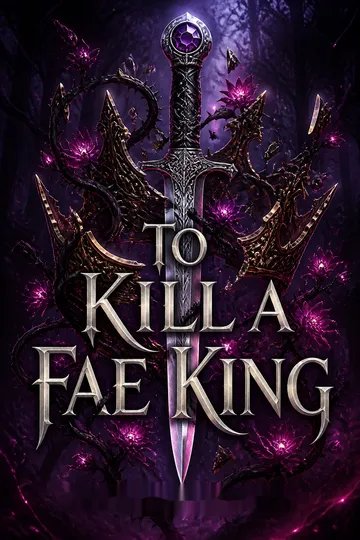
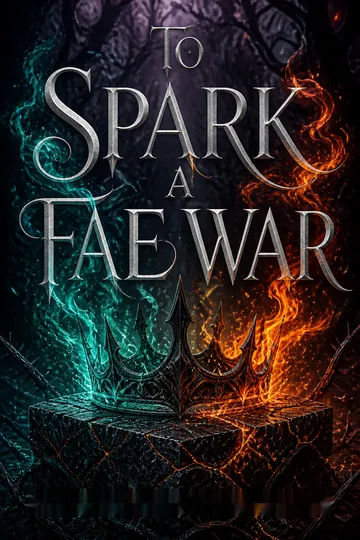
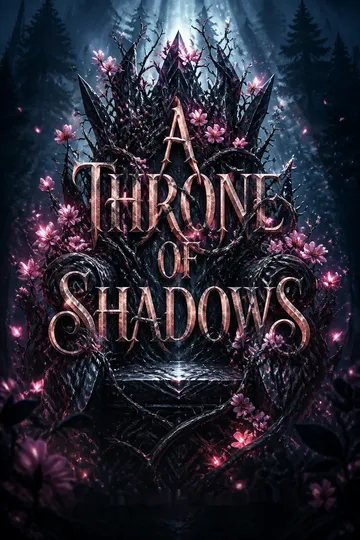
The Fair Isle Trilogy Series
About the Author
Download PDF
Download EPUB
.epub digital book format is ideal for reading ebooks on phones, tablets, and e-readers.








