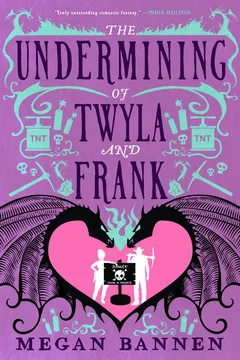


Plot Summary
A Fair Without Danger
Twyla Banneker and her longtime partner, Frank Ellis, spend the county fair leading children around on miniature water horses, a far cry from the dangerous work that first brought them together. Since the undead drudges vanished from Tanria, their patrols have dwindled to catching poachers, and Chief Alma Maguire warns that politicians may abolish the Marshals altogether.
That night, rookie Penrose Duckers rides out alone after his partner, Marshal Herd, fails to appear. When a flare rises, Twyla and Frank find Herd dead on a rocky plain, his body and the ground around him coated in glittering residue. A storm drives the three marshals to shelter before they can learn what killed him.
The fair establishes the novel's comic domestic rhythm, then lets institutional anxiety intrude: a safer Tanria threatens the Marshals' purpose and livelihoods. Twyla and Frank's ease with one another comes from years of practical care, not dramatic declarations; even their private rescue code belongs to a friendship built through repetition. Herd's death breaks that routine with a mystery that may restore the danger their employers want to eliminate. The plot's first irony is already visible: a force created to protect people from the impossible may be judged unnecessary just as the impossible returns.
Gold on the Ground
The rain washes away most of the residue, leaving Twyla, Frank, and Duckers little to examine besides traces of blood and a huge, three-toed footprint. The coroner later determines that Herd died from a head injury sustained in a fall, not from a clearly identifiable attack. No one can explain the glitter or the print, but Duckers insists a dragon may have been involved.
Maguire treats the theory as a dangerous possibility rather than a joke: she assigns Duckers to Twyla and Frank, orders them to patrol together, and has them retrieve full-sized crossbows. The weapons have gathered dust since the drudges disappeared. Now the marshals carry them into the mountains, wary of what their first real threat might be.
The evidence resists a neat crime narrative. Herd's fatal injury is mundane, while the residue and footprint suggest an animal outside accepted knowledge. That mismatch forces the marshals to act before certainty is available, a familiar burden for people whose work is judged by outcomes rather than by the risks they prevent. Duckers' willingness to entertain the dragon theory also gives the rookie a useful role: he is not yet trained to dismiss the extraordinary simply because it has never been recorded. Maguire's old crossbows become institutional memory made practical, prepared before anyone can prove they are needed.
Eggs at the Mist
A day later, the three marshals see riders fleeing toward an illegal opening in the Mist, pursued by a vast winged creature. The dragon knocks one rider from his mount, and the marshals abandon arrest to direct the survivors toward the portal. One man presses a strange egg into Frank's arms before escaping.
The dragon's throat swells; a burst of glittering slime slams Frank against the Mist, but leaves him alive. The creature gathers two eggs and flies away, while the one Frank dropped lies cracked beneath the residue. A hatchling springs out and clings to him. As the exhausted group returns to their barracks, the baby refuses to let go, turning a rescue into an unforeseen responsibility.
The first living dragon arrives not as a monster attacking for sport, but as a parent retrieving stolen eggs. The smugglers' panic makes the marshals' split-second choice legible: preserving life matters more than making arrests. Frank's injury then reverses the usual division between protector and protected. The man who has spent his career guarding others becomes the creature's unwilling point of safety, and the hatchling's attachment begins to recast care as a responsibility that cannot be scheduled around a shift. Wonder, danger, and domestic inconvenience enter the same scene without cancelling one another.
A Hatchling Chooses Frank
Chief Maguire brings in Quill Vanderlinden, a dracologist from the University of Quindaro, expecting help identifying the creature. Quill faints when he sees the hatchling, then recovers enough to explain that it has imprinted on Frank and regards him as its parent. He does not know the species, but recommends a high-protein diet; later evidence shows that Tanrian dragons mostly eat plants and insects, not people.
Twyla, Frank, and Duckers improvise diapers, meals, and care while Quill records the baby's growth. With evacuation temporarily off the table, they search for the adult dragon and find a lake where a family gathers. Frank, now deeply attached to the hatchling he names Mary Georgina, teaches her to swim.
The hatchling transforms the case from a question of threat into a question of kinship and policy. Quill's expertise matters, but it cannot immediately organize the new life in front of them; the marshals' practical experience with children proves just as valuable as his scholarship. Frank's response is especially revealing. He accepts care as something given, not merely as a duty performed for others, and Mary Georgina answers that instinct with trust. The early feeding scare also exposes how easily unfamiliar life is classified as dangerous when human beings mistake incomplete knowledge for evidence.
Hope Arrives Engaged
Twyla expects a quiet evening before Quill takes her out, but her son Wade arrives with his three young boys and assumes she will babysit. Then her daughter Hope returns from medical school early with her longtime friend Everett and announces that they are engaged after only a few weeks together.
Twyla loves Everett, yet the surprise leaves her struggling to offer the enthusiasm Hope expects. Quill arrives to find the family house in chaos and joins the dinner and games instead of taking Twyla away. The evening ends with a kiss at the door, not a date. In the midst of this family commotion, Twyla sees how readily everyone else treats her time and home as resources already promised.
Hope's engagement exposes Twyla's divided response to family: she wants her daughter to be happy, but her own marriage has made commitment feel like a possible route into self-erasure. At the same time, Wade's casual assumption that his mother will absorb his childcare needs repeats a pattern Twyla has spent decades accommodating. Quill's arrival offers a different kind of attention, yet even that possibility is immediately folded into household labor. The comedy of the crowded dinner does not soften the underlying imbalance. Twyla's needs remain easiest to overlook precisely because she is so practiced at meeting everyone else's.
A Date on the Water
Hope helps Twyla dress for a proper evening out, and Quill takes her to an expensive restaurant Twyla has never felt entitled to enter. Once she admits how nervous she is, he shares his own uncertainty and treats her life as an education rather than a lack of credentials. After dinner, they drive his luxurious autoduck onto the ocean and watch the stars.
Twyla chooses to spend the night with him. The encounter is gentle but disappointing for her, and she privately recognizes that she has spent too much time worrying about whether he desires her to ask what she wants. She does not regret the night, but the difference between being appreciated and feeling fulfilled becomes impossible to ignore.
Quill offers Twyla a valuable, if temporary, counterexperience to the assumption that her worth lies in usefulness. He sees her competence and knowledge, and his courtship gives her permission to imagine herself as a woman with appetite, not only as a mother or marshal. Yet sexual attention alone cannot undo a lifetime of putting her own pleasure last. Her disappointment is not a rejection of desire but a sharper definition of it: being chosen is insufficient if she cannot participate in choosing what feels good. The scene makes midlife sexuality a matter of agency rather than rejuvenation.
Dragons at the Lake
Back on tour, Twyla, Frank, Duckers, and Quill watch several dragons gather at the lake, where mothers swim with their young and Mary Georgina remains close to Frank. Quill proposes that these gentle, plant-eating dragons may have been created as companions for the imprisoned Old Gods, unlike the war dragons described in ancient records.
The theory is tentative, but it makes the animals' calm behavior easier to understand. The marshals begin looking for a nesting site so they can learn more and help Mary Georgina join her kind. Twyla also insists that she and Quill keep their relationship professional during duty. Frank's closeness with the hatchling, meanwhile, makes the prospect of separating them increasingly painful.
The lake turns abstract debate into observation: the dragons' social life is visible, but their future remains vulnerable to human institutions deciding what counts as safety. Quill's companion-animal hypothesis unsettles the familiar fantasy of dragons as weapons, while Frank's bond with Mary Georgina makes that distinction personal. Twyla's boundary with Quill shows a parallel effort to separate affection from obligation. She wants connection without surrendering control of her time or judgment. Both the dragons and Twyla resist being assigned roles by others, whether as dangerous assets, convenient caregivers, or romantic partners.
The Cavern Underfoot
While searching near the place where Herd died, Twyla loses her footing and falls into a cavern. Frank climbs down after her and helps her recover her breath. They find a ladder, traces of earlier human use, and a cache of cylindrical tubes filled with gunpowder. Twyla connects the explosives to the booming sounds miners had reported in another sector, then wonders whether the blasts woke the dragons from their long dormancy.
The discovery also suggests Herd may have been exploring more than a patrol route. Frank insists on getting Twyla medical attention, and they leave the tunnel without pursuing its branches. Her fall leaves her bruised, but the unexplored cavern now links Herd's death to a much larger secret.
The cavern converts an accident into evidence and makes the body's vulnerability part of the investigation: Twyla's fall is not merely a setback but the event that reveals a hidden human presence. The gunpowder offers a plausible mechanism for disturbing creatures no one knew were awake, connecting institutional greed to ecological disruption. Frank's immediate care for Twyla also sharpens the intimacy between them, though neither yet names its meaning. Their choice to leave the tunnels unexplored is prudent, but it creates suspense through incompletion. The danger is no longer only what lives underground; it is what people have been doing there.
Vows and Old Wounds
At the wedding of Mercy Birdsall and former marshal Hart Ralston, Twyla watches the couple exchange their birth keys and promise mutual care. Frank, uneasy around weddings because of his own divorce, slips outside afterward.
There he admits he still grieves the years he spent apart from his children, Lu and Annie, and doubts his ability to have been a good husband. Twyla comforts him, then reveals what she has never told anyone: she loved her late husband Doug, but over their long marriage she became cook, housekeeper, and caregiver without feeling cherished as an equal.
Frank listens without condemning her. Their exchange leaves Twyla exposed, but less alone with the truth that her grief for Doug never erased her relief at living independently.
The wedding's formal promises expose the difference between vows and lived arrangements. Twyla and Frank have both tried to understand failed marriages through personal blame, yet their confidences complicate that story: affection can coexist with neglect, and devotion does not guarantee reciprocity. Twyla's admission rejects the tidy role of the grateful widow who must romanticize the past. Frank's listening matters because he does not replace her account with a defense of Doug or a demand for forgiveness. Their friendship becomes a place where painful truths can be held without being simplified.
Two Beds Explode
After midnight, Twyla spots a bomb attached beneath her bed and immediately realizes Frank may have one too. She runs next door, finds the device under his bed, and carries it outside; it detonates on his lawn. The bomb beneath her own bed then explodes, tearing through her roof and bedroom. Frank is alive, and relief overwhelms Twyla's caution: she kisses him, and he kisses her back.
Sheriff Hart Ralston arrives to investigate the blasts, while deputies and neighbors gather outside. The fire chief declares Twyla's house uninhabitable, and Wade offers to handle repairs and shelter Hope. The attack has spared the marshals, but it leaves their homes destroyed and their friendship newly charged.
The bombs turn private space into a target, collapsing the boundary between professional danger and domestic life. Twyla's rescue of Frank is both a trained response and an emotional reflex; the kiss follows because the threat makes their attachment impossible to treat as merely routine. The damaged houses also carry a practical consequence: Twyla must rely on family at a moment when her relationships are already strained. Wade's unexpected offer of help hints that dependence need not always reproduce old patterns. But the central uncertainty remains: survival has changed what Twyla and Frank can plausibly pretend about one another.
The Dragon Mine
After returning to Tanria, Twyla, Frank, Duckers, Quill, and Maguire explore the cavern with better equipment. A pickaxe and gold-colored seams show that someone has been mining there, and Twyla connects the tunnels to the illegal iuvenicite case investigated by Marshal Rosie Fox.
Deeper in, they find a nest of eggs. Two dragons blast the group with glittering resin, but a familiar mother dragon drives them off and allows the marshals to escape. Laboratory results identify the residue as the material that becomes iuvenicite under geological pressure.
The dragons are therefore the source of the valuable mineral. Herd's connection to the mine and the blasts that disturbed the dragons now look central to both his death and the attempted silencing of Twyla and Frank.
The discovery binds three kinds of value together: the dragons' biological lives, the mineral market, and the cosmetics industry's promise to make aging disappear. A substance produced by living creatures becomes wealth only through time and pressure, but smugglers try to accelerate extraction with explosives, endangering the very animals they exploit. The dragons' attack is defensive rather than predatory, forcing the marshals to distinguish danger from malice. The evidence also recasts Herd's death: a compromised institution may have helped create the threat it was meant to manage. Protection now requires confronting the economics behind the crime.
A Future Under Debate
Quill takes Twyla on a quiet lakeside date and listens as she ends their romance, knowing he is kind but not the partner she wants. He accepts the decision without resentment. In his report to Maguire, he recommends a protected preserve, with zoos as a fallback; federal scientists arrive to assess the dragons.
Frank resists removing Mary Georgina from Tanria, arguing that the dragons belong in their own habitat. At the same time, Fox's investigation uses the illegal mine evidence to break the iuvenicite-smuggling case, and arrests are made. The Marshals can return home after their tour, but Frank remains troubled by the likely separation from Mary Georgina, while Twyla must face the family tensions she had postponed.
Quill's departure from Twyla's romantic life is not a failure but a successful act of discernment: she can value what he gave her without converting gratitude into obligation. The policy dispute over the dragons echoes that choice. A preserve could protect them, but confinement might still override their agency and belonging. Frank's attachment is emotionally understandable, yet it cannot by itself determine the animals' future. The crime's resolution restores some institutional order, though it does not settle the ethical question. The novel keeps asking whether care means keeping someone close or protecting the conditions in which they can live freely.
The Night She Asks
Back at Wade's crowded home, Twyla argues with Hope about the engagement. She warns that marriage and motherhood can place disproportionate labor on women, drawing on the years she spent managing a household while feeling taken for granted. Hope hears condemnation of Everett and rejects the life her mother represents. Hurt, Twyla walks to Frank's house.
He comforts her without demanding an explanation, and she finally tells him what she wants: intimacy on her own terms, with someone who attends to her pleasure. Frank responds with patience and tenderness. Their long friendship gives Twyla enough trust to be vulnerable, and they make love. For the first time, she experiences sex not as a performance or duty but as mutual attention and joy.
Twyla's warning to Hope is protective but shaped by unresolved injury; she risks mistaking her daughter's future for a repetition of her own past. The argument makes visible how testimony can become control when fear dictates its form. With Frank, the opposite movement occurs: Twyla names a desire, and he responds by making room for it rather than interpreting it for her. Her sexual awakening is therefore not simply a new romance. It is an embodied correction to the old arrangement in which her needs were always deferred. Trust enables pleasure because it does not require her to disappear.
Retirement's Locked Door
The next morning, Duckers reveals that Frank filed for retirement before making love to Twyla and told neither her nor their shared plans for an equimaris ranch and bed-and-breakfast. When Frank asks whether their night was a mistake, Twyla cannot answer, and he leaves, believing she has rejected him.
At the temple, a stranger helps Twyla see that her fear for Hope should not override her daughter's choices, and that denying her love for Frank will not preserve their friendship. Twyla recognizes how much she wants him, but has no time to find him before another crisis arrives. Her insight comes at a cost: Frank is gone, their future together is uncertain, and she must first repair the damage with her daughter.
The retirement secret hurts because it repeats the very asymmetry Twyla fears: Frank has made a decision about their shared future without including her. Her inability to answer his question is not indifference but the old habit of treating desire as dangerous until it can be made safe. The temple encounter reframes wisdom as permission to choose, not as a guarantee against pain. Twyla cannot control Hope's marriage or Frank's retirement; she can only speak honestly about what she wants. The delay between recognition and action gives the story's emotional insight real stakes.
A Note in the Mail
Twyla returns to Wade's home, where Hope apologizes for the cruel words she used and listens as Twyla explains that she wants her daughter to build a life on her own terms. They reconcile, and Twyla admits that her relationship with Frank has changed. Before they can talk further, a ransom note arrives: Frank has been kidnapped, and Twyla must meet a deadline in Tanria.
Her autoduck breaks down on the road, but Duckers and Quill give her a ride to the station. She tells Duckers to arm himself and asks Quill to find Maguire, then rides Saltlicker toward the coordinates. The renewed closeness with Hope gives way to urgent action; Twyla will risk herself rather than leave Frank in danger.
The reconciliation with Hope resolves an important emotional confusion: Twyla can offer hard-won knowledge without demanding that her daughter obey it. Their repair makes room for affection and disagreement at once. The ransom note immediately tests that openness by forcing Twyla into a familiar role, the person who will sacrifice herself to keep someone else safe. This time, however, her decision is not automatic self-erasure. She acts from a chosen bond, accepts help from Duckers and Quill, and makes a plan rather than simply obeying the threat. Care begins to include judgment and collaboration.
The Hedgehog's Ransom
At a remote shepherd's hut, Twyla finds Frank beaten and bound, with Duckers captured soon after her. Their kidnapper is Hermia, the seemingly harmless nimkilim mail carrier.
She admits she helped Herd smuggle iuvenicite for the Galatian mob and arranged the earlier threats; now she wants Mary Georgina in exchange for Frank's life, hoping to earn a lifetime supply of grape soda. Twyla agrees, then rides Saltlicker to the dragon lake. Mary Georgina follows her into the mountains, and adult dragon mothers lead Twyla to the nest.
With immortal marshal Rosie Fox's help, Twyla climbs onto one mother's back and flies to the hut. The dragon destroys the shelter and disables the mobsters, while Duckers pins Hermia's mailbag to a tree. Maguire and the marshals arrive to secure the scene.
The reveal turns Hermia's comic incompetence into a mask for calculated participation, but her motive remains absurdly small beside the harm she has caused. The contrast sharpens the book's interest in complicity: greed need not look grand or ideological to become lethal. Twyla's rescue also completes a shift in her relationship to care. She does not surrender Mary Georgina to the kidnappers, nor does she treat the adult dragon as a weapon; she asks for help through a bond built on prior protection. The climactic flight makes trust, rather than mastery, the means by which Twyla reaches Frank.
A Promise Without Marriage
At the infirmary, Twyla tends Frank's wounds after the rescue. Frank admits he has loved her for years, but believed her heart belonged to Doug and feared becoming a mistake in her life.
He explains that he requested retirement after she dismissed their first night together, hoping to avoid watching her choose someone else. Twyla tells him she loves him too and never considered him a mistake. Rather than propose marriage, Frank asks her to promise she will not marry him, but will share a life with him while keeping the freedom to live next door and take space when she needs it.
Twyla accepts. Their arrangement honors what they have already built: intimacy without possession and commitment without the old assumptions that once made marriage feel like a trap.
The resolution rejects the idea that love must culminate in the institution that previously confined Twyla. Frank's proposal is deliberately shaped around her autonomy: it offers continuity without requiring cohabitation, marriage, or the abandonment of private space. His confession also makes his retirement legible as fear rather than simple career fatigue, though his decision still caused real hurt. They do not erase that conflict; they speak through it and choose a form of commitment fitted to their history. The romance succeeds because neither must become the other's caretaker, possession, or proof of worth.
Epilogue
Years later, Tanria is a national park and home to a protected dragon preserve, co-founded by Twyla and Frank. Frank's children, Lu and Annie, work there, and Twyla's extended family arrives for a tour led by Lu, with Hope and Everett days from their wedding. Mary Georgina, now grown, lives among the dragons but remains especially comfortable with Frank.
At the preserve, visitors see the creatures as animals with a habitat, not as weapons or mineral sources. After the tour, Frank gives Twyla embroidered handkerchiefs for the wedding. Their affection is settled into ordinary life, expressed through shared work, family, and one more song on the drive home.
The epilogue makes the plot's ethical resolution public. Tanria is no longer merely a workplace or a forbidden resource; the preserve gives its dragons institutional protection while allowing them to remain in their own habitat. The family tour also gathers the strands that once competed for Twyla's attention: children, grandchildren, work, and love now occupy the same landscape without requiring her to disappear into service. Frank's handkerchiefs echo earlier gestures of care, but their meaning has changed. They are not emergency supplies for someone who must manage everyone else; they are a tender gift inside a life she has chosen.
Analysis
The novel makes a middle-aged woman, rather than a young adventurer, the center of a fantasy romance and lets her age shape both the comedy and the stakes. Twyla's body, widowhood, menopause, family obligations, and work are not background details to be transcended. They determine what she fears, what she desires, and what kind of intimacy can feel safe. Her central metaphor of being treated as a chair names a form of relational erasure: she has been useful to others without being consistently regarded as a person with independent wants. Her growth is not a rejection of care but a refusal to make care synonymous with self-abandonment.
The dragons extend that question beyond romance. People first interpret them through old stories of war, then through the market value of their resin, while the evidence shows animals protecting nests and raising young. Their danger is real, but it does not make them evil or available for ownership. The smugglers' explosives expose the consequences of treating a living habitat as a resource frontier. Iuvenicite, a mineral used in products promising youth, makes the exploitation especially pointed: the pursuit of feminine beauty literally depends on extracting value from creatures whose biology is misunderstood.
The book also resists the idea that love must be proved by marriage or constant proximity. Twyla and Frank's chosen commitment preserves separate homes and the right to space. That arrangement does not make their bond weaker; it answers the specific fears that their histories have taught them to take seriously. The romance's happy ending is therefore less a return to conventional domesticity than a negotiated form of belonging, supported by family, work, and a protected place for the dragons. Across all three strands, the story asks whether devotion can protect another being without claiming ownership over it.
Review Summary
Reviews for The Undermining of Twyla and Frank are mixed, averaging 4.02 stars. Many readers appreciate the refreshing portrayal of romance between protagonists in their 50s, the friends-to-lovers slow burn, and the charming pink, glitter-spitting dragons. Fans of the first book enjoy returning to the world of Eternity and Tanria. Common criticisms include a weak mystery plot, a disappointing villain reveal, pacing issues, and the lack of Frank's perspective. Some felt it couldn't match the emotional depth of its predecessor, while others loved it even more.
People Also Read

Characters
Twyla Banneker
Marshals' steady heartTwyla is a fifty-three-year-old Tanrian Marshal, a widow, and the mother of three grown children. Practical, funny, and reflexively helpful, she has spent much of adulthood anticipating what other people need before they ask. Her competence is not innate maternal magic but a skill earned through work, care, and years of keeping a family afloat. Twyla is also a woman whose self-image has narrowed under ageism and the old expectation that a good woman should be useful before she is fulfilled. Her closest relationships give her room to question that expectation. She values independence and loyalty, but must learn that asking for pleasure, space, or love is not a failure of generosity.
Frank Ellis
Twyla's quiet anchorFrank is Twyla's longtime neighbor, best friend, and Marshal partner. A careful worker with a deep voice, a dry sense of humor, and a particular affection for equimares, he is more comfortable showing care through practical acts than explaining his feelings. His childhood left him wary of failing the people who depend on him, and separation from his children remains a private source of pain. Frank's steadiness is genuine, but it can also become a form of self-denial: he often assumes that keeping a relationship intact is safer than asking it to change. His loyalty to Twyla is expressed through shared work, meals, and the quiet confidence that she knows him as he is.
Penrose Duckers
The eager rookiePenrose, usually called Duckers, is a young Tanrian Marshal who joins Twyla and Frank after losing another partner. He is enthusiastic, blunt, a gifted shot, and willing to entertain possibilities his elders dismiss. His humor makes him an easy companion, but beneath the bravado he takes love and responsibility seriously. His relationship with Zeddie forces him to distinguish affection from obligation and to recognize his need for independence. Duckers is often the first to turn an absurd situation into a joke, yet he can also act decisively when the danger becomes real.
Alma Maguire
The hard-nosed chiefAlma Maguire leads the West Station of the Tanrian Marshals. A demigod with striking aquamarine eyes and a formidable presence, she is practical, impatient with nonsense, and protective of her people. Budget pressure makes her responsible for defending the Marshals' continued existence even as she manages an extraordinary crisis. Her humor is dry, her orders direct, and her judgment more humane than her manner suggests. Maguire understands that public safety involves difficult choices, but she remains alert to how quickly fear can turn uncertainty into overreaction.
Quill Vanderlinden
The dragon scholarQuill is a dracologist at the University of Quindaro, trained to study dragons through fossils and old records. His aristocratic background, polished manners, and conspicuous field clothes make him seem out of place in Tanria, whose strange ecology quickly unsettles him. Quill is intelligent and genuinely curious, but he is willing to revise his scholarly assumptions when living evidence contradicts them. He approaches Twyla with respect and sees knowledge in her experience that formal education cannot supply. His work gives the Marshals a framework for understanding dragons, while his own uncertainty keeps that expertise from becoming false authority.
Hope Banneker
Twyla's med-student daughterHope is Twyla's youngest child and a medical student who returns to Eternity during a break. Quick-witted, affectionate, and direct, she shares her mother's sense of humor but is less willing to let family tension pass unspoken. Hope wants to build an adult life on her own terms, and she expects her mother to see her as capable of making consequential choices. Their closeness makes disagreement especially painful: Hope can challenge Twyla sharply because she trusts that the relationship matters enough to survive honesty.
Wade Banneker
The grown son next doorWade is Twyla's second son, a mechanic, husband, and father of three young boys. He is affectionate and well meaning, but often assumes his mother will absorb the work that would inconvenience him. His casualness creates friction with Twyla, who is learning to set limits after years of taking on more than her share. Wade is not deliberately cruel; his blind spots come from comfort and habit. His relationship with his mother offers space for growth as he begins to recognize that she has a life and needs beyond the help she gives him.
Everett Simms
Hope's longtime friendEverett is Hope's longtime friend, a thoughtful young man pursuing medicine. Polite, funny, and considerate, he has long been welcomed by Twyla, who trusts his character. His gentleness is visible in the way he supports Hope, though Twyla's own history makes her alert to the unequal burdens women can inherit in marriage. Everett's role is less to reassure Twyla with promises than to give Hope a partner with whom she can define the terms of her future.
Hart Ralston
The former marshal sheriffHart Ralston is Eternity's sheriff and a former Tanrian Marshal whose past work in Tanria gives him authority among the Marshals. Tall, reserved, and disciplined, he can seem severe until his quiet affection for those close to him becomes visible. He is protective of his community and accustomed to carrying responsibility without display. His relationship with Mercy reveals a more playful, tender side than his professional reputation suggests. Hart's experience also connects the town's civic life to the dangerous history of Tanria.
Mercy Birdsall
The town's undertakerMercy is Eternity's undertaker and the sister of Lilian and Zeddie Birdsall. Warm, capable, and attentive to the rituals of death, she helps grieving families honor the person they have lost and send the dead on their final journey. Her work places her at the meeting point of practical labor and religious belief. Mercy is devoted to her community, though the demands of her business and family can make major personal events feel overwhelming. Her partnership with Hart is grounded in affection and mutual recognition.
Rosie Fox
The immortal first marshalRosie Fox is an immortal demigod and one of the first Tanrian Marshals. Tall, red-eyed, and unmistakable, she is famous for her impulsiveness and her talent for getting into trouble. Fear of death does not govern her decisions as it does those of mortal colleagues, a freedom that makes her both an exceptional marshal and an unpredictable partner. She is frank, sociable, and willing to act before permission arrives. Fox's confidence is not the same as invulnerability to consequences for others, which makes her a compelling presence in a dangerous investigation.
Hermia
The mail-running hedgehogHermia is a tiny nimkilim who delivers mail across Tanria in an oversized sweater, rubber boots, and a satchel far larger than she is. Sweet-natured and distractible, she often loses track of her mail, her belongings, or the end of a farewell. Her immortality makes her seem harmless to the humans who encounter her, while her love of grape soda gives her a simple, intense pleasure. Hermia's comic manner can obscure how much power her unusual delivery route and enchanted bag place in her hands.
Mary Georgina
Frank's pink hatchlingMary Georgina is a pastel-pink Tanrian dragon who hatches from an egg near the Mist. She has green eyes, developing horns, wings, and a voice made mostly of chirps and meeps. Curious and affectionate, she bonds strongly with the person she first encounters and learns through close observation. Her attachment makes the Marshals rethink what a dragon is and what care for one might require. Though small beside the adults, Mary Georgina is not a pet or a possession; she is a young creature whose future depends on finding a place among her own kind.
Zeddie Birdsall
The affectionate young chefZeddie is Mercy's brother, a talented chef at Proserpina's, and Penrose Duckers's boyfriend. Stylish, warm, and openly affectionate, he expresses love through food, teasing, and direct bids for time together. His needs for closeness can conflict with Duckers's desire for solitude, but neither man's feelings are insincere. Zeddie brings an uncomplicated brightness to the Birdsall family and gives Duckers a relationship that asks for difficult conversations rather than easy reassurance.
Cora Ellis
Frank's former wifeCora is Frank's former wife and the mother of Lu and Annie. She once shared a neighborhood and a close friendship with Twyla. Her departure reshaped Frank's family life, though the reasons and feelings within their marriage remain more complicated than gossip suggests.
Doug Banneker
Twyla's late husbandDoug was Twyla's husband and the father of DJ, Wade, and Hope. He was a decent man whose marriage left Twyla carrying much of the household's practical labor. Her memories of him contain both affection and painful recognition of what she lacked.
Lu Ellis
Frank's grown sonLu is Frank's son, raised partly at a distance after his parents separated. He is outgoing and comfortable in the spotlight, and he shares a close bond with his sister Annie. His work in the dragon preserve reflects a practical interest in Tanria and the family life he shares with his father.
Annie Ellis
Frank's equimaris-loving daughterAnnie is Frank's daughter and Lu's sister. She is capable with equimares and shares her father's affection for them. Her visits are important to Frank, who has worked to remain present in his children's lives despite the distance created by his marriage's end.
Anita Banneker
Wade's practical wifeAnita is Wade's wife and the mother of Manny, Sal, and Teo. She is competent, warm, and often responsible for organizing family life. Her presence makes the unequal division of domestic labor visible to Twyla and Hope, even as she remains affectionate toward Wade and welcomes Twyla into her home.
Eloise
The adult dragon allyEloise is the name Twyla gives to an adult female dragon with fuzzy antlers and a protective nature. She lives among the dragons around the lake and responds to Twyla with unusual trust. Her strength is formidable, but her behavior is shaped by care for her family rather than hostility toward humans.
Plot Devices
The Mist and its portals
A border into dangerTanria is the former prison of the Old Gods, enclosed by a supernatural Mist. Invented portals let people enter, but illegal portals can create temporary openings, and the Mist itself is physically impenetrable. New Gods technology does not function inside, so Marshals travel by equimaris and rely on older tools. The boundary creates the story's distinctive geography: Tanria is accessible enough to exploit, yet difficult to police. It also makes the dragons' habitat vulnerable to smuggling and mining while keeping the outside world only a dangerous opening away.
Birth keys and the Salt Sea
Love measured through ritualIn the islands' religious practice, each person receives a key at birth. At death, the soul is released from the body and sails across the Salt Sea toward the Unknown God's home. Families keep the keys of the dead on an altar, while weddings use birth keys to symbolize the lives two people entrust to each other. The ritual gives the novel a concrete language for death, marriage, grief, and belonging. It also contrasts public vows with the less formal acts of care through which Twyla and Frank come to understand commitment.
Dragon resin
A living source of wealthTanrian dragons expel a glittering resin when threatened. It coats Herd, Frank, Twyla, and the others, initially appearing to be an unexplained substance. Laboratory testing reveals that, combined with sediment and geological pressure over time, the resin becomes iuvenicite, a valuable mineral used in beauty products. This fact connects the dragons to the smuggling operation and explains why criminals risk entering Tanria. The device also binds ecological danger to the market's appetite for youth and beauty: the mineral's value depends on a living process that extraction can disrupt.
Hermia's mail satchel
A courier's hidden passageHermia's enchanted satchel lets her carry mail across Tanria, where ordinary delivery is difficult. The nimkilim can transport objects in the bag but not living creatures. That distinction makes the satchel useful to the iuvenicite smugglers while preventing it from serving as an easy way to steal a dragon. Hermia's scattered habits make the bag seem like a running joke, but her access to a secure delivery network becomes significant to the criminal plot. Its limits also force the kidnappers to rely on Frank and Twyla rather than simply carrying their prize out of the Mist.
Imprinting and antlers
Trust becomes a way throughA hatchling that encounters Frank at hatching imprints on him, treating him as a parent and seeking his warmth and care. The bond explains Mary Georgina's attachment and makes any separation emotionally difficult. Adult dragons have soft, flexible, furred antlers that convey sensation and intention through touch. Twyla uses that contact to communicate her need for help, and later rides an adult dragon toward Frank's captors. These mechanisms shift the dragons from distant spectacle to participants in relationships. They permit cooperation without reducing the animals to trained mounts or weapons.
Hart and Mercy Series
About the Author
Other books by Megan Bannen
Download PDF
Download EPUB
.epub digital book format is ideal for reading ebooks on phones, tablets, and e-readers.








