

Plot Summary
A Drunken Auction Bid
At the wedding of his friends Mariel and Oz, Ben Rosewood gives a heartfelt toast, then watches the newlyweds dance and feels the ache of his own long loneliness. His sister Gigi and the pixie Themmie urge him to try online dating. Back home, too drunk to choose a dating site, Ben searches for a blue crystal to decorate his planned café and finds a ridiculous listing for a vampire succubus supposedly sealed inside one.
He bids less than a dollar, amused by the seller’s extravagant claims, and passes out on his couch. Two weeks later, a package arrives from the mysterious Witch in the Woods. The joke he barely remembers has become an object sitting in his living room.
Ben’s purchase turns loneliness into an accidental act of acquisition. He does not seek a person so much as a joke that lets him approach desire without risking rejection; the bargain price makes the fantasy feel safely unreal. Yet the wedding has already placed a harder truth before him: he wants the reciprocal intimacy he sees in his friends, not merely company. The novel makes that vulnerability comic without dismissing it. Ben’s self-deprecation is both a defense and a barrier, and the reckless click that follows will force him into an intimacy no dating profile could have prepared him for.
The Crystal Opens
The blue stone glows when Ben jokingly asks it to reveal its supposed occupant. Wind gathers in his palm, and a red-haired woman appears, armed with knives and ready to attack.
Eleonore Bettencourt-Devereux is a vampire-succubus hybrid who has spent six centuries trapped in enchanted vessels, most recently the plastic crystal Ben bought online. The spell makes the crystal’s owner her master and compels her to obey direct orders. She threatens Ben, but he learns she is hungry and offers her a sandwich and blood from his finger.
Her bite sends pleasure through them both, alarming Ben and briefly easing Eleonore’s hunger. He then goes to buy packaged blood rather than let her feed from his neck, choosing cautious care over the power he has unknowingly gained.
The first encounter establishes the novel’s central ethical problem before its romance: attraction exists inside an unequal arrangement. Ben’s possession of the crystal gives him coercive authority, while Eleonore’s threats are the only control she can immediately exercise. His decision to find food and blood rather than exploit that authority matters, but kindness alone does not erase the structure that makes her dependent on him. Their physical response to the bite further complicates consent, since desire is also nourishment for Eleonore. The book asks whether tenderness can begin under compromised conditions, while making clear that good intentions must eventually become concrete respect for her freedom.
A Dinner Goes Wrong
Ben brings Eleonore to a restaurant in Glimmer Falls, a town crowded with magical species, hoping to introduce her to the modern world. She learns about his garden shop and the café he is building, while explaining that the Witch in the Woods recruited her during a medieval battle by promising vengeance for her father’s death. The witch instead bound Eleonore and used her as an assassin.
When a diner grabs Eleonore’s shoulder, she pins him to a wall and threatens to kill him, reacting as if an old battlefield has opened beneath her feet. Ben orders her to release him, then guides her out. A phone video spreads online. Meanwhile, Gigi tells Ben she will challenge Mayor Cynthia Cunnington, and he agrees to help organize the campaign.
The restaurant incident exposes the gap between Eleonore’s survival skills and the social expectations of her new surroundings. A touch that another person might dismiss as rude becomes, for her, an immediate threat, and her body reacts before she can reassess the present. Ben’s intervention protects the diner, but it also uses the command mechanism she fears, a fact he does not yet understand. The viral video turns private trauma into public spectacle and creates pressure for a cover story. At the same time, Gigi’s campaign introduces a second conflict about power: Glimmer Falls has a political authority who, like Eleonore’s former captor, treats other people’s lives as material to manage.
The Order Behind Theatre
To protect Gigi’s campaign from the restaurant video, Ben tells his family that Eleonore is a performance artist and that the incident was publicity for a show at his new café. Gigi seizes on the idea and plans to announce her candidacy at the café’s opening, expecting Eleonore to perform. Ben presses Eleonore to agree, and she feels the binding spell force her to obey.
After Mariel challenges Ben to consider Eleonore’s fear and isolation, he brings her flowers and apologizes. During dinner, Eleonore explains that a crystal owner’s direct orders compel her, including the demand to perform. Ben is horrified and revokes it. Eleonore then chooses to do the show herself, turning an imposed task into an opportunity to explore a new life.
The Parmesan incident that reveals Eleonore’s compulsion makes a casual household phrase suddenly dangerous: even an ordinary request can become an involuntary act when spoken by the crystal’s owner. Ben’s apology is meaningful because he does not defend his intentions as sufficient; he recognizes that impact and consent have to be addressed. Eleonore’s later decision to perform is not a simple absolution of him. It is an act of reclaiming choice in a situation where choice has repeatedly been stolen. Theatre becomes the first shared project she can define for herself, and the distinction between being ordered to act and choosing to act begins the slow repair of trust.
Blood, Sequins, Applause
As Ben finishes the Annex, Eleonore researches modern theatre and plans a disturbing performance about murder, mortality, and stolen agency. On opening night, Gigi launches her mayoral campaign before a packed room.
Eleonore begins with sand and a meditation on decay, recounts life under a witch’s control, then dances to cheerful pop music in a rainbow-sequined suit smeared with fake blood. The audience is stunned, but a local arts journalist calls the piece daring and memorable.
Eleonore is exhilarated by the response, and Ben’s café fills with customers rather than emptying in disgust. The two exchange flowers afterward. When the newspaper praises her work, Ben realizes he is falling for her, just as Gigi learns Cynthia wants a private meeting.
The performance gives Eleonore a form in which she can represent violence without being reduced to the violence imposed on her. The cheerful music and glitter do not soften the subject; their clash with fake blood makes the audience confront how easily spectacle can disguise suffering. The unexpectedly positive review also changes the practical stakes: Eleonore has found a possible vocation and Ben’s stage has become a real venue. Their exchanged flowers are small, but they mark a new kind of reciprocity. Each offers something without a command. In parallel, Gigi’s campaign moves from family enthusiasm to direct confrontation with the entrenched power of Cynthia Cunnington.
Cynthia Meets Her Challenger
Eleonore joins Ben and Gigi at an abandoned warehouse, where Mayor Cynthia Cunnington has demanded a private meeting. Cynthia questions Gigi’s qualifications, mocks her working-class family, and offers her a chance to abandon the campaign before public humiliation.
Gigi keeps her composure and refuses. Eleonore recognizes that Cynthia’s pride is brittle: the mayor expects deference and reacts badly when challenged. Gigi begins organizing a broader voter drive, while Ben helps with events despite his discomfort canvassing strangers.
Eleonore becomes Gigi’s bodyguard and studies formal clothes that will let her carry knives while moving freely. Their campaign soon faces a more direct threat when an evening rally is disrupted by magical explosions.
Cynthia’s insult is not merely personal cruelty; it is a political argument disguised as social rank. She assumes that inherited status should decide who is fit to govern, and Gigi’s refusal makes that assumption visible. Eleonore reads the mayor’s anger as information, recognizing that someone who depends on fear can be unsettled by laughter and refusal. The meeting also draws Eleonore into a relationship outside Ben’s authority. Gigi trusts her bluntness and skill, giving Eleonore a chance to protect someone by choice rather than under magical compulsion. The expanding campaign tests whether community participation can counter an incumbent’s control over reputation, access, and public space.
Fireworks at City Hall
At Gigi’s first public rally, her campaign sign catches fire and the microphone explodes in a burst of magical sparks. Eleonore recognizes that the sequence is targeted sabotage, not a random accident. As the crowd scatters, she runs through the panic, lifts Gigi over her shoulder, and carries her several blocks away.
Gigi wants to return to check on supporters, but Eleonore prevents her from walking back into danger. Ben confirms that emergency workers are treating minor burns and that no one appears seriously hurt. Eleonore tells Gigi the attack was designed as a warning, most likely from Cynthia, and Gigi decides not to abandon the race. The group regroups at Ben’s home to plan security and a public response.
Eleonore’s rescue reverses the usual shape of her past service. She acts under no spell, protects a person who has not commanded her, and accepts that safeguarding someone sometimes means refusing their immediate wish. Gigi’s impulse to return reflects a leader’s sense of responsibility, but Eleonore makes her see that survival is also necessary to serve the community. The attack transforms campaign competition into a question of civic safety. It also exposes the limits of Ben’s usual caretaking: he can comfort Gigi with food and a safe room, but the threat demands a collective strategy. The scene turns protection from private loyalty into public responsibility.
A Bite Becomes Intimacy
After the rally, Ben keeps his fear hidden until the guests leave, then breaks down on the couch. Eleonore wraps him in a blanket and makes him tea, awkwardly trying to soothe him. They drink whiskey and watch Star Trek. Ben asks whether a vampire bite hurts, and Eleonore explains that it numbs the skin and can feel intensely pleasurable.
He offers his neck, making sure she is sober and willing to accept. She bites him, and the sensation overwhelms them both; afterward, Ben carries her to his bed when she falls asleep. The next morning, their closeness continues, but Eleonore sets a boundary: they can explore intimacy while she remains bound, but she will wait for penetrative sex until the curse is broken.
The bite is erotic, but its more important function is ethical. Ben explicitly checks Eleonore’s willingness and gives her control over whether to feed, while she states a boundary that keeps a future choice reserved for herself. Their desire does not erase the binding spell; it makes their handling of it more consequential. Ben’s vulnerability after the attack also changes the caretaking pattern. Eleonore, often treated as a danger to manage, becomes the one who recognizes his distress and tends to it. The relationship begins to develop as reciprocal care rather than a simple rescue fantasy, with each partner allowed to be frightened, needy, and imperfect.
The Moon’s Uneasy Pull
Ben admits that monthly transformations frighten him: as a wolf he hunts and behaves on instinct, then returns ashamed of the rabbits and mouse he has killed. Eleonore listens without treating his reluctance as a failure of masculinity. Before the next full moon, she prepares raw venison, fruit, nuts, and chili so he can eat without feeling compelled to hunt.
After his run, she feeds from his neck and uses their shared desire to ease his agitation; Ben sleeps instead of spiraling into shame. Meanwhile, Eleonore’s performances sell out, she grows close to Ben’s friends, and she gives him flowers. Their affection deepens through ordinary care, although they still do not know how to break the binding spell.
Ben’s distress over the moonshift mirrors Eleonore’s fear of being made into an instrument: both experience an imposed transformation that disrupts their sense of agency. He is not ashamed simply because he is gentle; he fears that his instincts will make him harm what he values. Eleonore’s care package responds to the practical source of that fear rather than offering empty reassurance. Her willingness to adapt the night around his needs turns affection into material support. Their growing intimacy is therefore built through attention to specific vulnerabilities, not through the fantasy that love will erase them. The full moon remains difficult, but it becomes something they can plan for together.
The Snake at the Rally
At another campaign gathering, a smoke adder slips beneath a barn door and fills the single-exit building with choking smoke. Eleonore reaches into the cloud to seize it, takes a venomous bite, then staggers outside and drops into a pond to make the snake release her. Ben pulls her from the water while Mariel and Calladia use magic to ease the poison and keep her warm.
Eleonore insists the snake should not be killed because it acted from fear. Alzapraz, an ancient warlock, heals her and recognizes her description of the Witch in the Woods. He identifies the witch as Isobel, a life witch who has crossed paths with Astaroth and Calladia. Eleonore now has a name and a destination.
The smoke adder attack echoes Eleonore’s own history: a creature is placed in danger and reacts defensively, while others might mistake its behavior for malice. Her plea to spare it reveals how far her moral attention extends, even while she is injured. The rescue also makes her vulnerability visible to the entire friend group, replacing the image of an untouchable assassin with a person who can be hurt and helped. Alzapraz’s recognition converts a faceless legend into a reachable person. Naming Isobel changes the emotional geometry of Eleonore’s past: revenge is no longer directed at a shadow, but the next step will require confronting someone who may still control her future.
The Binding’s Fine Print
Alzapraz explains that the binding is too specific for another witch to undo: Isobel herself must reverse it. He warns that the spell may also tie Eleonore’s lifespan to the witch’s, making a simple killing dangerously uncertain. Ben and Eleonore decide to find Isobel, even though Gigi’s election is only days away.
When Gigi tells Ben that campaign venues and performers are withdrawing under pressure, Eleonore takes the phone and stops him from volunteering to solve every problem. Gigi accepts help from the rest of her team, allowing Ben to leave. During the road trip, he realizes he loves Eleonore, while she admits she is afraid of losing the first person she has begun to trust.
The spell’s terms turn revenge into a problem of survival. Killing Isobel might free Eleonore, but it could also kill her, so anger cannot safely dictate the plan. Ben’s willingness to travel with her matters, yet Eleonore also has to protect him from his habit of making himself indispensable. Her interruption of the campaign call is a form of care that respects his limits rather than praising his self-sacrifice. The road trip gives both characters room to recognize what the relationship has become. Ben’s love and Eleonore’s fear are not solutions to the curse, but they raise the stakes: freedom now means the possibility of a shared future, not only escape from the past.
The Command in the Woods
At Isobel’s hidden cabin, Eleonore demands that the witch lift the binding. Isobel seems remorseful and offers a blood ritual, but as Eleonore approaches, Ben hears her whispering a spell and sees movement in her free hand. Eleonore is focused on finally escaping and misses the warning. Ben orders her to return to the car.
The compulsion takes effect instantly, removing her from the clearing just before lightning strikes the place where she stood. Eleonore interprets his order as a betrayal and drives away in his SUV. Ben runs after her, then gets stranded when she has already vanished. He tells his cousin Avram what happened, devastated that he broke his promise at the precise moment Eleonore trusted him to let her choose.
Ben’s command is simultaneously an act of rescue and a repetition of the structure that has defined Eleonore’s captivity. He sees a danger she cannot see, but the only tool available to him is the same coercive mechanism she has spent centuries resisting. The lightning confirms his judgment, not the emotional cost of his choice. For Eleonore, the timing makes the act feel like proof that trust was foolish; for Ben, saving her life does not absolve the breach. The scene refuses an easy distinction between benevolent and abusive control. Even a protective command can wound when it overrides the person it intends to save.
A Detour Toward Trust
While Eleonore drives toward Glimmer Falls, Lilith intercepts her after a traffic stop and takes her through the demon plane to Ben’s house. A message Ben has painted on a bedsheet says Isobel was casting a spell and he is sorry. Eleonore doubts him, but Lilith asks whether she actually watched Isobel’s hands. The question makes Eleonore reconsider what she missed in her fury.
Lilith then sends her away to Fable Farms so she can think before facing Ben. Meanwhile, she portals Ben back home, then takes him to Isobel’s cabin the next morning. Ben tricks the lonely witch into trusting him, cuffs her with magic-blocking restraints, and carries her out. His apology is becoming action, not just signage.
Lilith’s interventions are chaotic, but they create something neither lover could manage alone: distance between impulse and response. Eleonore has time to question her certainty without being pressured into forgiveness, while Ben is pushed to act instead of collapsing into remorse. The bedsheet is a deliberately clumsy gesture, yet its explanation gives Eleonore a fact to test against her memory. Ben’s capture of Isobel also changes his role. He cannot undo the command he used, but he can take responsibility for confronting the source of the binding and making a new attempt at freedom possible. Trust here is not restored by declarations; it is reconsidered through evidence and risk.
A Witch in the Dumpster
At Gigi’s final rally, Cynthia appears with her own stage and declares herself the city’s rightful choice. As Gigi approaches to confront her, Eleonore arrives and tackles Cynthia before she can cast a spell, ties her hands with a belt, and dumps her in a nearby dumpster. With the immediate threat removed, Eleonore and Ben meet away from the crowd and apologize at the same time.
She believes his account of Isobel’s attempted spell and understands why he used the command, while Ben explains how he captured the witch. He tells Eleonore he loves her, and she returns the feeling. Their friends gather with Isobel in custody. Eleonore now faces the final question: will Isobel freely undo the spell?
Eleonore’s return does not mean her anger has vanished; it means she has been willing to test a different explanation before letting anger decide everything. Her intervention against Cynthia shows that she remains decisive, but she now uses force to stop an immediate threat rather than to settle every grievance through vengeance. The simultaneous apologies matter because neither partner is cast as the sole injured party or sole moral authority. Ben admits what he did, and Eleonore owns the way she fled without listening. His confession of love arrives after evidence of commitment, especially his risky capture of Isobel. Reconciliation becomes a mutual act of interpretation, not a demand that either person forget the harm.
The Spell Comes Apart
With Isobel restrained, Ben and Eleonore first try threats, but Ben proposes a different approach: Eleonore tells Isobel that friendship cannot be built through imprisonment and offers the possibility of connection only if the spell ends. Isobel agrees to the blood ritual. She and Eleonore cut their palms, clasp hands, and speak the counterspell while Alzapraz watches for trickery.
The magic breaks, and Eleonore discovers she can refuse a direct order from Ben. He tests this by asking her to perform a handstand and sing backward; she refuses, laughing. Ben then asks her to stay with him in Glimmer Falls as his partner, and she accepts freely. Her freedom is no longer conditional on a crystal, a witch, or a bargain.
The climax resolves the book’s central question through a deliberate contrast between coercion and consent. Threats might have forced a ritual, but they would have reproduced the logic of the original binding. Instead, Eleonore names the difference between companionship and captivity, and Isobel must choose whether to release her. The refusal that follows the spell is more than a playful test: it makes freedom audible and observable. Ben’s final invitation is phrased as a question, leaving Eleonore with the authority to answer. Their romance can now continue without the hidden leverage that compromised its beginning, making chosen attachment the opposite of enforced service.
Epilogue
Two months later, Eleonore lives with Ben in a colorful home filled with plants, books, and her swords. Isobel remains under a magical restriction that keeps her away, while Eleonore pursues legal action rather than returning to revenge. On the night of Gigi’s inauguration, the news reports that Cynthia was caught trying to burn down City Hall and confessed to the earlier attacks on Gigi’s campaign.
Gigi has won the election. The broadcast also announces Eleonore’s artist residency with a Seattle experimental theatre company and her hope of taking her show to New York. Surrounded by friends, Eleonore drinks to her new life: a home, a vocation, and a family she has chosen.
The epilogue measures freedom not through a final punishment but through the ordinary life Eleonore can now inhabit. She keeps her weapons, but they no longer define her work; she chooses theatre, legal recourse, friendship, and a home made to reflect both partners. Cynthia’s arrest gives political consequences to the campaign’s earlier acts of intimidation, while Gigi’s inauguration turns civic change into a visible result. Isobel’s continued absence matters more than a dramatic revenge scene: Eleonore’s attention is no longer organized around her abuser. The ending’s abundance of friends and creative plans directly counters the isolation that once made captivity feel like the only permanent condition.
Analysis
The novel’s romance is built around an unusually explicit problem: Ben’s desire for Eleonore develops while a spell gives him power over her choices. The story does not pretend that kindness dissolves this imbalance. Instead, it makes the couple confront the difference between good intentions and meaningful consent. Ben must rescind commands and accept Eleonore’s boundaries; Eleonore must decide whether trust can be extended without surrendering the right to withdraw it. Their eventual intimacy becomes credible because the narrative stages negotiation as action rather than as a decorative promise.
The parallel werewolf and vampire-succubus bodies complicate conventional ideas of control. Ben’s monthly transformation frightens him because instinct seems to erase his preferred self, while Eleonore’s centuries of forced service have made instinctive violence both a survival tool and a source of shame. Neither is healed by becoming more like a stereotype. Ben’s gentleness does not make him less of a werewolf, and Eleonore’s anger does not make her incapable of tenderness. They help each other by responding to specific needs, such as food before the moonshift, care after a panic attack, and clear boundaries around sex.
The political plot widens the same question of power. Cynthia treats civic office as a birthright and the town’s residents as instruments; Gigi builds a campaign through volunteers, local organizations, and shared spaces. Ben’s café and Eleonore’s theatre turn that alternative into something material: a room where people gather, create, and participate. The artwork’s glitter and staged blood make violence visible without reproducing its coercion. In the end, the story locates freedom not in perfect safety or the erasure of trauma, but in the ability to choose relationships, work, and community while retaining the power to say no.
Review Summary
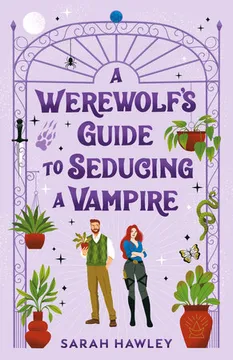
A Werewolf's Guide to Seducing a Vampire receives mixed reviews, averaging 3.76/5. Readers widely praise the unique pairing of an anxious, sweater-vest-wearing werewolf with an ancient vampire succubus, and appreciate the sensitive portrayal of anxiety and consent. Many adore Eleonore's fierce, quirky personality and her chemistry with the gentle Ben. Common criticisms include pacing issues, excessive focus on a sister's mayoral campaign, and underdeveloped antagonist resolution. Despite some finding it overlong, most agree it's a fun, cozy paranormal rom-com with heartwarming found-family vibes.
People Also Read




Characters
Ben Rosewood
Anxious plant-shop ownerBen is a tall werewolf who runs Ben’s Plant Emporium and is building an adjoining café and performance space. He is thoughtful, capable, and deeply dependable, but anxiety makes him overprepare, overwork, and doubt whether anyone could love him as he is. Gardening and knitting offer him tangible ways to care for people, while his family’s expectations and his own sense of responsibility leave little room for his needs. Ben dislikes the aggressive masculine ideals often associated with werewolves and struggles with the loss of control during the monthly moonshift. His kindness is genuine, but the story also tests whether he can respect another person’s autonomy when he is frightened and believes he knows what will keep them safe.
Eleonore Bettencourt-Devereux
Centuries-old vampire succubusEleonore is a French-speaking vampire-succubus hybrid, a skilled fighter with sharp instincts, a blunt manner, and a hunger for blood and sexual energy. She has spent centuries moving between imprisonment and brief periods of forced service, leaving her suspicious of kindness and quick to meet surprise with aggression. Her curiosity is as vivid as her temper: once given access to modern life, she devours history, technology, theatre, and cultural habits. Eleonore values directness because deception has repeatedly made her vulnerable, yet her own survival strategies can make tenderness difficult to trust. She is not simply a dangerous seductress. She is a person trying to decide what she wants when her choices have so often belonged to someone else.
Gigi Rosewood
Campaigning werewolf sisterGigi is Ben’s younger sister, an outgoing werewolf with political ambition, quick wit, and a real commitment to improving Glimmer Falls. She is more socially fearless than Ben and can turn enthusiasm into a practical campaign, but she initially leans on her brother without noticing how exhausted he has become. Her response to Cynthia’s condescension shows both courage and a willingness to speak plainly. Gigi’s campaign gives the novel a civic storyline in which community support must be organized, not merely celebrated.
Isobel
The Witch in the WoodsIsobel is an elusive life witch whose past is entwined with Eleonore’s. She is secretive, powerful, and skilled at preserving herself by drawing on other people’s lives. Her understanding of intimacy is profoundly distorted: she can interpret forced proximity as affection and treat threats as harmless play. That self-deception makes her more complicated than a calculating villain, but it does not make her less dangerous. Isobel’s isolation and need for control shape the risks surrounding Eleonore’s attempt to reclaim her own life.
Cynthia Cunnington
Glimmer Falls mayorCynthia is the wealthy, calculating mayor of Glimmer Falls and the daughter of Calladia. She values status, control, and political victory, treating people outside her favored circle as lesser and using her magical authority to reinforce that hierarchy. Her polished public image conceals a harsher private manner. Cynthia’s opposition to Gigi makes the campaign a contest between inherited influence and a more participatory vision of the town.
Mariel Spark
Witch and Ben’s friendMariel is a nature-loving witch who works at Ben’s garden shop and is newly married to Oz. Her warmth is paired with a practical moral clarity: she helps Ben see how his intentions can still violate Eleonore’s consent. Mariel is generous with her magic and friendship, but she has also worked to repair difficult family relationships and understands that apology requires changed behavior.
Ozroth Spark
Demon devoted to MarielOzroth, usually called Oz, is a demon who once came to Earth as a soul bargainer and is now married to Mariel. His severe manner hides a loyal, protective nature, and his relationship with Mariel has softened his suspicion of others. He belongs to Ben’s close circle and brings a steady, unsentimental presence to the group.
Astaroth
Reformed demon strategistAstaroth is a British demon and Oz’s former mentor, now partnered with Calladia. Once power-hungry, he has turned his intelligence toward branding, political strategy, and social change. He is stylish, sarcastic, and fond of theatrical chaos, yet his loyalty to his friends is serious. He connects the human town to the demon plane and to older magical histories.
Calladia Cunnington
Fighter estranged from CynthiaCalladia is a witch, personal trainer, and Astaroth’s partner. Physically confident and quick to fight, she is also perceptive about family harm and has chosen distance from her controlling mother, Cynthia. She supports Gigi’s campaign without pretending that estrangement is painless, and she brings both practical courage and emotional honesty to the friend group.
Themmie Tibayan
Pixie and campaign organizerThemmie, often called Themmie, is a pixie influencer and one of Ben’s friends. She is socially confident, funny, and quick to notice emotional needs, giving Ben the first nudge toward dating and helping Gigi with campaign communications. Her ease with technology and public attention contrasts with Ben’s anxious reserve.
Rani
Naiad and trusted colleagueRani is a naiad who works at Ben’s Emporium and supports Gigi as an event organizer. She is levelheaded, generous, and attentive to the people around her. Her past relationship with Gigi has settled into friendship, and she understands both the campaign’s needs and Ben’s habit of giving more than he can afford.
Lilith
Unpredictable demon matriarchLilith, known as the Mother of All Demons, is Astaroth’s mother and Kai’s partner. She is ancient, impulsive, and cheerfully dangerous, moving between absurd jokes and sudden acts of decisive violence. Her unpredictability makes her an unreliable guide to ordinary etiquette but a surprisingly effective ally when people are stuck in their own emotional loops.
Alzapraz Spark
Elder life warlockAlzapraz is an ancient warlock from Mariel’s family, known for life magic and an irreverent approach to age, pain, and sex. His knowledge helps the group understand the kind of spell surrounding Eleonore, though he is careful about what he cannot know. He is physically frail but mentally sharp, and his long history links present events to older magical conflicts.
Cornelius Crabapple
Faun arts journalistCornelius is a faun journalist for the Glimmer Falls Gazette and a devoted observer of local theatre. He recognizes the originality in Eleonore’s unsettling performance and gives her work a serious public platform.
Violet Rosewood
Ben’s affectionate motherViolet is Ben and Gigi’s warm, expressive mother. She is close to her children and eager to see Ben find love, though her optimism can make her assume more than he has actually said. Her kindness helps establish the secure family life Ben fears he is failing to match.
Loren Rosewood
Ben’s teasing fatherLoren is Ben and Gigi’s affectionate father, a practical gardener with a teasing streak and a strong sense of family loyalty. He celebrates Ben’s business achievements and enjoys gently embarrassing him about romance, while his easy warmth reflects the Rosewood family’s supportive, hands-on culture.
Kai
Confident Fable Farms wolfKai is a New Zealand werewolf, rugby player, and friend of Ben’s. His confidence and enjoyment of the moonshift represent the more conventional werewolf temperament Ben compares himself against. He is also Lilith’s devoted partner and often meets her chaos with enthusiasm.
Avram
Ben’s supportive cousinAvram is Ben’s werewolf cousin and childhood companion, now living in nearby Fable Farms. Good-natured and dependable, he offers practical help when Ben is stranded and makes clear that family support does not depend on romantic success.
Amy and Caitlin
Young theatre techniciansAmy and Caitlin are high school theatre students who help Eleonore with sound, lighting, and stage preparation. Their technical support gives her a way to turn raw ideas into a performance and helps Ben’s new venue welcome young artists.
Plot Devices
The plastic crystal
Binds choice to ownershipThe crystal is the vessel containing Eleonore and the physical focus of a spell that gives its owner power over her. A direct command compels her to act, while the holder can also summon or banish her. The spell converts everyday language into a possible instrument of control, so Ben must learn to distinguish requests from orders. Its presence complicates every stage of their relationship, even when both characters want intimacy. The crystal also ties Eleonore’s immediate safety to a larger history of captivity, giving the romantic plot an ethical obstacle that cannot be solved by affection alone.
Blood and desire
Makes intimacy nourishmentEleonore’s hybrid nature requires ordinary food, blood, and sexual energy. Blood carries emotional flavor for her, while sexual contact or proximity to arousal can sustain her succubus side. This biology creates a steady reason for physical closeness, but the story does not treat need as automatic consent. Ben and Eleonore repeatedly discuss what each wants, especially because he possesses the crystal that binds her. Feeding therefore works as both a fantasy device and a test of whether bodily vulnerability can be handled with care and choice.
The full moon
Tests Ben’s self-acceptanceEvery full moon forces Ben into wolf form for hours, disrupting his routines and placing him in a body governed by appetite, movement, and instinct. He dislikes hunting and feels ashamed afterward, unlike werewolves who welcome the transformation. The moonshift makes his anxiety concrete: he fears what he might do when he cannot rely on rational control. Eleonore’s practical preparation of food and her nonjudgmental attention help him face the experience without pretending to enjoy it. This device parallels her own history of coerced action while giving Ben a distinct struggle over identity and masculinity.
The Annex stage
Turns trauma into chosen artBen’s café and performance stage begin as a business expansion, then become the setting for Gigi’s campaign announcement and Eleonore’s unexpected theatrical career. The stage first enters the plot through a lie Ben tells to explain a viral video, and his pressure on Eleonore exposes the binding spell. Once he rescinds his command, Eleonore chooses to perform and reshapes the venue into a place for experimental art. The performance lets her represent violence without being forced to commit it, while the café becomes a community space that supports local creators and public participation.
Gigi’s mayoral campaign
Makes power publicGigi’s late-entry campaign places the family and their friends against Mayor Cynthia Cunnington’s inherited influence and political intimidation. Campaign events bring the group into public spaces where magical attacks can threaten both bodies and democratic participation. The campaign also reveals Ben’s tendency to accept too much responsibility, while Eleonore’s protective role gives her a meaningful connection to the town beyond Ben. Its civic stakes mirror the personal plot: authority can either make room for others or treat them as tools. The campaign’s supporters, organizing work, and public rallies make community action a concrete counterweight to Cynthia’s control.
About the Author

Download PDF
Download EPUB
.epub digital book format is ideal for reading ebooks on phones, tablets, and e-readers.








