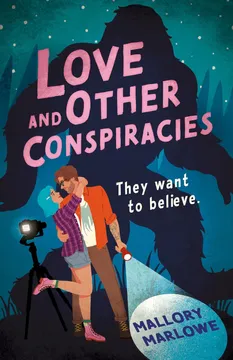


Plot Summary
Hallie Gets One Last Shot
Hallie Barrett has spent years producing viral videos at Skroll, but after her ex-boyfriend and former star Cade Browning removes her from his show, she is reduced to logging traffic reports. Her boss, Chloe, warns that Hallie has little work to justify keeping her on staff. Then another creator’s arrest leaves a place open in Skroll’s annual series competition.
Chloe gives Hallie until Friday to pitch a replacement show, with a production budget and a chance to reclaim her career if it succeeds. Hallie accepts before fear can talk her out of it. She has no concept yet, but she knows what she wants: proof that Cade did not make her talent, and cannot take it away.
The story begins with professional precarity rather than romance. Hallie’s identity has been built around making other people visible, and Cade’s control of the show has made that labor easy to erase. Chloe’s offer gives Hallie a narrow opening, not a rescue: she must supply the idea, persuade executives, and build a pilot under pressure. That distinction matters. The novel frames recovery as action taken before confidence arrives. Hallie is still measuring herself through the workplace that diminished her, but she chooses to compete within it anyway.
A Host in the Static
Searching for a concept, Hallie stays up watching television and lands on Cosmic Conspiracies, where podcast host Hayden Hargrove argues that Bigfoot might be extraterrestrial. His certainty and storytelling charm make the absurd topic compelling, and Hallie sees a web series in him.
She contacts Hayden and meets him at an alien-themed Hollywood bar, where she proposes adapting his podcast, The Out There, for Skroll. Hayden worries that his listeners will reject the change and that he cannot carry a camera-led show.
Hallie tries to persuade him with the promise of a larger audience, then takes him on a haunted Hollywood tour. Hayden spends the ride correcting the guide’s errors, revealing both his expertise and comic impatience. He leaves still undecided, but gives Hallie a small plastic alien from his drink.
Hayden enters as a contradiction to Hallie’s assumptions: he treats extraordinary claims seriously, yet his appeal is not fanaticism so much as narrative skill. Hallie recognizes that distinction before she believes any of his theories. Her pitch is also an act of professional judgment. She does not need to share Hayden’s worldview to see that he can hold an audience. The failed ghost tour becomes a useful first test of their chemistry: Hayden’s corrections frustrate the guide, but Hallie sides with him, turning an awkward recruitment meeting into the beginning of trust.
The Camera Changes the Plan
Hayden agrees to the project and supplies materials for Hallie’s pitch deck. Chloe and Skroll’s CEO approve the adaptation, but demand a pilot within days. In the studio, Hayden’s first takes are stiff; he reads from his script and loses the ease he had on television.
Hallie interrupts with questions about the Roswell incident, provoking his enthusiasm until he starts explaining the theories directly to her instead of reciting lines. Chloe notices that their banter gives the footage its energy.
She proposes that Hallie join Hayden on camera as co-host, and Hayden supports the idea, crediting Hallie’s humor and curiosity. Hallie accepts despite fearing she is not interesting enough to be seen. Chloe then changes the pilot plan, giving them extra time and a modest budget to film on location.
The project’s first major revision is also a revision of Hallie’s self-concept. She thought her value lay in arranging the show from behind the lens; Hayden and Chloe identify that her presence is part of what makes the material work. The scene avoids treating visibility as effortless empowerment. Hallie resists because Cade trained her to doubt her appeal, and accepting the role means risking public judgment. Hayden’s support matters because he gives up exclusive ownership of his platform. Their collaboration begins to function as reciprocal recognition, not a producer managing a talent.
The Roosevelt Pilot
Hallie and Hayden film their pilot overnight at the Hollywood Roosevelt, bringing cameras, temperature readers, and spirit-box equipment into a hotel room. Their investigation produces no conclusive evidence, but the equipment and their teasing create lively footage.
Hayden wakes during the night convinced that something touched his foot, while Hallie tells him to return to sleep. Jamie edits their footage, and the finished pilot plays well enough to win a full season in Skroll’s program.
Viewers respond to the hosts’ contrasting energy, including Hallie’s skepticism and Hayden’s earnest belief. They begin work on further episodes, among them a deep dive into the JFK assassination. The show is no longer an idea Hallie is using to survive at Skroll; it is a real production built by the two of them.
The pilot turns failure of proof into success of form. The ghosts remain unverified, but the human interaction is unmistakable, and the audience responds to the gap between Hayden’s conviction and Hallie’s skepticism. Their humor does not simply puncture the supernatural premise; it makes investigation feel accessible without requiring belief. The season pickup also changes the stakes. Hallie has earned a place in the competition, while Hayden has accepted the vulnerability of performing in a new medium. Their shared work begins to carry emotional weight beyond either person’s original career goal.
The Story Behind Hayden
While preparing the JFK episode at Hayden’s apartment, Hallie discovers that his father was Everett Hargrove, the celebrated horror novelist whose books fill Hayden’s shelves. Hayden explains that his father introduced him to monster hunts when he was a lonely child, then became ill while Hayden was in college.
Hayden set aside much of his young adulthood to care for him and built The Out There around work he could do from home. He rarely discusses the grief or the isolation that followed.
Later, Hallie and Hayden investigate the Queen Mary, where a single-bed room forces them to negotiate how close they are willing to be. They eventually share the bed, and Hallie wakes curled against him. The tenderness unsettles her, but she does not reject it.
Hayden’s interest in monsters is presented as an inheritance of care, not merely a quirky occupation. His father made wonder into a way of helping a bullied child feel accompanied, and Hayden’s later work keeps that practice alive. The cost is that care became a role he could perform more easily than asking for it. Hallie recognizes the loneliness beneath his competence, even as she struggles with her own fear of intimacy. The shared bed makes their emotional closeness bodily and ordinary, which is precisely why it feels more threatening to Hallie than a dramatic romantic gesture.
Cade Tests the Door
After the Queen Mary trip, Cade appears at Hallie’s apartment and demands an external trackpad he once gave her. He uses Skroll’s power structure to pressure her into handing it over, then insults her work and implies she manipulates men to advance.
At the office, he repeats those claims to Hayden, presenting Hallie as difficult and untrustworthy. Hayden rejects the attack and takes Hallie out to a playground, where he admits that grief has left him isolated and that meeting her made him want to let someone in again.
Their closeness nearly becomes a kiss, but Hallie stops herself, frightened by the risks of loving a coworker and trusting after Cade. Hayden accepts her boundary. His willingness to stay, without demanding more, gives her a new experience of safety.
Cade’s harassment works by converting private mistreatment into professional doubt. He does not only insult Hallie; he threatens the career she needs, making resistance feel economically dangerous. Hayden’s response offers a counterexample to Cade’s coercive intimacy. He defends Hallie at work, then speaks about his own loneliness without making her responsible for curing it. The almost-kiss matters less as postponed romance than as a test of consent: Hallie says no, and Hayden remains kind. The novel makes safety measurable through what happens after a boundary is set.
Care in Hayden’s Room
As Hallie and Hayden prepare for a research trip, she develops a high fever and can barely manage the drive home. Hayden brings her to his apartment, puts her in his bed, and checks her temperature. He makes soup, gives her medicine, cleans cold medicine from her hair when she spills it, and washes her hair over the bathtub.
Hallie keeps apologizing for needing help, but Hayden treats care as ordinary rather than something she must repay. When she asks him to stay, he sleeps beside her and holds her while she coughs. The experience unsettles a belief she has carried since childhood: that being sick or distressed means becoming a burden. By the time she recovers, she is less afraid of depending on him.
The illness scene is a quiet reversal of Hallie’s learned self-sufficiency. Her instinct is to minimize her needs, partly because Cade made affection conditional and partly because professional life rewards people who remain useful. Hayden does not answer with grand promises. He responds to concrete needs, from soup to clean hair, and does not turn assistance into leverage. The intimacy develops through practical attention rather than spectacle. For Hallie, accepting help is not passivity; it is a new form of agency, one that allows care to move in both directions.
A Kiss in Fresno
Once Hallie has recovered, she and Hayden begin a trip that includes Fresno Nightcrawler sightings, San Jose, and a Bigfoot hunt. In a Fresno park after dark, Hallie follows Hayden through the trees despite her dislike of bugs and the wilderness.
They sit on a bridge to watch for the strange, trouser-shaped figures, trading jokes while their hands and knees draw closer. When Hallie finally stops hiding her feelings, Hayden kisses her. The first kiss is slow and careful, and they continue only as far as Hallie wants, then return to their hotel holding hands.
Their relationship shifts from attraction they both manage around to a chosen intimacy. The next day’s investigations can continue, but neither can pretend their partnership is only professional.
The bridge gives their romance a threshold that is both literal and emotional. Hallie has spent the trip entering places she dislikes because she wants to share Hayden’s world; the kiss follows that chosen participation, not a sudden conversion to his beliefs. Her skepticism remains intact, while her willingness to risk closeness changes. Hayden’s restraint preserves the trust established when she previously stopped a near-kiss. Their bond is not built on agreement about monsters. It is built on curiosity, humor, and the confidence that disagreement will not become punishment.
Dinner with Ellen
The trip detours to San Francisco so Hayden can visit his mother, Ellen, and stepfather, Jeff. Hallie notices his hands shaking before they enter the polished family home. At dinner, Ellen and Jeff dismiss The Out There as an unserious career and suggest Hayden should move on from the interests he shared with his father.
Hayden finally tells them that they were absent during his years of caregiving and that the show is the first thing to make him feel well in a long time.
When he leaves the table, Hallie shows his parents viewer comments describing how the series has helped people through difficult weeks. Outside, she comforts Hayden and gives him a chance to be vulnerable. They share a small joint, then bring his parents inside to watch the pilot, which Ellen agrees to continue watching.
The family visit exposes the difference between support that is polite and support that actually sees a person. Ellen and Jeff offer conventional concern while dismissing the work that gives Hayden purpose; he has learned to call this arrangement fine, even when it leaves him unseen. Hallie’s intervention does not erase the family conflict, but it brings evidence of the show’s real effect into the room. The scene also reverses their usual roles: Hallie becomes the person defending Hayden’s worth, while he allows himself to be comforted rather than retreating into solitary competence.
Rain at Bigfoot’s Clearing
After the family visit, Hallie and Hayden reach the Northern California clearing associated with the famous Patterson-Gimlin Bigfoot film. Hayden reenacts the creature’s walk while Hallie films, and the performance ends with him stumbling into the woods.
Rain interrupts the investigation and sends them back to their cabin soaked. Their laughter gives way to kissing, and Hayden repeatedly checks that Hallie wants to continue. She chooses to undress with him and they have sex, communicating openly and taking time to learn what feels good to each of them.
The intimacy contrasts with Hallie’s previous experience with Cade, where her needs were ignored. In the morning, Hayden makes breakfast and jokes about how prepared he is for another night together. Hallie returns to Los Angeles feeling wanted rather than used.
The storm turns a failed search into the night’s real discovery: Hallie experiences sex as mutual attention rather than performance or obligation. Hayden’s repeated check-ins are not decorative gestures; they let her control pace and meaning. His patience also creates room for pleasure she had not expected to experience with a partner. The comic setting keeps the scene grounded in their shared personality, but the emotional consequence is serious. Hallie begins to distinguish desire from danger, and Hayden’s care becomes something she can trust without treating it as a debt.
The Convention Kiss Leaks
At CON-Spiracy, Hallie joins Hayden on a panel about digital media and the unexplained. She explains how she found him and why his work persuaded even a skeptic to build a show around it.
Hayden publicly credits her perspective and skill, while Hallie feels the difference between being present in a video and being valued for her own ideas. After the panel, they attend a bar with Nora and Jamie. When their friends step away, Hayden and Hallie kiss, unaware that an attendee photographs them.
The image spreads online, and fans quickly identify them as a couple. Hallie worries that public attention will let Cade use their relationship against them. Hayden is less concerned about being seen, and reassures her that they can face the attention together.
The convention expands Hallie’s visibility beyond Skroll’s internal hierarchy. She is no longer only the skilled producer whose work is credited to someone else; strangers listen to her explain what she contributes. Hayden’s praise reinforces that recognition without speaking for her. The leaked photograph then makes visibility feel less controlled. The same audience that can validate Hallie can also scrutinize her private life, a tension the novel treats as especially gendered. Their response to the leak becomes an early test of whether public recognition can coexist with a relationship they still want to define for themselves.
Cade Finds an Audience
At Skroll’s spring party, Hallie and Hayden’s growing success draws attention from coworkers and executives. Cade tries to undermine Hallie, first with insinuations about her appearance and then by claiming she is using Hayden for another career boost.
Hayden stops him from touching Hallie and refuses to accept his story. Weeks later, while Hallie and Hayden are visiting Point Pleasant, Cade appears on a popular podcast and calls Hallie needy, dishonest, and sexually opportunistic.
He uses a clip from The Out There to mock their work, and viewers begin repeating his accusations online. Hallie breaks down in Hayden’s arms, convinced the backlash could cost them their season. She decides to leave the finale rather than risk dragging Hayden’s show down, and returns to Los Angeles alone.
Cade’s tactics escalate from private intimidation to public narrative control. He understands that Hallie’s reputation is vulnerable to sexualized accusations, and he exploits the platform’s appetite for conflict. The attack is not persuasive because it is true; it is dangerous because it can affect views, employment, and Hallie’s already fragile confidence. Hayden’s defense matters, but it cannot instantly undo the audience’s reaction. Hallie’s withdrawal is therefore neither a simple mistake nor a betrayal of love. It is a protective reflex learned under coercion, and the story makes its cost visible in the show’s unfinished finale.
Hallie Reclaims Her Evidence
Hallie turns off her phone and spends several days at home with Nora, trying to recover without facing the flood of online reactions. Jamie reveals that Hayden is struggling to film the finale without her, while Hayden posts a detailed defense of Hallie and their work.
When Nora shows her the supportive responses, Hallie turns her phone back on and sees that many viewers still value her. She sends Chloe, Skroll’s CEO, and HR a link to Cade’s podcast and an account of his treatment of her.
At the office, she meets Effy, a young intern who asks how to stand out among Skroll’s male creators. Hallie encourages her to trust the people who respect her work. Cade then confronts Hallie, revealing that Skroll has fired him. She refuses to retract her report.
Hallie’s return begins with evidence, not a sudden cure for fear. She takes in the support of friends and viewers, then makes a formal record of what Cade did. That choice shifts the conflict from private endurance to institutional accountability. Effy’s question gives Hallie a chance to pass forward the permission she once needed, while also clarifying that her visibility has consequences beyond herself. Cade’s firing does not repair every harm, but Hallie refuses the old bargain in which his career must be protected at her expense. She acts before knowing whether the outcome will be safe.
Hallie Reaches Area 51
Nora drives Hallie to Rachel, Nevada, where Hayden and Jamie are preparing to film near the Little A’Le’Inn. Hallie arrives wearing Hayden’s old UFO shirt, the public version of a choice she has finally made for herself. She tells Hayden she reported Cade, will not let him control her career, and wants to continue making The Out There together.
She also tells Hayden she loves him, while remaining a skeptic about aliens and the government’s hidden base nearby. Hayden returns the feeling and welcomes her back without demanding that she believe what he does. They kiss, then join the crew to film the finale. Their relationship and the show become choices Hallie actively owns, rather than risks Cade can use to define her.
The finale resolves the novel’s two central questions in distinct ways. Hallie does not become a believer in extraterrestrials, but she becomes willing to believe in her judgment, her work, and her capacity to love. Her arrival at Area 51 is a concrete decision to return to the show after fear drove her away. Hayden’s response honors that choice rather than claiming it as proof of his theories. The shirt works as an affectionate signal, not a conversion. Their partnership succeeds because difference remains intact and neither person has to surrender their identity to be chosen.
Epilogue
Six months later, The Out There has been renewed with a larger budget, and Hallie, Hayden, Nora, and Jamie are in Scotland to investigate the Loch Ness Monster. When a strange shape breaks the water, Jamie captures a brief image before it disappears. Hayden cannot identify it, but Hallie is delighted by the possibility that they saw something real.
She still refuses to call herself a believer, though she now enjoys leaving room for wonder. The crew plans more investigations and travels together, while Hallie and Hayden keep their teasing intimacy. Their future includes both monster hunts and the ordinary closeness of building a life side by side.
The closing sighting does not settle the question of whether Nessie exists. Instead, it shows that Hallie’s development is not a conversion plot. She can remain intellectually cautious while allowing curiosity and delight to shape her response to uncertainty. The larger budget pays off the show’s professional stakes, while the expanded crew recognizes Nora and Jamie’s labor as part of the success. Most importantly, the couple’s future does not depend on proving the supernatural. Their lasting bond rests on shared work, reciprocal care, and the freedom to disagree without withdrawing affection.
Analysis
Love and Other Conspiracies uses the paranormal as a language for negotiating trust. Hallie is a skeptic not because she lacks imagination, but because her experience with Cade has taught her that belief can be exploited. Hayden’s theories ask her to entertain uncertainty without surrendering judgment; his respectful response to her boundaries makes that uncertainty safer than the certainty Cade imposed. Their romance grows through repeated, observable acts: Hallie gives Hayden a co-host, Hayden defends her work, and both learn to ask rather than assume what the other needs.
The workplace plot gives this emotional arc material consequences. Hallie’s creativity has been useful to Skroll while remaining easy for Cade to appropriate. Becoming a public host changes her position, but visibility also makes her vulnerable to gendered scrutiny. Cade’s smear campaign demonstrates how reputational harm can travel through platforms that claim to be neutral. Hallie’s eventual report is not a magical cure; it is an institutional action that refuses to leave the damage private.
The book’s central contrast is not belief versus disbelief, but curiosity versus control. Hayden’s openness is meaningful because it coexists with care and consent. Hallie’s skepticism is meaningful because it does not prevent wonder, affection, or professional risk. The unresolved Loch Ness sighting preserves that balance: evidence remains uncertain, while the joy of investigating together is real. The story’s happiest possibility is not that every mystery gets solved, but that people can remain distinct and still make a shared life.
Review Summary
Love and Other Conspiracies receives generally positive reviews, averaging 3.9 stars. Readers frequently praise the charming, cinnamon-roll MMC Hayden, the witty banter between leads, and the fun X-Files-inspired premise blending conspiracy theories, cryptids, and workplace romance. Common tropes include forced proximity, opposites attract, and the one-bed scenario. Criticisms include wanting more paranormal content, finding the FMC Hallie unlikable or whiny, and feeling the pacing drags. Many note the healthy relationship dynamics and emotional depth as highlights for a debut novel.
People Also Read





Characters
Hallie Barrett
The skeptical showrunnerHallie is a talented Skroll producer whose blue hair and irreverent humor contrast with the self-doubt she carries from a damaging past relationship. She is alert to how a story will work on camera, how a budget will stretch, and how talent can be shaped without being flattened. Her skepticism about ghosts and cryptids is genuine, but it does not keep her from taking Hayden seriously or enjoying the world his work opens up. Hallie’s central tension is between her instinct to make other people shine and her fear of being seen herself. She values competence, wit, and independence, yet must learn that accepting care does not make her weak or indebted.
Hayden Hargrove
The devoted cryptid hostHayden hosts The Out There, a podcast about cryptids and conspiracies, and brings an unusual mixture of meticulous research, theatrical enthusiasm, and self-deprecating humor to his work. His belief in unexplained creatures is sincere, but he rejects conspiracy theories that target vulnerable groups. Childhood monster hunts with his father shaped both his interests and his understanding of care. Hayden is comfortable explaining mysteries to an audience, yet less practiced at showing his own grief or asking others for help. He is thoughtful about consent and attentive to small details, often expressing affection through practical acts. Hallie’s skeptical questions challenge him creatively, while his steady respect gives her room to trust her own voice.
Cade Browning
The controlling ex-starCade is a popular Skroll personality and Hallie’s former partner, accustomed to receiving credit and attention inside the company. He is charming when it benefits him and cutting when someone resists his influence. His professional authority lets him blur personal conflict with workplace judgment, making Hallie doubt both her talent and her right to object. Cade treats other people’s careers as pieces he can arrange to protect his own status. His role exposes how manipulation can persist after a relationship ends, especially when an institution rewards the person with more power. He is not simply an unpleasant ex; he understands how to make intimidation sound like concern.
Nora
Hallie’s fearless roommateNora is Hallie’s roommate and Skroll coworker, a boldly expressive writer with colorful hair, conspicuous tattoos, and an instinct for making a crisis feel survivable. She supports Hallie without pretending recovery is simple, offering distraction, frank advice, and practical companionship. Her friendship gives Hallie a home away from work and a place where she does not have to perform competence. Nora’s closeness with Jamie adds a warm romantic counterpoint to Hallie and Hayden’s slow-building relationship. She is funny and impulsive, but her humor does not prevent her from recognizing when Hallie needs someone to listen.
Jamie Santos
The steady film editorJamie is a British documentary-minded Skroll contributor who edits and films The Out There. Polished and reserved, he is more comfortable showing affection through attention and practical help than through grand declarations. His quiet ease with Nora reveals a softer, playful side beneath his careful presentation. Jamie’s technical skill helps turn Hallie and Hayden’s improvised chemistry into a coherent series, and he notices when Hayden’s performance falters in Hallie’s absence. He is part of the show’s support system, not merely its camera operator, and his loyalty to the people making it is as important as his craft.
Chloe
Hallie’s supportive bossChloe manages Skroll’s video producers and is one of the few people inside the company who sees Hallie’s talent clearly. She offers Hallie a chance to pitch a new series rather than allowing her to disappear into low-level work. Chloe is pragmatic about budgets and audience response, but willing to recognize a creative solution when it emerges during production. Her decision to make Hallie a co-host changes the shape of The Out There and gives Hallie an opportunity she would not have claimed for herself. Chloe’s support is meaningful because it is backed by concrete professional choices.
Kevin Chadwick
Skroll’s image-conscious CEOKevin, Skroll’s CEO, prefers the nickname Champ and often views creative work through the lens of audience numbers and company growth. He initially approves Hallie’s pitch because he sees commercial promise in Hayden’s established following. Kevin is part of the corporate environment that can either reward or ignore talent, especially when workplace harm is raised. His relationship to Hallie and Cade is less personal than Chloe’s, but his decisions carry greater institutional weight. He represents the company’s uncertain conscience: interested in success, yet capable of responding when misconduct becomes impossible to dismiss.
Ellen Hargrove
Hayden’s guarded motherEllen is Hayden’s mother, a polished and conventional presence whose expectations for her son differ sharply from his chosen work. She is affectionate in familiar gestures, but initially struggles to take his interest in monsters and conspiracies seriously. Her distance from Hayden’s years of responsibility has left important feelings unresolved between them. Ellen’s concern is sincere, yet it often arrives in forms that make Hayden feel dismissed rather than understood. She offers a view of family love shaped by social respectability and worry, and her relationship with Hayden carries the possibility of greater honesty.
Jeff
Hayden’s formal stepfatherJeff is Hayden’s stepfather, a proper and socially polished man who helps host Hallie and Hayden during their visit. He tends to ask practical questions about money and career stability, which reinforces the family’s conventional expectations. At first, his manner feels stiff to Hallie, but he is not defined solely by that formality. Jeff participates in the family gathering and shows an ability to respond to the work in front of him. His presence helps make the dinner’s conflict about competing understandings of success, rather than a simple division between a villainous family and a misunderstood son.
Cthulhu
Hayden’s oversized catCthulhu is Hayden’s large gray cat, named for a fictional sea monster and far less frightening than his name suggests. He interrupts work sessions, demands attention, and occasionally breaks the tension between Hallie and Hayden. Cthulhu is a small but telling part of Hayden’s domestic life: a companion he cares for and a creature who makes his carefully maintained apartment feel lived in.
Effy
The aspiring Skroll internEffy is Kevin’s niece and an incoming Skroll intern who admires Hallie’s work. She asks how a young woman can stand out in a company dominated by familiar male creators. Her question gives Hallie a chance to articulate the importance of being taken seriously without pretending that confidence comes easily. Effy represents the next generation of people trying to enter a workplace that has not made equal room for them.
Abby
Hayden’s former fiancéeAbby is Hayden’s former fiancée, part of the life he set aside while caring for his father. Hayden speaks of her with consideration rather than bitterness, and he wants Hallie to understand that his past is not a hidden threat. Her presence in the story helps reveal how grief and responsibility altered Hayden’s capacity for intimacy.
Plot Devices
The Skroll Series Program
Career stakes and a deadlineSkroll’s annual competition gives Hallie the reason to build The Out There and supplies the story’s professional clock. Each producer must pitch a concept and create a pilot, then compete for audience attention and a possible second season. The program turns creative decisions into measurable risks: a strong idea is not enough unless it can be filmed, edited, and watched. It also places Hallie and Cade in direct competition, making the workplace inseparable from Hallie’s effort to reclaim her confidence. The eventual larger budget gives the show’s success practical consequences rather than leaving it as a purely emotional victory.
Ghost-hunting equipment
A comic test of beliefHayden uses night-vision cameras, EMF readers, recorders, spirit boxes, and an Ovilus during investigations. The devices give episodes structure and create opportunities for suspense, but their readings rarely prove what Hayden hopes they prove. Hallie challenges their reliability, sometimes teasing him and sometimes joining the experiment for the sake of the show. The equipment therefore works on two levels: it is a production tool for the web series and a recurring measure of how the couple handles uncertainty. Their disagreements remain playful because neither treats the other’s worldview as a reason to withdraw affection.
The co-host format
Chemistry becomes the showThe Out There begins as Hayden’s solo podcast, but the camera exposes his difficulty delivering scripted material alone. Hallie’s questions draw out his natural enthusiasm, and their contrasting perspectives give the web series a conversational shape. Her role grows from producer to co-host because the dynamic improves the footage and helps the audience connect with the investigations. The format also gives Hallie a public identity beyond her former work behind the scenes. Their on-screen partnership mirrors their private bond, while the show’s success depends on their ability to collaborate without pretending they agree about the paranormal.
The online audience
Validation and public pressureView counts, comments, fan edits, and social media posts shape both the show’s prospects and the couple’s exposure. Early viewers respond to Hallie and Hayden’s banter, and their support helps Hallie see that her presence matters. The same platforms become a weapon when Cade uses a podcast appearance to circulate allegations about her. Online attention is therefore neither simply a reward nor an antagonist: it amplifies the voices and incentives already present. The audience can affirm Hallie’s work, but she must learn not to let its loudest reactions determine her worth.
Cryptid investigations
A shared road into wonderThe investigations take Hallie and Hayden from haunted Los Angeles hotels to Fresno, the Queen Mary, the Winchester Mystery House, Bigfoot country, Point Pleasant, and eventually Area 51. Each location supplies a new episode premise and a reason for the pair to spend time together outside the office. The alleged evidence remains ambiguous, allowing Hallie to stay skeptical while engaging with Hayden’s enthusiasm. The excursions also create practical pressures, from cramped rooms to difficult weather, that reveal how each person responds to discomfort. Their travels turn the paranormal premise into a structure for intimacy, work, and comic discovery.
Download PDF
Download EPUB
.epub digital book format is ideal for reading ebooks on phones, tablets, and e-readers.








