

Plot Summary
A Duke With Two Strangers
Newly made Duke of Stanhope, Peter Kent takes his half-siblings, twelve-year-old Lu and ten-year-old Freddie, into London. Their father neglected them, their mother is dead, and the courts have left them with the elderly Great-great-aunt Rosamund. Peter wants to bring them into his care, but has not won their trust or secured legal guardianship.
On Bond Street, the children and Peter collide with Lady Selina Ravenscroft, a duke's sister hiding beneath a ridiculous bonnet. Lu has just acquired a fencing sword, and Peter is holding it out of her reach when he recognizes Selina. She is amused by the children, but learns that Peter cannot simply take them home. His struggle to become their guardian begins in earnest.
The opening makes inheritance feel less like a prize than an unfinished obligation. Peter has money and rank, yet neither grants him authority over the children he already loves. Lu's hostility and Freddie's anxious compliance show how neglect has taught them to treat adult promises as unstable. Selina notices the legal and emotional problem at once, while Peter's awkward attempts to win trust reveal that care cannot be purchased or commanded. Their first meeting therefore joins the book's romance to its central practical question: what makes a family reliable when law, blood, and affection do not align?
Marriage as Legal Strategy
Peter brings his barrister, Mohan Tagore, to Rowland House to seek help with the guardianship petition due before Lord Eldon. The chancellor dislikes Peter's American upbringing and abolitionist speech, and Peter has also angered him by arranging the theft and distribution of eighteen barrels of rare cognac.
Selina asks what Eldon values, then sees a possible route: a respectable, love-struck marriage might make Peter seem less troublesome and appeal to the chancellor's own romantic history.
With her friend Lydia Hope-Wallace, she prepares a shortlist: Lydia, the scholarly Iris Duggleby, and debutante Georgiana Cleeve. Selina rejects herself as a candidate, though Peter is the person she most wants to help and the man she is trying hardest not to want.
Selina's strategy treats marriage as both social evidence and emotional theater. In a system that reads a man's domestic respectability as proof of his fitness, a wife could strengthen Peter's legal case even though his affection for the children is already genuine. Her political intelligence works through character and custom rather than parliamentary influence. The plan also exposes the mismatch between Selina's competence and her private vulnerability: she can assess candidates with precision, but cannot admit that she wants Peter herself. Her concealment is not coyness alone. It protects a secret that could make her useful intervention dangerous to him.
The Courtship Goes Sideways
Peter tries to court the women on Selina's list. Georgiana's baffling remarks about geography and hats leave him struggling to hold a conversation, while Lydia becomes so frightened at a gathering that she flees and Iris bluntly asks whether he sees her as a person or merely a convenient duchess.
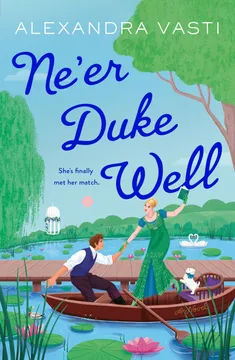
Meanwhile, Selina keeps steering Peter toward suitable matches. During a walk by the Serpentine, a small dog becomes stranded on floating branches. Peter prepares to wade in, despite the crowd and the scandal it could cause.
Selina dives in instead, then hides with the dog among the reeds while Georgiana fetches a boat. Peter rows them to safety. Georgiana later asks him to end his attentions, leaving Selina to wonder what else the debutante conceals.
The courtship episodes are comic, but each tests whether Peter can see beyond a woman's assigned social role. He is honest with Iris about the guardianship scheme, and her response makes clear that candor matters more than a polished performance. Georgiana's strange social mask begins to register as something deliberate rather than simple foolishness. The river rescue reverses the usual rescue pattern: Selina takes the physical risk, Peter supplies the boat, and Georgiana quietly organizes the escape. Their cooperation makes attraction inseparable from mutual competence, while Peter's instinct to act before considering consequences remains both generous and dangerous.
The Locked Library Kiss
At a dinner party, Selina learns that Lydia and Iris doubt Peter means to marry either of them. She pulls him into a library and explains that his broad charm makes every woman feel interchangeable. When he asks why she cares so much, Selina insists he practice sincere courtship on her.
Peter tells her how much he admires and desires her, then kisses her. The kiss confirms what neither can safely ignore, and Peter asks her to marry him.
Selina refuses, not because she lacks feeling, but because she believes her hidden work at Belvoir's would endanger his guardianship case and reputation. Peter leaves her in the locked room, hurt but unwilling to press her. She is left with the knowledge that her plan to find him a wife has exposed her own heart.
The scene turns instruction into confession. Selina knows how to teach Peter the language of particular attention because she has been the recipient of it; his charm becomes meaningful when directed toward her with unguarded specificity. Yet she refuses the proposal by making herself responsible for every possible consequence, a familiar form of control disguised as selflessness. Peter's desire is plain, but he cannot solve her fear by declaring it irrational. The kiss changes their relationship, while the refusal preserves the central conflict: Selina wants intimacy, but believes that protecting Peter requires keeping her own life hidden.
Caught Before the Eldons
At a dinner hosted by the Ravenscrofts, Peter tries to reassure Lord Eldon that he can raise Freddie and Lu while serving in the Lords. Eldon doubts that a bachelor can manage both, and Peter realizes Selina's marriage plan might have helped.
Later, he and Selina become trapped in a music room whose door will not open from inside. They speak plainly about why he cannot marry another woman, then kiss again. Lady Eldon discovers them together, followed by Lord Eldon and Selina's furious brother, Nicholas.
To prevent the compromising scene from wrecking Peter's case, Selina announces that she and Peter are betrothed. Peter confirms that he wants the marriage regardless of the legal advantage. Their private desire has now become a public commitment, and Selina must decide whether to reveal the secret behind her refusal.
The locked room converts the romance's private risk into a public fact. Selina's announcement is a strategic act, but it is not merely a rescue maneuver: Peter confirms that he wants her even without the legal benefit. Eldon's skepticism about Peter's capacity for care also makes the guardianship issue more personal. The scene exposes how aristocratic reputation can determine practical outcomes, especially for a woman whose compromised appearance carries harsher consequences. Their betrothal begins under pressure, yet the characters' consent matters: neither treats marriage as a favor owed, even as the crisis narrows their choices.
A Secret in Green Cloth
At his house, Selina tells Peter that she and her absent twin, Will, own and run Belvoir's, a circulating library. Its Venus catalog gives women access to candid writing about sex and contraception, knowledge Selina wanted other women to have after her friend Ivy Price was left pregnant and unsupported.
Selina fears discovery could destroy Peter's political standing and undermine his petition. Peter admires what she has built and refuses to treat it as a reason to withdraw.
They marry by special license, using hastily fashioned brass bands because they have forgotten proper rings. Back at Peter's nearly unfurnished townhouse, Selina takes charge of staff and rooms. Their new life is not settled before Rosamund dies, leaving Lu and Freddie with nowhere else to go.
The disclosure changes the basis of the marriage. Selina's library is not a passing indiscretion but an organized response to women's enforced ignorance, funded and managed through a network that gives her economic agency. Peter's acceptance matters because he sees the purpose as well as the risk; he does not ask her to become respectable by becoming smaller. The makeshift rings and empty house give their union a deliberately unfinished texture. They have chosen one another, but must still build the material conditions of family life and confront the danger their separate histories bring into the same home.
The Children Come Home
The siblings arrive at the Stanhope house in their wedding clothes, carrying one trunk and the gray kitten Peter once tried to give Lu. Freddie has named the cat Peter, which promptly escapes into the portrait gallery.
Selina welcomes both children and helps Peter turn the bare townhouse into a home, while Lu remains wary and Freddie begins to imagine a place for himself. Lydia visits and recognizes that Selina runs Belvoir's.
She also reports that political enemies have started blaming Nicholas for the library and its catalog, a rumor that could expose Selina at the worst possible moment. Selina decides to delay any confession until after Peter's guardianship hearing. Then the hearing is postponed, and a family outing ends with Freddie collapsing from fever.
The move into the townhouse is both a practical transition and a test of trust. The children arrive because the previous arrangement has ended, not because Peter has yet won the court's approval. Their belongings, the cat, and Selina's rapid plans for rooms make belonging tangible, but Lu's reserve keeps it provisional. Lydia's discovery adds a second legal and reputational threat: Selina's attempt to help Peter may now damage Nicholas as well. The postponement extends uncertainty just as the household begins to form, and Freddie's sudden illness makes the fragile new family confront a crisis no amount of planning can prevent.
Freddie's Fever
Freddie's fever and coughing worsen, and Lydia's brother Gabriel, a young physician, diagnoses pneumonia. He refuses to bleed or dose the boy with dangerous remedies, explaining that rest and careful nursing are the only sound course. Peter cannot leave Freddie's bedside. As Selina sits with him through the night, Peter tells her about Morgan, the brother who died of consumption when they were boys.
Their father abandoned the family, ignored Peter's pleas for help, and left Peter carrying the guilt of failing to save Morgan. Selina listens and stays beside him rather than trying to fix his grief. After several days, Freddie's fever breaks. Lu returns, accepts Peter's embrace, and hears him promise that he will not abandon her or Freddie.
Freddie's illness makes Peter's protective instinct collide with an old wound he has never resolved. The physician's refusal to offer a false cure forces Peter to endure uncertainty rather than convert fear into frantic action. His memories reveal that his recklessness and insistence on responsibility are shaped by a childhood in which an adult's absence had irreversible consequences. Selina's care is valuable precisely because she cannot cure the boy or erase the past; she remains present while Peter speaks. Lu's gradual acceptance follows the same logic. Trust grows not from a grand gesture but from seeing Peter stay through helplessness.
Alverthorpe's Threat
After Freddie improves, Selina goes to Belvoir's and finds Georgiana waiting. Georgiana admits she secretly writes popular novels and has been investigating the library because her father, the Earl of Alverthorpe, discovered its books and wants to destroy it.
He has traced Belvoir's to Selina and is spreading rumors that first implicated Nicholas. Selina urges Georgiana to protect herself, then returns home intending to leave Peter and move to a cottage in Cornwall before the scandal harms his guardianship case. Peter refuses to cast her out.
Together they recognize that Belvoir's membership records give Selina leverage: many powerful people use the Venus catalog and would not want their own membership publicized. They choose to face discovery rather than let Alverthorpe dictate their response.
Georgiana's revelation reframes the apparent debutante as another woman who has survived by managing what others are allowed to see. Her warning comes at personal risk, and Selina's instinct is to protect everyone by removing herself from the equation. That instinct repeats the loneliness at the center of her work: she assumes that responsibility means carrying consequences alone. Peter's refusal shifts the problem from sacrifice to collaboration. The membership records are not simply a threat; their existence exposes the hypocrisy of a society that consumes private knowledge while publicly condemning its source.
Belvoir's Opens Its Doors
Selina tells the Ravenscrofts about Belvoir's, and they respond with criticism for her secrecy but offer their help. Peter brings Lydia, Iris, Georgiana, Tagore, and other allies into the effort. They arrange a public show of support, then walk openly into the crowded library.
When Alverthorpe confronts Selina and threatens legal action, Georgiana drops her practiced air of foolishness and tells him that she wrote the novels he found. Selina confirms their popularity.
Georgiana's mother refuses to leave with the earl, while the Ravenscrofts and their allies close ranks around both women. Alverthorpe storms out alone. Selina and Peter then keep up their public composure, making clear that the library's owner is not isolated and will not be bullied into retreat.
The library's public opening reverses its founding logic. Selina built Belvoir's to circulate knowledge discreetly, but secrecy has also allowed powerful men to define its meaning and threaten its owner. By appearing openly with allies, she turns private patronage into collective protection. Georgiana's disclosure is especially consequential: she chooses to risk her own status rather than let her father use her silence against another woman. The scene does not erase the danger, but it changes who bears it. Alverthorpe confronts not a solitary target, but a network of women, families, and legal support willing to be seen together.
The Children Claim Their Place
At the postponed Chancery hearing, Tagore lays out the legal case, but Lord Eldon asks Peter why the children should live with him. Peter answers that he loves them and will stay, even when he cannot prevent every hardship. Before the court can finish, Lu and Freddie arrive with their pony and Lu's rapier.
They insist that they want to live with Peter and Selina, and that the decision concerns their lives too. Eldon appoints the couple as their legal guardians, explaining that he had already intended to do so and that his wife supports them. The children are now secure in the household that has become their home. Peter, Selina, and the siblings leave the courtroom together, with a pony still to manage.
The climax gives the children a voice in a legal process that has treated them as objects of guardianship. Lu's forceful speech and Freddie's quiet declaration are not a trick that wins the case; they articulate the attachment already visible in daily care. Peter's answer also marks a change in his understanding of protection. He cannot promise that no one will suffer, but he can promise not to leave. Eldon's ruling aligns law with demonstrated commitment, while the unruly pony punctures the ceremony. The new family is not orderly; it is chosen, audible, and alive.
Epilogue
Six months later, Selina and Peter are at an inn after Lu follows Freddie to Eton in disguise and claims she has taken a boat to Antigua. Their attempt to decide what happens next is interrupted by news that the Christmas goose has escaped. Peter gives Selina an emerald ring to replace the makeshift brass band from their wedding, but she keeps both.
The ring marks her pride in Belvoir's rather than a demand that she hide it. Lydia, meanwhile, has begun publishing radical writing through the library. The couple are still surrounded by schemes, noise, and uncertainty, but neither mistakes those things for a reason to leave.
The ending refuses to make domestic happiness synonymous with quiet or conformity. Lu's escape attempt, Lydia's new writing, and the escaped goose all show that the household remains full of unruly lives, not problems permanently solved. Peter's emerald ring honors Selina's work without replacing the brass band that began their marriage, so the symbol joins public pride to private memory. Their love does not tame either of them. Instead, it gives them a place from which to keep taking risks, sharing responsibility, and returning to one another after the commotion.
Analysis
Ne’er Duke Well uses the machinery of Regency respectability to ask who is permitted to care for whom, and what kinds of knowledge women are allowed to possess. Peter has a title and ample money, but the court questions his capacity to parent because the children are illegitimate and he is politically inconvenient. Selina can solve logistical problems with astonishing speed, yet her secret library exposes how little protection that privilege offers once powerful men decide to punish her. Both characters initially confuse responsibility with solitary control: Peter believes he must become a flawless guardian, while Selina assumes she must absorb every risk to keep others safe.
The romance changes those assumptions through reciprocal recognition. Peter does not love Selina because she can make him respectable; he admires the work she has undertaken and accepts that its consequences belong to their shared life. Selina, in turn, learns that allowing someone to help is not a failure of competence. The novel's most consequential acts are communal: relatives shelter children, friends exchange intelligence, a physician refuses harmful treatment, and Georgiana refuses the silence that protects her father. Care becomes credible through repeated acts of presence rather than through authority or blood alone.
Belvoir's is the book's sharpest social instrument. Its patrons benefit from information they would never publicly endorse, so their hypocrisy creates a fragile form of leverage. The story does not pretend that exposure carries no cost; it instead asks whether secrecy protects vulnerable people or leaves them isolated and easier to control. By choosing visibility together, Selina and her allies convert private shame into collective risk. The ending's comic disorder is therefore not a retreat from the serious conflicts. It is evidence that the family has made room for imperfect, outspoken people, and that belonging means staying through the mess rather than preventing it.
Review Summary
Ne'er Duke Well receives generally positive reviews, averaging 3.77/5. Readers praise its humor, chemistry between leads, and feminist themes surrounding Selina's erotic lending library. Peter Kent, an American duke from Louisiana, is widely adored as a charming, earnest hero. Critics note pacing issues, missing scenes, and a romance that resolves too quickly, leaving the custody battle to carry the latter half. The found-family element and supportive side characters are highlights, with many readers eagerly anticipating companion novels featuring Georgiana, Lydia, and Will.
People Also Read



Characters
Peter Kent
The reckless caretakerPeter is an American-raised heir unexpectedly made Duke of Stanhope, a position that places him inside an English political world he neither understands nor fully respects. He is impulsive, funny, and generous, with a fierce commitment to abolition and to the half-siblings he has only recently discovered. His instinct is to act before considering how a choice will look, partly because he rejects the standards his neglectful father used to judge him. Beneath his easy charm is a fear that love will end in loss and that he will fail anyone who depends on him. His developing relationship with Selina challenges him to see patience and shared care as forms of courage.
Selina Ravenscroft
The secret reformerSelina is the clever, unmarried sister of the Duke of Rowland, known in society for arranging other people's affairs with unnerving efficiency. She values independence because she has seen how ignorance and male privilege can leave women exposed to exploitation. Her hidden work for a circulating library gives that conviction practical form, though secrecy also lets her believe she can control every consequence alone. Selina is bold in action and hesitant in intimacy: she can organize a campaign or risk public embarrassment, yet struggles to believe someone would accept the costs attached to her choices. Peter's attention draws out her desire to be loved not as a fixer, but as a whole person.
Lucinda Nash
The wary young swordswomanCalled Lu, Lucinda is Peter's twelve-year-old half-sister. She is proud, sharp-tongued, and determined to acquire skills that make her feel less vulnerable in a world controlled by adults. Her resistance to Peter is rooted in the instability she and Freddie have experienced, not simple dislike. Lu protects her younger brother and dislikes being treated as a child whose wishes do not matter. Her fencing, blunt questions, and fierce independence give her a vivid presence in the household. She is not easily reassured by money or promises, and she needs evidence that people will remain beside her when circumstances become frightening.
Frederick Nash
The gentle younger brotherFreddie is Peter's ten-year-old half-brother and Lu's quieter companion. He is sensitive, polite, and eager to find a place where he can belong, though anxiety often makes him hesitant around unfamiliar people and customs. His affection for small comforts, including the kitten Peter brings him, contrasts with the uncertainty of his past. Freddie often follows Lu's lead, but his gentleness should not be mistaken for passivity; he wants his wishes to count and is capable of speaking clearly when it matters. He responds to kindness that is patient rather than demanding, and his presence gives Peter a chance to practice care without relying on bravado.
Lydia Hope-Wallace
The quiet political mindLydia is Selina's closest friend, a wealthy and politically astute young woman whose social anxiety can make ordinary conversation feel impossible. In private, she is incisive, funny, and exceptionally well informed about Parliament and the people who influence it. Selina trusts her as a source of strategic advice and gossip, while Lydia values their friendship enough to challenge Selina's habit of hiding difficult truths. Her reserve is not a lack of intelligence or feeling; it is a response to the pressure of being watched and judged in public.
Georgiana Cleeve
The unreadable debutanteGeorgiana is a young earl's daughter presented to society as a beautiful, harmless debutante. Her apparent confusion makes others underestimate her, and she moves through public life under close family scrutiny. Like Selina and Lydia, she is alert to the ways respectable appearances can hide unequal power. Her relationship with her mother and the expectations attached to her rank shape how carefully she chooses what to reveal. She is more observant than people assume, and her uneasy position between family loyalty and personal independence makes her an important presence in Selina's circle.
Nicholas Ravenscroft
Selina's principled brotherNicholas is Selina's older brother and the Duke of Rowland, a Whig reformer with a reputation for scrupulous political conduct. He helped raise Selina and her twin Will after their parents died, and remains protective even when he cannot direct his sister's choices. Nicholas's public principles make him influential, but also a target for political rivals. He represents the kind of steady leadership Peter hopes to learn, though his reserve can make his support appear more formal than it is.
Daphne Ravenscroft
The practical duchessDaphne is Nicholas's wife, an energetic and observant duchess who helps manage the Ravenscroft household and its estates. She offers Selina warmth without treating her as fragile, and she is skilled at turning social arrangements into useful support. Daphne's affection for Nicholas is visible in their easy partnership, while her practical judgment makes her a reliable ally when family and politics overlap.
Lady Judith Ravenscroft
The formidable auntAunt Judith is Selina's stern, sharp-eyed relative and one of the adults who helped raise her. She has little patience for foolishness, but her severity is joined to fierce loyalty and a dry sense of humor. She understands that care sometimes means setting firm limits, especially with children who have learned to distrust adults. Her partnership with Thomasin gives Selina a model of durable affection that is not dependent on social convention.
Thomasin Dandridge
The family's gentle anchorThomasin is Lady Judith's longtime companion and a loving maternal presence in Selina's family. She is warm, playful, and quietly perceptive, with a gift for helping children feel safe without demanding that they perform gratitude. Thomasin notices when Selina is trying to carry too much and offers comfort without taking away her agency. Her steady affection shows that family can be built through daily care as well as blood.
Will Ravenscroft
The absent twinWill is Selina's twin brother, a soldier serving abroad after losing his wife and infant child. He shares Selina's daring streak and has supported her ambitions, but grief has carried him far from home. His letters remain a vital connection between the twins. Selina's concern for him reveals how deeply she feels responsible for those she loves, even when she cannot reach or repair them.
Mohan Tagore
Peter's legal strategistTagore is Peter's barrister and practical adviser, charged with making a difficult guardianship case persuasive in Chancery. He is sharp, dryly humorous, and more cautious than his impulsive client. His work places personal loyalties inside the machinery of law, where affection alone is not enough to secure a child's future.
Lord Eldon
The wary chancellorJohn Scott, Lord Eldon, is the lord high chancellor and the judge who must consider Peter's guardianship petition. Conservative, formidable, and suspicious of Peter's politics and unconventional conduct, he judges applicants by more than their titles or wealth. His own romantic history and devotion to his wife complicate the stern public image he presents.
Lady Eldon
The warm-hearted advocateLady Eldon is the chancellor's lively, affectionate wife. Curious about Peter's life in New Orleans and attentive to the people he loves, she offers a more personal counterpoint to her husband's official severity. Her influence comes through warmth and emotional intelligence rather than political maneuvering.
Alistair Cleeve
The controlling earlThe Earl of Alverthorpe is Georgiana's father and a powerful peer who expects his family to conform to his rigid standards. He believes rank should grant him control over the people and institutions around him. His hostility toward political reform and women's independence makes him a danger to anyone who acts outside his authority.
Gabriel Hope-Wallace
The young physicianGabriel, usually called Gabe, is Lydia's brother and a newly qualified physician. He is evidence-minded and wary of treatments that may do more harm than good. His difficult honesty reflects the limits of medicine in the period, while his care for the family makes him a trusted presence in a crisis.
Ivy Price
Selina's vulnerable friendIvy is Selina's friend, whose experience of pregnancy and abandonment helped awaken Selina to the consequences of women's sexual ignorance. She is resilient and resourceful, and her needs give Selina's social reform a concrete purpose beyond abstract politics.
Plot Devices
The Chancery Petition
A family under legal reviewPeter's petition makes the children's future dependent on a legal system that does not automatically recognize his claim as their half-brother. Lord Eldon's dislike of Peter and doubts about his ability to parent create pressure for a respectable marriage and public evidence of family stability. The hearing gives the plot a deadline, while the postponement stretches uncertainty and forces the new household to prove its attachment in everyday life. It also makes the children participants in a decision that initially treats them as a case rather than as people.
Belvoir's Venus Catalog
Knowledge hidden in plain sightBelvoir's is a circulating library whose green-bound books conceal a women's-only catalog of sexual writing, practical information, and fiction. Selina uses it to answer the ignorance that left her friend Ivy vulnerable. Its ordinary public presence allows the collection to circulate widely without drawing attention, but its secrecy also makes Selina vulnerable when political enemies investigate ownership. The membership records later become a source of leverage, exposing the gap between society's private appetite for the books and its public condemnation of them.
The Marriage Campaign
Courtship turned into strategySelina proposes that Peter marry before his guardianship hearing, hoping that a respectable bride and a love match will make him more acceptable to Lord Eldon. She selects Lydia, Iris, and Georgiana, then coaches Peter on how to court them. The arrangement generates comic misunderstandings and reveals Peter's growing attachment to Selina. It also sharpens the conflict between marriage as social utility and marriage as a freely chosen relationship.
The Stranded Dog
A test of reckless kindnessA small dog stranded on branches in the Serpentine gives Peter another chance to act impulsively in public. Selina takes the risk instead, while Georgiana finds a boat and Peter rows them away unseen. The episode exposes Peter's instinct to help before considering consequences, Selina's readiness to share that risk, and Georgiana's capacity for practical action beneath her social persona. Its rescue becomes a compact demonstration of how the three characters work together.
The Brass Wedding Bands
A makeshift promiseWhen Peter and Selina arrive at their rushed wedding without rings, Selina twists brass wire from her headpiece into simple bands. The rings begin as a practical solution to a forgotten detail, but they come to represent a marriage built through improvisation rather than ceremony alone. In the epilogue Peter gives Selina an emerald ring that honors her work, yet she keeps the brass band too. The two rings preserve both the crisis that brought them together and the identity she refuses to hide.
Download PDF
Download EPUB
.epub digital book format is ideal for reading ebooks on phones, tablets, and e-readers.








