


Plot Summary
The Silent Umbra Docks
After months at sea, Lore, a half-elf with formidable magic, returns to Umbra with Abraxas, her dragon mate, and Allura, a siren who knows the ports. Allura has received none of the daily hawk reports she expected, and the harbor is eerily quiet. The humans and sailors who once crowded the docks are gone.
Abraxas recognizes that the absence feels deliberate, while Lore fears that Margaret, the elf left to govern, has used their absence to reshape the kingdom. They avoid announcing themselves and decide to learn what has happened before making a move. Lore’s immediate goal is to find Zephyr, the young human royal she regards as family, but the empty harbor suggests that saving him may mean confronting a much larger disaster.
The return begins with absence rather than an attack. The missing reports and emptied port turn a familiar home into evidence of concealed violence, making the characters read the landscape before they can trust it. Lore’s fear is sharpened by responsibility: she suspects Margaret’s actions may be consequences of her own decision to leave. Abraxas responds by narrowing his focus to protection, while Lore’s instinct is to investigate. Their different reflexes establish the tension between safeguarding loved ones and accepting obligations to a whole kingdom.
Forty Chains in the Dark
A satyr named Myrna tells Lore and Abraxas that humans have been seized from their homes and taken toward the castle. Lore gives Myrna a hot spring in her house as thanks, then watches from a ridge as elves march another group of captives across the fields.
That night, unable to ignore their cries, Lore slips away to free them. Abraxas joins her, and together they overpower the guards, though he kills one despite her request to spare them. The prisoners’ chains have been fused shut, so Lore and Abraxas break them by hand and magic.
They direct the forty freed people toward possible hiding places. When the captives fear that Lore has come to harm them, she reveals herself as their goddess and admits that she failed to prevent their suffering.
Lore’s rescue exposes the gap between symbolic power and practical responsibility. She can break chains, but she cannot provide a safe future for everyone she frees. Abraxas’s lethal protection saves her from a guard yet risks confirming the captives’ fear of magical beings. Lore instead chooses disclosure, making herself accountable to the humans rather than demanding their faith. Her admission of failure matters because it rejects the convenient distance of a divine role. She treats the title as an obligation to people who have reason to distrust her.
Beauty Beneath the Tree
In Tenebrous, Lore and Abraxas find human homes burned and the city’s remaining residents hungry. Lore visits the attic where she once hid, only to find a children’s playroom where her belongings used to be; Goliath’s nearby home has also been destroyed.
Before she can search further, a mortal man aims a crossbow at her in Borovoi’s abandoned house. His daughter Beauty arrives carrying supplies and recognizes Lore. The friends embrace, then Beauty reunites with Abraxas, whom she believed dead.
She explains that she and her father have survived in a concealed cellar beneath the house. Lore learns that Margaret has turned on former allies as well as humans. Beauty agrees to guide the search for Zephyr, giving Lore and Abraxas a trusted companion who knows the city’s hidden routes.
The reunion gives Lore a living connection to the people she left behind, but the altered attic and Goliath’s ruined home make clear that return cannot restore her old life. Beauty’s survival depends on secrecy and practical adaptation, not rescue by a distant hero. Her father’s crossbow shows how thoroughly fear has rearranged ordinary relationships: even a friend must first look like a threat. The cellar becomes both shelter and proof that the old order has collapsed. Lore’s grief does not stop the journey; it makes the search for Zephyr personal.
The Dwarves' Glass Test
While traveling toward Zephyr’s prison, Lore, Abraxas, and Beauty meet Mirin, a dwarf who has been waiting for Lore’s return. He leads them underground to King Algor, whose welcome begins with a dangerous joke: he asks them to step onto glass above water filled with strange creatures.
Lore crosses without fear, but Abraxas nearly attacks when the trick appears to endanger them. Algor calms him and reveals the glass floor. He then shows Lore armor prepared for her and a sword made from a fallen star.
A second set of armor is fitted for Abraxas in dragon form. The dwarves have preserved these gifts for the figure their traditions call the Fallen Star, and their hospitality offers the travelers protection and equipment for the conflict ahead.
Algor’s prank tests trust through controlled danger, but its success depends on a distinction the king initially overlooks: Lore can tolerate risk more easily than Abraxas can watch her face it. His protective anger is not comic decoration; it reflects the fear that has shaped their relationship. The gifts turn old dwarf craftsmanship into a future-facing alliance. Lore receives tools without being reduced to a ceremonial savior, while the star-forged blade and dragon armor make clear that the next struggle will demand both her judgment and Abraxas’s strength.
A Soul Walk to Zephyr
To learn how heavily Margaret guards Zephyr, Lore separates her soul from her body and travels unseen to the ruined Solis Occasum. She finds prisoners from several groups, then reaches Zephyr, who is chained, injured, and barely able to remain conscious.
A guard taunts him and kicks his already damaged body. Lore makes herself visible long enough to kill the guard by crushing his heart, then restores Zephyr’s hope without freeing him. She leaves a magical double to hide the death and returns to her body, knowing Margaret may detect the spell.
Beauty learns that Zephyr is being tortured and is furious that Lore withheld the information. Lore explains that rushing in blindly could have let Margaret move him. The delay was meant to conceal how much they knew.
The soul walk makes Lore’s power intimate and ethically dangerous. She can cross walls that physically bar her, but witnessing cruelty does not give her an easy route to undo it. Killing the guard is a protective act, yet it also marks a shift toward force when gentler intervention would expose Zephyr to further punishment. The secrecy around his location protects the rescue plan but injures Beauty’s trust. The episode makes clear that strategy has emotional costs, particularly when information is withheld from someone whose love makes her willing to act impulsively.
The Dungeon Door Breaks
With Margaret likely alerted, Lore abandons the careful timetable and leads an assault on Solis Occasum. Abraxas transforms and carries her to the castle, where she drops into the courtyard and fights while he clears the walls with fire.
They descend through the dungeon, defeating guards until they reach Zephyr, unconscious and badly injured. Abraxas carries him out. Lore releases the human, dwarf, and noble prisoners in the other cells, but leaves the imprisoned elves behind after one of their elders uses her mixed heritage to deny her belonging.
The escape forces the group to flee the dwarven refuge, since Margaret may retaliate against anyone who sheltered them. Zephyr is alive, but the poison and curses in his body make his recovery uncertain.
The rescue is a victory with a moral fracture at its center. Lore frees captives whose suffering she can answer in the moment, but refuses the same mercy to elves who repeat the rejection she endured as a child. Her choice is understandable as self-protection and troubling as a precedent. Abraxas’s violence is more openly defensive, while Lore’s power increasingly makes her judge and executioner. Zephyr’s survival does not resolve the danger; his poisoning converts a successful extraction into a continuing obligation.
The Ashen Deep's Bargain
Lore takes the injured Zephyr, Beauty, and Abraxas to the Ashen Deep, the elven clan ruled by a formidable Matriarch. The Matriarch’s healers discover that Zephyr carries poison and curses, and begin undoing them.
The Matriarch initially suspects Lore has harmed her son Draven, but accepts a message from him that confirms he is alive on the dragon isle. She also learns that Draven is bonded to Lore and Abraxas’s daughter, Nyx, a revelation that complicates the families’ ties.
While Zephyr recovers, Beauty confronts Lore for hiding the torture from her. Abraxas defends Lore’s strategy, but Lore later admits she is overwhelmed. A private night beneath the moon, with elfweed and a magical visit to her children, helps restore her sense of connection.
The Ashen Deep offers aid without removing tension. The Matriarch’s suspicion reflects a political culture in which kinship and power are never separate, while Draven’s message establishes an unexpected bridge between the families. Zephyr’s healing gives the group time, but Beauty’s anger shows that survival alone cannot repair trust. Lore’s contact with Nyx provides emotional grounding rather than a solution to the war. The moonlit respite is important precisely because it is ordinary: she needs intimacy, humor, and family memory to resist becoming only the role others expect her to perform.
Margaret's Red Moon
After the Matriarch shares maps of Margaret’s scattered human camps, she urges Lore to speak with Margaret directly. Lore and Abraxas enter the castle through a hidden passage connected to Abraxas’s old hoard. Margaret now calls herself queen and claims she has acted to restore elven supremacy.
She argues that Lore was meant to fulfill a prophecy, but Lore rejects Margaret’s attempt to define her destiny or claim credit for her power. When Margaret refuses to stop hunting humans, Lore moves the moon in front of the sun, bathing the castle in red light as a warning.
She and Abraxas escape before the assembled elves can capture them. The encounter confirms that Margaret will not release the humans through negotiation and that she believes the prophecy belongs to her cause.
The meeting turns a political dispute into a contest over who gets to interpret history. Margaret claims both the throne and the authority to explain Lore’s purpose, treating prophecy as a mandate for rule. Lore’s eclipse demonstrates overwhelming power, but it also exposes the danger of answering domination with spectacle. She leaves rather than converting the encounter into a battle, preserving a distinction between warning and conquest. The revelation that Margaret believes herself the rightful prophetic actor makes compromise harder, since she understands Lore’s independence as a threat to the story sustaining her rule.
A Kingdom in Miniature
Back with the Ashen Deep, Lore finds that humans, dwarves, and magical creatures are reluctant to trust one another. The Baron questions why a goddess needs their help, while the Matriarch and Algor pledge support for their own reasons.
The magician Lindon arrives without his former magic and offers knowledge of the spell that creates Umbral soldiers, hoping to help end the conflict. Lore ultimately conjures a hidden pocket realm inside a small hut, giving the gathered people temporary homes without exposing them to Margaret.
She promises that all communities, including the humans still in captivity, can shelter there. The refuge changes the coalition from a debating circle into a population with shared space, though distrust remains. Lore has made safety possible, but the people must still choose to fight together.
The refuge is a political experiment made physical. Rather than demand that suspicious groups trust one another in principle, Lore places them inside a space where they must share daily life. Her power provides material safety, but it cannot manufacture consent or erase old injuries. The Baron’s resistance and the Matriarch’s conditional alliance show that each faction evaluates the crisis through its own history. Lindon’s offer adds a tool with a dangerous past. Lore’s achievement is not harmony itself; it is creating enough shelter for cooperation to become possible.
The Throne Goes to Zephyr
As the refuge fills and the allied leaders prepare, Zephyr recovers enough to walk and speak with Lore privately. He tells her that the human nobles want him to take the throne, while he believes she would be the stronger ruler. Lore refuses.
She admits that her growing power and anger could turn her into the kind of ruler Umbra does not need. Rather than accept the crown as proof of her worth, she tells Zephyr that his self-doubt is evidence of his capacity to listen and learn.
She asks him to become king and promises support without taking his authority. Zephyr accepts the responsibility despite his fear. The decision gives the coalition a human leader who can speak to the people Margaret has displaced, while freeing Lore to act as protector rather than sovereign.
The throne scene reframes leadership as restraint rather than entitlement. Zephyr offers Lore power because he trusts her, but she recognizes that trust does not make her psychologically suited to rule. Her fear of corruption is not a claim that power is inherently evil; it is an assessment of how grief and anger are narrowing her choices. Zephyr’s hesitation, often treated as weakness by others, becomes a political resource because it leaves room for counsel. Their exchange makes legitimacy relational: the future ruler must be willing to depend on people beyond himself.
Crystals Beneath the Trees
At Lore’s request, Abraxas returns to the dragon isle to bring their children, Nyx and Hyperion, into the struggle. Hyperion touches emerald memory crystals and absorbs the experiences of dragons who understood forests and battle.
Abraxas then finds crimson crystals among the bones of dragons massacred in a cave. The ancient dragon Attor’s memories reveal that dragons once united to fight humans, failed, and hid many eggs in the mountains before their extinction. Attor’s final lesson is not revenge but a different future in which dragons live alongside other peoples.
Abraxas leaves the crystals and their dead undisturbed for now, then tells Tanis, the dragons’ Memory Keeper, to search for the hidden eggs. He returns to Umbra with his children, Tanis, Rowan, and the young dragonlings.
The crystals carry history as lived experience, not neutral information. Hyperion’s inheritance is painful and formative, while Abraxas’s encounter with Attor forces him to confront the danger of repeating a war his ancestors lost. Attor’s message contradicts the easy logic of vengeance: the dragons’ survival depends on changing their relationship to other peoples. The discovery of hidden eggs also turns remembrance into responsibility. Abraxas cannot simply mourn the dead; he must protect a future generation without making them instruments of the past.
Dragons at the Battlefield
Abraxas returns to the original battlefield with Nyx, Hyperion, and their companions. Lore reunites with her mate and children, then introduces the young dragons to the dwarves, Beauty, and Zephyr.
Their arrival changes the coalition’s sense of what is possible: dragons are no longer a legend or a single feared creature, but a family willing to fight beside them. Lore’s allies assemble at the castle, where she and Abraxas approach first to give Margaret one final chance to stop.
Margaret claims the prophecy demands elven rule and dismisses the opposing force as weak. Lore reveals the humans, dwarves, elves, and magical creatures gathered behind her. Abraxas and the other dragons then appear in the sky, making the scale of the challenge impossible for Margaret’s troops to deny.
The family reunion and the army’s arrival make belonging visible. Lore’s chosen family now includes dragons, dwarves, humans, and elves who have rejected Margaret, a living counterexample to the division her rule depends on. Yet the display of strength does not guarantee a peaceful surrender. Margaret answers evidence with a story that casts resistance as a threat to elven survival. The scene therefore establishes the battle’s central conflict: competing claims to safety, each shaped by genuine historical wounds but unequal in their willingness to dominate.
Stars Fall on the Castle
Margaret orders arrows fired, and Lore shields her allies before joining the fight. The coalition presses toward the castle as dragons clear the walls, but Margaret springs a second force from hidden trenches and launches acid weapons at Abraxas.
Lore’s defense falters when Margaret attacks with two grimdags, blades that hunger for souls. Lore kills Margaret with the daggers, then finds Abraxas dying from acid wounds and refuses to let his soul depart.
As the battle turns against her friends, she draws on the moon and stars, animates Lindon’s Umbral soldiers, and rains burning force across Margaret’s army while shielding her own. The battle ends in devastation. Lore has stopped the immediate threat, but the scale of her violence leaves her facing the very power she fears becoming.
The climax makes power inseparable from choice. Lore’s intervention begins as protection, but each escalation pulls her closer to vengeance: first the grimdags, then the refusal to accept death, then the destruction of an army. Her actions save Abraxas and her allies from imminent defeat, yet the cost is not abstract. She witnesses the battlefield become the instrument of her anger. The sequence resists an uncomplicated triumph, asking whether a just end can remain just when its defender controls life, death, and the terms of surrender.
A Throne Refused
After the fighting, Lore heals Beauty’s mortal wounds, brings Zephyr back to life, restores Abraxas, and gives Algor a new eye that lets him see. She also orders the remaining Umbral soldiers to fall apart. Though the survivors look at her as either savior or terror, Lore refuses to claim the throne.
She helps establish a court where humans and magical peoples can negotiate, then entrusts the kingdom to Zephyr. Three months later, he is crowned with Beauty beside him as queen.
Lore attends with Abraxas and their family, while dragons and other peoples stand together in the hall. Zephyr admits he still has much to learn, but promises to earn the kingdom’s trust. Lore leaves the governing work to them and returns to the life she chose with her mate and children.
The resolution distinguishes repairing harm from ruling over those who suffered it. Lore uses her extraordinary power to restore particular lives and give Algor back a form of sight, but she does not convert those rescues into a claim to permanent authority. Zephyr’s coronation turns his earlier uncertainty into a public promise of accountability, while Beauty’s presence links his rule to personal loyalty as well as political legitimacy. The final gathering offers coexistence as a practice, not a finished achievement. Lore can leave because she has helped create institutions others must now sustain.
Epilogue
Three months after the battle, Abraxas and Hyperion burn their stiff neckcloths rather than wear them to Zephyr’s coronation. Lore joins them in the Great Hall, where humans, dwarves, elves, and magical creatures gather under one roof. Zephyr accepts the crown while acknowledging that he must learn to govern, and he thanks those who fought beside him.
He presents Beauty as his queen. Lore declines a place among his advisers and prepares to return home with Abraxas and their children. Tanis has found more dragon eggs, carrying the possibility of a renewed dragon people. Abraxas calls Lore his home, and she accepts the future they have chosen together.
The coronation makes the ending political as well as romantic. Zephyr does not inherit authority as an effortless reward; he publicly names his ignorance and commits to earning trust, a direct contrast to Margaret’s certainty that power belongs to her people alone. Beauty’s elevation joins intimate affection to public office, while Lore’s refusal of an advisory role establishes a boundary after a campaign that repeatedly consumed her private life. The newly found eggs widen the future beyond the immediate settlement. The final image of home is not withdrawal from consequence, but the personal ground from which Lore can stop ruling by crisis.
Analysis
Taloned Heart treats the return to a damaged homeland as a problem of responsibility rather than restoration. Lore cannot recover the Tenebrous of her childhood, undo Goliath’s loss, or arrive in time for every human taken by Margaret. Her repeated guilt is therefore psychologically understandable but politically risky: she tries to compensate for what she could not prevent by taking responsibility for every consequence. The book’s most important counterweight is chosen family. Abraxas reminds her that love is not conditional on her usefulness, while Beauty and Zephyr insist that friendship includes the right to challenge her decisions.
The political conflict is not a simple contest between virtuous humans and cruel elves. Margaret’s demand for elven power grows out of real oppression, yet her remedy reproduces the logic of exclusion. Lore recognizes the same temptation in herself when grief makes violence feel like justice. The final battle deliberately intensifies that danger: she defeats Margaret, but also discovers how easily protective power becomes punitive power. Her refusal of the throne is consequently not modesty. It is an ethical limit, and an acknowledgement that the ability to impose order does not make someone fit to govern.
The dragons’ ancestral memories deepen the book’s argument about history. Attor’s account does not ask Abraxas to avenge a massacre; it asks him to break the cycle that led to it. Memory is valuable only when it changes what the living do next. The ending transfers the kingdom to Zephyr, whose self-doubt leaves room for advice, and presents coexistence as work that must continue after the battle. Lore can provide shelter, heal bodies, and help create institutions, but she cannot make peace durable by herself. The final movement toward home lets her remain responsible without remaining the kingdom’s sole answer.
Review Summary
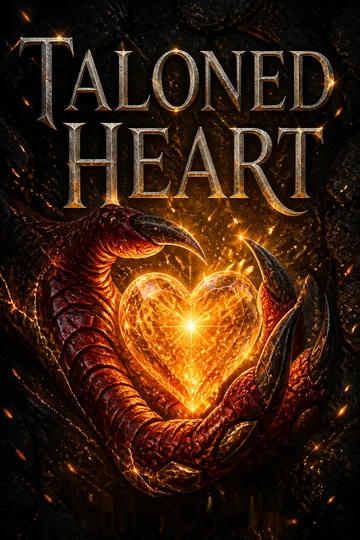
Taloned Heart receives mostly positive reviews as the final book in The Dragon of Umbra series. Readers praise the character development, emotional depth, and satisfying conclusion. Many appreciate the unique portrayal of Lore and Abraxas's relationship. Some readers felt the pacing was off, with a slow build-up and rushed ending. The book's themes of found family, love, and overcoming adversity resonated with fans. Overall, readers express bittersweet feelings about the series ending but are satisfied with the resolution.
People Also Read

Characters
Lore
Half-elf with goddess powerLore is a half-elf whose immense inherited magic makes others treat her as a goddess, though she remembers being a hungry child excluded by both human and elven communities. She is quick to intervene when someone is threatened and slow to accept that she cannot save everyone. Her love for Abraxas gives her a rare place to be vulnerable, while her loyalty to friends such as Beauty and Zephyr repeatedly pulls her toward danger. Lore’s central psychological struggle is not whether she has power, but whether she can use it without letting guilt and anger decide what justice means. She resists being defined by prophecy, bloodline, or the expectations of people who once rejected her.
Abraxas
Protective crimson dragonAbraxas is a powerful crimson dragon who can take human form and is Lore’s mate. Having endured captivity and the loss of his people, he is fiercely protective of the family he has made. His first response to danger is often physical force, but his devotion also appears in quieter acts: feeding Lore, noticing when she is exhausted, and grounding her when guilt takes over. Abraxas must reconcile his dragon instincts with the kind of future Lore hopes to build. His attention to his children and the histories of dragons shows that protection cannot mean simply keeping loved ones close; it also means preparing them to choose their own path.
Beauty
Human friend and survivorBeauty is Lore’s close human friend and a resilient survivor who has learned to navigate danger without surrendering her warmth. She hides with her father after Margaret’s takeover, but does not become passive or fearful; she carries supplies, guides the group, and fights when necessary. Beauty’s affection for Zephyr gives her a personal stake in the search for him, and her directness challenges Lore when secrecy and strategy become excuses for shutting others out. She is compassionate without being naïve, though her willingness to forgive can make her overlook warning signs. Her bond with Abraxas is familial, built on shared danger and mutual care.
Zephyr
Uncertain human royalZephyr is the surviving human royal, raised in isolation and burdened by comparisons to his powerful brother. He wants to be useful and tends to trust people who seem certain of what should happen, which makes him vulnerable to political influence. Yet Zephyr’s gentleness is not weakness: he remains concerned for others even when he is afraid, and his patience gives him a different kind of authority from the rulers who came before him. His relationship with Beauty is grounded in affection and trust. Lore sees in him a capacity to listen, learn, and take responsibility without assuming he is entitled to obedience.
Margaret
Elven ruler in rebellionMargaret is a determined elf who has spent much of her life fighting for elven freedom and political power. She is strategic, disciplined, and capable of making others feel that her plans are the only practical path forward. Her conviction grows from a history in which magical peoples were oppressed, but she increasingly treats the suffering of other groups as an acceptable cost of correcting that history. Margaret’s connection to Lore is especially charged because she once helped shape Lore’s choices and understands the expectations surrounding her. She represents a political imagination in which safety comes through dominance and the past grants an unquestionable claim to rule.
Allura
Siren and seafarerAllura is a siren and experienced sailor who accompanies Lore and Abraxas back to Umbra. She reads the sea and its people with practiced attention, noticing the silence of the docks before the others understand its significance. Allura’s bond with Lore is friendly but frank; she can puncture the couple’s intensity and keep the immediate realities of travel in view. Her concern for her sailors gives the kingdom’s upheaval a human scale beyond the central group.
Algor
Dwarven king and allyAlgor is the young king of the dwarves, exuberant, curious, and proud of his people’s craft. He welcomes Lore with a prank that reveals both his humor and his willingness to test newcomers. His kingdom has preserved equipment intended for her and Abraxas, but Algor is not merely a keeper of old traditions. He weighs the danger of joining the conflict and expects promises to carry weight. His easy manner conceals a serious sense of duty to the dwarves and their place in Umbra.
The Matriarch
Leader of the Ashen DeepThe Matriarch leads the Ashen Deep with formidable authority and a long memory. She distrusts Lore at first, especially where her son Draven is concerned, but she is willing to reassess when given evidence. Her people possess knowledge and healing abilities that make them important to the struggle, yet she protects their autonomy and does not offer support casually. She recognizes the burdens of inherited power and speaks to Lore as someone who understands the demands of leadership, even when they disagree about how that power should be used.
Draven
Deepmonger and dragon allyDraven is an elf of the Ashen Deep who has traveled with Lore and Abraxas and forms a close bond with their daughter, Nyx. He is observant, proud, and eager to prove his value through study and action. His relationship with Abraxas is strained by the dragon’s protectiveness, but Draven does not answer suspicion with retreat. He learns the histories and tactics of his people, seeking a place in a world where family loyalty and political duty continually collide.
Nyx
Abraxas and Lore's daughterNyx is Lore and Abraxas’s dragon daughter, bright, forceful, and fiercely protective of those she loves. Though she has access to many inherited memories, she remains young in her emotional needs and can become jealous when attention shifts to others. Her bond with Lore lets them communicate across great distances, giving her a way to remain part of her mother’s life. Nyx’s growing connection to Draven troubles her parents, but she is clear about her own feelings and resists being treated as though experience has erased her youth.
Hyperion
Emerald dragon sonHyperion is Lore and Abraxas’s son, an emerald dragon drawn to forests and the pain carried by the land. He is energetic, opinionated, and quick to quarrel with Nyx, but also deeply responsive to the natural world. When he encounters the memories of earlier dragons, he must absorb knowledge that arrives with real emotional weight. His bond with Abraxas is tender and sometimes uneasy, as father and son navigate the difference between preparing for danger and forcing a child to grow up too quickly.
Tanis
Dragon Memory KeeperTanis is an ancient dragon and keeper of dragon memories, responsible for guiding younger dragons through inherited knowledge. She is calm but not passive, willing to argue that the dragons must learn to defend themselves rather than remain sheltered. Her care extends across the dragonlings, whom she treats as a shared responsibility. Tanis’s perspective connects the dragons’ past losses to the choices facing their new generation.
Lindon
Disgraced magician and adviserLindon is a former magician whose knowledge remains valuable after he loses his magic. He acknowledges his role in the kingdom’s past harm and offers Lore information that could help her alter the Umbral soldiers. His regret does not make him harmless, and Abraxas has reason to distrust him. Lindon’s presence challenges Lore to consider how someone responsible for destruction might still contribute to repair, without pretending that an apology erases what came before.
Goliath
Lore's lost dwarf friendGoliath was Lore’s closest friend in Tenebrous, a dwarf remembered for humor, loyalty, and the courage to make room for hope in a hostile city. His memory shapes Lore’s grief and her affection for the dwarves she meets. He represents a chosen family formed through daily companionship rather than prophecy or bloodline.
Myrna
Satyr witness and hostMyrna is a satyr living near the port who tells Lore and Abraxas how humans were dragged from their homes. Her account gives them their first clear evidence of Margaret’s campaign. She speaks as an ordinary witness, not a leader, and her grief over missing neighbors brings the kingdom’s violence into the scale of a single household.
Mirin
Dwarf guide and envoyMirin is a young dwarf who finds Lore and brings her companions to Algor’s kingdom. He is eager to impress the visitors and proud of his people, though his nerves show in his attempts to manage their arrival. His enthusiasm opens the door to the dwarves’ protection and long-prepared gifts.
Beauty's father
Human elder and protectorBeauty’s father is a wary human who keeps his daughter safe in a hidden refuge beneath Borovoi’s house. He first meets Lore and Abraxas with a crossbow, a practical response to a world where familiar faces can no longer be trusted. He is protective, politically cautious, and committed to recovering the humans taken by Margaret. His fear does not prevent him from helping build a wider resistance.
Plot Devices
The Elven Prophecy
A contested claim to destinyElven visions foretell a half-elf who will change the kingdom, but the prophecy is never a neutral instruction. Margaret interprets it as a mandate for elven rule, while Lore resists being told what her life must mean. The prophecy heightens the conflict between inherited identity and chosen action. It also reveals how political actors turn uncertain futures into justification for present violence. Its importance lies less in predicting events than in the struggle over who gets to define them.
Ancestor Crystals
Memory carried across generationsCrystals hold the lived memories of earlier dragons and transfer them to those who touch them. Hyperion gains the knowledge of emerald dragons, while Abraxas encounters the history and final counsel of the crimson dragon Attor. The memories provide skills and context, but they also carry grief and the danger of repeating inherited conflicts. Their revelations connect the dragonlings’ future to a past in which dragons united for war and lost nearly everything.
Lore's Soul Walking
Scouting beyond physical barriersLore can separate her awareness from her body and travel unseen through the world. She uses this ability to locate Zephyr in the dungeon and assess the guards before the rescue. The power lets her cross distances without exposing the group, but it cannot safely extract someone or prevent every danger. Each use risks detection, and the experience resembles death closely enough to draw Lore toward memories and grief she would rather avoid.
The Grimdags
Weapons that hunger for soulsThe Ashen Deep’s grimdags are enchanted blades that whisper to their wielders and feed on souls. Their power makes them valuable in a fight and dangerous to handle, particularly for Lore, whose anger gives their temptation added force. When Margaret uses two grimdags against her, the weapons turn a political confrontation into a personal test of restraint. They embody the risk that a tool meant to defeat cruelty can draw its wielder toward cruelty of her own.
Umbral Soldiers
An army shaped by dangerous magicThe Umbral soldiers are magical constructs created through a spell associated with Lindon and the former kings. Their existence links the old regime’s power to the present conflict, and Lindon offers Lore knowledge that could alter how the spell works. During the final battle, Lore animates them to fight for her side. They turn an inherited weapon into a decisive force, while raising the question of whether using a tool built for domination can ever be separated from its history.
The Dragon of Umbra Series



About the Author
Other books by Emma Hamm

Download PDF
Download EPUB
.epub digital book format is ideal for reading ebooks on phones, tablets, and e-readers.








