

Plot Summary
Boston Under Blood
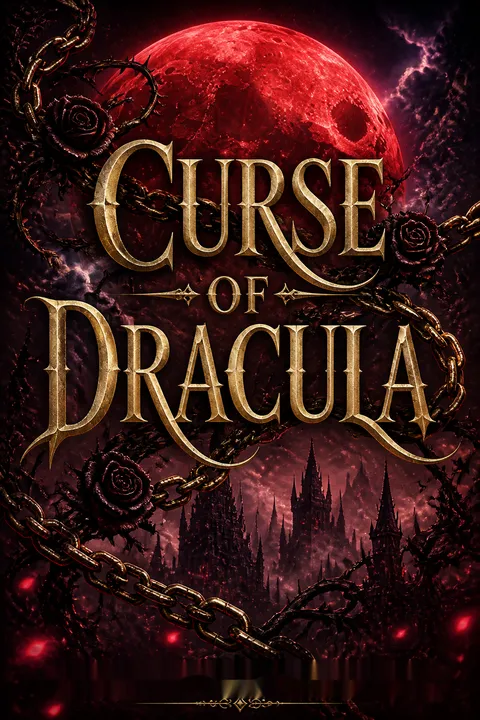
Vlad Tepes Dracula has offered to spare Boston if the hunters surrender Maxine Parker, an empath he loves. Alfonzo Van Helsing refuses, and Dracula answers by blotting out the sun and raising a crimson moon above the city. Monsters pour into the streets, and Maxine, chained among the hunters, feels the terror and pain of thousands as if each wound were her own.
She believes she caused the massacre by trusting Dracula and admits she may be able to destroy his soul. Alfonzo immediately turns that confession into a mission: he will drag her through the city and make her kill Dracula. Maxine is left caught between her love for the vampire and her horror at what he has done.
The inciting choice belongs first to Alfonzo, but Maxine bears its consequences most intimately. Her empathic gift makes catastrophe impossible to keep at a distance, while her guilt tempts her to accept responsibility for another person’s violence. Dracula’s bargain is morally compromised, yet it offered a way to save lives; Alfonzo’s refusal turns vengeance into a public disaster. The opening therefore frames the central conflict not as good against evil, but as a struggle over who gets to decide which lives are expendable.
The First Walk
The hunters release Maxine from her room only long enough to dress her, then lock iron cuffs around her wrists and lead her into the streets. Blood runs between the cobbles; bodies lie torn open beside overturned carriages and shattered buildings. When a gangly creature attacks, the hunters fight it while Maxine absorbs its hunger and the victims’ terror until she collapses.
Dracula watches from a rooftop but refuses to rescue her, though her distress reaches him. He tells Walter, his disciplined lieutenant, and Zadok, his illusionist, that the ordeal is meant to show Maxine the full nature of his cruelty. He orders Zadok to break the hunters’ unity, delaying their deaths because he wants them defeated in spirit as well as in battle.
Maxine’s sensitivity is both a form of knowledge and a vulnerability: she experiences the moral cost of Dracula’s violence without gaining the power to stop it. His restraint in not rescuing her is not indifference. It is a deliberate experiment in whether love can survive direct exposure to cruelty. That choice makes his affection unsettling, since he treats suffering as evidence to be gathered, even when the person he loves is the one enduring it.
A City That Moves
When Maxine wakes, the hunters press onward, though she can barely stand. Zadok appears as an illusion and explains that Dracula has altered the city itself: streets repeat, buildings distort, and the ground obeys its new master. The hunters refuse his offer to leave, then spend hours circling back to the same house.
During a dream, Dracula reveals that he had spent two years preparing to take Boston and would have withdrawn if the hunters had returned Maxine. Their refusal has brought them into his nightmare. He insists the destruction is not solely for her, but that she must witness what he is before she can judge him. He also makes clear that he will not let her die until he decides she has suffered enough.
The transformed city gives physical form to Dracula’s power over both space and choice. The hunters can keep moving, but their effort cannot become progress; their familiar confidence in action has been neutralized. Maxine’s dream brings the conflict into intimate focus: Dracula offers her agency while controlling the conditions under which she may exercise it. His test is therefore not a fair trial. It is a coercive demand that she decide whether love can include knowledge of his worst actions.
Bella Meets Mordecai
While the hunters rest, Bella hears a man being chased by monsters and rushes outside before the others can catch up. Her flying knives tear the creatures apart, saving him. The survivor is Mordecai, an incubus she once danced with at a gala. His eyes and voice draw her into his influence, and he carries her away before her friends wake.
In his private rooms, Bella struggles with shame and fear, but Mordecai argues that she has been taught to treat desire as a moral failing. He frees her from his enchantment and lets her choose whether to remain. Bella returns to him willingly, drawn by the intimacy and freedom he offers, though she still does not know what a future with a demon would mean.
Bella’s scene complicates the familiar rescue pattern: she saves a stranger, then becomes vulnerable to him. Mordecai’s influence blurs the boundary between coercion and consent, and the narrative gives Bella space to question both his power and the shame that shapes her response. Her choice matters, but it occurs inside an unequal encounter. The scene also begins a second love story that tests the hunters’ assumptions about monsters, desire, and who is permitted to define a woman’s life.
Zadok Wears Bella
Maxine wakes to find Bella beside her, but recognizes the wrongness beneath the familiar face. Zadok drops the disguise and explains that the real Bella is with Mordecai while the hunters sleep inside his illusion. He plans to impersonate her until the hunters fracture, and he wagers that they will not detect the substitution.
As they walk the same streets again, Zadok imitates Bella’s manner and lets Alfonzo’s certainty and Eddie’s hope do the rest. Maxine keeps quiet to protect the missing huntress. That night, Zadok asks to touch her hand so he can understand why Dracula risks so much for her. Maxine sees his memories of childhood abuse, rejection, and the loss of the vampire who first gave him a home, then comforts him.
Zadok’s deception succeeds because the hunters’ relationships are already uneven. Alfonzo sees Bella as a subordinate, while Eddie’s love makes him read what he wants to see. Maxine recognizes the impersonation but stays silent to protect Bella, accepting the moral strain of cooperating with the enemy. When she encounters Zadok’s memories, his theatrical cruelty becomes legible as a defense against abandonment. The exchange does not erase his manipulation; it makes their alliance more human and more difficult to simplify.
The Hunters Split
After two days of false companionship, Zadok drops his disguise and reveals that Bella has been held elsewhere. Dracula offers to release her and abandon Boston if the hunters leave, but Alfonzo refuses, still fixed on killing Dracula. Eddie urges him to accept, then chooses to search for Bella when Alfonzo will not turn back.
Zadok tells Alfonzo he can advance only by leaving Maxine behind; Alfonzo unlocks her cuffs and orders her to go, believing she must judge Dracula alone. A wall rises between them as soon as she leaves. Zadok points Eddie toward the church where Bella may be found and Alfonzo toward Dracula’s library fortress, setting the two men on separate, perilous paths.
The split exposes how different motives have been hiding beneath the hunters’ shared cause. Eddie prioritizes a person he loves; Alfonzo prioritizes the destruction of Dracula, even when abandoning Bella becomes the price. Maxine is physically released, but the freedom is conditional and shaped by other people’s decisions. The wall that separates her from the hunters turns an emotional fracture into architecture, while Zadok’s directions ensure that each man must face the danger his own attachment has chosen.
Monsters Tell Their Stories
Alone in the altered city, Maxine meets Elizabeth, a clever elder vampire who wants her to see Dracula’s followers as more than the bodies they have left behind. Elizabeth takes her to the Witchdoctor, two persecuted men joined in one body, who explain that they chose to remain with Dracula after death. Their histories reveal how cruelty shaped them without excusing the harm they now cause.
Maxine learns that many of Dracula’s followers seek a home as much as power. She leaves with her judgment unsettled, then waits beneath the blood-red moon. At midnight Dracula comes for her and brings her to his library fortress. Over dinner, she demands a chance for the living to escape; he agrees to let the sun rise for one day.
The encounters widen Maxine’s moral frame without offering an easy acquittal. The Witchdoctor’s history helps her see how persecution can deform a life, but his argument that human warfare is no less cruel threatens to turn explanation into excuse. Elizabeth is candid about her self-interest, making her more trustworthy in some ways than a supposedly noble witness. Maxine’s request for an evacuation is a practical answer to moral uncertainty: she cannot decide the whole question yet, but she can still reduce the harm.
One Day of Sun
At the library, Maxine and Dracula negotiate a single day in which the sun will return and Boston’s survivors may flee. Their intimacy deepens, and Maxine chooses to sleep with him, not because she has forgiven the massacre but because she desires him and trusts him enough to face the encounter without surrendering her judgment.
Their empathic connection intensifies until each feels the other’s pleasure and memories. Meanwhile, Eddie helps residents escape and continues toward Bella; Alfonzo pushes through the city toward Dracula’s fortress. The temporary daylight does not undo the deaths or restore the streets. It creates a narrow opening for people still alive, while leaving the lovers and hunters with the consequences of their choices.
The ceasefire is a rare moment when Maxine turns emotional insight into political leverage. Dracula grants her request, but the reprieve remains bounded by his power and his timetable. Their sexual union makes their connection more intimate without resolving the ethical conflict between them. The shared empathy intensifies that contradiction: Maxine can feel Dracula’s longing, yet she also remains responsible to the strangers suffering under his rule. The day’s rescue effort shows that compassion becomes meaningful through action, not merely through understanding.
Bella Grows Wings
Bella accepts Mordecai as her mate and embraces a life beyond the rules she had followed as a hunter. During the daylight reprieve, Dracula’s plan brings her face-to-face with Alfonzo at the church. Bella’s succubus influence draws out his buried desire for her, and he sleeps with the woman he had trained and protected.
Mordecai guides Bella as she feeds on Alfonzo’s life force, carefully keeping him alive for Dracula’s purpose. As the feeding completes her change, white wings tipped in blue emerge from her back. The encounter leaves Alfonzo exposed to capture and Bella transformed by a choice that is both intimate and entangled with Dracula’s revenge. Her new family is real, but its beginning carries a terrible cost.
Bella’s transformation challenges the hunters’ simple division between monstrous predators and virtuous humans. Her desire is her own, but her power over Alfonzo makes consent morally unstable, especially given their history of mentorship and dependence. The scene also exposes how Dracula turns private longing into a weapon: Alfonzo’s unacknowledged desire becomes the route to his defeat. Bella gains a new identity, yet the freedom she claims is entangled with another person’s exploitation and with the violence of the wider war.
Eddie Lets Bella Go
Eddie fights his way toward Bella and kills Elizabeth, an elder vampire who attacks him, losing a finger in the struggle. When he finally finds Bella with Mordecai, she confirms that she loves the incubus and intends to stay with him. Eddie is hurt, but he lowers his guns rather than punish her for refusing the future he had imagined.
He wishes her happiness and leaves the church to seek Dracula instead. His decision marks a change from possessive hope to a harder form of care: he can grieve Bella without claiming her. At the same time, Alfonzo is captured and delivered to Dracula’s dungeon, where ghouls are set to eat him while the Chainmaster keeps him alive.
Eddie’s heartbreak becomes a test of whether love can survive without ownership. He has mistaken long companionship for a promise of reciprocation, but Bella’s refusal forces him to recognize her as a person with desires independent of his. Lowering his guns does not make him unhurt; it means he refuses to turn that hurt into punishment. His choice contrasts with Alfonzo’s increasingly destructive fixation, while the dungeon gives the hunters’ failed campaign a brutal, bodily consequence.
The Dungeon’s Witness
Dracula brings Maxine to the dungeon, where Alfonzo lies maimed while a ghoul tears at his remaining leg. Maxine orders the creature away and kneels beside the hunter, who admits that he failed and is afraid to die. Dracula intends to keep torturing him until he accepts vampirism, then kill him in the sun.
Maxine leaves the cell but cannot escape what she has seen. When Dracula follows, she understands that his cruelty is not a mask she can peel away from the man she loves. She still wants him, and he still desires her, but the choice before her has sharpened: accept the monster as he is, or use her power to end his immortal suffering.
The dungeon strips away the protective distance of romance. Maxine’s compassion for Alfonzo does not depend on believing he was right, and her refusal to let the ghoul continue shows that moral agency remains possible even inside Dracula’s domain. Dracula, by contrast, treats cruelty as both appetite and judgment. The scene forces Maxine to distinguish loving someone from absolving them. Her choice is not between desire and disgust, but between an intimate bond and the lives that bond cannot repair.
The Curse Breaks
After one final night with Dracula, Maxine decides that love cannot justify letting his violence continue. As their bodies and minds join, she reaches into his soul and finds the curse at its core. She enters a vision of ancient Egypt, where priests drown a falcon in blood and force the captive Vlad to drink from it, beginning his transformation into the deathless predator.
Maxine cannot separate the curse cleanly from the soul it has consumed. She breaks the vessel, but part of the curse survives inside her. She wakes pale and cold, with crimson eyes, while Dracula lies unresponsive beside her. In the same aftermath, Walter and Eddie are still fighting outside the fortress, unaware that the power ruling the city has changed.
The origin vision turns Dracula’s monstrosity into an injury with a history, not an excuse with a conclusion. The curse and his soul have become so intertwined that Maxine cannot save one without inheriting part of the other. Her act is therefore neither clean execution nor simple rescue. She fulfills Dracula’s desire for release while losing the man she loves and becoming bound to the same deathless condition. The transformation makes the cost of moral judgment immediate and irreversible.
A Crown of Ashes
Maxine finds Eddie under Walter’s blade and stops the fight before Walter can kill him. She restores the sun and the city’s ordinary shape, though the dead remain dead and the damage cannot be undone. Taking command of Dracula’s fortress, she orders the Chainmaster to free captives who can leave and end the suffering of those who cannot.
Eddie helps her reach Alfonzo, who asks for death; Eddie grants it with Maxine beside him. The hunter then leaves Boston, while Walter and Zadok stay to help Maxine manage the vampires and demons. She has ended Dracula’s reign of destruction, but inherits his power, his followers, and the burden of preventing herself from becoming the same kind of ruler.
The resolution refuses a restorative fantasy. Maxine can stop the siege and release prisoners, but she cannot reverse death, repair every injury, or return to human life. Alfonzo’s mercy killing honors the distinction she has drawn between punishment and relief from suffering. Eddie’s departure leaves her without the old hunter group, while Walter and Zadok offer a new, uneasy community. The throne is not a reward; it is the consequence of surviving a moral choice that leaves her responsible for the world Dracula shaped.
Epilogue
For years, Maxine rules from a northern refuge, aided by Walter and Zadok, while Bella and Mordecai raise their winged daughter nearby. She feeds carefully, learns to defend herself, and writes to Eddie, who builds a mortal life before eventually dying. Each day she visits Dracula’s coffin and asks him to return.
He does not answer until, after many years, he opens his eyes. He remembers Maxine’s call and the moment she broke his curse, though he cannot fully explain how he survived. When she tells him she loves him, his heart begins to beat again. He draws her close, hungry and alive, and names her his immortal soul.
The epilogue makes hope feel less like rescue than a discipline Maxine chooses to practice. She cannot restore Dracula by force, and her repeated visits offer no guarantee that he will return. Instead, she builds a life around the absence: tending a refuge, caring for its inhabitants, and maintaining a connection with Eddie’s changing world. His death measures the distance between mortal time and her new existence. Dracula’s awakening does not erase that cost, but it changes the meaning of her waiting. The coffin that once signified his self-condemnation becomes a place where intimacy can begin again, though neither lover returns unchanged.
Analysis
Curse of Dracula makes the familiar romance between a dangerous immortal and a mortal woman carry an unusually explicit ethical burden. Maxine does not merely discover that Dracula is a monster; she witnesses the consequences of his power, feels the victims’ terror, and must decide whether intimacy can coexist with accountability. The book resists the easy answer that understanding a villain’s trauma redeems him. Dracula’s ancient wound explains his curse and loneliness, but it does not restore the dead or make his cruelty harmless. Maxine’s empathy sharpens this distinction: she can perceive motives without surrendering judgment.
The novel also contrasts different forms of attachment. Alfonzo’s pursuit of revenge makes his protective identity increasingly rigid, while Eddie must accept that loyalty does not entitle him to Bella’s love. Bella’s relationship with Mordecai challenges the shame that has governed her desires, but the supernatural influence complicates any simple celebration of liberation. These parallel relationships ask whether love respects another person’s agency or converts affection into a claim of ownership.
The ending refuses to reward compassion with a clean victory. Maxine stops the siege, but the dead remain dead, and she inherits the condition she tried to end. Her new authority is therefore a continuing moral problem, not a coronation of uncomplicated goodness. The epilogue extends that problem across years: she builds a refuge, cares for those around her, and waits for Dracula without knowing whether he will return. Hope persists, but it cannot undo what happened. The book’s hardest proposition is that love may preserve a person’s humanity only if it does not become an excuse to look away.
Review Summary
Curse of Dracula receives polarized reviews with an overall 4.01 rating. Many readers praise the dark, unapologetic portrayal of Vlad and Maxine's complex relationship, appreciating the beautiful writing and world-building. However, numerous reviewers express disappointment compared to the first book, criticizing inconsistent characterization, excessive focus on side characters (particularly Bella and Mordecai's rushed romance), and repetitive internal conflict from Maxine. The graphic violence and torture scenes disturbed many readers. While some found the ending satisfying, others deemed it anticlimactic or confusing. Common complaints include too many POVs, drawn-out pacing, and characters behaving out of character.
People Also Read







Characters
Maxine Parker
The empath at the centerMaxine is a perceptive, self-contained woman whose empathic gift makes other people’s emotions nearly impossible to ignore. Raised without a secure family and later accepted by a traveling Roma community, she has learned to manage overwhelming feeling by turning her attention away from herself. She works as a tarot reader and has spent years alongside vampire hunters, yet her deepest instinct is to understand rather than condemn. That compassion can become self-erasure: Maxine often accepts blame for choices made by others and struggles to name what she wants. Her relationship with Dracula forces her to confront the difference between understanding someone’s pain and approving the harm they cause.
Vlad Tepes Dracula
The deathless warlordDracula is an ancient, immensely powerful vampire whose command over darkness can reshape the world around him. He is capable of tenderness, curiosity, and fierce attachment, but none of these qualities cancel his appetite for violence or his belief that suffering can serve a purpose. Having lived for millennia under a curse he barely remembers, he treats mortality as something denied to him and loneliness as an old, permanent condition. Maxine attracts him because she can perceive the pain beneath his cruelty without mistaking it for innocence. His need to be known completely drives him toward tests that are as controlling as they are intimate.
Eddie Jenkin
The stubborn young hunterEddie is a capable marksman and loyal member of Alfonzo’s hunting party, but his warmth and humor set him apart from the older hunter’s severity. He wants to protect his friends and often measures himself by whether he can be useful in a crisis. His love for Bella complicates that loyalty, especially when he hopes their years of traveling together might become something more. Eddie is not as cynical as experience might make him; he keeps choosing people over abstract victories. That decency does not make him fearless or immune to heartbreak, but it gives him a moral center distinct from Alfonzo’s pursuit of revenge.
Bella
The gifted huntressBella is a skilled vampire hunter with a talent for directing knives through the air. She is lively, brave, and attentive to the emotional lives of those around her, especially Maxine and Eddie. Beneath her competence, Bella carries strict ideas about propriety and what a woman should want, which leave her uncertain when desire challenges the rules she has inherited. She is close to Alfonzo, who trained her, and shares years of travel and danger with Eddie. Her story asks whether a person can distinguish freely chosen desire from the expectations and influences that have shaped it.
Alfonzo Van Helsing
The vengeance-driven leaderAlfonzo leads the hunters with discipline, physical courage, and an uncompromising belief that Dracula must be destroyed. His history of fighting vampires has taught him to treat hesitation as a danger, but that certainty narrows his ability to consider alternatives. He helped raise and train Bella and commands Eddie’s loyalty, though his severity often strains both relationships. Alfonzo sees himself as a protector of humanity; his defining conflict is whether that mission can remain just when revenge becomes more important than the people he claims to protect.
Zadok
The charming illusionistZadok is Dracula’s witty, unpredictable illusionist, a vampire who treats deception as both craft and entertainment. He enjoys provocation, flirtation, and testing the people around him, but his irreverence covers a deep fear of abandonment. His childhood among the poor and abused left him desperate for belonging, and Dracula’s household gives him the closest thing he has known to family. Zadok can be cruel without being indifferent; he notices vulnerability and sometimes responds with unexpected tenderness. His shifting loyalties make him difficult to trust, but not impossible to understand.
Mordecai
The demon captainMordecai commands Dracula’s demonic forces and is an incubus who can shape desire and appearance. He is sensual, irreverent, and openly amused by human conventions, especially those that shame women for wanting pleasure. His confidence conceals a surprising capacity for vulnerability: he wants more than temporary conquest and fears being rejected when seen as he truly is. Bella draws from him a devotion he has not experienced before. Their connection places his supernatural power in tension with his insistence that love must involve choice.
Walter Northway
Dracula’s measured lieutenantWalter is Dracula’s ancient second-in-command, a tactician who tries to keep the vampire household functioning while its members pursue their appetites and schemes. He favors restraint, planning, and plain speech, often serving as the conscience others would rather ignore. His loyalty is rooted not in blind admiration but in a long history of obligation and attachment. Walter’s dry patience can harden into coldness, yet he is deeply aware of how immortality isolates those who endure it. He seeks order because he has spent too long managing other people’s chaos.
Elizabeth
The calculating elder vampireElizabeth is an elegant, sharp-minded elder vampire who survives through calculation and social skill. She regards Dracula’s followers as a kind of family, though her attachment is mixed with self-interest and a need for company. Her candor about her motives makes her less sentimental than she first appears. Elizabeth understands the loneliness of immortality and uses wit to make it bearable, while also favoring solutions that protect the vampire community rather than humanity. She approaches Maxine as both a potential ally and someone whose judgment could affect everyone around Dracula.
The Witchdoctor
Two lives joined togetherThe Witchdoctor is a shared body inhabited by two men, the Creole Witch and the English Doctor. Both were persecuted for what others feared or misunderstood, and both chose to remain connected to Dracula after death. The Witch is blunt, warm, and drawn to strong flavors; the Doctor is courteous, scientific, and careful with his tea. Together they offer Maxine a view of Dracula’s followers as people shaped by violence rather than monsters without histories. Their joined existence is strange, but their companionship is deliberate.
The Chainmaster
Keeper of Dracula’s dungeonThe Chainmaster is a demon who oversees Dracula’s prison and takes pride in the suffering inflicted there. Their eagerness to torment captives makes them a vivid expression of the violence within Dracula’s rule. Beneath that cruelty, the Chainmaster has a life and family they miss, suggesting that even a jailer can be trapped by the master they serve.
Plot Devices
Maxine’s empathic touch
Feeling beyond the surfaceMaxine absorbs the emotions of people nearby and can perceive what they feel even when they conceal it from themselves. Contact can also expose her to memories and the inner nature of another person, making touch both intimacy and danger. The gift helps her recognize Zadok’s distress and sense the competing emotions within Dracula, but it offers no automatic moral verdict. Maxine can understand why someone acts without agreeing with the act. Her capacity to reach into a soul becomes central to the final conflict, when she confronts the curse bound to Dracula’s existence.
The crimson moon
A city held in nightmareDracula removes the sun and replaces it with a blood-red moon, unleashing monsters and warping Boston’s streets and buildings. The altered city behaves like an extension of his power: roads loop, familiar landmarks shift, and the hunters cannot make progress without his permission. The permanent night also gives the crisis a visible clock, while the short return of daylight creates a practical chance for survivors to flee. Restoring the sun can end the supernatural siege, but it cannot resurrect those already killed or erase the human cost.
Zadok’s illusions
Trust turned into a weaponZadok can create convincing images and impersonate people, using perception itself as a battlefield. He disguises himself as Bella and stays among the hunters while the real Bella is elsewhere, exploiting their assumptions and emotional blind spots. His deception works not only because his magic is effective, but because the hunters are too preoccupied with their own goals to question the familiar face beside them. The illusion strategy helps divide the group and demonstrates how easily affection, loyalty, and certainty can be manipulated.
The soul-bound curse
Love tied to a lethal choiceDracula’s immortality is sustained by a curse fused to his soul, a force that also reaches into the city and shapes the creatures drawn to him. Maxine’s unusual power makes it possible for her to attack the soul itself, but the curse is not separate enough to remove cleanly. Dracula’s demand that she judge him turns this supernatural mechanism into the book’s central emotional dilemma: if she destroys the curse, she may destroy the person she loves and inherit part of what made him. This device joins the romance, the citywide violence, and Maxine’s transformation.
Demonic influence and mating
Desire reshapes identityIncubi and succubae can intensify existing desire, but their influence raises difficult questions about consent when attraction is amplified by supernatural power. A lasting bond between these demons and a chosen partner can also change that partner’s nature. Bella’s connection with Mordecai places these rules in the center of her personal story, while her influence over Alfonzo becomes part of Dracula’s strategy. The device contrasts Bella’s chosen intimacy with the danger of using desire as leverage, preventing the novel’s romantic relationships from being separated neatly from its questions of power.
Immortal Soul Series
About the Author
Other books by Kathryn Ann Kingsley





Download PDF
Download EPUB
.epub digital book format is ideal for reading ebooks on phones, tablets, and e-readers.








