

Plot Summary
Prologue
Mordred surveys a springtime Avalon restored by the destruction of the Iron Crystal. He still loves Gwendolyn, though her betrayal has wounded him, and he delays deciding what to do with her while he searches for Grinn, the demon he believes could burn the island to ruin.
Rather than chase Gwen at once, he plans to capture her if she resurfaces and keep her close. He also intends to let the newly freed elementals choose their next course before he considers rebuilding the prison. His hope for restraint is fragile: he expects war, but wants to stop Grinn before it begins.
The prologue gives Mordred's choices a double edge. His plan to imprison Gwen is not simple political calculation, because he admits that love makes killing or losing her unbearable. Yet he converts that vulnerability into control, imagining captivity as a way to keep her near without confronting what her freedom means. His decision to postpone a wider war suggests a possible change in his rule, but the word of restraint remains conditional. By placing Grinn ahead of Gwen as his immediate danger, Mordred briefly makes room for a public duty beyond private hurt, while his possessiveness reveals how difficult it is for him to distinguish protection from ownership.
Avalon Blooms Again
The shockwave from the shattered Iron Crystal has hurled Gwen into the woods, bruised but alive. When she gets to her feet, the island has transformed: spring flowers, bright birds, and strange creatures have replaced the exhausted autumn she knew.
She longs to share the marvels with Mordred, but remembers that she deceived him and turns away from his keep. A scarred, human-looking Merlin finds her and says he has lost his power; he wants to reach a mountain wizard who might restore it.
Gwen discovers they cannot separate without suffering, so she follows despite their mutual irritation. Eod, the loyal hound, catches up with them. At a nearby village, frightened residents first call for guards, then provide travel supplies after Gwen asks for help rather than taking them.
The restored landscape gives Gwen a glimpse of the world her choice has released, but beauty does not settle the moral question that follows her. She wants to celebrate Avalon with Mordred, yet shame makes her walk in the opposite direction. Her decision to accompany Merlin is less a confident quest than an improvised answer to dependence: neither can simply leave the other behind. The village encounter shows her testing a different kind of power. Merlin assumes fear should be answered with force; Gwen requests help and earns provisions without burning a home. This early contrast establishes her central wager: if violence has become normal, perhaps refusing its habits can still change what happens next.
A Knight Seeks Vengeance
Freed from the Iron Crystal, Lancelot discovers the shard once embedded in his chest is gone and his elemental powers have returned. He assumes Gwen died to release the prisoners, then learns from a tavern keeper that Mordred remains alive and has recalled his knights.
Lancelot sets out to build a force against him. On the road, the thorn-wielding Lady Thorn attacks, but accepts that Lancelot is no longer Mordred's magically bound servant and shares his desire to strike the prince. She grants him seven days to gather allies.
Meanwhile, Mordred visits Zoe, the Gossamer Lady, hoping her bond with Avalon can help locate Grinn. Zoe refuses to aid the prince, accusing him of using freedom as another instrument of control. Lancelot seeks her help instead, knowing her standing among the elementals may draw others to his cause.
Lancelot's freedom does not restore a neutral self; it releases a purpose organized around revenge. His certainty that Gwen is dead makes his mission feel like repayment, but he also turns a personal grievance into a political campaign against Mordred. Thorn's agreement shows how quickly common hatred can create an alliance among beings who otherwise distrust one another. Zoe occupies a more difficult position. She refuses Mordred without accepting Lancelot's cause outright, keeping her loyalty to Galahad distinct from her judgment of the prince. The parallel approaches expose the novel's central political problem: once distrust is entrenched, even a sincere appeal to protect Avalon sounds like a bid for power.
The Cat Was Grinn
On the road, Gwen presses Merlin about who he is and why he refuses to explain their journey. The answer comes violently when a farmer shoots an arrow through her body near his home. Eod attacks the man, while Merlin changes into a huge, scarred demon and charges the farmhouse. After Gwen wakes inside the house, the truth emerges: her companion is Grinn, the Ash King, and she carries his power through a magical bond.
Grinn says he intends to recover his strength and return to a world he can call home, even if Avalon must burn. He has killed the farmer and his wife, claiming he needed to prevent them warning others. Gwen is horrified by the deaths and by her own part in freeing a creature who treats other lives as expendable.
The revelation changes the meaning of Gwen's apparent partnership: the companion she thought was an irascible guide is the danger Mordred feared, and her own survival now depends on a creature she cannot trust. The arrow makes the conflict bodily before it becomes ideological. Eod's attack is protective, while Grinn's response expands the threat from self-defense to deliberate murder. His explanation that Avalon is not his home gives his cruelty a history but not an excuse. Gwen's refusal to collapse those two judgments is important. She can recognize his loss and still reject his plan to make an entire world pay for it, a moral distinction neither Grinn nor the island's old politics finds easy to sustain.
Caliburn Is the Key
Wounded and still tethered to Grinn, Gwen reaches the mountain house of a disorderly sorcerer she nicknames Doc. He understands that she wants to be separated from the demon, but cannot undo their intertwined life forces with his own magic. He identifies one possible tool: Caliburn, the sacred sword Mordred carries and would have to surrender willingly.
The meeting also reunites Gwen with Lancelot and introduces her to Zoe, who heals the arrow wound. Lancelot wants Mordred dead; Grinn wants his power back; Gwen wants to avoid both a renewed Crystal and a war. Doc offers no easy escape, only a difficult route back toward the keep. Gwen leaves with more information, but the only remedy points directly toward the man she betrayed.
The wizard converts a vague hope of separation into a concrete, costly condition. Caliburn is not merely a powerful object; because Mordred must willingly give it up, the solution requires trust from the person Gwen has already deceived. That makes the magical problem an ethical one. The gathering at Doc's house sharpens the conflict by putting Gwen among people with incompatible aims: Lancelot seeks justice through Mordred's death, Grinn seeks escape through restored power, and Zoe resists choosing sides. Gwen's wish to avoid catastrophe sounds modest beside their ambitions, yet it demands that she persuade people accustomed to force to accept limits. The answer is known, but reaching it depends on relationships no spell can repair.
A Family Lost to Avalon
As the group travels away from Doc's house, the sorcerer explains what Grinn has refused to tell Gwen. A past collision between Avalon and Hell brought Grinn, his wife, children, and other demons to the island.
The elementals killed the newcomers, sparing Grinn after Mordred argued against executing him. Gwen now understands why the demon's hatred is rooted in the loss of his family, though she still cannot accept his plan to destroy Avalon. The travelers head toward the keep because Caliburn is their only known chance to break the bond.
In Aercester, Zoe gives Gwen dragonlike wings before she and Lancelot split off to gather allies. Gwen continues with Grinn, Doc, and Eod, increasingly aware that she is being carried toward a battle she wants to prevent.
This history complicates the novel's moral landscape without absolving Grinn. The demon's wish to return home began in a catastrophe that cost him his family, and Mordred's earlier mercy shows the prince once tried a form of compassion. Yet those facts do not erase the present danger: Grinn converts grief into a license to destroy other families. Gwen is the character most able to hold cause and responsibility together. Her response is not to deny his suffering, but to refuse its expansion into collective punishment. Zoe's gift of wings adds a counter-image to the inherited story of violence: Gwen receives a new capacity from someone who chooses generosity. Her next steps will put that capacity, physical and moral, to a harder test.
Gwen Becomes Bait
In Aercester, soldiers ambush the travelers with muskets. Grinn is shot, and the pain travels through his bond with Gwen; Doc fights back with lightning while she runs into an alley. Cornered, Gwen begs the soldier blocking her escape to stop, then releases fire when he raises his weapon. The blast kills him. She collapses, sickened by what she has done.
Doc helps her flee with the wounded Grinn in a stolen cart, while Mordred reaches town and learns which road they took. Gwen knows he will pursue them, so she leaves the cart and waits on the road with Eod, hoping to draw Mordred away from Grinn and Doc. Mordred defeats her easily, knocks her unconscious, and takes her back to the keep as his prisoner.
Gwen's first killing is not a clean transformation into a warrior. She acts to stay alive, then recoils from the consequence, preserving the difference between necessary defense and comfort with violence. The attack also makes the bond with Grinn tactically visible: his injury threatens her, though she does not yet tell Mordred why. Choosing to separate from the cart is an act of agency inside a situation designed to deny her choices. She uses herself as a diversion, not because she believes she can defeat Mordred but because she wants the others to escape. His victory returns her to captivity, turning protection into the central ambiguity of their relationship: she is safer beside him, but not free to choose that safety.
A Prisoner Before the Prince
Mordred brings Gwen before his court and accuses her of betraying the hospitality he offered and continuing to help Grinn. She admits she is still aiding the demon but refuses to explain why, believing Mordred would kill her if he learned of their bond. He sentences her to imprisonment rather than death, citing Avalon’s rules, and sends her back to a cold cell.
Maewenn brings food and reassures her that Eod is safe. Later, Mordred takes Gwen to the map room and presses her for Grinn's location and the purpose of her journey. When she still withholds the bond, their tense questioning turns into an intimate encounter. He moves her from the cell to her old bedroom, but keeps her chained and under guard.
The court scene gives Gwen a narrow protection through law, not affection. Mordred's restraint matters, but he frames her as a suspect whose safety depends on what she reveals, while Gwen's silence is shaped by a rational fear of being used against Grinn. Their encounter in the map room intensifies rather than resolves that imbalance: desire exists alongside custody, suspicion, and unequal power. The story does not present intimacy as proof that the conflict has disappeared; Mordred returns her to guarded confinement. Maewenn's practical care and the silent guard's presence offer a quieter counterpoint, suggesting that care in this keep can appear through small acts even when its ruler cannot yet separate love from control.
Old Lovers Reunite
While Gwen remains confined, Galahad catches up with Lancelot and Zoe. The two knights prepare to fight, but Zoe stops them and reunites with Galahad, her lover of centuries. She will not return to the keep or abandon the campaign against Mordred, and Galahad cannot stand against his prince while bound to him.
When Galahad defeats Lancelot, Enin the Green intervenes, drives the pursuing knights away, and joins Lancelot's effort to remove Mordred. The decision turns a private rescue into a larger coalition.
In the keep, Maewenn continues to visit Gwen, while the silent, unfinished guard proves gentler than his neglected appearance suggests. The opposing sides now have emotional ties as well as political grievances, making the coming conflict harder to reduce to a simple contest between villains and victims.
Galahad and Zoe's reunion makes clear that love cannot automatically dissolve political obligation. They have endured separation, but Zoe still refuses to abandon the cause she believes necessary, while Galahad remains bound to Mordred. Their tenderness therefore exposes the cost of divided loyalty rather than offering a convenient resolution. Enin's intervention changes the military balance, yet his motive is not conquest; he can no longer watch suffering without acting. The parallel moments in the keep matter too. Maewenn and the guard care for Gwen without controlling her, a form of loyalty different from the obedience Mordred expects from his knights. The story assembles its alliances through personal obligations, but those bonds do not guarantee agreement about what justice requires.
A Date Before War
Mordred gradually lets Gwen out of her cell, though she remains a prisoner and wears a chain when escorted. He removes the connecting chain in her room and invites her to a private meal, where she names the silent guard Tim and begins to feel less isolated.
They share dinner, chess, and a rare night together in the tower, looking out over a living Avalon. Mordred admits he does not want to rebuild the Crystal unless the elementals make it necessary, but he cannot promise peace. Gwen still withholds her bond with Grinn.
Beyond the keep, Lancelot gathers more elementals, including Thorn's force, while Mordred prepares his soldiers, dragons, trebuchets, and defenses. Their tenderness grows as the armies draw closer, but neither can make the other safe.
The brief domestic interlude gives the romance substance through ordinary acts: food, a game, a name chosen for an overlooked guard, and a shared view of the island. These gestures soften Mordred without erasing the chains or his authority. Gwen's affection is real, but so is her continued concealment, which means intimacy cannot yet become trust. The military preparations press against the scene as its unspoken counterweight. Mordred's refusal to rebuild the Crystal is a meaningful restraint, but it depends on the elementals' conduct and leaves coercion available as a future solution. The novel lets love matter without pretending it can settle political history. Their night together is precious precisely because the morning may bring consequences neither can control.
The Buried Army Rises
Lancelot brings more than fifty elementals to Mordred's keep, expecting numbers to carry the assault. Mordred instead raises the iron soldiers buried around the fortress, trapping the attackers between his army and the walls. The battle begins, and Mordred kills Enin after the elder refuses to retreat.
Then Grinn appears behind the fighting, seizes Gwen, and threatens her life unless Mordred surrenders Caliburn. Mordred gives up the sword. Grinn crushes it, drains its magic, and breaks the thread binding his life force to Gwen's.
The separation nearly kills her, but Grinn regains his fire power and escapes rather than stay to fight. Gwen's hair returns to brown; she is human again, unconscious on the battlefield, while the battle between Mordred's forces and Lancelot's coalition continues.
The battle exposes the limits of numbers against preparation: Mordred's buried army turns Lancelot's confident advance into a trap. But the decisive breach comes from a private bond weaponized in public. Grinn makes Mordred choose between a sacred relic and Gwen's life, then treats the promised exchange as a route to power rather than a truce. The destruction of Caliburn fulfills the wizard's earlier condition, but not as Gwen hoped: it separates her from Grinn by restoring the very danger she feared. Her transformation back into a human body makes the cost immediate and lasting. The sequence links political violence to intimate dependence, showing how each person's attempt to use another as leverage creates consequences no one can fully direct.
Lancelot Falls
With Gwen alive but unconscious, Mordred returns to the battle and confronts Lancelot. The two men accuse each other of betraying Avalon and of endangering Gwen; neither can retreat from the history between them. Mordred overpowers Lancelot, pins him to the ground, and kills him with his broken sword. The sight sends Gwen into a faint when she wakes enough to understand what has happened.
Without their commander and with Grinn gone, the surviving elementals withdraw, while Mordred's knights pursue those who flee. The victory leaves Mordred in control of the keep, but it has cost him Enin, Lancelot, Caliburn, and the chance to prevent Grinn's return to full power. The army is scattered, not the danger that brought it there.
Lancelot's death is the emotional and political price of a victory that solves only the immediate siege. His motives may include revenge, but his opposition also reflects the genuine harm Mordred caused by imprisoning the elementals. Mordred's act is therefore both personal and political: he silences a former companion while defending the order he built. Gwen's collapse registers the human cost of treating people as pieces in a strategic contest. Even the battlefield's outcome offers no moral clarity. Mordred has defended his home, but Grinn has escaped and the island's former prisoners remain scattered and angry. The climax refuses the comfort of a decisive win; survival is secured, while the larger conflict becomes more dangerous.
The Crystal Returns
Gwen wakes in bed, human, weak, and grieving for Lancelot. Doc tells her that Mordred plans to hunt Grinn and will not stop until the demon is dead. The prince meets with his remaining knights, orders Lancelot buried beside Arthur, and directs them to pursue Grinn while observing Avalon’s laws for the other elementals.
Then he returns to the shattered remains of the Iron Crystal and uses his strength to draw its pieces together again. He intends to rebuild it as a more stable prison, though he does not know whether he will use it.
Gwen remains at the keep, still recovering and unsure whether Mordred can forgive the secret she kept. The novel closes with the hunt not yet begun and the Crystal restored, leaving the danger of renewed imprisonment unresolved.
The ending restores the instrument that defined Mordred's rule, but not the certainty that he will use it. His stated distinction between Grinn and the other elementals preserves a legal boundary, while rebuilding the Crystal shows how quickly fear can return him to the tool he once treated as necessary. Burying Lancelot beside Arthur acknowledges the knight's dignity even after killing him, a gesture that cannot undo the execution. Gwen's vulnerability shifts the romance's terms: the power that once made her an elemental and kept her tied to Grinn is gone, and she must now reckon with dependence on a man whose next decision may repeat the past. The final image is not reconciliation but preparation, a fragile pause before another cycle of containment or war.
Analysis
The novel makes freedom an unstable condition rather than a clean moral victory. Breaking the Iron Crystal restores Avalon and releases its prisoners, but the same act revives old rivalries and removes the structure Mordred used to prevent another catastrophe. His defense of the island has genuine purpose, yet his reliance on imprisonment turns protection into domination. The central tension is not simply whether Mordred is good or evil, but whether a ruler can claim to prevent violence while reserving the right to decide who must lose freedom.
Gwen complicates this political question because she is neither a strategist nor an innocent observer. She makes choices from compassion, but those choices have material consequences: she releases the Crystal, trusts Grinn without knowing his identity, and later kills to survive. Her guilt risks turning responsibility into self-punishment; the story instead makes her confront how little control any single person has over a violent system. Her instinct to spare others remains ethically meaningful even when it fails to stop harm.
The romance places intimacy inside the same struggle over agency. Mordred's tenderness is real, but so is his impulse to keep Gwen as a prisoner. Gwen desires him while fearing what he might do, and her withheld secret protects her life while obstructing trust. Their affection cannot substitute for a political settlement. Lancelot's campaign similarly mixes legitimate grievance with vengeance, while Grinn's grief explains his hatred without making mass destruction defensible.
By restoring the Crystal at the end, Mordred returns to the solution that once made him powerful and feared. He has not yet used it, so the ending remains a choice rather than a completed repetition. The book's warning is precise: when safety depends on coercion, each act of containment stores up the next revolt. Love may make a different future imaginable, but it cannot produce that future without accountability, consent, and a way to live with power that does not require another prison.
Review Summary
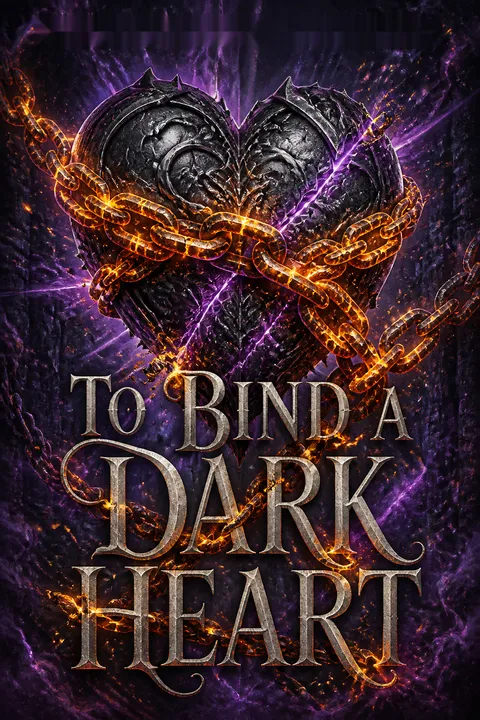
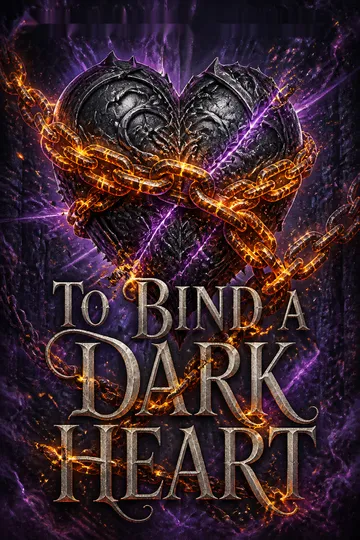
To Bind a Dark Heart is the second book in the Iron Crystal series, continuing Gwen and Mordred's story after her betrayal. Reviews praise the multi-POV narrative, world-building, and expanded character roster including Grinn's backstory. Many enjoyed the romance and morally gray characters, though several criticized Gwen's passivity and poor decisions. Readers appreciated being apart then reunited, though communication issues frustrated some. The slow pacing and cliffhanger ending left readers eager for book three, despite mixed feelings about character development and plot coherence.
People Also Read

Characters
Gwendolyn Wright
The compassionate outsiderGwen arrives in Avalon from Earth with an appetite for adventure and a strong instinct to protect animals and people in danger. Her humor helps her endure fear, but it does not make her indifferent to the consequences of her choices. She is drawn to Mordred even as she questions his rule, and her loyalty to Lancelot and her concern for Avalon pull her in opposing directions. Gwen tends to seek conversation and compromise where others expect force. Her courage is real but unseasoned, and she must learn that good intentions do not shield her from responsibility or harm.
Mordred
The ironbound princeMordred rules Avalon through iron, disciplined force, and the power to confine elementals in the Iron Crystal. He understands himself as a protector, shaped by long experience of war and betrayal, but his methods make it difficult for others to distinguish protection from domination. Gwen unsettles his practiced emotional distance: he is tender with her in private, yet remains capable of making ruthless choices for the island. His deepest conflict is not whether he cares, but whether care can alter the duties and habits that have defined his rule for centuries.
Grinn
The bitter ancient outsiderGrinn is an old, dangerous presence who distrusts nearly everyone and treats kindness as a likely disguise for self-interest. His contempt for Avalon gives him the manner of a creature who has stopped expecting to belong anywhere. He is practical, volatile, and often cruel, yet his anger has a history that he rarely chooses to share. His uneasy connection with Gwen forces him into continued proximity with someone whose empathy he dismisses but cannot simply ignore. Grinn's drive for freedom repeatedly collides with the lives and safety of those around him.
Lancelot
The silver knightLancelot is a skilled elemental knight whose long service under Mordred has left him with deep grievances and a fierce desire for justice. Freedom gives him the chance to act on those feelings, but his determination to remove the prince risks turning political repair into personal revenge. He can recruit and persuade when he needs allies, though he remains impatient with the elementals' disputes. His bond with Gwen is built on gratitude and respect, while his friendship with Galahad and his knowledge of Mordred complicate his path toward confrontation.
Doc
The unpredictable sorcererDoc is a nameless wizard with an untidy home, an eccentric manner, and an uncanny grasp of events and possible outcomes. He is helpful without becoming a conventional mentor: his humor can be maddening, and he offers information more readily than reassurance. He knows magic has limits and does not pretend he can solve every problem. His presence gives Gwen crucial context about Avalon and its inhabitants, while his neutrality lets him observe opposing forces without fully belonging to either.
Zoe
The Gossamer LadyZoe is an ancient and widely respected elemental whose beauty and gentleness coexist with strong moral judgment. She refuses to let affection for Galahad or fear of Mordred dictate every choice she makes. Her gifts often take the form of care, including healing and helping others recognize their own capacities. Zoe is reluctant to enter a conflict that pits people she loves against one another, but she does not confuse reluctance with indifference. Her relationship with Galahad gives the story a parallel portrait of love strained by duty.
Galahad
The knight in goldGalahad is Mordred's senior and most steadfast knight, a warrior whose honor and loyalty survive long periods of separation and sorrow. His love for Zoe makes his service to Mordred personally costly, but he does not abandon his obligations lightly. He speaks with restraint and acts with confidence, trusting that duty must be faced rather than evaded. Galahad's connection to both the prince and the opposing elementals gives him a precise view of what the conflict demands from people who cannot simply choose one loyalty without hurting another.
Eod
Gwen's devoted houndEod is Gwen's loyal dog and most consistent source of comfort in an unfamiliar, often hostile world. He tracks her, stays beside her when she is injured or frightened, and reacts to danger before she can. His affection is uncomplicated, but his training makes him capable of fierce protection. Eod's presence reminds Gwen of the kind of trust she recognizes instinctively: expressed through repeated acts of care rather than promises.
Maewenn
The keep's steadfast cookMaewenn is the keep's practical cook, attentive to Mordred's health and willing to speak plainly when he neglects himself. She also treats Gwen with warmth, bringing food and comfort when Gwen is isolated. Her loyalty is not blind obedience; she can question the prince while still caring for him. Maewenn anchors the keep in ordinary acts of service, showing how people sustain one another amid a political crisis.
Lady Thorn
The thorn-wielding avengerThorn is a small, ferocious elemental who uses living vines as weapons and has little patience for slow negotiations. Her distrust of Lancelot does not prevent her from recognizing a shared enemy, and she insists on action rather than prolonged discussion. Thorn's bluntness gives the anti-Mordred coalition a forceful presence, though her appetite for immediate violence also reflects the danger of letting grievance set the pace.
Enin
The ancient green elementalEnin is an ancient elemental associated with the forest, slow to enter conflict and formidable once he does. He prefers not to participate in warfare, but he cannot remain a spectator when others suffer. His intervention on behalf of Lancelot and Zoe reflects a moral threshold rather than a taste for power. Enin's age gives him distance from ordinary political maneuvering, but not immunity to the consequences of silence.
Percival
The wary copper knightPercival is a blunt, stocky knight whose concern for the stability of Mordred's rule often shades into self-preservation. He favors decisive action against threats and views Gwen as a dangerous distraction. His history of conflict with Mordred gives his loyalty an uneasy quality, even when he follows the prince's orders.
Tristan
The hopeful tin knightTristan is one of Mordred's knights, younger in manner than his centuries of service suggest. His questions reveal both concern for the others and a hopeful streak that has not been worn away by long conflict.
Gawain
The cautious cobalt knightGawain is one of Mordred's knights, recognizable by his guarded manner and often stern expression. He watches situations carefully and remains attentive to the risks that impulsive decisions create.
Bors
The practical nickel knightBors serves among Mordred's knights and tends to ask the practical questions others leave unfinished. His concern with rules and consequences makes him a measured presence in the prince's war council.
Tim
The unfinished iron guardTim is a silent, visibly imperfect iron guard stationed near Gwen. Though others dismiss him as an early, flawed creation, he responds to her kindness and proves capable of independent judgment. His quiet presence makes him one of the keep's gentlest figures.
Isha
The volatile lava elementalIsha is a powerful lava elemental who is quick to challenge Lancelot's motives and unwilling to overlook the harm done by Mordred. Her bond with the massive stone elemental Olgon is unusually close, and she speaks with confidence on behalf of their group.
Mirnin
The restless air elementalMirnin is an air elemental whose crackling, shifting form matches an impatient temperament. He wants clear answers and has little appetite for drawn-out debate, making him a forceful presence among prospective allies.
Niva
The wind-shaped elementalNiva is an air elemental whose body is made of moving currents, leaves, and grass. She listens carefully before committing herself, balancing the group's more impulsive voices with a quieter judgment.
Olgon
The living stone elementalOlgon is an enormous elemental made of boulders, so ancient and physically still that the landscape can gather around him. Though he rarely speaks in a human way, Isha understands him and treats his judgment as important.
Arthur
The absent legendary kingArthur is the legendary king whose gift of Caliburn gives the sword its sacred and personal meaning for Mordred. Though absent from the present action, his legacy shapes the prince's sense of honor and inheritance.
Morgana
Mordred's powerful motherMorgana is Mordred's mother, remembered for the magic and knowledge she passed to him. Her influence survives in his abilities and in the legacy of power that shapes his rule.
Plot Devices
The Iron Crystal
A prison for elemental magicMordred's Crystal confines elementals and suppresses the island's magic, leaving Avalon drained and trapped in an exhausted season. Its destruction restores spring and releases the prisoners, but also removes the mechanism that had contained their power and rivalries. The Crystal therefore functions as both a visible instrument of oppression and a false guarantee of peace. Its later reconstruction signals that Mordred still sees imprisonment as a possible answer when conflict overwhelms other choices.
The Life-Force Bond
Shared pain and survivalA demonic spell joins Gwen's life force to Grinn's, allowing her to carry his elemental power while making injury to one affect the other. The connection explains why Gwen cannot simply leave him and why Mordred cannot attack Grinn without endangering her. It also turns private dependence into a battlefield vulnerability. Doc says Caliburn could supply enough power to separate them, but when Grinn breaks the bond, the result nearly kills Gwen and removes her elemental abilities.
Caliburn
The key to separationCaliburn is Mordred's sacred sword, inherited from Arthur, and the only artifact Doc believes powerful enough to undo Gwen and Grinn's intertwined life forces. It cannot simply be stolen; Mordred must willingly surrender it. This condition makes the proposed solution a test of trust as much as a magical task. During the siege, Grinn coerces Mordred into handing it over, then destroys the sword to regain his power and sever the bond.
The Dream Necklace
A private line across distanceMordred binds a fragment of the broken Crystal to strands of Gwen's hair, creating a magical link that lets him enter her dreams and sense when she is in danger. At first, the connection gives him imagined conversations with her, allowing both of them to express feelings that remain difficult in waking life. When Gwen is threatened, Mordred pushes the spell harder and uses it to discover where she is. The device blurs comfort with intrusion: he can reach her, but she does not initially know the dreams are real contact.
Mordred's Iron Army
A buried reserve of forceMordred's living iron soldiers are sustained by stolen elemental magic and obey his commands. He maintains a larger force dormant beneath the ground near the keep, ready to rise if an army attacks. Lancelot underestimates this reserve and leads his coalition into a trap when the soldiers emerge behind it. The army embodies Mordred's capacity to protect his stronghold, but also the coercive system that fuels opposition to him.
The Iron Crystal Series Series
About the Author
Other books by Kathryn Ann Kingsley



Download PDF
Download EPUB
.epub digital book format is ideal for reading ebooks on phones, tablets, and e-readers.








