

Plot Summary
Chains Across the Realms
Several hours after her arrest in the Light Realm desert, Zali Omala1 wakes in a carriage with her wrists locked in unfamiliar black metal. Esen,3 the blue-haired guard3 who once tried to kill her, says they are bound for Taln, the Sun Realm capital, where King Azarn5 will receive her.
Zali1 had been riding to surprise Arrow,2 the Storm King she loves,2 and remembers Esen3 and Raiden11 declaring her arrest under his authority. She still cannot decide whether he betrayed her or Esen3 has twisted events. Her reaver cloak cannot hide her, and magic from the fire mage has blocked her powers. With her horse Luna following behind, Zali1 is once again a prisoner, but she refuses to let her captors see her fear.
Zali's predicament repeats the book's opening image of captivity, but her position has changed: she now knows her name, her lineage, and the political value others see in her. Her uncertainty about Arrow is not merely romantic doubt. It grows from a history in which rulers and family members have used affection as cover for control. Her refusal to display fear is a survival tactic, yet it also preserves her ability to assess the shifting loyalties around her.
The Dragon's Path
In Taln's throne room, Azarn5 accuses Zali1 of killing her twin brother, Quin,14 and offers a brutal alternative to execution: survive three public trials and marry his son,7 Prince Bakhur.7 Azarn5 wants access to the gold trade connected to Zali's1 reaver ancestry, not a human daughter-in-law.
Her first trial sends her through a tunnel of living flames, where she cuts down fire creatures before facing Dorn, the son of the blacksmith Arrow2 killed. Zali1 defeats Dorn with speed and persistence, then arrives bloodied before the court.
Arrow2 appears as she is ordered to dance, calling her an object and seeming to confirm her worst suspicions. A supposed Raiden11 stands with him, but Zali1 spots the real guard11 elsewhere and realizes a fire fae has been impersonating him.
Azarn makes spectacle a tool of government: Zali's body becomes both entertainment and bargaining chip in a contest over gold. Her victory refuses his intended ending, but does not free her. The impostor's presence also makes perception part of the danger. Zali's hard-won suspicion is useful, yet it risks making every apparent kindness look like another disguise. Her defiance is therefore both a weapon and a response to a world designed to make her doubt what she sees.
Runes Beneath the Dress
After the first trial, Bakhur7 slips into Zali's1 chamber and tries to immobilize her with dark magic. Arrow's2 Aldara mark burns when Bakhur7 touches it, but the prince7 finds a way to pin her and carve painful runes into her back. Ruhh,10 Azarn's dead sister,10 interrupts and forces Bakhur7 to leave.
The ghost10 warns Zali1 that he was testing how far he could hurt her while the mark remained, then offers help against Arrow.2 She also claims Arrow2 caused her death after rejecting a marriage proposal. The next morning, Esen3 allows Zali1 to visit Luna, and their guarded conversation softens into the beginnings of trust. Esen3 then takes Zali1 to the second trial, where Azarn5 demands a blood orchid from the Fen Forest.
The Aldara mark is protection with an owner attached: it can restrain Bakhur, but it does not prevent all harm or give Zali control over her circumstances. Bakhur's experiment exposes the limits of magical safeguards, while Ruhh's intervention offers an alliance built on shared grievance rather than trust. Esen's small act of allowing Zali to see Luna changes their relationship more quietly. Each woman tests whether the other can be more than a role assigned by a powerful male.
The Orchid's Price
In the Fen Forest, Zali1 follows the sound of water and nearly steps into a hidden fire bog. Vyprin,18 the serpent fae guarding the blood orchid,18 offers her two riddles instead of a weapon. Zali1 answers correctly, earns a flower, and keeps extra petals whose power she does not yet understand.
Back at the arena, Azarn5 sets Queen Estella6 against her. Estella6 wounds Zali,1 then traps the court in a time-stopping shield and reveals that Melaya's8 magic-blocking strength depends on his twin brother, Nukala.
She stages her own defeat so Zali1 can claim the second victory. Azarn5 then announces a final trial with rules favoring the opponent, and Zali1 chooses him as a target to provoke the king.5 Arrow2 warns her to seek Zaret,12 but she still sees him as an enemy.
Zali survives this trial through two kinds of intelligence: practical listening in a hazardous forest and attention to the loopholes in Vyprin's bargain. Estella's staged defeat gives Zali information without openly declaring an alliance, a choice shaped by her constrained position at court. The twin mages introduce a structural weakness into what had seemed an absolute magical system. Power here is not self-sufficient; it depends on hidden relationships that a determined observer can learn to use.
The Storm King Fights
For the final trial, Zali1 finds Arrow2 waiting as her opponent. He follows her into the forest, where two dragons threaten them from above, and fights with enough force to look deadly while repeatedly sparing her. When Arrow2 bites her, he strengthens their bond and tries to reach her through it. Zali1 uses the moment to stab him, but misses his heart.
As fire mages carry the wounded king2 away, he insists that Esen3 arranged the arrest and urges Zali1 to find Zaret.12 Zali1 has technically won, yet Azarn5 does not release her. Estella6 fastens a mergelyn anklet around her leg, tying her movements to Melaya's8 power and keeping her inside Taln. Victory has earned Zali1 a larger, more comfortable prison.
The duel turns the lovers' conflict into a problem of interpretation: Arrow's restraint can look like cruelty disguised as play, while his claim that he is protecting Zali arrives at the moment she has a weapon against him. Her failure to kill him is emotionally significant, but the immediate political consequence is another restraint. The anklet undercuts the court's language of reward. Zali has passed Azarn's tests, yet the king continues to define freedom as something he may grant or withdraw.
A Message Through Blood
Exploring Taln's market, Zali1 meets Zaret,12 the human son of Grendal, who explains that Arrow2 has ended Coridon's servant-bracelet system and helped him recover from gold-serum addiction. Zali1 struggles to believe that the king she remembers as a captor2 has changed his city. Later, Arrow2 arrives with Azarn's5 written permission to feed from her.
While the guards watch, he bites her and uses their Aldara bond to communicate privately. He says he never ordered her arrest and is pretending to be indifferent so Azarn5 will not recognize his attachment. Zali1 is not ready to trust him, but she hears that he has a plan to get her out. Her evidence against him is beginning to contradict itself.
Zaret supplies evidence of change in the form of policy, not a lover's promise. That distinction matters to Zali, whose experience has taught her that private tenderness can coexist with public exploitation. The feeding scene repeats their unequal physical dynamic, but the bond gives her access to information the guards cannot hear. The book keeps trust difficult: Arrow's explanation may be true, yet he still decides what she can know and when. Zali's skepticism remains a form of self-protection.
Esen's Buried Origin
Zali1 asks Esen3 to help locate the hidden fire cave, where she discovers Orion,13 the one-eyed orc sailor who once helped her escape,13 suspended above an enchanted pyre. Esen3 admits only fire fae can open the cave, then explains that she was born in Taln and planted in Coridon as a child. Azarn's5 mages killed her family, erased her memories, and altered her fire power to resemble storm magic.
Esen3 had believed she finally belonged when Azarn5 revealed her origin, but watching him treat Zali1 as disposable property changed her allegiance. She confesses that jealousy once made her hate Zali,1 because Arrow2 chose to protect her. Zali1 offers friendship rather than pity, and Esen3 accepts. Together, they begin looking for a way to free Orion.13
Esen's history reframes her hostility as the consequence of an imposed identity, without excusing the harm she has done. Her story parallels Zali's: both have had memory and belonging manipulated by those seeking power. The cave makes that manipulation visible in Orion's body, where punishment is designed to continue indefinitely. Zali's offer of friendship is consequential because she refuses to turn Esen's vulnerability into leverage. Their alliance begins with recognition, not absolution.
Lies for the Khareek
At the fire moat, Zali1 and Arrow2 feed the khareek lies in exchange for privacy, then use the silence to reconcile. Arrow2 explains that Azarn5 exploited Esen3 to make the arrest look like his order; his apparent indifference in Taln is part of a plan to protect Zali.1 Zali1 accepts that he did not betray her, though she remains furious about the pain their separation caused.
Ari4 arrives with Raiden,11 now her sworn mate, and confirms that the mergelyn anklet cannot spy on Zali.1 She also brings knowledge of Taln's twin mages and joins the plan to rescue Orion.13 Arrow2 admits that he caused Ruhh's10 death when he refused to let her threaten Zali.1 Ruhh,10 meanwhile, agrees to help the rescue in return for news from the Zareen.
The khareek make truth a material resource: their appetite for lies buys the couple a space where the court cannot monitor them. Reconciliation does not erase the unequal history between Zali and Arrow. Instead, Zali receives a causal account and chooses to revise her judgment. The arrival of Ari and Raiden widens the story from romance to coalition. Ruhh's participation is similarly pragmatic. The alliance assembles around shared aims, while each member retains private motives and unresolved moral debts.
Orion Leaves the Pyre
At dawn, Arrow's2 group enters the cave with Bakhur7 unconscious from a sleeping potion supplied by Estella.6 Ruhh10 explains that the prince's7 saliva can break the Sentura Pyre, so Arrow2 holds him over the flames until he drools into them. The spell collapses, and Esen3 cuts Orion13 free. Ari4 gives him water and food, then guides the party toward a hidden boat using her reaver cloak.
The boat is missing, so dolphins carry the weakened orc to its crew. Before the others can follow, grymarian guardians attack. Azarn5 arrives with Melaya8 and arrests Arrow,2 Ari,4 Esen,3 Raiden,11 and Zaret.12 Zali,1 still invisible under an orchid petal, escapes toward the palace, leaving her allies imprisoned and Orion13 safely at sea.
The rescue depends on unlikely cooperation: Bakhur becomes an unwitting key, Esen uses knowledge gained from her former loyalties, and the dolphins bridge the gap left by the missing boat. The escape succeeds for Orion but fails for the rescuers, making the scene's moral arithmetic deliberately uneven. Zali's survival is not a victory over Azarn so much as a new obligation. She is free to move, but the people who helped her are now the hostages through whom the king can exert pressure.
A Wedding as a Weapon
Using another blood orchid petal, Zali1 slips into the queen's private garden as Azarn's5 guards search her chamber. Estella6 gives her a pendant that can make her reliably invisible and explains the plan: during the wedding, she will hold Nukala underwater long enough to disrupt Melaya's magic block. Zali1 then uses the pendant to enter the dungeon beneath the fire moat.
There she finds Arrow2 bruised, chained, and barely conscious, while Raiden,11 Esen,3 and Zaret12 occupy another cell. She tells Arrow2 that the ceremony will begin the next evening and gives him orchid petals to conceal his escape. She also brings persimmons to help restore his strength. With no time to free him immediately, Zali1 leaves him with a plan and a promise to return.
Estella turns a forced marriage into an operational opening. The wedding's rituals create a predictable window, while the dungeon visit converts Zali's invisibility from a means of personal escape into a tool for collective action. Her gift of food to Arrow is intimate but practical, echoing the care that has gradually replaced suspicion. Still, the plan depends on timing, a royal family member's cooperation, and powers that may fail. Zali's agency is real, but it remains hard-won and conditional.
The Wedding Breaks
Azarn5 starts the wedding without Estella,6 forcing Zali1 to stand beside Bakhur7 while the ceremony's songs and formalities stretch on. A storm gathers above Taln as Estella begins holding Nukala underwater and Melaya's block weakens. Zali1 activates her reaver cloak, removes her anklet, and kills Bakhur7 with his own sword.
Arrow2 crashes into the arena, regains his storm power, and lifts Azarn5 above the dais in a cage of lightning before killing him. Melaya8 returns as the magic window closes. Estella6 has killed Nukala,9 and the weakened mage seizes Ari4 and flies away with her. The court's control collapses, but the rescue has become a new crisis: Melaya8 is loose, Ari4 is captive, and Arrow2 is left without his restored power.
The wedding's ceremonial promise of union becomes the setting for a political rupture. Zali's killing of Bakhur is not a symbolic refusal but a decisive act against a future of coerced marriage and rule. Arrow's execution of Azarn ends the king's immediate control, yet the plan's narrow timing leaves Melaya able to retaliate. The scene resists a clean liberation fantasy: removing one ruler does not dissolve the magical infrastructure or guarantee the safety of those who oppose it.
The Storm King Returns
Estella6 uses her star magic to pull Melaya8 back from the sky and drag him into a black cosmic void, ending his hold on Taln's magic. Arrow2 falls from the battle, apparently dead, until Ari4 gives him gold serum and his pulse returns. Estella6 agrees to guide the Sun Realm through its transition, while Arrow2 and Zali1 return to Coridon.
There, he shows her that the Underfloor has become a school and workshop district, with paid workers replacing slaves and serum bracelets abolished. Weeks later, Zali1 prepares for her Mydorian coronation, and Arrow2 gives her his mother's jewel. Ruhh,10 restored to a physical body, attends with their friends. Zali1 accepts her name, Leaf,1 alongside her birth name, and she and Arrow2 plan to marry and rule together.
The resolution links intimate repair to institutional change. Arrow's survival depends on Ari's risky use of serum, but his personal redemption is demonstrated most concretely by Coridon's transformed Underfloor, where the old system of addiction and forced labor has been dismantled. Zali's return to Mydorian restores her public identity without requiring her to discard Leaf, the name bound to her relationship with Arrow. The ending offers partnership as a promise, while leaving governance as ongoing work rather than a reward already secured.
Analysis
The novel makes captivity recur in different forms: a cage at the market, a tower room, a magical anklet, a forced marriage, and even a romantic bond that initially carries the memory of ownership. Zali's1 history makes her distrust reasonable, so the story's reconciliation depends on evidence as well as desire. Arrow's2 declarations matter less than the changes he makes in Coridon, where servants receive wages and the serum-based system of control is dismantled. That distinction gives his reform an institutional measure rather than treating love as a pardon for past behavior.
The Sun Realm's magic also works as a political metaphor with concrete mechanics. Melaya's8 power depends on Nukala,9 Azarn's5 rule depends on Estella,6 and the gold trade depends on cooperation between realms. Apparent sovereign strength is revealed as a web of enforced relationships. Zali's1 victories come from noticing these dependencies, listening closely, and building alliances with people whom their rulers have underestimated: Esen,3 Ari,4 Estella,6 and even the ghost10 Ruhh.10
The story's emotional arc moves from betrayal to suspicion, then toward a conditional trust that must survive danger and disagreement. Zali1 does not become less forceful when she accepts Arrow's2 love; she demands accountability and retains her own name and political purpose. The ending's promise is therefore not that private devotion can replace justice. It is that intimacy becomes more credible when paired with changed conduct, shared responsibility, and a willingness to rebuild the systems that once made domination seem ordinary.
Review Summary
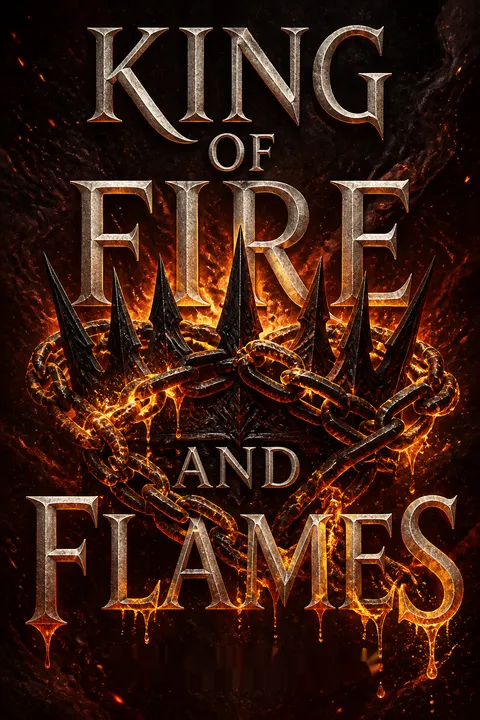
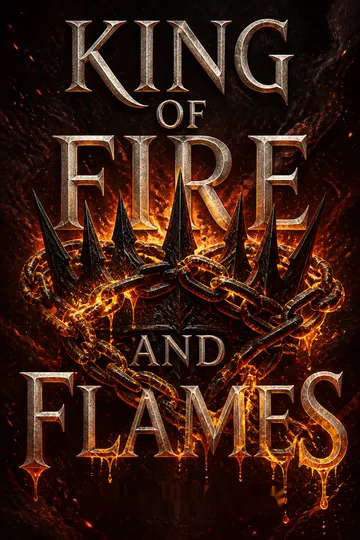
King of Fire and Flames is a fantasy romance novel that concludes Leaf and Arrow's story. Readers praised the vivid world-building, engaging plot twists, and character development. Many enjoyed the intense chemistry between the protagonists and the feminist themes. Some critics found Leaf's stubbornness frustrating and felt certain plot elements were rushed. Overall, fans of the series appreciated the satisfying conclusion, witty banter, and emotional depth. The book's mix of action, romance, and magical elements resonated with most readers, earning it generally positive reviews.
People Also Read
Characters
Zali Omala, called Leaf
The outlaw heirZali is the human heir to Mydorian, a fighter whose sharp tongue often keeps fear from mastering her. She has survived memory loss, enslavement, family betrayal, and the loss of people she trusts, so she reads affection cautiously and refuses to surrender her judgment to powerful rulers. Her reaver ancestry connects her to the gold trade, making her politically valuable in realms that despise humans. Yet she is motivated less by wealth than by the safety of her people and the return of balance between kingdoms. The name Leaf, given by Arrow2, carries both painful history and intimacy, while Zali remains determined to define herself on her own terms.
Arrow
The storm-bound kingArrow rules the Light Realm and bears the title King of Storms and Feathers. He is powerful, possessive, and accustomed to treating protection as a right to control, especially where Zali1 is concerned. His history of prejudice against humans and his inheritance of a cruel political system complicate his claim to love her. Beneath his confident, often provocative manner is a king burdened by grief and a growing awareness that his rule has depended on others' suffering. Zali's1 resistance forces him to examine both his private behavior and the institutions he inherited. His central tension is whether devotion can become partnership rather than another form of possession.
Esen
The divided guardEsen is a skilled warrior and former member of Arrow's2 guard, known for her cold competence and dangerous temper. Her loyalties are difficult to read, partly because she has spent much of her life being shaped by rulers who value her magic more than her personhood. She resents the vulnerability that affection creates and initially treats Zali1 as a rival for Arrow's2 attention. Beneath that hostility is a longing to belong somewhere without being used. Esen's guardedness is not simple cruelty: it is an adaptation to a childhood in which identity and safety were taken from her. Her relationship with Zali1 tests whether trust can be built without demanding instant forgiveness.
Ari
The reaver strategistAri is a high-ranking reaver elf, the Zareen's sister, and Arrow's2 Sayeeda, a trusted counselor whose knowledge spans court politics, healing, and old magic. She is measured where Zali1 is impulsive, and her calm often steadies people who are running out of options. Ari's loyalty is expressed through practical care: food, medicine, planning, and the willingness to enter danger for someone else's sake. Her bond with Raiden11 reveals a private tenderness beneath her formidable public role. She understands that political arrangements can conceal coercion, so she watches how people treat servants and outsiders as closely as she watches what rulers promise.
King Azarn
The fire court's tyrantAzarn rules the Sun Realm from Taln, where he turns imprisonment and spectacle into instruments of state power. He values the gold trade and sees Zali's1 human and reaver ancestry as leverage over both Mydorian and the Light Realm. His cruelty is not impulsive alone; he stages trials, marriages, and punishments to make domination appear lawful or entertaining. He depends heavily on the magic that enforces his authority, but his confidence blinds him to the dependencies beneath it. Azarn's family life is also governed by control, and his treatment of his wife6 and son7 reveals a ruler who confuses possession with loyalty.
Queen Estella
The star-bound queenEstella comes from the Crystal Realm of Night and Stars and brings a quiet, distant presence to Taln's fire court. Her cosmic magic is immense, but political and family bonds restrict how openly she can use it. She is a mother trying to protect her son7 while living under a husband5 whose ambitions have made her home a prison. Estella's reserve can look like passivity, yet she observes carefully and acts through timing, misdirection, and selective trust. Her compassion for Zali1 grows from recognizing another woman being turned into a bargaining instrument. She must weigh the cost of resistance against the people who would suffer if she moves too soon.
Prince Bakhur
The entitled heirBakhur is Azarn5 and Estella's6 son, raised as the Sun Realm's heir and accustomed to having his appetites indulged. He can be charming when it serves him, but his attention to Zali1 quickly exposes a cruel and possessive streak. He treats marriage as a route to status and human bodies as objects for experimentation. His dependence on his father's5 court has left him entitled rather than secure, and he measures other people by whether they can be controlled.
Melaya
The power-blocking mageMelaya is Azarn's5 principal mage, a restrained and watchful figure whose magic suppresses the powers of other realms across Taln. His control depends on discipline and on a bond with his twin, Nukala. He rarely wastes words, which makes his silences feel as deliberate as his spells. His loyalty to Azarn5 appears absolute, but the forces sustaining that loyalty are more complicated than the court admits.
Nukala
The hidden twinNukala is Melaya's twin, kept close to Azarn5 and dismissed by much of the court as powerless. His quiet presence contrasts with the visible authority of his brother8, while his private need for control shapes how he views weaker people. Others underestimate him because they mistake limited public power for irrelevance. His relationship with Melaya is central to the balance of magic in Taln.
Ruhh
The restless ghostRuhh is Azarn's5 dead sister, a ghost whose appearance and moods shift between mischievous and menacing. She resents Arrow2 and carries a long grievance against the court that binds her to Taln. Her sharp humor often conceals loneliness and a desire to be remembered as more than a tragic family ornament. Though unreliable, Ruhh can act decisively when a bargain serves her interests.
Raiden
Arrow's loyal guardRaiden is Arrow's2 closest friend and a capable guard, loyal to the people he considers family. He is quieter than Zali1 and less eager to provoke danger, but he will take risks when someone he loves is threatened. His long-standing affection for Ari4 gives him a private vulnerability beneath his steady soldier's manner.
Zaret
The human allyZaret is Grendal's human son and one of the few humans moving openly among the fae courts. He is observant, direct, and willing to challenge Arrow2 when the king's judgment fails. His experience with addiction and recovery makes him attentive to how systems can trap people while pretending to offer comfort. He is determined to honor the people who helped his family.
Orion
The one-eyed sailorOrion is an orc sailor whose kindness once helped Zali1 when she was lost and vulnerable. He is practical and courageous, willing to risk his safety for someone who has little power. His connection to his family and his history with the reavers make him more than a convenient rescuer; he carries loyalties of his own.
Quin Omala
Zali's twin brotherQuin is Zali's1 twin and a central figure in the political history she carries into Taln. Their shared childhood and deep familiarity make the rupture between them especially consequential. He is associated with the struggle for Mydorian's throne and with the dangerous promises of gold serum and borrowed magic.
Van Omala
Zali's younger brotherVan is Zali's1 younger brother and one of the family ties that keeps her oriented toward home. She thinks of his safety when she weighs risks, and her responsibilities to him help turn survival into a political duty. He represents a future for Mydorian beyond the rivalries that shaped Zali's1 past.
Marcella
The sharp-tongued auntMarcella is Azarn's5 living sister, a court insider who enjoys gossip and tests newcomers with polished provocation. Her information can be useful, but she rarely offers it without reminding others of their lower status.
Neeron
The resentful envoyNeeron is a Sun Realm envoy who holds a personal grudge against Zali1 after their earlier clash in Coridon. He uses his official position to press that resentment, making him a small but persistent face of the court's hostility.
Vyprin
The orchid's guardianVyprin is a serpent fae who protects the blood orchid in Fen Forest. He judges visitors by their honesty and wit, offering riddles where others might use force. His bargain gives Zali1 a tool she can carry beyond the forest.
Plot Devices
The Aldara bond
A channel through bloodArrow's2 mark binds him to Zali1 and reacts when others threaten or touch her. Feeding renews the bond and can allow them to communicate privately, even when guards are present. The same connection heightens their physical desire, making it both a source of protection and a complication in Zali's1 effort to judge Arrow2 clearly. The bond cannot settle the central question of consent by itself: its power is meaningful only when Zali1 can decide what she accepts. Its changing use tracks their movement from coercive attachment toward chosen intimacy.
The three entertainments
A court disguises executionAzarn's5 three trials offer Zali1 a nominal chance to live and marry his son7, while allowing the court to test her, humiliate her, and potentially kill her in public. The escalating events require combat, resourcefulness, and finally a confrontation with Arrow2. Their rules expose how power can make a rigged contest look like a voluntary choice. Zali's1 survival of each trial wins her attention and limited privileges, but does not end her captivity, proving that success within an unjust system is not the same as freedom.
The mergelyn twins
Power rests on a twin bondMelaya's8 ability to block other realms' magic is linked to his twin brother, Nukala9. The court presents Melaya8 as the source of Taln's control, but discoveries by Estella6, Zali1, and Ari4 reveal that his strength is relational rather than independent. The twin bond creates both the Sun Realm's defensive advantage and its vulnerability. Because weakening it requires careful timing rather than a straightforward attack, it shapes the wedding plan and makes Nukala's9 hidden position politically decisive.
Blood orchid petals
Temporary unseen passageThe blood orchid grows in the dangerous Fen Forest and is guarded by Vyprin18, who gives Zali1 petals after she solves his riddles. Rubbing a petal on her skin makes her invisible for a limited time. Zali1 uses the magic to approach Arrow2, move through Taln, evade her guards, and reach the dungeon. The petals do not solve every obstacle: their effect is brief and unpredictable, and their magic interacts poorly with reaver power. They turn observation and timing into practical tools for an otherwise trapped protagonist.
The gold trade
A currency of political leverageGold links the Light Realm's auron kanara, the reaver elves' bloodline, and the hidden human kingdom of Mydorian. Because Zali1 descends from the reaver line, rulers see her as a route to controlling trade between realms. This economic system motivates Azarn's5 marriage scheme and shapes the fragile accord between Arrow2 and the reavers. It also gives the story's abuses a material foundation: people are controlled, traded, or imprisoned because their bodies and labor sustain wealth. The political conflict cannot be resolved by romance alone; the system itself must change.
FAQ
```markdown
0. Synopsis & Basic Details
What is King of Fire and Flames about?
- A Captive's Quest: King of Fire and Flames plunges readers into the harrowing journey of Leaf (Zali Omala), a human queen-in-waiting, who awakens chained and betrayed, believing her former captor and lover, Arrowyn Ramiel, the King of Storms and Feathers, has delivered her to the cruel Fire King Azarn. This sets the stage for a desperate fight for survival and a quest for truth.
- Trials as Transformation: Trapped in the Sun Realm, Leaf is forced to endure a series of deadly "entertainments" orchestrated by King Azarn, designed to break her spirit and solidify his control over the gold trade. These trials test her physical prowess, wit, and emotional resilience, pushing her to confront her deepest fears and question every alliance.
- Unraveling Betrayal: As Leaf navigates the treacherous Fire Court, she uncovers a complex web of Shifting Alliances and Hidden Identities, shifting loyalties, and ancient grudges. The narrative explores themes of trust, forgiveness, and the true nature of power, as Leaf must discern who her real enemies and allies are, ultimately leading to a climactic confrontation that reshapes the Five Realms.
Why should I read King of Fire and Flames?
- Deep Emotional Resonance: The novel offers a raw and unflinching exploration of trauma, betrayal, and the arduous path to healing and forgiveness. Readers are drawn into Leaf's psychological complexities, experiencing her internal battles between hatred and lingering desire, making her journey deeply relatable and emotionally impactful.
- Intricate World-Building & Magic: Juno Heart crafts a vibrant yet dangerous world across the Five Realms, each with unique magical systems and political intrigues. The interplay of storm, fire, reaver, and cosmic magic, alongside the intricate details of the Aldara bond and Magical Bonds and Power Blocks, creates a rich, immersive fantasy experience.
- Reformed Villain & Fated Love: For fans of the "enemies-to-lovers" trope, this book delivers a compelling redemption arc for Arrowyn Ramiel, the King of Storms and Feathers. His transformation from a seemingly ruthless captor to a fiercely protective lover, coupled with Leaf's struggle to trust him again, provides a satisfying and "sizzling adventure" (Blurb) that redefines the boundaries of love and loyalty.
What is the background of King of Fire and Flames?
- Inter-Realm Political Tensions: The story is set against a backdrop of centuries-old treaties and simmering animosities between the Five Realms (Light, Sun, Earth, Ice, Crystal). The central conflict revolves around the control of the gold trade, primarily managed by the Light Realm (Arrow) and the reaver elves (Ari, Zareen), which the Fire King Azarn desperately seeks to usurp.
- Legacy of Slavery & Addiction: The Light Realm's past under Arrow's father, King Darian, involved the enslavement of humans and the use of gold serum to control servants, leading to widespread addiction. Arrow's efforts to dismantle this system and reform Coridon are a significant background element, highlighting themes of systemic injustice and the possibility of societal change.
- Hidden Histories & Ancient Magic: The narrative frequently delves into the hidden histories of characters and realms, such as Esen's true fire fae origins and the ancient, powerful magic of the mergelyn twins (Melaya and Nukala) and the Crystal Realm's star fae (Estella). These revelations provide crucial context for the characters' motivations and the unfolding plot, emphasizing that "not everything is as it seems" (Chapter 19).
What are the most memorable quotes in King of Fire and Flames?
- "No one loves harder than a reformed villain with a squishy marshmallow heart.": This dedication sets the core thematic promise of the book, foreshadowing Arrow's complex character arc and the depth of his eventual devotion. It immediately signals the novel's focus on redemption and the unexpected tenderness found within seemingly harsh exteriors.
- "My name is Leaf... And although I've spent a long time hating it, in truth, it's the name I like best. Given to me by the only male who makes me cry, and burn, and long for him like no other." (Chapter 24): This quote marks a pivotal emotional turning point for Leaf, signifying her acceptance of Arrow's love and the identity he gave her. It encapsulates her journey from defiance and perceived betrayal to profound trust and vulnerability, highlighting the transformative power of their bond.
- "You are my everything. The Empress of my Soul, who rules my every thought, wish, and desire. The mistress of my body, especially of my aching c—" (Chapter 24): Arrow's declaration to Leaf is a powerful testament to his absolute devotion and the depth of his love. It showcases his complete surrender to her, subverting his initial role as her enslaver and emphasizing the profound shift in their power dynamic, making him her "obedient slave" (Chapter 35).
What writing style, narrative choices, and literary techniques does Juno Heart use?
- Dual Narrative and Psychological Depth: Juno Heart employs a dual narrative perspective, primarily alternating between Leaf's and Arrow's first-person viewpoints. This choice provides deep psychological insight into their conflicting emotions, hidden motivations, and evolving perceptions, creating dramatic irony as readers are privy to truths the characters initially withhold from each other.
- Sensory-Rich & Visceral Language: The prose is highly descriptive, immersing the reader through vivid sensory details, particularly regarding heat, scent, and physical sensations. Phrases like "fiery agony seared my flesh" (Chapter 1) or "smell of old books and dust teasing my senses" (Chapter 23) create a visceral experience, enhancing the emotional intensity and the distinct atmosphere of each realm.
- Symbolism & Foreshadowing: The author subtly weaves in symbolic elements and foreshadowing throughout the narrative. Recurring motifs like chains, fire, gold, and the Aldara mark evolve in meaning, reflecting character development and plot progression. For instance, Esen's "unusual purple-brown color wove through the clear, blue light of her storm power" (Chapter 1) subtly hints at her dual nature long before her true identity is revealed.
1. Hidden Details & Subtle Connections
What are some minor details that add significant meaning?
- Esen's Dual Magic Hint: Early in the story, Leaf observes "An unusual purple-brown color wove through the clear, blue light of her storm power. Fire magic. How was that even possible?" (Chapter 1). This seemingly minor detail subtly foreshadows Esen's true identity as a fire fae whose magic was "transformed into lightning" (Chapter 19), revealing the depth of Azarn's long-term manipulation and the hidden complexities of the realms' magic.
- Azarn's Crown of Flames: King Azarn's "crown of black flames writhed like windswept shadows around his brow, and flakes of charcoal sloughed off its wood" (Chapter 2). This detail symbolizes his destructive nature and the ephemeral, consuming quality of his power, hinting that his reign, though seemingly formidable, is inherently unstable and self-destructive, much like a fire that eventually consumes its fuel.
- The Khareek's True Form: When Leaf descends into the moat, the khareek (lie-eaters) are described as transforming from "fiery bodies" into "sleek, angular forms shining with a cold, beautiful light" (Chapter 29), resembling Ice Realm water sprites. This subtle shift in appearance, linked to the Ice Realm, hints at the interconnectedness of the realms' magic and the deceptive nature of appearances, reinforcing the theme that "not everything is as it seems" (Chapter 19).
What are some subtle foreshadowing and callbacks?
- Raiden's Impersonation & Silence: Leaf notes Raiden's odd silence and rougher voice after her arrest, thinking "Had he lost his memories as well as his entire personality?" (Chapter 2). This subtle observation foreshadows the later revelation that a fire fae impersonated Raiden using transformational magic (Chapter 7), highlighting the pervasive deception within the Fire Court and Arrow's elaborate plan to protect Leaf.
- Ruhh's "Drowned Rat" Appearance: Leaf observes Ruhh's "lank hair hanging around a gaunt face... Water dripped from her gown onto the wooden floor. She had the look of a drowned rat" (Chapter 8). This detail subtly foreshadows Arrow's later confession that he "didn't help her get out" when she "slipped and fell in" the Lake of Fire (Chapter 25), revealing the true, darker circumstances of Ruhh's death and Arrow's ruthless protective instincts.
- Estella's "Sartoriahn Galaxiaros": During her duel with Leaf, Queen Estella whispers "Sartoriahn galaxiaros" (Chapter 11) before freezing time. This seemingly magical incantation is later revealed to be the name of her home, the Crystal Realm of Night and Stars, and a key to her cosmic power. This callback emphasizes the deep connection between a fae's identity, their realm, and their unique magical abilities, hinting at the vast, untapped power Estella possesses.
What are some unexpected character connections?
- Esen's Shared Trauma with Leaf: Esen reveals that her memories were "wiped when they dumped me at Coridon, a bit like what happened to you, Zali. Our stories are quite similar" (Chapter 19). This unexpected parallel between their origins—both being manipulated and having their pasts stolen—forges a deep, empathetic connection that transcends their initial animosity, transforming Esen from a tormentor into a loyal ally.
- Zaret as Arrow's Conscience: Leaf learns that Zaret, Grendal's son, has "acted as my conscience" (Chapter 26) in Arrow's absence. This connection is surprising given Arrow's initial disdain for humans and gold addicts, showcasing his profound personal growth and willingness to learn from those he once scorned, fulfilling Leaf's earlier hope that he would "reform himself for me" (Chapter 34).
- Estella's Maternal Love for Bakhur: Despite Bakhur's cruelty, Queen Estella's primary motivation for enduring Azarn's tyranny is her love for her son, as "magical blood bonds were created to ensure that if he was ever murdered, our son's life force would leech from his body" (Chapter 28). This unexpected maternal devotion adds a layer of tragic complexity to Estella's character, explaining her seemingly passive role and her ultimate sacrifice.
Who are the most significant supporting characters?
- Queen Estella, the Cosmic Strategist: Beyond her initial portrayal as a distant queen, Estella emerges as a pivotal strategic ally. Her ability to "stop time, suck matter into black holes, uncreate life" (Chapter 25) and her deep understanding of Taln's magic system (especially the twin mages' bond) are crucial to the rebellion's success. Her quiet strength and ultimate sacrifice for peace make her a profound force for change.
- Esen, the Redeemed Spy: Esen's journey from Arrow's jealous guard and Azarn's unwitting spy to Leaf's fierce friend and ally is central to the theme of found family and forgiveness. Her internal conflict and eventual choice to fight for Leaf and Arrow demonstrate the power of empathy and self-acceptance, proving that even deeply damaged individuals can find redemption.
- Zaret, the Human Catalyst: Zaret, Grendal's son, serves as a vital link between the human and fae worlds, and a testament to Arrow's transformation. His role in gathering intelligence, his unwavering loyalty to Leaf, and his embodiment of the "reformed" human (ex-addict) highlight the potential for positive interspecies relations and the importance of individual integrity.
2. Psychological, Emotional, & Relational Analysis
What are some unspoken motivations of the characters?
- Azarn's Insecurity & Control: Beyond his stated desire for gold and power, King Azarn's relentless cruelty and obsession with public "entertainments" stem from a deep-seated insecurity and need for absolute control. His constant need to humiliate Leaf and assert dominance over Arrow (e.g., "he has always believed he owned you and that you were his possession" - Chapter 3) reveals a fragile ego that compensates through spectacle and subjugation.
- Arrow's Self-Punishment: Arrow's willingness to endure Leaf's hatred and play the villain in Azarn's game, even allowing himself to be wounded, is driven by a subconscious need for self-punishment for his past actions and perceived failures. His internal monologue reveals a profound guilt ("I've been drowning in regret, guilt, and shame" - Chapter 34), suggesting his "ruthless thunder" is often a facade for deeper emotional turmoil.
- Estella's Hidden Despair: Queen Estella's detached demeanor and seemingly passive acceptance of her fate mask a profound despair and longing for her true home and lover in the Crystal Realm. Her "sadness" (Chapter 28) and her willingness to risk everything to help Leaf and Arrow are driven by a desperate hope for freedom and a desire to prevent further suffering, even if it means sacrificing her own son's future.
What psychological complexities do the characters exhibit?
- Leaf's Trust Issues & Resilience: Leaf's amnesia and repeated betrayals (Quin, Arrow's perceived betrayal) leave her with deep-seated trust issues, making her fiercely independent but also emotionally guarded. Her psychological complexity lies in her struggle to reconcile her rational distrust with her undeniable emotional pull towards Arrow, leading to internal conflict and a hard-won journey towards vulnerability and forgiveness.
- Arrow's Redemption & Vulnerability: Arrow's character is a study in the psychological journey of a "reformed villain." He grapples with the legacy of his father's cruelty and his own past actions, striving to be a better king and lover. His vulnerability is revealed through his desperate need for Leaf's trust ("Your faith in me was more essential than oxygen" - Chapter 21) and his capacity for tears, a new emotional expression for him (Chapter 22).
- Esen's Identity & Self-Acceptance: Esen's psychological complexity stems from her manipulated identity as a fire fae transformed into a storm wielder. Her bitterness and jealousy are rooted in this fundamental disconnect from her true self. Her eventual shift to ally and friend signifies a journey of self-acceptance and finding belonging, demonstrating that true strength comes from embracing one's authentic nature rather than succumbing to external manipulation.
What are the major emotional turning points?
- Leaf's Realization of Arrow's Loyalty: The pivotal emotional turning point occurs during Arrow's "feedings" in Leaf's room, where their Aldara bond allows them to communicate telepathically. Arrow's whispered confessions of love and explanations of his "ruse" ("I've had no choice but to play the part of your enemy to save you" - Chapter 17) shatter Leaf's belief in his betrayal, transforming her hatred into renewed love and trust.
- Esen's Confession & Alliance: Esen's tearful confession of her true origins as a fire fae spy and her empathy for Leaf's similar manipulation ("Our stories are quite similar" - Chapter 19) marks a significant emotional shift. This moment of shared vulnerability transforms their adversarial relationship into a powerful female alliance, highlighting the theme of found family and the healing power of understanding.
- Orion's Torture & Rescue: Witnessing Orion's agonizing torture in the Sentura Pyre (Chapter 18) is a major emotional catalyst for Leaf, solidifying her resolve to fight for justice beyond her personal revenge. His rescue, a collaborative effort involving former enemies, becomes a powerful symbol of collective resistance and the triumph of compassion over cruelty, uniting the allies in a shared purpose.
How do relationship dynamics evolve?
- Leaf and Arrow: From Captor-Slave to Co-Rulers: Their relationship undergoes the most dramatic evolution, starting as a power imbalance (Arrow buying Leaf as a slave) and progressing through phases of defiance, reluctant attraction, perceived betrayal, and ultimately, a deep, fated love. The Aldara bond becomes a metaphor for their unbreakable connection, culminating in their co-rulership of three realms, symbolizing a balanced partnership built on mutual respect and shared purpose.
- Leaf and Esen: From Tormentor to Trusted Friend: Initially, Esen is Leaf's jealous tormentor, attempting to kill her. However, as Leaf's resilience and empathy shine through, and Esen's own manipulated past is revealed, their dynamic shifts. Esen's confession ("I want to be your ally... I want to be your friend" - Chapter 19) marks a profound transformation, evolving into a loyal friendship based on shared experiences of betrayal and a desire for justice.
- Estella and Azarn: A Marriage of Power, Not Love: Their relationship is a stark contrast to Leaf and Arrow's, representing a toxic power dynamic. Estella is a "prisoner of circumstance" (Existing Analysis), forced into marriage and enduring Azarn's cruelty for her son's sake. Her quiet rebellion and eventual role in Azarn's downfall highlight the subversion of patriarchal power structures and the strength found in strategic, hidden resistance.
4. Interpretation & Debate
Which parts of the story remain ambiguous or open-ended?
- Ruhh's True Intentions and Fate: While Ruhh aids Leaf and Arrow, her motivations remain ambiguous. Her "deranged smile" (Chapter 28) and desire to "hug you" (Chapter 28) after her body is restored by the Zareen leave her future actions and true alignment open to interpretation. It's debatable whether her newfound "kindness" is genuine or merely a temporary alliance of convenience, especially given her past vengeful nature.
- Long-Term Stability of the United Realms: The ending sees Leaf and Arrow ruling three realms, with Estella returning to the Crystal Realm and a new order established. However, the long-term stability of this new political landscape, especially with the lingering threat of Melaya's potential return ("he will find a way back from the fringes of the cosmos" - Chapter 32), remains open-ended. The narrative leaves room for future conflicts and the ongoing work of maintaining peace.
- The Nature of "Reformed Villain": While Arrow undergoes a significant redemption arc, the extent of his "reformation" is debatable. His past actions, such as not helping Ruhh from the Lake of Fire (Chapter 25) and his continued capacity for ruthlessness ("No atrocity would be too vile" - Chapter 25), suggest that while he is reformed for Leaf, his inherent nature as a powerful, sometimes brutal, king may still surface, leaving readers to ponder the true depth of his change.
What are some debatable, controversial scenes or moments in King of Fire and Flames?
- Arrow's Initial Treatment of Leaf: The initial dynamic where Arrow buys Leaf as a slave and subjects her to "punishments" that turn "enjoyable" (Book 1 Recap) is highly controversial. While the narrative later reframes this as a complex strategy to protect her, the "pretend dub-con" (Blurb) elements and the power imbalance raise ethical questions about consent and the nature of their early relationship, sparking debate among readers.
- Estella's Sacrifice of Bakhur's Future: Queen Estella's decision to allow Bakhur's death, or at least not actively prevent it, despite her maternal love, is a morally complex and debatable choice. Her justification ("I cannot achieve all my goals, and instead, must help those who will strive toward peace for all" - Chapter 28) forces readers to weigh individual sacrifice against the greater good, questioning the ethics of her "queen's plot."
- The Use of Gold Serum for Healing: Ari's use of gold serum to revive Arrow after his near-fatal injury (Chapter 32), despite its known addictive properties and association with slavery, presents a controversial moment. While fr
Courts of the Star Fae Realms Series
Download PDF
Download EPUB
.epub digital book format is ideal for reading ebooks on phones, tablets, and e-readers.








