

Plot Summary
The Ransacked Cottage
Eleanor Thorn returns to Styrland after fleeing the faerie realm and finds her cottage wrecked, her father Isaac unconscious with a gash across his head. At healer Ruth's home, she learns Albrecht's men are searching for the Gold Weaver and her research. Ruth treats Isaac, then reveals a note from her mother's records: when Eleanor was an ill infant, her mother sought help from a changeling.
Eleanor has no memory of the visit, and her parents never told her about it. Though she wants to stay beside Isaac, the hidden history presses harder. She leaves him with Ruth and follows the directions to the changeling, hoping to learn why her mother believed a fae creature could save her.
The opening makes Eleanor's return less a homecoming than a collision with unfinished danger. Her father's injury turns private history into immediate responsibility, while Ruth's discovery reframes Eleanor's childhood as something deliberately obscured. Eleanor's defining response is to investigate rather than accept protection or reassurance. That impulse is both strength and vulnerability: she seeks agency through knowledge, even when each answer may expose her to further danger.
A Name Beneath Her Skin
The changeling, Tesha, remembers Eleanor as the sick baby brought to her by Leah. She explains that the child needed a true name, a fae rite Tesha performed with blood from both of them. Eleanor learns her name is Lunasworn, meaning Sword of the Moon, and recognizes an unsettling counterpart to Ruskin's name, Solskir, Shield of the Sun.
Tesha agrees to share the name in exchange for a future favor, with Eleanor's condition that it cannot demand a life or directly harm anyone. Back at Ruth's, Eleanor finds Isaac recovering and learns he remembers her childhood illness but not its cause. Before they can discuss more, soldiers spot them on the road.
The revelation complicates Eleanor's sense of self without making her less human: Tesha insists her parents are hers, while locating her magic in an unexplained connection to Faerie. The true name gives Eleanor a new form of identity, but its paired meaning also makes intimacy feel like a possible destiny rather than a free choice. Her careful limits on Tesha's favor show how earlier bargains have taught her to protect consent through precise terms.
Ruskin Returns in Blood
The soldiers identify Eleanor as the fugitive they want and draw an iron sword. Ruskin appears before they can seize her, kills the captain and the other men, then explains that survivors could lead Albrecht to Eleanor's home and village. Isaac fears the fae prince, but Eleanor agrees to hear him privately.
Ruskin admits he knew she was Leah's daughter when they first made their bargain, though some force prevents him from explaining how he knew her mother. He asks Eleanor to return to Faerie and save his mother, Queen Evanthe, whose body is still damaged by iron after two centuries asleep. Eleanor agrees to try, but only if Ruskin protects her family and removes Albrecht's memories of her.
Ruskin's rescue is protective and terrifying at once, forcing Eleanor to hold affection and moral disgust in the same frame. His explanation for the killings is practical, but his certainty that he alone can judge what protection requires echoes the secrecy that broke their trust. Eleanor's conditions are an attempt to turn a familiar imbalance into a negotiated partnership. She accepts the mission because a life is at stake, not because the relationship has been repaired.
Back Through the Gate
Isaac protests when Eleanor says she must return to Faerie, fearing she will come back more badly hurt than before. She promises to return, though she withholds what she has learned about her mother's bargain. Ruskin gives Isaac a small branch that lays a protective spell over him, then takes Eleanor through the permanent gate into the Seelie realm.
Destan welcomes her, while Halima, Ruskin's armored guard, apologizes for failing to detect Cebba's earlier attack. In Ruskin's rose garden, Eleanor finds Evanthe lying among the flowers. Ruskin guides her to sense the queen's body as a map of metal, and Eleanor sees the ancient iron dispersed through it. She draws it out until Evanthe breathes and opens her eyes.
Eleanor's return rests on two different kinds of trust: a promise to Isaac and a technical bargain with Ruskin. The protective branch offers genuine care, but cannot erase her fear of leaving her father behind. Reviving Evanthe gives Eleanor proof that her emerging power can do more than make gold. The scene also shifts her from a rescued outsider to an active healer, while Ruskin's instruction creates a moment of cooperation that neither mistakes for reconciliation.
The Banquet's Iron Bloom
Evanthe wakes and learns that her husband Ilberon and daughter Cebba betrayed her. At the banquet, Ruskin presents her return to the Seelie Court but conceals that he has ruled as High King for two centuries. Evanthe recalls that Ruskin once opposed her efforts to make peace with humans, and he admits he considered them inferior.
Before the court can settle into celebration, cold iron bursts through the orchard floor, splitting tables and killing fae. Ruskin's magic cannot stop it. Eleanor stills the metal with her power, saving those beyond its reach, while Halima and Destan help the wounded escape. The attack leaves the orchard ruined and makes clear that Evanthe's recovery has not healed the kingdom.
The banquet joins private revelation to public crisis. Evanthe's return looks like restored order, but Ruskin's concealed kingship shows that the court's stability already depends on an official fiction. Eleanor also discovers that saving a ruler does not resolve the political and physical damage surrounding her. The iron attack strips away ceremony, revealing how little the fae's hierarchy can do against a weapon their magic cannot govern.
The Palace Turns Hostile
After the banquet, Ephor Jorna interprets an old prophecy as a warning that iron will purge poison from the Seelie realm. Ruskin evacuates nearby quarters as the iron's sickness spreads.
The next day, a raven recalls him and Eleanor from their journey toward Styrland: iron has erupted again, this time through the memorial square and a residential gallery. Eleanor reaches trapped fae and slows the advancing shoots, but a frightened boy runs into their path and dies.
Ruskin's vines cover the metal so survivors can descend, while Eleanor helps the weakened reach safety. One grieving mother blames Eleanor, and Ruskin restrains her before violence escalates. Seeing the damage and the fear gathering around her, Eleanor abandons her planned return home and chooses to stay.
The prophecy turns a material emergency into a story the court can use to assign blame. Eleanor's power saves many, yet cannot prevent every death, and the boy's loss exposes the limits of treating courage as a guarantee of control. Her decision to stay is not a romantic surrender to Ruskin. She sees people who need her, and chooses responsibility despite knowing the court may regard her as the cause of its danger.
Masks in the Corridor
As Eleanor follows a silver chain to practice sensing metal at a distance, she overhears nobles and Jorna describe her as an unnatural threat. Soon afterward, masked fae attack her in a deserted corridor, blinding her with magic and crushing her ribs. Queen Evanthe intervenes, killing the attacker who is strangling Eleanor and exposing two accomplices, including Galaphina's sister.
They confess to an earlier attempt involving a snake. Eleanor stops Ruskin from executing the survivors, arguing that revenge would create more enemies, and asks that they be imprisoned. A healer repairs her injuries. Ruskin responds to the attack by sending Halima to train Eleanor in self-defense, rather than simply assigning her a guard.
The attack makes the political cost of Eleanor's difference bodily and immediate. Her choice to spare the surviving attackers breaks with Ruskin's instinct for lethal deterrence, but it is not passive forgiveness: she insists on consequences without making vengeance the court's only language. Halima's training offer marks a practical compromise. Eleanor will not be reduced to a protected object, while Ruskin must begin respecting her ability to prepare herself.
A Sword's Stored Battle
Halima teaches Eleanor basic sword work, then Eleanor unexpectedly enters a vivid memory carried by the weapon: the massacre at Amethyn Valley, experienced through the perspective of Halima's warrior mother. Halima explains that the blade was bound to its first wielder through blood, allowing it to retain the imprint of a battle.
Eleanor realizes metal can preserve more than location or composition; it can hold traces of events and feeling. The discovery suggests she may be able to trace the iron's history and find its source. When she visits the orchard, she also sees Low Fae miners working too long near the poisonous metal with inadequate protection. Their exhaustion and burns make her question the court's acceptance of their suffering.
The blade turns Eleanor's gift into a form of historical witness. She does not merely manipulate metal; she encounters the lives and violence that have left marks on it. That experience deepens her empathy for Halima and makes the court's current crisis feel continuous with its old wars. The exhausted miners extend the same insight into the present: social rank determines whose pain is treated as expendable, even when a supposedly civilized court depends on their labor.
Lead Shields for Miners
Eleanor casts a lead mask to reduce the miners' exposure to iron, then returns to the orchard and reads a metal fragment as something once living, warped by pain. Ruskin wants her to focus on training, but she argues that the workers need help now. During a later sparring session, he deliberately provokes her to reach deeper into her power.
Eleanor tears a hidden silver deposit from a hillside, sending shards across the valley; Ruskin shields them beneath a bower. They kiss, but Eleanor realizes he engineered the danger without telling her. She rejects his treatment of her as a tool to be pushed toward his preferred result and leaves him, insisting that manipulation will cost him her trust.
The lead mask embodies Eleanor's preference for practical care over spectacular displays of power. Ruskin's provocation may increase her ability, but the method repeats the central injury in their relationship: he decides what she needs and withholds the risk. The silver explosion makes that control physically visible. Eleanor's boundary is therefore both emotional and ethical. She refuses to let a useful outcome excuse another person's unilateral control of her body or choices.
The Stone Rejects Evanthe
When Evanthe is judged strong enough to reclaim the throne, Eleanor helps clear iron from the hidden chamber beneath the palace. The founding stone begins testing Evanthe, but rejects her before she can complete the rite. The ground shakes, and a fresh eruption tears through the orchard and palace. Eleanor slows the spreading iron, but the miners working nearby are killed before they can escape.
Jorna's prophecy gains influence, while some nobles again call Eleanor a curse. Evanthe is left weakened and unable to explain the stone's resistance. Ruskin concludes that restoring his mother may not be enough to stop the attacks, and decides they must seek help from his old Unseelie tutor, Magister Cragfoot.
The failed rite links political legitimacy to the kingdom's physical instability, but does not prove that the stone's judgment is simple or fair. Eleanor's partial success has a terrible cost: the workers she tried to protect die in the very place she hoped to make safer. Her guilt sharpens her commitment, while the court's scapegoating shows how quickly uncertainty becomes prejudice. Seeking outside knowledge is the first admission that neither royal authority nor Eleanor's growing strength can solve the crisis alone.
The Manticore's Trial
Ruskin and Eleanor cross into the Unseelie kingdom, where his uncle, King Lisinder, requires each visitor to pass a trial. Ruskin defeats a minotaur in the arena. Eleanor faces a manticore and reveals that she has a true name, asking Ruskin to channel his power to her. Strengthened by him, she cuts off the creature's stinger and drops the arena's cold-iron chandelier onto it.
Lisinder accepts her victory and grants them an audience. In the bath afterward, Ruskin presses her about the name and their possible bond. Eleanor admits that their names seem matched but refuses to let fate decide their relationship. Her discovery of shared power has made the possibility real, not resolved her distrust.
The trials turn admission into a test of demonstrated capacity, a sharp contrast to the Seelie court's assumptions about blood and status. Eleanor wins through observation and improvisation, but her request for Ruskin's power reveals that their connection can be used before either understands its full meaning. She resists the idea that magical compatibility settles questions of consent or trust. The bond may shape what they can do together, but it cannot make the choices between them disappear.
A Tutor's Old Debts
Lisinder grants Ruskin and Eleanor access to Magister Cragfoot, who turns out to be Maidar, the Unseelie trader Eleanor knew from the human market. He teaches her to read metal at greater distances and at increasingly fine levels. Ruskin finally explains why he pardoned the Riverwing brothers after they killed Unseelie challengers: punishing them risked a Seelie rebellion and a return to war.
Eleanor hears the political calculation without treating it as proof that his choices were harmless. As she and Ruskin grow close again, intimacy causes his power to surge through her magic, confirming that they can share strength. She keeps the discovery to herself, still uncertain whether she wants the bond to define them.
Maidar's presence bridges Eleanor's human expertise and the fae world's neglected knowledge, making the solution to the iron crisis depend on learning across cultural boundaries. Ruskin's account of the Riverwings gives context rather than absolution: he acted under political pressure, but Eleanor remains entitled to judge the cost. Their renewed intimacy likewise opens a real channel between them without resolving their disagreement about fate. Connection increases responsibility; it does not substitute for honesty.
The Moon Orb's Beast
During a mountain exercise with Maidar, Eleanor reaches deep into the memories of augium ore and nearly loses herself in centuries of impressions. Ruskin steadies her until she can withdraw. Soon afterward, Kasgill and two companions ambush the trio. Kasgill breaks a moon orb, a banned magic that magnifies Ruskin's Unseelie instincts.
Ruskin kills Kasgill and the others, then turns on Eleanor and Maidar without recognizing them. Eleanor uses Ruskin's true name, Solskir, to halt him and bring him back to himself. Although the spell explains his violence, the sight leaves Eleanor shaken. Lisinder, alarmed by the deaths and unrest, tells them to leave the Unseelie court that night.
The moon orb externalizes Eleanor's fear that Ruskin's violence is not merely a political tactic but a force he may fail to govern. Her use of his true name saves them, yet the rescue is also an exercise of power over someone she loves. The episode challenges the comforting idea that their bond guarantees safety. Lisinder's order to leave closes the possibility of belonging in this court just as Eleanor and Ruskin have begun to understand it.
Iron Roots in the Roses
Returning to the Seelie palace, Ruskin and Eleanor find iron spreading through the buildings and many courtiers gone. Halima is furious that Ruskin left, and says Evanthe herself delayed the message calling them back. Eleanor enters the ruined orchard and reads a lump of iron more deeply than before.
It was once a rose, and its roots now entwine with a vast iron network beneath the palace. She senses the same dark magic around the roots and realizes the iron removed from Evanthe may have fed the growth. Before she can warn Ruskin, the ground shakes again. Eleanor sends Destan for Halima and rushes toward the founding-stone chamber, where she believes Ruskin has gone with Evanthe.
The source of the crisis is found through a method that combines Eleanor's craft knowledge with magical memory. The rose is not decorative evidence but a link between the queen's recovery, the royal garden, and the iron spreading through the court. Eleanor's suspicion is urgent but not yet a verdict; she knows the signs, not the full intent behind them. Meanwhile, Halima's anger exposes the political cost of Ruskin's absence, even as Eleanor must choose immediate action over repairing that conflict.
Halima's Last Stand
In the chamber, Eleanor finds Ruskin chained with iron spikes driven into his wrists. Evanthe admits she has been directing the attacks and wants Ruskin to name her heir so she can pass the founding stone's trials. She believes the Seelie court's vanity and greed must be purged through suffering; Cebba had secretly influenced her during her long sleep.
Halima arrives and attacks Evanthe rather than obeying her, but an iron shoot pierces Halima's heart. Eleanor gives Ruskin her true name, Lunasworn, and channels her power into him. Together they protect the stone with an alloy of iron and augium, then escape the chamber as Evanthe unleashes more iron. Halima dies, and Ruskin orders the court evacuated.
Evanthe's plan transforms the restored queen from a promise of stability into the crisis's human author. Her critique of Seelie corruption contains recognizable grievances, but she answers systemic injustice with indiscriminate pain and a bid for absolute power. Halima's loyalty is tested not as obedience to a ruler but as fidelity to the realm she swore to defend. Eleanor's gift of her name converts intimacy into trust made actionable: she shares power because she believes Ruskin will use it responsibly.
The Lake Takes Ruskin
Eleanor, Ruskin, and Destan flee the iron-struck court and bury Halima before leaving. At Lake Irnua, Evanthe's followers appear, with Hadeus revealing that Isaac is being held by King Albrecht. Their force pins Eleanor with a blade while Ruskin creates an opening for her and Destan to escape toward the Unseelie border.
Eleanor and Destan reach cover and watch Ruskin fight Evanthe near the lake. A burst of dark magic swallows both of them, and when it clears, neither is visible. Destan pulls Eleanor away as Rivera spots them and the Wild Hunt closes in. Eleanor runs toward the mountains with her friend, separated from Ruskin and still uncertain whether her father is safe.
The ending refuses a clean victory: the immediate flight from the palace gives way to separation, pursuit, and a new hostage threat. Eleanor's choice to run honors Ruskin's sacrifice and Halima's defense of the court, but it leaves her carrying grief without confirmation of Ruskin's fate. The lake, previously a route for magical travel, becomes an opaque boundary between them. The novel closes with agency narrowed to survival and the next attempt to reunite a fractured family.
Analysis
The novel makes metal both the instrument of violence and the medium through which history becomes legible. Eleanor's craft begins as a human skill prized by fae who cannot create in the same way; in Faerie it becomes power capable of reading the buried past and resisting cold iron. Her scientific habits matter because they oppose the court's reflex to treat catastrophe as fate, prophecy, or a reason to sacrifice the socially weaker. She asks what the material is, where it came from, and who is suffering while it is removed.
That inquiry meets a political order organized around concealment. Ruskin hides his kingship, Evanthe's condition is misrepresented, and factions turn uncertainty into accusations against Eleanor. The book does not equate secrecy with simple malice: Ruskin's choices often arise from fear of rebellion or loss. Yet the emotional damage remains. His protective intent cannot make unilateral control feel like partnership, and their romance advances only when Eleanor demands participation rather than accepting affection as compensation for withheld truth.
The naminai bond intensifies this problem instead of solving it. Shared names and magic suggest deep compatibility, but Eleanor refuses to treat destiny as consent. The bond becomes meaningful when she chooses to share her name, not when lore declares that she and Ruskin belong together. Her arc therefore joins intimacy with agency: trust is neither blind faith nor complete knowledge, but a deliberate risk grounded in observed character.
Evanthe's campaign gives the kingdom's hierarchy its darkest mirror. She recognizes real corruption, including vanity, prejudice, and the expendability of Low Fae, but tries to cure injustice by imposing pain from above. Her answer reproduces the coercion she condemns. Eleanor's choice to protect miners, spare attackers, and defend the founding stone offers a different model of power: intervention that limits harm without claiming that one person's authority makes every cost acceptable. The unresolved ending preserves the consequences of these choices, leaving Eleanor with a fractured court, a missing beloved, and a father in danger.
Review Summary
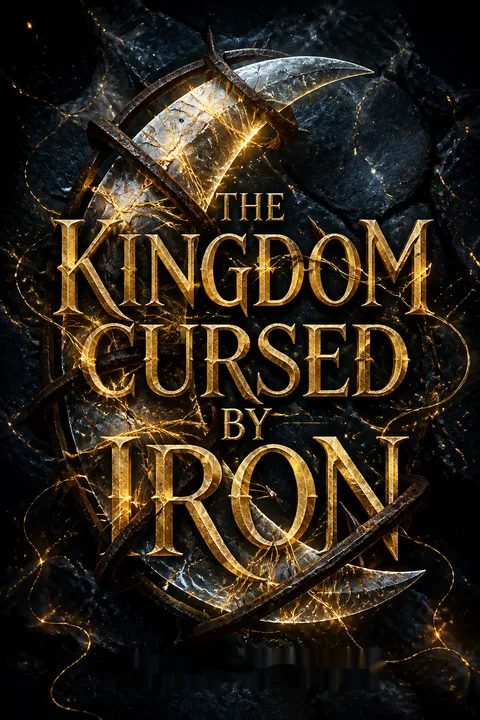
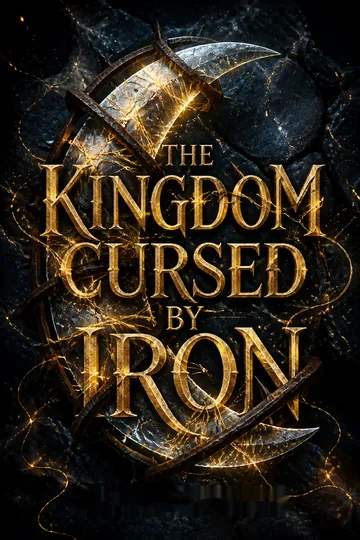
The Kingdom Cursed by Iron receives mixed reviews averaging 4/5 stars. Readers praise the fast-paced plot, creative storyline, and protagonist Eleanor's character growth, particularly her magic development and sword training. Many enjoy the chemistry between Eleanor and Ruskin, though their miscommunication frustrates numerous reviewers. The romance's "will they, won't they" dynamic divides opinions. Common criticisms include rushed pacing, predictable twists, repetitive relationship conflict, and Eleanor's hypocritical behavior regarding secrets. Secondary characters receive limited development. Several reviewers note second-book syndrome, though most remain invested enough to continue the trilogy despite its flaws.
People Also Read
Characters
Eleanor Thorn
The metalworking healerA human metallurgist and healer's daughter, Eleanor combines practical curiosity with a fierce refusal to accept that suffering is inevitable. Her ability to work metal becomes magical in Faerie, but she approaches it like a craft: testing, observing, and learning from failure. Her attachment to Ruskin draws her toward the court that has repeatedly endangered and deceived her, while her loyalty to Isaac keeps her connected to home. Eleanor is most herself when she turns knowledge into protection, whether she is healing a queen, defending miners, or challenging a ruler's decisions. Her central struggle is not choosing between love and independence, but insisting that love must leave room for both.
Ruskin Dawnsong
The guarded fae kingA powerful half-Seelie, half-Unseelie ruler, Ruskin is feared in both fae and human stories for his bargains and capacity for violence. He thinks strategically and protects the people he loves, but often treats secrecy and unilateral decisions as necessary forms of care. His affection for Eleanor is genuine, yet his habits of control make it difficult for her to trust him. His mother, the court, and his Unseelie inheritance all shape his sense of duty. Beneath his formidable composure is someone wary of vulnerability and uncertain that he deserves the authority he holds.
Isaac Thorn
Eleanor's devoted fatherEleanor's father is a human fisherman whose quiet trust in his daughter contrasts with his fear of Faerie and the people hunting her. He has endured grief and hardship, and his protectiveness comes from knowing how little control ordinary people have over powerful rulers. Isaac does not always have the strength or information to guide Eleanor, but he offers her a home and a steady emotional anchor. His bond with Eleanor is built on affection rather than authority: he worries, questions her choices, and ultimately recognizes that she must make them for herself.
Evanthe Dawnsong
The sleeping High QueenEvanthe is Ruskin's mother and the former High Queen of the Seelie Court. Before her long absence, she sought peace with humans and Unseelie alike, a project that placed her at odds with traditionalists in her own court. She carries herself with composure and political intelligence, but waking into a kingdom transformed by centuries of betrayal leaves her vulnerable as well as authoritative. Her relationship with Ruskin is marked by deep affection and the burden of what he has endured in her absence. She represents both the promise of restored legitimacy and the difficulty of returning to power after history has moved on.
Destan
The court's loyal confidantRuskin's friend and a lively Seelie courtier, Destan uses humor, style, and social ease to move through a court full of danger. He is one of the few people Eleanor trusts to answer questions directly, though his loyalty to Ruskin sometimes puts him between them. Beneath his playful manner is a steadfast friend who notices when others are isolated or hurting. Destan understands court politics without making them his whole identity, and he often serves as a bridge between Eleanor and the fae society she is still learning to navigate.
Halima
The oathbound swordswomanHalima is Ruskin's armored guard, a disciplined fighter whose devotion to her oath gives her life its structure. She values preparation, directness, and responsibility, and can be blunt when she thinks others are treating danger too lightly. Her mixed Seelie and Low Fae ancestry has made her familiar with the court's hierarchy from more than one position. Halima's respect is earned through competence, not titles, and her guarded manner conceals a profound commitment to the people and institutions she serves. She becomes Eleanor's combat instructor and a model of practical courage.
Maidar
The Unseelie metal scholarA goat-horned Unseelie trader and scholar, Maidar has long dealt with Eleanor at the human market. He values books, minerals, and human knowledge that other fae dismiss, making him an unusual interpreter between cultures. As Ruskin's former tutor, he can challenge the prince while guiding Eleanor's developing magic. His brusque teaching style masks an energetic curiosity about how the natural world works.
Tesha
The Kilda changelingTesha is a reclusive changeling who speaks of herself in the third person and remembers Eleanor's infancy. Her uncanny appearance and precise knowledge of fae rites make her unsettling, but she is also capable of compassion and measured negotiation. Tesha treats knowledge as something with a price, and her bargain with Eleanor reflects the old rules governing contact between human and fae.
Ruth
The village healerRuth is the region's healer and the daughter of a woman who once worked alongside Eleanor's mother. Fear of the king initially makes her reluctant to shelter Eleanor, but her healer's oath wins out. She provides care for Isaac and shares a piece of Leah's history that redirects Eleanor's search for answers.
King Lisinder
Ruskin's Unseelie uncleThe direct and honor-conscious ruler of the Unseelie Court, Lisinder is Ruskin's uncle and the brother of Ruskin's father. He expects visitors to prove their worth by the court's traditions and speaks his judgments openly. His bluntness contrasts with the Seelie court's political evasions, though his concern for honor can make compromise difficult.
Ephor Jorna
The court's divinerJorna studies ancient histories and prophecies, and her interpretations carry weight among anxious Seelie courtiers. She is more accustomed to solitude than public attention, but the iron attacks bring her forward as a voice offering explanations. Her uncertainty about prophecy's meaning sits uneasily beside the certainty with which others use it.
Lord Hadeus
The mining lordA wealthy Seelie noble whose family operates mines, Hadeus offers labor and resources during the iron crisis. He is careful in his dealings with Ruskin and guarded around Eleanor, whose presence complicates his standing. His polished manners do not prevent him from seeing the Low Fae as useful labor before seeing them as people.
King Albrecht
Eleanor's human pursuerThe human king once intended to marry Eleanor and now hunts her for her unusual skill with metal. His authority reaches into her home through soldiers and threats, making him a persistent danger even when she is in Faerie. Albrecht represents the human realm's own capacity for cruelty and coercion.
Cebba
Ruskin's dangerous sisterRuskin's sister, Cebba is a formidable fae whose history is entangled with the royal family's old conflicts. Her actions have left Eleanor wary of the palace's apparent safety and suspicious of people who approach under false identities. Even when absent, Cebba's influence shadows the court's present dangers.
Ilberon
Evanthe's second husbandIlberon was Evanthe's husband after the death of Ruskin's father. His place in the royal family is bound to the old struggle over succession and the court's attitude toward Evanthe's political ambitions. His history helps explain the mistrust and grief that shape the Dawnsong household.
Lucan
Ruskin's Unseelie fatherLucan was an Unseelie prince who married Evanthe as part of a peace between the courts. Ruskin remembers little of him directly, but stories describe a candid man devoted to his wife. His legacy gives Ruskin a connection to the Unseelie that he has not always known how to claim.
Atlana Elmsweb
The palace healerAtlana is a Seelie healer who treats Eleanor after an attack. She combines magical healing with careful attention to the body's limits, explaining why recovery is not always instantaneous.
Kaline
Eleanor's palace attendantA Low Fae attendant who once cared for Eleanor at court, Kaline offers her human-safe food and small acts of kindness. Her presence reminds Eleanor that palace servants have loyalties and vulnerabilities beyond the nobles' notice.
Lady Petra
A grieving court noblePetra is a High Fae mother whose grief after the iron attacks turns into anger at Eleanor. Her response shows how fear and loss can be redirected toward a convenient outsider.
Kasgill
The Unseelie hunterKasgill is an Unseelie fighter who challenges Ruskin and Eleanor on the road and later confronts them in the mountains. His pride in the warrior culture makes backing down difficult, especially when he feels his honor has been challenged.
Plot Devices
True Names and Naminai
Names bind power and trustA fae true name carries power over its owner, though the person who performs a naming rite is exempt from using it against the child. Eleanor learns that her own name, Lunasworn, corresponds to Ruskin's Solskir. Fae lore calls complementary true names a naminai bond, associated with shared magic. The bond becomes practically significant when Eleanor channels Ruskin's strength and later gives him her name. It also sharpens the romance's central conflict: magical affinity cannot decide whether Eleanor trusts Ruskin or consents to a future with him.
Cold Iron
The fae realm's poisonCold iron is made using fae blood and burns or weakens fae, making it a weapon against the magic that sustains them. In the Seelie Court, iron erupts from underground in living-looking tendrils that pierce bodies, damage buildings, and spread sickness. Eleanor can sense, move, and eventually read the metal because she is human and her power works through metal. Its source and connection to the royal rose garden become central to the crisis.
The Founding Stone
A trial for royal powerThe ancient black stone beneath the Seelie palace records the monarch's true name and tests those who seek its power. Ruskin's name, Solskir, is inscribed there, while Evanthe must pass its trials to reclaim the throne. The stone's response is more than ceremonial: its judgment affects succession and the balance of the realm. Eleanor eventually reaches it through the augium within its structure and shields it from Evanthe's magic.
Metal Memory
History hidden in matterEleanor's power develops beyond alchemy and metal manipulation. She can sense metal at a distance, perceive what happens near it, and enter impressions left by violence or time. Halima's sword gives her a warrior's memory of the Great Divide, while augium and iron reveal older histories. The ability changes investigation into a physical act of listening, but it can overwhelm her when she reaches too far into accumulated memory.
Fae Bargains
Promises carry hidden pricesHuman and fae bargains are governed by precise wording, unequal knowledge, and magical consequences. Eleanor has learned to set explicit limits, as she does when Tesha asks for a future favor. Ruskin's history of making deals is initially misunderstood as self-serving, then partly explained by his attempt to preserve Evanthe's life. Leah also made a bargain connected to Eleanor's birth. The device binds personal relationships to questions of informed consent, sacrifice, and what a promise can fairly demand.
The Gold Weaver Series
About the Author
Download PDF
Download EPUB
.epub digital book format is ideal for reading ebooks on phones, tablets, and e-readers.








