

Plot Summary
Prologue
Before Eleanor’s flight, Ruskin breaks into a human castle and finds his mother, Evanthe, bound and wounded with cold iron. He kills the guards, frees her, and learns that a fae man with violet eyes and a woman resembling Evanthe gave the human king the secret of iron in exchange for a promise to restore his dead wife.
Ruskin recognizes the woman as his sister, Cebba, and suspects their father, Ilberon, arranged the scheme. He carries Evanthe toward Faerie, determined to save her before he takes revenge.
The prologue roots the conflict in a failed attempt to turn grief into power. The human king’s wish to recover his dead wife makes him vulnerable to Cebba’s manipulation, while Ruskin’s rescue of Evanthe begins as an act of loyalty that will later become entangled with guilt and political consequence. Cold iron is introduced not merely as a weapon but as a secret whose circulation changes the balance between worlds. Ruskin’s promise of revenge also establishes his capacity for ruthless justice, a trait the main story will ask Eleanor to understand without simply excusing.
The Hunt on the Mountain
After Ruskin vanishes with Evanthe into a collapsing water portal, Eleanor and his friend Destan flee the Wild Hunt through the mountains. When an arrow wounds Destan and the riders close in, Eleanor heats their horseshoes until the animals bolt, then captures Lord Hadeus, a commander loyal to Evanthe. Destan tortures Hadeus for information, but Eleanor intervenes before his cruelty becomes needless.
Hadeus reveals that Ruskin and Evanthe disappeared into a dark void during their fight. Destan identifies it as Interra, the hostile space between realms. Eleanor reaches for her bond with Ruskin and feels his agony, but also his life. Certain he is still somewhere beyond the worlds, she decides to go after him.
The chase makes Eleanor’s grief operational: she cannot afford to mourn while pursuit is active, so she turns fear into tactical attention. Her choice to stop Destan from inflicting more pain distinguishes her from the violence surrounding her without making her naïve about survival. The bond offers knowledge, not comfort. Its pain confirms that Ruskin lives, yet also shows that their attachment exposes both of them to suffering. The turning point is therefore not simply the discovery of Interra. It is Eleanor’s decision to treat uncertainty as a reason to act, even when rescue may cost her the way home.
A Chain into Darkness
Destan and Eleanor reach an Unseelie gate, where she proposes creating a water portal across the gate’s threshold. Their clashing magics should reproduce the collapse that swallowed Ruskin, though neither knows whether anyone can survive Interra. Eleanor makes a tether from Hadeus’s chainmail and secures one end to the gate, while Destan digs down to groundwater and struggles to hold the portal open.
Before she jumps, he accepts that keeping her safe means helping her choose danger for herself. The chain is her only planned route back. Eleanor enters the black whirlpool with Ruskin’s bond as her guide, leaving Destan outside to maintain the opening and wait for her return.
The makeshift portal turns Eleanor’s characteristic inventiveness into a form of commitment. She treats magic as something to understand and manipulate, but this experiment has no reliable measurements and no guarantee of recovery. The chain gives her a practical tether, while the bond gives her an emotional direction; neither is sufficient alone. Destan’s change from protector to accomplice matters because he recognizes that care cannot mean restricting Eleanor’s agency. Their trust is not expressed as certainty that she will return. It is expressed as willingness to help her go, despite knowing he may be left behind.
Ruskin Without His Past
Interra presents Eleanor with lifeless fragments of familiar realms and sends a creature after her along the chain. She hears Ruskin fighting a huge, shadow-covered beast and joins the battle, driving her sword into it so Ruskin can break free and kill it. They escape through the portal with another monster close behind.
Back in Faerie, Ruskin recognizes his rank and powers but not Eleanor or Destan. Their bond convinces him that Eleanor is trustworthy and draws him toward her, yet he regards their shared history as unknown. Eleanor persuades him to seek help from his old tutor, Maidar, and the three begin traveling toward Unseelie, carrying Ruskin’s memory loss like a fresh wound between them.
The rescue separates bodily presence from relational recognition. Eleanor has recovered the person she feared losing, but the memories that made their intimacy mutually legible are gone. Ruskin’s remaining instincts, including attraction and trust through the bond, complicate the idea that identity is simply a storehouse of recollections. He is not a blank stranger, but neither is he fully the partner Eleanor knew. Her grief becomes more difficult because it has no public shape: Ruskin is alive, yet the shared past that anchored their love is inaccessible to him. The story makes recovery a question of rebuilding, not merely retrieval.
A Court of Tests
King Lisinder grants Ruskin, Eleanor, and Destan sanctuary but refuses to commit his army to a Seelie succession struggle. At court, Lisinder executes Hadeus after testing whether Ruskin will put political usefulness above the captive’s life; Ruskin chooses death, knowing Hadeus would rather die than endure his imposed disgrace.
Eleanor then seeks influence through bastet, the violent Unseelie game whose winners earn council seats. She rides an ursinian, survives attacks, and uses her metal magic to help her team defeat Turis’s faction. The victory earns her a council place, but Turis’s taunts and her subsequent eavesdropping expose his campaign against Ruskin and his role in the plot surrounding Ruskin’s father.
The Unseelie court makes authority visible through tests, contests, and public consequences. Eleanor gains standing not by mastering its etiquette but by demonstrating judgment and capability under physical threat. Yet her win does not erase the court’s brutal norms: the game treats injury as expected, and Lisinder’s handling of Hadeus turns execution into a measure of loyalty. Ruskin’s memory loss sharpens his ability to observe these systems without familiar attachments, while Eleanor has to interpret their moral costs. Turis’s prejudice is especially dangerous because it converts private hatred into institutional influence, making spectacle and sport part of political strategy.
A Queen’s Cruel Bargain
Maidar’s experiments draw out Ruskin’s Unseelie instincts but do not restore his memories. Eleanor interrupts one spell and discovers her own senses and strength have intensified. Before they can understand the change, Evanthe contacts Lisinder through a water portal and demands that he surrender Ruskin and Eleanor.
When he refuses, she reveals Pyromey bound before her and breaks the Unseelie woman’s limbs, then kills her. Lisinder commits his kingdom to defending its own, and Eleanor, Ruskin, and Destan join the force marching to Cavalil. The threat has crossed from court politics into open war, while Eleanor carries guilt because she had urged Pyromey to investigate the border.
Evanthe’s cruelty transforms political bargaining into witnessed bodily terror. She does not merely threaten Lisinder’s family; she stages their suffering where his court must see it, trying to make solidarity feel more costly than surrender. The tactic backfires because the violence violates the Unseelie’s own standards of honor and awakens their collective anger. Eleanor’s guilt shows how resistance can make people feel responsible for dangers they did not create: she encouraged Pyromey’s investigation, but Evanthe chose the murder. The scene also signals that Evanthe’s earlier composure has deteriorated into something more openly sadistic, an escalation that changes the scale of the conflict.
Iron in Cavalil
At Cavalil, the Unseelie find iron spikes piercing residents and dark shadows clustering around the metal. Eleanor removes the iron from the first bodies, then leads the army toward a square filled with the dead and guarded by Evanthe. As Seelie soldiers advance in lead armor, Eleanor turns the iron shoots back against them, then redirects the remaining metal to open a route through the square.
The battle spills beyond the town. Turis’s allies target Ruskin and Eleanor, and a crossbow bolt punches through Eleanor’s abdomen. She remains conscious long enough to help drive Evanthe’s force back. Evanthe escapes through a portal, while Ruskin raises a living barrier along the border. Eleanor collapses only after the Unseelie reach safety.
Eleanor’s magic becomes both a rescue tool and a weapon capable of killing at scale. The battle forces her to act inside an ethical bind: leaving the iron untouched would let it kill her allies, while redirecting it makes her responsible for the deaths it causes. Her endurance unsettles even the fae, but physical resilience does not remove psychological cost. Ruskin’s barrier offers immediate protection, yet does not solve the political threat because Evanthe escapes. The victory is therefore provisional. It saves Cavalil and secures the border, but leaves Eleanor confronting what her power can do and Ruskin facing an adversary who has learned to wield the same darkness.
The Memories Behind Shadows
After Eleanor survives surgery, Maidar concludes that Interra may have locked Ruskin’s memories inside his mind. He asks Eleanor to use the bond to find them. In Ruskin’s memory-world, she sees his childhood friendship with Destan and Evanthe comforting him after a boy insults his Unseelie heritage.
She frees memories of their own first meeting and love, then confronts a darker episode: Ruskin’s revenge on the human king who tortured Evanthe. Though she recoils from the slaughter, Eleanor cuts through the remaining shadows and reaches the Interra memory that trapped his past. The bond becomes a glowing blade, and her attack frees Ruskin’s memories. When she wakes, he recognizes her and their shared life again.
The recovered memories are not a simple return to happiness. Eleanor encounters the tenderness of Ruskin’s childhood alongside the violence he enacted after his mother’s torture, and must hold both as parts of the same person. Her work in his mind makes intimacy an act of witness: she gains access to experiences he had never disclosed, including scenes that trouble her love. The bond functions as a tool because it is more than emotional attachment; it is a durable connection capable of resisting Interra’s erasure. Ruskin’s restored identity therefore depends on Eleanor’s labor, but the memories return with moral questions rather than uncomplicated closure.
Justice Names the Murderer
With his memories restored, Ruskin recognizes that Turis and his allies sabotaged him at Cavalil. He invokes the Unseelie King’s Justice, with Eleanor’s council seat allowing her to second the petition. The challenge accuses Turis, Climent, Hartflood, and Brianne of conspiring against Ruskin, and Turis of arranging the murder of Ruskin’s father, Lucan.
A royal bloodline rule forces Ruskin to face all four opponents together. He transforms into a massive black panther, defeats them, and compels their answers. The group admits its crimes, including Turis’s murder of Lucan. Lisinder executes the conspirators and publicly pledges Unseelie support for Ruskin against Evanthe.
The King’s Justice turns truth into a public procedure rather than a private suspicion. Ruskin lacks physical proof of Lucan’s murder, but the contest’s rules make victory compel confession, binding personal revenge to institutional accountability. His transformation into a panther demonstrates an integration of the Unseelie identity he once treated as a mask or liability. Yet the result is not morally frictionless: the court’s answer to confession is execution, and Eleanor must watch justice take the form of violence. Lisinder’s alliance is a political consequence of the trial, but it also reflects a change in his own judgment: he can no longer excuse hidden treachery as protection of the court.
A Prophecy of Ruin
Halima’s parents, General and Lord Sunshard, arrive with Ephor Jorna, who reveals that Evanthe’s reign will leave the Seelie realm barren. Eleanor reads Jorna’s enchanted necklace and sees a dead Emerald Forest and a starving unicorn. The Sunshards also report a resistance of Low Fae and human servants opposing Evanthe.
Meanwhile, Jorna warns that a prophecy links Eleanor and Ruskin, saying their bond could destroy Seelie’s foundations. Eleanor fears the prophecy and her growing fae nature, but returns with Ruskin to the Seelie court rather than retreating. Their immediate plan is to remove the iron shard hidden in Evanthe’s heart, the source sustaining her control of cold iron.
The prophecy attacks the relationship at the point where it has become a source of strength. Eleanor must decide whether love is evidence of destiny or a risk to a whole kingdom, while the vision of ecological ruin gives her fear concrete form. The opposing knowledge systems matter: Jorna interprets an old text, Eleanor directly experiences a vision, and neither fully explains causality. The Sunshards’ report broadens the struggle beyond royal succession by showing that ordinary servants have organized resistance. Eleanor’s choice to continue is not certainty that the prophecy is false. It is a refusal to let an ambiguous prediction dictate action before its meaning is tested.
The Founding Stone Falls
The party meets the Seelie resistance through a hidden route beneath the Emerald Forest, where Kaline and the imp Gapir guide them to a safe house. Eleanor learns that Kaline’s brother Falstir was crippled by Evanthe’s followers and denied help. The resistance agrees to aid Ruskin after he promises justice for abuses and freedom for human servants.
Their next attempt to confront Evanthe fails: she kills Kaline with iron as the group escapes. In Styrland, they rescue Eleanor’s father from Albrecht’s dungeon and learn that the king has been making cold iron with Evanthe’s help. A young Prince Gawain reveals the human-made acid plan against the founding stone. Before they can return, Evanthe strips Ruskin of his High King power.
This sequence makes the cost of delay visible through Kaline and Falstir, whose suffering gives the resistance a history beyond the protagonists’ campaign. Ruskin’s promise to free human servants is a meaningful political change because it answers the people he previously overlooked. But his first return to the palace ends in loss, and Evanthe’s removal of his power proves that formal legitimacy can be seized as well as earned. The Styrland interlude complicates the conflict: the human realm is not a refuge from Faerie’s cruelty, and its technical knowledge has become part of Evanthe’s plan. Eleanor’s ingenuity now matters on a kingdom-wide scale.
The Palace Opens from Below
The resistance learns that Albrecht’s soldiers have invaded the Seelie palace, armed with cold iron and holding the court captive. Eleanor and Ruskin persuade the Low Fae to help by promising justice, then lead them through the palace’s hidden passages. Captain Kellspring and other guards join them, and the group reaches the orchard, where Eleanor disarms the human soldiers by handling their iron weapons herself.
Ruskin tells the captives that Evanthe made an alliance with Albrecht and reveals that he has been the true High King for centuries. The court begins pledging to him, while Vanis and other committed supporters of Evanthe are imprisoned. A messenger raven reports that Evanthe and Albrecht are advancing toward Irnua.
The palace’s recovery depends on people whom the old order treated as invisible. Low Fae tunnels, human servants’ knowledge, and Kellspring’s loyalty matter more than inherited rank. Eleanor’s immunity to cold iron overturns the invaders’ assumption that human weapons guarantee control. Ruskin’s public confession also changes the political structure: the truth he withheld is now necessary to regain trust, even if it exposes his long concealment. The court’s new allegiance remains incomplete because some nobles are detained rather than persuaded. Still, the alliance is no longer only a royal pact. It is a coalition assembled from people with different reasons to resist Evanthe.
Wedding Before the War
As the allied forces prepare for Irnua, Eleanor realizes that she may reach the iron shard in Evanthe’s heart through the monarch’s magical bond with a subject. Because Eleanor has no Seelie blood, Ruskin explains that marriage would make her a subject of the crown. He proposes, both because he loves her and because their marriage may create a path to Evanthe.
Eleanor accepts after speaking with her father, who affirms that Faerie has become the place where her abilities and purpose fit. General Sunshard conducts a hurried ceremony in the palace. Eleanor and Ruskin exchange rings made from the gold rose-petal pendant he once gave her, then ride out as newlyweds toward the battle.
The marriage is simultaneously intimate commitment and political technology, and the story does not pretend those motives can be cleanly separated. Ruskin proposes because the legal bond may give Eleanor access to a magical channel, but he also articulates a desire that exceeds prophecy and practical need. Eleanor’s father helps her distinguish fear of change from unwillingness to choose it; her decision to remain in Faerie is not simply a decision to follow Ruskin. The gold rings remake an earlier token of navigation into a promise of shared life. Their wedding is deliberately imperfect and urgent, reflecting a love practiced under pressure rather than postponed until the world becomes safe.
The Army of Iron
At Irnua, Eleanor senses that the human army advancing against the Unseelie has no people inside its armor. Evanthe has created animated cold-iron soldiers powered by dark magic, and the Unseelie are already struggling against their numbers.
Eleanor joins the battle and crushes groups of the constructs with her metal magic, while Ruskin transforms and searches for Evanthe. The cost is immediate: Wistal is buried beneath attackers, Maidar dies when his cart is overturned, and Eleanor’s father defies orders to help the wounded in the healers’ tents.
Eleanor also finds Thatch, a village acquaintance fighting for Albrecht, but he dies refusing her help. Ruskin returns with word that Evanthe is near the lake and preparing to reopen the Interra portal.
The iron army literalizes the political fantasy of force without vulnerability: soldiers that do not bleed or tire, but also cannot choose what they serve. Eleanor’s magic is uniquely effective against them, yet she cannot protect everyone at once. Wistal and Maidar’s deaths, alongside Thatch’s, make the battlefield’s losses cross former boundaries of allegiance and affection. Her father’s decision to help healers gives him a way to act without pretending he is a soldier, turning his earlier helplessness into care. The discovery that Evanthe’s army is a diversion forces Eleanor to leave the front and pursue the source, choosing between immediate rescue and the larger danger threatening both courts.
The Heart of Iron
Eleanor and Ruskin reach Evanthe beside the reopened portal to Interra, while Albrecht blocks the path. Eleanor crushes Albrecht’s cold-iron armor around his throat, then confronts Evanthe as shadows pour from the portal. When Evanthe curses Eleanor and attacks Ruskin with iron, the curse drags Eleanor into her own memories.
She uses the founding stone’s connection to augium beneath the mountains to resist the assault, shake the earth, and trap Evanthe in a fissure. While Evanthe struggles, Eleanor sends her magic through the bond created by marriage and draws the hidden iron shard from the queen’s heart. Evanthe reaches for Ruskin after the iron is gone, but her dark magic remains. Ruskin kills her as she begins to free herself.
The climax joins the novel’s major systems: Eleanor’s experimental knowledge, the founding stone’s ancient magic, the marital bond, and the shadows imported from Interra. She does not defeat Evanthe by overpowering her in a conventional duel. She finds a route through the queen’s connection to the crown, then uses the landscape itself to interrupt the attack. Removing the shard weakens Evanthe but does not restore her former self, forcing Ruskin to make the final decision. His killing of his mother is both an act of protection and a grief-laden recognition that the woman he loved has been lost. Victory therefore does not erase the damage that produced the crisis.
Two Courts, One Reckoning
With Evanthe dead, her iron constructs collapse and the Seelie and Unseelie collect their wounded. Ruskin confirms that his mother’s former self had already been lost, while Lisinder recognizes the two courts’ joint defense as a renewal of the peace their parents once wanted. Eleanor’s father, who aided the healers, feels useful again after Albrecht forced him to witness others’ deaths.
Eleanor meets Prince Gawain, now king of Styrland, and offers safe passage for his soldiers if they abandon cold iron and never return to Faerie. Gawain accepts, even when one soldier insults Eleanor. The new queen then turns toward rebuilding, carrying grief for Halima, Pyromey, Kaline, Wistal, and Maidar alongside the hard-won alliance.
The aftermath refuses a simple division between innocent allies and wicked enemies. Gawain’s men fought for Albrecht, but many were coerced or misled, so Ruskin and Eleanor choose terms that protect them while limiting the spread of cold iron. Gawain’s acceptance suggests a different human kingship may be possible, though it remains untested. Eleanor’s father regains agency through healing rather than combat, an important counterpoint to the book’s repeated glorification of force. The holding rituals and negotiated surrender make mourning and governance part of the same work. Peace is not the absence of violence; it is the effort to prevent violence from becoming the only available language.
The Stone Belongs to All
Back in the Seelie palace, Ruskin and Eleanor gather the court around the founding stone. Eleanor breaks it with her magic, then repairs it by binding its pieces with augium while persuading its power to serve the whole court, not just monarchs. Ruskin announces that both High and Low Fae may pledge themselves to the stone, which will test them for wisdom and loyalty.
Tesha, the changeling who once helped Eleanor, becomes the first candidate. The stone accepts her and gives her a small meadow of flowers. As others approach, Eleanor understands that her role as a sword need not mean destruction: she can cut the bindings that exclude people. Ruskin stands beside her, and the couple begins a new Seelie order built on shared allegiance.
Breaking the founding stone is the book’s political answer to the prophecy of a destroyed foundation. Eleanor does not preserve the old institution unchanged; she alters what it recognizes and whom it serves. The stone’s new test replaces inherited blood status with wisdom and loyalty, turning belonging from a privilege into a responsibility open to Low Fae as well as High Fae. Tesha’s acceptance gives that reform an immediate human face: someone once rejected for her appearance is welcomed by the kingdom’s central source of legitimacy. Eleanor’s metaphorical transformation of the sword is therefore practical, not sentimental. Her power can sever oppressive structures as well as bodies.
Analysis
The novel makes political legitimacy a material question. Cold iron can injure bodies, the founding stone can authorize rulers, and a metal-working woman can alter both systems. Eleanor’s expertise is not decorative magic added to a conventional romance; it is the method by which she reads hidden power and finds alternatives to force. Her ability to transform metal also mirrors the broader possibility of transforming institutions, though the book is careful to show that power used defensively can still kill.
The romance is structured around partial knowledge. When Ruskin loses his memories, Eleanor must decide whether love can survive without being reciprocated through recollection. The answer is not that memory is irrelevant, but that identity also persists in habits, bodily responses, instinct, and chosen conduct. Ruskin’s recovery includes his past violence, which prevents reconciliation from depending on a sanitized version of him. Eleanor’s love remains conditional in an important way: she accepts his history but does not abandon her own moral limits.
Interra functions as a pressure chamber for the book’s question of change. It takes memory from Ruskin, intensifies Evanthe’s corruption, and gives Eleanor traits that make her fear losing her humanity. The exchange is not cleanly good or bad. New capacity can save lives while making violence easier, and personal transformation can offer belonging while disturbing the self that existed before. Eleanor’s final acceptance of change comes only after she preserves her right to define what that change means.
The ending resolves the prophecy by refusing its narrowest interpretation. The foundation of Seelie is literally broken, but the act becomes reform rather than destruction. Ruskin and Eleanor shift authority away from blood inheritance and toward shared standards of wisdom and loyalty. The novel’s answer to inherited violence is not innocence or perfect peace. It is accountable power, widened participation, and the willingness to rebuild the institutions that once made cruelty seem inevitable.
Review Summary
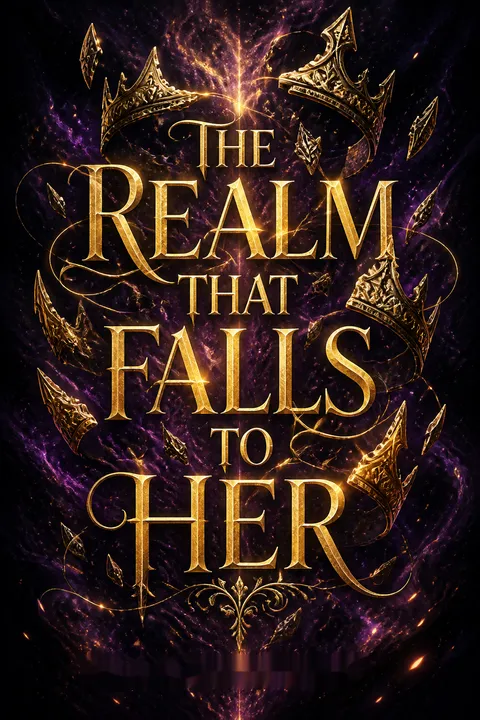
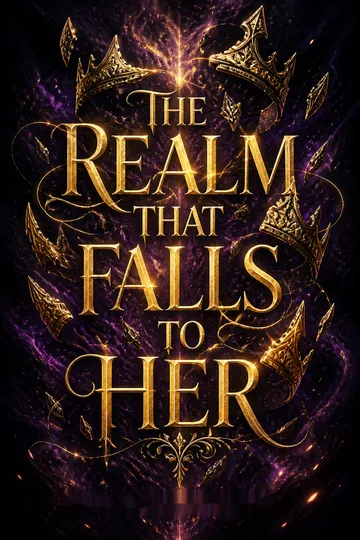
The Realm That Falls to Her, the final book in the Gold Weaver trilogy, receives mostly positive reviews with a 4.14/5 rating. Readers praise the action-packed conclusion, character development, and romantic elements. Common criticisms include rushed pacing, particularly toward the end, underdeveloped plot points (especially the council seat subplot), and some plot holes regarding true names. The memory loss trope divided readers. Most appreciated Eleanor's growth and Ruskin's character arc, along with expanded world-building in the Unseelie court. The ending satisfies fans seeking closure and happily-ever-after, though some felt emotional moments lacked depth.
People Also Read
Characters
Eleanor Thorn
The metal-working bridgeEleanor is a human inventor whose unusual ability to transform and manipulate metal draws her into Faerie’s political crises. Practical, curious, and stubbornly compassionate, she studies problems as systems to be tested rather than mysteries to fear. Her magic makes her valuable to powerful courts, but she resists being reduced to a weapon or a convenient solution. Eleanor’s attachment to Ruskin is profound, yet she also questions what life in Faerie will make of her and whether love requires surrendering her independence. Her defining strength is not simply courage under attack; it is the habit of asking who benefits from a rule, and whether that rule can be remade.
Ruskin Dawnsong
The guarded fae monarchRuskin is the powerful, mixed-blood ruler of the Seelie court, shaped by political isolation, family loss, and years of concealing his authority. He is strategic and fiercely protective, but his instinct to control danger can place him at odds with Eleanor’s independence. His Unseelie nature gives him strength and heightened senses, while his Seelie inheritance ties him to the kingdom’s land and magic. Ruskin’s relationship with Eleanor gives him a rare space to be known beyond his title and defenses. He is not defined by gentleness alone: his past includes choices made in grief and vengeance, and his ongoing challenge is to lead without treating brutality as inevitable.
Destan Lionsvale
The loyal courtly friendDestan is Ruskin’s childhood friend and a Seelie lord whose polished clothes and humor can disguise considerable nerve. He is loyal without being blindly obedient, and his friendship with Eleanor grows into a practical partnership built on trust. Destan can navigate court manners, but he also has experience with interrogation and danger that complicates his elegant appearance. His first instinct is to protect the people he loves; over time, he learns that protection sometimes means supporting their choices rather than directing them. He remains a source of levity, but his humor does not make him shallow. It is one way he keeps fear from deciding every action.
Evanthe Dawnsong
The corrupted queenEvanthe is Ruskin’s mother and a former High Queen whose reputation rests on diplomacy and a long commitment to Seelie. Her illness and the cold iron attack on her body leave her vulnerable to Cebba’s dark magic, though she initially presents herself as a controlled and reasonable ruler. Evanthe believes the Seelie court’s vanity and greed have made it unworthy of its power, and she sees harsh rule as a way to purge its weaknesses. Her political conviction is inseparable from personal injury: she wants control partly because she has learned how easily kindness can be exploited. This combination makes her more than a power-hungry antagonist, while never excusing the harm she causes.
Destan Lionsvale
Ruskin’s steadfast companionDestan is Ruskin’s oldest friend and a Seelie courtier whose wit and elaborate dress make him seem less formidable than he is. He helps Eleanor navigate unfamiliar courts and supports Ruskin through danger, while keeping his own fear visible enough to remain human. His loyalty has been tested by years of political threats, and he has acquired skills he would rather not use. Destan’s warmth is not weakness; it is a deliberate way of sustaining connection in a world that rewards suspicion.
King Lisinder
The wary Unseelie kingLisinder is Ruskin’s Unseelie uncle, a ruler whose first responsibility is preventing his people from being drawn into another catastrophic war. He is blunt, politically cautious, and willing to test those who seek his protection. His court’s traditions emphasize strength and honor, but Lisinder understands that public legitimacy matters as much as personal conviction. He cares for Ruskin and his family, yet does not initially let affection override the risks to his kingdom. His decisions reveal a leader trying to balance memory of past conflict with the possibility of a different alliance.
Maidar Cragfoot
The searching old tutorMaidar is Ruskin’s former tutor, an elderly Unseelie scholar who treats magic as a body of patterns worth testing. He is gruff, curious, and more invested in difficult questions than in social comfort. Maidar helps Ruskin explore the parts of himself he has suppressed and assists Eleanor in understanding the strange effects of Interra. His scholarship is grounded rather than omniscient: he offers theories, admits uncertainty, and relies on Eleanor’s instincts when conventional research reaches its limits.
Halima Sunshard
The absent warrior mentorHalima is a disciplined Seelie warrior and one of Ruskin’s most trusted friends. She trains Eleanor in combat and helps protect the court during its political upheavals. Direct, capable, and deeply loyal, Halima expresses care through preparation and action rather than sentiment. Her influence remains present through her parents, her sword, and the standards she taught Eleanor. She represents a form of courage that is neither showy nor careless: the willingness to take responsibility when others are in danger.
General Sunshard
The seasoned Seelie commanderGeneral Sunshard is Halima’s mother, a respected military leader who has survived the Great Divide and understands the cost of renewed conflict. She is disciplined and direct, with a strong sense of duty to the Seelie realm. Her loyalty is not merely to a monarch but to the people and institutions that deserve protection. She approaches Eleanor with pragmatic respect and brings military judgment to plans shaped by magic and court politics.
Lord Sunshard
The grieving Seelie veteranHalima’s father is a Seelie veteran whose gentler manner complements his wife’s command. He bears grief without allowing it to erase his judgment, and he recognizes the importance of his daughter’s principles. His support helps connect Ruskin’s cause to the older generation that remembers the cost of war. He also treats Eleanor as a person rather than a political anomaly.
Eleanor’s father
The human healer’s widowerEleanor’s father is a human villager who has lived through loss and years of emotional withdrawal. He is loving but not possessive, allowing Eleanor to discover a life beyond the village even when that choice separates them. His experiences under Albrecht’s rule leave him haunted, yet he finds renewed purpose by helping the wounded. He offers Eleanor a grounded measure of home that does not demand she remain unchanged.
Tesha
The rejected changelingTesha is a changeling with unusual features who lives between communities and carries a deep longing for recognition. Her speech is eccentric, but her perceptions are sharp, and she notices dangers others overlook. She once helps Eleanor and expects her promises to be honored in return. Tesha’s wish to belong to the Seelie court exposes the prejudice that can exist even among fae toward their own kin. She is defined by more than rejection: she is observant, persistent, and capable of choosing where she wants to make a home.
Ephor Jorna
The fearful court seerJorna is a Seelie diviner whose visions and interpretations influence court politics. She is sincere in her belief that prophecy can protect the kingdom, yet fear makes her cautious about acting when the consequences might fall on her. Her predictions are powerful but not always self-explanatory, and she sometimes lets others draw conclusions she has not established. Jorna embodies the danger of treating interpretation as certainty, as well as the possibility that an imperfect, frightened person can still bring crucial knowledge.
Pyromey
The fierce Unseelie cousinPyromey is Lisinder’s niece, a sharp-eyed Unseelie warrior and court security leader. She is pragmatic, openly skeptical, and willing to test Eleanor rather than offer easy approval. Her humor is edged but not mean, and she recognizes capability when she sees it. Pyromey understands the court’s political divisions and the influence held by people who use tradition to disguise prejudice. Her courage and appetite for action make her an important ally during Eleanor’s first attempts to gain Unseelie respect.
Lord Turis Hailtorn
The bloodline traditionalistTuris is an influential Unseelie lord who believes ancestry should determine status and political belonging. Controlled in public and skilled at provoking others, he prefers to manipulate conflicts rather than expose himself to direct consequences. His resentment toward mixed heritage and Seelie influence gives him a coherent political vocabulary, but his concern for tradition masks a willingness to sacrifice people to preserve his own vision of the court. He is a reminder that prejudice can operate through procedure and persuasion, not only open violence.
Kaline
Eleanor’s palace allyKaline is a Low Fae servant who once helped Eleanor in the Seelie palace. Practical and quietly brave, she understands the risks faced by servants under powerful rulers. Her loyalty to her brother and her anger at abuses of authority make her a natural part of the resistance. Kaline knows the palace’s hidden routes and the people who move through them, giving her influence that High Fae often underestimate.
Prince Gawain
The uneasy human heirGawain is Albrecht’s son, raised in a court where obedience and cruelty are tangled together. He is wary of fae power but shows a conscience that distinguishes him from his father. Gawain has little control over his position and worries about the people forced to serve the crown. His instinct to protect others suggests the possibility of a different kind of human ruler, though he must learn to act beyond the constraints his father imposed.
King Albrecht
The grasping human kingAlbrecht is the human ruler of Styrland, driven by entitlement, vanity, and a hunger to control what he cannot understand. He treats servants and subjects as instruments and sees marriage, magic, and political alliances as routes to personal advantage. His fixation on Eleanor and his willingness to bargain with fae make him dangerous beyond the borders of his own realm. He represents human cruelty without the excuse that Faerie’s customs are uniquely barbaric.
Cebba
The hidden source of corruptionCebba is Ruskin’s sister, a politically ambitious fae whose resentment and dark magic have lasting consequences for her family. She understands how to exploit other people’s desires and vulnerabilities. Though her role is often revealed through what others did or suffered, her choices help shape the danger surrounding Evanthe and the Seelie succession.
Ilberon
The ruthless fae patriarchIlberon is Ruskin and Cebba’s father, a powerful figure associated with the family’s old political conflicts. His presence in the story is tied to schemes that treat loyalty and magic as tools of succession. He offers a glimpse of the dynastic pressures that shaped Ruskin long before Eleanor entered Faerie.
Elias
The blunt Unseelie veteranElias is an older Unseelie warrior and bastet player who values earned status over inherited rank. Gruff and direct, he initially worries about the consequences of supporting Ruskin, but respects courage and competence when he sees them. His experience of war gives his caution weight, while his readiness to fight for the court makes him a reliable ally.
Jasand
The sharp-tongued court allyJasand is an Unseelie relative of Lisinder, a capable fighter who speaks with blunt humor. He understands the court’s traditions and tensions, and is willing to support Eleanor when her efforts challenge entrenched prejudice. His directness makes him useful in a society where political meaning is often hidden in ceremony.
Wistal
The formidable bastet playerWistal is a huge Unseelie warrior and bastet player who can transform into a powerful bull-like beast. He is physically imposing and initially doubts that Eleanor can survive the game, but respects skill and nerve. His presence reflects the Unseelie court’s admiration for strength while showing that strength can become generous and protective.
Gapir
The resourceful imp guideGapir is an imp who works with the Low Fae resistance. He knows hidden routes and community networks that the High Fae overlook. Cautious but committed, he insists that promises made to human allies matter. His practical knowledge helps turn resistance from an idea into coordinated action.
Thatch
The village boy turned soldierThatch is a young man from Eleanor’s village who once expected to marry her. Proud and accustomed to attention, he comes to Faerie as a soldier under Albrecht’s command. His assumptions about Eleanor and the fae reveal how sharply her life has diverged from the world she left behind.
Plot Devices
The naminai bond
Love as lifelineThe bond links Eleanor and Ruskin as true-name matches, allowing them to sense each other’s pain, share emotion, and channel power. It guides Eleanor through Interra and later helps her enter Ruskin’s memories. The bond is not a substitute for consent or knowledge: it cannot restore their shared history by itself, and Eleanor must still make choices about what she wants from their relationship. Its growing magical effects also alter Eleanor’s body, complicating the romance with questions of identity and the price of belonging.
Interra
A realm of exchangeInterra is the sunless space between Faerie and the human realm, entered through unstable water portals. Its landscape contains ghostly fragments of neighboring worlds and predatory shadow creatures. The realm takes something from those who enter and gives something in return. Ruskin loses access to his memories, while Eleanor and Evanthe return changed by new physical or magical traits. Interra’s shadow magic becomes central to the danger at Cavalil and Irnua, and the bond’s resistance to its influence gives Eleanor a way to undo what it has taken.
Cold iron and augium
Metal as weapon and keyCold iron is poisonous to fae and becomes the instrument through which Evanthe attacks the Seelie court and threatens the Unseelie. Eleanor’s ability to sense and reshape metal lets her remove iron from bodies, redirect it in battle, and discover the shard hidden in Evanthe’s heart. Augium, a powerful ore within the founding stone and surrounding mountains, gives Eleanor a connection to the land itself. Her expertise in metals therefore drives both tactical action and political change.
The founding stone
Legitimacy made tangibleThe founding stone anchors the Seelie monarchy, binds the ruler to the realm, and tests claims to power. Eleanor protects it from Evanthe, later uses its magical relationship to expose a route into the queen’s defenses, and ultimately breaks and reshapes it. In the new order, the stone can accept pledges from both High and Low Fae and tests for wisdom and loyalty rather than relying only on inherited status. It turns an ancient symbol of centralized authority into a mechanism for broader belonging.
The King’s Justice
A challenge that compels truthThe Unseelie King’s Justice is a formal challenge granted by the monarch when a serious accusation has been made. The challenger must defeat the accused in combat, after which the accused must directly answer the charges. A royal bloodline rule allows several accused relatives to fight together, raising the danger for Ruskin. The ritual provides a public process for exposing Turis’s conspiracy and Lucan’s murder, but its resolution relies on combat and execution, leaving the court to confront how justice can also reproduce violence.
The Gold Weaver Series
About the Author
Other books by Zara Storm
Download PDF
Download EPUB
.epub digital book format is ideal for reading ebooks on phones, tablets, and e-readers.








