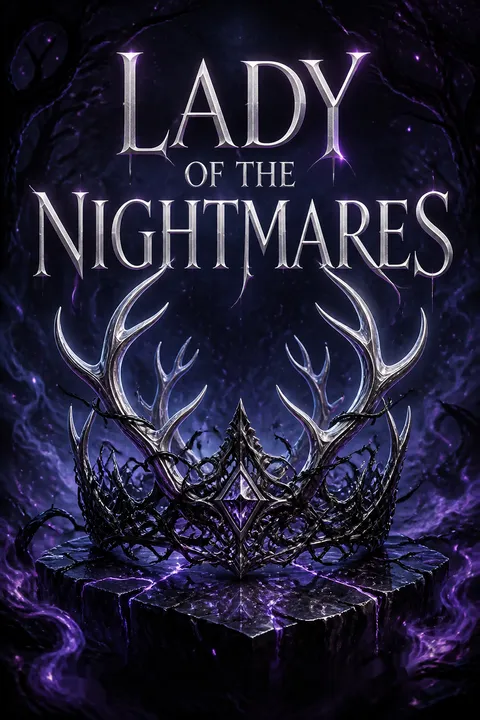


Plot Summary
Prologue
At Samhain, six months after King Penvalle’s death, the rebel leader Ambrose allows himself to be taken to the dungeon while Everlast City burns. He believes his visions have already fixed the night’s course.
A companion named Riven recognizes that Ambrose has chosen to be captured, but the royal he expects to meet is not Bael. Scion appears instead, his estranged brother. After the guards leave Ambrose alone in darkness, he senses a heartbeat and a familiar presence through the stone wall: Lonnie is nearby.
The prologue makes capture look less like defeat than a move in a contest whose rules Ambrose may see more clearly than anyone else. His confidence in prophecy is tempered by its uncertainty: he knows possible futures, not a single fixed outcome, and still has to choose among them. Scion’s unexpected arrival establishes that the brothers’ conflict is intimate as well as political. The final discovery of Lonnie nearby draws the human queen into a design she does not yet understand, while the dungeon’s darkness reverses the usual hierarchy: the seer, who reads the future, cannot see himself.
A Crown in Question
Lonnie Skyeborne, once a kitchen maid, became queen after killing King Penvalle during the previous Wilde Hunt. Now she must survive another hunt to keep the crown, while Scion, the former heir, watches from the palace rather than joining the pursuit.
Rebels have already entered the castle, and he fears they will strike the capital while the royal family is away. A recent visit to Ambrose, the imprisoned rebel leader, has left Scion with a dangerous possibility: marrying Lonnie could secure his claim. He keeps that bargain and his uncertainty from his family.
When Bael senses Lonnie is in danger, he abandons Scion mid-conversation, declaring that protecting her matters more than anything else. Scion realizes Bael believes Lonnie is his fated mate, and decides she must remain close to the family.
Scion’s dilemma begins as a problem of succession, but the facts he withholds reveal how little control he has over the people he means to govern. He can monitor Lonnie, threaten rivals, and weigh marriage as a political instrument, yet Bael’s departure breaks the family’s fragile agreement to prioritize the capital. Bael, meanwhile, treats his attachment as a command rather than a choice, a response shaped by a family curse that makes happiness seem dangerous. Lonnie’s crown puts her at the center of these calculations before she has any meaningful say in them.
The Quarry's Teeth
Alone at the depleted quarry, Lonnie faces three Fae hunters who want the crown. Her bluff that the crown cannot be transferred fails, so she throws herself from the cliff and plunges into the freezing lake rather than be captured. She escapes the water through a field of corpses, only to meet a giant Beithir serpent on the shore.
When fear gives way to anger, Lonnie summons a small flame, confirming the power her mother taught her to hide. The serpent warns that her magic could draw worse creatures, then accepts a bargain: Lonnie must eventually bring it royal blood. Bael arrives after she calls for him and escorts her through the remaining hours. At dawn, Lonnie returns to camp alive and keeps the crown.
Lonnie wins by making decisions under pressure, not by mastering the rules of a world designed to outmatch her. The cliff is a desperate calculation, and the serpent’s bargain turns survival into a future obligation. Her first flame marks a breach in the discipline her mother imposed, but it does not feel like uncomplicated liberation: the serpent links her power to a danger larger than herself. Bael’s timely arrival offers safety while deepening Lonnie’s distrust, since she has to rely on someone who has not told her what their connection means.
Rosey's Hidden Forecasts
After the hunt, Lonnie reads a page from Rosey’s recovered journals while Bael explains his own affinity for time and the dead. The entries describe a ship bound for Nevermore that will sink, a recurring dream of a valley, and a meeting in an Inbetwixt tavern involving Ambrose. Bael recognizes the pattern as the work of a seer, making Lonnie suspect that Rosey had powers neither sister understood.
The journal’s prediction of a sunken merchant fleet connects to news of a recent wreck, but it offers no clear explanation of Rosey’s role in the rebellion or her death. Lonnie stops reading when grief overwhelms her. She keeps the remaining journals close, hoping they will reveal what Rosey hid.
Rosey’s journal changes grief from a closed wound into an unfinished investigation. Lonnie has spent her life treating secrecy as protection, but the pages show that silence can also leave loved ones unknowable. The predictive entries invite interpretation without guaranteeing it; a shipwreck might be a warning, a memory, or only one strand in a larger pattern. Bael’s knowledge gives Lonnie a way to read the clues, but his own guardedness keeps their exchange reciprocal rather than intimate. The book links prophecy to the burden of deciding what evidence means when certainty arrives too late.
The Afflicted Cross South
As the royal party rides back from Inbetwixt, tremors split the road and topple carts. Bael carries Lonnie away from the falling trees, then uses his power to leave wreckage behind them as bait. A fissure opens and the afflicted, corrupted beings from ruined Aftermath, pursue them through the forest.
When their horse falls, Bael sends Lonnie through the shadows to the palace with a warning for Scion. She arrives in the middle of breakfast and reports the attack before collapsing.
Scion guards her while healers fail to wake her; an Underfae healer determines that Lonnie’s magic has been depleted. Scion then gives her his blood, and Lonnie eventually wakes in his tower, disoriented and convinced that she has been carried there for reasons he will not explain.
The afflicted make the kingdom’s neglected catastrophe physically present again. The tremor is not merely a disaster but a sign that the violence contained in Aftermath can travel south, while Bael’s choice to use destruction as a decoy exposes the moral compromises that shape survival. Lonnie’s collapse leaves her dependent on Scion, the prince who imprisoned her, and his blood makes that dependence bodily. The healers’ inability to explain her condition underscores how little the court understands about her. Even when Scion protects her, his secrecy prevents protection from becoming trust.
Cutthroat's Refusal
Once Lonnie can travel, Scion takes her to Inbetwixt against her wishes, hoping to find Ambrose and secure help against the afflicted. The city’s ruling family refuses to lend its soldiers, explaining that the guilds and a recent attack on merchant ships already threaten its control. Lonnie offers to help solve the guild problem in exchange for cooperation, forcing Scion to negotiate rather than simply command.
He brings her to the Crossroads tavern, a front for the thieves’ network, and asks its leader, Cross, to search for Ambrose. Lonnie recognizes Cross as the stranger who once gave her a cryptic warning in the capital. Cross admits the remark was not meant as a direct clue, but Scion suspects Ambrose arranged the coincidence.
Inbetwixt offers a political alternative to the palace’s reliance on inherited authority. Its rulers cannot simply obey Scion, and its guilds hold power the royal family has chosen not to absorb. Lonnie’s offer turns her from the person being transported into a participant in the negotiation, though she still lacks the information needed to judge the consequences. Cross’s loose network contrasts with the Everlast court’s secrecy: it can find people, but it cannot necessarily interpret them. The apparent coincidence of his earlier advice suggests that Ambrose’s influence may extend beyond direct command.
The Thieves' Long Memory
Cross explains that he and Scion served together before he left the army to build the thieves’ guild. His people track movements across Inbetwixt, and a lookout matching Ambrose’s companion Riven may have been seen at the Side Saddle, the pleasure guild’s house. To identify him, the group needs the madam Phillipa Blacktongue’s records.
Siobhan, Cross’s skilled safecracker, can reach the enchanted safe if Lonnie and Scion keep Phillipa occupied. Lonnie agrees before Scion can object. The plan draws them into a city where guilds, royals, and smugglers share uneasy ground. Cross’s recollection of Lonnie’s earlier encounter also raises the possibility that Ambrose has been arranging encounters around her without her knowledge.
The guild operates as a counter-institution: it gathers intelligence and loyalty outside the monarchy, while still depending on relationships with powerful figures such as Scion. Cross’s army history complicates the simple divide between royal servant and rebel sympathizer; he has seen the costs of military command and chosen another form of influence. Lonnie’s willingness to enter the plan is both agency and risk. She is not merely a lure for Phillipa, because she has her own reason to seek the records. Yet the growing pattern of coincidences leaves her uncertain whether her choices are truly her own.
A Face Stolen Twice
While Lonnie sleeps at Cross’s house, Kaius, the bartender, uses glamour to appear as Scion and enters her room. The imitation becomes suspicious when he addresses her in a way the real prince would not. Lonnie fights back with a heavy book and pins the intruder down before Scion arrives.
Scion recognizes Kaius as an incubus and later kills him in the guild den, displaying the body as a warning to anyone who might target Lonnie. Lonnie condemns the violence, but Scion says the killing also serves as deterrence and as a response to the threat of Gancanagh’s Dust in the city. He insists on sharing her room that night, arguing that the guild cannot guarantee her safety.
The attack exploits the very intimacy that has begun to unsettle Lonnie: Kaius borrows Scion’s face because desire and danger have become difficult for her to separate. Her ability to recognize the impostor and overpower him counters the assumption that she is only a protected object. Scion’s response, however, restores control through spectacle. His brutal warning may reduce immediate danger, but it also repeats the court’s logic that fear is an acceptable substitute for trust. Lonnie’s resistance to both the attacker and her protector makes clear that safety without consent can still feel like captivity.
Dust in the Madam's Desk
At the Side Saddle, Lonnie and Scion try to keep Phillipa occupied while Siobhan searches her safe. In Phillipa’s office, Lonnie opens a drawer and releases Gancanagh’s Dust, a substance that overwhelms its victims with compulsive lust. Both Lonnie and Scion are affected, and he nearly loses control. When he bites her, her blood interrupts the drug’s hold, leaving them shaken and unsure why it worked.
Scion gets Lonnie out, forces Phillipa to remain behind with the dust, and takes Lonnie back to Cross’s house. The next morning, he explains what the drug does and refuses to treat their drug-induced encounter as a freely chosen bond. Lonnie asks to be left alone, embarrassed by what she remembers and by how much she wanted it.
The dust makes coercion literal: it manufactures desire while removing the capacity to choose, forcing both characters to confront the difference between bodily response and consent. Scion’s restraint matters, but it does not erase his earlier violence or the danger of their situation. Lonnie’s blood stopping the drug suggests a connection neither understands, converting a frightening incident into evidence of a larger mystery. The scene also puts the pleasure guild’s apparent hospitality under suspicion. What looks like indulgence may conceal an industry built on manipulating appetite, power, and vulnerability.
Rhiannon in the Ledger
Siobhan succeeds in stealing Phillipa’s records, and Lonnie finds her mother Rhiannon Skyeborne listed among the names. Scion identifies a meeting connected to Lord Bard’s household and takes Lonnie to confront the ruling family. The parents deny meeting rebels, but their son has been working with them to move Gancanagh’s Dust through a new route into Underneath.
Scion also tells Lonnie that, years earlier, he helped seize her mother on Queen Celia’s orders. Celia had sought women born on the day Nightshade fell, but Rhiannon was not born then; Lonnie and Rosey were. Scion insists he did not kill her mother, though he cannot say what became of her. The revelation leaves Lonnie with more questions about her family and the rebels.
The ledger turns an intimate mystery into political evidence, but it offers no clean explanation. Rhiannon’s name places Lonnie’s family in a network of trafficking and rebellion, while Scion’s account reveals that the royal household treated people as targets in a prophecy-driven search. His distinction between taking and killing may be factually important, yet it does little to relieve Lonnie’s anger. The scene shows how bureaucratic records and royal memories can preserve fragments of truth while concealing the human cost. Lonnie now has reason to doubt not only the court but the stories she inherited at home.
Shadows Out of the Stable
After two days in Inbetwixt, Lonnie and Scion return to find the palace burning under a rebel assault. Scion binds her in the stables while he searches for the crown, but Lonnie accidentally discovers that she can shadow walk and escapes to the servants’ corridor. She finds Iola struggling to leave, admits that her advice to drink moondust tea caused Iola’s lingering illness, and gives her clothes and a route to safety.
Lonnie then reaches Bael’s chamber, where a gigantic feline beast kills a rebel who attacks from behind. The creature changes back into Bael. He admits that his transformation explains his absences, while Lonnie recognizes that the royals’ dependence on a few powerful defenders has left the palace dangerously exposed.
Lonnie’s escape is a practical breakthrough born from the exact condition that made her feel powerless: Scion’s shadow restraints. She discovers ability through necessity rather than formal training, while her encounter with Iola forces her to acknowledge harm caused by her own ignorance. Giving Iola her clothing does not undo the poisoning, but it offers concrete repair where apology alone cannot. Bael’s transformation reveals that the prince’s cage has contained a threat as well as a secret. Lonnie’s assessment of the attack shifts from personal survival toward political judgment: the monarchy has made itself vulnerable by concentrating power in a few people.
Ambrose Names Elowyn
As the palace collapses, Lonnie runs after the princes and collides with Ambrose, the rebel leader she has been seeking. He addresses her by her true name, Elowyn, and carries the obsidian crown and a weapon made to kill Fae. Ambrose says Rosey joined his cause willingly and hints that Lonnie’s mother may still be alive.
He explains that he has spent decades searching for a successor worthy of the crown and believes no one is born ready to end the Everlast curse. His plan is to force change by creating suffering severe enough to produce a worthy heir. He offers Lonnie answers if she will leave with him, but she refuses, demanding clarity while the castle and its inhabitants remain in immediate danger.
Ambrose’s use of Lonnie’s true name makes knowledge itself feel like a form of possession. He offers the answers she has long wanted, but only in exchange for allegiance, repeating the structure of the bargains she distrusts. His claim that suffering can forge a worthy ruler resembles Scion’s justification of violence for the kingdom, though Ambrose directs that violence against the whole established order. Lonnie refuses to let either man define her as the instrument of a cure. Her insistence on the endangered people around them makes the moral stakes immediate rather than theoretical.
The Source Opens Again
When the last tower falls, Lonnie’s grief and rage erupt into uncontrolled magic. The ground splits, and the afflicted pour from the opening, drawn by the power her mother had forbidden her to use. Bael reaches her and tries to bring her back to herself, while Scion and Ambrose hold the creatures away from the injured Everlasts and the surviving household.
The castle is lost, and the survivors flee in stages through the shadows, carrying wounded Thalia and the child Elfwyn. Lonnie cannot make the power stop and fears she has caused the disaster that follows them. By the time they reach a remote coastal village, the group is alive but displaced, exhausted, and wary of what her magic might unleash next.
Lonnie’s power does not arrive as mastery but as catastrophe. The eruption externalizes grief that she has kept compressed since Rosey’s death, yet its consequences cannot be reduced to emotional release: the afflicted threaten people beyond the palace, and Lonnie cannot simply will them away. The three princes’ cooperation around her makes their rival attachments less important than the immediate work of survival, but it does not resolve the danger she represents. The ruined castle also strips the Everlasts of their familiar setting and authority. Everyone must face the fact that old structures can no longer contain what has been buried.
Home Is Aftermath
In the coastal inn, Lonnie and Bael find comfort in each other after the escape, and their attraction becomes more openly physical. Scion remains close but withdraws after kissing Lonnie, admitting through his actions that he is shaken by how near she came to dying. The crown is still with Ambrose, and the next Wilde Hunt no longer offers a meaningful answer to who deserves to rule.
When the displaced group debates whether to seek shelter in Nevermore or Overcast, Lonnie chooses to return to Aftermath, where she was born and where she may find her mother. She also wants to understand the power she unleashed. Bael and Scion remain emotionally entangled with her, and she expects neither of them, nor Ambrose, to stay away.
The ending replaces the hunt’s public test of worth with Lonnie’s private decision about where to seek truth. Her return to Aftermath is not a solution but a refusal to let the court, the rebellion, or the men around her decide what her origins mean. Intimacy with Bael and Scion registers as a change in her capacity to accept comfort, yet the triangle remains unresolved and shaped by unequal power. The stolen crown, surviving rebels, uncertain mother, and uncontrolled magic all remain active questions. Instead of restoring the old political order, the ending sends Lonnie toward the wound at the center of it.
Analysis
The novel makes political power inseparable from bodily vulnerability. Lonnie’s crown is won through survival, but her authority remains compromised by a court that treats her as a pawn, a prize, or a possible cure. Her refusal to remain passive matters more than any single victory: she bargains with a serpent, questions Scion’s choices, offers Iola a route out, and ultimately chooses to seek her origins rather than follow the royal itinerary. Yet agency is not presented as effortless freedom. Lonnie often acts with partial information, and her protective lies can injure the very people she wants to save.
The Everlast family’s curse converts happiness into a political hazard. Bael’s protectiveness, Scion’s self-denial, and the family’s fear of bonding all arise from the same inherited belief that intimacy can destroy everyone. Their contradictory responses make affection difficult to distinguish from possession or strategy. The romances therefore sharpen the book’s central ethical problem: care may be genuine while still being coercive. Scion’s violence can protect Lonnie and also reduce her choices; Bael’s devotion can comfort her and conceal essential facts.
Prophecy deepens this problem rather than solving it. Celia, Rosey, and Ambrose preserve visions, but foreknowledge does not produce consensus or absolution. The leaders still choose who will suffer, then explain those choices through the future they claim to serve. Ambrose’s attempt to forge a worthy heir through catastrophe mirrors the royal family’s own willingness to sacrifice people for stability. Lonnie’s uncontrolled magic disrupts both designs. The collapsing palace and the opening earth suggest that buried harms cannot be managed indefinitely through secrecy, punishment, or dynastic ritual. The ending offers no restored throne; it gives Lonnie a direction, a birthplace, and the choice to pursue the truth on her own terms.
Review Summary
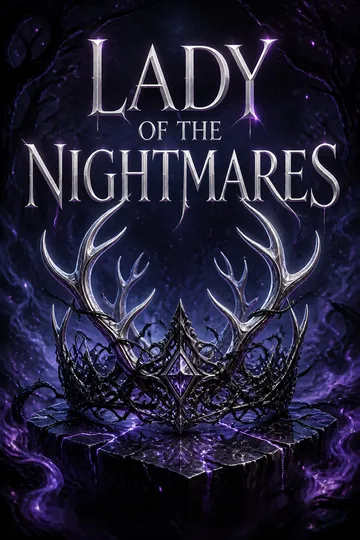
Readers generally enjoyed Lady of the Nightmares, praising its world-building, character development, and plot complexity. Many appreciated the slow-burn romance and growing tension between characters. Some found the book plot-heavy and slow-paced, while others loved the intricate storytelling. Criticisms included a lack of focus on certain characters and confusion about the plot's direction. Despite mixed opinions on pacing and romance elements, most readers expressed excitement for the next installment in the series, highlighting the author's ability to create an engaging and mysterious fantasy world.
People Also Read


Characters
Lonnie Skyeborne
The unwilling human queenLonnie is a former kitchen maid thrust into the monarchy after the previous king’s death. She is resourceful, suspicious, and quick to use humor or deception when a stronger opponent corners her. Her mother’s rules taught her to hide, but her choices increasingly bring her into the political and magical conflicts she once wanted to avoid. Lonnie’s grief for her twin sister Rosey complicates every new clue about the rebellion, while her growing reliance on the Everlast princes challenges her old certainty that closeness is only another danger. She is not a natural ruler or fighter, but she keeps acting, even when she does not yet understand the power she carries.
Scion
The shadowed former heirScion is the Everlast prince once expected to inherit the throne. A former soldier and feared wielder of illusion, he approaches political crises as problems to be contained, often through force. He believes the kingdom’s survival justifies terrible choices and rarely distinguishes protection from control. Lonnie unsettles his certainty because she is difficult to intimidate and refuses to accept his explanations at face value. Beneath his hostility lies a fierce sense of responsibility toward his family and country, though his habit of withholding information makes that responsibility feel threatening to those he means to protect.
Bael
The dangerous devoted princeBael is a younger Everlast prince with golden hair, feline eyes, and magic that is difficult even for his family to manage. He is playful and irreverent when calm, but his intensity sharpens when Lonnie is threatened. A cage in his chamber and regular absences suggest that he keeps part of himself under strict restraint. Bael trusts instinct more readily than explanation, and his certainty about Lonnie contrasts with her caution. His protectiveness can feel comforting, possessive, or both, leaving him to negotiate the difference between wanting to keep her safe and letting her choose her own risks.
Ambrose Dullahan
The elusive rebel commanderAmbrose leads the rebellion against the Everlast regime and moves through events with the patience of someone who believes he can see several steps ahead. His prophetic ability gives him an unusual relationship to time, but it does not eliminate uncertainty or the need to act. He is persuasive without being reassuring, offering people partial truths and demanding a price for what he knows. Ambrose’s challenge to the monarchy grows from a belief that its suffering has become comfortable rather than corrective. His methods make him difficult to distinguish from the rulers he opposes.
Rosey Skyeborne
Lonnie's secretive twinRosey is Lonnie’s identical twin, remembered as gentler and less combative than her sister. She kept daily journals and shared a childhood shaped by their mother’s warnings about the Fae. Lonnie’s grief is sharpened by how little she understood about Rosey’s private life. The journals preserve fragments of dreams, observations, and names that may matter to the rebellion, turning Rosey’s absence into an active mystery rather than a settled loss.
Rhiannon Skyeborne
The absent motherRhiannon raised Lonnie and Rosey to conceal themselves from the Fae, shaping her daughters’ habits through strict warnings and protective lies. Her past is tied to the ruined northern province and to the royal court, though the full reasons for her choices remain unclear. Rhiannon’s influence persists in Lonnie’s instinct to hide her identity and distrust promises. She represents both the care that kept the twins alive and the cost of growing up without reliable answers.
Aine
The sharp-tongued princessAine is Bael and Gwydion’s sister, a princess who dislikes the expectations attached to her title. Her dry wit lets her puncture family pretensions, but she is also a close confidante of Scion and understands the political stakes surrounding him. She recognizes when Lonnie’s safety or the capital’s stability is being treated as an afterthought. Aine’s bluntness is a form of control in a family where much is left unsaid.
Gwydion
The court's trusted healerGwydion is Bael’s older brother, a powerful healer with a genial reputation that makes him seem less threatening than other Everlasts. He is engaged to Thalia and often acts as a calmer presence among his volatile relatives. His easy manner should not be mistaken for innocence: he understands how to bargain and how to make others accept an alliance. Gwydion’s medical skill and political instincts give him influence even when he appears to stand outside the central conflict.
Thalia
The overlooked political voiceThalia is Gwydion’s betrothed and a cousin of the Everlast family. Often quiet and visibly burdened, she has been trained to understand the cost of dynastic arrangements. She offers Lonnie practical advice about gathering information and forcing her way into decisions rather than waiting to be invited. Thalia’s perspective comes from a smaller province that depends on Everlast power but has its own political needs. Her restrained demeanor hides a capacity for direct criticism.
Iola
Lonnie's recovering friendIola served Lonnie in the palace and treated her with kindness when few others did. She has her own limits and vulnerabilities, but she continues to seek a place where she can live beyond service. Her connection with Lonnie is one of the few relationships not founded on royal status or romantic desire. Iola’s presence reminds Lonnie that her mistakes affect real people, and that care must sometimes become practical action.
Enid
The self-preserving servantEnid is a palace servant who prioritizes her own safety and avoids unnecessary risks. Her relationship with Lonnie has been wary rather than affectionate, but she can cooperate when their interests align. Enid’s caution reflects the precarious position of servants who must survive powerful households without the protection of rank.
Cross
The thieves' guild fatherCross leads a close-knit thieves’ guild and once served alongside Scion in the army. He treats the guild as a family, providing structure to people who might otherwise be discarded by respectable society. His humor and hospitality do not make him harmless; he understands information, criminal power, and the cost of war. Cross’s relationship with Scion lets him speak to the prince with a rare lack of fear.
Siobhan
The guild's master safecrackerSiobhan is one of Cross’s guild members and an expert at opening locks. Her confident warmth gives Lonnie a glimpse of companionship outside the palace’s rigid social order. She is observant about the people around her and speaks plainly about the marks and signals others read. Siobhan’s skill turns the group’s search for Ambrose into a workable plan.
Kaius
The glamour-wielding bartenderKaius works at Cross’s tavern and moves easily through the pleasure guild’s social world. His charm and glamour make him difficult to read, especially to someone unfamiliar with the range of Fae and Unseelie abilities. He is useful to Cross’s network, though his persuasive manner makes trust a risky proposition.
Phillipa Blacktongue
The pleasure guild madamPhillipa runs the Side Saddle, a pleasure house whose influence reaches beyond its rooms. She guards her records carefully and treats access to her time as a matter of power. Her business depends on managing desire, secrecy, and the people who come to her establishment. Phillipa is accustomed to setting the terms of an encounter, making her a formidable obstacle to those who want information.
Elfwyn
The young royal illusionistElfwyn is the nine-year-old daughter of Penvalle and Mairead and looks up to Scion. She has inherited a talent for illusion despite her age. Her youth does not shield her from court politics, and her eagerness to prove herself can be dangerous. Elfwyn’s presence shows how royal children are shaped early by the family’s conflicts and expectations.
Quill
Scion's watchful ravenQuill is Scion’s large raven and a constant presence at the prince’s side. He watches Lonnie during the hunt and seems to tolerate her more readily than most people. The bird functions as both companion and lookout, extending Scion’s attention beyond the palace.
Lord Bard
Inbetwixt's uneasy rulerLord Bard governs Inbetwixt alongside Lady Acacia. His authority is strained by the guilds, troubled trade routes, and the Everlast family’s demands. He is cautious in the face of Scion’s power and protective of his city’s limited resources.
Lady Acacia
Inbetwixt's pragmatic rulerLady Acacia shares rule of Inbetwixt with Lord Bard. She understands the city’s dependence on trade and the danger of losing control of its gates. Her apparent delicacy masks a practical awareness of political pressures and the costs of royal interference.
Bard Inbetwixt
The lord's rebellious sonThe son of Inbetwixt’s ruling family resents the royal court and is drawn into the city’s conflict between guild power and the rebellion. His hostility toward Scion and Lonnie makes him a volatile political actor, particularly when the city’s trade and security are at stake.
Mairead
The guarded royal motherMairead is Scion’s mother and the mother of the younger royal children. She has lived within the Everlast court’s shifting alliances for decades and is closely connected to its most painful family history. Her reticence leaves others to interpret her motives, sometimes with little evidence.
Plot Devices
The Wilde Hunts and crown
A public test of ruleThe Hunts determine who may claim and keep the obsidian crown. A challenger must take it during the trial, while the current ruler must survive or cross the boundary. The structure turns political legitimacy into a physical contest and makes Lonnie’s unexpected queenship precarious. Each hunt also creates a deadline that forces rivals to negotiate, protect, or attack rather than postpone their disputes. In this story, the advancing threat of the afflicted eventually makes the scheduled contest seem small beside the danger facing the country.
Prophecy and private journals
Clues with uncertain meaningsQueen Celia’s prophecies and Rosey’s journals preserve fragments of possible futures, dreams, and political events. They direct characters toward specific people and places without explaining how the pieces fit. Lonnie’s reading of Rosey’s entries turns her sister’s private writing into an investigative trail, while Scion’s reliance on prophecy shapes his ideas about the throne and the curse. The device creates tension between foreknowledge and responsibility: characters may glimpse danger, but they must still decide how much to reveal and what action to take.
Names and bargains
Words that create leverageFae bargains and true names carry social and magical weight, making speech a form of negotiation rather than simple exchange. Lonnie has learned to conceal her name and lie to protect herself, while the serpent demands a promise sworn on her identity. Ambrose’s knowledge of her true name reveals how vulnerable she may be to those who know more about her than she does. The rules are not entirely simple, however: power determines whether a name can control someone, and a bargain can protect one person while binding them to future danger.
Shared blood and magic
Intimacy with consequencesBael first gives Lonnie his blood to heal her, and Scion later does the same when she falls into a magical sleep. Blood-sharing can transfer power and carries implications beyond ordinary healing, especially in a family whose curse makes bonds dangerous. The marks left by biting and the effects of shared magic become evidence of connections the characters are not prepared to name. This device links bodily intimacy to political stakes, since a private bond may affect succession, family survival, and the balance of magical power.
Gancanagh's Dust and the afflicted
Coercion becomes catastropheGancanagh’s Dust overwhelms its victims with lust and can cause destructive effects beyond the immediate encounter. Its production and movement through trade connect the pleasure guild, Inbetwixt’s ruling family, and the rebellion. The afflicted are a separate but related danger: people transformed by Wilde magic after the destruction of Nightshade. Lonnie’s forbidden power draws them toward the capital, turning an old catastrophe into a present crisis. Together, the drug and the afflicted expose how institutions exploit vulnerability while insisting that the resulting harm is necessary or controllable.
Wilde Fae Series
About the Author



Download PDF
Download EPUB
.epub digital book format is ideal for reading ebooks on phones, tablets, and e-readers.








