

Plot Summary
Prologue
A year before the rebellion, Bael and his cousin Scion patrol the hunting woods and find Lonnie, a human girl with untamed red hair, secretly meeting a guard. Scion’s illusion should hide the princes from her, but Lonnie senses them, sees them, and reaches for her lover in fear.
Scion tries to stop her from witnessing them, yet cannot bring himself to harm her. Bael recognizes the force of that hesitation and feels an equally inexplicable pull toward the girl. Neither understands why she can see through their magic, but Bael is certain their paths will cross again.
The first encounter turns a chance trespass into a question of agency. Lonnie is not simply visible to the Fae; Scion’s inability to hurt her interrupts the violence that has defined his family, while Bael’s fascination makes her a problem he wants to solve. The scene plants attraction beside danger without explaining either, so the reader experiences the same uncertainty as the princes. Its year-long gap also makes the pull feel less like a sudden romance than a force already shaping decisions before Lonnie understands what she is.
Magic in the Cellar
One week after the rebels destroy the obsidian palace, Lonnie shelters with Bael and the displaced royal family in the thieves’ guild beneath Inbetwixt. She tries to master shadow walking, but fear of the afflicted creatures her magic once summoned keeps her abilities unreliable. Her immediate goal is not a throne: she wants to reach Aftermath, where she hopes to find her mother, whom she had believed dead.
At a strategy meeting, the group agrees to smuggle her out before the rebel leader, Ambrose Dullahan, can capture her. Iola stays behind to recover, while Bael’s sister Aine insists on joining the journey. Scion says nothing about coming, leaving Lonnie unsettled by how much she expects him to follow.
Lonnie’s first objective is a search for family, not a bid to govern, which keeps the political crisis personal. Her magic carries an immediate social cost: the afflicted may endanger allies as well as enemies, so hesitation is not mere timidity. The guild meeting also exposes a split between the way others see her and the way she sees herself. Soldiers fear her power, yet she still thinks of herself as someone who needs protection. Scion’s silence matters because it reveals how thoroughly attachment has entered her calculations, even before she is willing to name it.
The Harbor Turns Hostile
Cross leads the party through the thieves’ hidden tunnels and out near Inbetwixt’s harbor, where they find the eastern gate closed and rebel soldiers already converging. Aine uses her mind-influencing power to turn several attackers against themselves, while Bael returns to the fight after sending Lonnie away from the crush.
Lonnie refuses to abandon the group until Bael makes clear the rebels are targeting her. She runs into the Waywoods, where Riven, a tattooed rebel soldier, shoots a crossbow bolt through her chest.
With her pursuer closing in and the wound worsening, Lonnie forces herself to reach for the shadow magic she has failed to command in practice. The forest blurs, and she vanishes before she can tell whether she escaped or collapsed.
The escape converts an abstract political threat into bodily vulnerability: the rebels do not merely oppose Lonnie’s claim, they pursue her as an object to seize. Her decision to run is not cowardice but a difficult recognition that staying would make the others’ defense harder. The arrow then strips away the illusion that magic can be summoned safely through rehearsal. Lonnie’s first successful shadow walk comes when survival leaves her no other choice, linking power to emergency rather than mastery. Aine’s intervention complicates the family portrait too: the princess who seemed ineffectual can act decisively when she chooses.
Blood in the Barn
Scion reaches Lonnie by following the pain he feels when she is wounded, with his raven Quill guiding him through the woods. His blood revives her enough to stay conscious, but the arrow must come out before she can heal. He pulls it free, and Lonnie drinks from his wrist until her wound closes.
The shared blood intensifies their attraction; they sleep together in the abandoned barn, and Scion realizes he loves her even though he believes she cannot be his mate. Their uncontrolled magic ignites the building. Bael arrives from the harbor battle, finds both of them alive, and understands that Scion has crossed a line he had been resisting. Rather than explain themselves, the three leave the burning barn together to find shelter.
The rescue is built on dependence that neither character can comfortably admit. Scion’s arrival answers his earlier silence with action, while the blood exchange makes care physically consequential rather than merely romantic. His realization that love may exist without a fated bond removes the excuse that destiny alone explains his feelings. The fire gives that emotional loss of control a visible consequence, yet the scene does not punish Lonnie for accepting help. Bael’s arrival turns private intimacy into a shared problem: the trio must negotiate desire, loyalty, and the family curse without pretending that any one of them can simply withdraw.
A Bed Too Small
The trio reaches an inn in Forlorn, where Lonnie asks Bael and Scion how an ordinary person can defend herself against Fae. They explain the danger of Source-forged weapons, magic drain, and other ways immortals can die, confirming that Lonnie cannot rely on either prince to be beside her every time.
In the inn’s cramped bathing room, Bael argues that she and Scion are bound to him as mates, despite the Everlast curse that makes happiness dangerous for the family. Scion resists the conclusion, but their intimacy makes the attachment impossible to dismiss. In the morning, Lonnie slips away before either man wakes. She believes distance may keep the curse from killing them, though she has no plan beyond reaching her mother.
Lonnie’s decision grows out of a contradiction: the people who make her feel safest may also be endangered by her happiness. The curse turns pleasure into a collective threat, so intimacy cannot be treated as private or consequence-free. Bael articulates a shared bond, but Scion’s resistance shows how shame and fear can make a person reject the very connection he wants. Lonnie’s departure is an act of protection, yet also a return to solitary survival, the strategy she learned before either prince entered her life. Her choice is emotionally coherent even as it creates the next danger.
Ambrose Takes the Road
Lonnie leaves the inn in the night and searches a stable for a horse. Ambrose appears before she can escape, and Riven knocks her unconscious on his orders. She wakes aboard Ambrose’s ship, far from shore, where he admits that he arranged both the capture and the earlier shooting. Ambrose says he needs her alive and gives her a diluted mixture of Gancanagh’s dust, which suppresses magic rather than inducing its usual intoxicating effects.
He offers information in exchange for questions answered over meals, making food part of a bargain that Lonnie resents but eventually accepts. While Ambrose controls the ship and her access to magic, Lonnie begins to understand that his interest in her is more complicated than immediate murder.
Ambrose’s coercion is dressed as pragmatism, but the distinction does not erase Lonnie’s lack of consent. His bargain over meals grants her a limited channel for information while preserving his control over movement and magic. That arrangement mirrors the larger political world: those with power decide what the vulnerable may know, then call the exchange reasonable. Lonnie’s resistance remains active, even when she has to choose between hunger and pride. Ambrose, meanwhile, presents himself as both captor and caretaker, making trust difficult to assess. His contradictions create tension without making the harm he causes disappear.
Rosey’s Last Choice
At dinner, Ambrose confirms that Lonnie’s mother is alive but not in Aftermath. When he asks about her closest friend, Lonnie breaks down and accuses him of causing her twin Rosey’s death. He explains that Rosey had visions of Lonnie joining the rebellion and believed she could prevent that future by taking her place in danger.
Already gravely ill, Rosey became a spy, passing information through messages written on moondust leaves. She joined the attack on King Penvalle knowing she was unlikely to survive, hoping to keep Lonnie from being the sister who died. Ambrose’s account leaves Lonnie devastated and angry, but eventually she gets up, eats, and asks for useful work rather than surrendering to grief.
Rosey’s story complicates the comforting idea that sacrifice guarantees control over the future. She acts to protect Lonnie, but her prophetic knowledge cannot prevent either loss or uncertainty. The revelation also shifts Lonnie’s guilt: her sister’s choices were loving, but they were not hers to command or repay perfectly. Ambrose’s explanation is not absolution, and Lonnie does not immediately accept it as such. Her gradual return to the world begins with small bodily acts, eating and asking for a task. That recovery matters because grief is shown as something endured through renewed participation, not solved by a single revelation.
A Tentacle at Sea
Lonnie tests the unlocked cabin door and escapes in a rowboat, hoping to reach land before the ship’s crew notices. A Charybdis rises from the icy water and overturns her plan; Ambrose pulls her back aboard before the creature can drag her under. After that failure, he offers to teach her swordsmanship, and Lonnie slowly learns to keep a blade steady and move with control.
A second Charybdis attacks the ship as they near Underneath. Lonnie cannot use magic because Ambrose’s potion still suppresses it, but she survives the chaos with the weapon skills he taught her. During a quieter night, she learns that Ambrose is trying to break the Everlast curse and chooses to help him rather than remain a passenger in her own fate.
The sea makes escape costly without turning Lonnie’s attempt into foolishness: she acts on the only opening she can find, then adapts after the ocean proves more dangerous than the ship. Sword training gives her a form of agency that does not depend on latent magic or a rescuer arriving at the right moment. Ambrose’s lessons are a compromise between his desire to protect her and her insistence on competence. Her decision to help him follows a similar logic. She does not become passive because she is captive; she chooses a purpose after learning enough to judge the stakes.
The Serpent’s Bargain
While Lonnie sails toward Underneath, Bael and Scion seek the ancient serpent at the abandoned quarry, hoping its sight can locate her. The creature demands payment for Lonnie’s earlier bargain, then reveals that she is traveling by ship to Underneath. It also declares that Scion and Lonnie’s exchanged marks and blood make them husband and wife under the land’s old laws.
Scion offers his blood for the serpent’s answer, and Bael destroys the creature before it can devour him. The cousins cross the Hedge into Underneath, where they disguise themselves in stolen guards’ robes. After Scion strikes a guard who insults Lonnie, the king’s soldiers surround them and take both princes to the castle dungeon.
The serpent transforms romance into political and legal fact, but the revelation does not resolve Scion’s emotional resistance. Instead, it raises the stakes of his choices: Lonnie is not merely someone he loves, but someone the world now recognizes as his spouse. Bael’s intervention saves him while exposing how much his power frightens even those closest to him. Their capture shows that crossing into Underneath is not a simple rescue mission; the kingdom’s rules are built around the king’s authority and can neutralize the princes’ usual advantages. Their violence toward the guard also reveals the danger of confusing devotion with entitlement.
The Crown at Dinner
Ambrose brings Lonnie into King Gancanagh’s castle, where magic fails inside walls treated with Gancanagh’s dust. At dinner, Ambrose presents Lonnie as Rosey and lets the king assume she is the dead twin, protecting her true name.
The king discusses business with Ambrose while his silent, veiled wives sit beside him. Lonnie leaves for air and follows one wife onto a terrace, where a red-robed servant attacks them. Remembering her sword lessons, Lonnie fights with a concealed dagger and kills the assailant by cutting his throat and then removing his head.
She returns to the feast carrying the head, forcing the king’s court to confront the attack. Ambrose rushes her away before Gancanagh can respond, and she begins to suspect the assault was a deliberate test.
The dinner turns etiquette into a weapon: Ambrose’s technically accurate misdirection protects Lonnie, while the king’s courteous welcome conceals surveillance and danger. Lonnie’s choice to leave the table creates risk, but it also exposes the court’s willingness to place her in harm’s way. Her fight is a payoff to the practical training she insisted on receiving, not a sudden transformation into an expert. Returning with the attacker’s head reverses the court’s gaze: Lonnie refuses to let violence be hidden behind ceremony. The scene leaves open whether the king ordered the test, preserving suspicion as a political fact rather than a solved mystery.
Blood Opens the Cells
During the king’s hunt, Lonnie searches the castle and follows one veiled queen to the dungeon entrance. She finds Bael and Scion imprisoned in separate cells. Scion has been tortured and, at first, cannot recognize Lonnie; she reaches him by insisting on the hatred he remembers between them until his awareness returns.
A fellow prisoner explains that only royal blood can open the cell locks. Lonnie’s own blood fails, but Bael’s opens both doors. She also discovers an unkempt captive who claims to have spent nearly seven thousand years imprisoned and offers knowledge about the crown. Before she can question him further, the veiled queen charges into the dungeon with a sword, turning the escape into a fight.
The dungeon reverses the roles Lonnie and the princes have occupied throughout the journey. She has to act without magic, interpret a strange rule, and choose whom to trust while those she loves are physically trapped. Her effort to reach Scion through their old antagonism is psychologically precise: she uses a familiar emotional pattern as an anchor when tenderness no longer reaches him. Bael’s blood opens the cells, making ancestry a practical key rather than an abstract status. The ancient captive’s claim introduces another unresolved history, but Lonnie’s immediate priority remains the people she came to save.
The Veil Falls
The veiled queen attacks Bael, who transforms into a lion and tears through the dungeon’s magic and stonework. Scion drags Lonnie into a cell to keep her from the fight, but Bael’s claws strike the queen and her veil slips.
Lonnie recognizes the attacker as her mother, Rhiannon, whose scream she has carried in memory since childhood. The castle begins collapsing around them. Scion carries Lonnie toward the exit despite her protests, and Bael follows in his beast form.
The violet-eyed prisoner escapes the ruined cell and catches up with them; when Lonnie begs him to help her mother, he lifts Rhiannon from the rubble. They flee the castle with Rhiannon alive but gravely injured, while Lonnie is left without an explanation for her mother’s attack.
The revelation does not offer the reunion Lonnie has imagined. Her mother is present, but as an attacker whose motives remain unknown, so recognition produces shock rather than comfort. The collapse of the castle gives the emotional rupture a physical counterpart: every attempt to pause and understand is interrupted by imminent danger. Scion’s choice to carry Lonnie away prioritizes her survival over her stated wish to save Rhiannon, exposing the limits of protective love when it overrides agency. The prisoner’s intervention creates a fragile possibility of repair, but not forgiveness or safety. Lonnie escapes with her mother’s body and a question she cannot yet ask.
A King Falls at Sea
Outside the castle, Lonnie insists the group head for Ambrose’s ship rather than flee across the bridges, and Scion follows her decision. Gancanagh’s hunting party catches them before they reach the harbor. Bael meets his father in lion form while Scion gets Lonnie to the ship, where Ambrose and the crew are preparing to sail.
Lonnie tries to return to the fight, but Ambrose holds her back until Bael tears into Gancanagh’s throat and kills him. The victory makes Bael the new king of Underneath. Seeing Bael survive, Lonnie dives from the ship into the harbor and swims to him. His lion body shifts back into his familiar form as she reaches him, and the two reunite on the shore.
The climax makes the cost of divided loyalties immediate: Scion and Ambrose choose escape, while Bael stays to face the king, and Lonnie refuses to treat either decision as emotionally simple. Bael’s victory is not achieved through a prophecy or a negotiated settlement but through his own dangerous power and willingness to meet Gancanagh directly. His accession changes the political map, yet it does not erase the danger that produced the fight. Lonnie’s leap into the water is an act of attachment and choice, not simply rescue. She risks her own safety to return to Bael after spending the book trying to protect others by leaving them.
The Kings Come Aboard
Back on Ambrose’s ship, Rhiannon remains unconscious but alive, and the newly freed prisoner asks to speak privately with Ambrose. Lonnie recounts what happened in the castle to Bael and Scion, including the serpent’s revelation that Scion is her husband under Fae law.
The princes confront Lonnie for leaving the inn, but she explains that she feared her happiness would trigger the family curse and kill them. Bael and Scion answer with affection rather than a promise that the danger has vanished, and Lonnie accepts their closeness without pretending her fear is solved.
Quill arrives on the deck, confirming Scion is near. Ambrose says he cannot foresee Lonnie’s future, but believes the group can return to the capital and face the questions still waiting there.
The ending offers reunion, not resolution. Rhiannon’s survival opens the possibility of answers, while her unconsciousness keeps the mother-daughter conflict suspended. The freed captive and Ambrose’s private conversation also preserve a larger mystery beyond the immediate family crisis. Lonnie’s fear of the curse remains rational because no one has proved it broken; affection cannot function as evidence. Yet she no longer treats separation as the only ethical choice. The group’s return toward the capital is therefore a provisional commitment to face consequences together. Emotional security begins not with certainty, but with the willingness to remain present while uncertainty persists.
Analysis
The novel treats power less as an abstract gift than as a question of who may decide what happens to another person. Lonnie is repeatedly captured, protected, recruited, or carried away by people who claim to know what is best for her. Her resistance is therefore not simply stubbornness. It is an effort to preserve authorship of her own life in a world where magical and political hierarchies make coercion seem ordinary. Her most significant gains come when she insists on practical agency: choosing the road, demanding the means to defend herself, and returning to Bael rather than remaining safely aboard the ship.
The Everlast curse turns happiness into a problem of collective responsibility. Bael and Scion fear that personal fulfillment could kill their family, so emotional restraint becomes a survival strategy handed down across generations. The curse’s real force lies not only in whether it is literally true, but in how thoroughly it shapes behavior before anyone can test it. The novel refuses to let romance erase this danger. Lonnie’s care for the princes is inseparable from fear, while their desire to protect her repeatedly risks becoming control.
Prophecy adds a second pressure on choice. Ambrose sees branching futures and tries to arrange the world toward a chosen good, but Lonnie remains unreadable to him. Rosey’s visions likewise fail to prevent suffering, even when she acts out of love. These limits challenge the fantasy of perfect foresight: knowing more can enlarge responsibility without guaranteeing a better outcome. The book’s emotional resolution is consequently provisional. Bael becomes king, Scion accepts his bond, and Lonnie reunites with them, but her mother’s motives and the curse remain unresolved. Hope emerges not from certainty that everything is safe, but from choosing to face the consequences together.
Review Summary
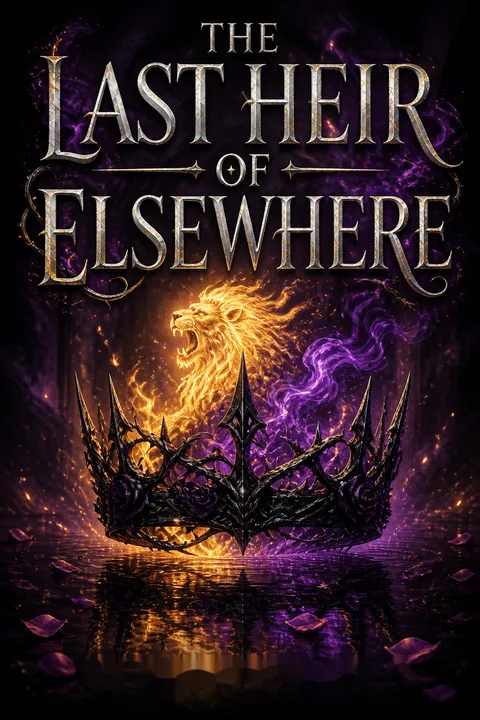
The Last Heir of Elsewhere is the third book in the Wilde Fae series, receiving mostly positive reviews. Readers praise the character development, world-building, and spicy scenes. The story follows Lonnie and her growing harem, introducing a new love interest, Ambrose. While some criticize the increased focus on romance, most enjoy the plot twists and evolving relationships. Fans eagerly anticipate the fourth book, hoping for answers to lingering questions about Lonnie's true identity and the mysterious prophecy.
Characters
Lonnie
Reluctant mortal queenLonnie is a human-raised young woman whose survival instincts were shaped by poverty, loss, and a lifetime of being underestimated. Her red hair and apparent vulnerability make others notice her, but her defining trait is not helplessness: she observes quickly, challenges decisions that affect her, and keeps moving when fear would be easier. She distrusts Fae authority because she has experienced its cruelty firsthand, yet she is capable of revising her judgments when someone’s actions contradict her assumptions. Her emerging magic frightens her because it can endanger people around her. Lonnie’s deepest struggle is balancing independence with connection, especially when love seems entangled with danger.
Bael
Dangerous golden princeBael is a Fae prince with yellow eyes, sharp teeth, and a playful manner that can conceal a taste for violence. He is fiercely attentive to Lonnie, but his protectiveness can slip into possessiveness, and he often uses humor to approach feelings he would rather not expose directly. His magic is potent and difficult to control, which has made his family treat him as a danger even when he is trying to help. Bael values his bond with Scion as deeply as his romantic connection with Lonnie. He wants closeness, but the Everlast curse makes happiness feel like a threat rather than a refuge.
Scion
Raven-marked warrior princeScion is a battle-hardened Fae prince with silver eyes, shadow magic, and a reputation for cruelty. He speaks through bluntness and anger because vulnerability feels to him like a loss of control. His years as a soldier have trained him to weigh individual risk against the safety of a larger group, a habit that can make his care look like command. Scion is close to Bael, though their friendship is tested by their shared feelings for Lonnie. He distrusts easy happiness and struggles to separate love from the danger his family’s curse attaches to it.
Ambrose Dullahan
Rebel seer and strategistAmbrose leads the rebellion with the confidence of someone accustomed to seeing possibilities others cannot. His prophetic talent gives him a formidable advantage, but it also encourages him to treat people as pieces in a plan for what he calls the greater good. He is intelligent, patient, and capable of tenderness, yet he does not always recognize that good intentions cannot make coercion harmless. Lonnie unsettles him because he cannot predict her choices in the usual way. He is drawn to her resilience and wants to change the future of Elsewhere, but his methods raise difficult questions about freedom, responsibility, and the price of political repair.
Rhiannon
Lonnie’s absent motherRhiannon is the mother Lonnie and her twin grew up believing they had lost. She raised her daughters with deep suspicion of the Fae and taught them to hide, lie, and survive rather than trust the courts. Her past includes displacement and proximity to political violence, but the reasons for her choices remain difficult for her daughters to understand. Rhiannon’s absence has become part of Lonnie’s inner life, shaping both her fear of magic and her longing for a home that might explain where she came from.
Rosey
Lonnie’s devoted twinRosey is Lonnie’s identical twin, remembered as gentler, more dutiful, and more optimistic than her sister. The contrast between them never meant a lack of closeness; Rosey is the person Lonnie most wishes she could still consult when the world becomes confusing. Her quietness can make her seem easy to read, but Lonnie’s memories suggest a private life and a will of her own. Rosey’s presence in the story is felt through grief, old habits, and the standards Lonnie imagines her sister would hold her to.
Aine
Reluctant royal allyAine is Bael’s sister, a princess who resents being treated as ornamental or incapable. She is sharp-tongued, skeptical, and slow to volunteer trust, especially when the upheaval of rebellion threatens to strip away the comfortable life she once knew. Her reluctance to use her magic comes from distaste for controlling other people, not an absence of power. Aine’s dry wit can make her seem detached, but she is capable of taking responsibility when the situation demands it.
King Gancanagh
Ruler of UnderneathGancanagh rules Underneath through a form of absolute power that reaches into the castle itself. He is strikingly beautiful, polite when it suits him, and difficult to read beneath his courtly manners. His interest in political influence extends beyond his own realm, and his dealings with Ambrose mix trade, strategy, and personal history. Gancanagh’s confidence makes other people’s fear look like a reasonable response rather than an overreaction. He embodies a kind of authority that expects obedience while presenting itself as hospitable.
The violet-eyed prisoner
Ancient captiveThe prisoner Lonnie encounters in the dungeon is a strong, enigmatic Fae with violet eyes and a history he describes in impossible spans of time. He knows how the castle’s locks work and hints that he understands the crown’s history. He speaks in riddles, but his willingness to help gives Lonnie a reason to listen even when she cannot verify his claims. His real identity and motives remain uncertain.
Cross
Thieves’ guild leaderCross leads the thieves’ guild in Inbetwixt and offers shelter to people displaced by the rebellion. He is warm and practical, but his easy manner does not soften his judgment about danger. His long friendship with Scion gives him a perspective on the royal family that few outsiders possess. Cross values capable allies, community, and plans that give frightened people a chance to survive.
Iola
Lonnie’s recovering friendIola is Lonnie’s friend and former servant, still weakened by a poisoning that preceded the rebellion. Her awkwardness and uncertain place among the displaced royals make her wary of taking up space. Lonnie feels responsible for her, but Iola is more than someone to be protected: she is trying to recover and decide where she belongs.
Quill
Scion’s raven companionQuill is Scion’s enormous raven companion, recognizable by his golden eyes and unnerving intelligence. He can locate people and carry information between separated characters, making him more than a familiar presence. Quill is protective of Scion and openly hostile toward people he distrusts, though Lonnie has earned a different response from him.
Riven
Ambrose’s armed lieutenantRiven is a large, tattooed fighter who serves Ambrose and carries out orders the rebel leader does not want to handle himself. His disciplined competence makes him valuable to the rebellion, but he is also willing to use force when Ambrose decides it is necessary. Riven’s presence reminds Lonnie that political plans have human agents and immediate consequences.
Lin
Ship’s skilled first mateLin is the ship’s capable navigator and first mate, trusted to keep the crew working and the vessel moving. Though she has little direct contact with Lonnie, her practical authority helps make Ambrose’s ship function.
Siobhan
Guild scout and guideSiobhan is a skilled scout for Cross’s thieves’ guild. She guides Lonnie’s party through concealed tunnels and assesses the route out of Inbetwixt, bringing calm competence to a dangerous escape.
Gwydion
Everlast healer and cousinGwydion is a powerful-looking member of the Everlast family who is known primarily for healing. He is more sociable than Scion and Bael, but his good manners do not mean he avoids difficult choices.
Plot Devices
The Everlast curse
Happiness carries dangerThe royal family believes that genuine happiness for one of its members can bring death to the rest. This inherited curse makes intimacy politically consequential: Bael, Scion, and Lonnie cannot treat their growing attachment as a private romance without fearing that it could kill an entire family. Ambrose’s long campaign to change the future is also shaped by the curse. It functions both as a plot constraint and as a psychological inheritance, teaching the Everlasts to distrust joy before they can experience it. The book does not establish that the curse has been broken.
The obsidian crown
A claim to ruleThe crown is the visible sign of rule in Elsewhere and the object around which the Wilde Hunts and succession struggle turn. Lonnie’s possession of it makes her politically important even when she would rather search for her family than govern. The crown also carries a history that the imprisoned stranger hints he can explain. In Underneath, royal blood opens the dungeon cells, giving ancestry an immediate physical function. The device ties legitimacy, power, and family history together without making any one of them simple.
Blood and mating bonds
Intimacy becomes consequenceSharing blood can heal Lonnie and deepen her connection to the Fae who feed her their blood. Marks, blood, and intimacy also carry significance within Fae mating customs. These exchanges help explain why Bael and Scion feel drawn to Lonnie, but they do not neatly resolve the characters’ uncertainty about what they are to one another. The book complicates the bond further by connecting it to the Everlast curse: closeness can feel like both safety and danger. Blood therefore serves as medicine, evidence of attachment, and a reminder that love in this world has physical and political consequences.
Gancanagh’s dust
Magic has a mute switchIn its familiar form, Gancanagh’s dust is a dangerous intoxicant. Ambrose has access to a diluted preparation that suppresses magic, which he gives Lonnie aboard the ship to prevent her powers from causing an accident at sea. The same substance is used to neutralize magic in the Underneath castle, leaving most visitors unable to use their abilities. This makes the substance both a trade commodity in the rebellion and a tool of control. Its effects force Lonnie and the Fae to depend on weapons, judgment, and physical skill rather than magic alone.
Prophecy and the old serpent
The future stays uncertainAmbrose’s seer ability lets him anticipate many possible events, while the ancient quarry serpent can perceive distant movements and enforce a bargain Lonnie made during an earlier hunt. The serpent supplies the route to Underneath and declares Scion and Lonnie married under the land’s old laws. Yet neither prophecy nor supernatural knowledge gives the characters total control. Ambrose cannot see Lonnie’s future, and the serpent’s answers come at a price. This device makes information powerful but incomplete, keeping choices meaningful even in a world where some characters can glimpse what may happen.
Wilde Fae Series

About the Author




Download PDF
Download EPUB
.epub digital book format is ideal for reading ebooks on phones, tablets, and e-readers.








