

Plot Summary
Prologue
Lonnie has learned to distrust the Fae, whose truthful words can still be engineered to deceive. Her mother taught her three rules: never bargain with a fairy, never enter the Waywoods on a hunting day, and never attract the High Fae’s attention.
Lonnie is less certain that rules can protect anyone, but she keeps the habit that matters most: she lies to guard herself and the people she loves. In Elsewhere, where names and promises carry power, a lie can be a shield, even when the person holding it no longer knows what is safe to reveal.
The prologue gives Lonnie a survival ethic before the plot tests it. Its distinction between lying and deception is central: humans lie to protect one another, while the Fae can use technically honest language to conceal their intentions. Lonnie’s rules offer structure in a world where she has little control, but her growing skepticism hints that obedience may not be enough. Her instinct to conceal names, feelings, and knowledge becomes both a defense and an obstacle. The story’s tension will turn on whether she can recognize the difference between a protective lie and one that keeps her trapped.
Rules Fail at the Treeline
In Everlast’s poor human quarter, Lonnie works in the palace kitchens and keeps watch over Rosey, her identical twin, whose cough is worsening. The villagers fear Lonnie because misfortune seems to follow her, and she has learned to hide behind her sister’s better reputation. She meets Caliban, a palace guard who is both her lover and one of the few people unafraid of her.
When he talks of joining the Wilde Hunts, Lonnie warns him off, then follows him into the Waywoods. Two royal princes, Bael and Scion, approach unseen by Caliban but visible to Lonnie. Scion’s magic falters before it reaches her. Bael notices her instead, and the princes leave with fresh interest in the human who can see them.
Lonnie begins by trying to remain small: she conceals her worries about Rosey, lets a shop assistant mistake her for her twin, and keeps her anger at the hunts to herself. But her perception makes invisibility impossible. The scene establishes a world where power is not simply a matter of rank: the princes can control what others see, yet Lonnie can see through their glamour, and Scion cannot affect her as he expects. Her instinctive resistance is not yet a plan or even a conscious gift. It is the first breach in the rules that have kept her alive.
A Twin's Borrowed Face
On the day the hunts begin, Rosey asks Lonnie to take her place serving the royal court. She will not explain why she needs the time, but her cough and pale, strained appearance deepen Lonnie’s worry. Trusting her twin, Lonnie puts on Rosey’s dress and lets her arrange her hair to cover the damaged tip of Lonnie’s ear.
At the forest revel, fairy music repeatedly draws Lonnie toward the dancers, while Enid, another servant, tries to keep her discreet. Bael recognizes Lonnie from the woods and kisses her in front of the gathering, making her the subject of a bet. The spectacle brings Lonnie before the princes, where Scion humiliates her over spilled wine and demands submission. His attention catches on her scarred ear.
The disguise makes the twins’ closeness practical as well as emotional: Lonnie risks exposure because Rosey asks, and Rosey relies on Lonnie’s willingness to act without answers. That trust is already complicated by secrecy. The court then turns the disguise into public spectacle. Bael’s kiss is not a romantic overture so much as a display that makes Lonnie visible to everyone, while Scion uses humiliation to test how much she will endure. The scar changes the balance: it is evidence of earlier harm and a clue that the princes recognize something about Lonnie they do not understand.
The Crown Changes Hands
The revel breaks apart when masked rebels storm the clearing. Lonnie spots Rosey among them, moving toward King Penvalle with a knife. The king draws his sword and cuts Rosey down before Lonnie can reach her. Grief becomes a heat Lonnie cannot control. She rushes into Penvalle’s tent, where the king’s servants remain trapped in a spell that forces them to dance around death and sex.
Penvalle touches Lonnie, and her rising heat makes him recoil. She seizes his obsidian crown and strikes him repeatedly until one of its points enters his eye. The spell ends with the king’s death. Enid and the other servants free Lonnie from beneath his body and urge her to run. She takes the crown into the Waywoods.
Lonnie’s first decisive act is not a bid for rule. It is an answer to the immediate, witnessed murder of the person she has trusted most. The crown turns from a royal symbol into an improvised weapon, and Lonnie’s unexplained heat makes the killing possible in a way she cannot explain. Her action also has consequences beyond grief: killing the king ends the enchantment in his tent, but it places the crown and the law of the hunts in her hands. The story binds personal vengeance to public power without pretending Lonnie has chosen either role deliberately.
Eleven Months Below
Lonnie’s escape lasts only until the three Everlast princes corner her. They want the crown, but Scion cannot simply take it; when he reaches for her, his magic fails to control her completely. She refuses his offer of money or freedom because she wants to know why Rosey died. Scion transports her to the castle dungeon and leaves her there, although the rules of the hunts should make her queen.
The cell is designed to torment immortals and makes human prisoners waste away. Lonnie loses track of time, survives on scraps Caliban occasionally brings, and speaks rarely to the prisoner beside her. In Scion’s memory, Lonnie’s mother had once been seized by the royal family, and young Lonnie was injured trying to save her.
The prison makes the political contradiction physical: Lonnie holds the crown, yet the ruling family can still deny her the protections that should follow from it. Scion’s decision is especially revealing because he knows the legal claim and chooses confinement anyway. Lonnie’s endurance is not a triumphant display of will; it is costly, measured in hunger, isolation, and a distorted sense of time. The flashback to her mother’s seizure links the dungeon to an older wound and shows that Lonnie’s conflict with the Everlasts began long before she became a threat to their throne.
Bael's Dangerous Pardon
Nearly a year after Penvalle’s death, Bael discovers Lonnie’s cell and finds her close to dying. He gives her his blood, easing the damage, then offers a choice: remain underground or compete in the next Wilde Hunt. The first trial is the following night. Lonnie accepts because the prospect of the open air outweighs her fear of the Fae, but she demands a chance to return to Aftermath if she survives and gives Bael the crown.
He wants her to abdicate in his favor. When she refuses to surrender her true name, Bael seals their bargain with a kiss instead. He moves her to Scion’s tower room, provides food and a bath, and prepares her for a contest in which he claims he can help her live.
Bael’s offer is rescue in the narrowest possible sense. He gives Lonnie a choice, but both options are shaped by the Fae’s violence, and the hunt is a dangerous route out of a danger he did not prevent. Lonnie’s demands matter because they express what she still values: a home in Aftermath and control over her identity. Bael’s insistence on her name reveals the political and magical weight of disclosure, while the kiss makes their bargain intimate without making it safe. Lonnie accepts help out of necessity, not trust.
Rain, Moths, and a Crown
At the first hunt, Bael cannot stay beside Lonnie among the hundreds of hunters, so she runs into the forest alone. Rain makes the paths treacherous, and a living plant catches her in its vines. She escapes when lightning and water drive it back, then follows a fiddlehead sprite carrying a small lantern. The sprite leads her toward the boundary, but Lonnie reaches a cliff strewn with bodies instead of the river.
A hunter knocks her down while searching for the crown. Scorpion moths attack him, then turn on Lonnie. Bael arrives and destroys the swarm. He gives her more of his blood, briefly sharing magic as well as healing her, then points her toward the boundary. Lonnie crosses it with the crown and survives the first trial.
The hunt strips away the assumption that royal protection can make Lonnie safe. Bael’s strategy cannot account for the forest’s hazards, and Lonnie survives by responding to what is in front of her: she uses the weather against the plant, accepts guidance from an Underfae sprite, and keeps moving after the cliff. Her success is neither pure luck nor mastery. It depends on attention, adaptation, and help she did not expect. Bael’s blood creates a second, less visible dependence. Survival here is already entangled with a bond whose meaning neither of them fully controls.
A Queen Without Allies
After Lonnie crosses the boundary, Scion returns the crown but warns that she will not survive the next hunt. At breakfast, nobles curtsy to her while the Everlast family treats her as an inconvenience. Bael begins teaching her to fight, though she is a poor student and suspects that he enjoys provoking her as much as preparing her.
Mordant, the family’s advisor, points out that Lonnie has no known living relatives. If she dies outside a hunt, the crown may have no lawful successor, leaving Elsewhere in crisis. Scion responds by threatening to kill her during the next trial. Lonnie also meets Thalia, betrothed to Gwydion, and realizes that even the apparently more agreeable royals see her as a political problem.
Lonnie’s first victory changes the court’s behavior but not its regard for her. The bowing is procedural, not an embrace, and the family’s hostility makes that distinction unmistakable. Mordant’s warning gives Lonnie’s survival a consequence she did not seek: her death could destabilize the kingdom, even as powerful people continue to plan it. Bael’s training offers a practical form of agency, but the lessons occur within an arrangement where he still controls the terms. The court sees Lonnie as a legal hinge, not a person, and the story makes that dehumanization visible in both ceremony and threat.
Rosey's Trail Goes Dark
Lonnie tries to use her sudden access to wealth for something beyond herself. She takes valuable objects from the palace and gives them to a village merchant, asking him to help struggling families. He advises her to seek contacts through a local tavern rather than shout in the square.
There, a bartender says Rosey visited several times the previous year with the same traveling group. Before Lonnie can learn more, Scion catches her outside and accuses her of contacting the rebels and their leader, Dullahan.
Lonnie’s confusion is genuine, but Scion assumes she is lying. She continues training with Bael and learns that a Source-forged weapon or overwhelming magic can kill an immortal. Yet she still has no name for the people Rosey met or the reason her sister joined them.
Lonnie’s effort to redistribute palace wealth is a small but pointed reversal: she uses the resources of the court to address the poverty it ignores. The attempt also exposes the limits of symbolic power. A gift can relieve a household, but it cannot instantly build trust or open a rebel network. The tavern gives her the first concrete evidence that Rosey had a life beyond the palace, while Scion’s accusation demonstrates how suspicion fills every gap in Lonnie’s knowledge. Her investigation becomes more urgent because she cannot separate family grief from the political machinery that has already assigned her a role.
Three Hundred Kneel
At a formal court gathering, Gwydion tells Lonnie that the Everlast family has always hunted as a unit and offers her a possible alliance against Scion. When the ball begins, the nobles kneel to Lonnie as queen, with Scion among them. He dances with her and admits that his hatred is not simply about Penvalle or the crown, though he still refuses to explain it.
Before the moment can become more intimate, Iola collapses, poisoned. Gwydion will not heal her without leverage. Lonnie gives him her true name, binding herself to the bargain so he will act. He heals Iola, who survives, while Lonnie learns that even a crown cannot command loyalty without relationships and obligations behind it.
The ballroom makes authority theatrical: hundreds kneel, yet Lonnie cannot compel one healer to save Iola without offering something personal. That contrast exposes the difference between visible status and usable power. Gwydion’s bargain is not framed as kindness but as strategy, and Lonnie meets it with the only asset she can provide. Her true name becomes currency, precisely what her mother’s rules taught her never to spend. Scion’s dance complicates the public hostility without resolving it. Attraction and political dependence enter the same space, neither of them enough to make the other safe.
The Unwanted Rescue
Soon after Iola is poisoned, Lonnie leaves the palace to seek information and is cornered by four Fae near the lake. They doubt that a human could have killed Penvalle, then beat her when she refuses to explain. Scion reaches her first, using his magic to incapacitate the attackers. Bael arrives moments later and carries Lonnie back to his room.
He gives her his blood again, and her injuries begin to ease. Their response makes clear that the princes will not let outsiders kill her, though their motives remain difficult to separate from their claim on the crown. With the next hunt approaching in Inbetwixt, Lonnie asks why Bael keeps sharing his blood. He answers with the history of his family’s curse.
The attack shows that Lonnie’s danger is not limited to official trials or royal policy. Her visibility has made her vulnerable to lesser nobles who resent the possibility that she killed their king. Scion and Bael save her, but the rescue is not simple reassurance: their intervention also reinforces the possessive language of the court, where protection can resemble ownership. Lonnie’s question about Bael’s blood marks a shift from accepting help to examining its cost. Her body has become evidence of a magic system she does not understand, and she presses for an explanation rather than letting gratitude close the subject.
Aisling's Broken Crown
Bael recounts how Aisling, the first queen of Elsewhere, lost her mates and crown to an Unseelie king. Her curse promised misery to the obsidian kingdom and death to the Everlasts if any of them found true happiness before the crown returned to its rightful wearer. The old king began the hunts to find that person.
Bael says his family has followed the curse for generations, choosing politically useful marriages over true mates. Lonnie recognizes that his story may connect to the catastrophe that created Aftermath, where she was born, but she does not yet know how. Meanwhile, the young princess Elfwyn tells Lonnie that rebels have infiltrated the capital and plan to exploit the royal family’s departure for the Inbetwixt hunt.
The origin story gives the hunts a purpose more complicated than a contest for power: they are an inherited attempt to escape a curse that makes happiness itself dangerous. That premise reframes the Everlasts’ cruelty without excusing it. Their political marriages and emotional repression are strategies for survival, but strategies repeated across generations become a culture. Lonnie hears the history while carrying her own unanswered questions about Aftermath and her nature. Elfwyn’s warning then brings the old curse back into immediate politics. The family is bound by its past, while rebels prepare to exploit the same rigid system in the present.
A Note from Dullahan
With Bael away and the next hunt near, Lonnie slips into a revel despite his warning. She watches Bael and Scion among the dancers, then Bael catches her and kisses her before abruptly withdrawing, alarmed by what is happening between them.
Lonnie escapes to the palace garden, where an Underfae guardian reveals Rosey’s hidden journals beneath a moondust tree. Someone has searched Lonnie’s room and left a Source-forged dagger with a message from Ambrose Dullahan, promising a meeting in Inbetwixt.
Bael finds Lonnie among the servants and explains that his blood has been sharing magic with her, not merely healing her. He believes she is not wholly human. A completed bond between them could kill his entire family, so he demands to know what she is concealing.
The ending brings Lonnie’s separate searches into collision. Rosey’s journals promise an explanation of the rebellion, while Dullahan’s message suggests that the rebels have reached into the palace itself. At the same time, Bael’s confession turns an apparently practical act of healing into a dangerous exchange of power. Lonnie has been trying to discover what her sister concealed; now she must confront what she herself has hidden, even from her own understanding. The cliffhanger does not resolve whether the princes’ attention is desire, strategy, or both. It makes the question of identity inseparable from the question of who can be trusted.
Epilogue
Before the second hunt, Scion visits a prisoner in the dungeon: Ambrose Dullahan, the rebel leader whose name has followed Lonnie through the book. Scion shows him a final letter from Queen Celia and asks for help understanding its meaning.
Ambrose refuses to do favors for his captor, then points out that Scion may not need to win the hunts to take the crown. He could marry a queen. Scion leaves with the possibility unresolved, while the royal party prepares to depart for Inbetwixt.
The epilogue shifts the story’s final uncertainty from Lonnie’s hidden nature to Scion’s possible role in the succession. Ambrose’s suggestion makes marriage another route to power, but in this family, marriage is already tied to magic, political control, and the suppression of true attachment. Scion’s visit also shows that he needs knowledge from the very rebel he has imprisoned, complicating the apparent hierarchy between captor and captive. The scene ends on a practical possibility rather than a resolution. The next contest may be decided not only by who survives the hunt, but by who can make a queen part of a political bargain.
Analysis
Lords of the Hunt makes political power tangible through bodies: servants are bewitched into dancing, prisoners waste away in a dungeon built for immortals, and challengers are sent into a forest where the landscape itself can kill. Lonnie’s claim to the throne begins not in ambition but in grief and self-defense. That distinction matters. The court treats her as a political symbol, while she keeps returning to practical human questions: what happened to Rosey, who is hungry, and who can be saved now?
The book’s central conflict is not simply humans against Fae. Lonnie’s resistance exposes fractures within the Everlast family and among the servants, while the rebellion’s methods remain morally uncertain. Scion, Bael, and Gwydion each offer different forms of power: coercion, conditional protection, and strategic alliance. None is uncomplicated. Their interest in Lonnie can be protective and possessive at once, which makes intimacy difficult to separate from control.
The contrast between lying and compelled honesty gives the story a useful psychological pressure point. Lonnie lies to preserve privacy and protect people; the Fae often tell the truth in ways that conceal consequences. Her reluctance to reveal her name is therefore not mere stubbornness. It is an effort to keep ownership of herself in a world where a word can become a contract. When she finally spends that name to save Iola, the choice is meaningful because it is freely made under pressure, not because the bargain becomes safe.
The curse complicates the romance by making happiness a political hazard rather than an uncomplicated reward. The Everlasts have turned fear into custom, and custom into governance. Lonnie’s unexplained magic, Rosey’s hidden journals, and Dullahan’s message suggest that the story’s apparent contest for the crown conceals a deeper conflict about identity and inheritance. The novel ends before Lonnie can decide what she is or what her claim should mean. Its strongest unresolved question is whether she can use power without reproducing the system that taught her to fear it.
Review Summary
Lords of the Hunt receives mixed reviews, with many praising its dark fae world and slow-burn romance. Readers appreciate the complex characters, especially the morally grey fae princes. Some find the plot intriguing and unpredictable, while others criticize inconsistencies and confusing elements. The book is often compared to The Cruel Prince and A Court of Thorns and Roses, but with more adult themes. Many readers eagerly anticipate the sequel, despite some frustrations with unanswered questions and cliffhangers.
People Also Read

Characters
Lonnie Skyborne
The unmanageable claimantLonnie is a human-raised kitchen worker in the palace of Everlast, where her twin sister Rosey is her closest family and Caliban is her secret lover. Quick-tempered, observant, and practiced at lying, she has learned that curiosity and visibility can be dangerous. Her sharp humor gives her a way to resist humiliation, but it can also draw the attention she has spent her life trying to avoid. Lonnie wants to protect Rosey and escape the court, not rule it. Her instinct to challenge cruelty, however, repeatedly puts her in conflict with those who control the kingdom. She distrusts the Fae’s bargains and motives, yet must learn how to act within their world without surrendering her judgment.
Bael Everlast
The dangerous rescuerBael is a prince of the Everlast family, known for his predatory charm, unsettling magic, and appetite for provocation. He treats danger as entertainment and often uses jokes to keep others from seeing what he is thinking. Lonnie interests him because she resists his glamour and refuses to respond as the court expects. His actions mix real assistance with self-interest: he offers her a path out of the dungeon, but expects the crown in return. Bael is protective in ways that can feel possessive, and he is more careful with his emotions than his teasing suggests. His history within the royal family makes him wary of the forces that govern his impulses.
Scion Everlast
The silver-eyed executionerScion is the heir apparent and the Everlast family’s feared executioner, a prince whose magic can inflict terrible pain. He is disciplined, watchful, and accustomed to treating vulnerability as something others will exploit. His history has taught him to equate duty with violence, though his certainty can fracture when Lonnie resists his power. He is hostile toward her and suspicious of the rebellion, but his attention is more complicated than simple political rivalry. Scion’s treatment of Lonnie reflects the court’s brutal habits, while his private doubts suggest that he is not entirely at ease with the role he performs. He rarely gives others the explanation they want.
Rosey Skyborne
Lonnie's gentler twinRosey is Lonnie’s identical twin and her closest confidante. More composed and socially graceful than Lonnie, she has survived palace life by keeping her head down and tending carefully to the people she loves. She works as a lady’s maid and tends to hide her needs, even when her persistent cough makes her health difficult to ignore. Rosey’s private writing and unexplained absences suggest that Lonnie does not know everything about the life her sister leads. Her bond with Lonnie is affectionate but not free of secrets: each twin keeps things from the other, believing concealment can be a form of protection.
Gwydion Everlast
The strategic healerGwydion is Bael’s brother, an unusually large prince whose healing magic and genial manner make him seem less threatening than his relatives. He is sociable, curious, and willing to let others underestimate how strategically he thinks. His relationship with Thalia is shaped by an arranged betrothal and the family’s interest in compatible magic. With Lonnie, he offers help when it serves a purpose, but he does not pretend that kindness alone guides him. Gwydion believes political stability matters, and he watches Lonnie as both a person and a potential force in the struggle over the crown. His easy smile should not be mistaken for uncomplicated loyalty.
Aine Everlast
The sharp-tongued princessAine is Bael and Gwydion’s sister, an observant princess who is blunt about the family’s schemes and her own distaste for them. She is independent, politically aware, and less eager than others to hide her opinions behind courtly manners. Aine has a tense but loyal relationship with her brothers, particularly when she thinks they are acting recklessly. She sometimes gives Lonnie useful context, though never without deciding how much to reveal. Her skepticism makes her one of the few royals whose hostility is legible, but she remains a member of the family whose interests may not align with Lonnie’s.
Raewyn Everlast
The prophetic royal motherRaewyn is Bael, Gwydion, and Aine’s mother, a princess with prophetic ability and a theatrical command of attention. She speaks lightly even when her intentions are difficult to read, and her courtly charm can turn brittle without warning. Raewyn is invested in securing the crown for her family, but her methods and predictions are not always transparent to her children. Her relationship with Auberon appears more intimate than her concern for the wider court. To Lonnie, Raewyn represents the danger of a person whose apparent playfulness may conceal political calculation.
Thalia
The unwilling noble brideThalia is a noblewoman from Overcast and Gwydion’s betrothed. Her beauty and formal composure make her conspicuous at court, but she is not content with the role assigned to her. She sends her maid Iola to assist Lonnie and occasionally walks with her, revealing flashes of sympathy beneath her reserve. Thalia’s position is shaped by the royal family’s expectations around marriage and magical compatibility. She is not simply a rival or an ally. Her frustration suggests a person trying to preserve some choice within arrangements made by others.
Caliban
Lonnie's guard and loverCaliban is a palace guard from a human family long established in Elsewhere. He is attractive, physically confident, and unafraid to be close to Lonnie, which makes their relationship a rare refuge for her. He also dreams of joining the Wilde Hunts and winning status, despite Lonnie’s warnings about the danger. His ambition is rooted in a world that gives humans few paths to power, but he does not fully understand the risks Lonnie sees. Later, his visits to the dungeon offer her a thread of human connection when she has almost none.
Enid
The blunt kitchen maidEnid is a palace maid who initially fears Lonnie and treats her with suspicion. She is practical, sharp-tongued, and alert to the danger of attracting royal attention. When circumstances force her to act, she proves more capable of compassion than her guarded manner suggests. Enid does not become instantly close to Lonnie, and her help remains frank rather than sentimental. She values survival and honesty about the risks they face, making her a grounded presence among the court’s elaborate manipulations.
Beira
The kitchen's stern caretakerBeira is an old nymph who runs the palace kitchens and cares for the many young servants brought into court life. Her warnings are delivered through proverbs, and she has little patience for Lonnie’s tendency to attract danger. Beneath that sternness is a long history of attachment and loss: she has watched children leave her care through royal service, death, or age. Beira’s kitchen is one of the few places where practical care is given without elaborate bargaining, even though its people remain vulnerable to the Fae who rule above them.
Iola
Thalia's eager maidIola is Thalia’s lively maid, quick to speak and eager to help. She brings clothes and practical care to Lonnie when the court expects her to appear as a queen, even though Lonnie dislikes being waited on. Her cheerfulness gives Lonnie a glimpse of warmth that is neither royal authority nor a demand for obedience. Iola’s illness and vulnerability reveal how easily servants can be treated as expendable by the nobles around them. Her connection with Lonnie grows through small acts of assistance rather than formal allegiance.
Ambrose Dullahan
The absent rebel leaderAmbrose Dullahan is the name attached to the northern rebellion and to the threat the Everlast family believes is gathering against them. Lonnie hears accusations about him before she has any reliable knowledge of his aims or identity. His influence reaches the palace through Rosey’s unexplained connections and a message addressed to Lonnie. For Scion, Dullahan represents a dangerous challenge to royal power; for Lonnie, he is a possible source of answers about her sister. The gap between those views leaves his intentions uncertain.
King Penvalle
The blood-soaked kingPenvalle is the reigning Everlast king at the opening of the story, feared for his cruelty and appetite for domination. The court’s elaborate celebrations of his rule contrast with the suffering of servants and humans living outside the palace. He exercises power as if no one can meaningfully challenge it, and the hunts turn violence into a sanctioned spectacle. Penvalle’s authority shapes the danger Lonnie and Rosey face even before either twin is drawn directly into royal politics.
Queen Celia
The vanished prophetic matriarchCelia was the long-reigning queen whose prophecies and political decisions continue to govern the Everlast family after she leaves the throne. Her descendants treat her predictions as authoritative, even when they do not understand them. Celia’s history is bound to the royal curse and the tradition of the hunts. To her grandchildren, she is both a source of guidance and a source of frustration, because her final instructions leave them with obligations that seem to point in different directions.
Mordant
The court's anxious adviserMordant is an elderly High Fae adviser who served Queen Celia and now tries to guide the Everlast family through a succession crisis. Formal, fussy, and devoted to procedure, he is more concerned with legal consequences than with Lonnie’s comfort. His warning that Lonnie’s death could leave the kingdom without a clear heir gives her political importance she never asked for. Mordant’s presence shows how the court’s rules can constrain even the ruling family, though those rules do not necessarily protect the vulnerable.
Lord Auberon
Raewyn's wary consortAuberon is Raewyn’s husband and the father of Gwydion, Bael, and Aine. He is a noble from Overcast who often appears more reserved than his wife, watching court disputes with wary patience. His affection for Raewyn is more visible than his interest in political maneuvering. When he does speak about Lonnie, he reflects the family’s assumption that her claim is temporary and can be erased. His calm exterior does not make him a neutral observer.
Mairead
Scion's withdrawn motherMairead is Scion’s mother and the widow of Prince Belvedere, later tied by marriage to Penvalle. She is poised and proud, but grief has made her largely withdrawn from the family’s public life. Her silence contrasts with the volatility of the younger royals and hints at old losses that the court does not openly discuss. Mairead’s presence in the royal household shows that its political history is also a family history of bereavement, remarriage, and unresolved wounds.
Lysander
The hostile young princeLysander is Penvalle and Mairead’s adolescent son, quick to anger and eager to prove himself among the powerful. He insults Lonnie and resents the disruption her claim brings to the Everlast family. His impulsiveness stands in contrast to the older princes’ more practiced cruelty, though his youth does not make him harmless.
Elfwyn
The sharp-eyed royal childElfwyn is the youngest Everlast child, a precocious girl with a blunt, unsettling view of court life. She chafes at being kept indoors and speaks as though violence and political danger are ordinary facts. Her casual disclosures give Lonnie information the adults withhold, though Elfwyn’s understanding is not always reliable.
Quill
Scion's oversized ravenQuill is Scion’s unusually large raven, an intelligent and unpredictable bird that follows him through the palace. He sometimes chooses to perch near Lonnie, despite her uncertainty about what his attention means. His presence links him to Scion, but the bird is not simply a symbol of the prince’s authority. Even the royals seem unsure what Quill understands or why he behaves as he does.
Plot Devices
The Wilde Hunts and crown
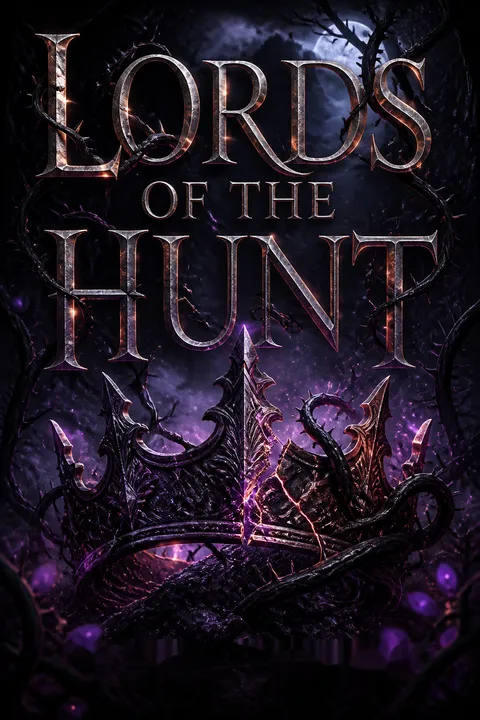
A crown won through survivalThe hunts are a series of deadly trials in which challengers may contest the ruling house’s right to hold the crown. The royal family treats the violence as tradition, while ordinary people enter for money, revenge, or the faint possibility of power. Because Lonnie kills Penvalle after sundown and takes his obsidian crown, she gains a claim that the family cannot simply ignore. Each new hunt then forces her to defend that claim in a different province, while making the crown a visible reminder of the distance between law and actual power.
Names and bargains
Identity becomes magical currencyIn Elsewhere, fairy bargains can bind their participants, and a true name may give another person power. Lonnie’s mother warns her never to bargain with a fairy or reveal her name. Lonnie resists giving Bael her true name, then later offers it to Gwydion to compel him to heal Iola. These exchanges turn ordinary acts of trust into legal and magical risks. The device also sharpens the contrast between Fae wordplay and human lying: a promise may be literally accurate yet still conceal the danger of its terms.
Aisling's curse
Royal happiness carries a costBael’s account of Queen Aisling connects the ancient loss of the crown to the Everlast family’s long misery. The curse makes true happiness dangerous to the royal line until the crown returns to its rightful wearer, helping explain the family’s fear of intimate bonds and its preference for politically useful marriages. The hunts are presented as an attempt to find someone who can end the inherited condition. Lonnie’s claim therefore threatens more than the family’s authority. It may also change the rules by which the royals have organized their private lives.
The moondust journals
A twin's hidden historyRosey uses the moondust trees as cover for nighttime excursions, supposedly to gather leaves for tea to soothe her cough. Lonnie gradually realizes that the trees may also conceal evidence of Rosey’s rebel contacts. An Underfae guardian eventually reveals the missing journals, giving Lonnie a direct route toward understanding her sister’s actions. The discovery does not immediately answer why Rosey joined the rebels, but it converts Lonnie’s grief into an investigation and links private family secrets to the wider political conflict.
Shared blood and magic
Rescue creates dangerous intimacyBael repeatedly gives Lonnie his blood when she is close to death or badly injured. At first the act appears to be healing, but it also shares magic between them and helps explain why Lonnie’s reactions and abilities are changing. Bael warns that completing a mate bond could trigger the curse against the Everlast family. The blood therefore serves three functions at once: it keeps Lonnie alive, increases her dependence on Bael, and creates a personal danger that neither desire nor political strategy can safely resolve.
Wilde Fae Series
About the Author


Download PDF
Download EPUB
.epub digital book format is ideal for reading ebooks on phones, tablets, and e-readers.








