


Plot Summary
Prologue
Years earlier, a village girl named Isidora16 climbs Mount Lumidor to warn the High Clerics that goblins are approaching her home. At Queen’s Reach Monastery, she finds the clerics murdered and meets Wrenley,9 a young Golden Acolyte.9
Prince Kairyn, the banished second son of Spring,7 steps from the shadows and promises to protect the mountain villages before challenging his father’s15 rule. His offer brings Isidora16 hope, but his question about a nightingale8 hints that another force is already moving through the Vale.
The opening makes political upheaval answer a concrete failure of care: Isidora climbs because her village has asked for help and been ignored. The dead clerics show that the institutions meant to protect Spring are already compromised, while Kairyn’s promise offers the urgency they lacked. His appeal is therefore both rescue and recruitment. Wrenley’s quiet presence connects the threatened village to the monastery’s hidden future, and the nightingale’s mention plants a warning that the apparent uprising has more than one author.
Castletree Starts to Fail
Six weeks after the fight in Autumn, Rosalina1 tries to keep Castletree standing as rain pours through its broken roof and Caspian’s6 brittle briars fail to hold the walls together. Farron4 returns first, then Dayton5 and Keldarion,3 and together the four princes pour their magic into the castle’s roses. Rosalina1 adds her own newly awakened power, and the shaking stops.
The reprieve is brief. Farron4 must help his father govern Autumn, Keldarion3 must address Winter, and Dayton5 has already returned to Summer. Ezryn2 remains absent in the Briar. Rosalina1 watches the others prepare to go and understands that their shared home cannot mend the distance between them, even when their magic can repair its walls.
The castle makes emotional dependence visible as structural damage. The princes can stabilize their home only by pooling their power, but the same obligations that make them rulers pull them away from one another. Rosalina’s contribution complicates her former role as the human they protected: she can now help sustain the place, yet she cannot make the men stay. Their brief success therefore sharpens rather than resolves her loneliness.
Departures and Unspoken Claims
In the library, Farron4 welcomes Rosalina1 back to their quiet routines, sharing news of Autumn and helping her record memories of his dead mother. Their intimacy offers comfort, but it cannot answer Rosalina’s1 questions about her growing magic or the princes who remain distant. Ezryn2 arrives, admits he is leaving for Spring, and finally tells her how grief over his mother16 has hollowed his father.15
Her kindness helps him cross the mirror. Keldarion,3 meanwhile, tells Ezryn2 he intends to offer Winter’s Blessing to his uncle Irahn17 and become warden of the Great Chasm instead. He calls himself unfit to rule and refuses Ezryn’s2 offer to break the bargain with Caspian.6 Each man chooses duty or retreat over asking Rosalina1 to stay close.
The princes’ departures arise from different versions of the same defense: Farron works, Ezryn avoids his family’s grief, and Keldarion plans to relinquish power before confronting his own history. Their choices protect them from immediate emotional exposure, but they leave Rosalina to manage the consequences. The book treats love not as a cure that automatically dissolves avoidance, but as an invitation the characters still have to choose to accept.
The Prince of Thorns Returns
While training in the Summer Wing, Rosalina1 turns a practice arrow into seawater, an ability no ordinary fae should possess. That night Caspian6 enters her room searching for the Queen’s20 book she stole from him. Rosalina1 pins him with her thorns and challenges his claim that the briars are poisoning Castletree. She has felt the vines reinforcing the castle, and Caspian’s6 silence confirms she is right.
When she touches him, a vision flashes through her: a woman, green fire, and Caspian6 in agony. He acknowledges the flames are dangerous, fashions her a thorn bow, and disappears back Below before explaining more. Rosalina1 keeps his secrets from the absent princes, adding another uneasy bargain to the hidden truths gathering around her.
Rosalina’s unusual magic first appears as an anomaly, then becomes a way of reading what others misinterpret. She recognizes that the feared briars are sustaining the castle, not simply destroying it, and Caspian’s reaction confirms her intuition. Yet insight does not make her free of secrecy. He gives her a useful weapon while withholding the history that would let her judge its danger, turning trust into an unstable mixture of perception and dependence.
Green Fire at Castletree
A goblin veined with green flame attacks the library, and Rosalina1 kills it with a thorn arrow. Its body burns into a skeleton that keeps moving, so she smashes its skull with a book before the fire can spread through her favorite room.
She races to Dayton’s5 quarters, where five more flame-marked goblins have cornered him and stolen the Sword of the Protector. When one wounds Dayton,5 Rosalina’s1 eyes turn gold and golden briars spear the attackers.
She and Dayton5 trap the fleeing creatures on the bridge, recover the sword, and discover their weapons are newly forged Spring steel. In the rain, Rosalina1 tells Dayton5 she believes he is her mate. They make love, but no bond awakens, leaving her devastated and Dayton5 convinced she must belong to someone else.
The attack turns Rosalina’s protective instinct into visible power, but the intimate aftermath refuses the simple equation that desire or courage guarantees a destined bond. Her magic answers Dayton’s danger; the expected romantic confirmation does not. That mismatch gives the scene its emotional sting. It also makes the stolen Spring steel more than a clue about weapons: the attack has reached into the princes’ home and exposed a threat moving between realms.
Sira Counts the Relics
Summoned by Sira, Queen of the Below,10 Caspian6 hears reports that Rosalina1 can wield briars and has become known in Autumn as the Golden Rose.1 He conceals what he knows, but his adopted sister, the Nightingale,8 suspects he is protecting Rosalina.1 Her questions reveal that Sira’s10 forces want information about the woman and the princes’ bonds, while a wider plan depends on gathering five divine weapons.
The Nightingale8 has begun consolidating power in Spring, and Caspian6 is expected to retrieve Winter’s missing sword. He cannot promise the task is easy. His reluctance to expose Rosalina1 makes his sister8 more suspicious, and Sira10 warns them not to provoke the princes before the Below can control all the realms.
This private audience reframes Caspian’s silence as a dangerous choice rather than mere teasing. He lies to Sira because he understands Rosalina’s value to a power struggle, while the Nightingale treats knowledge as leverage between siblings. The five weapons give the conflict a material objective, but Sira’s caution shows that her ambitions have limits for now. The danger comes from a coalition still assembling, not an omnipotent enemy already in control.
Kairyn Takes the Throne
Ezryn2 reaches Florendel expecting to find his father, Thalionor,15 governing Spring. Instead, Kairyn7 sits on the throne, claiming his father15 is ill and that he has removed the High Clerics and installed loyal guards. He has returned from banishment without permission.
Dayton5 and Rosalina1 arrive soon after, but Kairyn’s7 guards initially refuse them entry until Marigold11 recognizes the young sentries and presses her old authority. In the throne room, Ezryn2 orders Kairyn7 back to the monastery and refuses to recognize his self-appointed stewardship.
Kairyn7 nearly invokes Spring’s Rite to challenge him, but Ezryn2 pins him with a sword before he can complete the challenge. The conflict is not settled; Ezryn2 must judge his brother7 while discovering how much Spring has changed in his absence.
Kairyn’s coup is difficult to dismiss as simple ambition because his rule has grown from a real vacuum: Thalionor is incapacitated, and the mountain villages face raids. Ezryn nevertheless sees the broken law and displaced guards as threats. Their conflict therefore pits legitimacy against effective action, with each brother carrying evidence that the other has failed. The near-Rite reveals how quickly family resentment can become a constitutional crisis.
Winter’s Last Warden
Far from Florendel, Keldarion3 reaches Voidseal Bridge to ask his uncle Irahn17 to take Winter’s Blessing and become High Prince. Irahn17 refuses to abandon the Deep Guard, whose work holds back intelligent, dangerous creatures from the Below.
Keldarion3 offers to stay as their warden, believing that his cursed nature makes him more suited to fight monsters than to rule. Irahn17 does not accept the sacrifice at face value. He leads Keldarion3 into the chasm, where they fight a cave troll armed with a blade glowing green.
Working together, wolf and uncle17 bring it down. Irahn17 then tells Keldarion3 the battle has shown him something unexpected: Keldarion3 may be the ruler Winter needs after all. The choice remains unresolved, but surrender is no longer the only path Keldarion3 can imagine.
Irahn refuses the fantasy of abdication as moral cleansing. He measures Keldarion not by his shame or title, but by what he can do beside the people he hopes to serve. The fight restores an older, practical bond between nephew and uncle, grounded in shared labor rather than ceremonial authority. Keldarion’s beast, which he treats as proof of unfitness, becomes useful without being denied or excused.
Spring Steel Leads Upward
On the mountain road, Dayton5 and Rosalina1 help an acolyte named Wrenley9 rescue baby ibexes from goblins. Dayton5 dives into the river after Wrenley9 is swept over a waterfall and uses Summer magic to clear water from her lungs.
At Draconhold Forge, blacksmith Tilla14 examines a goblin sword and confirms it came from a recent Spring shipment. The forge’s weapons are accounted for, but unusually large deliveries went to Queen’s Reach Monastery after Kairyn7 took command. Tilla14 also reports a strange illness among workers, marked by fever and hallucinations.
At the monastery, Kairyn7 shows Rosalina1 art depicting the Below, the Queen,20 and the five divine weapons, whose power can corrupt anyone lacking the Queen’s token. The missing steel now points directly toward Kairyn’s7 new military order.
This investigation links intimate rescue to political evidence. Dayton saves Wrenley through a practiced relationship with water, while Tilla’s knowledge of the forge turns a weapon into a traceable supply chain. The monastery’s sacred art then supplies the historical context for why those weapons matter. Spring’s beauty and craftsmanship are not separate from its vulnerability: the same industry that equips its defenders can furnish the force now threatening them.
Brothers Choose Spring
After learning that a shipment of Spring steel was raided, Ezryn2 confronts Kairyn7 but listens to his reasons for arming the mountain villages. He realizes his brother7 has protected people even while breaking orders.
Rather than execute or exile him again, Ezryn2 lifts the banishment and returns with him to Florendel. He later tells Kairyn7 the truth about their mother’s16 death and formally accepts him as steward beside Thalionor.15 Kairyn7 agrees, and their fragile reconciliation gives Spring a chance at shared rule.
He also shows Ezryn2 an airship he designed to move people and supplies between realms. The invention suggests a future of cooperation, but the growing sickness and missing weapons remain unresolved, and the brothers have not yet uncovered the force shaping Kairyn’s7 choices.
Ezryn’s change is not a sudden absolution of Kairyn; it is a decision to replace assumptions with testimony. Naming his own guilt makes reconciliation possible without erasing the harm of banishment. Kairyn, in turn, gains recognition through a role in which he can act rather than compete for the throne. Their emerging partnership is meaningful precisely because it remains vulnerable to pressures neither brother fully understands.
The Nightingale Strikes
At Sylvanita Lake, Rosalina1 watches a purple flower release hallucinogenic pollen. Ezryn2 relives the day he received Spring’s Blessing: his uncontrolled magic killed his mother, Isidora,16 and left Kairyn7 convinced he was a murderer.
Rosalina1 sees the memory too, then helps Ezryn2 wash the pollen away. The Nightingale8 arrives with Dreadknights and goblins, attacks Rosalina,1 and tries to kill the disoriented prince. Keldarion3 reaches them alongside Caspian,6 who fights at Kel’s3 side; Rosalina1 and the princes defeat the first wave.
The Nightingale8 summons a monstrous plant-and-rat creature with a crystal supplied by Perth Quellos.19 Sira10 appears, destroys the creature effortlessly, takes the princes and Rosalina1 captive, and brings them Below before they can escape.
The pollen makes private guilt physically contagious: Rosalina is forced to experience a memory Ezryn has never shared, so intimacy becomes witness rather than reassurance. The Nightingale exploits that vulnerable moment with a prepared army, while Caspian and Keldarion’s cooperation complicates the expected divisions. Sira’s easy destruction of the monster reveals the scale of power behind the attack and turns a local assault into open captivity.
A Bargain Comes Due
At the Tower of Nether Reach, Sira10 binds the princes and orders Caspian6 to take their Queen’s tokens. He also removes Rosalina’s1 necklace, hiding its moonstone rose from his mother.10 When Sira10 demands he cancel his bargain with Keldarion,3 Caspian6 says Rosalina1 still owes him a kiss.
He claims payment in front of the princes. Keldarion’s3 own bargain is then exposed: years ago, he vowed to take no lover but Caspian,6 and any later lover would serve Caspian6 in repentance.
The revelation explains why Caspian’s6 past lovers appeared at Castletree and why the bond has never dissolved. Rosalina1 takes command of the thorns and pulls herself and the princes out of the Below, though she also draws Caspian6 into a private, confusing kiss before the escape ends.
The bargain turns desire into law, converting private affection into consequences that reach across years and realms. Keldarion’s secret was meant to protect Caspian from feeling abandoned, yet its wording now constrains everyone involved. Rosalina’s escape demonstrates that she is not merely the object of competing claims: she acts, chooses, and remains unsettled by the connection she cannot yet explain.
Castletree Splits Again
Back at Castletree, Rosalina1 admits she suspects Caspian6 may be connected to her through more than Keldarion’s3 bargain. Farron4 and Dayton5 warn that Caspian6 has manipulated and hurt them; Rosalina1 answers that she sees pain beneath his cruelty.
The argument wounds Farron4 especially, since Caspian6 attacked Autumn and destroyed its records. Keldarion,3 rather than condemn her, finally tells Rosalina1 how he met Caspian,6 loved him, and followed him Below before the betrayal and war that killed his mother.
He also explains that his bargain cannot simply be broken without confronting what remains between them. Rosalina1 shares what she knows about the thorns supporting Castletree. The group returns to Spring with its secrets exposed but its trust badly strained.
Rosalina’s empathy is not presented as harmless virtue: it risks making her vulnerable to someone who has repeatedly used trust as leverage. Yet the princes’ certainty also rests on old wounds that have never been fully examined. Keldarion’s account complicates the category of villain without absolving Caspian. The conflict is psychological as much as strategic: can compassion notice harm without disguising it?
The Flowers Take Hold
Returning to Spring, Rosalina1 attends Ezryn’s2 jubilee while Dayton5 tries, at her urging, to know Wrenley9 better. Red flowers placed throughout Florendel conceal a danger no one has identified. Soon, Rosalina,1 Marigold,11 Astrid,12 and Eldy13 fall under a command to climb Mount Lumidor. Rosalina1 sees visions of her dead mother20 and father18 beckoning from a cliff, but recognizes that the scene is false when it contradicts what she knows of her father.18
She throws herself and Eldy13 into the river, disrupting the trance. In the current, she uses water magic to pull Marigold11 and Astrid12 away from the precipice, then transforms Eldy13 into a wren so he can fly for help. Ezryn2 races to the river, dives after Rosalina,1 and gives her his breath.
The enchantment attacks through familiar attachments, turning Rosalina’s longing for her parents into an instrument of self-destruction. Her rescue begins with a small act of discernment: she notices that the vision violates her knowledge of her father. Water, previously a surprising magical talent, becomes both a means of resistance and a bridge to her oldest memories. Transforming Eldy shows that her power exceeds the categories she has been using to understand herself.
A Face Beneath the Helm
At Sylvanita Lake, Ezryn2 removes his helmet to give Rosalina1 the breath she needs to live, violating Spring’s strict creed before anyone can witness him. She wakes, recognizes him by his voice and presence, and realizes they are mates. They choose each other, and their bond begins to intensify Ezryn’s2 magic.
Terrified that another surge will kill someone as it killed his mother,16 he tries to suppress the beast and power rising inside him. The effort turns the grove into a storm: he drains life from the land and kills three guards who shoot Rosalina.1 Keldarion3 and Kairyn7 reach him, and Keldarion3 calms him. Ezryn2 is arrested for breaking the creed and killing the guards, then taken to face judgment before Spring.
The scene makes intimacy inseparable from risk. Ezryn’s exposed face is an act of care, but the creed treats that vulnerability as a public offense. His attempt to prevent harm reproduces the catastrophe he fears, showing how shame can become self-fulfilling when it leaves no room to seek help. Rosalina’s survival does not resolve the danger; it binds her to a man whose power and guilt now collide.
The Price of Spring
At the public trial, Ezryn2 accepts responsibility for his actions and admits that his uncontrolled magic killed Isidora.16 Thalionor15 briefly rises to ask for forgiveness, but Kairyn7 removes him before his plea can decide the case. Rosalina1 argues that Ezryn2 revealed his face to save her, and the crowd begins asking for mercy.
Kairyn7 rejects that appeal and demands that Ezryn2 name himself as his mother’s16 killer. Ezryn2 does, and Kairyn7 deposes him, taking Spring’s Blessing for himself despite warnings that the transfer could be fatal. He survives, then orders Ezryn2 banished, removes his helmet, and cuts the tips from his ears. Rosalina1 and the other princes cannot intervene without violating Ezryn’s2 choice to answer for the crime.
The trial converts remorse into spectacle. Ezryn’s confession is morally significant, but Kairyn uses it to claim both political authority and control over the meaning of their mother’s death. The crowd’s brief mercy shows that public judgment can shift; Kairyn’s ritual of unhelming and mutilation forcibly shifts it back to shame. Ezryn’s insistence on submitting to the process preserves his agency while making its violence harder to endure.
The Bow’s Hidden Heir
After the Nightingale8 captures Rosalina1 and takes the princes’ remaining tokens, she uses a potion to suppress Rosalina’s1 magic and strands her at Queen’s Reach. Ezryn,2 stripped of his Blessing, fights his way through the monastery to reach her.
The Nightingale’s8 men attack Rosalina,1 but Ezryn2 arrives before they can assault her. He holds off a knight while she recognizes the white stardrop flower as an antidote and eats it, restoring her power. When the Nightingale8 binds Ezryn2 in thorns, Rosalina1 reaches for the Bow of Radiance.
It accepts her without the Queen’s token and transforms in her hands. Rosalina1 uses its light to break the thorns and drive the Nightingale8 away. The weapon’s response reveals that Rosalina1 carries the Queen’s20 own magic and bloodline.
The tower compresses Rosalina’s growth into a test under extreme constraint. She is wounded, deprived of magic, and forced to infer the antidote from a flower she has seen before. The bow’s response changes the scale of her identity, but its importance lies in her choice to reach for it while Ezryn is threatened. Inheritance becomes more than pedigree: it is an ability she claims through action.
The Throne Room Breaks
Rosalina1 and Ezryn2 return to Keep Hammergarden to recover Thalionor,15 only to find Kairyn7 waiting with the Sapphire and Bronze Knights. Kairyn7 wields the Hammer of Hope and attacks Ezryn,2 while the knights fight Keldarion3 and Rosalina.1
Rosalina1 uses the Bow of Radiance to blast the knights back, and she and Kel3 create a fissure that briefly separates the fighters. Ezryn2 crosses it anyway to confront his brother.7 Kairyn7 grows into a towering mass of vines and moss, trapping the others and nearly crushing Ezryn.2
Caspian6 arrives and breaks the plant barrier, but then drives a thorn into Thalionor’s15 heart. Rosalina’s1 golden briars free her companions and carry Keldarion,3 Ezryn,2 and Caspian6 to Castletree. Kairyn7 smashes her magic and captures Rosalina.1
Every alliance becomes unstable in this battle. Kairyn’s plantlike power turns the Spring Realm’s fertility into a weapon, while Rosalina’s inherited magic provides an escape that does not save everyone. Caspian’s intervention appears protective until his thorn kills Thalionor, making his motives impossible to reduce to either rescue or betrayal. The result is a costly separation: the princes reach safety, but Rosalina remains in Kairyn’s hands.
A Brotherhood Comes Apart
At Castletree, Ezryn2 tries to kill Caspian6 for murdering Thalionor,15 but Keldarion3 blocks his sword. Ezryn2 calls the choice a betrayal of their brotherhood and leaves to find Rosalina1 alone. Keldarion3 collapses, and Caspian6 kisses him, promising that no one but himself will take Rosalina.1 Elsewhere, Farron4 and Dayton5 reach the field outside Florendel, where Wrenley9 has helped free them from Kairyn’s7 red-flower hypnosis.
A will-o’-wisp reveals that Wrenley9 and Dayton5 are mates. The sight brings Dayton5 joy and grief at once, because he has loved Rosalina1 without being her destined partner. Meanwhile, Kairyn7 carries Rosalina1 aboard his airship toward Summer, intending to use her and the Bow of Radiance in his larger campaign.
The aftermath does not restore the family that the battle scattered. Ezryn’s rejection of Keldarion is an attempt to act without compromise after Caspian’s violence, while Kel’s defense of Caspian repeats a loyalty that has already cost him dearly. Dayton’s new bond offers a different model of connection, but it does not erase his grief for Rosalina. The airship makes the private fractures part of an approaching war.
Spring’s Army Turns South
Wrenley9 and Dayton5 help Farron4 escape the city’s red-flower trance, then Tilla14 leads the group through hidden forge tunnels. She explains that Kairyn’s7 forces seized the weapons and killed workers who resisted.
From a concealed opening, Dayton5 and Farron4 see a vast army of Spring soldiers and goblins camped at the pass to Summer. Kairyn7 has not merely secured Florendel; he is preparing to carry the campaign into Dayton’s5 realm. Wrenley9 stays with the princes rather than flee with Tilla’s14 refugees.
Farron4 feels Rosalina’s1 pain through their bond and realizes Kel3 and Ezryn2 are no longer with her. The group must warn Summer and locate her before Kairyn’s7 forces reach the pass, while the source of the red-flower control remains active across Spring.
The discovery broadens the conflict from a succession crisis into territorial conquest. Tilla’s account of the forge makes Kairyn’s army materially possible, while the flowers make occupied citizens appear compliant. Dayton’s impulse to protect his home now converges with Farron’s bond-driven urgency to find Rosalina. Their personal stakes become strategic: rescuing her and warning Summer are no longer separable tasks.
The Golden Rose Captured
Inside Kairyn’s7 airship, Rosalina1 wakes with her wrists chained and her bow gone. Through the window she recognizes the Summer coast below and understands that Kairyn7 is carrying her toward the realm his army plans to attack. Her bonds, her magic, and her mates are all beyond reach. She steadies herself by remembering the people waiting for her: her father,18 the Castletree staff, and the princes she intends to reunite with.
She also believes her mother, the vanished Queen,20 may still be alive. Rosalina’s1 immediate escape remains uncertain, and Spring has fallen under Kairyn’s7 control. Instead of surrendering to the fear of being transported as a weapon, she resolves to reclaim her power and make the Vale hers to defend.
The ending withholds rescue and leaves Rosalina physically isolated at the moment her identity has expanded most dramatically. Her resolve does not depend on having immediate access to magic or allies; it comes from the relationships and responsibilities she has chosen. The airship literalizes the new scale of the conflict, carrying her toward a threatened realm. Hope here is not certainty of victory, but a refusal to let captivity define her next action.
Epilogue
In a prison of green crystal Below, Caspian6 visits Queen Aurelia,20 who has been secretly drained of her power. He tells her that Thalionor15 is dying because Aurelia20 bound his life to Castletree, and that Rosalina1 has found the Bow of Radiance. When Aurelia20 asks whether her daughters1 are alive, Caspian6 confirms they are, though Rosalina1 has been captured.
He insists that he acts for no one but himself, yet he has kept Aurelia’s20 moonstone rose safe and risked punishment to protect her daughters.1 Aurelia20 tells him she believes he will never allow Rosalina1 to be harmed, naming him a worthy mate for her child.1
The coda recasts Caspian’s apparent allegiance without excusing his harm. His secret visits to Aurelia and his protection of the moonstone rose show that he has been acting from loyalties he refuses to name, even as his choices remain violent and costly. Aurelia’s imprisonment also changes the meaning of Rosalina’s inheritance: the Queen is not a distant legend but a captive mother whose fate is entwined with the dying castle. The book closes by shifting the central question from what Rosalina is to whom she can trust.
Analysis
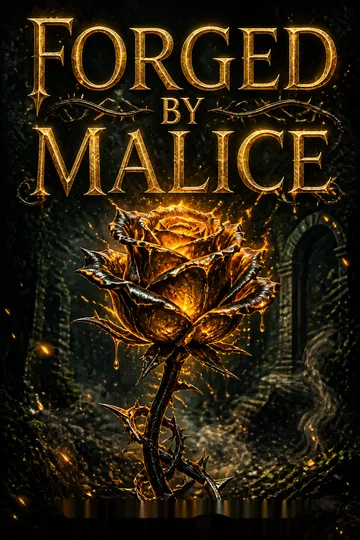
Forged by Malice makes love, rulership, and magic answer to the same question: what does protection demand, and who gets to decide? The princes repeatedly mistake isolation for responsibility. Keldarion3 hides the bargain that would shape everyone’s choices; Ezryn2 treats his mother’s16 death as proof that he should not trust his own power; Dayton5 withdraws from love because he expects it to end in loss. Their sacrifices may be sincere, but secrecy makes them costly to the people they mean to protect.
Rosalina1 offers a countermodel, though not an uncomplicated one. She observes, asks questions, trains, and intervenes. Her compassion makes her attentive to motives others dismiss, as with Caspian6 and Kairyn,7 but it also puts her in danger when she underestimates how effectively people can exploit trust. The story does not equate forgiveness with innocence: Caspian’s6 tenderness coexists with violence, and Kairyn’s7 real service to Spring does not excuse his turn toward coercion. Love must therefore be paired with judgment, boundaries, and action.
The political plot literalizes that problem through magical systems. The Spring creed protects privacy but can turn an accident into a public death sentence. Queen’s tokens distinguish legitimate wielders from corrupt ones, while flowers turn natural beauty into a technology of mass control. Rosalina’s1 emerging power disrupts these inherited categories, especially when the Bow of Radiance recognizes her. Yet inheritance alone does not make her a ruler; her authority emerges through the choices she makes to protect others and accept the consequences.
The cliffhanger leaves that work unfinished. Spring has been captured, the princes are divided, and Rosalina1 is carried toward a threatened Summer. Her growing identity offers possibility, not an easy victory. The novel’s deepest tension is between the desire to save someone by controlling them and the harder work of standing beside them while they choose their own path.
Review Summary
People Also Read



Characters
Rosalina O’Connell
The Golden RoseRosalina is a curious, stubborn young woman whose human upbringing and emerging fae identity leave her questioning what she can do and where she belongs. She loves books, notices details others overlook, and tends to offer care even to people who have frightened or hurt her. That generosity can make her vulnerable to manipulation, but it is not passivity: she trains with weapons, tests her magic, and acts when someone is in danger. Her relationships with the princes are affectionate and complicated, shaped by their curses, loyalties, and fears. Rosalina’s central drive is to understand the people she loves without surrendering her own judgment.
Ezryn
The Armored Spring PrinceEzryn is the reserved High Prince of Spring, a warrior and protector whose armor reflects a strict royal creed. He habitually substitutes duty for emotional disclosure, especially when confronting his family’s grief. His distance is not indifference: he watches carefully, tends injuries, and places himself between danger and the people he loves. Yet his fear of his own power makes closeness difficult, because he believes that losing control could destroy what he is trying to protect. Rosalina’s1 candor unsettles his self-containment, while his loyalty to Keldarion3 and the other princes gives him a model of brotherhood beyond blood.
Keldarion
The Cursed Winter PrinceKeldarion is the High Prince of Winter, bound to a curse that turns him into a wolf and burdened by a history he has kept from his closest friends. His dry manner and stoic discipline conceal a fierce capacity for devotion. He often treats self-denial as protection, choosing distance rather than risk exposing the people he loves to his past. That strategy has consequences: his silence leaves Rosalina1 and his brothers to guess at dangers he understands. His old loyalty to Caspian6 complicates his sense of duty, while his bond with Rosalina1 gives him a reason to reconsider whether sacrifice is always the same as doing what is right.
Farron
The Autumn Wolf PrinceFarron is the High Prince of Autumn, a warm and attentive partner whose gentleness coexists with the predatory instincts of his wolf curse. He turns grief into work, caring for his realm and preserving memories of his mother. With Rosalina1, he offers emotional openness and physical affection, but his history with Caspian6 makes trust a hard-won resource. He is also deeply connected to Dayton5, a friendship that carries tenderness neither man has always known how to express. Farron’s instinct is to protect by gathering facts and staying close; when fear takes over, that same instinct can become controlling.
Dayton
The Summer GladiatorDayton, High Prince of Summer, is a charismatic fighter who uses humor, flirtation, and bravado to keep painful feelings at a distance. His history of loss has left him expecting that anyone he loves will eventually be taken from him, so he sometimes withdraws just as a relationship becomes emotionally important. He is skilled with weapons and water, quick to protect others, and more perceptive than his joking manner suggests. Rosalina’s1 affection unsettles his belief that he is dangerous to those close to him. His bond with Farron4 offers a place where his vulnerability can be met without ridicule.
Caspian
The Prince of ThornsCaspian is a powerful fae of the Below, quick-witted, theatrical, and practiced at turning secrets into leverage. His cruelty is real, as are the injuries and betrayals he has caused; charm does not erase the consequences. Yet his reactions sometimes reveal a private tenderness he works hard to conceal, particularly around the people he considers his own. He fears dependence and treats emotional vulnerability as a threat, so he often chooses manipulation before honest disclosure. His relationship with Keldarion3 is marked by a long, tangled history, while his attention to Rosalina1 unsettles the boundaries he claims to control.
Kairyn
The Banished Spring BrotherKairyn is Ezryn’s2 younger brother, an inventive and forceful fae who has spent much of his life feeling overlooked beside the favored heir. His actions grow from a genuine desire to protect Spring’s villages, but resentment shapes how he seeks power and recognition. He can build, organize, and lead, yet he also treats affection as something to win through achievement or force. His relationship with Ezryn2 holds both admiration and grievance, making reconciliation difficult even when the brothers share a goal. Kairyn’s vision for Spring is ambitious, and his impatience with limits makes him dangerous to allies as well as enemies.
The Nightingale
Sira’s Ambitious DaughterKnown as the Nightingale, she is a masked operative of the Below and Caspian’s6 adopted sister. She is disciplined, clever with potions, and determined to prove her value to Sira10. Her relationship with Caspian6 mixes rivalry with a history of mutual protection, though neither sibling finds trust easy. She reads other people’s needs as openings to exploit and uses charm as readily as violence. Underneath her ambition is a painful fear of being unwanted or replaceable, which makes her pursuit of power feel less like vanity than a desperate bid for security.
Wrenley
The Golden AcolyteWrenley is a Golden Acolyte from Queen’s Reach, marked by blue eyes, quiet resolve, and a strong attachment to her family. Her service to the monastery gives her a place in Spring’s religious life, but she is more observant than her calm manner first suggests. She shows courage in protecting vulnerable creatures and is willing to question the behavior of the powerful. Her connection to Dayton5 begins through an act of rescue and shared memories of the sea. Wrenley’s presence links the monastery to Summer and makes faith, family, and belonging personal rather than abstract.
Sira
Queen of the BelowSira rules the Below with a mixture of patience, menace, and strategic restraint. She does not confuse power with haste: she gathers information, tests the limits of her opponents, and waits until the balance favors her. Her children are both agents and instruments within her plans, and her treatment of them reveals a ruler who values usefulness over comfort. Sira understands the emotional leverage created by family and desire, then uses it to divide people who might otherwise cooperate. Her long conflict with the realms above gives the story’s immediate crises a much older political history.
Marigold
The Castle’s Loyal KeeperMarigold is a sharp-tongued member of Castletree’s staff who looks after Rosalina1 and the princes with practical affection. Her confidence comes from years of service, not from rank, and she is unafraid to challenge nobles when their decisions put others at risk. Beneath her brisk manner is a romantic history she has never entirely set aside. She is deeply loyal to Ezryn2 and the household, but her care is not blind obedience: she speaks plainly when she believes the people she loves are making a mistake.
Astrid
The Quick-Witted ShifterAstrid is a close friend and helper to Rosalina1, quick with jokes and attentive to the emotions beneath a room’s surface. Her ability to shift into a small animal makes her both useful and vulnerable in a dangerous realm. She offers companionship without demanding that Rosalina1 explain every feeling, and she often helps ease tension between stronger personalities. Her loyalty to Marigold11 and the Castletree household gives her a firm sense of belonging, even when the princes’ conflicts threaten to pull the group apart.
Eldy
Spring’s Faithful MajordomoEldy is the majordomo of Keep Hammergarden, a nervous, conscientious servant whose loyalty to Spring’s royal household spans many years. He fusses over practical details and can be flustered by conflict, but his knowledge of the keep and its people makes him invaluable. His affection for Marigold11 is complicated by old hurt and missed chances. Eldy believes service means showing up, tending to needs, and keeping a household functioning, even when its rulers are absent or divided.
Tilla
The Spring BlacksmithTilla commands a sector of Draconhold Forge and knows Spring steel by sight and touch. A direct, capable craftswoman, she is difficult to impress and unwilling to be pushed into giving information. Her history with Keldarion3 has taught her to value independence over a respectable arrangement that would cost her self-determination. She meets Rosalina1 without treating her as a rival and gives her practical help instead. Tilla’s loyalty is grounded in her city and its workers, not in courtly promises.
Thalionor
The Ailing Spring StewardThalionor is Ezryn2 and Kairyn’s7 father and the steward of Spring. Once a formidable ruler and warrior, he has struggled to function since the death of his mate, Isidora16. His illness deepens as grief isolates him from the people who might help, leaving his sons to interpret his silence in different ways. The respect his people retain for him reflects a long record of service, even when he can no longer exercise authority as he once did.
Isidora
The Lost High PrincessIsidora was the High Princess of Spring and Thalionor’s15 mate, remembered for her strength, kindness, and devotion to her family. She remains an important presence in her sons’ lives, though each remembers her through a different wound. Ezryn2 associates her with duty and the cost of power, while Kairyn7 remembers the person who understood him when others did not. Her influence shapes Spring’s expectations of leadership long after she is gone.
Irahn
Warden of VoidsealIrahn is Keldarion’s3 uncle and a veteran guardian of the Great Chasm. He values the lives protected by the Deep Guard more than political prestige, and his bluntness exposes how distant Keldarion3 has become from the realities of Winter’s defense. Their relationship is built on old experience and mutual respect, even when they disagree about who should rule.
George O’Connell
Rosalina’s Explorer FatherGeorge is Rosalina’s1 human father, an archaeologist whose travels have kept him away for long stretches. He is curious, affectionate, and determined to uncover the truth about Rosalina’s mother20. His letters and discoveries keep their relationship active even across distance, though their separate adventures have left them with much still to learn about one another.
Perth Quellos
The Below’s Corrupt AlchemistPerth Quellos is a former Winter official whose hunger for power has made him a useful servant to the Below. He is inventive, ruthless, and willing to experiment on living beings in pursuit of greater control. His work with Green Flame and dangerous plants turns his intellectual curiosity into a threat to every realm. He treats other people as materials for discovery, a habit that has repeatedly brought violence in his wake.
Queen Aurelia
The Vanished QueenQueen Aurelia is the legendary creator of the Enchanted Vale, revered across the realms for the gifts and order she established. Her disappearance five centuries ago left both a religious longing and a political vacuum. Stories about her emphasize compassion, power, and a fierce capacity to shape the world, but the truth of her history remains disputed. The characters’ search for meaning in her legacy shapes how they understand the Vale’s magic.
Plot Devices
Castletree and the Briar
The Failing Magical HomeCastletree connects the four seasonal realms and gives the princes a shared home, but its magic is weakening. Its physical decay tracks the princes’ inability to sustain it alone, while Caspian’s6 briars complicate the assumption that he is simply draining its life. The castle also serves as a crossroads for travel, a refuge for the staff, and the place where the group’s alliances are tested. Rosalina’s1 growing ability to command its thorns makes the home both a source of danger and a resource she can use to reunite separated characters.
Mate Bonds and Curses
Love Under EnchantmentThe princes’ curses bind their physical forms and magic to the search for their mates, while bonds between Rosalina1 and the princes create emotional and magical connections. These rules make intimacy consequential but not always predictable: powerful feelings do not guarantee that a bond will awaken, and an awakened bond does not automatically resolve fear or guilt. Wilde courtship intensifies desire when a bond remains incomplete. Keldarion’s3 separate bargain with Caspian6 further complicates the romantic structure, imposing consequences that persist even when the people involved want to move forward.
The Queen’s Weapons
Power Bound to TokensFive divine weapons were made for the rulers of Winter, Spring, Summer, Autumn, and the Queen’s20 realm. Each can corrupt or kill an unprotected wielder, while a Queen’s token allows its rightful ruler to use it safely. The weapons turn the political conflict into a struggle over specific objects, each with a distinct place in the realms’ history. The Bow of Radiance becomes especially important when Rosalina1 can wield it without a token, revealing that her connection to the Queen20 is more than scholarly curiosity.
The Poisoned Flowers
Control Disguised as BloomFlowers associated with Spring are used to produce nightmares, suppress magic, induce hypnosis, or alter living bodies. The red blossoms let Kairyn7 control citizens, while the purple pollen traps Rosalina1 and Ezryn2 in visions drawn from their deepest wounds. The white stardrop offers a countermeasure, and water can clear some of the effects. Because the flowers are beautiful and widely placed, the threat hides in the ordinary scenery of Florendel. Their use turns Spring’s botanical abundance into a means of coercion and helps explain why the capital’s apparent consent cannot be trusted.
Green Flame
Power with a Corrosive CostGreen Flame is an otherworldly force associated with corruption, reanimated creatures, and a power that can overwhelm the people who wield it. Quellos19 experiments with it to create soldiers and monsters, while Caspian6 carries a connection to it that he keeps hidden from Sira10. Its use can destroy enemies quickly but also exposes how much power Caspian6 is willing to unleash and how little he can escape its cost. Green Flame links the Below’s experiments to the larger threat facing the Vale, without making it a safe or stable weapon for any side.
Beasts of the Briar Series


About the Author
Other books by Elizabeth Helen



Download PDF
Download EPUB
.epub digital book format is ideal for reading ebooks on phones, tablets, and e-readers.








