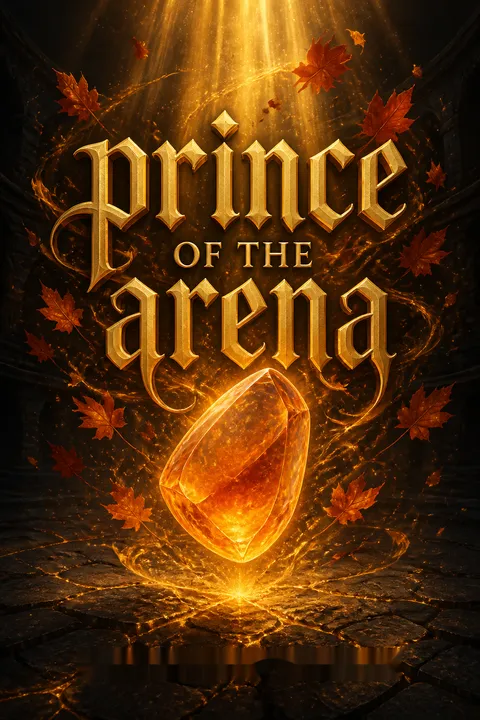


Plot Summary
The Match and the Window
High Prince Damocles tells his younger brother, Dayton, to consider becoming consort to Farron, Autumn’s heir, a political match their mothers have discussed. Dayton resents being directed, while Farron arrives at Soltide Keep already dreading court expectations and the Summer prince he remembers as a reckless boy.
At the gala, Farron watches his mother Niamh and Damocles scrutinize him, panics at the prospect of inheriting power, and knocks a marble bust from its pedestal. He flees through a window just as Dayton climbs in from outside to avoid arriving on time. The collision leaves Farron sprawled against a stranger’s chest, each believing the other is someone he can dismiss.
The match begins as a political solution to a problem neither young prince has chosen: the transfer of inherited power. Their opposite evasions make the first encounter more than a romantic mishap. Dayton resists by refusing courtly conduct; Farron’s fear erupts physically, shattering the decorum he is expected to master. The broken bust gives his private panic a public consequence, while the window becomes an accidental meeting point between two forms of escape. Neither is ready to name what he wants, but both are already acting against the roles their families have written for them.
A Night Without Titles
Dayton mistakes Farron for an Autumn servant and coaxes him into exploring Hadria, where Farron marvels at the markets, architecture, and waterfront book stalls. In a hidden cavern, glowing fungi and minerals turn the walls into a natural lantern; the two paint each other with luminous residue, letting curiosity and touch replace their first impressions.
At dawn, Farron admits he wants one moment free of the future planned for him, then kisses Dayton. Their intimacy is interrupted when Autumn guards find them. Farron’s title is exposed, and Dayton realizes he has spent the night with the heir his family hoped he would court. Rather than let the guards report their meeting, Dayton uses his standing to keep it quiet.
The nighttime excursion lets each prince encounter the other outside inherited labels. Farron’s knowledge turns the cave into an object of wonder, while Dayton’s irreverence makes the city feel newly visible even to someone who belongs there. Their attraction grows through shared attention, not simply through the contrast between scholar and gladiator. The reveal of Farron’s rank immediately restores the political stakes, yet Dayton protects their private encounter from becoming another family maneuver. Their first kiss is therefore both a discovery and a brief refusal of the future others have arranged.
The Balcony Climb
After training with Justus, Dayton admits to himself that wanting Farron is different from obeying Damocles’s plan. He visits Farron’s balcony, but Farron, stung by the assumption that their night meant little, rejects him.
Dayton climbs the wall anyway, apologizes for his childhood insult, and persuades Farron to give him another chance. They keep their growing courtship secret and spend the next weeks sailing, visiting orchards, and exploring the jungle with Farron’s sketchbook and collecting bag in tow.
At Captain Katharine’s Isle, Dayton tells him the surrounding water is cursed and warns him away from the supposed treasure. When Dayton goes distant, Farron takes his hurt to the Farewell Gala and sends him a message through Decimus: he is ready to jump.
Dayton’s climb is a concrete risk, but it does not yet amount to emotional courage: he wants Farron close while hiding the relationship from the people who might define it. Farron, meanwhile, moves from being carried along by Dayton’s plans to making a direct demand for clarity. Their explorations create a private world in which Farron’s scholarship and Dayton’s appetite for experience complement one another. The curse story gives Farron a language for the danger of loving Dayton, then his message turns that metaphor into a test. He will no longer wait passively for Dayton to choose.
Captain Katharine’s Leap
Dayton understands Farron’s message as a warning that he may jump from the cliff above the cursed waters. He reaches the edge just as Farron steps off, then dives after him. A kelpie attacks Dayton beneath the waves, but Farron’s golden magic calms the frightened creature and lets the two swim free. They reach the island and uncover Captain Katharine’s chest, only to find red sand inside.
Farron heats the grains while Dayton cools them with water, fusing their powers into a piece of red sea glass. The shared creation becomes a keepsake as they admit how much the coming separation hurts. Farron, who has never been with anyone, chooses to sleep with Dayton, and Dayton takes care to make the encounter mutual and wanted.
The leap converts an inherited legend into a test of action. Dayton risks his life not because he has conquered fear, but because Farron matters more than the story he tells himself about staying free. Farron’s ability to soothe the kelpie also complicates the idea that he is merely the fragile partner in need of protection. The empty chest refuses the fantasy of treasure as something already waiting to be claimed; the glass exists only because they combine what each can do. Their intimacy grows from that mutual creation, giving the night a weight neither can dismiss as a political arrangement.
A Year of Burning
When Farron returns to Autumn, Dayton promises they will meet at future festivals, then fails to attend them and leaves Farron’s letters unanswered. Farron visits Spring’s forge and speaks with Prince Ezryn about the old belief that fated mates share a star; Ezryn’s description sharpens Farron’s hope, then makes him fear he has mistaken longing for destiny.
In Summer, Dayton’s chest burns so relentlessly that healers cannot explain it. He asks Damocles to take him to Winter, where he submerges himself in a frozen lake until the heat eases. In the cold, he sees the image of someone drowning, but cannot hold on to it. Each prince interprets separation differently: Farron searches for a reason, while Dayton tries to silence what he feels.
The year apart turns desire into a problem each prince tries to solve with his own habits. Farron seeks an explanatory framework in the language of fate, hoping that a cosmic bond might make his feelings less precarious. Dayton instead treats his suffering as a bodily disturbance to suppress, and the lake offers temporary relief without resolving its cause. Their responses reveal the cost of uncertainty: Farron risks idealizing a bond he cannot prove, while Dayton mistakes avoidance for self-command. The unexplained vision and recurring heat keep their separation active rather than allowing either to truly move on.
The Prince Returns
A year after their first summer, Farron reaches Soltide Keep for the four-year Solstice Games, expecting Dayton to ignore him again. Dayton arrives late, enters Farron’s room by climbing the balcony, and wakes him with an accidental blow from Farron’s book. The old ease returns for a moment, but Farron makes clear that his time is limited and that Dayton cannot assume he will always wait.
The next day, Farron watches Dayton win fight after fight in the Sun Colosseum. His admiration turns to fear when he learns that the Games’ final bout allows no surrender and ends only with a death. Dayton treats the contest as a sacred family tradition; Farron sees that the man he loves may not come back from it.
The reunion exposes how much has been lost to silence: Dayton can still reach Farron physically with ease, but he has no explanation for a year of absence. Farron’s refusal to meet him with uncomplicated delight marks a change from the first visit, when he accepted the temporary terms of their closeness. The arena then makes their private conflict public and mortal. Dayton’s confidence is built around a tradition that turns death into honor, while Farron’s fear insists that a meaningful life cannot be reduced to a noble ending. His presence becomes a counterweight to the crowd’s appetite for spectacle.
Chained Beneath the Arena
Before the final bout, Dayton hides Farron in a royal dungeon beneath the arena to shield him from the gladiators’ taunts. When Farron learns the match is to the death, he locks his own wrists to the wall, refusing to leave until Dayton returns. Above them, the crowd’s roar turns the fight into an ordeal Farron can only hear; blood runs beneath the cell door before Dayton emerges, wounded but victorious.
He hurries back to unlock Farron instead of basking in the arena’s acclaim. At the celebration, Dayton’s family announces that Sabine is expecting a daughter. Then Dayton kisses Farron openly before both royal households, making their relationship visible in a way he had refused during their first summer.
Farron’s chains invert the spectacle above him. The arena asks Dayton to prove himself through violence, but Farron answers by accepting confinement rather than treating his beloved’s death as a tolerable ritual. His choice is desperate and controlling, yet it also expresses the value he places on Dayton’s life over inherited ceremony. Dayton’s immediate return after winning redirects the meaning of victory: public acclaim matters less than finding the person who feared for him. The open kiss extends that choice beyond the dungeon, challenging the secrecy that had once allowed Dayton to feel close without being accountable.
The Autumn Departure
During the weeks after the Games, Farron and Dayton explore Summer together again. Farron makes Dayton a necklace from shells and the red sea glass they created, then invites him to visit Autumn. Dayton agrees to speak with Damocles, but fears that going would mean accepting life as a consort and living in his brother’s shadow.
Before he can face that fear with Farron, he overhears Damocles and Decimus questioning whether he is fit to lead. On the morning Farron expects him to leave, Dayton is drunk in a stable and tells Farron their relationship was only a summer diversion. He insists Farron does not belong with him, and Farron departs without him. Dayton watches the carriages go and feels the absence as numbness rather than relief.
Dayton’s rejection is not evidence that his attachment has vanished; it is the consequence of believing that love will expose his inadequacy. Hearing his brothers assess him confirms the shame he already carries, but instead of challenging their judgment, he makes Farron pay for it. His cruelty protects his independence only in appearance, since he is acting under the pressure of the very expectations he resents. Farron’s departure reverses their earlier pattern: he no longer turns fear into a leap toward Dayton. The necklace remains a material sign of what Dayton refuses to acknowledge, while his numbness shows that escape has not freed him.
Epilogue
At the Rainbow Eclipse celebration in Castletree, Farron watches the royal families navigate change: Ezryn has taken Spring’s throne after Isidora’s death, Kairyn is banished, and Keldarion is preparing to propose to Tilla. Dayton is present but keeps his distance until he follows Farron to the library.
Farron tells him that wanting him means Dayton must show up rather than keep him in secret, and Dayton accepts the condition when Farron admits he wants him now. Their reunion is interrupted by a scream at the castle entrance. The injured stranger there identifies himself as Caspian and says he has escaped the Below, turning their private reconciliation toward a new danger.
The epilogue gives Dayton and Farron a possible beginning rather than a settled ending. Farron’s condition directly addresses the pattern that damaged them: affection in private cannot substitute for showing up when public and political life makes the relationship difficult. Dayton’s acceptance matters, but the scene does not establish that he has solved his fear of duty or of being judged. The surrounding royal changes widen the scale beyond their romance, while Caspian’s arrival breaks the lovers’ return to privacy. Their bond must now exist in a world where other crises can claim their attention.
Analysis
Prince of the Arena makes political inheritance an intimate pressure. Farron and Dayton are not simply deciding whether they love one another; they are confronting the roles that love would attach to them. Farron fears that he lacks the steadiness required to rule, while Dayton assumes that becoming a consort would confirm his inadequacy and confine him beneath Damocles’s example. Their central conflict is therefore not opposition between love and duty, but the belief that duty leaves no room for a self-chosen form of love.
The novella gives this conflict physical form. Farron’s panic breaks a public relic. Dayton’s attempt to avoid a gala becomes a literal collision. The leap from the cliff, the chains beneath the arena, and the forced departure all make emotional choices visible through bodily risk. These acts do not automatically solve the characters’ problems. Dayton can jump into dangerous water but still retreat from a future in Autumn; Farron can chain himself to the dungeon wall but cannot make Dayton understand what commitment requires. Courage in one domain does not guarantee courage in another.
The red sea glass offers the story’s clearest alternative to inherited symbols of rank. It begins as worthless sand and becomes beautiful through the cooperation of two different kinds of magic. Yet a keepsake cannot substitute for a decision. Dayton’s rejection proves that affection, even when intense and sincere, can become harmful when one partner insists on keeping it separate from public responsibility. In the epilogue, Farron’s demand that Dayton show up changes the terms of their reunion. The story leaves the future uncertain, but makes one point concrete: love cannot be secured by a promise of endless private pleasure alone. It requires choosing the other person when that choice has consequences.
Review Summary
People Also Read







Characters
Dayton
Summer’s restless gladiatorDayton, the youngest son of Summer’s royal family, is a skilled gladiator who prefers the sea, the arena, and immediate experience to courtly duty. His irreverence is genuine, but it also shields a deep uncertainty about whether he could ever match his eldest brother, Damocles, as a leader. He reacts to pressure by resisting it, sometimes so reflexively that he cannot tell the difference between choosing freely and running away. His loyalty appears in sudden, uncalculated acts, while emotional commitment asks more of him than physical danger does. Farron’s attention lets him imagine a life beyond his reputation, even as that possibility unsettles him.
Farron
Autumn’s bookish heirFarron is the eldest son of Autumn’s High Princess and its expected future ruler. He is observant, scholarly, and artistically curious, but his anxiety makes him mistake caution for proof that he is incapable. Family gatherings and succession plans place him under constant scrutiny, and his panic can overwhelm his carefully reasoned composure. Farron’s sensitivity is not passivity: he notices details others miss, asks questions that expose what people avoid, and gradually experiments with acting before he feels completely ready. He wants affection that can survive daylight and responsibility, not merely private intensity. His bond with Dayton draws out both his courage and his need for a relationship that is openly chosen.
Damocles
Summer’s watchful rulerDamocles is Dayton’s eldest brother and the High Prince of Summer. Disciplined, politically capable, and difficult to read, he believes that responsible planning protects both family and realm. His efforts to guide Dayton come from care, but he often expresses that care as expectation and judgment. He sees the political usefulness of a match between Dayton and Farron before either prince is ready to discuss what such a union would mean personally.
Decimus
Summer’s steady commanderDecimus is Dayton’s middle brother, a respected gladiator and Imperator of Summer’s legionnaires. His military discipline makes him a practical observer of family and public risk, but he is not as rigid as Damocles. He treats Farron kindly, understands more of Dayton’s feelings than his brother realizes, and can deliver difficult information without turning it into a spectacle.
Niamh
Autumn’s ambitious motherNiamh is Farron’s mother and the High Princess of Autumn. She believes the realm should pass power to a younger generation and sees Farron’s intelligence and kindness as qualities suited to rule. Her love for him is sincere, though her vision of his future can leave little room for his own uncertainty. She is also a close friend of Sabine and shares political hopes with Summer’s royal household.
Sabine
Summer’s warm matriarchSabine is Dayton’s mother and a former High Princess of Summer. Having passed her Blessing to Damocles, she understands the burden of holding power for too long. Playful and affectionate with her family, she notices emotional changes that formal court politics may overlook. Her experience gives her a gentler perspective on Dayton’s choices than the one he expects from his older brother.
Justus
The goat-herding trainerJustus is a reclusive goat herder who trains Dayton with the severity of an experienced warrior. His rough methods force Dayton to confront the gap between impulsive bravado and deliberate courage. He is one of the few people willing to challenge Dayton without flattering or condemning him, and his lessons often reach the prince through physical action rather than abstract advice.
Eleanor
Autumn’s curious youngestEleanor, often called Nori, is Farron’s much younger sister. A voracious reader with a fascination for unusual natural specimens, she is less concerned with royal etiquette than with whatever has caught her attention. Her blunt observations puncture the formality surrounding her family, and her closeness to Farron gives him a glimpse of the responsibility he carries toward those younger than himself.
Ovidius
Summer’s navigator fatherOvidius is one of Dayton’s fathers and a skilled navigator and naval commander. Warm and socially at ease, he moves between royal diplomacy and family affection without much strain. He is married to Sabine and brings a calm, attentive presence to a household whose public life is often loud and competitive.
Cenarius
The laughing warrior-bardCenarius is one of Dayton’s fathers, a bard-warrior whose easy laughter contrasts with Damocles’s formality. He is affectionate with the children and patient with their mischief. His warmth helps make Summer’s royal family feel like a household as well as a political institution.
Ezryn
Spring’s armored heirEzryn is the elder prince of Spring, usually concealed behind a silver helm. A disciplined craftsman and fighter, he works at the Great Forge and makes weapons for the other realms. He speaks sparingly, but Farron finds him willing to discuss the difficult questions that courtly conversation tends to avoid. His reserve suggests a person accustomed to carrying responsibility privately.
Kairyn
Spring’s shadowed princeKairyn is the younger prince of Spring and wears dark armor beneath a hood and mask. His manner is severe, and his ideas about combat place little value on surrender. Where Ezryn’s restraint invites careful conversation, Kairyn’s presence makes other characters alert to the possibility of danger.
Keldarion
Winter’s formidable heirKeldarion is the heir to Winter, a powerful fighter and commander whose imposing appearance matches his disciplined manner. He approaches royal duty with confidence and is accustomed to taking charge in a crisis. His connection to Lady Tilla and his friendship with Ezryn reveal a more personal side beneath his formidable public bearing.
Tilla
Spring’s poised warriorTilla is a noblewoman from Spring, known for her intricate braids, formal steel accents, and reputation as a capable warrior. She moves comfortably within royal gatherings but is not part of Spring’s masked ruling family. Her relationship with Keldarion places her close to the political and personal negotiations between realms.
Isidora
Spring’s masked rulerIsidora is the High Princess of Spring and the mother of Ezryn and Kairyn. Her family maintains a strict tradition of appearing in armor and helms, which gives her rule an air of distance and secrecy. She is an old friend of Niamh, and their private companionship contrasts with the formality of their public roles.
Caspian
A stranger from belowCaspian appears at Castletree during the Rainbow Eclipse celebration, injured and dressed in rags. His arrival interrupts a royal gathering and suggests that danger from beyond the familiar realms has reached the court.
Dominic and Billagin
Autumn’s mischievous twinsDominic and Billagin, often shortened to Dom and Billy, are Farron’s younger twin brothers. They delight in pranks and mischief, and their easy affection for him brings comic disorder to formal royal occasions.
Marigold
Spring’s blunt attendantMarigold is a lady-in-waiting in Spring’s court. Blunt and practical, she ushers Farron toward the forge without sharing his apprehension about what he may find there.
Plot Devices
The Blessings
Power passed between rulersEach realm’s Blessing marks the authority of its High Ruler, making succession a personal and political question. Niamh’s wish to pass Autumn’s Blessing to Farron and Sabine’s earlier decision to pass Summer’s Blessing to Damocles shape the proposed match. The system gives marriage an immediate public meaning: a consort may be expected to help a ruler govern, not simply share a private life. For Farron and Dayton, the Blessings make the future feel like an institution already waiting to claim them.
Captain Katharine’s Isle
A legend tested by riskThe island is surrounded by waters said to hide a curse and a buried treasure. Dayton uses the story to express his fear of taking a risk that could hurt Farron, while Farron treats the legend as a challenge. The creature beneath the water is a kelpie, not simply a curse, and Farron’s ability to calm it helps the princes reach the island. The chest contains red sand rather than riches, but their combined magic transforms it into sea glass. The legend thus shifts from warning to shared experience.
Red Sea Glass
A keepsake made togetherThe red glass begins as sand in Captain Katharine’s chest and becomes solid when Farron heats it with his magic and Dayton cools it with water. It is a physical record of their powers working in cooperation, rather than an inherited treasure or a token supplied by either family. Farron later uses it in a necklace for Dayton, giving the object a continuing role in their relationship. Its meaning comes from the shared act of making it and the distance the keepsake is meant to cross.
The Solstice Games
Honor sharpened into dangerThe Summer Games make gladiatorial combat a public celebration, but the final bout carries a lethal rule: the combatants cannot simply surrender to end it. Dayton approaches the contest as a sacred family tradition and a chance to win the crowd, while Farron sees the personal cost hidden beneath its pageantry. The arena also houses the Orb of Ancestors, where the memories of fae who die in the Games are preserved. The device tests whether inherited ideas of honor can outweigh the living relationships that give a life meaning.
Beasts of the Briar Series



About the Author
Other books by Elizabeth Helen



Download PDF
Download EPUB
.epub digital book format is ideal for reading ebooks on phones, tablets, and e-readers.








