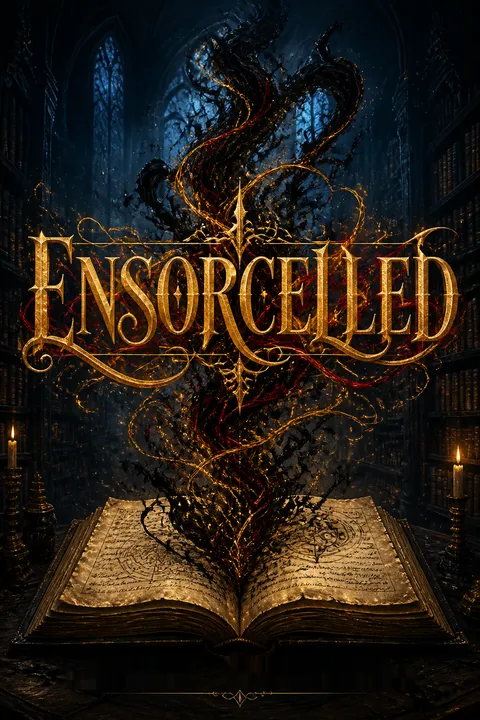


Plot Summary
The Brother Gone Missing
After a battle with a Noswraith, Clara Darlington has brought the nearly lifeless Prince Castien to her childhood home. She manipulated her old friend Danny Gale, a physician, into draining Castien’s human blood to save him, and Danny now watches over the recovering prince with wounded suspicion.
Clara can scarcely think about that quarrel: her younger brother Oscar has vanished, and she fears he has returned to the Old Docklands, where their father once sank into addiction.
Danny confirms he has found Oscar in that district before, but warns Clara against going alone. When Danny tries to stop her, Castien intervenes. Clara admits she has no intention of waiting until morning, and Castien recognizes that she will go whether he approves or not.
The opening binds two kinds of caretaking to one another. Clara attends to Castien’s body while fearing for Oscar, yet her habit of rescuing loved ones also makes her susceptible to controlling them or accepting control herself. Danny’s protectiveness is genuine, but his attempt to physically restrain Clara repeats the pattern she resists: another person deciding what risks she may take. Castien sees her agency more clearly, though his defense is not uncomplicated, since their relationship is already structured by obligation. The immediate crisis is not simply Oscar’s disappearance. It is Clara’s conviction that love requires her to go after him, even when she cannot promise that rescue will last.
A Bargain for the Cab
Castien explains that saving his life has made their magical Obligation mutual: each may command the other in turn, but Clara refuses to begin by forcing him to stay behind. He insists on accompanying her, and the pair disguise him in her father’s old coat before bargaining with a cabby for a ride. At the Den of Vipers, a fae doorkeeper warns them away from the wrong passage.
Inside, Clara’s childhood memories make the drug den’s misery feel unreal and unbearable. She spots Oscar dancing in a glamour that disguises wreckage as a fae revel. When a stranger grabs Clara, Castien frees her, then uses magic to calm Oscar’s drug-addled terror. Clara and Castien carry her brother home, though Oscar cannot promise he will stay away from the drug.
The rescue grants Clara a temporary success without pretending she can cure addiction through devotion alone. Oscar’s altered senses turn the warehouse into a seductive fantasy, while Clara sees the squalor beneath it; that split echoes her childhood effort to protect him by naming danger plainly. Castien helps without taking over the choice that brought them there. Clara could have used their new magical arrangement to compel him, but chooses not to reproduce Estrilde’s coercive style. Their trust grows through practical dependence: he steadies her in the den, and she lets him share the burden of carrying Oscar home.
A Kiss, a Fist, Departure
The next morning, Danny arrives with food and discovers Clara ignored his request to wait. His fear turns into jealousy; after Clara refuses his marriage hopes, he kisses her against her will. Oscar, still unsteady from rothiliom, attacks Danny, and Castien intervenes before the fight worsens.
Later, Castien has recovered enough to sit up, but his servant Lawrence returns from Vespre with news that the library is overwhelmed after another Noswraith outbreak. Clara must choose between remaining with Oscar and returning to the endangered city where her work is needed.
She leaves food in the kitchen, sends a message to Danny’s family, and promises Oscar she will return. On the journey back, Castien asks whether she will come with him. Clara answers without hesitation, though she cannot explain why leaving feels so painful.
Danny’s outburst exposes the difference between devotion and entitlement. His long history of helping Clara gives him real claims on her gratitude, but not ownership of her future or body. Oscar’s attack briefly reverses the expected roles: the brother Clara has spent years protecting becomes her defender, even while impaired. Her departure for Vespre is not a clean rejection of family. It is an agonizing division of care, made sharper by Oscar’s dependence and the library’s danger. The decision also unsettles Clara’s self-image. She believes home must mean Oscar, yet she feels drawn toward the people and responsibilities she has made in Vespre.
The City’s Funeral Lift
Back in Vespre, Clara is greeted by the small troll children she cares for and by Lir, her devoted maid. She soon joins the funeral of Peronelle Silveri, a veteran librarian killed by the Eyeless Woman. Nelle’s son Mixael takes over as head librarian, while the Prince honors the years she spent protecting the library.
At the ceremony, Nelle’s familiar wyvern companion is revealed as a folded page, a final reminder of how thoroughly written magic shapes this world. Clara also hears Princess Ilusine press Castien to ally with her and seek power through marriage.
Castien refuses to be treated as a political instrument, and Ilusine leaves, warning that she may withdraw her support. The private exchange leaves Clara uncertain about Castien’s ambitions and more aware of how little she understands about his past or his feelings.
The funeral makes Vespre’s institutional crisis bodily: each librarian lost is both a person mourned and a pair of hands the city cannot replace. Nelle’s paper-like companion collapses the boundary between story and life before Clara understands how central that boundary will become to her own history. Ilusine’s political proposal offers Castien an alliance, but he resists a future built on being useful rather than wanted. Clara witnesses that refusal from the margins, mirroring her own uncertainty about whether she is valued for herself or for what she can do. The sequence links private affection to public survival without reducing either to a simple choice.
Reading the Eyeless Woman
The Eyeless Woman’s binding is decaying, so Castien, Mixael, Andreas, and Clara descend to her vault. Castien cannot read the spell while his fae blood dominates, leaving Clara to renew it.
The words pull her into the story behind the binding: as a child, she tried to protect her frightened brother from a mysterious woman who soothed him by denying their father’s cruelty. Clara watched the woman’s stitched-shut eyes appear, but their mother dismissed her warnings and locked her away. The memory ends with her mother standing beside the cellar as Oscar screams below.
The Eyeless Woman then attacks Clara inside the spell, tearing at her eye in a vision so convincing that she loses track of the vault. At the last moment, Clara remembers the Noswraith’s true name: Emma. Mixael uses it to secure the binding.
Clara’s task is not only technical. Reading the spell forces her to inhabit the emotional logic that created it: a child’s jealousy, fear, and desperate wish to protect a sibling. The Eyeless Woman’s attack exploits Clara’s oldest vulnerability, the belief that she failed to keep Oscar safe. Remembering the name Emma interrupts the nightmare because naming restores a measure of authorship and control. Yet the scene resists an easy triumph. Clara survives because the librarians work together, and the binding must be renewed again. Knowledge empowers her, but it also makes her responsible for what she has recovered.
The Story Was Clara’s
After the binding, Clara’s memories return. Five years earlier, her father Edgar found the story she had written about the Eyeless Woman and published it under his own name. Readers’ imaginations gave the nightmare enough force to manifest in Eledria, where it killed Castien’s mother and later Nelle.
When King Lodírhal demanded responsibility, Edgar admitted the story was Clara’s, but the king executed him anyway. Castien had hated Clara for the deaths, yet argued against killing her; Estrilde took Clara under Obligation and suppressed her memories.
Clara confronts Castien with her guilt, but he will not yet explain why he spared her. Soon afterward he leaves Vespre to seek new librarians, leaving Clara to take on more of the library’s work.
The revelation complicates guilt rather than erasing it. Clara’s words helped create a real danger, but her father stole the story and its credit, while the adults around her denied her power to understand or prevent what followed. Her childhood participation in writing cannot be treated as adult consent to publication or consequence. Castien’s refusal to explain why he spared her keeps intimacy unresolved, but his past action already challenges Clara’s verdict that she deserves only punishment. The story’s magic therefore becomes a model of inherited harm: creation matters, yet responsibility depends on who controls, interprets, and deploys what has been made.
Knots That Catch Nightmares
While Castien is away, a small Noswraith escapes the library and slips into the room shared by Clara’s troll charges. Sis’s elaborate thread tangle catches it, leaving the creature bound inside a knot.
Clara recognizes that the gubdagog may be more than a child’s game and takes the children to seek guidance from Umog Grush, the Low Priestess of the Deeper Dark. Alone in the unlit temple passage, Clara reaches the priestess and argues that Sis and her brothers need both a home and a connection to troll culture.
Umog Grush agrees to meet Sis before deciding whether to train her. Back at the library, Clara learns that the larger Striker Noswraith has been missing for a year. Before she can investigate the connection, the alarm sounds: an intruder has entered the vault of the Eight-Crowned Queen.
The gubdagog unsettles the assumption that only human writing can bind a Noswraith. Clara’s discovery comes through a child’s practice, not a formal institution, and her first response is to seek a community capable of teaching it rather than claim the knowledge for herself. Her plea to Umog Grush also reframes adoption as more than rescue: caring for the children means allowing them access to their own people and traditions. The looming Striker question adds urgency, because Vespre’s established system is already failing. The section’s central tension is whether an unfamiliar form of care can become a practical alternative to a collapsing one.
Danny Opens the Wrong Book
The intruder is Danny. He has opened the Eight-Crowned Queen’s grimoire and become trapped in its Nightmare, following a bargain Princess Estrilde offered as a way to break Clara’s Obligation. Mixael and Andreas refuse to enter such a dangerous world, but Clara cannot abandon her childhood friend.
She reads the spell and crosses into a storm-dark landscape where many Noswraiths’ realities overlap. After evading a stone-eyed creature and cutting her way past a tentacled horror, she finds Danny at a grotesque tea party.
The hostess compels them to eat insects and slugs; Clara drives a fork into the creature, disrupting its hold long enough for them to escape through a window. Outside, she tries to guide Danny away from the layered Nightmare, but he remains determined to complete Estrilde’s task.
Danny’s entry into the book grows from a recognizably human motive, his wish to free Clara, but the bargain turns that motive into dangerous self-sacrifice. His love does not equip him for a world whose rules he does not know. Clara’s expertise does, and the rescue reverses their familiar roles: the physician she once relied on must trust her judgment. The tea party’s forced civility sharpens the threat, making violence appear beneath hospitality and manners. Clara can get Danny moving, but she cannot yet make him understand that intention is not protection. Their emotional history helps her reach him and complicates her ability to set boundaries.
The Fen Gives Back
The pair flee through another story-world, Dulmier Fen, where Danny sinks into what appears to be bottomless mud. Clara is left alone until she meets a wounded young officer from the tale, a ghost who believes his men are lost forever.
He helps her reach a tree marking a thin place between realities. As Clara kisses him in response to his final wish, the officer’s form changes into Danny, pulled back from the fen. Together they reach the vault and return to their bodies.
Before Clara can celebrate, Estrilde arrives and claims Danny under a new fifteen-year Obligation: he has failed to bring her the Queen’s bloodgem necklace. Clara cannot stop Estrilde from taking him. The rescue has saved Danny’s life, but it has not freed him, and Estrilde has placed him where Clara cannot easily reach him.
The ghost’s rescue of Clara turns the story’s logic of failure inside out. He believes his command doomed his men, yet he still chooses to help a stranger; his act gives Clara the route that restores Danny. Compassion here does not undo the officer’s past, but it creates a meaningful action in the present. The return to the vault then refuses a conventional rescue payoff. Clara has recovered Danny from immediate danger, but the bargain’s legal machinery claims him anyway. The result separates physical survival from freedom, exposing how the fae system can convert a loving intention into a long sentence of service.
Aurelis Sends Him Under
On her next free day, Clara travels to Aurelis to learn what has become of Danny. Lord Ivor Illithor meets her in the gardens, and his beauty and intense attention make her suspect that he is influencing her with glamour.
He says his betrothal to Estrilde is not final, but Clara leaves without accepting the invitation his words imply. At the library, Thaddeus Creakle discovers that Danny has been sent Under, Aurelis’s dangerous lower city. Clara finds him in the Games, forced to fight for a bloodthirsty crowd.
Danny wins a bout, then tries to help his opponent and watches the arena’s magic kill the satyr for breaking the rules. In Danny’s cramped lodging, Clara hears how Estrilde’s sentence keeps him fighting and witnessing suffering. She promises to seek the bloodgem that could end the bargain.
Aurelis offers Clara two different forms of seduction. Ivor’s glamour makes attraction feel almost irresistible, while the Games turn suffering into public entertainment. Clara recognizes the first as potentially coercive and the second as deliberately cruel, though she remains emotionally implicated in both. Danny’s behavior in the pit preserves his identity as a healer: even after winning, he reaches toward the injured opponent. That tenderness becomes a liability in a system designed to punish mercy. Clara’s promise to save him is compassionate, but the scene also shows how readily she assumes responsibility for harms she did not create.
The Queen’s Missing Head
Back in Vespre, Clara tells Castien she will free Danny, but he refuses to help her pursue the Eight-Crowned Queen. Because their mutual Obligation gives Clara the next command, she invokes it and makes him explain how the bloodgem can be obtained.
Castien recounts how Lord Vokuram once used the blood of murdered wives to create a talisman, entered the Queen’s Nightmare, and escaped with one of her heads. The Queen kept the bloodgem necklace, while Vokuram retained the severed head.
Clara realizes that she must negotiate an exchange, not steal the necklace. Castien warns that Vokuram is dangerous, but the Obligation makes him provide the information. Once Clara releases her command, Castien refuses to help further, leaving her to decide whether the risk is worth taking.
The reciprocal Obligation turns abstract magical law into an intimate test of power. Clara can make Castien obey, but doing so sickens her because she knows the difference between formal consent and compelled action. His account of Vokuram’s wives reveals how violence can be disguised as a means to an end, then preserved as an object of power. The head and necklace form a grotesque economy in which a stolen body part can be traded for a magical weapon. Clara chooses not to abandon Danny, but her willingness to risk herself also raises the question Castien has pressed: when does care become a form of self-erasure?
The Hunt Turns Red
Clara enters Noxaur alone to seek Vokuram, but his people capture her and suspend her over a fire. He forces her into the Wild Hunt, promising a prize if she reaches the Mercy Stones.
She crosses the Valley of Bones, evading hunters with quick thinking and a nixie’s help, then survives when a rock giant scatters the pursuers. Cornered near the stones, Clara writes Emma’s name and unleashes the Eyeless Woman. The nightmare overwhelms Vokuram’s hunters, then turns on Clara, taking her eye in a vision.
Castien reaches her and draws her back from the Nightmare. He cannot bind Emma himself, so Clara writes the spell, drives the apparition toward the cellar, and shuts the door on her. She survives, but Vokuram’s head and the Queen’s necklace remain unclaimed.
The climax makes Clara’s creative power both weapon and danger. Writing Emma’s name gives her a means to resist a physical threat, but it also releases a force she knows has already killed. The episode does not present power as moral innocence: the hunters are cruel, yet they are still beings caught in the destruction Clara unleashes. Castien’s rescue cannot replace her agency; he can bring her back, but she must finish the binding herself. The repeated cellar image transforms childhood terror into an action Clara can finally take. Closing the door is not a cure for the past, but it is a deliberate interruption of its hold.
A Duty Used as a Chain
Castien carries Clara away from the hunt, and as she recovers beneath an oak, she tells him that Emma was her mother. Her mother comforted Clara and Oscar after their father abused them, but also excused his violence and never removed them from danger.
Clara connects that painful pattern to her own compulsion to rescue loved ones at any cost. Castien refuses to call her a monster and tells her he forgives her, though he does not make the choice easier. Clara still intends to return to Noxaur for the Queen’s head.
Because her bargain with Vokuram was compromised, she cannot claim the promised prize. Back in Vespre, Castien uses his Obligation to require her library service until her next free day. Clara accepts the duty for now and vows to use their mutual bond again afterward.
The ending brings Clara’s rescue impulse into focus without resolving it neatly. Her mother’s care was real, but it repeatedly softened the truth of abuse instead of stopping it. Clara has inherited a similar pattern: she protects others, then measures her worth by how much danger she can absorb on their behalf. Castien’s forgiveness offers recognition, not absolution from consequence, and Clara does not let affection change her chosen goal. His command protects the library while also asserting power over her. The novel closes with their obligations still active, leaving the romance and the rescue unfinished rather than mistaking emotional closeness for freedom.
Analysis
Ensorcelled treats care as an action with consequences, not as a virtue that automatically makes choices right. Clara’s loyalty saves people, but it also encourages her to take responsibility for their decisions and to measure love by how much danger she can absorb. Oscar’s addiction cannot be undone by a single rescue; Danny’s devotion does not entitle him to Clara; and Clara’s willingness to risk herself does not guarantee that others will be saved. These distinctions keep the novel’s emotional conflicts from resolving into simple judgments of selflessness or selfishness.
The magical systems give those conflicts material form. Obligation converts power into law, yet the fae find ways to turn legal protections into traps. Grimoires make stories consequential, while Clara’s hidden authorship links creative power to guilt, inheritance, and the theft of credit. Her father’s publication of her work helps produce a monster, but the book distinguishes the child who imagined a story from the adults who exploited it and the institutions that punished her. The eventual return of her memories therefore restores more than information. It gives Clara a chance to see how responsibility was distributed and where it was denied to her.
The troll children and their gubdagogs offer a countermodel to the library’s failing system. A child’s pattern-making holds a creature that formal human bindings struggle to contain, suggesting that knowledge may exist outside the institutions that claim authority over it. Clara’s appeal to Umog Grush recognizes that protection must include cultural belonging, not merely shelter. Yet the novel does not make this alternative an easy solution; it remains a possibility requiring trust and instruction.
The romance develops within the same argument about agency. Castien’s restraint matters because he possesses power over Clara, while his jealousy and her commands reveal that affection does not dissolve unequal structures. Their bond remains unresolved at the close. Clara returns to her work under magical compulsion, but she also intends to choose her next action. The ending preserves the central question: can love become a form of mutual recognition without turning into ownership, rescue, or debt?
Review Summary
Ensorcelled receives mixed reviews, with an overall rating of 4.05/5. Fans praise the intense plot, world-building, and slow-burn romance. Critics find the protagonist Clara frustrating and reckless, making poor decisions that endanger others. Some readers appreciate Clara's complex character development, while others find her actions illogical. The book explores themes of trauma, obligation, and love. Many readers eagerly anticipate the next installment, despite some frustrations with pacing and character choices.
People Also Read


Characters
Clara Darlington
The stubborn rescuerClara is a human librarian whose life is divided between the endangered city of Vespre and the family she left in her own world. She is sharp-eyed, practical, and difficult to intimidate, but her loyalty often becomes an obligation she places on herself. Years of protecting her younger brother have taught her to act before asking whether help is wanted or sustainable. Clara distrusts fae bargains because she knows how easily care can be used to disguise control. Her work with dangerous books demands both precision and courage, while her private life exposes how hard it is for her to distinguish responsibility from guilt. She is compassionate without being meek, and her strongest choices arise when she refuses to let others define what she can endure.
Castien
The burdened fae princeCastien is the hybrid prince responsible for Vespre, a city built around a library containing dangerous living spells. He combines courtly arrogance and teasing wit with a serious sense of duty, often doing practical work that his rank might let him avoid. His human and fae natures place him between worlds, and his changing magical abilities make him keenly aware of vulnerability. Castien watches Clara closely and respects her competence, though his protectiveness can become another form of pressure. He is politically astute, guarded about his motives, and reluctant to use the power he holds over her. His central tension is between the obligations imposed by his position and the private loyalties he cannot easily admit.
Daniel Gale
The devoted physicianDanny is Clara’s childhood friend and a physician who serves patients at Westbend Charity. His instinct is to heal, feed, and protect, and years of caring for Clara and her brother have made him feel deeply responsible for their wellbeing. He is kind and capable, but his affection for Clara can blur into certainty that he knows what is best for her. Danny struggles to accept that gratitude and shared history do not guarantee romantic love. His profession gives him a practical understanding of suffering, while his limited experience with fae magic leaves him vulnerable to bargains he does not understand. He remains compassionate even when anger, fear, or disappointment compromises his judgment.
Oscar Darlington
Clara’s troubled brotherOscar is Clara’s younger brother, a gifted writer whose promise is tangled with addiction and the emotional injuries of their childhood. He has a playful imagination and a vulnerable streak that Clara has long tried to shield. His dependence on rothiliom makes him difficult to reach, but it does not erase the intelligent, affectionate person Clara remembers. Oscar’s relationship with Clara is shaped by mutual love and an unequal history of protection: she often treats his safety as her responsibility, while he resists being managed. His future is uncertain because he must confront his own choices and wounds, not simply rely on his sister’s devotion.
Princess Estrilde
The calculating fae mistressEstrilde is a powerful fae princess and Clara’s former mistress, accustomed to making arrangements that serve her political ambitions. She is beautiful, controlled, and skilled at turning formal rules to her advantage. Her manner can appear playful or generous, but her bargains carry consequences that others may not understand until too late. Estrilde’s relationship with Clara is marked by hierarchy and resentment, while her ties to Castien and Ivor connect personal desire to succession politics. She understands that obligation can be wielded as efficiently as a weapon. Her composure makes her difficult to read, and her attention to other people’s attachments gives her leverage over them.
The Eyeless Woman
The stitched nightmareThe Eyeless Woman is a powerful Noswraith bound within the Vespre Library, recognizable by the dark stitching over her empty eye sockets and the red mist that follows her. She enters stories through comfort and familiarity, turning protective gestures into a means of drawing people toward danger. Her presence is especially disturbing because she can make a nightmare feel intimate before revealing its violence. The librarians fear her not only for her physical strength but for the way she reaches into memory and perception. She represents the particular danger of a story that understands a person’s longing well enough to exploit it.
Lord Ivor Illithor
The golden fae lordIvor is a high-ranking fae lord with political importance in Aurelis and a striking personal presence. He is connected to Estrilde’s plans and appears to feel a powerful attraction to Clara. His attentions are flattering and unsettling in equal measure, especially because Clara senses a magical influence around him. Ivor’s position makes private desire inseparable from questions of power, marriage, and the future of the court. He is not easy for Clara to interpret, and his apparent sincerity does not remove the need for her to guard her own judgment.
Lawrence
The prince’s steady servantLawrence is Castien’s loyal manservant and a reliable messenger between the palace and other worlds. He carries himself with practical good humor, even when the library’s dangers and the household’s disorder leave little room for ease. Lawrence helps keep Castien’s household functioning and takes responsibility for the troll children when Clara is away. His loyalty is expressed through useful work rather than grand declarations, making him one of the quiet supports on which Vespre depends.
Peronelle Silveri
The veteran librarianNelle is a long-serving librarian whose experience and courage have helped protect Vespre for centuries. She is Mixael’s mother and one of the people whose discipline made the library’s impossible work more manageable. Nelle’s love of poetry and fiction offers a glimpse of the private life that librarians preserve alongside their grim duties. She is remembered as both a formidable professional and a warm presence within the community.
Mixael Silveri
The overburdened head librarianMixael is a librarian who inherits leadership in Vespre at a moment when the institution is dangerously understaffed. He is usually optimistic and approachable, but the work and personal losses weigh heavily on him. Mixael values rules because he has seen what happens when bindings fail, yet he can bend procedure when necessity demands it. He worries about Clara’s safety and the library’s future, sometimes mistaking caution for the only responsible choice. His leadership requires him to balance grief, fatigue, and the demands of a job that offers no real rest.
Andreas Cornil
The scholarly librarianAndreas is a quiet, thoughtful librarian whose knowledge of old texts and Noswraiths helps sustain the work at Vespre. He loves ancient poetry and approaches crises with a measured temperament, though danger can draw a firmness from him that surprises others. Andreas is tired from the demands of the library but continues to do his share, wary of putting colleagues at risk. His learning is practical as well as scholarly: he can read a grimoire closely, assess a threat, and recognize when no available choice is safe.
Captain Khas
The palace’s hard-edged guardKhas is the captain responsible for guarding the palace and helping keep Vespre’s people alive. She is disciplined, physically formidable, and direct about danger, but her loyalty is not limited to the people who are easiest to protect. Khas assists Clara in the lower city and takes the troll children’s training seriously. Her hard manner conceals a careful sense of responsibility, especially when custom and personal safety pull in different directions.
Lir
Clara’s devoted troll maidLir is Clara’s maid and companion, a pale-skinned troll raised by human parents rather than within her people’s usual traditions. That history leaves her feeling out of place in both communities. She is capable, affectionate, and frequently exasperated by the children in her care, but her complaints cannot hide how attached she has become. Lir’s experience helps Clara understand that belonging is not always secured by origin alone. She wants the children to be safe without denying the complexity of her own identity.
Sis
The inventive troll childSis is the youngest of Clara’s troll charges, bold in her affections and fiercely absorbed in making elaborate tangles from thread and found objects. She is playful, stubborn, and more observant than adults initially realize. Her creations reveal a distinctive way of thinking about pattern, containment, and play. Sis is not a miniature human child in troll skin; she has her own habits, loyalties, and cultural inheritance, which Clara tries to honor even as she gives her a home.
Calx
One of Clara’s troll childrenCalx is one of the troll siblings taken into Clara’s household. He is affectionate, energetic, and accustomed to living close among his siblings. His presence helps make Clara’s role as caretaker a daily practice rather than a distant promise.
Har
One of Clara’s troll childrenHar is one of the troll siblings in Clara’s care. He is lively and physical, happiest among his brothers and sister, and gradually becomes part of the palace household’s routines.
Dig
One of Clara’s troll childrenDig is one of the troll children Clara shelters. He is spirited and closely bonded to his siblings, with a taste for rough play and the lively disorder of their shared household.
Umog Grush
The Low PriestessUmog Grush is the Low Priestess of Vespre’s trolls, a formidable religious and cultural authority who lives in the Deeper Dark. She is wary of human interference and protective of troll customs, especially when children risk losing their place among their people. Her judgment is severe, but she is curious enough to listen when Clara argues with conviction. Umog Grush sees that care can become a form of cultural displacement, even when it begins in love.
Lord Vokuram
The Noxaurian hunterVokuram is a powerful lord of Noxaur who leads a group devoted to the Wild Hunt. He is dangerous, theatrical, and convinced that brutality can be made sacred through ritual. His cultured manner sits uneasily beside his appetite for domination. Vokuram respects strength when he encounters it, but his agreements are shaped by a worldview in which other beings are prey, prizes, or sources of power.
Edgar Darlington
Clara’s celebrated fatherEdgar is a once-famous writer whose talent and public reputation shape the Darlington family’s rise and decline. At home, he is demanding and emotionally volatile, measuring his children against standards they cannot satisfy. His rare approval carries enormous force for Clara, who longs to be recognized by him. Edgar’s public identity as a literary figure contrasts sharply with the harm he causes in private.
Clara’s mother
The comforting parentClara and Oscar’s mother is remembered as affectionate and gentle, often offering comfort after family distress. She loves her children, but her way of soothing them can avoid confronting the source of their pain. Her presence in Clara’s memories is bound to tenderness, grief, and unresolved questions about what protection requires.
Kitty Gale
Danny’s devoted sisterKitty is Danny’s sister and part of the close-knit human household that has offered Clara friendship over the years. She is not central to the action, but Clara’s concern for her makes Danny’s fate matter beyond their complicated relationship.
King Lodírhal
The stern fae kingLodírhal is the ruler of Aurelis and a figure whose judgments carry great weight across the fae courts. His authority shapes the history of Clara’s family and Castien’s place in the political world. He is associated with the severe laws and dynastic expectations that govern their lives.
Thaddeus Creakle
The Aurelis librarianThaddeus is an older librarian in Aurelis who knew Clara before her departure for Vespre. He is diligent, cautious, and willing to help her search records, though his knowledge of the lower city makes him reluctant to see her venture there.
The young officer
A ghost in the fenThe young officer is a figure trapped within the story-world of Dulmier Fen. He carries the burden of believing that his leadership led his soldiers to ruin. His quiet grief and willingness to help a stranger reveal a capacity for compassion even inside a world shaped by loss.
Plot Devices
The Obligation
Power with a priceAn Obligation is a binding magical service agreement between a human and a fae. It can compel obedience, but its laws also restrict what a master may demand and shape how one bargain affects another. Clara’s relationship with Castien becomes unusually reciprocal after she saves his life, allowing each of them to command the other in turn. Estrilde’s retained Breaker’s Rights and Danny’s separate bargain show how fae can exploit the rules without openly violating them. The device makes power tangible in intimate relationships: affection, gratitude, duty, and coercion can occupy the same magical bond.
Grimoires and Noswraiths
Stories made dangerousNoswraiths are nightmares given form through human stories and held inside magical books by written bindings. Librarians must read, repair, and sometimes rewrite those spells to keep the creatures contained. A binding can decay, a name can strengthen it, and entering a grimoire can draw a person into the story-world itself. This system turns reading and writing into physical labor with lethal consequences. It also makes the library’s staffing crisis a threat to the whole city, since each damaged book is a possible breach between imagination and life.
Between Gates
Passages between worldsThe Between Gates are magical crossings connecting the different realms of Eledria and Clara’s human world. Travel through them is physically disorienting, and the gates’ dials must be set toward the intended destination. Their presence makes journeys possible but never ordinary or entirely safe. The gates also bring distant crises into immediate reach: Lawrence can return with news from Vespre, and Clara can cross into Aurelis or Noxaur when her choices demand it.
Troll Gubdagogs
Knots that hold storiesGubdagogs are intricate troll tangles woven from threads and found objects. Sis makes them as play, but one catches an escaped Noswraith, revealing that the patterns can hold powerful magic. Clara’s discovery challenges the library’s assumption that human writing is the only way to bind a story-creature. The gubdagogs connect children’s play to a larger cultural practice and suggest that Vespre may have access to a different form of protection. Their full potential remains uncertain, which gives Clara reason to seek guidance from Umog Grush.
The Bloodgem Necklace
A bargain’s missing halfThe necklace contains a talisman made from the blood of Lord Vokuram’s murdered wives, and it belongs to the Eight-Crowned Queen. Vokuram also possesses one of the Queen’s severed heads, taken during an earlier invasion of Vespre Library. Estrilde makes the necklace the price of breaking Danny’s Obligation. Castien explains that Clara must offer the missing head in exchange, because theft is unlikely to succeed and the object was acquired through a bargain of violence. The necklace turns Clara’s rescue mission into a dangerous negotiation whose cost reaches far beyond the two humans involved.
Prince of the Doomed City Series
About the Author

Download PDF
Download EPUB
.epub digital book format is ideal for reading ebooks on phones, tablets, and e-readers.








