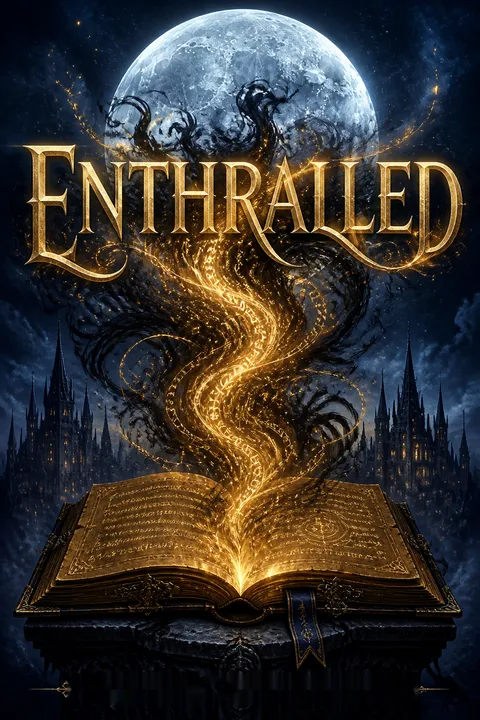


Plot Summary
The Bride Without Yesterday
Clara Darlington wakes in the Gales’ guest room with nausea, a missing stretch of memory, and a wedding scheduled for the next morning. Her childhood friend Danny Gale says they became engaged after she returned from working as a governess, while his sister Kitty treats the wedding as a joyful certainty.
Yet lavender, the word worlds, and an unfamiliar voice keep stirring flashes that do not belong to this life. Clara cannot remember leaving her brother Oscar behind on Clamor Street, or why Danny’s kiss makes her feel she is reaching for someone else. When Danny puts his mother’s amethyst ring on her finger, she accepts the gesture without understanding how her life has been arranged.
Clara’s missing memories are not an empty space so much as a structure built to make a particular choice feel natural. Danny’s domestic care, Kitty’s wedding preparations, and the ring all supply a ready-made identity, but Clara’s bodily recoil registers what her conscious mind cannot. The story begins by making the reader inhabit that split: social reassurance insists she is safe, while sensation and stray words signal that safety has been purchased through erasure.
Oscar’s Bestseller Turns Dark
Clara goes to Clamor Street, where her brother Oscar is hunched over a desk amid bottles and pages. His horror story, The Hollow Man, has made him a literary sensation, even eclipsing the reputation of their dead father, Edgar. Clara congratulates him, but Oscar attacks her, claiming she and the Prince she cannot remember kept his creative power chained.
He cuts her palm with a penknife, then orders her away. Danny finds Clara outside and binds her hand. He explains that she has recently survived gray fever and insists that she agreed to stop trying to rescue Oscar. When Clara presses him about her father’s death, Danny urges her not to remember. His careful answers deepen her suspicion.
Oscar’s success appears to vindicate the talent Clara has always wanted him to possess, but his reaction makes achievement inseparable from grievance. His story is both a real creative breakthrough and a vessel for forces Clara cannot yet recognize. Her habitual defense is to interpret his cruelty as evidence that he needs her more, not less. Danny offers a different form of control: protective explanations that suppress questions. Both relationships ask Clara to surrender her own perception.
Estrilde Breaks the Wedding
On the wedding morning, Clara reaches the chapel aisle but sees Danny waiting at the altar and bolts into the street. The lost voices in her mind return, and a radiant, horned fae named Estrilde seizes her. Estrilde says Clara has forgotten a Fatebond and confirms that Clara is carrying a child. She knocks Clara unconscious before Danny or Kitty can stop her.
Clara wakes in a tower chamber, chained to a stone slab, while Oscar stands beside Estrilde. He has helped her bring Clara there and expects Estrilde to use Clara’s living heart in a rite to retrieve his lover, Ivor Illithor. Oscar blames Clara for Ivor’s earlier fall and accepts the risk to her life as a price worth paying.
The interrupted wedding turns Clara’s private unease into an unmistakable conflict between imposed identities. Estrilde’s claim about the Fatebond and pregnancy makes the body itself evidence against the fabricated life Clara has been given. More painfully, Oscar is no longer merely an erratic brother in need of protection: he has made a decision that treats Clara as expendable. The scene forces the central emotional question into the open. Can love remain love when it requires denying another person’s autonomy and safety?
Blood Opens the Third Hell
Before Estrilde can begin the rite, Prince Castien Lodírith bursts through the chamber roof. He recognizes Clara as his wife, but she does not know him. Estrilde threatens Clara until Castien offers his own blood and swears to summon Ivor from Saalvru, the Third Hell. The rite opens a pit, and Oscar pulls out Ivor, who returns horribly mutilated.
Castien stops Estrilde from killing Clara, but Oscar takes up the knife and cuts a forbidden word into his own arm. His new magic releases the Hollow Man, the monster born from his story. Castien fights the giant long enough for Estrilde, Ivor, Oscar, and Clara to flee toward a hidden passage in the palace library.
Castien’s rescue is compromised from the start: the vow that saves Clara also gives Estrilde what she wants, and Oscar’s reunion with Ivor brings the story’s imagined horror into the world. The Hollow Man marks the dangerous overlap between expression and enactment. Oscar’s talent can give shape to pain, but without any reckoning with that pain, the creation becomes an instrument of harm. Castien’s willingness to bind himself by oath shows that love can be protective while still carrying grave consequences.
The Gate Takes Seven Years
In the library, Clara opens a hidden gate that lets the fugitives escape into another world. King Lodírhal discovers the passage and decides that Vespre must be cut loose rather than risk the spread of the nightmares. His spell destroys the gates linking Vespre to Eledria and kills him in the effort.
Castien kisses Clara before following the collapsing passage, and the contact restores her memories of their marriage, their children, and the life she left behind. Estrilde cannot claim the crown because its power passes to Castien. She turns on Clara, but the fae princess Ilusine rescues her and carries her through another gate to the human world. The passage leaves Ilusine gravely weakened.
The severing of the gates converts separation into a material catastrophe. Clara’s restored memory does not bring comfort; it reveals the scale of what she has lost and how little time she has to repair it. Castien’s final kiss gives her back the truth, then leaves her on the far side of the destruction. The contrast between recognition and access is crucial: knowing whom she loves cannot reunite her with him. The seven-year separation will make that emotional distance visible in Clara’s children and in Castien’s body.
Clara Refuses the Easy Life
Back in her family home, Clara finds Ilusine wounded and still carrying her pride despite her weakened body. Danny arrives in his wedding clothes and admits that he remembered Clara’s life in Eledria all along. He had hoped her lost memories would let them marry, and he knew she was probably pregnant with Castien’s child.
Clara refuses him and returns his ring, choosing the truth of her marriage over the safe future he offers. Ilusine reveals that Clara’s earlier bargain with the Daughters of Bhorriel requires three days of pain, so they must wait before seeking another passage. Clara endures the bargain’s cost and prepares to return to Eledria, accepting that she must face Oscar and the consequences of her choices.
Danny’s deception grows from love, but its tenderness does not make it consensual. He wants the version of Clara who cannot remember Castien, and Clara recognizes that a life built on her unknowing would still be a lie. Her decision is not a simple rejection of Danny; she grieves what they shared while refusing to make his longing the measure of her future. The waiting period also denies her a dramatic shortcut. She must sit with pain rather than treat sacrifice as proof that she is entitled to forgiveness.
Danny Gives Up His Dream
When Clara and Ilusine reach the Den of Vipers, fae creatures demand kisses as their toll. Danny has followed them and drives the attackers away with a lantern. He admits that he once bargained with a crone to bring Clara safely home, paying with his lifelong dream of marrying her. At the crone’s house, Clara asks for a route to Vespre.
The crone offers to take Clara’s heart, but Danny steps forward and gives up his own instead. The crone seals the bargain, and Danny collapses. Ilusine promises to get him safely back to his people while Clara enters the crone’s magical garden and crosses a failing gate toward Vespre.
Danny’s sacrifice is both generous and tragic because it finally respects the choice Clara has made, even as it costs him the future he wanted. The crone turns emotional attachment into literal currency, giving the novel’s recurring bargains a sharp psychological form: love can be offered freely, but it cannot guarantee possession or reciprocation. Clara accepts the passage without claiming Danny’s pain as a debt she can repay. Her departure marks a change from self-punishment toward responsibility for the people she abandoned.
Seven Years in the Hinter
Clara lands in the ruined solarium of Vespre Palace, where the broken connection to Aurelis has killed its plants. A Thorn Maiden attacks her, and Clara uses Oscar’s notebook to create an axe and hold the monster behind a door. Calx finds her while fleeing another wraith, then leads her to his sister Sis, whose woven gubdagogs trap the creature.
Clara learns that her seven weeks away have lasted seven years in Vespre. The children are grown, and Lir has raised them in her absence. With wraiths loose throughout the city, the low priestess Umog Grush tells Clara that binding them is no longer enough. Clara must help find a way to end them.
The time difference turns Clara’s return into a confrontation with irreversible change rather than a homecoming that can restore the past. Her children have survived without her, and Lir has taken on the care Clara once believed only she could provide. That fact wounds Clara, but it also challenges her old conviction that being indispensable is the same as being loving. The demand to destroy the wraiths shifts her task outward: she cannot undo seven lost years, but she can choose what to do with the danger now.
Vervain Faces Her Creation
Clara and Lir enter the palace to search for Dig, who was separated from his rescue party. They find him injured in Clara’s old room after he tried to draw a wraith away from a priestess. Nearby, Vervain has survived her tower confinement by painting intricate patterns on her walls. When the Hungry Mother, Vervain’s own creation, attacks, Clara’s fear briefly pulls her into a childlike state.
Vervain breaks through that illusion and faces the monster directly, recognizing it as part of herself rather than merely fighting it. The nightmare disappears into darkness, and Vervain emerges changed. Her confrontation shows Clara a possible way to meet the wraiths beyond force and containment.
Vervain’s response offers Clara a new model of strength. She does not deny the danger of the Hungry Mother, but neither does she reduce the creature to an enemy that must simply be dominated. Recognition interrupts the old cycle between fear and violence. Clara’s temporary regression shows how easily terror can return her to childhood helplessness; Vervain’s steadiness makes room for a different response. The painted patterns in the cell are not decoration alone. They embody a patient practice of making order without pretending the past never happened.
The Queen and the Fen
Ivor confronts Clara in the palace and reveals his plan to use the bloodgem necklace to control Idreloth, the Eight-Crowned Queen. He summons the monster, and Vervain stays behind to fight while Clara escapes. In Dulmier Fen, a nightmare built from the grief of author George Godswin traps Clara in mud among dead soldiers.
She reaches the author beneath the wraith’s phantom shape and persuades him to name himself and release the men he has kept bound to his guilt. The fen vanishes. Clara returns to the palace and meets Oscar, who explains Ivor’s ambition to conquer Eledria. When Oscar dismisses the suffering of trolls, Clara strikes him and leaves.
The fen gives Clara her first proof that a wraith can be ended through truthful recognition rather than a stronger binding. George’s haunting persists because his grief has become an identity he cannot relinquish; hearing his name and pain allows him to release both himself and the dead. Clara applies that insight imperfectly to Oscar. She can no longer excuse his choices as helplessness, but her slap also signals the cost of separating love from compliance. She leaves him without imagining that one confrontation will heal him.
The Refugees Leave the Temple
Mixael and Andreas rescue Clara from two wraiths and bring her back to the low temple, where Dig is recovering. Anj initially refuses to evacuate the refugees, but Umog Grush orders the city to move toward the palace. Idreloth breaks through their defenses, and Umog holds the queen in an immense gubdagog long enough for the families to flee.
On the march, Andreas is killed when his own Mind Worm escapes him. Mixael keeps the survivors moving despite his grief. At the palace steps, the Thorn Maiden blocks their way until Castien appears and drives it back. Clara has found her husband at last, but Vespre’s defenders have been cut down and the surviving group is small.
The evacuation makes survival a collective practice, not a heroic rescue in which one powerful figure can protect everyone. Umog spends her life buying time for people who cannot fight; Andreas’s fate reveals the danger carried by the librarians themselves. Mixael’s grief must wait because the children still need a path forward. Castien’s arrival brings power back into the story, but only after the community has paid heavily. Clara’s return cannot erase those losses, and the shrinking procession keeps the cost visible.
The Library Becomes a Refuge
Castien leads the survivors into the library and uses the last remnant of a secret gate to reach Aurelis. Khas takes baby Sor through first to check the other side, followed by the troll families and Clara’s children. Mixael refuses to abandon the library, while Lir and Anj remain with him. As the last refugees prepare to cross, Oscar and Ivor arrive outside.
Their attack bursts the door open and unleashes the Hollow Man. Mixael lashes the monster with a spell while Lir throws a gubdagog over its face. Ivor stabs Mixael, however, and the binding breaks. Clara realizes that no one else can confront the creature born from Oscar’s story, and reaches for her old desk.
The gate divides safety from loyalty. Clara’s children cross into a more secure world, but several adults remain because they cannot abandon the people and work still at risk. Mixael’s choice is not presented as uncomplicated nobility; it exposes the painful arithmetic of protection, where no one can save everyone at once. The Hollow Man’s entrance makes the physical crisis inseparable from Clara’s family history. The library, once the place where she learned to work with written monsters, becomes the threshold to her own unresolved ones.
Clara Names Her Nightmares
Using the library’s books and quills, Clara enters the Nightmare Realm while Castien tries to break the gate and Oscar lies beyond her reach. She faces the Eyeless Woman, a wraith shaped by Clara’s childhood belief that she alone must protect her brother. Instead of fighting the illusion, Clara recognizes her own frightened younger self and accepts that child with compassion.
Then she faces the Hollow Man, the creation attached to Oscar’s pain. Its image changes into a broken boy, and Clara tells him that Edgar is gone and that she loves her brother without excusing what he became. The Hollow Man dissolves. In the physical library, Oscar has died, and Castien closes the gate before killing Ivor as he attacks Clara.
Clara’s decisive change is not that she stops loving Oscar, but that she stops confusing love with endless rescue. By recognizing the Eyeless Woman as a frightened part of herself, she withdraws the shame that kept the wraith powerful. By seeing the Hollow Man as Oscar’s pain rather than as their father, she separates inheritance from identity. The release does not undo Oscar’s death or absolve his actions. It lets Clara grieve him without renewing the family’s pattern of denial, submission, and self-erasure.
Two Kings Reopen the Way
With Ivor dead and the remaining refugees sheltered, Castien proposes that Anj become king of Valthurg and use the island’s power to restore a gate. Anj accepts the crown and opens a passage to Aurelis. There, Clara and Castien find Estrilde ruling through indulgence and violence, with Khas, Sor, and Clara’s children held among her captives.
Castien reveals himself as the rightful king, and Clara demands the prisoners’ release. The court’s power returns to Castien; he strips Estrilde of her titles and banishes her. Khas is freed and sent back to Mixael in Vespre. The new rulers begin reconnecting Valthurg to Eledria, while Clara and Castien turn toward the long work of making the damaged worlds livable again.
Political restoration follows, rather than replaces, the novel’s emotional reckoning. Anj’s crown allows the people of Valthurg to act as a sovereign community, while Castien’s return prevents Estrilde from turning the emergency into permanent rule. Clara’s demand for the captives shows her new authority in action: she no longer treats a protected home as something purchased by abandoning others. The resolution remains laborious. Gates must be rebuilt, wraiths addressed, and trust renewed; victory creates conditions for repair rather than making repair unnecessary.
The Moths Return to Vespre
Two cycles later, Clara attends Vespre’s Hugag celebration with Castien and their young son, also named Oscar, while carrying another child. The sacred moths return in a vast flight, a sign that the island has begun to recover under Anj and Lir’s rule. Clara’s older troll children are thriving, Mixael continues the library’s work, and Clara travels between libraries to help release the Noswraiths by finding their true names.
She still grieves the brother she lost, Danny and Ilusine remain far away, and the work is unfinished. At the library, Clara reads the hopeful ending she has added to the story she and Oscar once began, then dances with Castien as their sleeping child rests between them.
The epilogue makes healing cyclical rather than final. The returning moths echo renewal, but Clara’s continued grief and unfinished work prevent the image from becoming a claim that everything has been repaired. She can remember Danny, Ilusine, and Oscar without trying to pull them back into the life she now has. Revising the childhood story gives her a careful form of authorship: she does not erase the painful ending her brother wrote, but she adds a future in which connection can survive loss.
Epilogue
Two cycles after the crisis, the sacred moths return to Vespre during the Hugag festival. Clara watches with Castien, their young son Oscar, and a child growing inside her. The older children are established in their lives, Anj and Lir lead a recovering Valthurg, and Clara works with Mixael to release Noswraiths by discovering their true names.
Later, she reads the unfinished story she once shared with her brother, now given a more hopeful ending, before Castien draws her into a dance. Grief remains, but it no longer dictates what she must sacrifice.
The ending refuses a clean reset. The island has renewed its ties to the worlds, yet Clara still misses the people who cannot return to her, and the library still holds dangerous work. The moths make renewal visible without making it effortless. Clara’s revised story is especially important: she neither denies Oscar’s despair nor allows his despair to be the final word. Her family life and her work coexist with mourning, suggesting that healing means carrying memory differently, not eliminating it.
Analysis
The book’s central conflict is not simply between humans and fae, or between a city and the monsters haunting it. It asks what happens when care becomes a person’s entire identity. Clara has learned to see herself as Oscar’s rescuer, and that belief lets her reinterpret his anger, excuse his choices, and discount the claims of her children, Castien, and herself. Her devotion is real, but its moral force depends on whether she can see the person she loves clearly. The story’s answer is neither abandonment nor endless forgiveness. Clara must recognize Oscar’s harm without pretending that love requires obedience.
The Noswraiths make psychological pain materially dangerous. They arise from human imagination, but the story does not treat creativity as evil in itself. Writing gives suffering a form; the danger comes when the creator’s identity becomes fused with an unexamined wound. George Godswin’s release and Clara’s confrontation with the Eyeless Woman establish recognition as an alternative to repression. Naming a wraith means seeing its human source, not endorsing everything that source has done. The method allows grief to be acknowledged and then released, rather than endlessly contained.
The novel also distinguishes love from possession through its competing relationships. Danny’s desire to give Clara a safe life becomes coercive when he hopes her memory loss will make that life possible. Castien can also be controlling when he withholds the truth. Ilusine and Lir, by contrast, show forms of loyalty that accept pain without claiming ownership. Their choices complicate the romantic fantasy of one person saving another: love can support, sacrifice, and accompany, but it cannot make another person’s choices disappear.
The ending offers restoration without pretending that loss can be reversed. Clara cannot reclaim the childhood years she missed or bring Oscar back as he was. She can choose how to remember him, protect the living, and help other creators face what they have made. The renewed island and unfinished library work make recovery a shared practice, not a reward granted to a flawless heroine.
Review Summary
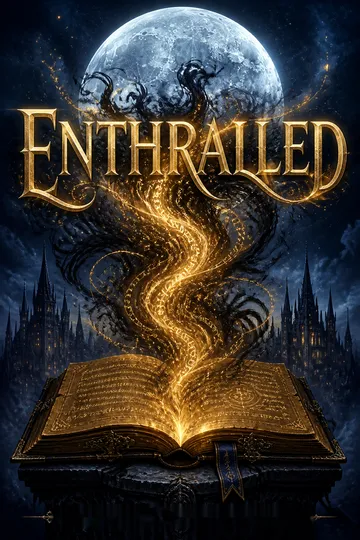
Enthralled, the final book in the Prince of the Doomed City series, received mostly positive reviews. Readers praised the character development, especially Clara's growth and journey of self-discovery. The book's themes of trauma, healing, and forgiveness resonated with many. Some found the pacing uneven and certain plot elements frustrating. The slow-burn romance and world-building were widely appreciated. While a few readers felt disappointed with aspects of the conclusion, most found it a satisfying end to the series.
People Also Read
Characters
Clara Darlington
The returning mageA human librarian and writer, Clara is fiercely protective of her younger brother Oscar and instinctively puts other people’s needs ahead of her own. Her care is sincere, but her belief that she alone can save someone makes it easy for her to ignore what that person is choosing and what her loyalty costs others. She is observant, resourceful, and braver than she thinks, especially when using written magic. Her emotional struggle concerns the difference between love and self-erasure: she must learn to face harm without denying it, and to take responsibility without treating herself as beyond repair.
Castien Lodírith
The exiled fae princePrince of Aurelis and Clara’s Fatebound husband, Castien is a formidable mage whose power is channeled through writing. His wit and command can disguise deep fear of losing the people he loves. He protects Clara, but he can also withhold information or decide what is best for her, mistaking control for care. His life is bound to Clara across worlds, making separation physically dangerous as well as emotionally painful. He is both a romantic partner and a ruler forced to weigh intimate loyalty against the survival of entire communities.
Oscar Darlington
Clara’s gifted brotherClara’s younger brother is a talented writer shaped by a childhood marked by their father’s cruelty and their mother’s inability to protect them. He longs to be recognized on his own merits, yet his sense of self is tangled with anger, shame, and the family history he wants to escape. Clara sees the vulnerable boy beneath his volatility and often mistakes that memory for the whole person he has become. His writing has unusual power, making his imagination a source of both artistic achievement and danger.
Danny Gale
The devoted childhood friendA physician and Clara’s longtime friend, Danny has loved her since they were young and offers the steadiness of a familiar home. His devotion is genuine, but he can shape his hope around the version of Clara he wants, rather than the person making choices in front of him. He wants to care for her and provide a safe life, yet his fear of losing her makes him conceal truths and cling to a future she does not choose. His character gives the story a painful account of affection that remains real even when it cannot become a shared life.
Ilusine
The proud Soliran princessA princess of Solira, Ilusine is a powerful fae woman with a regal manner, sharp judgment, and little patience for human weakness. Her history with Castien makes her a complicated presence in Clara’s life. Pride protects her from vulnerability, but it does not make her incapable of costly loyalty. She can be brusque and difficult to approach, yet she understands the pain of loving someone whose heart is bound elsewhere. Her perspective helps Clara see that romantic rivalry and genuine care can exist in the same relationship.
Lir
The children’s other motherOnce Clara’s maid and first trusted friend in Vespre, Lir becomes a capable organizer, mother, and gubdagog weaver. She is gentle without being timid and increasingly willing to challenge people stronger or more powerful than herself. Her connection to Clara’s children is built through years of daily care, not an abstract claim to affection. Lir’s growth unsettles Clara’s belief that love means being indispensable, while her partnership with Anj places her between the city’s families and its leaders.
Ivor Illithor
The ambitious fae lordA fae lord of royal blood, Ivor is drawn to power and to the possibility of claiming a destiny he believes has been denied him. He is persuasive, politically calculating, and capable of making other people feel uniquely chosen. His charm conceals an ambition broad enough to endanger entire realms. He sees people as useful pieces in a campaign for authority, even when he frames that campaign as love or justice. His dealings with Clara, Oscar, and Estrilde reveal how seduction and political manipulation can reinforce one another.
Princess Estrilde
The glamourous royal rivalCastien’s cousin, Estrilde is a fae princess whose dazzling glamour masks a hard appetite for control. She understands courtly theater and knows how to make threats seem beautiful, reasonable, or inevitable. Her alliance with Ivor is driven by ambition and expectation of power, while her treatment of Clara shows little regard for human vulnerability. Estrilde is not merely a magical threat: she is skilled at exploiting institutions and people already prepared to mistake beauty or rank for moral authority.
Vervain Keldi
The imprisoned artistA former librarian and creator of a powerful nightmare, Vervain has endured years of confinement after her magic became dangerous. She is delicate in appearance but possesses a concentrated inner strength. Painting gives her a way to shape experience without immediately turning it into a weapon. Her insight into the relationship between a creator and a creation becomes crucial to Clara’s understanding of the Noswraiths.
Mixael Silveri
Vespre’s head librarianThe head librarian of Vespre, Mixael is warm, witty, and deeply committed to the books and people in his care. His charm does not make him careless: he is a skilled fighter and a determined keeper of dangerous knowledge. He balances professional duty with love for his wife and child, and his responsibilities often require him to make painful choices. His friendship gives Clara a place within the library’s working community.
Andreas Cornil
The quiet spell librarianAndreas is one of Vespre’s librarians, a mild and thoughtful man who often seems absent-minded. His quiet manner can obscure the skill and history demanded by his work. He helps contain the dangerous beings housed in the library and shares the professional risks borne by its small staff.
Anj
The Hrorark leaderA powerful throwback troll and leader of the Hrorark, Anj is blunt, formidable, and responsible for the safety of his people. He distrusts easy promises and measures decisions by their consequences for the city. His working relationship with Lir challenges his guarded nature and draws him into a broader role among the refugees. Anj’s authority is grounded in duty rather than a desire for courtly prestige.
Sis
The young gubdagog weaverOne of Clara’s troll children, Sis is spirited, affectionate, and fearless enough to volunteer for dangerous work. She has a rare gift for weaving gubdagogs, the magical threads used to contain wraiths. Her bond with Clara survives a long separation, but she has also grown within a family and community that no longer depend on Clara alone.
Calx, Har, and Dig
Clara’s troll childrenClara’s three troll sons grow into distinct young men during her absence. Calx is outgoing, Har is more reserved, and Dig is bold enough to take risks for others. Their closeness with Sis and their place in Vespre’s community show that the children have built lives of their own. They embody both Clara’s enduring bond with them and the years she cannot recover.
Captain Khas
The steadfast troll warriorKhas is a disciplined troll captain, a formidable fighter, and Mixael’s wife. Her strength is practical rather than theatrical: she protects the vulnerable and keeps moving under pressure. Motherhood adds another responsibility without diminishing her authority as a warrior. Her loyalty to her family and her people shapes the choices she makes during Vespre’s crisis.
Umog Grush
The low temple priestessThe low priestess of the Deeper Dark, Umog Grush is a formidable spiritual leader and master of gubdagog weaving. She is stern with Clara because she judges actions by what they have cost Vespre, not by what Clara intended. Her command carries the weight of responsibility for the city’s people, and she expects courage to be proved through service.
Lodírhal
The king of AurelisCastien’s father and king of Aurelis, Lodírhal is a powerful ruler whose protective instincts are shaped by the fear of catastrophe. He values the survival of the wider realm, even when that demands terrible choices from the people and places under his authority. His relationship with Castien carries the familiar tension between a father’s expectations and a son’s independent judgment.
Kitty Gale
Danny’s loyal sisterDanny’s sister and Clara’s close friend, Kitty is warm, energetic, and eager to build a future in which Clara belongs to her family. Her wedding preparations express genuine affection, though she cannot see the full cost of the life Clara is being asked to accept.
The Daughters of Bhorriel
The bargain-making cronesA coven of uncanny crones who trade access between worlds for personal treasures, memories, pain, or dreams. They are clever negotiators who exploit desperation and are not bound by the same expectations of honesty as the fae. Their bargains make emotional costs tangible and difficult to reverse.
George Godswin
The author of Dulmier FenA writer whose wartime grief gives shape to the haunted Dulmier Fen. His story carries the burden of a survivor who cannot forgive himself for living when his companions died. He represents the intimate pain that can be hidden inside even a modest work of fiction.
Plot Devices
The Fatebond
Love across worldsA magical bond joining Clara and Castien across distance and time. Separation weakens Castien and helps explain why Clara’s return matters beyond romance. Their connection can guide them toward one another, but it does not remove the consequences of choices, repair lost years, or guarantee that they will arrive in the same world at the same time.
Written magic
Stories become spellsClara and other mortal mages use writing to create effects in the Nightmare Realm, while stories can also generate dangerous beings called Noswraiths. A mage’s work can bind a wraith temporarily, but the story’s power comes from the creator’s imagination and pain. The distinction between writing a monster and understanding the person who made it drives the final method of dealing with the wraiths.
True names
Recognition breaks bindingsNames can help identify and contain magical beings, but a label is not always enough to capture what a wraith truly is. Clara’s encounter in Dulmier Fen suggests that acknowledging a creator’s identity and pain can release a wraith more deeply than another temporary spell. This device links language, memory, and responsibility, and changes the practical goal from merely locking nightmares away to understanding what sustains them.
Between Gates
Passage with a priceMagical gates connect realms and, in some cases, different timelines. Lodírhal’s destruction of the gates strands Vespre in the Hinter, while the hidden passage and the crones’ bargains provide dangerous, limited routes back. Each crossing separates people as well as places, making the gates a practical obstacle and a physical expression of the story’s repeated losses.
Gubdagogs
Troll-woven wraith trapsGubdagogs are woven magical nets made by troll weavers, including Sis and Lir, and strengthened when several people work together. They can snare or repel many lesser wraiths and help protect the refugee families. Their limits matter: powerful beings can tear through them, and the traps do not by themselves resolve the grief or creative force behind a Noswraith.
Prince of the Doomed City Series
About the Author

Download PDF
Download EPUB
.epub digital book format is ideal for reading ebooks on phones, tablets, and e-readers.








